
Modern metal-forming operations require more than high nominal force. Manufacturers increasingly need stamping equipment that combines structural rigidity, accurate slide movement, flexible die installation, reliable safety control, automation compatibility, and efficient production management. A press may have sufficient tonnage, but if its working area is restrictive, its stopping performance is inconsistent, or its control system cannot communicate effectively with peripheral equipment, the machine may limit the entire production line.
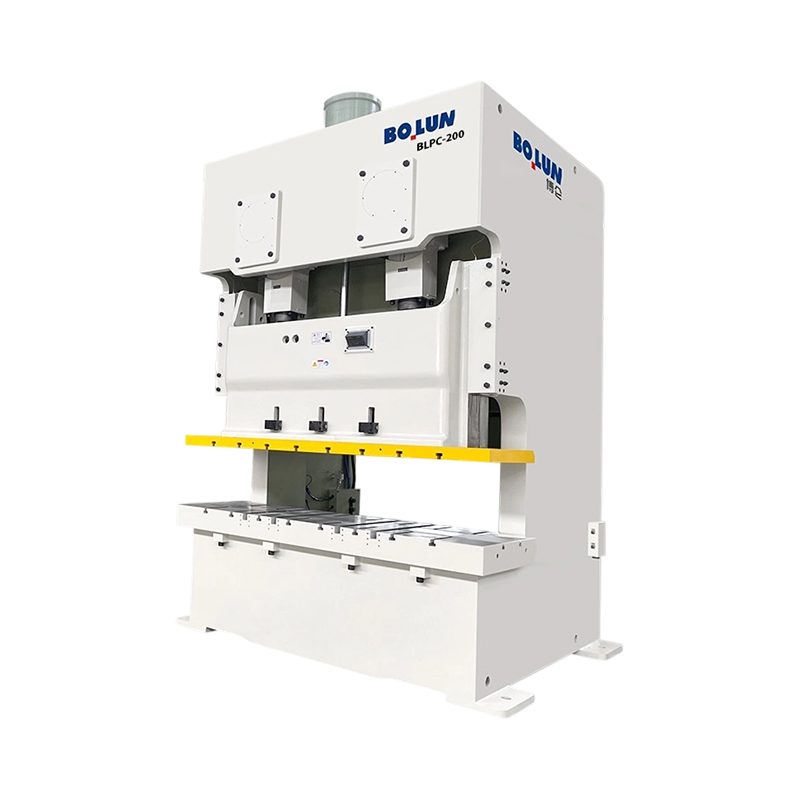
The BLPY-90 Flexible Closed-Type Single-Point Wide-Door Power Press is designed to address these requirements. With a nominal capacity of 900 kN, the machine provides substantial forming force for a broad range of industrial stamping applications. Its defining feature is the exceptionally wide distance between columns, which creates an expansive working area and simplifies the installation of large dies, transfer systems, feeding equipment, sensors, and other automation devices.
The press combines a closed-type frame, single-point slide drive, programmable logic controller, touch-screen operation, dry-type clutch-brake technology, and a high-efficiency dual solenoid valve. Together, these systems support precise movement, responsive stopping, convenient operation, and stable production control. The result is a power press intended for manufacturers that need both high-force forming capability and a flexible platform for evolving production requirements.
This article examines the structure, operating advantages, technical characteristics, manufacturing strengths, automation potential, maintenance considerations, and application value of the BLPY-90. It also compares the principal specifications of the BLPY-90 and the larger BLPY-200 model to help production managers select an appropriate machine configuration.
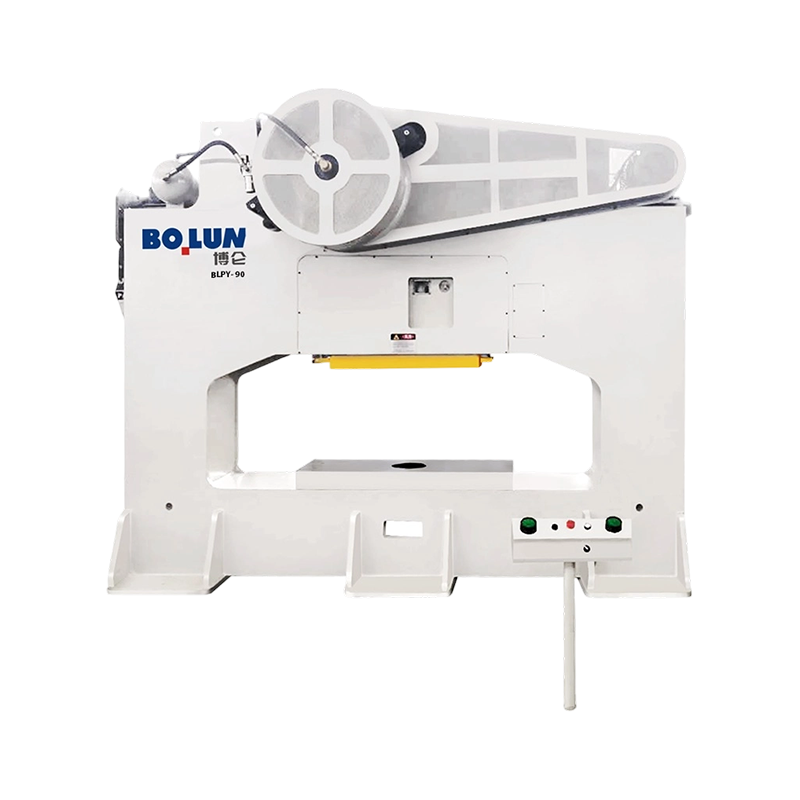
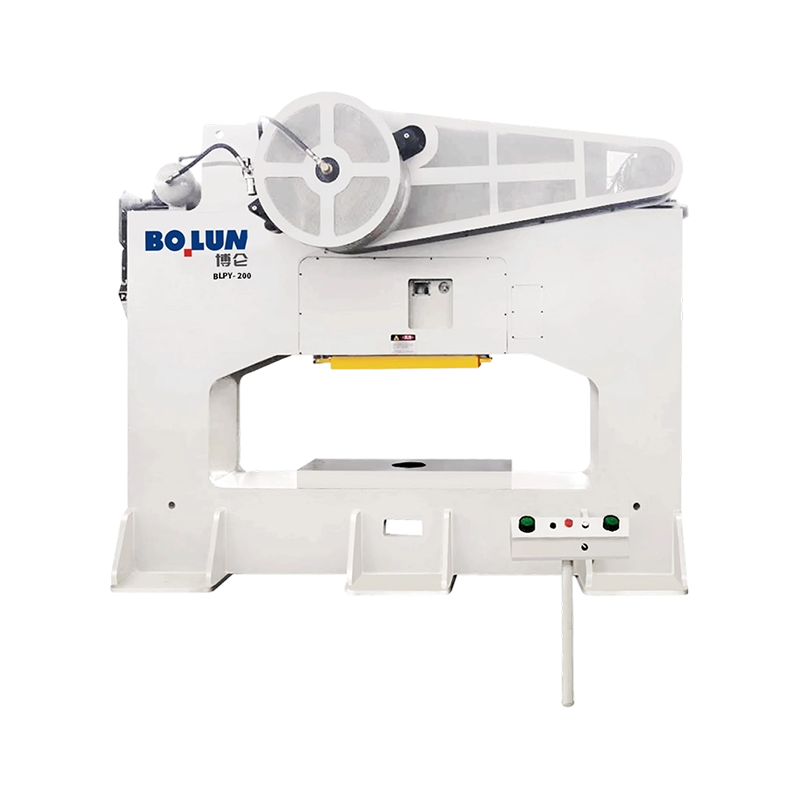
BLPY-90 Flexible Closed-Type Single-Point Wide-Door Power Press
The BLPY-90 is a closed-type single-point wide-door power press with a nominal force of 900 kN. The closed-type configuration provides a rigid working structure around the die area, helping the machine withstand the forces generated during stamping. The single-point drive arrangement applies slide movement through a centralized mechanism, supporting balanced transmission of force to the slide and die.
Unlike a conventional press with a narrow opening between the uprights, the wide-door design offers an unusually large distance between columns. For the BLPY-90, this distance is listed as 2,600 mm. Such a wide opening is particularly valuable when the press is used with large-format dies, progressive tooling, multi-stage forming operations, or automated material-handling equipment.
The machine is not limited to a single production style. It can be configured for manual loading and unloading, semi-automatic operation, or integration into a more advanced automated line. Its wide workspace gives production engineers greater freedom when arranging feeders, conveyors, robotic arms, sensors, scrap-removal equipment, and die-protection systems.
A programmable logic controller manages the principal operating functions, while a touch-screen interface provides an accessible method for setting and monitoring production parameters. This combination gives operators a clearer view of the machine’s operating status and supports more consistent production management than a purely mechanical control arrangement.
The clutch-brake system is another important feature. The dry-type clutch-brake unit is designed for rapid engagement and release, while the dual solenoid valve supports responsive and controlled pneumatic operation. These components contribute to precise slide movement and stopping, which are essential for accurate forming, safe operation, die protection, and efficient cycle management.
The main characteristics of the BLPY-90 can be summarized as follows:
• 900 kN nominal capacity for demanding stamping operations.
• Closed-type frame architecture for a rigid and stable forming platform.
• Single-point slide drive for centralized force transmission.
• Wide 2,600 mm distance between columns for large dies and automation equipment.
• PLC-based control for coordinated machine operation.
• Touch-screen interface for operating, setting, and monitoring functions.
• Dry-type clutch-brake unit for responsive engagement and stopping.
• High-efficiency dual solenoid valve for reliable control of the clutch-brake system.
• Slide stroke of 180 mm for a broad range of forming and blanking tasks.
• Production speed range of 35 to 55 strokes per minute.
• Worktable measuring 1,150 mm by 600 mm.
• Slide bottom measuring 1,000 mm by 470 mm.
• Maximum die height of 420 mm with 80 mm of die-height adjustment.
• Main motor rated at 11 kW with a four-pole configuration.
The width of a power press is not simply a dimensional specification. It directly affects tooling selection, material flow, automation design, maintenance access, and future production expansion. A narrow press opening can force a manufacturer to use smaller dies or complicated tooling arrangements, even when the press has adequate nominal capacity. It can also make it difficult to install automated feeding and transfer equipment.
The BLPY-90 addresses these constraints with a distance between columns of 2,600 mm. This measurement provides a broad opening around the working area, allowing production planners to evaluate larger dies and more complex line layouts. The additional space can be especially useful for wide sheet-metal components, long parts, multi-station dies, and processes that require side access to the die.
Wide access also supports faster die installation and removal. Maintenance personnel can approach the tooling area with greater freedom, while lifting and positioning equipment can be arranged with fewer obstructions. In a high-mix manufacturing environment, this may reduce setup difficulty and improve the practicality of frequent die changes.
The open working envelope can also simplify the integration of automatic systems. A feeder, transfer mechanism, robotic arm, or conveyor must have enough room to enter and leave the die area without interfering with the press frame. The BLPY-90’s wide-door structure gives system integrators more design options and can reduce the need for highly specialized compact automation equipment.
Compared with a conventional closed-type press that has a smaller throat or narrower opening, the BLPY-90 offers a stronger balance between frame-supported forming and accessible working space. It retains the stability associated with a closed structure while providing the flexibility normally associated with a more open machine layout.
Large and complex dies often require substantial installation clearance. The BLPY-90 has a maximum die height of 420 mm and provides 80 mm of die-height adjustment. These specifications allow users to accommodate a range of die constructions and fine-tune the working relationship between the slide, die, and worktable.
The worktable measures 1,150 mm by 600 mm, while the slide bottom measures 1,000 mm by 470 mm. These dimensions provide a practical mounting platform for dies within the machine’s rated working envelope. Before selecting a die, users should confirm total die weight, mounting-hole patterns, shut height, required stroke, material width, and the actual force needed by the forming process.
The wide opening is also useful when tooling includes side-action components, sensors, lubrication devices, quick-change systems, or automatic part-removal mechanisms. These additions can be difficult to access in a restricted press area. Greater clearance helps technicians inspect the die, replace wear parts, and adjust tooling without unnecessary disassembly.
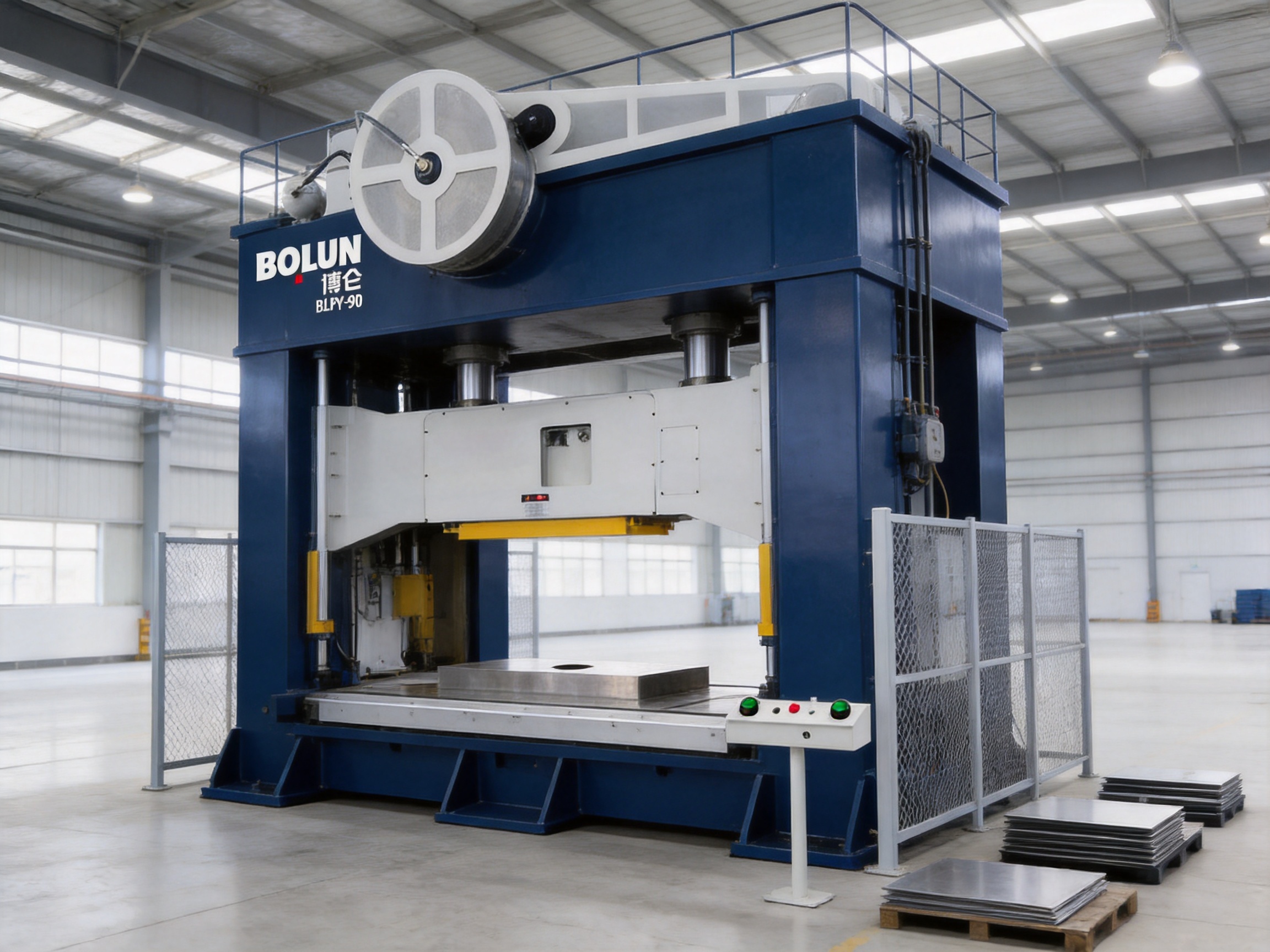
High-force stamping places significant mechanical demands on the frame, slide, worktable, drive system, and die. A press must resist deformation while maintaining the alignment between the upper and lower tooling. The closed-type configuration of the BLPY-90 is intended to provide a stable structural loop around the working area.
The 900 kN nominal capacity gives the machine a substantial force reserve for suitable blanking, bending, drawing, forming, embossing, and other sheet-metal operations. Nominal capacity should not be interpreted as a universal recommendation for every application. Actual suitability depends on the force curve of the operation, material characteristics, die design, stroke position, production speed, and load distribution.
The machine’s nominal pressure stroke is 5 mm. This indicates the reference stroke position at which the nominal capacity is specified. Engineers should compare this point with the force requirements of their dies, especially when the process involves deep forming or a force peak that occurs away from the nominal pressure position.
The 180 mm slide stroke provides a useful operating range for many general stamping applications. Stroke selection affects available forming depth, material feeding, die clearance, and production speed. A shorter effective stroke can support faster cycles, while a longer stroke may be necessary for deeper forming or more complex part ejection. The BLPY-90 offers a practical balance for a wide range of industrial work.
A single-point press transfers slide movement through a centralized connection. This arrangement can support consistent motion across the working area when the tooling is properly designed and the material load is appropriately distributed. It is commonly used for applications where the die layout and part geometry are compatible with a central force-transmission point.
For best results, users should verify that the die is centered correctly and that off-center loading remains within the machine’s permitted limits. Proper die alignment, balanced material flow, suitable lubrication, and correct press settings are essential for protecting the slide and guiding system.
The single-point configuration can also simplify tooling arrangements compared with more complex multi-point systems. Fewer primary drive connections may make die design and setup more straightforward for applications that do not require independently controlled slide points.
The BLPY-90 uses a programmable logic controller as the central control element. PLC technology is widely used in industrial machinery because it provides reliable sequencing, logical interlocking, signal processing, and communication with sensors and auxiliary equipment.
In a power press, the PLC can coordinate operating modes, clutch-brake commands, stroke settings, cycle control, emergency conditions, die-protection signals, and automation interfaces. The exact functions available depend on the machine configuration and control program, but the PLC foundation creates a flexible platform for managing the production process.
The touch-screen interface complements the PLC by giving operators a visual control point. A properly configured interface can display selected operating parameters, production status, alarm information, operating mode, and maintenance prompts. It can also make setup and changeover more intuitive than a control panel that relies exclusively on mechanical switches and indicator lamps.
Clear operator feedback is valuable in both manual and automated production. When a machine stops, personnel need to understand whether the cause is a safety condition, a die-protection signal, a control interruption, a material-feed problem, or another event. Better visibility can help reduce troubleshooting time and support more consistent responses.
A PLC-based control system offers several practical advantages:
• Repeatable operating sequences: programmed logic helps the machine perform defined actions consistently.
• Easier integration: sensors, feeders, conveyors, and robotic systems can be connected through appropriate control interfaces.
• Improved diagnostics: alarms and status information can help operators identify abnormal conditions.
• Flexible production settings: authorized personnel can adjust operating parameters according to the die and process.
• Support for multiple operating modes: manual, single-stroke, continuous, and automatic functions may be configured according to the machine’s control design.
• Better process visibility: the touch screen can present production information in a more accessible format.
PLC control does not replace sound mechanical design, operator training, or safety procedures. It functions as part of a complete machine-control system. Users should follow the supplied operating instructions and ensure that all safety circuits, guarding systems, and interlocks are validated before production begins.
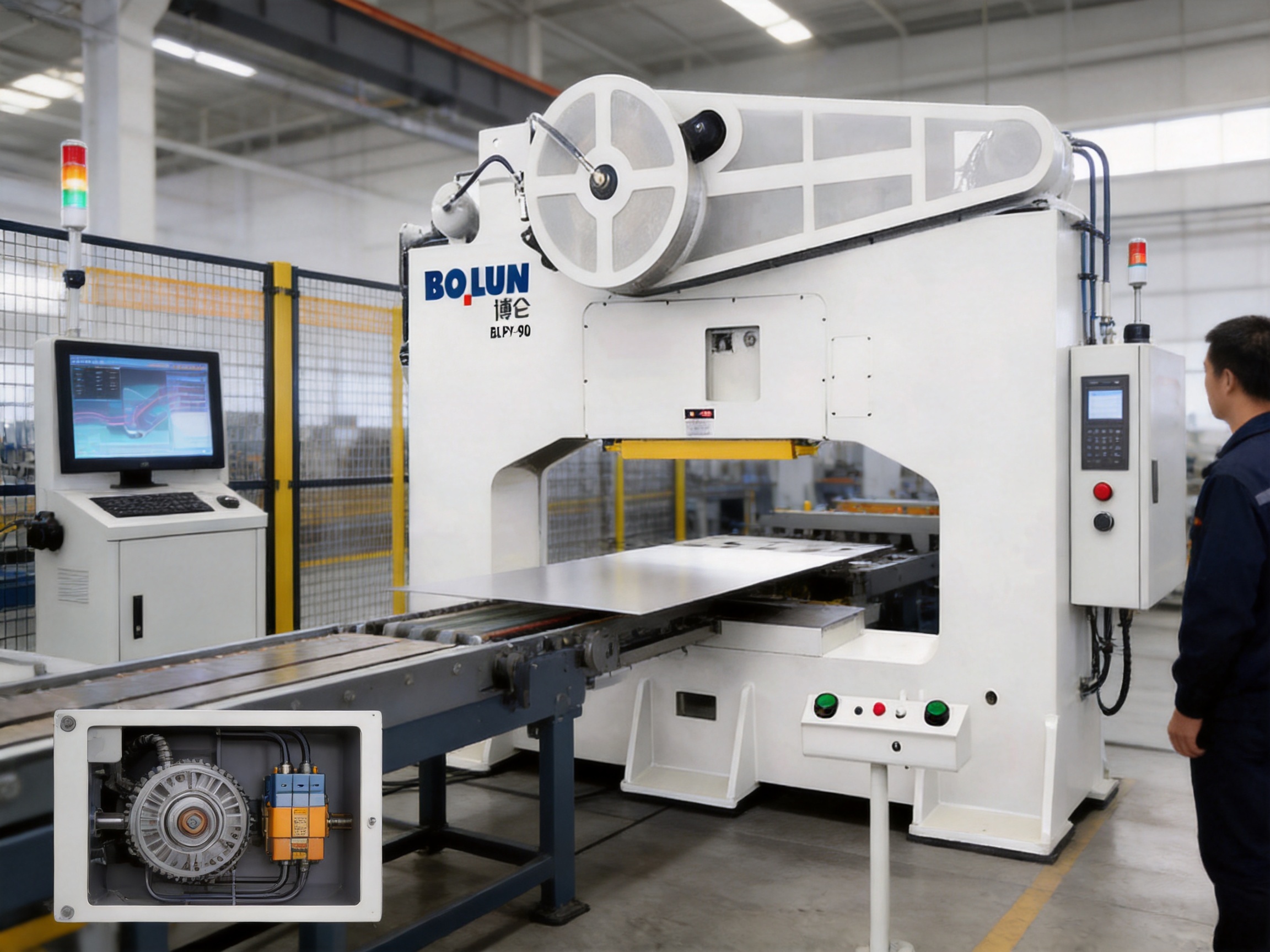
The clutch-brake unit is one of the most important components in a mechanical power press. It controls the transmission of drive power to the slide and allows the slide to stop at a controlled position. The BLPY-90 uses a dry-type clutch-brake unit designed for responsive operation.
Fast clutch engagement supports the start of the press cycle, while controlled brake action helps stop the slide accurately. Consistent engagement and stopping are important for maintaining die timing, protecting tooling, controlling part quality, and supporting safe operation.
The press also uses a high-efficiency dual solenoid valve. A dual-solenoid arrangement can provide dependable pneumatic control and support stable switching between clutch and brake functions. The efficiency and responsiveness of the valve are important because delays or inconsistent pneumatic signals can affect cycle timing and stopping performance.
In production, stopping precision has several consequences. If the slide does not stop consistently, the upper die may not return to the expected position, feeding may become unreliable, and operators may experience difficulty during setup. A responsive clutch-brake system helps the machine maintain predictable motion, although performance still depends on correct adjustment, air quality, lubrication where specified, component condition, and regular inspection.
Accurate slide motion helps maintain the intended relationship between the die components and the workpiece. This can reduce variation caused by inconsistent cycle timing or positioning. The benefits are particularly relevant when a die includes multiple forming stages, narrow clearances, or automatic material transfer.
Consistent stopping also supports die protection. If the press detects an abnormal feed position or a die-protection signal, the control system must respond quickly and reliably. The clutch-brake assembly and control valve therefore contribute not only to productivity but also to tooling preservation and operational control.
The following table presents the available specifications for the BLPY-90 and the larger BLPY-200 model. The BLPY-200 is included as a reference within the same product family and should not be treated as an automatic substitute for the BLPY-90. Final selection should be based on the actual process, die, material, production rate, and factory layout.
| Specification | Unit | BLPY-90 | BLPY-200 |
|---|---|---|---|
| Nominal Capacity | kN | 900 | 2000 |
| Nominal Pressure Stroke | mm | 5 | 6 |
| Slide Stroke | mm | 180 | 200 |
| Strokes per Minute | S.P.M. | 35–55 | 20–50 |
| Maximum Die Height | mm | 420 | 460 |
| Die Height Adjustment | mm | 80 | 110 |
| Worktable Size | mm | 1,150 × 600 | 1,300 × 850 |
| Slide Bottom Size | mm | 1,000 × 470 | 1,130 × 630 |
| Distance Between Columns | mm | 2,600 | 2,950 |
| Height of Working Face | mm | 685 | 1,045 |
| Main Motor | kW × poles | 11 × 4 | 18.5 × 4 |
| Press Precision Classification | Standard | GB/JIS Class 1 | GB/JIS Class 1 |
For many general industrial applications, the BLPY-90 offers a useful combination of capacity, workspace, speed, and installation flexibility. The BLPY-200 provides a higher nominal capacity and larger working dimensions for heavier or larger tooling. However, selecting the larger model solely because it has a higher force rating may not be the most efficient approach. Excess capacity can increase equipment cost, energy demand, floor-space requirements, and tooling constraints.
When comparing the BLPY-90 with competing power presses, buyers should evaluate the entire machine system rather than focusing only on nominal tonnage. The practical value of a press depends on how effectively it can support the intended production process.
The wide-door configuration is one of the BLPY-90’s clearest differentiators. Many conventional presses are designed around a more restricted opening, which may be adequate for standard dies but limiting for large-format tooling and automated equipment. The 2,600 mm distance between columns gives the BLPY-90 a substantial working envelope and may reduce compromises during line design.
The combination of a wide opening, PLC control, touch-screen operation, and responsive clutch-brake technology provides a suitable foundation for automation. Competitors may offer similar individual features, but the value lies in how these features work together. A machine that can accommodate the physical dimensions of an automation system but lacks appropriate control integration may require additional engineering. Conversely, a sophisticated control system is less useful if the frame leaves no room for the required feeder or transfer mechanism.
The dry-type clutch-brake unit and dual solenoid valve are intended to support fast, stable control of slide motion. In applications where cycle timing and stopping position are important, this can be a meaningful advantage over equipment using slower or less responsive control arrangements.
The BLPY-90 provides a stated range of 35 to 55 strokes per minute. The suitable speed depends on the material, die, forming depth, feeding method, part geometry, and safety requirements. A high maximum speed is valuable only when the complete process can operate reliably at that rate. The BLPY-90’s speed range gives users room to balance output against tooling life, part quality, and process stability.
Some stamping operations require non-standard worktable arrangements, special feeding systems, additional sensors, unusual die dimensions, or customized automation interfaces. The manufacturer’s stated experience in research, development, design, production, and service supports an engineering approach to these requirements. Buyers should discuss all special conditions during the technical review so that the proposed configuration matches the actual production line.
The BLPY-90 is produced by Zhejiang Bolun High-Precision Machinery Co., Ltd., a machinery manufacturer based in Zhejiang, China. The company reports approximately two decades of experience in machinery manufacturing and describes its operations as covering research and development, design, production, sales, and service.
An integrated business structure can provide advantages when developing and manufacturing specialized forming equipment. Engineering teams can communicate directly with production personnel, while service feedback can be incorporated into future designs. This type of connection is particularly important for power presses because machine performance depends on the interaction of structural components, control systems, pneumatic devices, electrical equipment, and tooling requirements.
The company states that it operates advanced precision-processing equipment and maintains an industrial environment covering basic design, core component development, and final machine assembly. For a power press, these stages are closely connected. Frame accuracy affects alignment. Machined guide surfaces influence slide movement. Drive-component quality affects motion and vibration. Assembly accuracy affects the relationship between the worktable, slide, clutch-brake system, and control devices.
A controlled production process can help reduce variation between machines and support more predictable commissioning. It can also make it easier to identify the source of a problem when performance does not meet expectations. Consistent inspection records, dimensional verification, and assembly procedures are important elements of professional machine production.
Stamping applications vary significantly. A manufacturer of automotive components may require a large automated transfer arrangement, while an appliance producer may need a broad die area and high repeatability. A metal-fabrication company may prioritize quick die changes, while a precision component manufacturer may focus on control stability and low variation.
The company describes its capabilities as including non-standard customization and one-stop design and manufacturing services. This may allow customers to discuss special specifications and functions during the project-development stage. Potential customization should be evaluated carefully, including its effect on structural load, electrical controls, safety certification, delivery time, maintenance, spare parts, and total cost.
The company identifies quality as a central principle and reports a finished-product inspection system designed to exceed ordinary industry requirements. A reliable quality program for a press should include inspection of structural parts, machined surfaces, drive components, electrical systems, pneumatic systems, control functions, safety circuits, and completed machine performance.
Customers should request appropriate inspection documentation, acceptance criteria, and test procedures as part of the purchasing process. Important checks may include slide parallelism, table flatness, stopping performance, clutch-brake response, control-function verification, noise and vibration assessment, and operation under representative conditions.
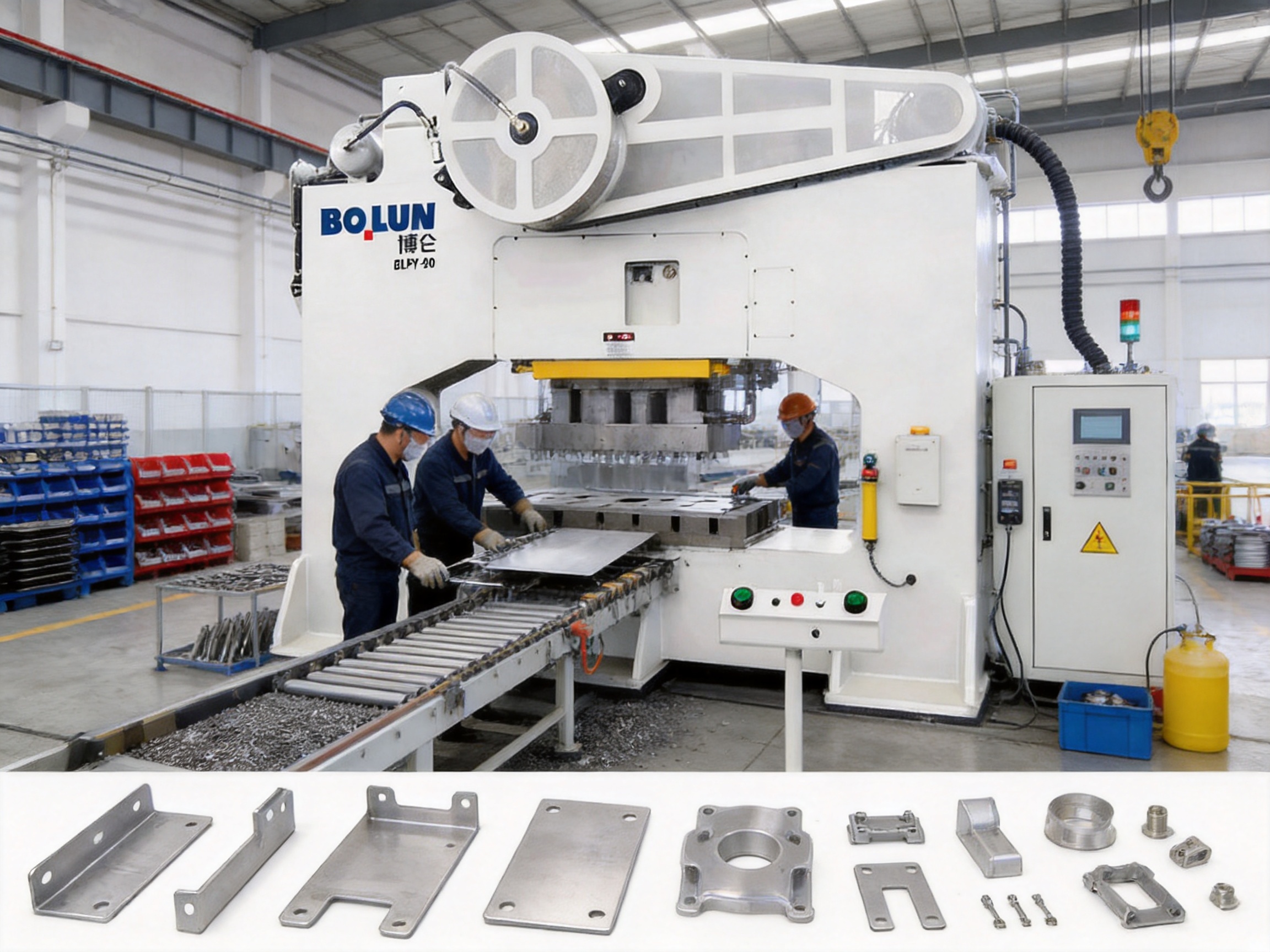
The BLPY-90’s wide workspace makes it suitable for integration with a variety of material-handling and production-support systems. Depending on the application, these may include mechanical feeders, servo feeders, decoilers, straighteners, transfer devices, robotic arms, conveyors, part collectors, scrap-removal equipment, lubrication systems, and inspection sensors.
Automation integration should be planned at the beginning of the project rather than added after the press has been installed. The engineering review should consider material width, coil weight, feed pitch, die sequence, transfer timing, part orientation, scrap flow, access requirements, guarding, emergency stops, and communication between the press and auxiliary equipment.
The PLC provides a logical foundation for coordinating these systems. Signals from a feeder or die sensor can be used to authorize a press cycle, while the press can provide status signals to the automation system. Proper interlocking helps ensure that the slide does not operate unless the material and tooling are in the correct condition.
The touch-screen interface can also support setup activities. Operators may need to select a production mode, confirm die settings, verify sensor status, or monitor cycle conditions. A clear interface helps reduce setup errors, particularly when different dies and materials are processed on the same machine.
Not every application requires a fully automated line. The BLPY-90 can also be valuable in manual or semi-automatic environments where flexibility and accessible tooling are more important than maximum automation. The wide door can improve operator access during die installation and maintenance, while PLC-based control can provide consistent single-stroke or continuous operation.
Manual operation must always be conducted using appropriate guarding, two-hand controls, light curtains, emergency stops, and other safety provisions required by the machine configuration and applicable regulations. The machine’s flexibility should never be interpreted as permission to bypass safety devices or operate outside approved procedures.
The BLPY-90 may be considered for a broad range of sheet-metal forming operations, subject to engineering verification. Potential processes include blanking, piercing, bending, shallow drawing, embossing, coining, flattening, trimming, and progressive stamping.
Potential industries include automotive components, electrical equipment, household appliances, hardware products, metal furniture, construction fittings, lighting components, agricultural equipment, and general industrial parts. The machine can be particularly attractive where the workpiece or die requires a large horizontal working envelope.
Material compatibility depends on thickness, tensile strength, yield strength, blank size, forming depth, lubrication, die clearance, and required production speed. Common materials used in stamping may include carbon steel, stainless steel, aluminum alloys, copper alloys, and other sheet metals. These materials should not be processed without confirming that the press and die are suitable for the actual load and operating conditions.
Before ordering a BLPY-90, the buyer should prepare a detailed process evaluation. This should include the maximum and average forming forces, force position within the stroke, material dimensions, die weight, die height, required stroke, target strokes per minute, feeding method, part-removal method, and projected operating schedule.
The buyer should also identify whether the process involves eccentric loading. Although the press has a wide opening, the die must still be positioned correctly and operated within the machine’s permitted loading limits. A wide working area improves flexibility, but it does not eliminate the need for balanced tooling and sound process engineering.
A high-capacity power press requires careful installation. The foundation must support the machine’s weight and dynamic forces, while the installation area must provide sufficient clearance for operation, maintenance, die handling, electrical access, and material movement.
The working-face height of the BLPY-90 is listed as 685 mm. This dimension should be considered when planning operator access, feeding height, conveyors, material racks, and the interface with upstream and downstream equipment. An appropriate working height can improve ergonomics and simplify automation layout.
Electrical supply, compressed air, ventilation, lighting, grounding, and environmental conditions should be confirmed before delivery. The compressed-air system must provide clean and stable air at the pressure and flow required by the clutch-brake control system and other pneumatic devices. Contaminated or unstable air can affect valve performance and stopping consistency.
Commissioning should include a systematic inspection of the frame, worktable, slide, die-height adjustment, clutch-brake operation, PLC functions, touch-screen controls, emergency circuits, sensors, lubrication points, and auxiliary interfaces. The machine should first be operated without material, then with test material, and finally under representative production conditions.
A formal acceptance test can help ensure that the delivered machine meets the agreed requirements. The test plan may include:
• Verification of nominal specifications and machine identification.
• Inspection of worktable and slide dimensions.
• Confirmation of die-height adjustment.
• Measurement of slide movement and stopping response.
• Testing of manual, single-stroke, and continuous operating modes.
• Verification of emergency stops and protective interlocks.
• Checking of touch-screen displays, alarms, and control signals.
• Trial operation with the customer’s representative die or a suitable test die.
• Confirmation of automation communication where applicable.
• Review of manuals, spare parts, maintenance schedules, and training requirements.
Routine maintenance is essential to preserve the performance of any power press. The inspection schedule should be established according to operating hours, production intensity, environmental conditions, and manufacturer recommendations.
Operators should monitor abnormal noise, vibration, overheating, air leakage, stopping variation, unusual clutch-brake response, oil or grease leakage, electrical alarms, and changes in slide movement. Early identification of these conditions can prevent minor issues from developing into costly failures.
The dry-type clutch-brake unit should be inspected according to the manufacturer’s procedures. Wear, adjustment, response time, and stopping behavior should be monitored. Pneumatic components, including the dual solenoid valve, should be kept clean and checked for reliable switching. Air filters, regulators, lubricators, and hoses should be serviced as required by the system design.
The PLC and touch-screen system should also be protected from unsuitable environmental conditions. Electrical cabinets should remain clean, dry, and properly ventilated. Control backups and parameter records should be maintained so that approved settings can be restored after service or component replacement.
Die alignment and mounting should be checked regularly. Even a highly stable press can produce poor results if the die is not installed correctly, the mounting bolts are loose, or the material is feeding inaccurately. Press maintenance and die maintenance should therefore be treated as a single production-quality program.
Daily checks may include general cleanliness, air pressure, abnormal sounds, safety-device condition, lubrication status, and visible leakage.
Weekly checks may include clutch-brake response, electrical connections, pneumatic fittings, die-height mechanisms, fasteners, and sensor operation.
Periodic checks may include slide parallelism, table condition, guide components, motor performance, control-system backups, and detailed inspection of wear parts.
Annual or major-service inspections should be performed according to operating hours and manufacturer recommendations. These may involve more comprehensive measurements, replacement of scheduled wear components, and verification of the machine’s precision classification.
Training is a fundamental part of power-press performance. Operators should understand the machine’s controls, operating modes, permitted materials, die limitations, emergency procedures, and inspection requirements before beginning production.
Personnel responsible for die changes should be trained in lifting, positioning, clamping, alignment, and verification. They should understand the maximum die height, adjustment range, slide position, and worktable limitations. No die should be installed unless its dimensions and weight are compatible with the press and the available handling equipment.
Safety devices must remain active and correctly adjusted. Operators should never reach into the die area during an active cycle, bypass interlocks, defeat light curtains, or use improvised methods to hold or position material. Lockout and isolation procedures should be used during maintenance, cleaning, troubleshooting, and die work.
Training should also cover the touch-screen interface. Operators need to know how to interpret alarms, identify operating modes, reset the machine safely, and report abnormal conditions. A clear escalation procedure helps prevent operators from repeatedly resetting a fault without finding its underlying cause.
The value of a power press extends beyond its purchase price. Manufacturers should consider throughput, die utilization, changeover time, maintenance costs, energy consumption, floor-space requirements, automation potential, product quality, and service support.
The BLPY-90’s wide-door structure may improve the economic use of tooling by allowing larger or more sophisticated dies to be installed on one machine. This can reduce the need to divide a process among several smaller presses, provided that the die and force requirements are suitable.
The 35–55 strokes-per-minute range may support productive operation for many repetitive stamping processes. Actual output depends on material loading, feeding, part removal, inspection, and downtime. A press operating at a moderate speed with reliable feeding and low stoppage may deliver better annual output than a faster machine that experiences frequent interruptions.
PLC control and a touch-screen interface can also reduce the time required for setup, fault identification, and production monitoring. When combined with automation, these systems may help improve labor efficiency and process consistency.
Another important consideration is future flexibility. A machine with a very restricted working area may become unsuitable if the manufacturer later introduces larger parts or automated tooling. The BLPY-90’s wide opening provides additional capacity for future equipment planning, which can help protect the value of the investment.
Prospective buyers should prepare technical information before requesting a quotation. The following questions can help create a complete evaluation:
• What are the maximum, average, and position-specific forming forces?
• What are the material width, thickness, tensile strength, and feed pitch?
• What are the die dimensions, total height, weight, and center of force?
• Is the die compatible with the 1,150 mm by 600 mm worktable?
• Is the die bottom compatible with the 1,000 mm by 470 mm slide bottom?
• Is the 180 mm slide stroke sufficient for the process?
• What production speed is required?
• Will the press operate manually, semi-automatically, or in a fully automated line?
• What feeder, transfer, inspection, lubrication, or scrap-removal equipment is required?
• What electrical and pneumatic services are available at the installation site?
• What safety standards, certifications, and documentation are required for the destination market?
• What spare parts, training, installation, and after-sales services are included?
• What acceptance tests will be performed before shipment and after installation?
A detailed technical review reduces the risk of selecting a machine based on nominal tonnage alone. It also allows the manufacturer to recommend appropriate options and identify any necessary customization.
The BLPY-90 has a nominal capacity of 900 kN. The actual usable force for a specific operation depends on the force curve, stroke position, material, die design, and loading conditions.
Wide-door refers to the large opening between the press uprights. The BLPY-90 has a listed distance between columns of 2,600 mm, providing substantial space for wide dies, feeding equipment, transfer systems, and maintenance access.
Yes. Its wide working area, PLC control, touch-screen interface, and responsive clutch-brake system provide a suitable foundation for integration with feeders, conveyors, robotic systems, sensors, and other peripheral equipment. The complete automation design must be verified for the intended application.
The slide stroke is 180 mm. This value should be compared with the forming depth, feeding requirements, die clearance, and production speed of the intended process.
The listed speed range is 35 to 55 strokes per minute. The appropriate speed depends on the die, material, forming process, feeding system, part-removal method, and required quality level.
The maximum die height is listed as 420 mm, with 80 mm of die-height adjustment. The actual die must also comply with the worktable, slide, weight, mounting, and force requirements.
The worktable measures 1,150 mm by 600 mm. The slide bottom measures 1,000 mm by 470 mm. Buyers should confirm the die footprint and mounting arrangement before purchase.
The dry-type clutch-brake unit is designed for responsive engagement and stopping. Together with the dual solenoid valve and PLC control, it supports accurate slide movement, controlled stopping, cycle consistency, and die-protection response.
The BLPY-200 has a higher nominal capacity of 2,000 kN, a larger worktable, a longer slide stroke, and a wider distance between columns. The BLPY-90 has a 900 kN capacity and a more compact specification while still providing a very wide working opening. The appropriate model depends on the actual production requirements.
The manufacturer describes capabilities in non-standard customization and special-function design. Customers should provide complete technical requirements so that the proposed configuration can be reviewed for structural, electrical, control, safety, and maintenance compatibility.
Users should confirm foundation strength, floor space, working clearances, electrical supply, grounding, compressed-air quality and capacity, material flow, die-handling access, ventilation, lighting, safety guarding, and communication with auxiliary equipment.
Maintenance includes inspection of the frame, slide, worktable, die-height adjustment, clutch-brake unit, pneumatic valve, electrical cabinet, PLC, touch screen, safety devices, lubrication points, fasteners, and wear components. The precise schedule should follow the manufacturer’s instructions and operating conditions.
The BLPY-90 Flexible Closed-Type Single-Point Wide-Door Power Press is designed for manufacturers that need substantial stamping force without sacrificing workspace flexibility. Its 900 kN nominal capacity, 2,600 mm distance between columns, 180 mm slide stroke, and adjustable die-height range make it suitable for many industrial forming applications.
Its strongest competitive advantage is the combination of a rigid closed-type structure with an exceptionally wide working opening. This arrangement can simplify the use of large dies, improve access during setup and maintenance, and create more space for automated peripheral equipment. The PLC and touch-screen system further support process control, while the dry-type clutch-brake unit and high-efficiency dual solenoid valve contribute to responsive motion and precise stopping.
The machine’s value is reinforced by the manufacturer’s reported strengths in research and development, precision processing, assembly, customization, quality inspection, and customer service. These capabilities are important when a power press must be integrated into a complete production line rather than operated as an isolated machine.
For the best result, buyers should evaluate the complete process before ordering. Force requirements, die dimensions, material characteristics, operating speed, automation, safety, foundation, utilities, and maintenance must all be considered. When properly selected, installed, operated, and maintained, the BLPY-90 can provide a flexible and productive platform for high-force stamping and future manufacturing expansion.
1. Product technical data supplied for the BLPY-90 Flexible Closed-Type Single-Point Wide-Door Power Press.
2. Product technical data supplied for the BLPY-200 closed-type power press model.
3. Manufacturer information concerning research and development, precision manufacturing, customization, quality management, and service capabilities.
4. General industrial guidance on mechanical power-press selection, die compatibility, stamping-force evaluation, and preventive maintenance.
5. General principles of programmable logic controller application in industrial forming equipment.
6. General engineering practices for clutch-brake inspection, pneumatic control, machine guarding, and power-press commissioning.


What Is a Power Press? A power press — also called a stamping press or punch pr...
Power press machines are classified in two main ways: by frame construction, w...
Understanding Mechanical Power Presses and Their Essential Functions A mechani...
In the fields of metal forming, sheet metal fabrication, blanking, and punching,...
As the manufacturing industry moves steadily toward automation and smart product...
In modern manufacturing, cold forging is widely used in the automotive, aerospac...
Contact Us

bolunpress@gmail.com

+86-575-83362228

+86-15158259588

+86-575-83362999

+86-15158259588

Hangzhou Office Add: No. 332 Wangjiang East Road, Shangcheng District

No.1 Linjiang Road East, Xiaren, Jinting Town, Shengzhou City, Zhejiang Province, China
Ready to Begin?
Get in Touch

Now!

ZHEJIANG BOLUN
 English
 中文简体
中文简体