
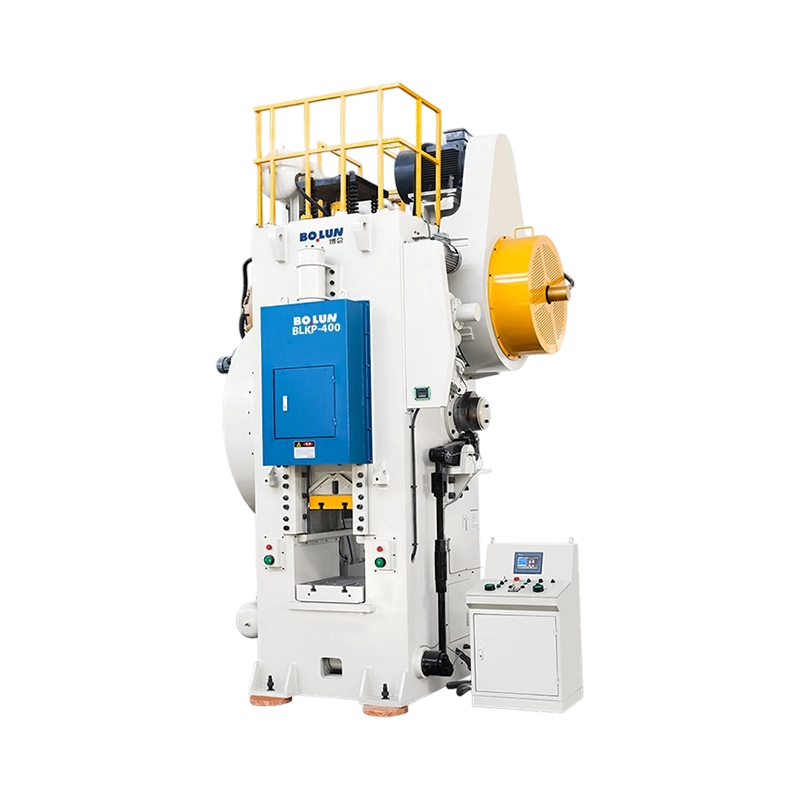
The BLKP-650 is a heavy-duty toggle type power press developed for demanding cold forging, compression forming, upsetting, coining, and other high-load metal deformation processes. With a nominal capacity of 6,500 kN, the machine is positioned for manufacturers that require substantial forming force, controlled pressure retention, reliable part ejection, and a rigid working structure for thick-gauge components.
Cold forging is one of the most technically demanding metal-forming methods. It can produce strong, precise parts with excellent surface quality and reduced material waste, but it also places exceptional demands on the press. The equipment must withstand high instantaneous loads, maintain alignment under pressure, transfer force efficiently, protect dies and tooling, and operate consistently over long production cycles. A machine that is merely powerful is not enough. It must also be stable, controllable, serviceable, and compatible with the complete forming process.
The BLKP-650 addresses these requirements through a combination of high nominal capacity, toggle-type motion, high-rigidity construction, an 8 mm nominal pressure stroke, an integrated ejector system, and load detection safety technology. Its 600 × 700 mm worktable, 450 × 550 mm slide bottom, 400 mm maximum die height, and 70 mm ram stroke provide a substantial working envelope for large and complex cold-forged components.
For companies producing automotive parts, industrial hardware, high-strength fasteners, bearing components, transmission elements, construction hardware, and other metal products requiring significant deformation, the BLKP-650 offers a practical balance between forming power and process control. It is designed not only to complete an individual forming operation, but also to support repeatable manufacturing performance throughout a demanding production program.
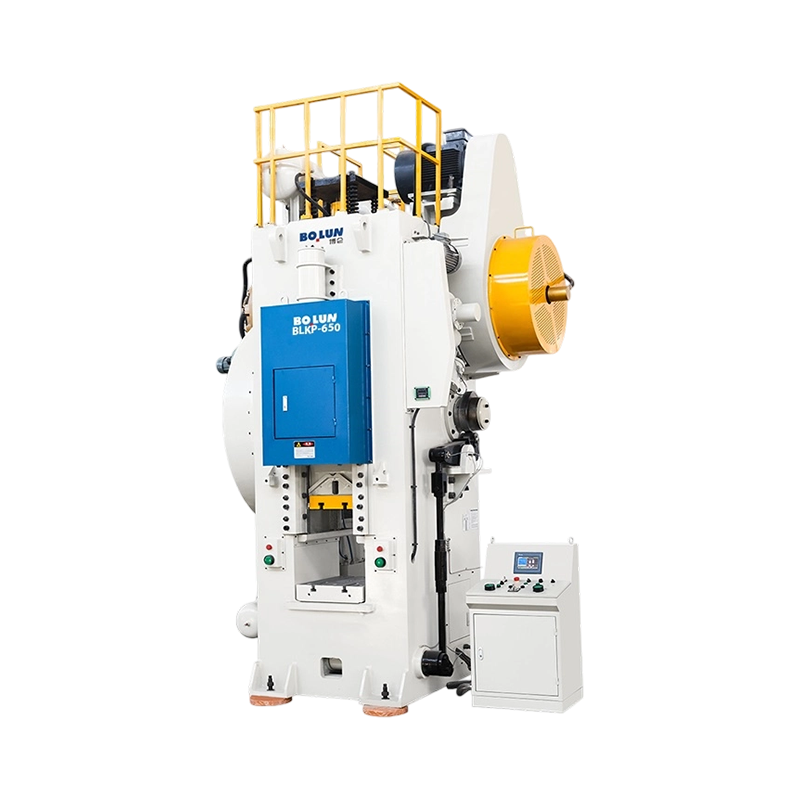
BLKP-650 Robust High-Deformation Cold Forging Toggle Type Power Press
Cold forging forms metal at or near room temperature by applying controlled compressive force through dies and tooling. Compared with many cutting-based processes, it can improve material utilization, shorten production routes, and create components with favorable grain flow. However, the material resistance encountered during deformation can be extremely high, particularly when the workpiece has a thick cross-section, a complex profile, or a substantial reduction ratio.
The BLKP-650 is built around a 6,500 kN nominal capacity, making it suitable for heavy compression and high-deformation applications. This capacity gives process engineers greater freedom when evaluating difficult materials, larger blank sizes, and forming operations that require significant force near the end of the stroke. The press can be used where a smaller machine may approach its load limit, experience unstable deformation, or require excessive process compromises.
A major feature of the machine is its 8 mm nominal pressure stroke. The nominal pressure stroke describes the critical portion of the movement in which the press develops and maintains its rated forming pressure. In cold forging, this controlled pressure zone is important because the highest forming resistance often occurs during the final stage of deformation. The ability to sustain pressure during this stage can help support complete filling of the die cavity, stable material flow, and consistent part geometry.
The pressure stroke is particularly valuable for high-deformation workpieces. If pressure is not maintained effectively, the material may fail to reach remote areas of the die cavity, resulting in incomplete forming, dimensional variation, or excessive follow-up machining. By maintaining forming force during the critical deformation stage, the BLKP-650 helps production teams establish a more predictable relationship between tooling design, material condition, lubrication, and final component geometry.
High-deformation forming also requires the press frame, slide, crankshaft, toggle mechanism, table, and tooling support system to work together as a single load-bearing structure. Local flexibility can lead to uneven die contact, premature tooling wear, product inconsistency, or overload concentration. The BLKP-650 therefore emphasizes structural rigidity as an important part of its overall performance rather than treating nominal capacity as the only measure of capability.
The toggle type mechanism is central to the operating characteristics of the BLKP-650. A toggle linkage converts the movement of the drive system into a controlled slide motion and creates a favorable mechanical advantage as the mechanism approaches its pressure-forming position. This arrangement is well suited to applications that require high force during a relatively short portion of the forming cycle.
In practical production, toggle action can provide a useful combination of approach speed, controlled forming movement, and high pressure near the bottom of the stroke. The slide can travel through the working cycle while the linkage progressively develops mechanical advantage. During the final forming stage, the mechanism supports the concentrated force needed to deform resistant material and complete the die impression.
The BLKP-650 has listed slide stroke options of 160 mm and 180 mm, depending on the specified configuration. These stroke choices allow the press to be matched to different die layouts, blank-loading arrangements, and forming sequences. A suitable slide stroke can help provide sufficient space for part handling while avoiding unnecessary travel that may reduce productivity or increase mechanical movement.
The machine is also listed with a 32 strokes-per-minute configuration and a 25–40 strokes-per-minute variable-speed configuration. The exact production rate depends on the selected version and the process requirements. In actual use, the most appropriate speed is determined by material characteristics, lubrication, die temperature, blank-transfer conditions, part geometry, safety requirements, and the desired balance between output and tooling life.
For high-load cold forging, the fastest possible cycle is not always the best cycle. A controlled speed can reduce impact effects, allow more stable material flow, provide additional time for blank positioning and ejection, and help maintain consistent tooling conditions. The availability of different operating configurations gives users a basis for selecting a production rhythm that matches the process rather than forcing every application into one fixed speed.
Compared with a conventional press that may deliver its force less efficiently at the critical bottom portion of the stroke, a well-designed toggle power press can concentrate forming capability where it is most valuable. This is one of the principal reasons toggle mechanisms are widely considered for coining, sizing, embossing, upsetting, and high-pressure cold forging operations.
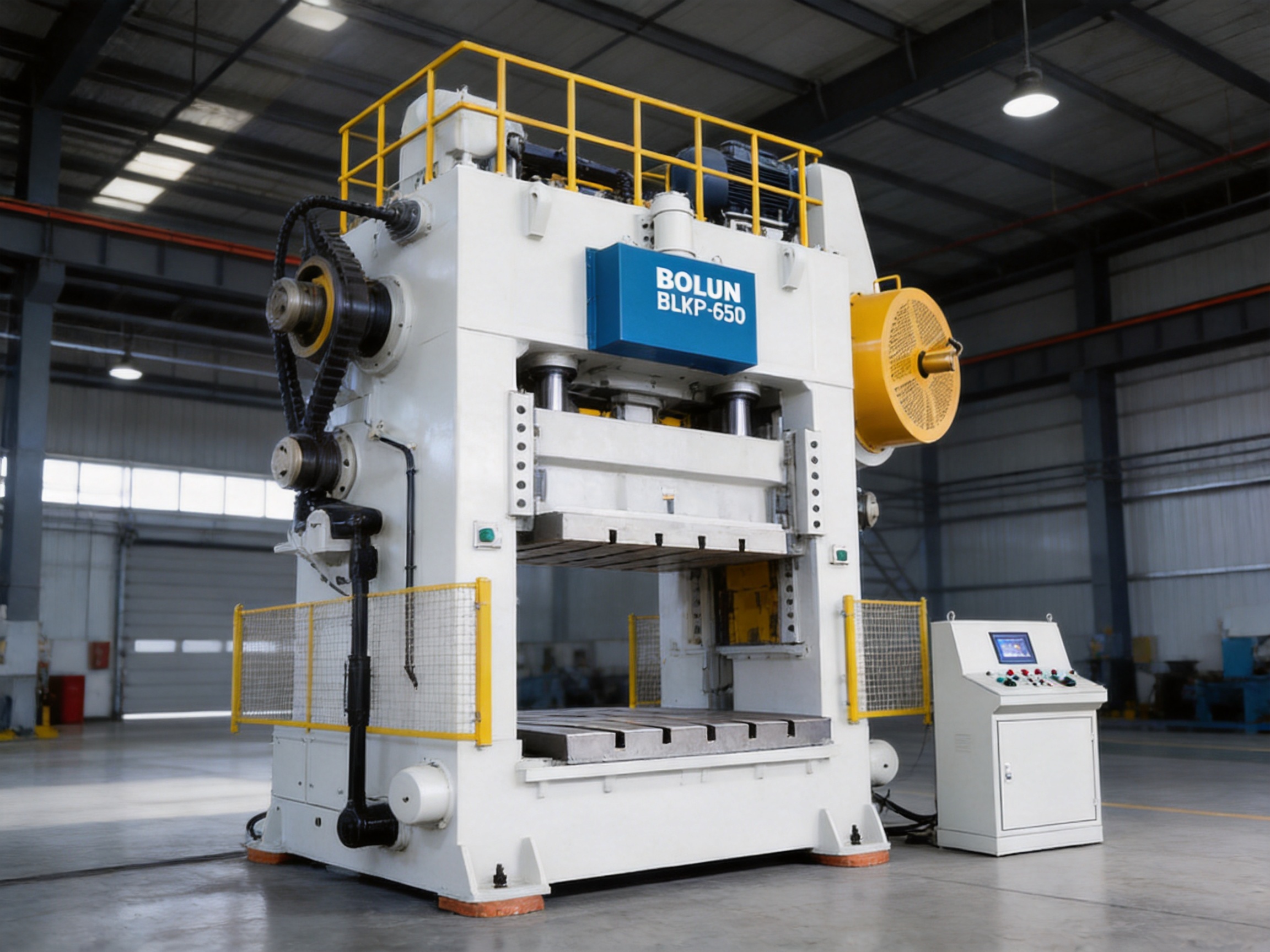
The BLKP-650 is equipped with a 600 × 700 × 150 mm worktable. This table provides a solid platform for substantial dies, die holders, guide systems, and auxiliary tooling. The 150 mm table thickness contributes to the machine’s working rigidity and provides support for heavy forming assemblies.
The slide bottom size is listed as 450 × 550 mm. This surface is large enough to support a wide range of upper die arrangements while leaving engineers room to plan clamping, guide components, punch holders, and forming inserts. The relationship between the slide bottom and worktable dimensions allows the tooling designer to create a stable load path between the upper and lower die assemblies.
The maximum die height is 400 mm. Die height is a critical consideration in cold forging because tooling can include multiple inserts, guide structures, ejector elements, transfer components, and spacer arrangements. A suitable die-height allowance can simplify tooling design and reduce the need for excessive modifications when changing between related component families.
The machine provides 15 mm of die height adjustment. This adjustment capability helps operators and tooling engineers fine-tune the relationship between the upper and lower dies. Precise die-height setting is important for controlling shut height, forming depth, clearances, ejector timing, and the final position of the workpiece. It can also assist with compensating for tooling changes or planned process adjustments.
Cold forging tooling is exposed to severe compressive loads and must be installed with careful attention to alignment, clamping, contact surfaces, and die support. The BLKP-650’s rigid table and slide configuration provide a suitable foundation for these requirements. Before production, users should verify the actual die dimensions, mounting method, force distribution, blank size, and safety clearance against the selected machine configuration.
The machine’s 1,000 mm working-face height is another practical consideration. This dimension places the working area at a useful operating level for many factory layouts and can support ergonomic access to the die space. The final installation arrangement should nevertheless be assessed according to the production line, feeding system, operator access, maintenance route, foundation design, and local safety requirements.
Part removal is a key stage of every cold forging cycle. A part may remain tightly held in the die because of friction, elastic recovery, surface pressure, or the geometry of the formed component. Manual removal can slow production and introduce safety risks, while poorly timed ejection can damage the part or interfere with the next blank.
The BLKP-650 incorporates an ejector system driven by a crankshaft cam and rocker mechanism. This mechanical arrangement coordinates the ejector movement with the main press cycle. It is intended to provide reliable part removal after forming while maintaining a direct relationship between the press drive and the ejection sequence.
The listed mold pad capacity for the BLKP-650 is 300 kN, and the ram stroke is 70 mm. These specifications provide important guidance when designing the lower tooling and ejection system. The actual ejector force required depends on the part material, contact area, die surface condition, lubricant, draft features, shape complexity, and degree of mechanical locking in the die.
A mechanically coordinated ejector can offer advantages in repeatability because the timing is linked to the press mechanism rather than relying solely on an independent manual action. Consistent ejection timing can reduce the risk of interference between the formed part and the upper die, stabilize transfer operations, and support more reliable downstream handling.
The ejector arrangement is also useful when the production process involves automated or semi-automated blank loading. A predictable part-removal position makes it easier to integrate chutes, grippers, conveyors, sensors, and transfer devices. For complex production lines, the ejection sequence should be verified during tooling trials so that the part exits cleanly without rotation, rebound, or contact with adjacent tooling.
Although the integrated ejector is designed for reliable operation, its long-term performance still depends on correct lubrication, inspection, adjustment, and protection from forging debris. Maintenance personnel should examine the cam, rocker, contact surfaces, connections, and moving interfaces at intervals appropriate to the production load and factory maintenance plan.
Rigidity is one of the most important characteristics in a heavy cold forging press. During forming, the press frame and tooling system experience large compressive forces. Any undesirable elastic deflection can affect the parallelism between the slide and table, change the effective die clearance, alter the final part dimensions, and concentrate stress in localized areas of the die.
The BLKP-650 uses a high-rigidity frame intended to support stable operation under substantial forming loads. The frame must provide a strong and accurately aligned path from the drive system through the crankshaft and toggle linkage, into the slide, through the upper die, across the workpiece, and back through the lower die and table. The more direct and controlled this load path is, the easier it becomes to maintain consistent process conditions.
High rigidity also contributes to tooling protection. When the press structure remains stable, the dies are less likely to experience unexpected tilting, uneven contact, or repeated shock caused by misalignment. This can help reduce abnormal wear and improve the service life of punches, inserts, guide components, and die holders. Tooling life is influenced by many factors, including material quality and lubrication, but press stability is a fundamental requirement.
For competitors’ machines, nominal tonnage alone may not fully indicate how effectively the available force can be applied. A press with a high stated capacity but insufficient structural stability may not provide the same practical forming performance as a rigid machine with an efficient pressure mechanism. Buyers should therefore evaluate frame design, slide guidance, die support, load distribution, pressure behavior, and inspection standards alongside the capacity figure.
The BLKP-650’s 6,500 kN rating, toggle mechanism, pressure stroke, and rigid frame are intended to work as a unified system. This combination can be particularly beneficial in processes where the forming load changes rapidly, where the final deformation stage is severe, or where the component requires repeatable filling across a broad die cavity.
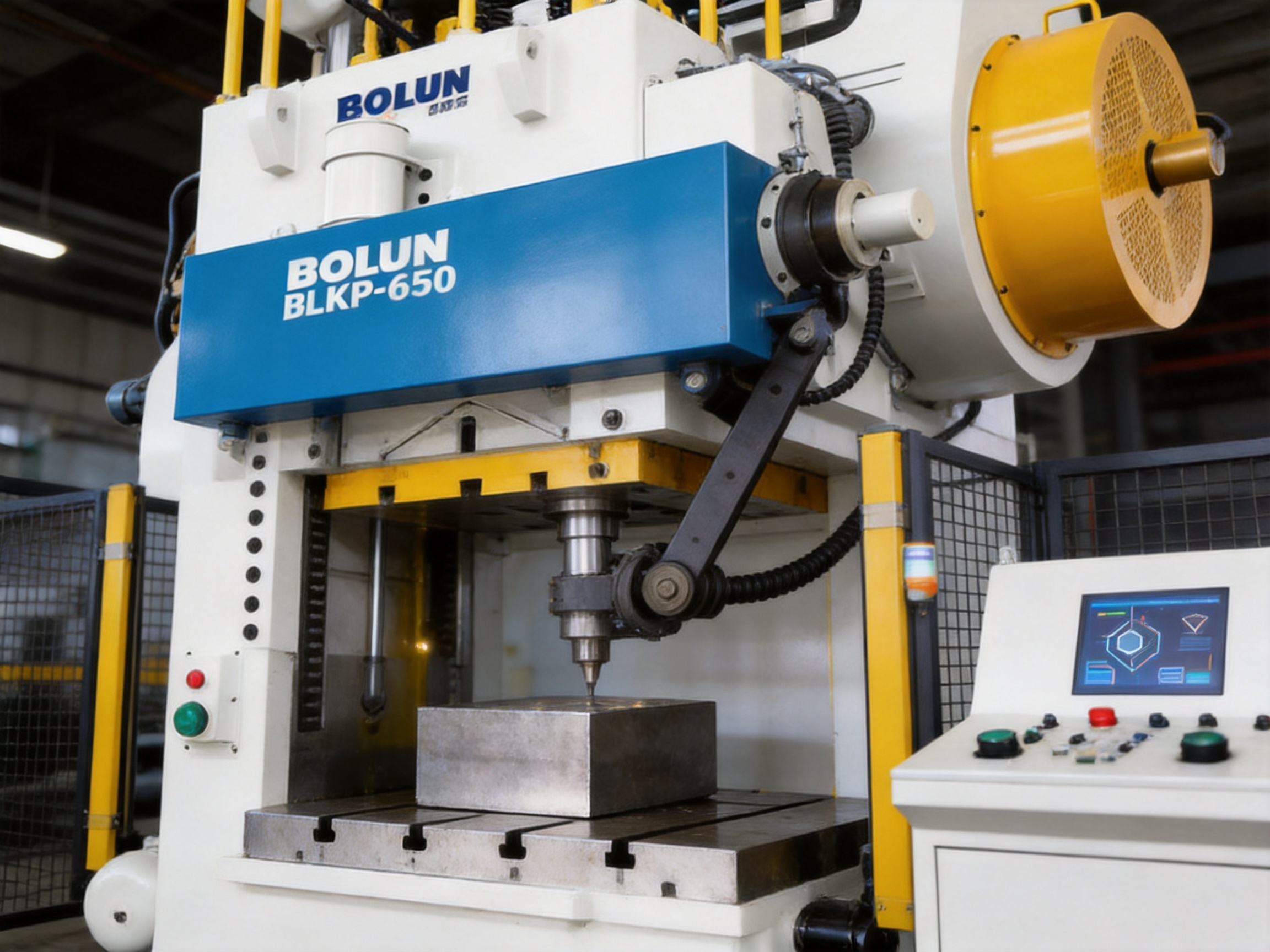
Cold forging involves high energy and high mechanical stress. A sudden overload may damage a die, punch, holder, linkage, or other press component. In addition to the cost of repairs, an overload can interrupt production, compromise product quality, and create a serious safety concern. Effective load monitoring is therefore an important part of modern press operation.
The BLKP-650 is equipped with a load detection safety system. This system is intended to help identify abnormal forming conditions and provide a controlled response when the actual load deviates from the expected operating range. Load detection can support protection against conditions such as excessive blank volume, incorrect material placement, blocked ejection, die obstruction, tooling failure, or an improperly adjusted process.
Load monitoring is not a replacement for correct die design, operator training, guarding, maintenance, or process validation. Instead, it acts as an additional layer of protection within a broader safety system. The most reliable production environment combines machine-based detection with documented operating procedures, regular inspection, proper lockout practices, and appropriate personal protective equipment.
For process engineers, load information can also be useful beyond immediate protection. Repeated load patterns can help identify gradual changes in material condition, lubrication, die wear, blank volume, or machine setup. If the forming load begins to change over time, the production team may be able to investigate the cause before defects or major tooling damage occur.
Before commissioning, users should confirm the load detection settings, alarm functions, reset procedures, and integration with the plant control system. The system should be tested during controlled trials and included in the plant’s preventive maintenance schedule. Safety devices should never be bypassed or adjusted without authorization from qualified personnel.
The BLKP-650 is listed with a main motor specification of 75 kW × 4. This motor arrangement provides the drive power required for the large-capacity press and its demanding forming cycles. The exact electrical supply, control architecture, starting method, protection devices, and factory connection requirements should be confirmed for the ordered configuration and the customer’s installation environment.
The listed air pressure is 0.55 MPa. Compressed air may be used for auxiliary functions depending on the machine configuration and production line arrangement. The factory air supply should be clean, dry, stable, and capable of delivering the required flow. Pressure fluctuations or contaminated air can affect pneumatic components and may reduce the reliability of auxiliary operations.
Installation planning should include foundation capacity, machine leveling, electrical isolation, compressed-air preparation, access for maintenance, material-handling routes, and space for die changes. A 6,500 kN power press is a major industrial asset, and its foundation and surrounding environment must be designed to support safe, accurate, and serviceable operation.
The press should be installed by qualified personnel in accordance with the technical documentation supplied for the selected machine. Leveling and alignment should be checked before production begins. The surrounding floor should remain free of obstacles, oil accumulation, loose materials, and unauthorized storage. Adequate lighting and clearly defined operator zones are also essential.
Manufacturers comparing the BLKP-650 with other power press solutions should evaluate the complete production requirement rather than comparing capacity alone. Different press types may be optimized for blanking, stamping, bending, extrusion, coining, warm forging, or cold forging. A machine that performs well in one application may not provide the most appropriate pressure behavior or tooling compatibility for another.
One advantage of the BLKP-650 is its specific orientation toward cold forging and high-deformation work. The 8 mm nominal pressure stroke is relevant to processes where pressure must be maintained during the final deformation stage. This feature can distinguish the machine from general-purpose presses whose motion and force characteristics are primarily intended for sheet-metal stamping or less concentrated forming operations.
The toggle mechanism provides another potential advantage. It is designed to develop strong mechanical leverage near the pressure-forming position, which can support high-load operations without requiring an excessively long pressure period. This can be beneficial for forming parts that need substantial compression, localized sizing, coining, or deep cavity filling.
The integrated crankshaft-cam and rocker ejector system is also important when comparing equipment. A coordinated mechanical ejection arrangement can provide more predictable timing than an improvised external removal method. It may simplify the relationship between forming, part release, and subsequent handling, particularly in repeat production.
The 600 × 700 mm table and 450 × 550 mm slide bottom offer a useful tooling platform for heavy dies. A smaller press may limit die size or require a more compact arrangement that complicates cooling, lubrication, guiding, or ejection. The BLKP-650 provides additional physical capacity for tooling engineers to design robust assemblies, provided the complete die system remains within the machine’s rated limits.
The load detection safety system strengthens the machine’s suitability for industrial production. While many presses can generate high force, not every machine provides the same level of attention to overload identification and process protection. This feature can help reduce the risk associated with abnormal material loading and tooling conditions.
Another advantage is configuration flexibility. The machine data includes different slide-stroke and speed arrangements, allowing customers to select a version that matches the production cycle. This is preferable to using a single fixed configuration for every part, because high-volume production, large tooling, sensitive materials, and automated handling may require different operating conditions.
However, responsible equipment selection requires technical comparison. Customers should review actual forming calculations, die dimensions, blank weight, load curves, cycle requirements, material properties, automation interfaces, factory utilities, and local compliance standards. The BLKP-650 is a strong candidate for heavy cold forging, but its final suitability should always be confirmed through engineering review and, when necessary, sample trials.
The BLKP-650 can be considered for a wide range of high-load metal-forming applications. Automotive manufacturers may use this class of equipment for structural hardware, drivetrain components, suspension-related parts, hubs, sleeves, and other forged products that require strong material flow and dimensional consistency.
Industrial component manufacturers can evaluate the press for bearing-related parts, high-strength connectors, mechanical fittings, shafts, collars, rings, and specialized hardware. In these applications, the ability to sustain pressure during the final deformation stage can help improve cavity filling and reduce the need for extensive secondary correction.
The press may also be suitable for producing construction and infrastructure hardware. Components used in heavy equipment, agricultural machinery, energy systems, and industrial assemblies often require substantial strength and dependable geometry. Cold forging can provide favorable grain continuity and efficient material use, while the BLKP-650 supplies the forming force required by larger or more resistant parts.
Coing and sizing operations are additional possibilities. These processes often require high localized pressure to refine dimensions, improve surface definition, or calibrate a previously formed workpiece. The toggle mechanism and pressure-forming characteristics can be advantageous when the operation requires controlled force near the end of the stroke.
Multi-stage production lines may also use the BLKP-650 as one press within a sequence. The machine can be integrated with upstream blank preparation, lubrication, loading, transfer, and downstream inspection systems. The final arrangement depends on the product, but the substantial table, ejector arrangement, load monitoring, and selectable operating speeds provide useful foundations for integration.
Material selection remains an important factor. The press can be used for suitable cold-forming grades of steel and other metals, but the exact material, hardness, blank size, lubrication system, die design, and forming ratio must be evaluated together. If the material requires elevated temperature or special environmental control, a different forming process or customized machine configuration may be necessary.
Zhejiang Bolun High-Precision Machinery Co., Ltd. has developed its business around the design and manufacture of high-precision forming equipment. The company combines research and development, mechanical design, production, sales, and service within an integrated organization. This structure can help reduce communication gaps between engineering, manufacturing, installation, and customer support.
The company reports approximately two decades of experience in machinery manufacturing. This background provides a foundation for understanding the practical challenges associated with high-load presses, forging equipment, casting machinery, tooling coordination, and industrial production environments. Experience is particularly valuable in customized machinery because the success of a press depends on how well its mechanical, electrical, hydraulic, pneumatic, and process systems work together.
A stated technology-first strategy supports continued development in precision forming equipment. The company maintains a design team capable of addressing products with special specifications and functions. This is important for customers whose production needs cannot be met by an entirely standard machine. Applications may require customized die spaces, ejection arrangements, automation interfaces, speed options, monitoring functions, or working dimensions.
The manufacturer also emphasizes a full-chain production system. Such a system can cover basic design, core-component development, precision processing, assembly, testing, and final inspection. Controlling more stages internally may improve traceability and help the manufacturer coordinate critical tolerances across the machine. It can also make it easier to implement engineering changes when a project involves non-standard requirements.
Advanced precision-processing equipment is a key part of a high-quality press manufacturing process. Large frames and precision-machined components must be produced within controlled dimensional and geometric tolerances. Machining accuracy affects alignment, bearing installation, guide movement, slide behavior, and load distribution. The quality of production equipment therefore has a direct influence on the final press.
Machine assembly is equally important. A press is not simply a collection of individual parts; it is a synchronized mechanical system. The crankshaft, toggle linkage, slide, frame, table, ejector, drive motor, sensors, and control devices must be assembled and adjusted correctly. Assembly teams must pay attention to alignment, clearances, lubrication paths, fastening, motion smoothness, and safety-system operation.
The company describes a finished-product inspection system that applies quality control to processes and components. For a machine such as the BLKP-650, appropriate inspection may include dimensional verification, surface and fit checks, movement testing, load-related testing, electrical checks, safety-function verification, and operational trials. The exact inspection scope should be confirmed in the project documentation and customer acceptance plan.
Bolun also provides pre-sales consultation, in-sales support, and after-sales service. This service approach is relevant to heavy forging equipment because customers often need assistance with application assessment, configuration selection, installation, commissioning, maintenance, spare parts, and operator training. A well-supported machine can provide greater value over its operating life than equipment purchased solely on initial price.
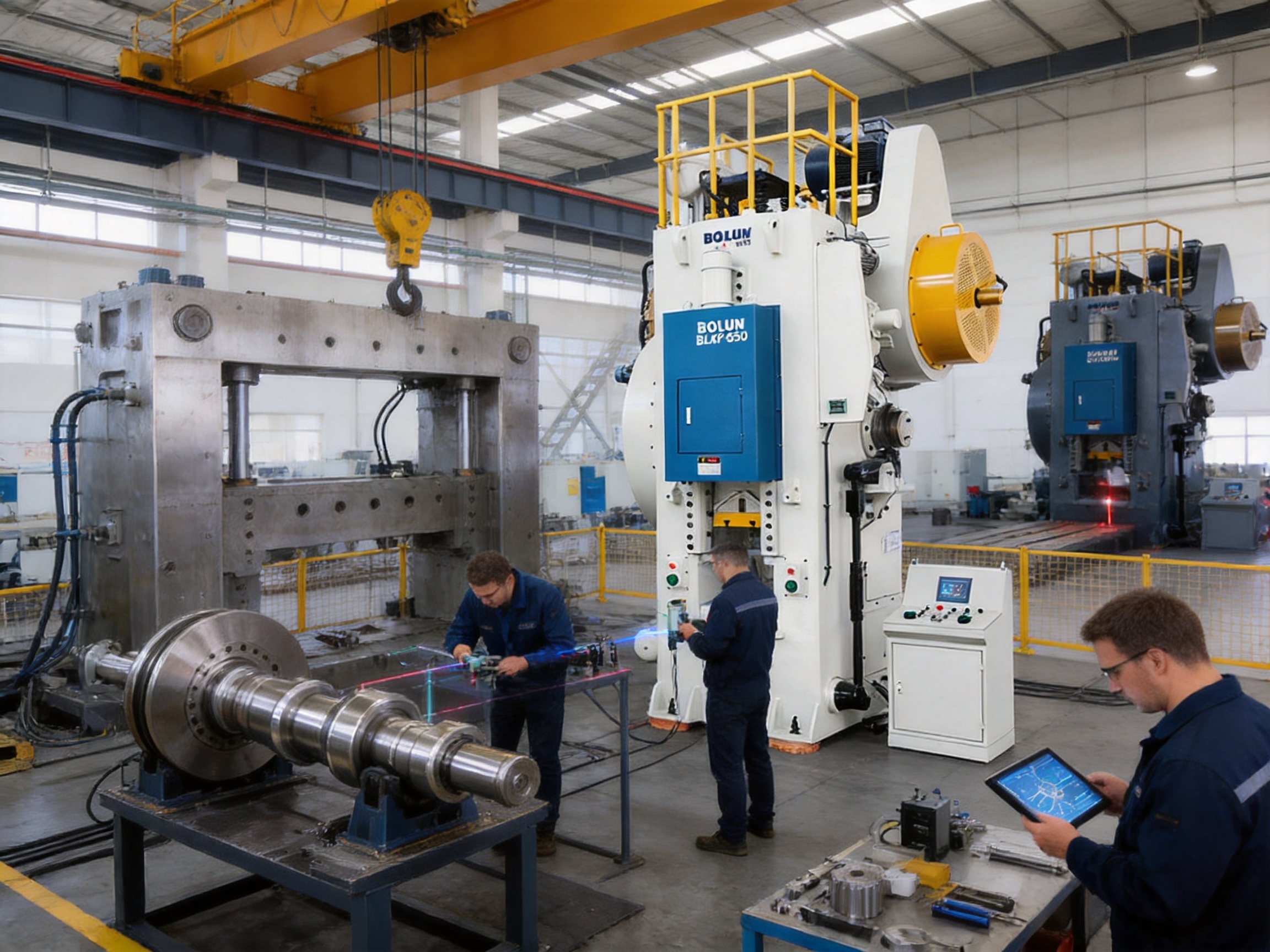
The manufacturing process for a high-capacity toggle press begins with application understanding. Engineers must identify the product geometry, material, blank dimensions, required forming force, die arrangement, ejection method, production speed, and expected cycle conditions. This information is used to select the appropriate machine configuration and to determine whether special options or modifications are needed.
Mechanical design follows the application review. The frame, slide, table, toggle mechanism, crankshaft, drive system, die-height arrangement, and ejector system must be designed to manage the intended load. Engineering calculations and structural analysis can help evaluate force transfer, deformation behavior, component strength, bearing loads, and fatigue considerations.
Component processing is the next major stage. Large structural parts require accurate machining of mounting faces, guide surfaces, bearing seats, linkage interfaces, and other critical locations. The objective is not merely to achieve a visually acceptable finish, but to establish the geometry needed for accurate assembly and stable load transfer.
Critical moving parts must be inspected before assembly. Crankshafts, rocker components, toggle links, slide connections, guide systems, and cam surfaces require careful attention because small errors can be amplified during high-load operation. Surface condition, dimensional accuracy, hardness where applicable, lubrication access, and contact patterns all contribute to long-term reliability.
During assembly, technicians establish the relationship between the frame, drive, slide, table, and ejection mechanism. The machine must move smoothly through the complete cycle without abnormal interference. The ejector timing must correspond to the slide position, and the load detection system must communicate correctly with the control system.
Operational testing provides an opportunity to identify issues before shipment. Testing may include no-load running, controlled motion checks, speed verification, die-height adjustment checks, ejector operation, motor operation, sensor response, emergency-stop functions, and protective-device testing. Depending on the customer agreement, further testing may be conducted with tooling or representative material.
Documentation is also part of the quality process. Technical manuals, electrical information, lubrication instructions, maintenance schedules, spare-parts information, and safety procedures help the customer operate and service the machine correctly. Complete documentation supports faster troubleshooting and improves consistency when different operators or maintenance teams work with the equipment.
The BLKP-650 can contribute to manufacturing efficiency in several ways. First, its high capacity enables production teams to evaluate larger parts or more demanding deformation schedules on one machine. This may reduce the need to divide a forming operation into unnecessary stages, although the final process design must be based on forming calculations and tooling analysis.
Second, the pressure-forming behavior can help stabilize the final stage of deformation. When material flow is more complete and predictable, manufacturers may reduce rework, improve dimensional consistency, and limit secondary correction. These benefits depend on appropriate blank preparation, die design, lubrication, material control, and machine setup.
Third, the integrated ejector system can improve cycle consistency. Reliable removal is essential for both manual and automated production. A part that remains in the die or exits at an inconsistent position can interrupt the line, damage tooling, or create a handling problem. Mechanical coordination between the press cycle and ejection supports a more repeatable production sequence.
Fourth, load detection can provide a valuable layer of process intelligence. A stable production operation normally produces a recognizable load pattern. Deviations may indicate a problem that requires attention. Early detection can protect the machine and tooling while helping production staff maintain a more controlled process.
Fifth, the machine’s rigid construction can support longer-term consistency. Stable alignment reduces the likelihood that gradual deformation or uneven contact will become a hidden source of quality variation. In high-volume forging, small changes repeated across thousands of parts can have a significant effect on cost, inspection results, and customer satisfaction.
The full economic benefit should be evaluated through total cost of ownership. Relevant factors include productivity, tooling life, maintenance requirements, energy consumption, spare parts, changeover time, installation, training, downtime, product yield, and service support. A robust press can justify its investment when it helps maintain reliable production over many years.
Before ordering a BLKP-650, the customer should prepare a detailed application profile. This profile should include the material grade, blank size, initial and final dimensions, forming sequence, maximum expected load, die layout, cycle target, part-removal method, production volume, and quality requirements.
The maximum forming load should be calculated using reliable engineering methods. The nominal capacity of 6,500 kN should not be treated as an invitation to operate continuously at the absolute limit without an appropriate safety margin. Load distribution, impact behavior, eccentricity, die strength, blank variation, and process instability must be considered.
Tooling should be reviewed for compatibility with the 600 × 700 mm worktable, 450 × 550 mm slide bottom, 400 mm maximum die height, and 15 mm adjustment range. The die should also be assessed for the available mold pad capacity and 70 mm ram stroke. Mounting surfaces, guide components, ejector clearances, lubrication access, and inspection points should be included in the review.
The customer should confirm whether the required production rate matches the selected 32 S.P.M. or 25–40 S.P.M. configuration. A theoretical stroke rate is not the same as a guaranteed output rate for every part. Actual productivity may be limited by loading, transfer, blank preparation, lubrication, inspection, ejection, and operator procedures.
Factory utilities should be checked before delivery. The electrical supply must be compatible with the 75 kW × 4 main motor specification and the ordered control system. The compressed-air system should provide the listed 0.55 MPa pressure with suitable filtration and moisture control. Foundation and access arrangements should be completed before installation.
After installation, the machine should undergo leveling, alignment, lubrication, electrical verification, safety testing, and controlled trial operation. Tooling should be introduced progressively, beginning with low-risk checks before moving to full forming conditions. Load signals, ejector timing, speed selection, die clearance, and part handling should be verified together.
Preventive maintenance is essential for maintaining the performance of a large cold forging press. The maintenance program should include regular lubrication, inspection of the toggle linkage, checking of crankshaft and cam surfaces, examination of the rocker mechanism, verification of slide guidance, and inspection of table and slide mounting areas.
Operators should monitor unusual noise, vibration, temperature rise, leakage, irregular motion, changes in ejection behavior, and unexpected load signals. These symptoms may indicate wear, insufficient lubrication, misalignment, loose connections, tooling problems, or a change in the forming process. Prompt investigation is usually less expensive than continuing production until a major failure occurs.
Die and punch condition should be recorded as part of the maintenance system. Excessive wear can increase forming load, alter material flow, and create dimensional variation. When a tooling problem is suspected, the press should be checked at the same time because machine alignment and tooling condition can influence each other.
The load detection safety system should be tested periodically according to the manufacturer’s instructions and the customer’s safety procedures. Emergency stops, guards, interlocks, sensors, and control functions must remain operational. Safety devices should not be defeated to increase output or avoid nuisance alarms.
Maintenance teams should use approved lubricants and replacement parts. Heavy press components may require specialized lifting equipment and qualified technicians. Work involving the drive, crankshaft, toggle mechanism, electrical cabinet, or stored energy should be conducted under an appropriate isolation and authorization procedure.
With disciplined maintenance, appropriate tooling, and correct operation, a high-rigidity press can provide reliable service over an extended production life. The manufacturer’s service resources, technical guidance, and spare-parts support can further assist users in preserving machine accuracy and availability.
| Item | BLKP-650 Specification |
|---|---|
| Product type | Cold forging toggle type power press |
| Nominal capacity | 6,500 kN |
| Nominal pressure stroke | 8 mm |
| Slide stroke | 160/180 mm, depending on configuration |
| Strokes per minute | 32 S.P.M. or 25–40 S.P.M., depending on configuration |
| Maximum die height | 400 mm |
| Maximum die weight | 1,000 kg |
| Worktable size | 600 × 700 × 150 mm |
| Slide bottom size | 450 × 550 mm |
| Height of working face | 1,000 mm |
| Die height adjustment | 15 mm |
| Air pressure | 0.55 MPa |
| Main motor | 75 kW × 4 |
| Mold pad capacity | 300 kN |
| Ram stroke | 70 mm |
| Ejection method | Crankshaft cam and rocker mechanism |
| Safety monitoring | Load detection safety system |
The values above are based on the supplied product information. Configuration-dependent values, installation requirements, electrical details, control functions, and optional equipment should be confirmed with the manufacturer before purchase. The maximum capacity of a press does not by itself establish the allowable load for every die, material, eccentric condition, or operating mode.
The BLKP-650 stands out as a specialized heavy-duty forming solution rather than a general-purpose stamping machine. Its design combines the high force required for difficult cold forging with a toggle mechanism capable of producing mechanical advantage near the critical pressure position. The result is a press intended for applications in which deformation resistance, tooling stability, and repeatability are central concerns.
Its 8 mm nominal pressure stroke directly supports the demands of high-deformation forming. The 6,500 kN capacity provides substantial force for large or resistant workpieces. The rigid frame helps preserve the load path and die relationship. The integrated ejector system assists reliable part removal. The load detection safety system adds protection against abnormal conditions. Together, these features address several of the most common challenges faced by cold forging manufacturers.
The machine’s practical dimensions are also significant. The 600 × 700 mm worktable and 450 × 550 mm slide bottom offer a platform for substantial dies, while the 400 mm maximum die height supports tooling assemblies with meaningful vertical requirements. The 15 mm die-height adjustment gives operators and engineers additional control during setup.
Beyond the machine itself, the supplier’s manufacturing capabilities add value. Integrated design and production, precision processing, customization support, quality inspection, and customer service are all relevant when purchasing a major forming system. A press must be supported throughout its life cycle, from initial application review through installation, commissioning, production optimization, maintenance, and future upgrades.
For buyers comparing machines from different suppliers, the best decision should be based on technical suitability, documented quality, service responsiveness, tooling compatibility, and total operating value. The BLKP-650 offers a compelling specification profile for heavy cold forging and provides a solid basis for detailed project evaluation.
The BLKP-650 is a cold forging toggle type power press. It is intended for high-load compression and deformation operations involving metal blanks and dies. It is especially suited to applications requiring strong pressure during the final stage of forming.
The nominal capacity is 6,500 kN. This capacity should be evaluated together with the load position, die design, material properties, blank dimensions, eccentricity, and required safety margin. Users should complete a forming-load assessment before selecting the machine for a specific component.
The nominal pressure stroke is 8 mm. This is the pressure-forming portion of the cycle in which the press maintains its rated forming capability. It is useful for high-deformation applications where the material requires substantial force during the final stage of die filling or sizing.
The supplied information lists 160 mm and 180 mm slide-stroke options for the BLKP-650 configuration. The appropriate selection depends on die height, blank-loading requirements, part geometry, ejection, and the desired production cycle.
The listed operating configurations include 32 strokes per minute and a variable range of 25–40 strokes per minute. The actual usable speed depends on the ordered version and the forming process. Material flow, tooling, loading, lubrication, ejection, and safety conditions must be considered before setting the production rate.
The worktable measures 600 × 700 × 150 mm. This gives the machine a substantial lower-tooling platform for heavy dies and supporting components.
The maximum die height is listed as 400 mm. The complete tooling assembly, including holders, guides, inserts, ejector components, and spacers, should be checked against the available die-height range before installation.
Yes. The BLKP-650 includes an integrated ejector system driven by a crankshaft cam and rocker mechanism. The mold pad capacity is listed as 300 kN, and the ram stroke is listed as 70 mm.
The load detection system helps identify abnormal forming conditions such as excessive load, incorrect blank placement, blocked ejection, or tooling interference. It provides an additional layer of protection, but it must be used together with guards, interlocks, trained operators, proper tooling, and documented safety procedures.
The main motor specification is listed as 75 kW × 4. Electrical supply and control details should be confirmed for the specific machine configuration before installation.
The listed air pressure is 0.55 MPa. The customer should provide a clean and stable compressed-air supply and confirm the required flow and filtration conditions with the manufacturer.
The machine can be considered for automated or semi-automated lines, subject to engineering review. Its predictable mechanical ejection, selectable operating speed, substantial die space, and load monitoring provide useful foundations for integration with blank feeders, transfer systems, sensors, conveyors, and inspection equipment.
The manufacturer provides non-standard customization capabilities and design support for special specifications and functions. Potential modifications should be discussed during the technical review. Customers should provide detailed information about the product, die, production rate, material, automation, and factory utilities.
Potential industries include automotive components, industrial hardware, heavy equipment, construction hardware, agricultural machinery, energy equipment, bearing-related products, high-strength fasteners, and other sectors requiring substantial cold deformation and reliable repeatability.
Customers should confirm the forming-load calculation, machine configuration, die dimensions, maximum die weight, speed requirement, ejector details, electrical supply, air supply, foundation, safety compliance, automation interface, installation scope, training, spare parts, warranty, and acceptance-testing procedure.
The BLKP-650 is a robust 6,500 kN toggle type power press designed for demanding cold forging and high-deformation applications. Its 8 mm nominal pressure stroke, high-rigidity frame, substantial worktable, coordinated ejector system, load detection safety technology, and selectable operating configurations address the practical needs of modern heavy forming production.
Its strongest value lies in the way these features operate together. The machine is not defined by tonnage alone. It combines force, pressure retention, mechanical leverage, tooling support, part removal, monitoring, and manufacturing discipline into a complete forming platform. This makes it a suitable candidate for manufacturers seeking stable production of large, thick-gauge, or highly deformed components.
The capabilities of Zhejiang Bolun High-Precision Machinery Co., Ltd. further support the product proposition. The company’s integrated approach to design, precision processing, assembly, inspection, customization, and service is important for customers investing in major industrial equipment. With proper application engineering, tooling design, installation, training, and maintenance, the BLKP-650 can become a dependable foundation for long-term cold forging production.
Manufacturers should assess the machine through actual product requirements and technical trials wherever necessary. When the capacity, pressure behavior, die space, ejection, safety monitoring, and production configuration match the application, the BLKP-650 offers a powerful and practical solution for high-load metal forming.
1. Supplied BLKP-650 product description and technical specification data.
2. Internal product information for the BLKP series cold forging toggle type power presses.
3. General engineering principles of cold forging, compression forming, coining, upsetting, and sizing.
4. General principles of mechanical press design, toggle mechanisms, die support, and ejector coordination.
5. General industrial guidance concerning press safety, overload detection, preventive maintenance, and machine commissioning.
6. Manufacturer-provided information concerning integrated design, precision processing, quality inspection, customization, and customer service.


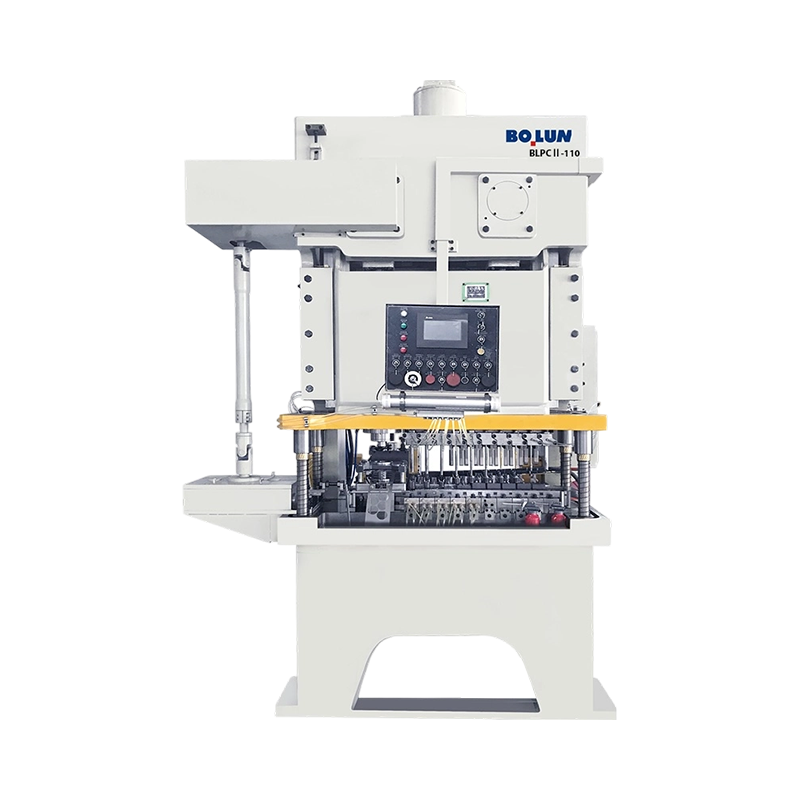
Power press machines are classified in two main ways: by frame construction, w...
What Is a Power Press? A power press — also called a stamping press or punch pr...
Understanding Mechanical Power Presses and Their Essential Functions A mechani...
A cold forging die rarely announces its failure in advance. One day the press r...
In the fields of metal forming, sheet metal fabrication, blanking, and punching,...
As the manufacturing industry moves steadily toward automation and smart product...
Contact Us

bolunpress@gmail.com

+86-575-83362228

+86-15158259588

+86-575-83362999

+86-15158259588

Hangzhou Office Add: No. 332 Wangjiang East Road, Shangcheng District

No.1 Linjiang Road East, Xiaren, Jinting Town, Shengzhou City, Zhejiang Province, China
Ready to Begin?
Get in Touch

Now!

ZHEJIANG BOLUN
 English
 中文简体
中文简体