
Modern metal-forming operations require more than a high nominal capacity. A production press must combine structural rigidity, controlled motion, die compatibility, operator protection, repeatable performance, and maintainability. When these elements work together, manufacturers can process demanding materials with consistent results while reducing unplanned interruptions and improving the useful life of dies and tooling.
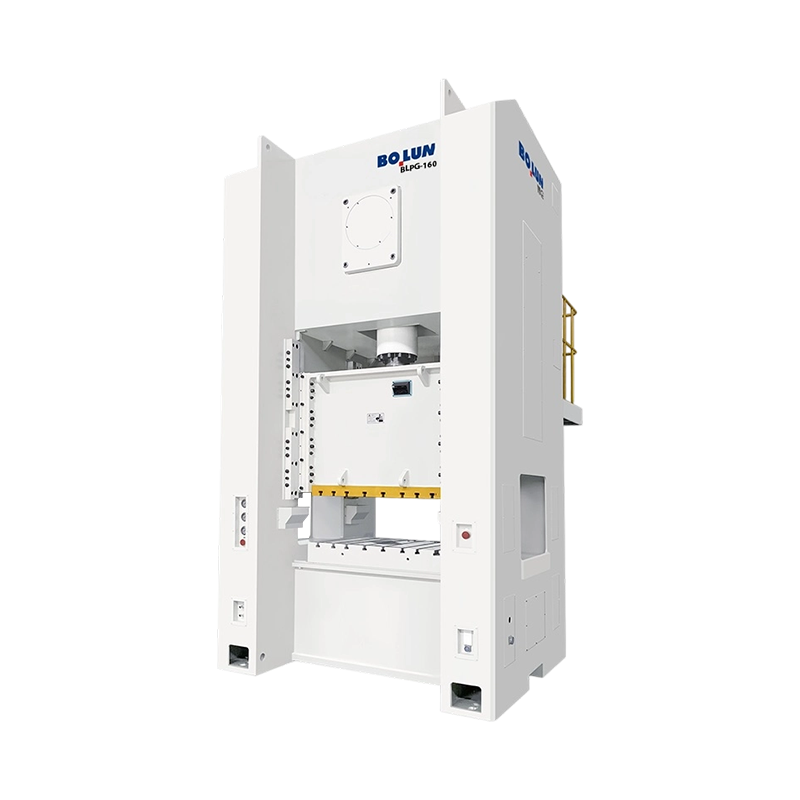
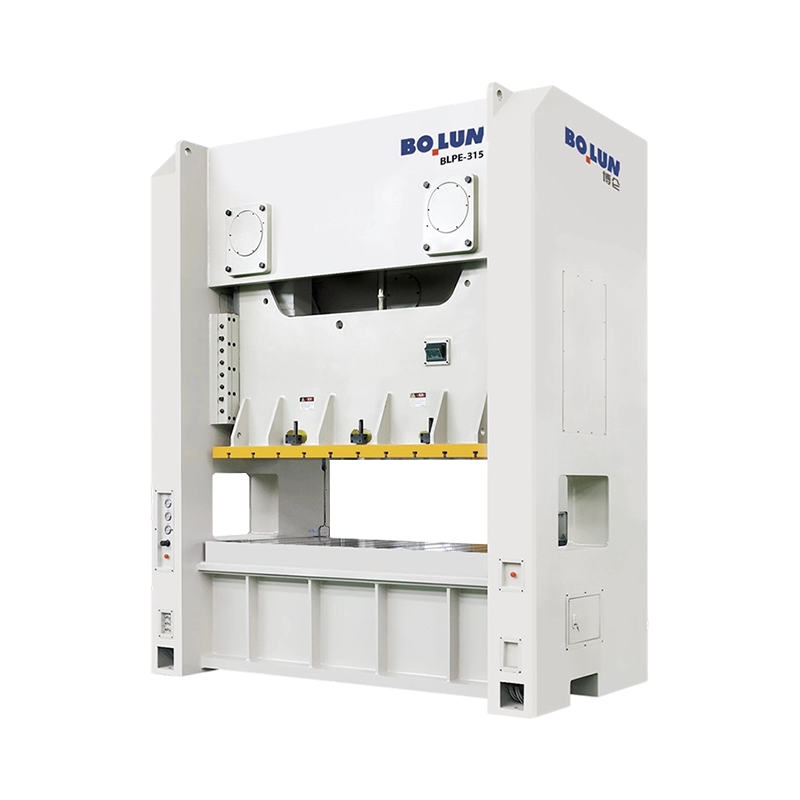
The BLPG-260 Industrial Force Heavy-Duty Closed-Type Single-Point Wide-Door Power Press is designed for demanding stamping environments where stable force delivery and a robust machine structure are essential. With a nominal capacity of 2,600 kN, the press provides the forming power required for large components, thick sheet materials, and high-resistance forming applications. Its heat-treated, high-rigidity frame supports reliable operation under heavy loads, while the wide-door closed-type configuration helps accommodate larger dies and workpieces.
The machine combines a 1,100 × 900 mm worktable, a 180 mm slide stroke, a 22 kW main motor, and 20,000 J of working energy. These specifications establish a balanced platform for large-die stamping, blanking, forming, bending, drawing-related operations, and other industrial processes that demand a substantial working envelope. Automatic lubrication, hydraulic overload protection, and an electronic rotary cam switch with multiple control channels further support production reliability and process control.
Manufactured by Zhejiang Bolun High-Precision Machinery Co., Ltd., the BLPG-260 reflects a product philosophy built around precision manufacturing, heavy-duty construction, customization, and service support. The company integrates research and development, mechanical design, component processing, machine assembly, inspection, sales, and after-sales service. This integrated approach allows the press to be developed as a complete production system rather than as a collection of unrelated components.
Power presses are central to many manufacturing sectors because they transform flat stock or preformed material into finished parts through controlled mechanical force. Automotive components, electrical cabinets, appliance panels, industrial hardware, agricultural machinery parts, construction fittings, and general metal products may all require stamping or forming operations.
In a light-duty application, a press may be selected primarily according to nominal force and production speed. In heavier applications, however, the selection process is more demanding. The machine must resist deflection, maintain alignment, absorb cyclic loads, protect the die, and remain stable over long production runs. A press with insufficient rigidity may produce inconsistent dimensions, premature die wear, vibration, excessive noise, and avoidable maintenance problems.
The BLPG-260 is intended for applications where a large, stable forming platform is more important than simply achieving the highest possible stroke rate. Its 2,600 kN nominal capacity is suitable for substantial forming tasks, while its wide-door arrangement improves access to the die area during setup, inspection, and material handling.
A closed-type frame is particularly valuable when the production process requires controlled alignment between the slide and worktable. The enclosed frame structure provides support around the primary load path, helping distribute forming forces through the machine body. This design can offer a more stable working condition than less rigid structures when large dies or high forming loads are involved.
The BLPG-260 is a closed-type single-point wide-door power press. “Closed-type” refers to the enclosed frame configuration, “single-point” indicates the central slide drive arrangement, and “wide-door” describes the accessible working area designed to accommodate larger tooling and components.
The machine’s nominal capacity is 2,600 kN. This capacity provides a substantial force reserve for industrial stamping operations when the die, material, forming geometry, and pressure point are correctly matched to the press. Nominal capacity should always be evaluated together with the nominal pressure stroke and the intended load position rather than treated as an unrestricted force value at every point of the slide movement.
The nominal pressure stroke is 3 mm for the BLPG-260 configuration shown in the supplied technical series data. The slide stroke is 180 mm, giving the machine a considerable vertical travel range for die opening, material positioning, component removal, and forming operations that require greater clearance.
The worktable measures 1,100 × 900 mm, with a listed table thickness of 180 mm. This provides a strong and spacious foundation for large dies. The slide bottom size is listed as 1,000 × 800 × 95 mm, creating a substantial upper mounting area for tooling. Final die dimensions, mounting holes, bolster arrangements, and material-feeding requirements should be confirmed during technical order review.
The main motor is specified as 22 kW in the product description, with the broader technical table identifying the relevant motor entry as 22 × 4. The product information also lists 20,000 J of working energy. Together, these characteristics support stable mechanical operation for demanding production environments where the press must deliver repeatable force over extended operating cycles.
| Technical Item | BLPG-260 Specification | Production Significance |
|---|---|---|
| Press type | Closed-type single-point wide-door power press | Provides a rigid frame and broad working access for large dies and components |
| Nominal capacity | 2,600 kN | Supports high-load stamping and forming applications |
| Nominal pressure stroke | 3 mm | Defines the reference condition for the rated nominal capacity |
| Slide stroke | 180 mm | Offers useful die-opening and forming travel |
| Worktable size | 1,100 × 900 mm | Provides a large mounting and working area |
| Table thickness | 180 mm | Contributes to a robust die-supporting platform |
| Slide bottom size | 1,000 × 800 × 95 mm | Provides a substantial upper die mounting surface |
| Main motor | 22 kW | Supplies drive power for heavy-duty operation |
| Working energy | 20,000 J | Supports consistent energy delivery in demanding forming cycles |
| Die height adjustment | 100 mm | Allows tooling height to be adjusted for different dies and processes |
| Side opening | 600 × 400 mm | Supports access for tooling, material, and auxiliary equipment |
The frame is one of the most important elements in a heavy-duty power press. During forming, the machine experiences large compressive loads and repeated dynamic forces. If the frame is not sufficiently rigid, elastic deformation can affect slide alignment, die clearance, product dimensions, and tooling life.
The BLPG-260 uses a heat-treated, high-rigidity frame. Heat treatment is an important manufacturing step because it can improve the stability of steel components after fabrication and help reduce the effects of residual stress. A controlled treatment process supports dimensional consistency during subsequent machining, assembly, and operation.
High rigidity does not mean that the frame is completely motionless under load. Every mechanical structure has some elastic deflection. The engineering objective is to control that deflection and keep it within an acceptable range for the intended operation. A well-designed frame transfers the forming load through a predictable structural path while maintaining the relative position of the slide, die, and worktable.
Compared with lower-capacity or lightly built presses, the BLPG-260 is better suited to processes in which the machine must withstand repeated heavy loading. The frame design can help reduce the risk of unstable operation caused by excessive structural movement, especially when the machine is correctly installed on a suitable foundation and used within its rated application range.
For manufacturers, this structural stability can create several practical benefits. It may support more consistent part quality, reduce the frequency of die adjustment, protect sensitive tooling, and improve operator confidence during long production runs. These benefits are particularly valuable when the cost of a defective stamped component or damaged die is high.
A press can have sufficient tonnage and still be unsuitable for a production line if the working area is too restricted. Large dies require adequate table space, mounting clearance, access for setup tools, and room for the part to enter and leave the die safely.
The BLPG-260 provides a 1,100 × 900 mm worktable. This dimension is suitable for a broad range of large-format dies and supports the use of tooling that would be difficult to install on a smaller press. The 180 mm table thickness also provides a substantial structural base for tooling support.
The wide-door configuration is an important advantage when the production process involves bulky components or large die assemblies. A wider working opening can simplify die installation, reduce setup difficulties, and improve visibility during adjustment. It can also support easier integration with feeding devices, transfer mechanisms, conveyors, and unloading systems.
Access should not be considered only from the perspective of initial die installation. Operators and maintenance personnel need access during routine inspections, die cleaning, adjustment, lubrication checks, sensor alignment, and troubleshooting. A practical working opening can reduce unnecessary handling time and make planned maintenance more efficient.
The machine also includes a 600 × 400 mm side opening according to the supplied specifications. Side access can be useful for long or wide workpieces, material movement, scrap removal, die inspection, and the installation of auxiliary equipment. The specific use of the side opening must be coordinated with the guarding arrangement and the site’s safety requirements.
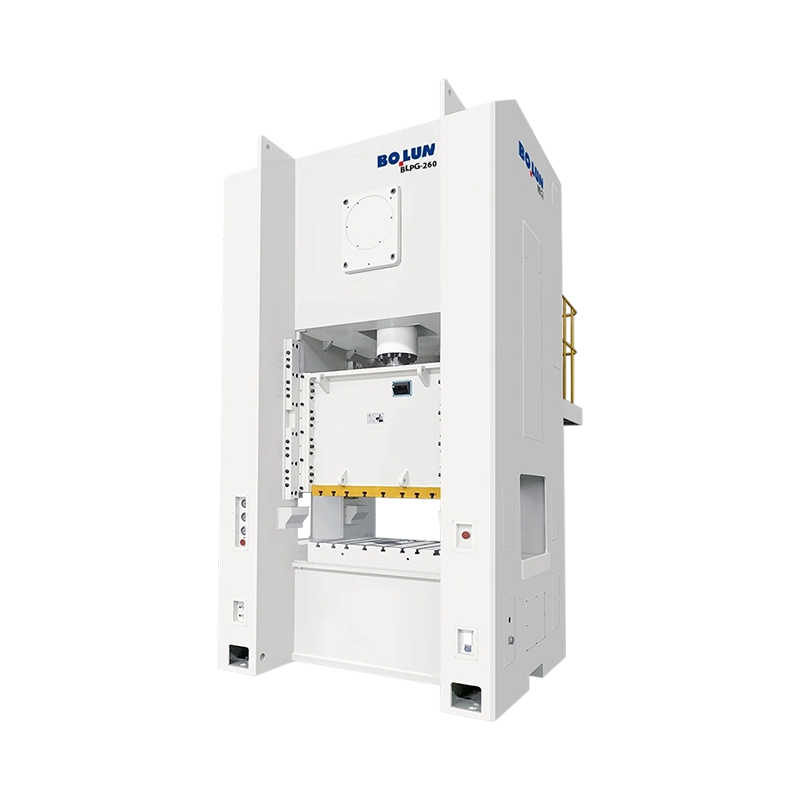
BLPG-260 Industrial Force Heavy-Duty Closed-Type Single-Point Wide-Door Power Press
The 180 mm slide stroke gives the BLPG-260 a useful range of vertical movement. Slide stroke influences the available die opening, material access, forming depth, and the ability to remove finished components from the die. A longer stroke may be beneficial for dies with greater working height or for processes that require additional clearance between the slide and the worktable.
The technical information lists a maximum die height of 555 mm and a die height adjustment of 100 mm for the relevant BLPG-260 entry. These values allow the machine to accommodate a range of die configurations, provided that the actual tooling dimensions and required shut height fall within the approved operating range.
Die height adjustment is essential when a press serves multiple production programs. Different dies may have different shut heights, cushion requirements, material thicknesses, or forming depths. The adjustment mechanism allows the slide position to be matched to the die, helping establish the required operating clearance and forming condition.
Tooling compatibility should be reviewed before purchase. Important considerations include die weight, die dimensions, mounting hole patterns, load distribution, feed direction, material handling, die sensors, part ejection, and the relationship between die height and slide stroke. Bolun’s integrated design and customization capabilities can be valuable when a customer requires special specifications or auxiliary functions.
The machine’s single-point drive arrangement is appropriate for tooling designed around a central force application. For every application, the die must be engineered so that the load remains balanced and the press is not subjected to excessive eccentric loading. Correct die design and proper setup are essential to realize the benefits of the press structure.
Nominal capacity describes the force available under a defined reference condition, while working energy relates to the machine’s ability to perform forming work through the operating cycle. The BLPG-260 is listed with 20,000 J of working energy, supporting applications in which substantial energy must be delivered repeatedly and consistently.
The 22 kW main motor provides the drive power needed to operate the press mechanism. Motor selection affects acceleration, cycle behavior, energy recovery, operating stability, and the ability to maintain production performance under demanding conditions. In heavy-duty equipment, the motor must work in harmony with the flywheel, clutch and brake system, transmission, crank mechanism, control system, and lubrication system.
A heavy-duty press should not be judged only by its motor rating. The complete drive train must be designed and manufactured to transmit power efficiently and safely. Bearings, shafts, gears, connecting components, slide guides, and fastening structures all contribute to the machine’s long-term performance. The value of the BLPG-260 lies in the coordination of these systems within a high-capacity press platform.
The technical series identifies a variable strokes-per-minute range for the BLPG-260 configuration, with the supplied table showing 20–40 strokes per minute for one relevant 2600 kN entry. Actual speed depends on the selected version, die requirements, material handling, stroke utilization, safety settings, and production process. Manufacturers should confirm the final cycle rate during technical evaluation rather than assuming that the maximum range applies to every application.
For many heavy stamping operations, consistent cycle behavior is more important than maximum speed. A stable, repeatable cycle can reduce variations in part quality and support predictable integration with feeding and unloading equipment. This makes the BLPG-260 suitable for production environments that prioritize dependable high-load operation.
Lubrication is fundamental to the service life of a mechanical press. Bearings, gears, pins, slides, and other moving interfaces require an appropriate lubricant supply to limit friction, control wear, and dissipate heat. Inadequate lubrication can lead to increased resistance, abnormal noise, temperature rise, surface damage, and premature component failure.
The BLPG-260 incorporates an automatic lubrication system. Automatic lubrication helps deliver lubricant according to a planned operating cycle instead of relying entirely on manual intervention. This can improve consistency, especially in continuous production environments where operators may be focused on material flow, quality inspection, and production monitoring.
An automatic system also supports preventive maintenance planning. Maintenance personnel can inspect the reservoir, lines, distribution points, pressure condition, and alarm status as part of a defined checklist. The system does not eliminate maintenance; rather, it makes lubrication more systematic and helps reduce the risk of missed lubrication points.
Proper lubricant selection remains important. The type and viscosity of lubricant, filling intervals, operating temperature, environmental conditions, and cleaning practices should follow the machine documentation. Dust, metal particles, stamping debris, and excessive contamination can affect lubrication performance and should be controlled through regular housekeeping and inspection.
In comparison with a basic press that depends primarily on manual lubrication, the BLPG-260 offers a more production-oriented maintenance arrangement. This is particularly useful for factories operating multiple shifts, where consistent lubrication practices help support machine availability and reduce avoidable operator variation.
Overload protection is a critical feature for protecting the press, die, and production process. Overloads may occur because of incorrect material placement, excessive material thickness, a blocked die, an incorrect shut height, foreign objects, or a forming condition that exceeds the intended load profile.
The BLPG-260 uses hydraulic overload protection. When an abnormal load condition occurs, the protection system is designed to help limit the mechanical consequences of the overload. The exact response, reset procedure, pressure setting, and permissible operating conditions should be confirmed in the machine manual and commissioning documentation.
This feature provides an important advantage over presses with less comprehensive overload management. It can help reduce the severity of damage to critical mechanical components and valuable tooling. It may also shorten recovery time after an overload event when compared with a situation in which major components must be dismantled for inspection or replacement.
Overload protection is not a substitute for correct process engineering. Operators must still verify the die, material, lubrication, feed position, shut height, and machine settings before production. The protection system should be treated as a safety and asset-protection layer rather than permission to operate beyond the machine’s design limits.
For high-value dies, the combination of a rigid frame and hydraulic overload protection is especially valuable. The frame supports stable force transmission during normal operation, while the overload system provides additional protection when abnormal conditions occur. Together, these features support a more resilient stamping process.
Modern stamping lines require accurate coordination between the press motion and peripheral equipment. Feeders, transfer mechanisms, sensors, ejectors, lubrication devices, part detectors, and safety circuits must operate at the correct points in the press cycle.
The BLPG-260 is equipped with an electronic rotary cam switch featuring multiple control channels. This type of control device can provide timing references linked to crankshaft or press position. Multiple channels allow different machine functions or external devices to be coordinated with selected angular positions in the operating cycle.
Accurate timing is important for automatic production. A feeder must introduce material at the correct point, a transfer mechanism must move when the die is open, and an ejection system must activate only when the part can be removed safely. A rotary cam control system helps organize these events and can improve synchronization between the press and its auxiliary equipment.
The electronic design also supports clearer adjustment and more repeatable control than purely mechanical timing arrangements. Depending on the final control configuration, operators may be able to set or monitor channel positions more conveniently during commissioning and changeover. Detailed functionality depends on the supplied electrical system and selected options.
Compared with a basic press with limited control outputs, the BLPG-260 offers greater potential for line integration. This is a meaningful advantage for manufacturers seeking to reduce manual handling, improve cycle repeatability, and prepare equipment for more automated production workflows.
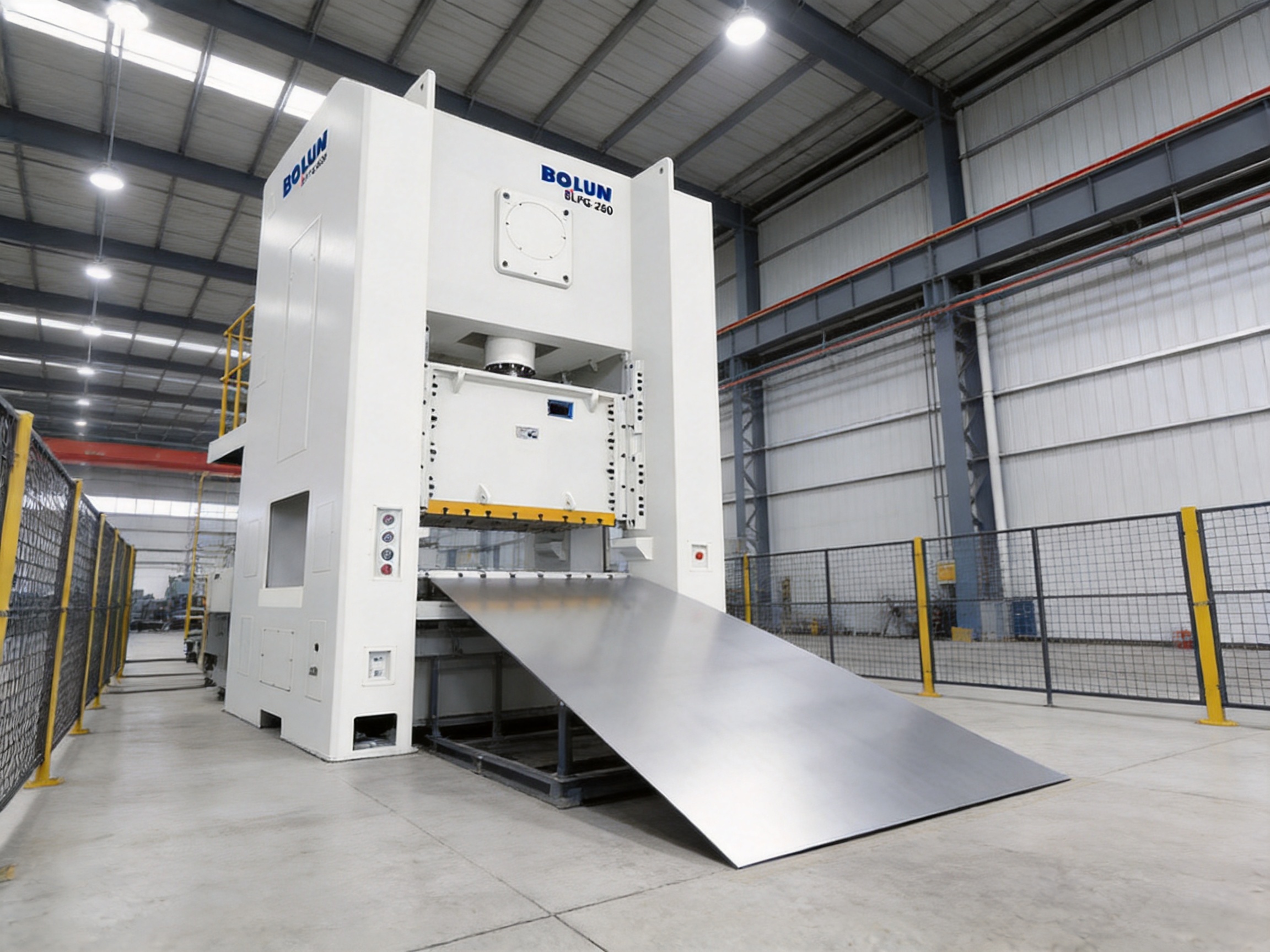
Some competing presses may offer comparable nominal tonnage but use lighter structural designs or less carefully controlled fabrication processes. A heavy-duty frame with heat treatment and high rigidity provides a strong foundation for repeatable forming. The practical advantage is not merely a larger specification; it is the ability to maintain stable relationships among the slide, worktable, and die during repeated loading.
The wide-door configuration helps distinguish the BLPG-260 from more restricted press designs. Larger dies and workpieces are easier to position when the front and side working areas provide practical access. This can reduce setup time and simplify the integration of feeding, unloading, and material-handling equipment.
Automatic lubrication and hydraulic overload protection are important differentiators when comparing a fully equipped industrial press with a basic machine. These systems support preventive maintenance, reduce the effects of abnormal loading, and provide additional protection for the mechanical structure and tooling.
The electronic rotary cam switch with multiple control channels gives the BLPG-260 a stronger foundation for coordinating external devices. A press with limited timing and control interfaces may require additional equipment or complicated modifications before it can be integrated into an automated line.
Zhejiang Bolun High-Precision Machinery Co., Ltd. provides research, design, manufacturing, sales, and service within one organizational structure. This can be an advantage when a customer requires a non-standard table size, special die arrangement, customized feeding system, modified controls, or other application-specific features. A vertically coordinated manufacturer can address mechanical, electrical, and production requirements more efficiently than a supplier that only distributes standardized equipment.
The company reports a finished-product inspection system that covers processes and components before delivery. For a high-capacity press, quality must be controlled at multiple stages, including material preparation, frame fabrication, heat treatment, precision machining, component inspection, assembly, alignment, electrical testing, and final running tests. A process-based inspection approach is more meaningful than relying only on a final visual check.
The performance of a heavy-duty press depends heavily on the quality of its manufacturing process. A machine with excellent theoretical design can still perform poorly if fabrication tolerances, material condition, surface treatment, or assembly accuracy are not controlled.
Bolun’s manufacturing system covers the full product chain from basic design and core component development to final machine assembly. This integrated scope allows design decisions to be reviewed against actual manufacturing capability. It also supports better communication between engineering, machining, assembly, inspection, and service teams.
Before production, the press must be evaluated according to capacity, stroke, die size, working height, speed, material, production cycle, and automation requirements. Application evaluation helps ensure that the selected machine is appropriate for the customer’s intended process rather than being chosen only by nominal tonnage.
Design teams must consider load paths, slide guidance, frame stiffness, drive-system behavior, working clearances, guarding, lubrication, overload response, and electrical control. This multidisciplinary approach is essential for a machine that will operate continuously under heavy loading.
Frame fabrication requires careful control of plate preparation, welding or structural joining, dimensional references, and post-fabrication treatment. Large structural components can retain residual stress after manufacturing. Heat treatment and controlled processing help stabilize the frame before precision machining and final assembly.
Stable structural components are important because later dimensional changes can influence slide alignment, table flatness, die positioning, and overall machine accuracy. The use of a heat-treated, high-rigidity frame reflects the importance of structural stability in the BLPG-260 design.
Precision processing equipment is used to create accurate mounting faces, guide surfaces, bearing seats, shaft locations, and connection points. The quality of these surfaces affects the alignment of moving components and the smoothness of operation.
Machining must be performed with appropriate reference systems and inspection procedures. Large press components are especially sensitive to setup accuracy because small errors can accumulate across the frame, slide, table, drive train, and tooling interfaces.
Core components must be selected according to the intended load, speed, operating environment, and service requirements. The drive train, bearings, clutch and brake components, slide guides, lubrication equipment, overload system, and electrical controls all influence the final machine performance.
Integrated component development gives the manufacturer more control over compatibility. The design can be adjusted when a customer requires special operating conditions, unusual die dimensions, or additional control channels. This flexibility is useful for manufacturers with diverse product portfolios.
Assembly is not simply the process of joining parts. It involves establishing correct clearances, positioning rotating elements, aligning the slide and worktable, setting the drive system, connecting lubrication lines, installing hydraulic protection, and testing electrical functions.
Correct alignment is particularly important for a single-point press. The central drive must transmit force consistently through the slide while the guide system maintains the required movement. Assembly personnel must follow controlled procedures and use suitable measurement equipment to confirm the relationship between major components.
Final inspection should confirm mechanical operation, slide movement, die height adjustment, lubrication performance, overload protection, control functions, emergency stopping, and other relevant systems. Running tests can reveal abnormal vibration, unusual noise, temperature changes, leakage, or control inconsistencies before shipment.
Bolun’s stated quality philosophy emphasizes inspection of every process and component. This approach supports stable precision and long service life under high-intensity operating conditions. Customers should request the applicable inspection records, acceptance criteria, and commissioning procedures as part of the purchasing process.
Zhejiang Bolun High-Precision Machinery Co., Ltd. is located in Zhejiang, one of China’s important manufacturing regions. The company has approximately two decades of experience in machinery manufacturing and focuses on high-precision forming equipment, forging machinery, casting machinery, and related industrial machine tool solutions.
The company integrates research and development, design, production, sales, and service. This structure enables it to support customers throughout the equipment life cycle, from initial technical consultation and configuration selection to installation, operator training, maintenance, and after-sales support.
Bolun emphasizes a technology-first development strategy. Its capabilities include precision processing, full-chain production, non-standard customization, and international management practices. These strengths are relevant to customers who need more than an off-the-shelf press and require equipment adapted to a particular material, die, production volume, or automation plan.
The company also promotes a one-stop design and manufacturing model. A customer can discuss special specifications and functions with a manufacturer that has resources across engineering, production, assembly, and service. This can simplify communication and reduce the risk that important application details are lost between separate equipment suppliers.
Quality control is positioned as a core part of the company’s operation. Inspection is applied across processes and components to support stable precision and long service life. In heavy industrial equipment, this is essential because the press must remain dependable not only during initial production but also throughout years of repetitive operation.
Service capability is another important consideration. A press is a long-term production asset, and its value depends on installation quality, correct commissioning, spare-parts availability, technical support, maintenance guidance, and response to operating questions. Bolun’s service structure covers pre-sales consultation, in-sales support, and after-sales guarantees.
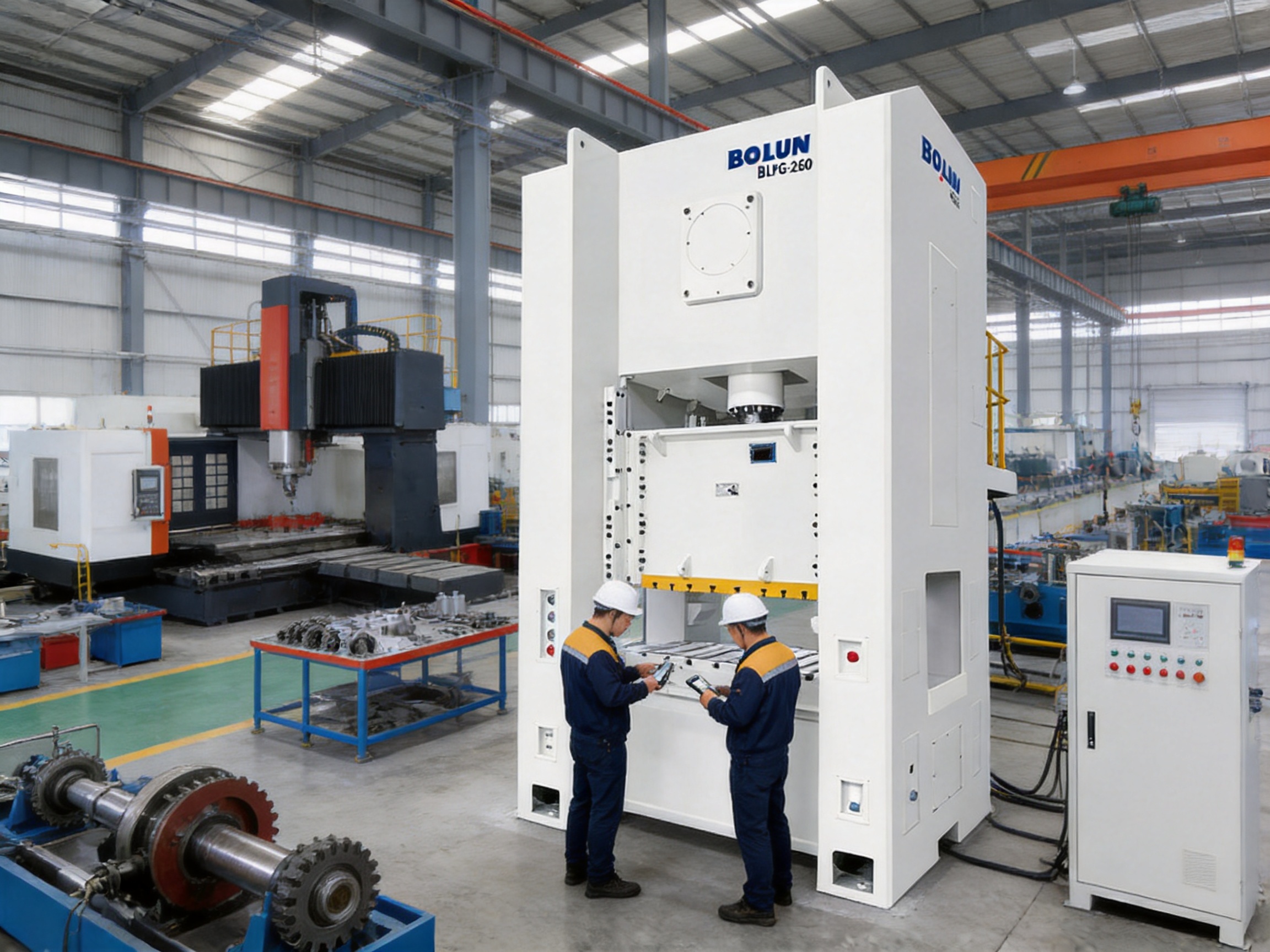
The BLPG-260 can be considered for a wide range of high-load stamping and forming applications. Potential uses include automotive structural and chassis components, agricultural machinery parts, appliance components, electrical enclosures, industrial brackets, construction hardware, metal furniture components, and general fabricated parts.
It may be suitable for blanking operations when the material thickness, die design, cutting perimeter, and pressure requirements fall within the approved machine capacity. It can also support bending and forming processes requiring a large worktable and stable slide movement.
Large dies benefit from the machine’s working envelope and wide-door access. This can be helpful when a product requires multiple forming stages, complex material positioning, or a large contact area between the die and workpiece.
Manufacturers should calculate the actual force requirement for every application. The calculation should consider material strength, thickness, cutting length, forming geometry, friction, die design, pressure position, safety margin, and the applicable load curve of the press. The BLPG-260 should be operated within the manufacturer’s rated conditions.
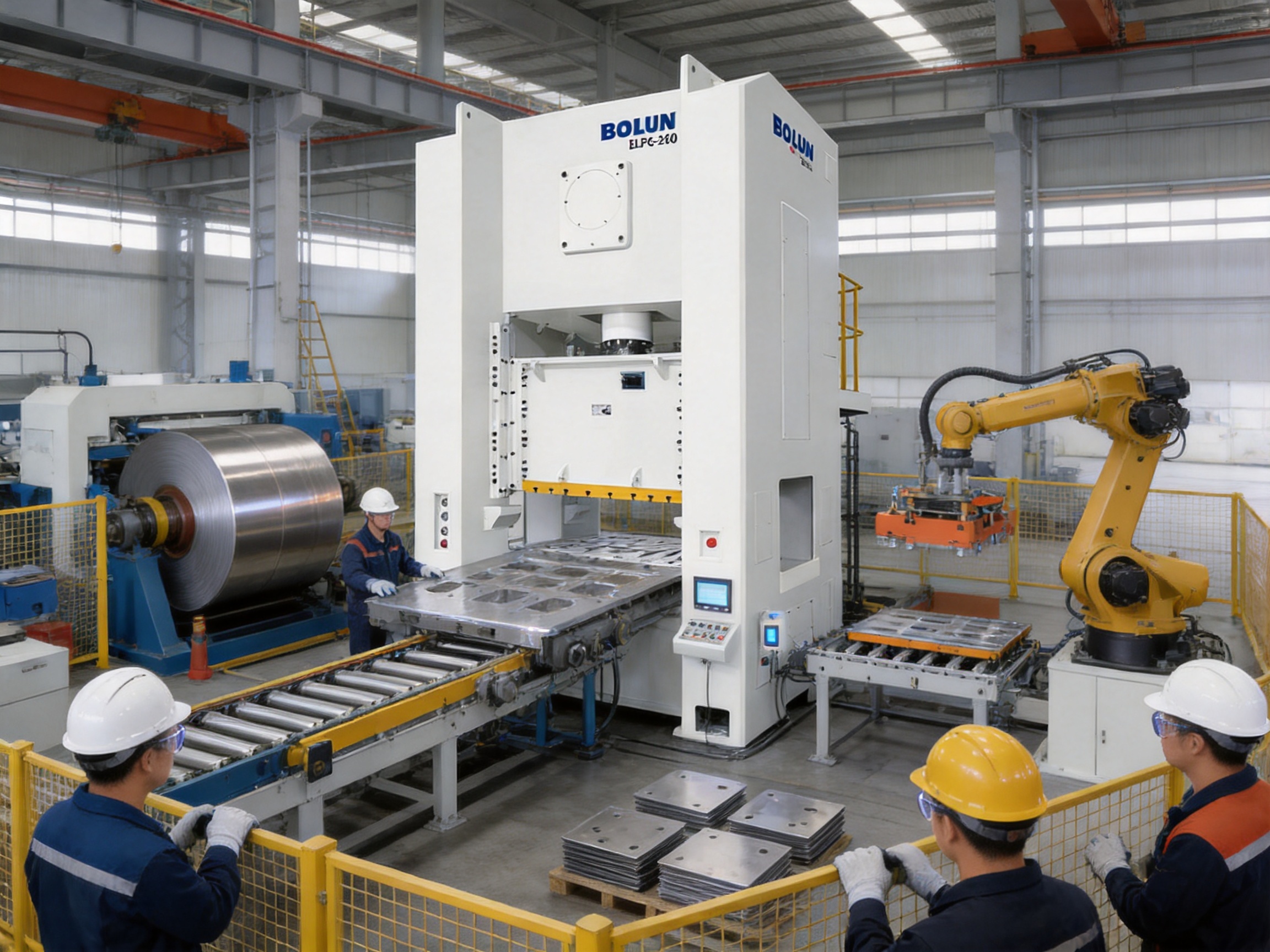
A modern power press rarely operates as an isolated machine. It may be connected to a decoiler, straightener, feeder, transfer system, conveyor, scrap removal device, lubrication unit, inspection station, or robotic handling system.
The electronic rotary cam switch can help coordinate these auxiliary devices with press position. For example, a feeder may be enabled during a defined part of the cycle, while a transfer mechanism may be prevented from moving until the slide reaches a safe position. Multiple control channels can help organize these signals according to the requirements of the production line.
Successful integration requires more than connecting wires. The press cycle, material flow, die opening, sensor locations, emergency circuits, guarding, and communication signals must be planned together. The equipment layout should provide safe access for operators and maintenance personnel while preventing interference between the press and auxiliary devices.
When purchasing the machine, customers should define the desired automation level, material dimensions, feed direction, coil or blank handling method, line speed, part removal strategy, and quality inspection requirements. Early technical coordination helps prevent costly modifications after installation.
Heavy-duty press performance depends on correct installation. The foundation must be designed for the machine weight, dynamic loads, vibration behavior, and local site conditions. Leveling, anchoring, electrical supply, compressed air, ventilation, and access space should be prepared before delivery.
Commissioning should include inspection of the frame, drive system, lubrication system, hydraulic overload protection, electrical controls, safety devices, die height adjustment, and slide movement. The press should be operated without load before gradual production testing begins.
Die installation must be performed with suitable lifting equipment and verified mounting procedures. The die should be centered and secured according to the machine and tooling instructions. Operators should confirm the shut height, feed position, material orientation, and clearance before starting automatic production.
Preventive maintenance should include inspection of lubrication levels and distribution lines, fasteners, guides, bearings, clutch and brake functions, hydraulic protection, electrical connections, sensors, and guarding. The maintenance schedule should reflect the actual operating frequency, material contamination, production environment, and load severity.
Abnormal noise, excessive vibration, temperature rise, lubricant leakage, inconsistent slide motion, repeated overload activation, or changes in product quality should be investigated promptly. Continuing to operate under abnormal conditions can increase repair costs and create safety risks.
A high-capacity press must be operated only by trained personnel who understand the machine, die, material, control system, and site safety procedures. Operators should receive instruction in normal operation, setup, emergency stopping, overload response, die changes, inspection, and lockout procedures.
Guarding, interlocks, emergency-stop functions, two-hand controls, light curtains, and other protective devices should be selected and installed according to the applicable regulations and risk assessment. The final safety configuration depends on the customer’s country, factory layout, production process, and automation system.
Never bypass a safety device to accelerate production or simplify troubleshooting. Any modification to the control system, guarding, overload protection, or mechanical structure should be reviewed and approved by qualified technical personnel.
The hydraulic overload protection and electronic control functions support safer and more reliable operation, but they do not replace proper risk assessment. Safe production depends on the interaction of machine design, die design, operator training, guarding, maintenance, and disciplined procedures.
The purchase of a heavy-duty press should be evaluated according to total production value rather than initial price alone. A suitable machine can influence output, part quality, die life, labor requirements, maintenance costs, energy use, and the ability to accept future orders.
The BLPG-260 offers a combination of high capacity, large working dimensions, controlled slide travel, structural rigidity, automatic lubrication, hydraulic overload protection, and multi-channel timing control. These features create a platform that can support both current production and future automation improvements.
Its wide-door design can reduce the practical difficulty of handling larger dies. Its 2,600 kN capacity can support heavier material and more substantial components than smaller presses. Its 180 mm slide stroke provides useful clearance for tooling and part handling. Its control and protection systems help make the machine more appropriate for continuous industrial production than a minimally equipped press.
The company’s manufacturing strengths further enhance the equipment’s value. Integrated engineering, precision processing, inspection, customization, and service support can help customers obtain a machine that is better matched to their production requirements.
For manufacturers seeking a durable, high-load stamping platform, the BLPG-260 represents a balanced solution. It is designed not merely to generate force, but to deliver force through a stable, maintainable, controllable, and production-ready system.
Before placing an order, customers should confirm the required nominal capacity and verify that the actual process load remains within the machine’s approved operating range.
Customers should review die dimensions, die weight, maximum die height, adjustment range, mounting details, slide bottom size, table size, and the required working clearance.
Material thickness, material width, feed direction, blank size, forming depth, production speed, stroke utilization, and part removal method should be documented during technical discussions.
The required automation level should be established, including feeder controls, transfer signals, part sensors, scrap removal, lubrication requirements, and integration with factory control systems.
Electrical supply, compressed-air requirements, foundation design, machine layout, lifting access, ventilation, and maintenance clearance should be evaluated before delivery.
Customers should also confirm the scope of supply, standard accessories, optional equipment, inspection documents, installation support, commissioning services, operator training, warranty conditions, and spare-parts arrangements.
The BLPG-260 has a nominal capacity of 2,600 kN. The actual usable capacity depends on the load position, nominal pressure stroke, die design, material, forming process, and operating conditions. The press should not be used beyond the manufacturer’s rated application limits.
It is a closed-type single-point wide-door power press. The closed frame supports structural rigidity, the single-point drive applies force through a central slide arrangement, and the wide-door design provides practical access for large dies and workpieces.
The listed worktable size is 1,100 × 900 mm, with a table thickness of 180 mm. Customers should confirm final mounting details and any optional bolster or die-installation requirements before ordering.
The BLPG-260 has a listed slide stroke of 180 mm. This provides useful vertical movement for die opening, material positioning, forming, and part removal.
The product description specifies a 22 kW main motor. The technical series table identifies the related motor entry as 22 × 4. The final motor and electrical configuration should be confirmed in the official technical order documents.
Yes. The BLPG-260 is equipped with hydraulic overload protection. This system is designed to help protect the press and tooling from abnormal load conditions, although correct die setup and operation within rated limits remain essential.
Automatic lubrication helps provide a more consistent lubricant supply to designated machine points. It can reduce reliance on manual lubrication routines and support preventive maintenance, but the reservoir, lines, lubricant condition, and alarm functions must still be inspected regularly.
Yes. The electronic rotary cam switch with multiple control channels provides a useful basis for coordinating feeders, transfer systems, sensors, ejectors, and other auxiliary devices. The exact integration design should be developed according to the customer’s material, die, line speed, and safety requirements.
Potential applications include high-load blanking, bending, forming, and other stamping operations involving large dies, thick materials, or substantial components. The exact suitability must be verified through force calculations, die review, material evaluation, and production testing.
Zhejiang Bolun High-Precision Machinery Co., Ltd. integrates research and development, design, precision processing, production, assembly, inspection, sales, and service. The company also provides non-standard customization capabilities for applications requiring special specifications or functions.
The BLPG-260 is designed for reliable operation in continuous industrial production environments. Its suitability for a specific production schedule depends on the material, die, strokes per minute, duty cycle, maintenance plan, and automation configuration.
The foundation, machine layout, lifting access, electrical supply, compressed-air requirements, safety guarding, die-handling equipment, maintenance clearance, and automation interfaces should all be prepared before installation. Proper leveling, anchoring, commissioning, and operator training are also important.
The BLPG-260 Industrial Force Heavy-Duty Closed-Type Single-Point Wide-Door Power Press is designed for manufacturers that require high forming capacity, robust construction, generous working space, and dependable process control. Its 2,600 kN nominal capacity, 180 mm slide stroke, 1,100 × 900 mm worktable, 22 kW main motor, and 20,000 J working energy create a strong foundation for demanding stamping applications.
The heat-treated, high-rigidity frame supports stable load transmission, while the wide-door configuration improves access for large dies and workpieces. Automatic lubrication contributes to systematic maintenance, hydraulic overload protection helps protect valuable equipment, and the electronic rotary cam switch supports coordination with automated production systems.
Beyond the machine specifications, the product benefits from the manufacturing and engineering capabilities of Zhejiang Bolun High-Precision Machinery Co., Ltd. The company’s integrated approach to research, design, processing, assembly, inspection, customization, and service allows customers to address both standard and specialized production requirements.
For companies seeking a heavy-duty press that balances force, rigidity, working access, protection, maintainability, and automation readiness, the BLPG-260 is a practical industrial solution. Final equipment selection should always be based on a detailed review of the material, die, production cycle, site conditions, safety requirements, and long-term manufacturing objectives.
1. Manufacturer-supplied BLPG-260 product description and technical specification table.
2. Manufacturer-supplied information on automatic lubrication, hydraulic overload protection, and electronic rotary cam control.
3. General principles of mechanical power press design, structural rigidity, slide alignment, and die compatibility.
4. Industrial stamping equipment maintenance practices, including lubrication inspection, overload response, and preventive servicing.
5. General occupational safety principles for mechanical power presses, die handling, guarding, and lockout procedures.
6. Manufacturer-provided company information concerning research and development, precision processing, customization, quality inspection, and customer service.


What Is a Power Press? A power press — also called a stamping press or punch pr...
Power press machines are classified in two main ways: by frame construction, w...
Understanding Mechanical Power Presses and Their Essential Functions A mechani...
In the fields of metal forming, sheet metal fabrication, blanking, and punching,...
As the manufacturing industry moves steadily toward automation and smart product...
In modern manufacturing, cold forging is widely used in the automotive, aerospac...
Contact Us

bolunpress@gmail.com

+86-575-83362228

+86-15158259588

+86-575-83362999

+86-15158259588

Hangzhou Office Add: No. 332 Wangjiang East Road, Shangcheng District

No.1 Linjiang Road East, Xiaren, Jinting Town, Shengzhou City, Zhejiang Province, China
Ready to Begin?
Get in Touch

Now!

ZHEJIANG BOLUN
 English
 中文简体
中文简体