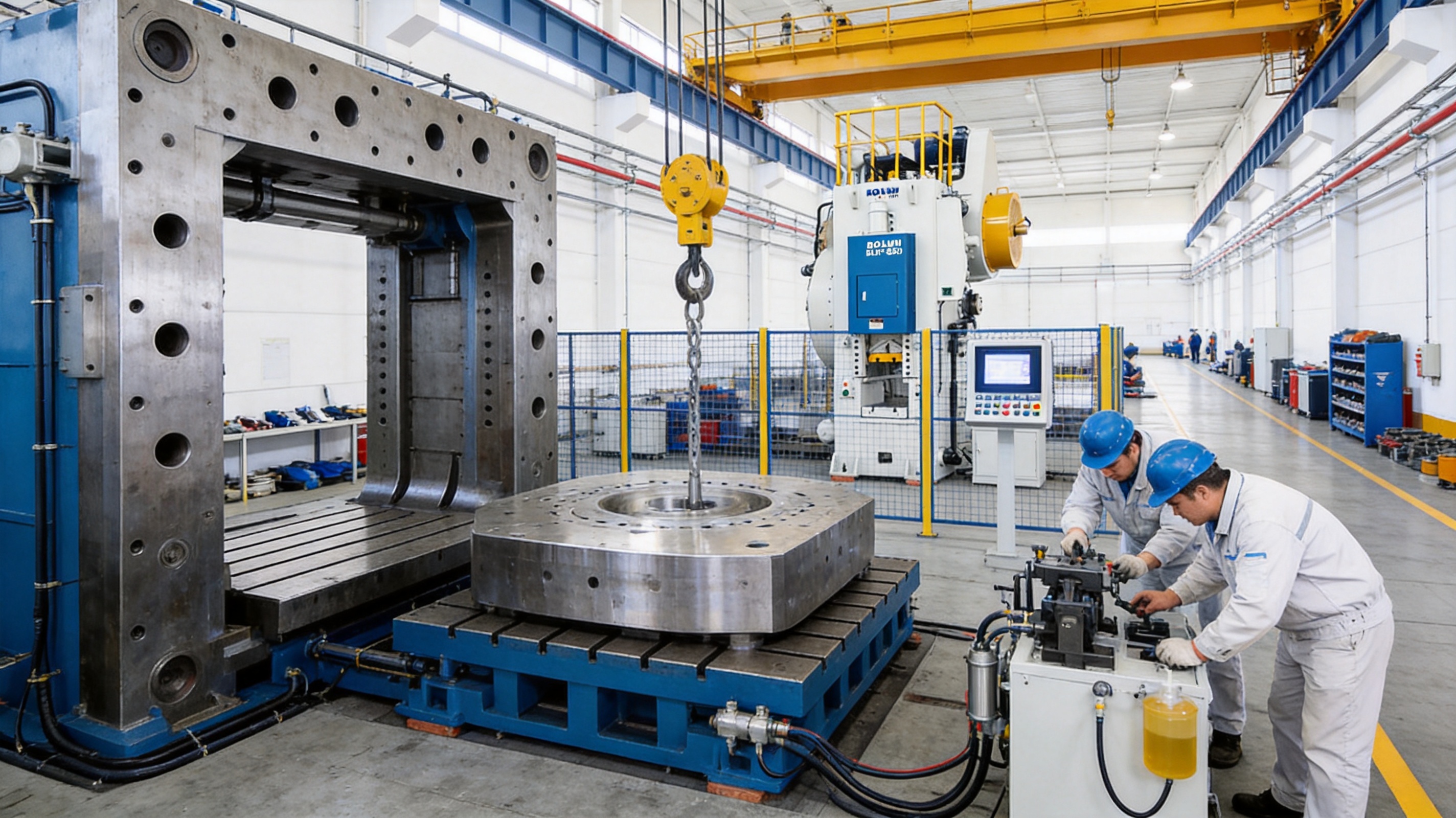
Cold forging is one of the most demanding metal-forming processes used in modern industrial production. It requires a machine that can generate enormous forming force while maintaining accurate movement, stable pressure, dependable lubrication, controlled speed, and reliable protection for operators and equipment. In automotive, transportation, machinery, electrical, and heavy-equipment manufacturing, the performance of the press directly influences dimensional consistency, tool life, production efficiency, and the total cost of each component.
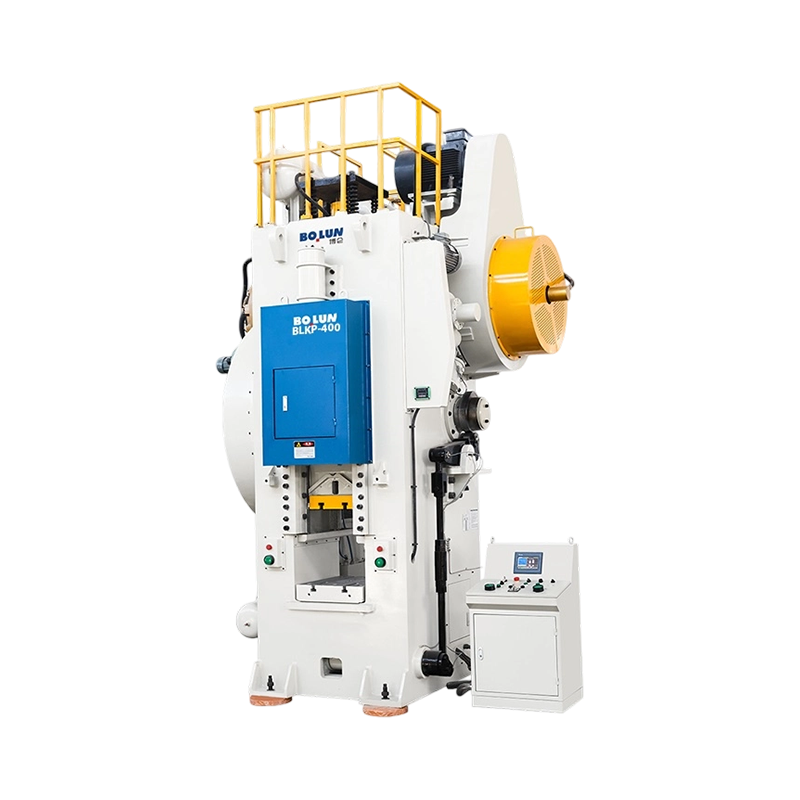
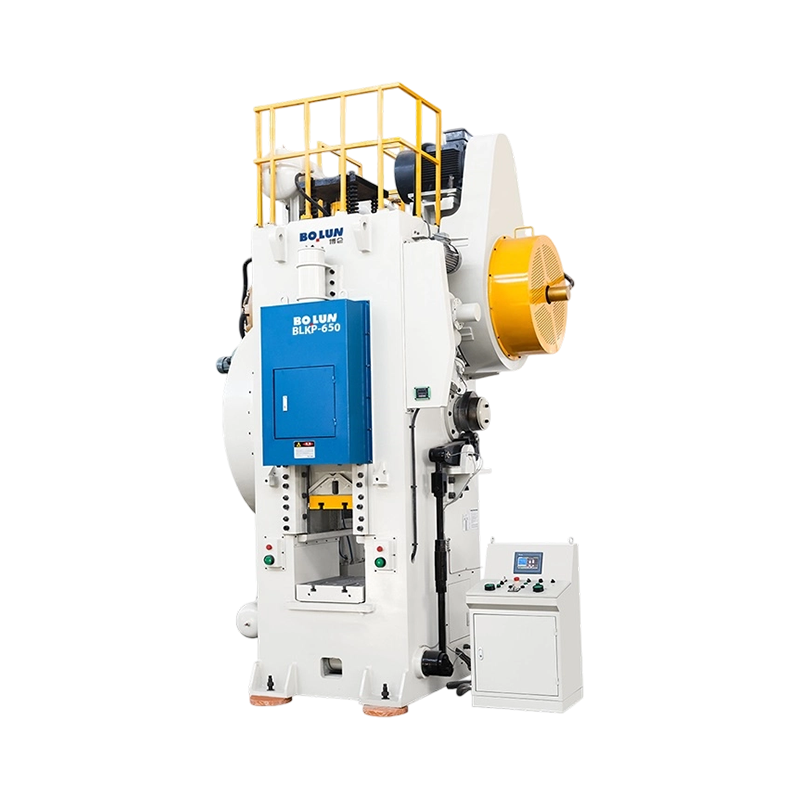
The BLKP-850 Industrial Strength Heavy-Duty Cold Forging Toggle Type Power Press is designed for precisely this operating environment. With a nominal capacity of 8,500 kN, the machine is intended for high-load cold forging applications involving difficult-to-deform materials, large workpieces, and demanding production schedules. Its toggle-type transmission system provides controlled forming movement and concentrated force near the bottom of the stroke, while its rigid frame and thickened bolster help resist deformation during repeated high-load operation.
The machine combines a 600 × 700 mm worktable, a 180 mm thick bolster, an 8 mm nominal pressure stroke, a 180 mm slide stroke, and a 75 kW main motor. These specifications position the BLKP-850 as a serious production machine for manufacturers that require more than basic pressing capability. It is engineered to provide a balanced combination of force, structural stability, forming control, tool support, and continuous-operation reliability.
Manufactured by Zhejiang Bolun High-Precision Machinery Co., Ltd., the BLKP-850 is supported by an integrated approach covering product design, precision machining, assembly, inspection, customization, technical service, and after-sales support. This article examines the machine’s design, working characteristics, technical advantages, manufacturing strengths, application value, maintenance requirements, and suitability for competitive industrial production.
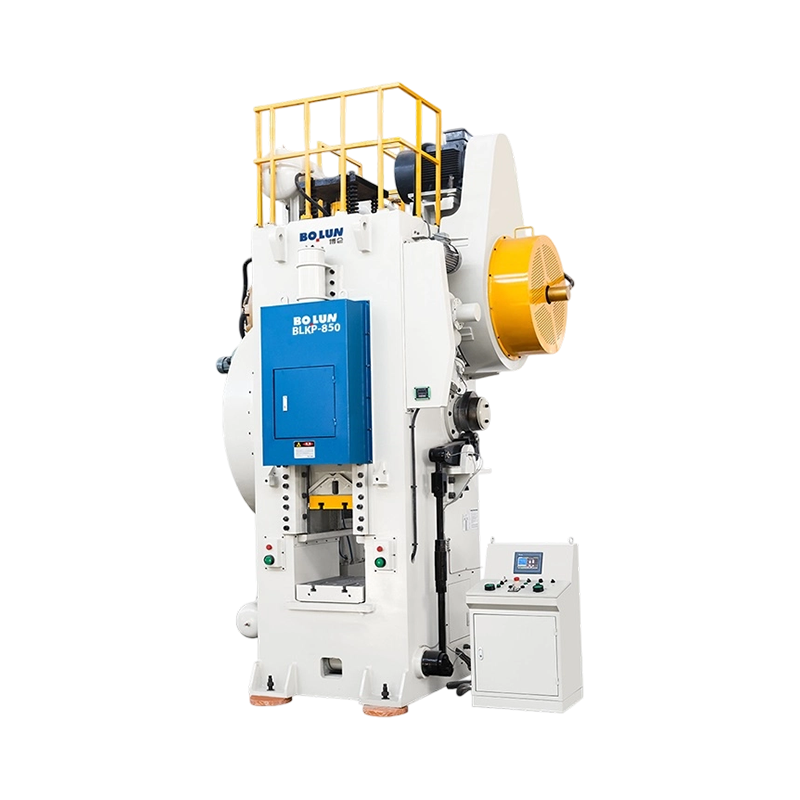
BLKP-850 Industrial Strength Heavy-Duty Cold Forging Toggle Type Power Press
The BLKP-850 belongs to the cold forging toggle type power press category. It is designed for processes in which metal blanks are formed at or near room temperature rather than heated to forging temperature. Cold forging can produce components with excellent dimensional accuracy, strong material flow, improved surface quality, and reduced material waste. However, it also places substantial stress on the press, dies, tooling, transmission system, and frame.
An 8,500 kN nominal capacity provides the force required for large or high-strength parts that cannot be formed effectively on smaller presses. The machine is suitable for applications such as automotive structural and powertrain components, heavy machinery parts, high-strength fasteners, industrial hardware, bearing-related components, steering and suspension parts, agricultural machinery components, and other products requiring substantial forming pressure.
The press can support production environments in which repeatability and uptime are as important as maximum force. A high-capacity machine is not valuable merely because it can reach a specified tonnage. It must also sustain that force consistently, protect the tooling, maintain alignment, dissipate operating stresses, and allow production teams to manage the process safely. The BLKP-850 is therefore configured as an integrated forming system rather than simply a force-generating mechanism.
Cold forging frequently involves high contact pressure between the workpiece and die. As material flows into cavities, the die and press experience rapidly changing loads. Any excessive frame deflection, looseness in the transmission, poor slide guidance, or insufficient bolster support can affect part accuracy and accelerate tool wear.
The BLKP-850 addresses these concerns through a rigid industrial frame, a substantial 180 mm bolster, a controlled toggle mechanism, and a worktable sized for demanding tooling arrangements. The overall design is intended to help distribute forming loads through the machine structure while maintaining stable working relationships between the slide, die, bolster, and workpiece.
Industrial cold forging often operates in repetitive cycles. A press may be required to perform thousands or millions of strokes over its service life. Under these conditions, a machine’s value depends on the consistency of its performance over time. The BLKP-850 incorporates recursive lubrication and a photoelectric safety system to support ongoing operation.
Recursive lubrication helps deliver lubricant to important moving and loaded components at regular intervals. This can reduce friction, manage heat, limit abrasive wear, and support more predictable maintenance. The photoelectric safety system provides an additional protective layer around the working area by detecting interruptions in the protected zone and helping prevent unsafe machine operation.
The BLKP-850 combines high forming capacity with dimensions intended for substantial tooling and workpieces. The following specifications summarize the principal configuration supplied for this model.
| Specification | BLKP-850 Value |
|---|---|
| Machine type | Cold forging toggle type power press |
| Nominal capacity | 8,500 kN |
| Nominal pressure stroke | 8 mm |
| Slide stroke | 180 mm |
| Strokes per minute | Approximately 30 S.P.M. in the standard configuration; variable range may be 25–35 S.P.M. depending on configuration |
| Maximum die height | 400 mm |
| Maximum die weight | 1,000 kg |
| Worktable size | 600 × 700 × 180 mm |
| Slide bottom size | 450 × 550 mm |
| Height of working face | 1,030 mm |
| Die height adjustment | 15 mm |
| Air pressure | 0.55 MPa |
| Main motor | 75 kW × 4 |
| Mold pad capacity | 300 kN |
| Ram stroke | 70 mm |
Production configurations can vary according to tooling, drive arrangement, electrical standards, safety requirements, and customer process conditions. Before ordering, users should confirm the final technical specification, electrical configuration, speed range, foundation requirements, die dimensions, and automation interface with the manufacturer.
The nominal capacity is one of the most important indicators of a forging press. At 8,500 kN, the BLKP-850 is intended for applications that demand considerably more force than conventional medium-duty stamping equipment can provide. The capacity gives manufacturers greater flexibility when selecting part geometries, material grades, reduction ratios, and forming sequences.
High capacity also allows a production engineer to evaluate processes that may otherwise require multiple smaller presses or additional intermediate operations. In some cases, a larger press can consolidate forming steps, reduce transfer handling, and improve process integration. The actual suitability of the machine must always be confirmed through engineering calculations and trials, because required force depends on material strength, friction, reduction, die geometry, blank dimensions, lubrication, and forming speed.
The nominal pressure stroke is the portion of the forming movement associated with the rated pressure condition. An 8 mm nominal pressure stroke supports concentrated forming action during the critical stage of material deformation. This characteristic is particularly relevant in toggle presses, where the mechanism develops favorable mechanical leverage as the slide approaches the bottom region of the stroke.
Controlled pressure movement can help stabilize the forming process, especially when the workpiece requires substantial force over a relatively short distance. It may also support improved dimensional control by reducing sudden movement during the final stage of forming. The exact results depend on the die design, material preparation, lubrication, blank positioning, and machine adjustment.
The 180 mm slide stroke provides room for loading, unloading, blank positioning, and die operation while retaining the compact, force-focused characteristics of a toggle power press. The maximum die height of 400 mm gives tooling designers useful space for multi-stage or deep tooling arrangements within the machine’s working envelope.
The combination of slide stroke and die height is important when evaluating existing dies. Tooling engineers should consider the closed height, opening height, ejector requirements, guide components, sensors, transfer devices, and access clearances. Proper verification before installation helps prevent interference and ensures that the press operates within its intended mechanical limits.
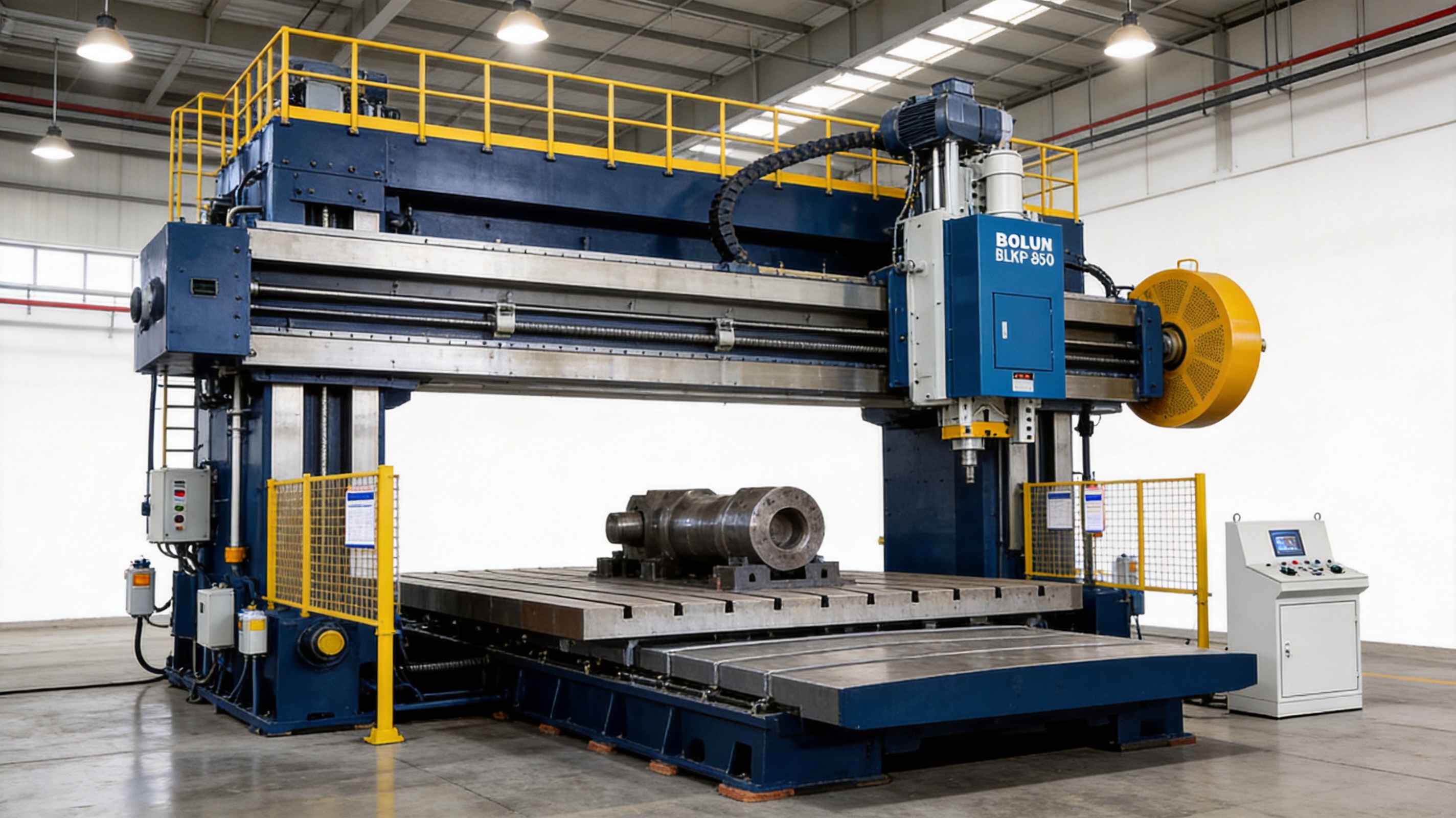
The toggle mechanism is the defining feature of this press. Unlike a simple direct-drive arrangement, a toggle transmission uses a linkage system to transform rotary movement into controlled slide movement. As the toggle approaches its near-straight position, the mechanical advantage increases. This allows the press to deliver substantial force during the final forming stage while maintaining controlled low-speed movement.
This operating characteristic is valuable in cold forging because the material often requires high pressure to fill the die cavity. A carefully controlled final approach can reduce the risk of excessive impact, unstable material flow, or unnecessary shock loading. The toggle system does not eliminate the need for proper process engineering, but it provides a mechanical foundation suited to high-pressure precision forming.
In many forming processes, speed must be considered together with force. Extremely rapid movement can increase impact, vibration, and thermal generation, while uncontrolled deceleration may affect part consistency. The toggle mechanism of the BLKP-850 supports a slower and more controlled forming action near the pressure point.
This controlled motion can benefit the production of components with tight dimensional requirements or complex material flow. It may also reduce the mechanical shock transmitted to dies and machine components compared with a less controlled impact-type process. The result is a more stable environment for tooling and a greater opportunity to optimize the process window.
High-strength steels, alloy materials, stainless grades, and other difficult-to-deform materials can require significant pressure and carefully managed forming conditions. A press must provide enough capacity without sacrificing stability. The BLKP-850’s 8,500 kN rating, rigid frame, and toggle action create a suitable platform for demanding material applications.
Material selection remains the responsibility of the process engineer. The machine can provide the required force environment, but successful cold forging also depends on blank quality, annealing condition, surface treatment, lubrication, grain structure, die radii, reduction per operation, and intermediate forming strategy. When these variables are properly coordinated, the press can help manufacturers produce strong and repeatable components.
Repeated shock loading can shorten the service life of dies, bearings, joints, frame components, and drive elements. The toggle design encourages force development through mechanical leverage rather than relying solely on abrupt impact. This can help create a smoother load path, although all machines must still be operated within rated conditions.
Stable mechanical loading also benefits the workpiece. Sudden changes in movement can produce uneven material flow, local defects, or variations in final dimensions. Controlled movement gives the tooling system a better opportunity to guide the material progressively through the intended cavity.
Frame rigidity is essential in high-capacity forming. When a press is loaded, every structural component experiences stress. If the frame, bolster, slide, or guides deform excessively, the die may not remain correctly aligned. Even small deviations can influence part geometry, die wear, flash formation, and the service life of the tooling.
The BLKP-850 is built around an ultra-rigid industrial frame intended for heavy-duty operation. Its design aims to maintain structural stability when the machine is subjected to repeated high loads. Rigidity is not only a matter of material thickness; it also depends on the frame architecture, stress distribution, joint design, machining accuracy, assembly quality, and foundation installation.
The 180 mm thick worktable and bolster provide a solid support surface for large and heavy dies. The bolster must transfer forming forces into the frame while limiting local deflection. A substantial bolster can improve the stability of the die set and provide greater confidence when handling demanding tools.
The worktable size of 600 × 700 mm offers a practical platform for tooling within the machine’s rated envelope. A maximum die weight of 1,000 kg provides useful capacity for heavy die sets, although loading equipment and handling procedures must be designed accordingly. Users should confirm die mounting holes, T-slots, clamping arrangements, ejector openings, and other interface details before installation.
The slide bottom measures 450 × 550 mm, providing an appropriate mounting area for the upper die assembly. Correct alignment between the slide, upper die, lower die, and bolster is critical in cold forging. Poor alignment can create uneven clearance, excessive edge loading, premature die failure, and inconsistent parts.
A high-quality press must therefore be manufactured and assembled with close attention to guide systems, machined reference surfaces, slide parallelism, bolster flatness, and final adjustment. These details are often invisible after installation, but they strongly influence long-term performance.
The height of the working face is approximately 1,030 mm. This dimension affects ergonomics, die access, feeding arrangements, discharge systems, and the design of auxiliary equipment. A suitable working height can make manual intervention, inspection, and maintenance more manageable when the production process requires operator access.
For automated systems, the working height must be coordinated with conveyors, transfer units, robots, sensors, lubrication systems, and safety guarding. Integrators should review the complete production cell rather than treating the press as an isolated machine.
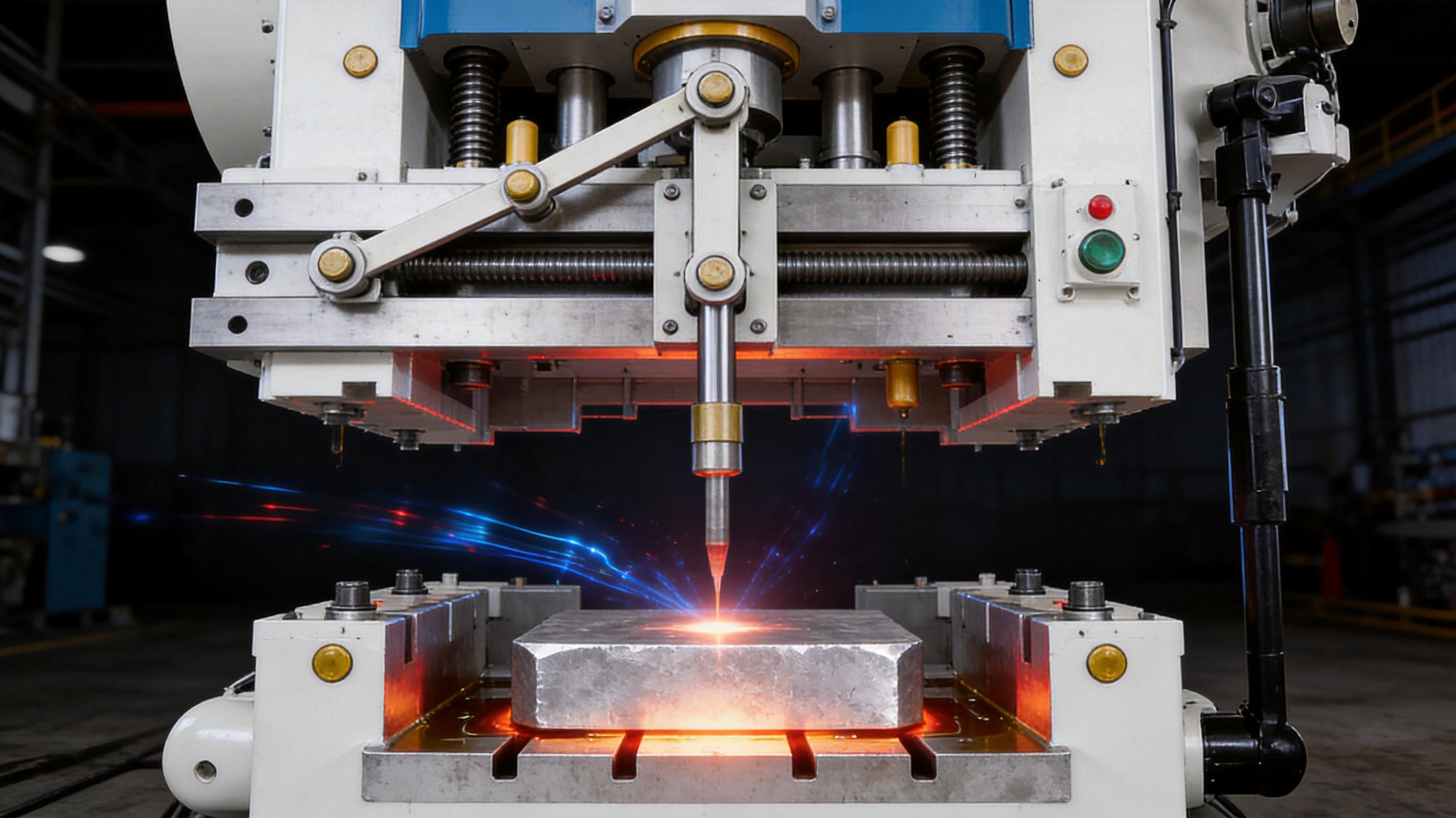
The performance of a large power press is closely connected to the quality of its manufacturing process. A high-capacity machine includes a large number of structural, mechanical, electrical, and safety-related components. Each stage, from basic design through final assembly, can influence reliability. Zhejiang Bolun High-Precision Machinery Co., Ltd. integrates research and development, engineering design, machining, assembly, sales, and service within its manufacturing system.
The design of a cold forging press begins with a clear understanding of the load path, required capacity, slide motion, die envelope, operating speed, lubrication, control system, safety functions, and maintenance requirements. Engineering teams must consider both static and dynamic loads. They must also evaluate the interaction between the press, tooling, foundation, and production automation.
A modern press manufacturer needs more than a standard product drawing. Different industries may require special die dimensions, electrical standards, feeding arrangements, ejection functions, speed controls, monitoring systems, or customized safety interfaces. A company with non-standard design capabilities can adapt the basic machine platform to specific customer requirements without compromising the fundamental structure.
Large press components require appropriate machining capacity and process control. The frame, bolster, slide, shafts, joints, guides, and other load-bearing elements must be manufactured according to controlled dimensions and surface requirements. Precision machining helps ensure that important reference surfaces remain correctly related after assembly.
Manufacturing quality depends on equipment capability, operator skill, process planning, measurement methods, and documentation. Large components may require staged machining, stress relief, repeated inspection, and controlled handling. The purpose is to minimize distortion and preserve dimensional stability as the parts move through production.
A heavy-duty press frame must retain its geometry under repeated force. Frame fabrication therefore involves careful control of material preparation, welding or connection procedures, heat treatment where applicable, stress relief, machining, and inspection. Internal stress can cause deformation during later machining or operation if it is not properly managed.
A mature production system establishes defined procedures for frame preparation and inspection. This helps reduce variation between machines and provides a stronger basis for consistent assembly. The final machine must be more than a collection of individually acceptable parts; all major components must work together within the required alignment and tolerance relationships.
Assembly is a critical stage in power press manufacturing. The transmission system, toggle links, eccentric or crank elements, slide, guides, bolster, lubrication circuits, electrical controls, and safety devices must be installed and adjusted as a complete system.
Correct adjustment affects slide movement, pressure behavior, noise, vibration, lubrication, and die alignment. Assembly technicians need to verify clearances, fastener tightening, bearing conditions, linkage relationships, lubrication delivery, and safety interlocks. Final no-load and loaded testing can reveal issues that are not visible during component inspection alone.
Zhejiang Bolun High-Precision Machinery Co., Ltd. describes a finished-product inspection system intended to exceed basic industry requirements. Such a system can include inspection of raw materials, machined components, welded structures, purchased parts, assembly relationships, lubrication circuits, electrical functions, safety devices, operating noise, vibration, and trial performance.
Quality control is most effective when it is applied throughout production instead of being limited to final inspection. Process records, dimensional checks, traceability, and corrective-action procedures help manufacturers identify problems earlier and maintain a more stable production system.
The product is supported by a supplier with approximately two decades of experience in machinery manufacturing. Zhejiang Bolun High-Precision Machinery Co., Ltd. is located in Zhejiang, a major Chinese manufacturing region with extensive industrial supply-chain resources and engineering capabilities.
The company integrates research and development, design, production, sales, and service. This integrated model can shorten communication paths between the customer and the technical team. It also allows feedback from installation, operation, and maintenance to influence future product development.
An integrated manufacturer can manage more of the machine’s value chain internally. This includes basic design, core component development, precision processing, final assembly, inspection, commissioning, and service coordination. For customers purchasing a large industrial press, this can reduce the complexity of managing multiple independent suppliers.
Integrated production is particularly useful when the machine requires customized specifications. A customer may need a different control standard, special worktable arrangement, modified die space, additional monitoring, automatic feeding, or integration with an existing line. The ability to coordinate mechanical, electrical, and process changes is an important supplier qualification factor.
Cold forging applications vary widely. Two companies may use the same nominal press capacity but require different dies, material conditions, transfer systems, ejection arrangements, or production speeds. A supplier that supports non-standard customization can help adapt the machine to the actual process rather than forcing the customer to redesign the entire operation around a fixed configuration.
Customization should be managed through a formal technical review. The review should define force requirements, die dimensions, production rate, blank size, loading method, ejection method, automation interfaces, safety zones, electrical standards, foundation information, and acceptance criteria. A clear technical specification protects both the customer and the manufacturer.
Industrial equipment is often purchased for overseas production sites. Effective international support requires more than export packaging. It involves documentation, installation guidance, spare-parts planning, remote technical communication, commissioning assistance, operator training, and after-sales response.
A customer evaluating the BLKP-850 should request the complete documentation package, including installation instructions, electrical drawings, lubrication diagrams, spare-parts lists, recommended maintenance schedules, safety procedures, and troubleshooting guidance. Clear documentation improves the efficiency of installation and helps the customer build an internal maintenance program.
The BLKP-850 should be evaluated against the actual production requirements rather than against a single specification. Its main advantages become clear when compared with conventional lower-capacity presses, less rigid machines, or forming systems that do not provide the same degree of controlled toggle movement.
Compared with medium-capacity presses, the 8,500 kN rating enables the BLKP-850 to handle more demanding forming operations. A larger capacity margin can help reduce the risk of operating continuously at the upper limit of a smaller press. It may also allow the customer to consider larger blanks, stronger materials, greater reductions, or more complex tooling.
Capacity margin should not be confused with permission to exceed process limits. The force requirement must still be calculated carefully, and the machine must be operated within its rated pressure, speed, stroke, die weight, and tooling parameters. Nevertheless, a correctly selected high-capacity press can provide greater flexibility and longer-term production potential.
Compared with a simple high-speed pressing arrangement, the toggle mechanism provides favorable mechanical leverage near the bottom of the stroke. This can be advantageous for controlled cavity filling, precision forming, and difficult-to-deform materials. It may also reduce the severity of mechanical impact when the process is correctly configured.
The 600 × 700 mm worktable, 180 mm bolster, and 1,000 kg maximum die weight provide a solid foundation for substantial tooling. Smaller machines may lack the working area or structural support required for large multi-stage dies. The BLKP-850 is intended to accommodate tooling that demands both space and force.
Recursive lubrication and an integrated safety system support the machine’s use in repeated industrial cycles. Consistent lubrication can help protect moving components, while photoelectric protection helps address access risks around the working area. These systems do not replace maintenance or safe operating procedures, but they contribute to a more complete production platform.
A press with sufficient capacity and die space may allow manufacturers to combine operations that would otherwise require separate machines. Process consolidation can reduce intermediate handling, shorten production routes, and improve material traceability. Whether consolidation is practical depends on the part, die technology, transfer method, production rate, and quality requirements.
Automotive production is one of the most important application areas for high-capacity cold forging. The industry requires large quantities of repeatable components with controlled dimensions, strong mechanical properties, and competitive material utilization. Potential applications include specialized fasteners, drivetrain-related parts, steering components, suspension hardware, hubs, sleeves, and other forged products.
Heavy machinery manufacturers may use high-capacity presses for components that must withstand high loads, impact, vibration, or wear. Agricultural equipment, construction machinery, industrial transmissions, material-handling systems, and energy-related equipment all include parts that can benefit from the strength and repeatability associated with cold forming.
The BLKP-850 can also be considered for contract forging operations. Job shops and specialized forging suppliers often need a versatile machine that can serve multiple customers and materials. The combination of high capacity, substantial tooling support, controlled movement, and customization potential can make the press suitable for a broad range of production programs.
Cold forging can improve material utilization because the process forms a blank close to the final shape. It may also produce favorable grain flow and reduce the need for extensive machining. However, the quality of the final component depends on more than the press. Die design, surface preparation, lubrication, blank cutting accuracy, material condition, transfer timing, and inspection must all be controlled.
A press with stable movement and a rigid load path gives the process engineer a stronger foundation for optimizing these variables. It helps ensure that changes in part quality are more likely to be traced to tooling or process conditions rather than uncontrolled machine movement.
High-load cold forging requires disciplined maintenance. The machine’s service life depends on keeping lubrication systems functional, monitoring critical components, inspecting tooling interfaces, and correcting abnormal conditions before they develop into major failures.
The recursive lubrication system is designed to deliver lubricant repeatedly to selected machine components. Proper lubrication reduces friction between moving surfaces, helps manage operating temperature, and limits wear. It can also reduce the risk of seizure or accelerated damage in heavily loaded joints.
Operators should check lubricant levels, pressure, distribution, filters, lines, nozzles, and alarm functions according to the maintenance schedule. Lubricant contamination or blocked lines can create a false impression that the system is working normally while important components remain inadequately lubricated.
The photoelectric safety system helps protect the working zone by detecting the interruption of a light-based safety field. If an operator or object enters the protected area during a hazardous condition, the system can initiate the appropriate safety response according to the machine’s control design.
Safety devices must be tested at scheduled intervals. Operators should never bypass, reposition, or disable the photoelectric system. The press should also be used with appropriate guarding, emergency-stop devices, lockout procedures, personal protective equipment, and trained personnel.
Routine inspections should include the toggle links, pins, bearings, slide guides, fasteners, worktable, bolster, die clamps, lubrication circuits, electrical cabinet, sensors, safety system, pneumatic connections, and abnormal noise or vibration. Any unusual temperature, sound, movement, leakage, or deterioration should be investigated promptly.
Maintenance records are useful for identifying trends. A gradual increase in vibration, lubrication consumption, temperature, or adjustment frequency may indicate wear before a serious failure occurs. Preventive maintenance is generally less expensive and less disruptive than emergency repair during a production campaign.
Installing an 8,500 kN press requires careful planning. The foundation must be designed for the machine’s weight, dynamic loads, anchoring requirements, and local ground conditions. The customer should prepare the site before delivery, including access routes, lifting equipment, electrical supply, compressed-air supply, ventilation, lighting, safety barriers, and material-handling arrangements.
The air pressure specification for the machine is 0.55 MPa. The customer should confirm the required flow rate, air quality, filtration, drainage, and connection size. Electrical requirements must also be verified according to the final motor, control system, voltage, frequency, and local standards.
After mechanical installation, the machine should undergo leveling, alignment, lubrication commissioning, electrical testing, safety verification, and no-load operation. Die installation and loaded testing should follow only after the basic functions have been confirmed. Trial production should begin with conservative process settings and carefully monitored parts.
Commissioning should include operator and maintenance training. Personnel should understand machine controls, operating limits, emergency procedures, lubrication requirements, die changes, fault response, and lockout practices. Proper training helps protect employees and improves the consistency of production results.
The BLKP-850 is most appropriate when the production project requires high forming capacity, stable heavy-duty performance, substantial tooling support, and controlled toggle movement. Before purchasing, the customer should prepare a technical evaluation covering the complete process.
Start with the required forming force for each part and operation. Consider material yield strength, ultimate strength, friction, contact area, reduction, die geometry, lubrication, blank temperature, and safety margin. The maximum required force should be compared with the machine’s nominal capacity, while also considering where in the stroke the force occurs.
Confirm the die height, die weight, slide bottom dimensions, worktable dimensions, mounting pattern, ejector requirements, bolster arrangement, and opening clearance. The tool must fit within the machine’s physical envelope and remain within rated limits during operation.
The stated operating speed is approximately 30 strokes per minute in the standard configuration, with a possible variable range of 25–35 strokes per minute depending on the selected arrangement. Actual output depends on loading, unloading, transfer, inspection, lubrication, die design, and the number of operations per component.
Production planners should calculate the complete cycle rather than relying only on nominal strokes per minute. A slower, stable process may produce more good parts per hour than a faster process with frequent stoppages, die adjustments, or quality rejects.
Customers should determine whether the press will be manually loaded, robotically served, or integrated into a multi-stage transfer line. The machine’s control interface, sensor requirements, safety circuits, blank detection, part ejection, die lubrication, and fault communication should be defined during the technical review.
Cold forging can provide material and energy advantages compared with hot forging or machining-intensive production routes. Because the material is formed without heating the entire blank to forging temperature, the process may reduce thermal energy consumption and eliminate some heating-related handling requirements. Near-net-shape production can also reduce chip generation and improve material utilization.
The economic value of the BLKP-850 depends on the complete cost structure. Important factors include die investment, cycle time, material yield, labor, energy, maintenance, scrap, tooling life, machine availability, and product quality. A well-designed process can create substantial savings by reducing secondary machining and improving production repeatability.
High-capacity equipment also provides strategic value. It can allow a manufacturer to accept larger orders, develop higher-strength products, expand into new industries, and reduce dependence on external forging suppliers. The machine therefore represents not only a production asset but also a platform for future manufacturing capability.
Zhejiang Bolun High-Precision Machinery Co., Ltd. presents itself as a manufacturer focused on precision forming equipment, forging machinery, casting machinery, and custom industrial machine solutions. Its capabilities cover research and development, design, component production, assembly, inspection, sales, and service.
The company emphasizes technology-first development, advanced precision processing equipment, a full-chain production system, and a quality-control structure intended to support stable accuracy and long service life. These capabilities are relevant to customers purchasing a heavy-duty press because the machine’s performance depends on the complete manufacturing chain, not just the final assembly.
Customer support begins before the order is placed. Technical communication can help determine whether the BLKP-850 is appropriate for the part, material, tooling, and production rate. During the order stage, engineering coordination can define custom features and acceptance criteria. During installation, guidance can support foundation preparation, assembly, alignment, and commissioning. After installation, service and spare-parts support can help maintain the machine’s performance.
For international buyers, communication should include clear documentation and an agreed response process. Customers should ask about recommended spare parts, delivery schedules, warranty conditions, remote diagnostics, service personnel, and training arrangements. These considerations are especially important for a large press that may become central to a production line.
The BLKP-850 has a nominal capacity of 8,500 kN. This makes it suitable for high-load cold forging and other demanding forming applications when the process force, tooling, and operating conditions remain within the machine’s rated limits.
It is designed primarily for cold forging and high-load precision forming. It may be suitable for automotive components, heavy machinery parts, industrial hardware, and other products requiring substantial forming pressure. Final suitability should be confirmed through engineering review and process testing.
The toggle mechanism provides increased mechanical leverage as the slide approaches the forming position. This supports controlled low-speed forming and concentrated pressure during the critical part of the stroke. It can be beneficial for die filling, difficult-to-deform materials, dimensional control, and reduced shock loading.
The worktable is approximately 600 × 700 mm, with a 180 mm thick bolster. The actual die-mounting arrangement, clamping method, and interface dimensions should be confirmed from the final machine drawings.
The listed maximum die weight is 1,000 kg. Safe die handling also depends on lifting equipment, die dimensions, center of gravity, installation method, and site procedures. The customer should verify the complete die-handling plan before production.
The slide stroke is 180 mm. The nominal pressure stroke is 8 mm, which refers to the rated pressure portion of the forming movement. These two specifications describe different aspects of the slide’s operating behavior.
The standard data indicates approximately 30 strokes per minute, with a possible range of 25–35 strokes per minute depending on configuration. The final speed must be confirmed with the manufacturer because tooling, material, automation, and customer requirements can influence the selected operating range.
Yes. The machine includes a photoelectric safety system intended to protect the working area. The system must be installed, tested, and maintained correctly, and it must never be bypassed. Additional guarding, emergency stops, lockout procedures, and operator training are also required.
The recursive lubrication system repeatedly supplies lubricant to designated moving and loaded components. This helps reduce friction and wear and supports stable continuous operation. Lubricant levels, lines, filters, pressure, and alarm functions should be checked according to the maintenance schedule.
The manufacturer provides non-standard design and manufacturing services. Potential customization areas may include tooling interfaces, electrical standards, automation, safety arrangements, control functions, die space, and special forming requirements. All modifications should be defined in a formal technical specification before production.
The listed main motor configuration is 75 kW × 4. The final electrical configuration should be confirmed according to the customer’s voltage, frequency, control requirements, and local installation standards.
Customers should verify force calculations, material specifications, die dimensions, die weight, die height, worktable and slide interfaces, production rate, automation, foundation, electrical supply, compressed air, safety requirements, maintenance access, spare parts, documentation, and commissioning support.
The BLKP-850 Industrial Strength Heavy-Duty Cold Forging Toggle Type Power Press is designed for manufacturers that need reliable high-force forming capability in a demanding production environment. Its 8,500 kN nominal capacity, 8 mm nominal pressure stroke, 180 mm slide stroke, 600 × 700 mm worktable, 180 mm thick bolster, 1,000 kg die capacity, and toggle-based forming action provide a strong technical foundation for automotive, heavy machinery, industrial hardware, and other cold forging applications.
The machine’s principal advantages include controlled forming movement, favorable mechanical leverage near the pressure point, rigid structural support, substantial tooling capacity, recursive lubrication, and photoelectric safety protection. These features can help manufacturers improve process stability, support difficult-to-deform materials, protect tooling, and maintain continuous production performance.
Its value is strengthened by the manufacturing capabilities of Zhejiang Bolun High-Precision Machinery Co., Ltd. The company combines engineering, precision processing, assembly, inspection, customization, and service within an integrated production system. This approach can provide customers with a more coordinated path from initial process evaluation to machine delivery, commissioning, and long-term support.
As with any high-capacity forging machine, successful results depend on correct process engineering, suitable tooling, disciplined maintenance, safe operation, and accurate installation. When these requirements are properly managed, the BLKP-850 can serve as a dependable platform for high-load cold forging and a valuable long-term asset for advanced industrial production.
1. Industrial Press Design Principles, technical reference material covering frame rigidity, slide guidance, load distribution, and forming-machine construction.
2. Cold Forging Technology and Practice, reference material on material flow, die design, lubrication, process force, and near-net-shape manufacturing.
3. Metal Forming Machinery Maintenance Guidelines, reference material covering lubrication, inspection, preventive maintenance, alignment, and service planning.
4. Industrial Machine Safety Engineering, reference material addressing photoelectric protection, guarding, emergency stops, lockout procedures, and operator training.
5. Technical Product Information for the BLKP Series Cold Forging Toggle Type Power Press, manufacturer-supplied specifications and configuration data.
6. Manufacturing Quality Management Practices for Heavy Machinery, reference material covering precision machining, assembly inspection, process control, and finished-equipment testing.


A tooling engineer quotes a new bracket program and specifies a 160-ton press. ...
When you are planning to produce medium or small metal parts in high volumes, t...
A cold forging die rarely announces its failure in advance. One day the press r...
A mid-size fastener manufacturer recently faced a familiar problem: its CNC lat...
A buyer comparing a 45-ton open-gap press for a bracket line often receives two...
Two presses can both carry a 200-tonne nameplate and still produce very differe...
Contact Us

topbolun@gmail.com

+86-575-83362228

+86-13735238388
+86-18667502750

+86-575-83362999

+8618667502750

No.1 Linjiang Road East, Xiaren, Jinting Town, Shengzhou City, Zhejiang Province, China
Ready to Begin?
Get in Touch

Now!

ZHEJIANG BOLUN
 English
 中文简体