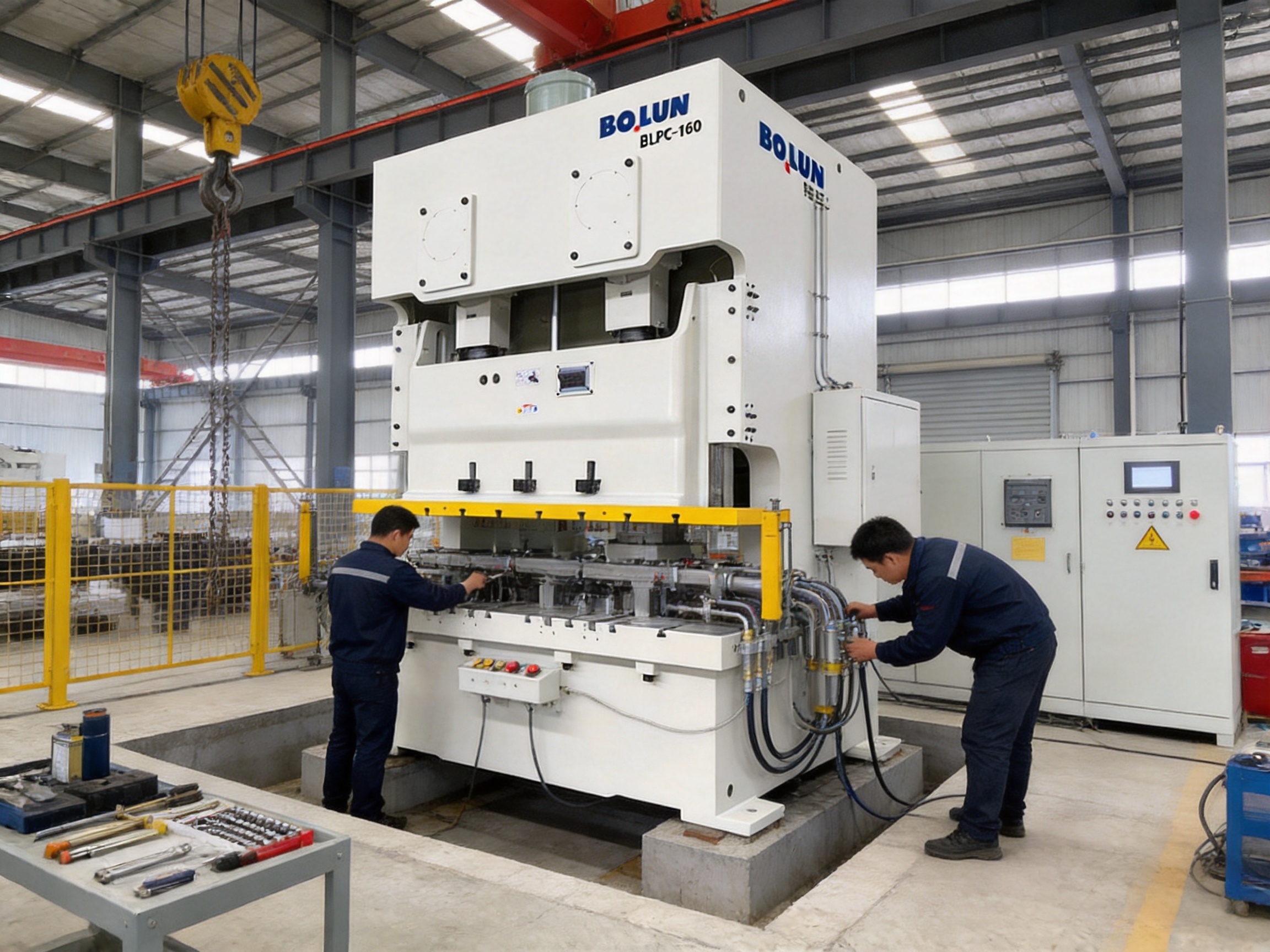
Modern metal-forming operations require more than a press with high nominal capacity. Manufacturers must achieve repeatable accuracy, stable performance under demanding production conditions, efficient die changes, reliable integration with automation, and a reasonable total cost of ownership. The BLPC-160 Versatile Precision-Stable Open-Type Double-Point Power Press is designed to address these requirements through a combination of 1600 kN forming capacity, a rigid open-type frame, double-point slide guidance, electronic control functions, and a large working area.
As a high-capacity mechanical power press, the BLPC-160 is suitable for stamping, blanking, bending, shallow drawing, forming, and progressive-die operations. Its structure is intended to support production environments in which dimensional consistency, controlled motion, and resistance to off-center loading are essential. The machine is especially relevant to manufacturers producing automotive components, appliance parts, electrical enclosures, hardware, industrial fittings, and other formed metal products.
The machine combines a substantial 2000 mm worktable with a 1600 kN nominal capacity. This balance allows users to install larger dies or multi-stage progressive tooling without moving to a larger and more expensive press platform. At the same time, the double-point arrangement distributes slide force across two connection points, helping improve stability when the die is wide or when the load is not perfectly centered.
The following article examines the BLPC-160 in detail, including its design advantages, operating characteristics, accuracy-related features, automation potential, manufacturing strengths, maintenance considerations, and suitability for different production applications.
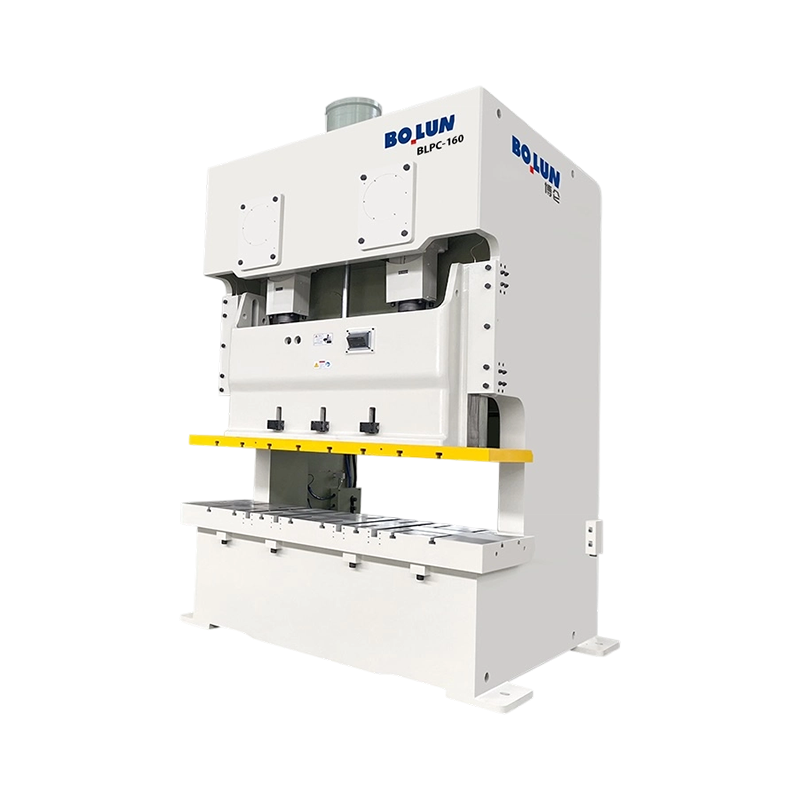
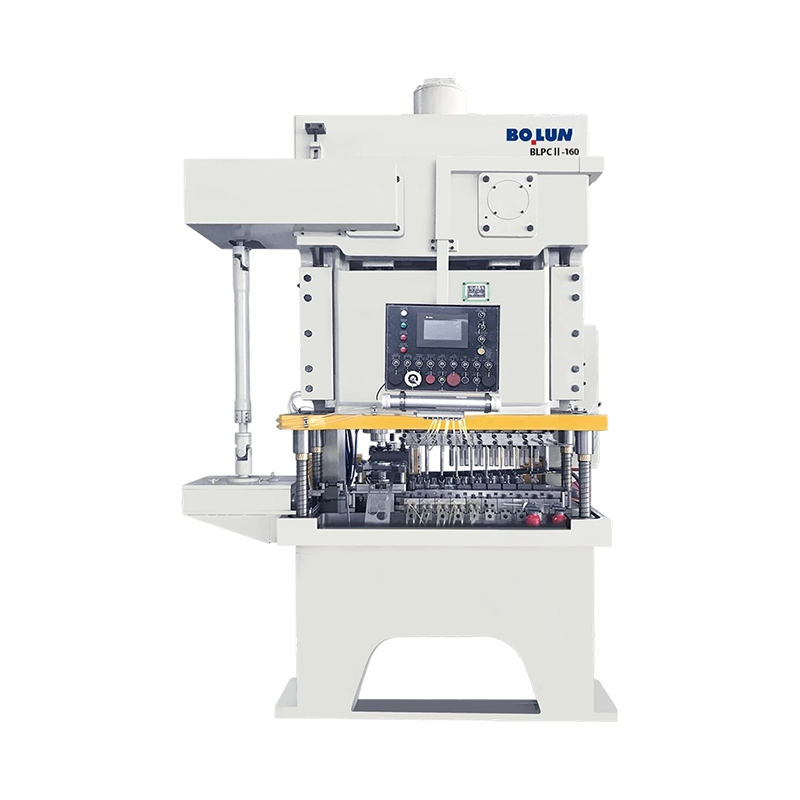
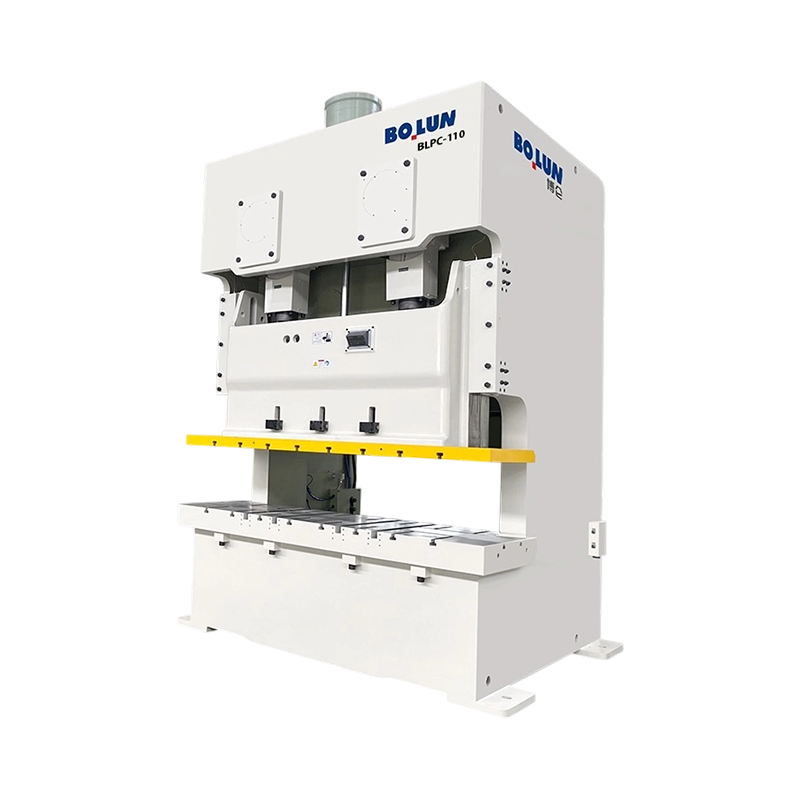
BLPC-160 Versatile Precision-Stable Open-Type Double-Point Power Press
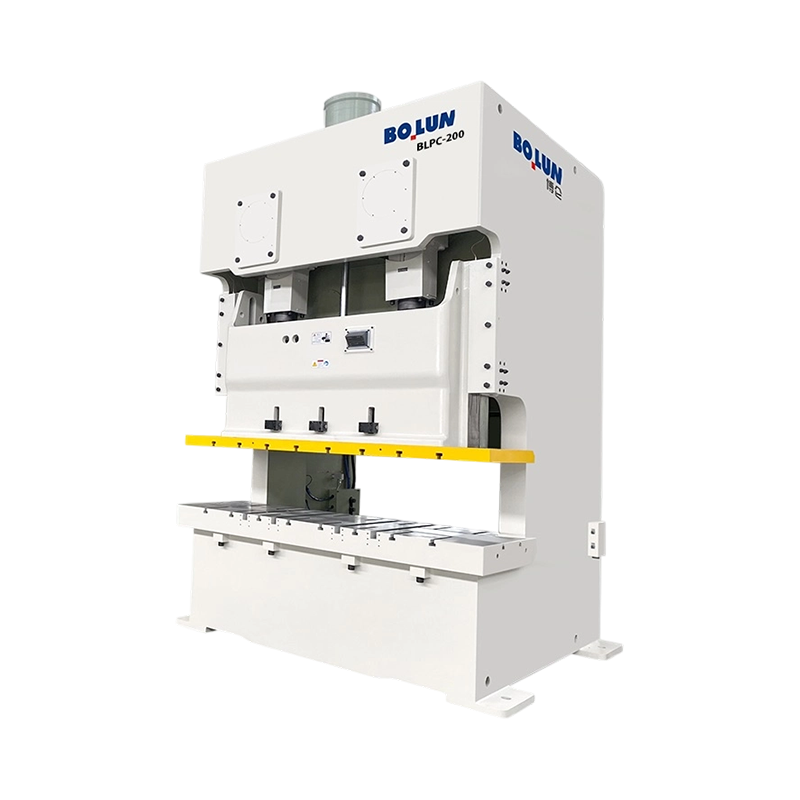
The BLPC-160 is an open-type double-point power press with a nominal capacity of 1600 kN. In practical terms, this capacity places the machine in a useful range for medium- and high-volume stamping operations that require more forming force than a compact single-point press can provide. The open front and side access associated with an open-type press also make die installation, inspection, feeding, and part removal more convenient.
The press is built around a rigid steel frame that has undergone heat treatment. Frame rigidity is one of the most important factors in power press performance because the frame must absorb repeated forming forces without excessive deflection. When a frame deflects unpredictably, the result may be uneven die clearance, inconsistent part dimensions, premature die wear, and increased noise or vibration. A heat-treated, reinforced structure helps reduce these risks by improving structural stability over long production cycles.
The double-point slide architecture is another defining feature. Rather than transmitting the full slide force through one central connection, a double-point design uses two connection points positioned across the width of the slide. This configuration is particularly beneficial for wide dies and applications in which the working load can shift from one side to the other. It helps limit twisting and tilting of the slide and supports more consistent contact between the upper and lower die sections.
The BLPC-160 also includes a worktable measuring approximately 2000 × 760 × 150 mm according to the supplied product data. This generous surface provides space for large dies, feeding devices, sensors, die cushions, and other auxiliary equipment. The slide bottom is approximately 1600 × 550 × 70 mm, providing a substantial mounting area for upper tooling.
The product description identifies an electric die height indicator and an electronic rotary cam switch with six spare channels. These functions support faster setup and more flexible integration with automated peripherals. They can be valuable when a production line includes feeders, transfer units, part detectors, lubrication systems, ejection equipment, or other electrically controlled devices.
The BLPC-160 has a nominal capacity of 1600 kN. Nominal pressure is specified at a stroke position of approximately 3 mm in the supplied technical information. This figure should be understood as the rated forming force available near the bottom portion of the slide stroke, where mechanical presses typically develop their highest usable force.
The standard slide stroke is listed as 110 mm for the BLPC-160 configuration in the supplied model table. This stroke is appropriate for a broad range of stamping and forming applications, particularly when the tooling requires enough vertical travel for feeding, part release, or shallow drawing operations without requiring the longer stroke associated with deep-drawing presses.
The operating speed range is listed at approximately 50 to 100 strokes per minute for the BLPC-160 configuration. Actual production speed depends on the die design, material thickness, feed length, part geometry, lubrication, required forming time, and safety limitations. A relatively high speed range allows manufacturers to balance productivity against tool life and part quality.
The maximum die height is approximately 435 mm, with die height adjustment of around 100 mm for the relevant configuration. These specifications provide flexibility when installing dies with different shut heights. The electric adjustment system can reduce manual setup time and make the press easier to configure when production changes frequently between products.
The throat depth is approximately 385 mm. Throat depth is important because it determines how far a workpiece can extend into the press from the front of the frame while remaining within the usable forming zone. A deeper throat allows greater flexibility for larger blanks, longer flanges, and wider tooling arrangements.
The worktable dimensions of approximately 2000 × 760 × 150 mm create a useful platform for large or multi-stage dies. The table surface is large enough to accommodate tooling that would exceed the practical capacity of many smaller single-point presses. The table also provides space for die cushions, material guides, sensors, and other production accessories when the tooling layout is carefully planned.
The slide bottom measures approximately 1600 × 550 × 70 mm. This upper mounting surface is suitable for dies with a substantial footprint. Proper die fastening remains essential, and users should confirm bolt patterns, mounting slots, die weight, and permissible load distribution before installation.
The working-face height is listed at approximately 990 mm, while the distance between columns is approximately 1630 mm. These dimensions affect operator access, material handling, and the compatibility of feeding and conveying systems. The relatively wide column spacing supports the installation of broad tooling and allows better access for inspection and maintenance.
The main motor specification is approximately 15 kW with a four-pole configuration. The die height adjustment motor is listed at approximately 1.1 kW. The required air pressure is approximately 0.55 MPa. These utilities should be prepared according to the final machine configuration and the requirements of any connected peripherals.
The supplied information identifies punch accuracy as Level 1GB or JIS Class 1. Accuracy in actual production will depend not only on the press but also on die quality, material condition, machine installation, lubrication, operating speed, and maintenance. Nevertheless, a high-accuracy press platform provides a stronger foundation for producing consistent parts and protecting precision tooling.
The approximate overall dimensions for the BLPC-160 configuration are 1940 × 2200 × 3709 mm, and the listed press weight is approximately 21 tons. The machine should be transported, positioned, leveled, and anchored using an engineering plan appropriate for the building floor, handling equipment, and local safety requirements.
| Specification | BLPC-160 Value | Production Significance |
|---|---|---|
| Nominal capacity | 1600 kN | Supports medium- and high-force stamping and forming work |
| Nominal pressure stroke | Approximately 3 mm | Indicates the rated force position near the bottom of the stroke |
| Slide stroke | Approximately 110 mm | Provides vertical travel for stamping, bending, and progressive dies |
| Strokes per minute | Approximately 50–100 S.P.M. | Allows productivity to be balanced with tool life and part quality |
| Maximum die height | Approximately 435 mm | Accommodates substantial tooling assemblies |
| Die height adjustment | Approximately 100 mm | Supports setup flexibility for different die shut heights |
| Throat depth | Approximately 385 mm | Provides room for larger blanks and deeper tooling access |
| Worktable size | Approximately 2000 × 760 × 150 mm | Accommodates large or multi-stage dies |
| Slide bottom size | Approximately 1600 × 550 × 70 mm | Provides a broad upper die mounting surface |
| Main motor | Approximately 15 kW × 4 poles | Supplies drive power for repeated production cycles |
| Air pressure | Approximately 0.55 MPa | Supports pneumatic functions and auxiliary equipment |
| Approximate weight | Approximately 21 tons | Reflects the substantial structural mass used for stability |
One of the most important advantages of the BLPC-160 is its double-point slide arrangement. In stamping operations, the load is not always distributed perfectly across the center of a die. Large progressive dies may perform different operations at different stations, and the cutting or forming force can vary throughout the working cycle. If the slide is supported at only one central point, these changing loads may create a tendency for the slide to twist or tilt.
A double-point system supports the slide at two positions. This arrangement improves the distribution of force across the width of the machine and helps control angular movement. When properly adjusted, it can reduce uneven die loading and help maintain consistent clearance between the punch and die. The result may include more uniform part quality, slower tool wear, and a lower risk of localized damage.
Double-point construction is especially valuable for wide dies. A wide die may contain several forming stations, multiple cutting operations, or several parallel part lanes. Such tooling can place greater demands on slide rigidity than a narrow, centrally loaded die. The wider support pattern of a double-point press is therefore a strong advantage for manufacturers seeking to operate broad progressive tooling on one production platform.
The supplied description also refers to a robust balance device. A balance device helps maintain controlled slide movement and can reduce the effects of uneven loading or variations in moving mass. It may also contribute to smoother operation during the return portion of the cycle. Stable slide motion is important for protecting guide components, reducing vibration, and preserving the relationship between upper and lower tooling.
Competitors using a smaller single-point press may offer similar nominal capacity but less effective support across the die width. In an application with off-center loading, nominal tonnage alone does not describe the complete performance of a press. The ability to manage load distribution, resist deflection, and preserve die alignment can be equally important. This is where the BLPC-160’s double-point architecture provides a meaningful production advantage.
The frame of a power press must withstand millions of repeated load cycles. Each stroke creates a rapid transfer of force through the die, slide, connecting mechanisms, frame, table, and foundation. A frame that is insufficiently rigid may experience excessive deformation, and repeated deformation can reduce accuracy and shorten component life.
The BLPC-160 uses a rigid steel frame with heat-treated construction. Heat treatment is used to improve the stability of steel components after fabrication and machining. When large structural parts are welded, cut, and machined, internal stresses can develop. If these stresses are not controlled, the frame may shift gradually during operation or after installation. A suitable heat-treatment process helps reduce this risk and supports dimensional stability.
Frame rigidity also helps reduce vibration. Vibration can affect the quality of stamped parts, especially when the die performs fine blanking, precision piercing, narrow-slot cutting, or forming operations with tight tolerances. It can also contribute to noise, fastener loosening, bearing stress, and fatigue in die components.
A heavier and more rigid machine structure provides a stable base for the die. The listed approximate weight of 21 tons reflects the substantial mass of the BLPC-160. Machine mass alone does not guarantee performance, but when combined with a properly engineered frame, suitable guides, balanced drive components, and correct foundation preparation, it contributes to smoother force absorption.
Compared with lighter machines designed primarily for intermittent or lower-force work, the BLPC-160 is better positioned for continuous industrial production. Its structure is intended to preserve stability during repeated cycles, allowing users to focus on maintaining die condition, material consistency, and process parameters rather than compensating for avoidable machine movement.
Precision in stamping is a system result. It depends on the relationship between the press, die, material, feed system, lubrication, sensors, and operating method. A high-quality press cannot correct a poorly designed die or inconsistent material, but it can provide the rigid and repeatable platform required for precision tooling to perform correctly.
The BLPC-160 supports precision through several design elements. These include the double-point slide, a rigid heat-treated frame, a substantial worktable, controlled die height adjustment, and a high-accuracy specification identified in the supplied data. Together, these features help create stable conditions for die alignment and repeatable production.
Repeatability is particularly important in progressive-die stamping. In a progressive operation, a strip of material moves through several stations, and each station performs a specific cutting or forming task. A small error in feed length or die alignment can accumulate through the process and produce scrap. The press must therefore provide consistent slide travel and a stable relationship between the die halves.
The BLPC-160 is also suitable for applications where off-center loading cannot be completely avoided. The double-point structure and balance device help reduce the risk that one side of the die will experience excessive movement. This can support more even wear across guide posts, bushings, cutting edges, and forming surfaces.
For users seeking precision, installation and commissioning remain critical. The press should be leveled according to the manufacturer’s procedure, the foundation should meet the required load and vibration conditions, and the die should be mounted with appropriate fasteners and support. Operators should confirm shut height, stroke, feed timing, lubrication, and material positioning before increasing speed.
When these conditions are controlled, the BLPC-160 can provide a strong foundation for high-repeatability production. Its value is not limited to the maximum force it can generate; it also lies in its ability to maintain a stable process over long operating periods.
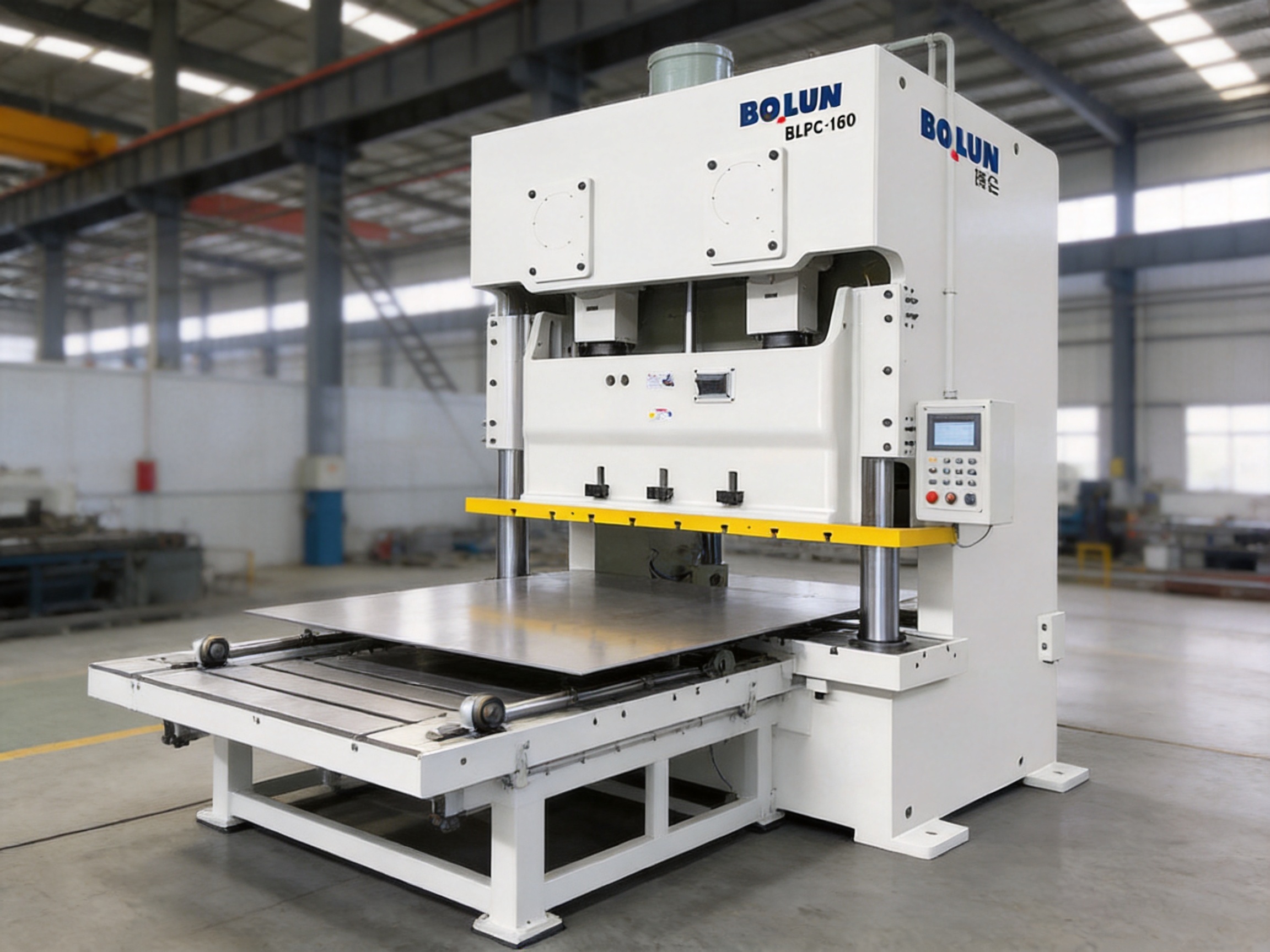
A large worktable is a significant practical advantage for manufacturers using progressive dies or tooling with multiple stations. The BLPC-160 worktable is listed at approximately 2000 × 760 mm, giving users more usable space than many conventional compact presses in the same general production category.
Progressive dies often require substantial length because each operation occupies a dedicated station. A single tool may include piercing, notching, bending, embossing, trimming, forming, and part cutoff. If the worktable is too short, the die may need to be divided into separate tools, which increases handling time and may introduce additional alignment or transfer steps.
The larger table also supports multi-part production. A die can be designed with two or more lanes when the material width and part geometry permit. This may improve material utilization and increase output per stroke. The press must, however, be evaluated for total die weight, force distribution, feed direction, and the location of the most demanding operations.
The table dimensions can also benefit manufacturers that use auxiliary devices. Automatic feeders, straighteners, lubricators, sensors, scrap conveyors, and transfer systems may require space around the die. A larger table and wide column opening simplify the layout of these components and can help create a more organized production cell.
In comparison with smaller presses that may have adequate tonnage but limited table length, the BLPC-160 offers greater tooling flexibility. This can reduce the need to purchase separate machines for different die sizes. It may also allow a manufacturer to consolidate several production steps into one automated operation.
Table size should always be considered together with slide bottom dimensions, throat depth, die height, and maximum permissible eccentric load. A large table is useful only when the installed die can be safely supported and the press can manage the force distribution. Proper engineering review is therefore essential before selecting a final tooling layout.
Die height is one of the most important setup parameters in a mechanical press. The distance between the slide and table must match the die’s required shut height, and the adjustment must be made accurately enough to avoid overloading the die or producing incomplete forming.
The BLPC-160 includes an electric die height adjustment function and an electric die height indicator. These features make setup more convenient than a fully manual adjustment arrangement. The operator can make controlled changes to accommodate different dies and can monitor the selected position during setup.
Electric adjustment can reduce changeover time, especially in facilities that run multiple products during one shift. Faster and more repeatable setup helps improve machine utilization and reduces the likelihood of inconsistent manual adjustment. It can also make the press more suitable for flexible manufacturing environments where tooling changes are frequent.
The die height indicator provides a reference for recording and repeating setup values. Production teams can document the appropriate die height for each tool and use the recorded setting during future changeovers. This supports standardized work procedures and reduces reliance on individual operator memory.
Adjustment should still be performed carefully. The operator must confirm that the die is correctly supported, the slide is positioned safely, the adjustment range is not exceeded, and the tool is properly secured before production begins. The indicator is a setup aid, not a substitute for die inspection and verification.
Compared with basic presses that require more manual setup, the BLPC-160’s electric adjustment system provides a practical advantage in modern manufacturing. It supports repeatable changeovers, helps reduce nonproductive time, and contributes to more consistent process control.
Automation is increasingly important in stamping production. A press may be connected to a coil feeder, straightener, transfer unit, robot, lubrication system, quality sensor, scrap removal system, or downstream assembly process. These devices must operate in coordination with the press cycle.
The BLPC-160 is equipped with an electronic rotary cam switch and six spare channels. A rotary cam switch provides timing signals based on the angular position of the press crankshaft or another synchronized mechanical reference. These signals can be used to control or monitor external devices at specific points in the cycle.
The six spare channels are especially useful because they provide flexibility for future expansion. A basic installation may use only a portion of the available channels for feeder timing, lubrication, or part detection. Additional channels can later be assigned to sensors, air blow-off systems, transfer mechanisms, or other peripherals without requiring a complete control-system redesign.
Automation compatibility can improve productivity in several ways. Automatic feeding reduces manual handling and helps maintain consistent material positioning. Automated lubrication can provide more uniform die protection. Part detection can identify missing blanks or misfeeds before they cause serious die damage. Scrap management can keep the work area cleaner and reduce interruptions.
The press’s control functions can also support safer operation. Interlocks and sensor signals may be used to prevent a stroke when a required condition is not met. The precise control strategy depends on the final machine configuration and the connected equipment, but the availability of electronic cam channels provides a useful foundation for integration.
Compared with presses that offer limited auxiliary control capacity, the BLPC-160 is better suited to staged automation and future production upgrades. This is important for manufacturers that do not want to purchase a fully automated line immediately but want to preserve the option of adding automation as demand increases.
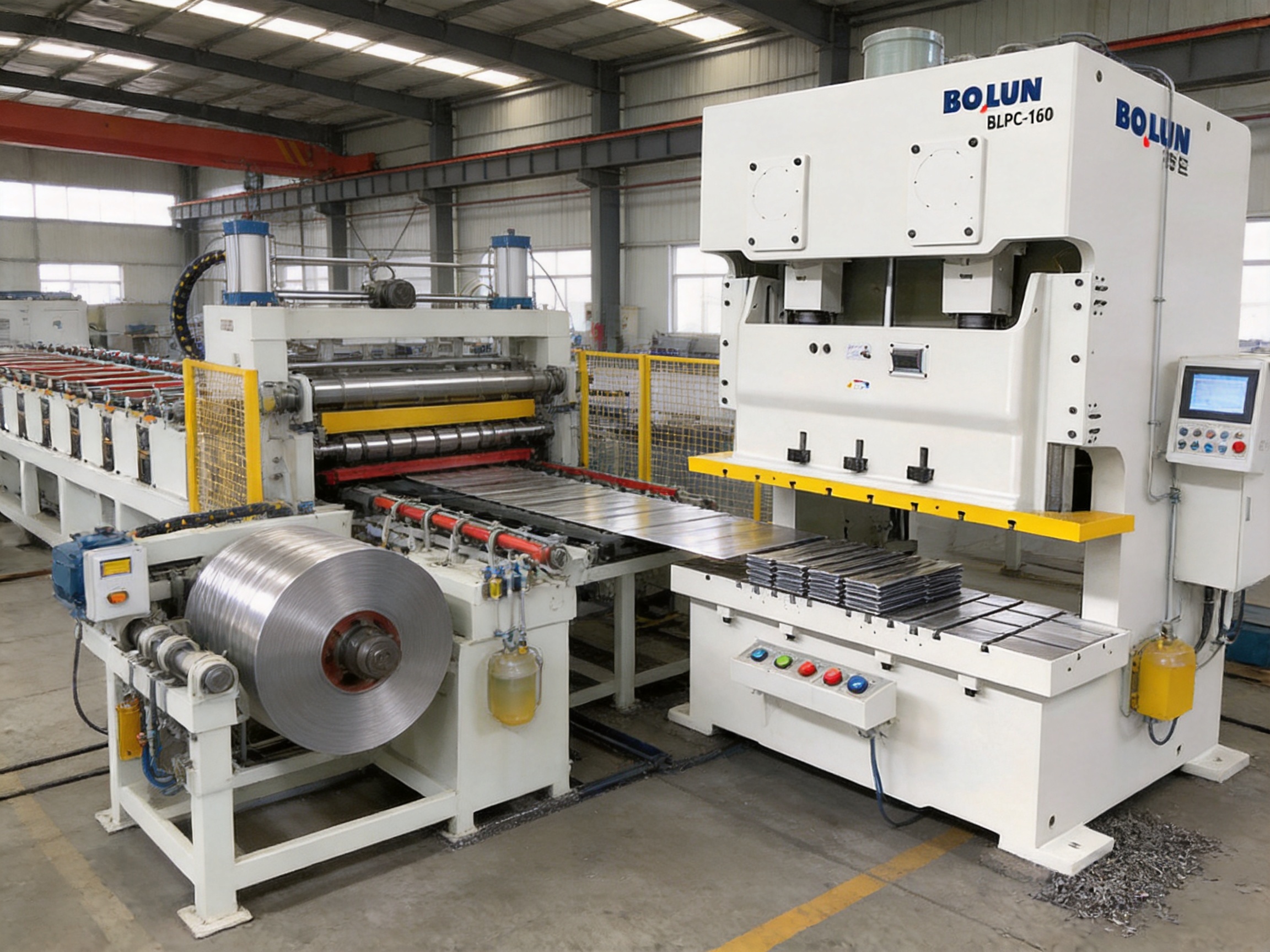
The BLPC-160 can serve a wide range of metal-forming applications. Its 1600 kN nominal capacity, broad worktable, double-point support, and adjustable production speed make it suitable for both general stamping and more specialized tooling.
Automotive suppliers often require repeatable production of brackets, reinforcement components, seat parts, mounting plates, chassis fittings, and other formed metal products. These parts may involve multiple operations and may be produced from steel or other sheet materials. The BLPC-160’s double-point structure is useful when the die is wide or when the forming forces vary between stations.
Household appliances contain numerous stamped parts, including internal brackets, panels, supports, hinge components, reinforcement pieces, and hardware. Appliance production often involves large dies and high output requirements. The worktable dimensions allow greater flexibility when installing tooling for broad or multi-operation components.
Electrical cabinets, equipment housings, mounting brackets, connector components, and control-panel parts often require punching, bending, embossing, and forming. The machine’s precision-oriented design and electronic auxiliary controls can support automated production cells for these components.
Industrial hardware manufacturers may produce hinges, brackets, clips, supports, fittings, and structural connectors. These parts are often produced in large quantities, making press speed, die life, and repeatability important. The BLPC-160 can be configured for progressive-die or multi-operation production depending on the part design.
Progressive tooling is one of the clearest applications for this machine. A large table, broad slide, double-point support, and cam-switch integration provide the basic platform for combining several operations into one continuous process. This can reduce handling, improve output, and support consistent part-to-part quality.
When comparing the BLPC-160 with competing power presses, users should examine more than rated tonnage. A press with the same nominal capacity may differ substantially in frame rigidity, load distribution, table size, setup functions, control flexibility, and service support.
The first competitive advantage is the double-point architecture. A single-point press can be effective for centrally loaded dies, but wide or asymmetrical tools may place greater demands on slide stability. The BLPC-160 is designed to manage these conditions more effectively by distributing force through two support points.
The second advantage is the combination of capacity and working area. Some presses offer adequate force but have limited table dimensions, restricting the use of long progressive dies. The BLPC-160 provides 1600 kN of capacity with a worktable of approximately 2000 × 760 mm, creating a useful balance between force and tooling space.
The third advantage is the focus on structural stability. A rigid, heat-treated frame and substantial machine mass help reduce vibration and deflection. This supports longer die life and more consistent production than a lighter frame may provide under similar operating conditions.
The fourth advantage is setup flexibility. Electric die height adjustment and an electronic indicator can reduce changeover time and improve repeatability. In a factory running several tools, these functions can deliver measurable savings over the life of the machine.
The fifth advantage is automation readiness. The electronic rotary cam switch and six spare channels provide room for peripheral integration. This is more flexible than a basic machine with limited timing outputs, especially for manufacturers planning gradual automation development.
The sixth advantage is the potential to protect expensive dies. Stable slide guidance, controlled load distribution, and vibration reduction can help reduce premature wear. Since dies often represent a major investment, protecting tooling can be as important as maximizing the press’s hourly output.
These advantages do not eliminate the need for correct application engineering. Users should still confirm material thickness, required force, die dimensions, eccentric load, feed speed, and safety requirements. However, the machine’s design gives manufacturers more capability and flexibility when these factors are properly evaluated.
Zhejiang Bolun High-Precision Machinery Co., Ltd. is presented as an integrated manufacturer covering research and development, design, production, sales, and service. This integrated approach can provide advantages when customers require customized specifications, specialized functions, or support during installation and commissioning.
The company reports approximately two decades of experience in machinery manufacturing. Long-term experience in this sector is valuable because press performance depends on many interconnected disciplines, including structural engineering, mechanical transmission, machining, welding, heat treatment, electrical control, assembly, testing, and field service.
A complete production chain allows a manufacturer to coordinate these stages more effectively. Basic frame design can be reviewed together with machining requirements. Core components can be evaluated in relation to the final assembly. Electrical controls can be designed around the mechanical motion profile, and quality inspections can be applied throughout the process rather than only at final delivery.
The company also emphasizes non-standard customization. Customization may involve table size, stroke, die height, feeding direction, automation interfaces, safety systems, cushioning arrangements, or special production requirements. The ability to modify a press responsibly requires engineering competence and an understanding of how changes affect frame loading, drive power, control logic, and machine safety.
Advanced precision-processing equipment is another stated strength. Precision machining is necessary for critical surfaces, guide components, bearing seats, slide interfaces, and mounting areas. Accurate machining helps ensure that components fit correctly during assembly and maintain their intended relationship during operation.
The company describes a finished-product inspection system that evaluates components and processes against demanding standards. Inspection may include dimensional checks, alignment verification, electrical testing, no-load operation, loaded trials, lubrication-system checks, safety-function verification, and final performance assessment. Specific inspection procedures should be confirmed for each machine order, but a systematic approach is essential for reliable delivery.
The company’s stated service model covers pre-sales consultation, in-sales support, and after-sales assistance. This is important for large industrial equipment because successful installation involves more than shipping a machine. Application review, foundation preparation, transportation planning, commissioning, operator training, maintenance guidance, and spare-parts support all influence the final result.
For international customers, a supplier with an international management perspective may also provide better coordination of documentation, technical communication, export preparation, and service procedures. These capabilities reduce the risk of misunderstanding during machine selection and installation.
The manufacturing process for a high-capacity power press begins with engineering. Designers must calculate the frame strength, slide guidance, drive requirements, die-height range, worktable loading, and expected operating conditions. The design must also account for maintenance access, safety functions, lubrication, electrical control, and compatibility with optional peripherals.
Frame fabrication is a critical stage. Steel plates and structural members must be cut, formed, positioned, and welded according to controlled procedures. Welding sequence matters because uncontrolled heat input can create distortion or residual stress. Fixtures and inspection methods help maintain the intended geometry during fabrication.
Heat treatment or stress-relief processing is used to improve frame stability after fabrication. Once the structural parts have reached the required condition, key surfaces can be machined. Large machining operations require suitable equipment and measurement methods because errors in one reference surface can affect the alignment of several connected assemblies.
Machining is followed by the production or installation of mechanical components. These may include crankshaft elements, connecting rods, slide guides, bearings, gears, clutch and brake components, balance devices, adjustment mechanisms, and lubrication parts. Each component must meet its specified dimensional and functional requirements.
The slide and table require particular attention. Their surfaces must be sufficiently flat and aligned so that the die can be mounted correctly. The table must support the intended working load, while the slide must move with controlled parallelism. Guide clearance should be set according to the design and verified during assembly.
Electrical integration is another major process. The main motor, control cabinet, sensors, die height indicator, rotary cam switch, emergency functions, and operator controls must work together. Wiring should be organized for reliability and service access. Control logic should be tested under normal, setup, inching, single-stroke, and continuous operating modes where applicable.
Final assembly combines the frame, drive system, slide, table, controls, lubrication circuits, pneumatic components, safety devices, and optional equipment. Assembly technicians must verify alignment, fastening torque, lubrication flow, motion smoothness, and the correct operation of adjustment systems.
Testing should include no-load cycling and, where appropriate, loaded or simulated production trials. The machine should be checked for abnormal noise, vibration, temperature rise, oil leakage, air leakage, control errors, and inconsistent slide movement. Documentation of inspection results helps establish traceability and provides a reference for future service.
This production approach gives the manufacturer a stronger basis for delivering reliable machines. It also supports customization because the engineering, machining, assembly, and testing functions are coordinated within one production system.
The BLPC-160 is a heavy industrial machine and must be installed by qualified personnel. Before delivery, the customer should prepare the foundation, access route, lifting equipment, electrical supply, compressed-air system, and working area.
The foundation must be capable of supporting the machine’s static weight and dynamic operating loads. The listed machine weight is approximately 21 tons, but the final installation load may include dies, feeders, conveyors, lubrication systems, and other peripherals. Foundation design should therefore be reviewed according to local engineering requirements and the supplier’s installation documentation.
Leveling is important for press accuracy. A machine that is not correctly leveled may experience uneven loading, abnormal guide wear, table distortion, or inconsistent die alignment. Installation technicians should use suitable precision instruments and follow the prescribed sequence for leveling and anchoring.
Electrical installation should match the required voltage, frequency, protection devices, grounding, and motor specifications. The control cabinet should be positioned where it is protected from excessive heat, moisture, dust, and impact. Compressed air should be clean and stable at the required pressure, which is listed at approximately 0.55 MPa in the supplied information.
Commissioning should begin with inspection of fasteners, lubricants, guards, wiring, air connections, and emergency-stop functions. The machine should first be operated at low speed or in setup mode. Die height adjustment, slide movement, balance-device function, lubrication, and cam-switch signals should be verified before production begins.
When a die is installed, the operator should check the die weight, mounting arrangement, shut height, stroke requirements, feed alignment, and clearance. The first production cycles should be conducted at reduced speed while monitoring part quality, noise, vibration, and material movement.
Regular maintenance protects both machine performance and die investment. Operators should follow the recommended inspection and lubrication schedule and keep accurate records of maintenance activities.
Daily checks may include lubrication levels, air pressure, visible oil leakage, abnormal noise, emergency-stop operation, safety guards, fastener condition, and the general cleanliness of the work area. Operators should report changes in sound, vibration, slide movement, or product quality immediately.
Periodic maintenance should include inspection of bearings, guides, connecting components, clutch and brake systems, balance devices, die height adjustment mechanisms, electrical connections, sensors, and pneumatic circuits. Wear measurements should be compared with the supplier’s service limits.
The rotary cam switch and connected sensors should be kept clean and correctly adjusted. A timing error can cause feeder misalignment, improper lubrication, incomplete part transfer, or a collision between the die and material. Spare channels should be labeled clearly when used for additional equipment.
Die height adjustment components should be lubricated and protected from contamination. Operators should avoid forcing the adjustment mechanism beyond its specified range. If the indicator reading changes unexpectedly, the machine should be stopped and inspected before further production.
Die protection is also part of machine maintenance. Correct material feeding, lubrication, scrap removal, and part detection reduce the likelihood of an overload or die crash. The press should not be used to compensate for a damaged, incorrectly installed, or improperly adjusted die.
Preventive maintenance is generally less expensive than emergency repair. It also reduces unplanned downtime and helps preserve production consistency. Because the BLPC-160 may be used with large and expensive tooling, a disciplined maintenance program can produce substantial long-term savings.
Power presses contain moving components capable of generating extremely high forces. Only trained and authorized personnel should operate, adjust, or maintain the machine. Operators must understand the controls, operating modes, emergency procedures, die setup requirements, and safety devices.
Hands and tools must remain outside the danger zone during automatic or production operation. Appropriate guarding, light curtains, two-hand controls, interlocks, and other protective systems should be installed and maintained according to applicable regulations and the final machine configuration.
Before die changes or maintenance, the press should be stopped, isolated, and secured using the site’s lockout and tagout procedure. Stored energy in pneumatic, mechanical, or electrical systems must be released or controlled. Heavy dies should be handled with suitable lifting equipment and verified lifting points.
Operators should never bypass a safety device to increase production speed. If a sensor, interlock, or emergency function fails, the machine should be removed from service until the fault is corrected. Safe production is a prerequisite for sustainable productivity.
Before purchasing, users should compare the required forming force with the actual die load rather than relying only on the nominal capacity. The load should include cutting, bending, forming, stripping, and any additional operations performed during the stroke.
Die dimensions should be checked against the table, slide bottom, throat depth, maximum die height, and column spacing. The customer should also review die weight, center of gravity, eccentric loading, and the location of the highest-force stations.
Material characteristics are equally important. Thickness, tensile strength, yield strength, surface condition, coil width, feed pitch, and lubrication requirements all affect press selection and operating speed. A production trial or engineering review may be appropriate for difficult materials or complex forming processes.
Automation requirements should be defined early. If the line will use a feeder, straightener, transfer mechanism, part detector, lubrication system, or scrap conveyor, the control interfaces and timing requirements should be discussed with the supplier. The electronic cam switch and spare channels create flexibility, but the final integration plan must still be engineered.
Customers should also consider service availability, spare parts, training, documentation, installation requirements, and response time. The lowest purchase price does not always represent the lowest total cost. A stable machine with good support may deliver greater value through reduced downtime, longer die life, and consistent product quality.
The nominal capacity is 1600 kN. The actual usable capacity depends on the position of the slide, die design, material characteristics, operating speed, and the specific forming process.
The double-point design supports the slide at two locations across its width. This helps distribute forming forces, reduce slide twisting, and improve stability when using wide or off-center-loaded dies.
The supplied data lists an approximate worktable size of 2000 × 760 × 150 mm for the BLPC-160 configuration. The final confirmed dimensions should be verified in the machine quotation and technical drawing.
Yes. The large worktable, broad slide bottom, double-point architecture, adjustable die height, and electronic cam-switch functions make the machine suitable for many progressive-die applications. The die must still be evaluated for force, weight, dimensions, and load distribution.
The supplied model table lists an approximately 110 mm slide stroke for the BLPC-160 configuration. The final stroke should be confirmed for the selected machine version.
The listed range is approximately 50 to 100 strokes per minute. The appropriate production speed depends on material, die design, forming complexity, feed system, lubrication, and required quality.
Yes. The product description identifies an electric die height adjustment system and an electric die height indicator. These features support faster and more repeatable setup between different dies.
The electronic rotary cam switch provides timing signals linked to the press cycle. These signals can coordinate feeders, lubrication devices, sensors, transfer equipment, and other peripheral systems. Six spare channels provide additional flexibility for future expansion.
The supplied technical information lists approximately 0.55 MPa. The required air quality, flow rate, and final connection requirements should be confirmed before installation.
Typical applications may include automotive brackets, appliance components, electrical enclosures, industrial fittings, hardware, support plates, formed panels, and parts produced with progressive dies. Final suitability depends on part geometry, material, die requirements, and forming force.
A rigid heat-treated frame helps resist deflection and vibration during repeated forming cycles. This supports stable die alignment, consistent part quality, reduced tool wear, and longer machine service life when the press is correctly installed and maintained.
No. Precision depends on the complete production system. Press rigidity, die quality, material consistency, installation, lubrication, feed accuracy, operating speed, and maintenance all contribute to the final result.
The customer should prepare a suitable foundation, transport and lifting plan, electrical supply, compressed-air supply, installation space, safety perimeter, die-handling equipment, and trained personnel. Detailed requirements should be confirmed with the supplier before shipment.
The product is manufactured by Zhejiang Bolun High-Precision Machinery Co., Ltd., a Chinese producer of precision forming and power press equipment with stated capabilities in design, manufacturing, customization, sales, and service.
The BLPC-160 Versatile Precision-Stable Open-Type Double-Point Power Press is designed for manufacturers that need substantial forming capacity without sacrificing tooling flexibility or process stability. Its 1600 kN nominal capacity, approximately 2000 mm worktable, double-point slide support, rigid heat-treated frame, electric die height adjustment, and electronic cam-switch functions create a balanced platform for demanding stamping work.
Its strongest advantages are found in the relationship between structure and production practicality. The double-point design helps manage off-center loads and wide dies. The rigid frame and machine mass support vibration control. The large table accommodates longer or multi-stage tooling. The die height system simplifies setup, while the spare cam channels support automation expansion.
The machine is also supported by the broader manufacturing capabilities described for Zhejiang Bolun High-Precision Machinery Co., Ltd. These include integrated research and development, precision processing, customization, quality inspection, assembly, and customer service. Such capabilities are important because industrial press performance depends on coordinated engineering from initial design through commissioning and long-term maintenance.
For automotive, appliance, electrical, hardware, and general industrial applications, the BLPC-160 can provide a strong foundation for efficient and repeatable forming production. The final performance will depend on correct application selection, die engineering, installation, operator training, preventive maintenance, and safe operating practices. When these requirements are properly managed, the machine can help manufacturers improve productivity, protect valuable tooling, and build a more flexible and stable stamping operation.
1. Product technical information supplied for the BLPC-160 open-type double-point power press.
2. Product specification data for the BLPC series of open-type double-point power presses.
3. Manufacturer-provided information regarding structural design, manufacturing capability, quality control, customization, and service support.
4. General principles of mechanical power press design, stamping-process engineering, die alignment, and progressive-die production.
5. General industrial guidance concerning press installation, preventive maintenance, machine safeguarding, and operator training.


A buyer comparing a 45-ton open-gap press for a bracket line often receives two...
Two presses can both carry a 200-tonne nameplate and still produce very differe...
What Is a Power Press? A power press — also called a stamping press or punch pr...
A tooling engineer quotes a new bracket program and specifies a 160-ton press. ...
Understanding Mechanical Power Presses and Their Essential Functions A mechani...
In the fields of metal forming, sheet metal fabrication, blanking, and punching,...
Contact Us

topbolun@gmail.com

+86-575-83362228

+86-13735238388
+86-18667502750

+86-575-83362999

+8618667502750

No.1 Linjiang Road East, Xiaren, Jinting Town, Shengzhou City, Zhejiang Province, China
Ready to Begin?
Get in Touch

Now!

ZHEJIANG BOLUN
 English
 中文简体