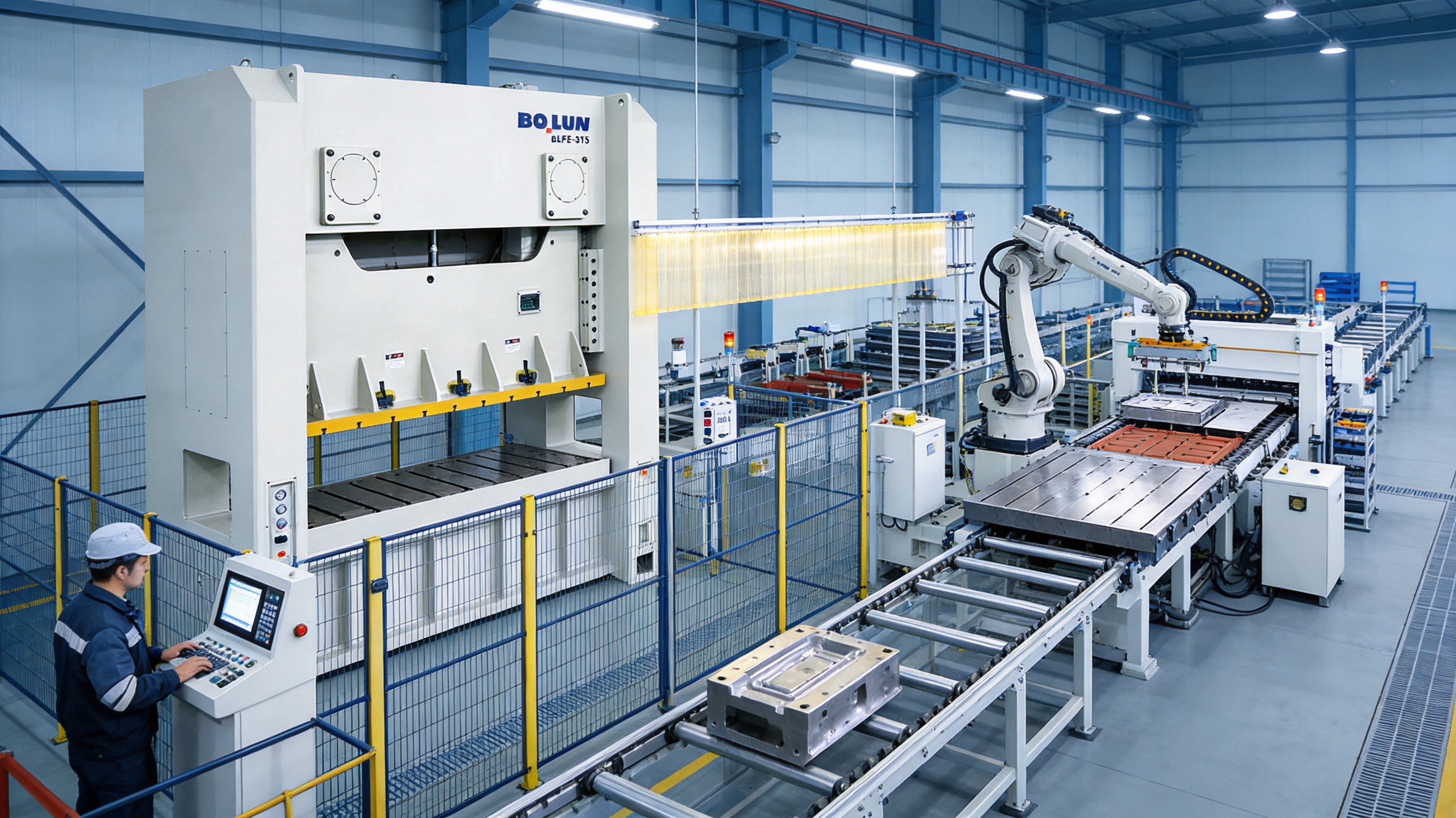
Modern stamping, forming, and forging operations require more than a machine with a high nominal tonnage. Manufacturers need a complete production platform that combines structural rigidity, controlled motion, repeatable accuracy, dependable lubrication, operator protection, and long-term serviceability. The BLPE-315 high-capacity heavy-duty closed-type double-point press is designed to meet these requirements in demanding industrial environments where production loads are high, tooling is substantial, and process consistency directly affects product quality and operating cost.
With a nominal capacity of 3150 kN, the BLPE-315 occupies an important position in the heavy-duty press market. It provides the force needed for large-scale stamping and forming while retaining the controlled operating characteristics expected from a precision mechanical press. Its three-section frame, double-point slide guidance, V-type slide stroke configuration, 30 kW main motor, electric die-height adjustment display, automatic lubrication system, and integrated photo-electronic safety equipment form a coordinated system for reliable production.
The machine is particularly suitable for automotive components, heavy appliances, industrial enclosures, structural parts, fabricated assemblies, and other products that require substantial forming force. Its closed-type construction supports stable load distribution across the working area, while the double-point drive arrangement helps control slide movement and minimize tilting during forming operations. These characteristics make the press a practical choice for manufacturers seeking higher productivity without sacrificing dimensional consistency or workplace safety.
Industrial forming processes are often performed under severe mechanical conditions. A workpiece may require deep drawing, blanking, bending, embossing, coining, or progressive forming, with each operation applying significant force to both the material and the tooling. When the machine frame or drive system lacks sufficient rigidity, the result can be uneven forming, excessive die wear, dimensional variation, vibration, and unplanned downtime.
A high-capacity press must therefore perform several functions simultaneously. It must generate adequate force at the correct point in the stroke, hold the slide accurately under load, maintain alignment between the upper and lower die, dissipate operating stresses, and repeat the cycle thousands of times with predictable results. It must also provide operators and maintenance personnel with a safe and manageable working environment.
The BLPE-315 is developed around these industrial realities. Its 3150 kN nominal capacity provides a substantial forming reserve for medium-to-large components. The closed-type frame creates a continuous load path around the working zone, helping the machine resist deformation during high-load operations. The double-point configuration distributes the drive force across two points on the slide rather than concentrating it through a single central connection. This is especially valuable when dies are wide, workpieces are asymmetrical, or forming loads are distributed across a broad area.
For manufacturers, the benefit is not limited to force capacity. A rigid and accurately guided press can improve tool life, support more stable production parameters, and reduce the risk of defective parts caused by slide deflection or uneven loading. In a high-volume factory, small improvements in repeatability can produce significant savings over the life of the equipment.
The BLPE-315 is a closed-type double-point power press intended for heavy industrial forming. It delivers a nominal capacity of 3150 kN and uses a three-section frame structure designed for high rigidity and service stability. The specified V-type version provides a 300 mm slide stroke, giving the machine sufficient vertical travel for a broad range of stamping dies and forming tools.
The maximum die height is listed at 615 mm, allowing the press to accommodate substantial tooling arrangements. Die-height adjustment is electrically controlled, simplifying setup and helping operators establish repeatable tooling conditions. An electric mode height display provides direct process information during adjustment, reducing reliance on manual measurement and improving setup transparency.
A 30 kW main motor supplies the drive power required for heavy-duty operation. The press is also equipped with an automatic lubrication system intended to deliver lubricant to critical moving areas at controlled intervals. This helps reduce friction and wear, supports stable operation during extended production runs, and decreases the likelihood of lubrication-related maintenance interruptions.
The machine includes photo-electronic safety protection and sensitive control systems. These features are important in production environments where operators interact with dies, feeders, transfer equipment, and workpieces. A correctly integrated safeguarding system can help reduce access-related risks while allowing the press to maintain an efficient production rhythm.
| Item | BLPE-315 V Configuration |
|---|---|
| Press type | Closed-type double-point power press |
| Nominal capacity | 3150 kN |
| Nominal pressure stroke | 3 mm |
| Slide stroke | 300 mm |
| Strokes per minute | 20–35 S.P.M. |
| Maximum die height | 615 mm |
| Worktable size | 2500 × 1000 × 190 mm |
| Slide bottom size | 2300 × 900 × 95 mm |
| Distance between columns | 2800 mm |
| Working-face height | 1200 mm |
| Side opening | 900 × 600 mm |
| Main motor | 30 kW × 4 poles |
| Air pressure | 0.55 MPa |
| Punch accuracy | GB/JIS Class 1 |
| Frame structure | Three-part |
The published specifications indicate a balanced combination of force, working envelope, stroke length, and production speed. With an operating range of approximately 20 to 35 strokes per minute, the press can support demanding production schedules while allowing sufficient time for material handling, die action, and forming operations. Actual output will depend on the workpiece, tooling design, material thickness, feed system, safety settings, and process requirements.
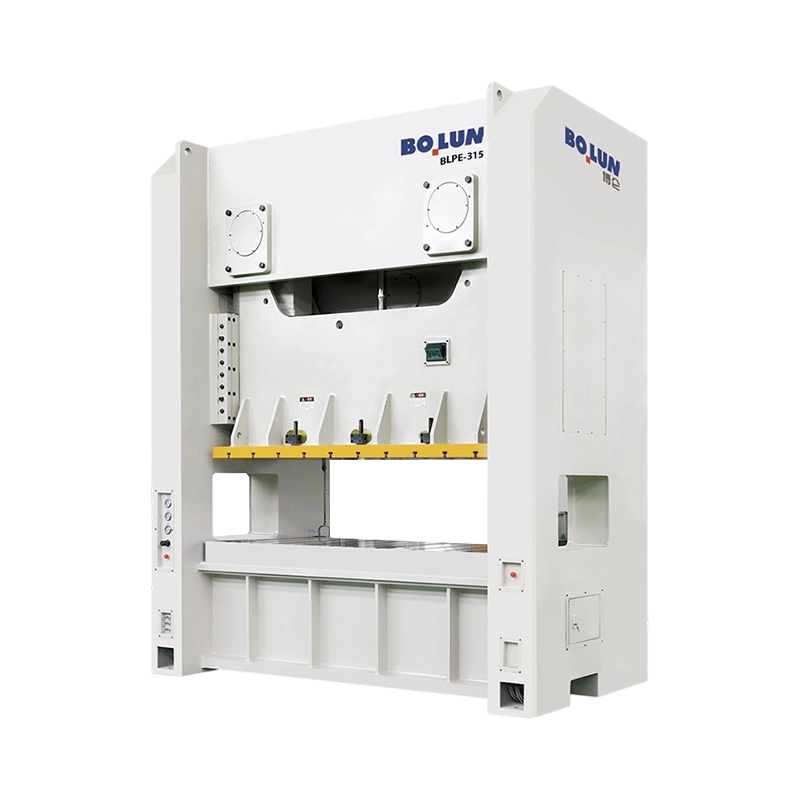
BLPE-315 High-Capacity Heavy-Duty Closed-Type Double-Point Press
Frame rigidity is one of the most important characteristics of a heavy-duty power press. During forming, the machine experiences large compressive forces that attempt to separate or deform the frame, bed, slide, and tooling. If these components move excessively, the upper and lower die surfaces may no longer remain correctly aligned. Even small changes in alignment can affect part dimensions, cutting clearance, surface quality, and tool life.
The BLPE-315 uses a three-section frame structure. This construction is intended to provide a robust load-bearing configuration while supporting manufacturing, transportation, assembly, and maintenance requirements. A multi-section design can be engineered with carefully machined mating surfaces and reinforced structural members, allowing the finished press to achieve a strong and stable working condition.
The closed-type arrangement further strengthens the load path. Unlike an open-sided press, a closed frame surrounds the working area and is better suited to high-force operations over a wide die. The frame absorbs and distributes operating loads through its columns, crown, and bed. This helps reduce localized stress concentrations and supports more consistent force transmission from the drive system to the workpiece.
For large dies, the relationship between table size and frame rigidity is critical. The BLPE-315 offers a 2500 × 1000 mm worktable, providing a broad surface for industrial tooling. The slide bottom size of 2300 × 900 mm is proportionally matched to the working area, supporting the use of large upper die structures. The 2800 mm distance between columns provides a wide working zone for large or multiple-cavity tools.
Competitors may offer similar nominal capacities but differ considerably in practical rigidity. Tonnage alone does not guarantee reliable forming. A machine with insufficient structural stiffness may technically generate the required force but still deliver unstable results under off-center loading. The double-point and closed-frame architecture of the BLPE-315 is intended to provide a stronger foundation for broad and demanding dies.
In a single-point press, a wide die can create a tilting moment if the forming load is not centered. This may cause uneven clearance, accelerated wear on guiding components, or inconsistent part geometry. A double-point press distributes the slide-driving force across two connection points. When correctly designed and adjusted, this arrangement improves control over slide balance and provides better support for wide tooling.
The double-point design is particularly useful in automotive and appliance manufacturing, where workpieces frequently have large panels, irregular shapes, or multiple forming stations. It can also be valuable in blanking and bending operations where the load is spread over a significant portion of the die surface. The objective is not simply to increase force, but to apply that force in a more controlled and stable manner.
The slide is the moving assembly that transfers the press drive to the upper die. Its movement must remain smooth, parallel, and repeatable throughout the working stroke. Any deviation can influence the quality of the formed part and the service life of the tooling.
The BLPE-315 uses a double-point slide configuration that supports large-die applications. The 300 mm slide stroke provides substantial travel for forming and return movement, while the 615 mm maximum die height allows the press to work with tall tools and complex die assemblies. The relationship between stroke and die height gives manufacturers flexibility when developing processes for deep, multi-stage, or large-format components.
Slide guidance is especially important in operations involving substantial horizontal or off-center forces. The press must maintain the relative position of the upper die and lower die even when material flow is not perfectly symmetrical. A carefully guided slide can reduce die impact, improve cutting and forming consistency, and prevent premature wear in guide posts, bushings, and other tooling components.
The specified punch accuracy of GB/JIS Class 1 indicates a precision-oriented design target. In practice, achievable production accuracy also depends on die construction, material properties, lubrication, press foundation, setup quality, operator procedures, and maintenance. Nevertheless, a press designed to meet a recognized accuracy class offers a stronger starting point for demanding manufacturing work than equipment intended only for general-purpose forming.
Die height is a critical setup parameter. The distance between the slide and table must correspond closely to the working height of the die, the required shut height, and the material-forming process. Incorrect adjustment may lead to insufficient forming, excessive die impact, overloading, or damage to the tool.
The BLPE-315 incorporates an electric die-height adjustment system and electric mode height display. This arrangement makes setup more efficient than relying exclusively on manual adjustment or external measurement. Operators can make controlled changes and verify the selected height through the display, supporting repeatable changeovers between jobs.
Electronic height indication is also useful for production documentation. When a process is validated, the selected die height can be recorded as part of the setup recipe. If the same product is manufactured later, the stored value provides a practical reference for returning the press to a known configuration.
The 30 kW main motor is selected to provide the drive power necessary for a 3150 kN class press. Heavy-duty forming requires more than peak force; the machine must accelerate and decelerate the slide reliably, maintain the operating cycle, and manage repeated loads without excessive heating or instability. The motor and transmission system must therefore work as a coordinated assembly.
The BLPE-315 V configuration is specified for approximately 20 to 35 strokes per minute. This operating range gives manufacturers the ability to balance productivity and process control. Faster cycles may be appropriate for simpler blanking or bending work, while more complex forming processes may benefit from a slower setting that provides additional time for material positioning, die action, or part removal.
Press speed should always be selected according to the tooling and material. A high cycle rate is not automatically the most productive choice if it results in excessive vibration, tool wear, material movement, or quality defects. The value of a flexible speed range is that it allows the production team to identify an efficient operating point rather than forcing every job to run at one fixed speed.
The motor is listed as 30 kW × 4 poles. A four-pole motor configuration is widely used in industrial machinery because it offers a practical balance of operating speed, torque characteristics, efficiency, and compatibility with mechanical transmission systems. The final performance of the drive system depends on the complete transmission design, flywheel, clutch and brake arrangement, control logic, and maintenance condition.
In continuous production, stability is often more important than short-term peak performance. A press that maintains consistent speed, lubrication, alignment, and control response throughout a shift can deliver more usable output than a faster machine that requires frequent adjustments or stoppages.
The BLPE-315 is designed as an industrial production machine rather than a light-duty workshop press. Its high-rigidity frame, automatic lubrication, controlled die-height adjustment, and safety integration are intended to support prolonged use. These systems can help reduce the variation that commonly appears when a press is exposed to high loads over extended periods.
Manufacturers should still establish a preventive maintenance schedule. Motor condition, drive components, fasteners, guides, lubrication points, electrical cabinets, safety devices, and foundation connections should be inspected according to operating hours and application severity. Proper maintenance protects the investment and helps preserve the original accuracy of the machine.
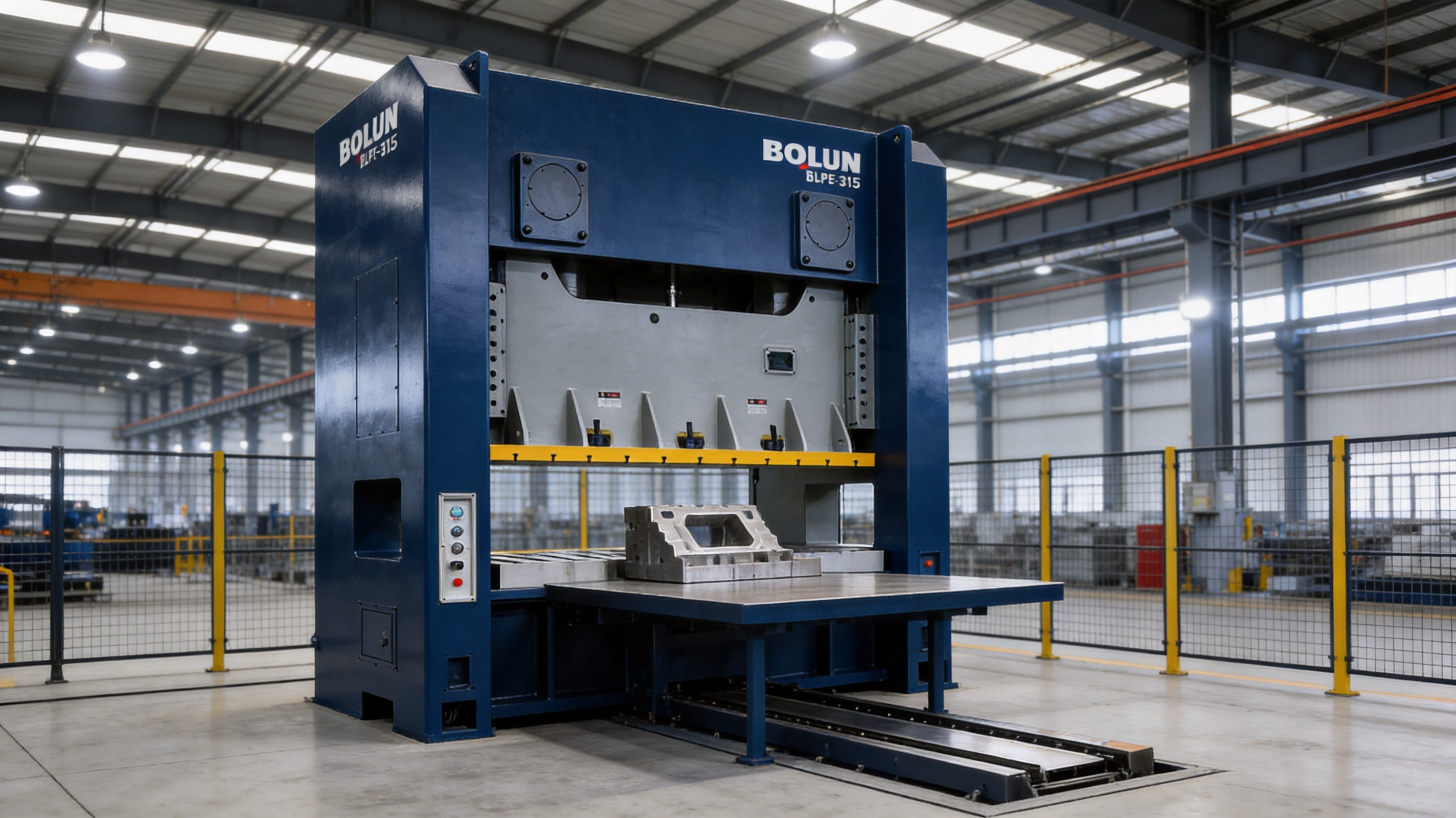
Lubrication is fundamental to the reliable operation of a mechanical press. Moving joints, bearings, slide guides, eccentric components, and other contact areas experience friction and repeated loads. Without adequate lubrication, heat and wear increase rapidly. In severe cases, poor lubrication can lead to scoring, seizure, inaccurate slide movement, or unplanned downtime.
The BLPE-315 incorporates an electric automatic lubrication system. Instead of requiring operators to lubricate every point manually at irregular intervals, the system is designed to deliver lubricant according to a controlled program. This supports more consistent coverage of critical components and reduces the chance that an important lubrication point will be overlooked.
Automatic lubrication provides several practical benefits. It can reduce routine labor, improve maintenance consistency, and help ensure that the press receives lubrication during production conditions when manual access may be inconvenient or unsafe. It also supports a more systematic approach to preventive maintenance because lubricant supply and system alarms can be incorporated into operating procedures.
Lubrication does not eliminate the need for inspection. Reservoir levels, lubricant quality, lines, metering points, filters, and pump operation should be checked regularly. The correct lubricant must be selected for the machine and the ambient conditions. Contaminated or incompatible lubricant can create as many problems as insufficient lubricant.
The purchase price of a press is only one part of its total cost. Energy consumption, tooling wear, maintenance labor, spare parts, downtime, rejected products, and production changeover time may have a greater financial impact over the machine’s life.
A robust frame can help protect tooling from alignment-related damage. Accurate slide movement can reduce scrap and rework. Automatic lubrication can help extend the service life of moving components. Electric die-height adjustment can shorten setup time. Safety systems can reduce operational risk and support compliance with internal factory procedures. These combined advantages make a well-engineered press more valuable than a machine selected solely on initial price or nominal capacity.
When comparing the BLPE-315 with competing machines, buyers should evaluate these lifecycle factors. Two presses with similar force ratings may have different levels of structural stiffness, control quality, maintenance accessibility, lubrication coverage, and production reliability. A broader comparison provides a more realistic assessment of return on investment.
Large industrial components require a press with sufficient working area. The BLPE-315 worktable measures 2500 × 1000 × 190 mm, while the slide bottom measures 2300 × 900 × 95 mm. These dimensions provide a substantial mounting area for dies used in automotive panels, appliance parts, industrial covers, brackets, structural components, and other wide-format products.
The distance between columns is specified as 2800 mm. This broad opening allows manufacturers to install large tooling and provides practical access for die handling and maintenance. The side opening of 900 × 600 mm can also support tooling access, material movement, and service operations, subject to the exact die design and safety requirements.
A working-face height of 1200 mm gives the machine a defined operating elevation. This dimension should be considered during factory layout planning, especially when the press is combined with conveyors, destackers, transfer systems, coil lines, robotic handling, or scrap removal equipment.
The maximum die height of 615 mm is another important advantage for tooling flexibility. Tall dies may incorporate several forming stages, mechanical cams, lifters, sensors, nitrogen cylinders, or other special mechanisms. A press with insufficient die height may require compromises in tool construction or additional risers, which can affect stability and production efficiency.
Although the press can be operated as a standalone machine, its size and performance make it suitable for integration into automated production lines. Potential supporting equipment includes coil feeders, sheet straighteners, transfer devices, robotic loading and unloading systems, die sensors, part detection systems, and automated scrap handling.
The broad table and slide dimensions can support tooling layouts designed for automated material movement. Photo-electronic safety equipment can help define protected zones around the machine, while sensitive control systems provide a foundation for coordinated operation with auxiliary equipment. Any automation project must be engineered as a complete system, with clear communication between the press, feeder, robot, die sensors, and emergency circuits.
Automation can improve production consistency by reducing manual handling variation. It can also improve workplace safety by keeping operators away from hazardous areas during the press cycle. For high-volume automotive or appliance production, the combination of a heavy-duty press and suitable automation can significantly increase throughput and reduce labor-intensive handling.
Safety is an essential part of press design and should never be treated as an optional accessory. Power presses combine high force, moving tooling, fast cycling, and potentially heavy workpieces. A safe production environment requires mechanical protection, electrical controls, operator training, appropriate procedures, and regular inspection.
The BLPE-315 includes an integrated photo-electronic safety device. Such a device can detect an interruption in a protected light field and initiate the appropriate safety response according to the machine’s control design. This helps prevent unauthorized access to the danger zone during operation and adds an important layer of protection for operators and nearby personnel.
The effectiveness of photo-electronic safeguarding depends on correct installation, alignment, testing, and integration with the press control system. The protected field must be positioned to prevent access to hazardous movement, and the system must be tested regularly. Operators should understand the function of the safety device and should never bypass, obstruct, or disable it.
Highly sensitive control systems further support safe operation by monitoring commands and coordinating press functions. Controls should be configured for the intended operating modes, including setup, inching, single stroke, continuous operation, and emergency stop conditions. Exact control functions may vary according to the final machine configuration and customer requirements.
Safety begins before the first production cycle. The machine should be installed on a suitable foundation designed to support its mass and absorb operating forces. Electrical, pneumatic, and grounding connections must be completed according to applicable standards. The working area should provide adequate clearance for die handling, inspection, maintenance, and emergency access.
During commissioning, the press should be inspected for shipping damage, correct lubrication, proper fastener torque, electrical function, emergency-stop response, photo-electronic device operation, and slide movement. Trial runs should begin at conservative settings before the machine is released for full production.
Personnel should receive training in machine operation, die setup, lockout procedures, adjustment, fault response, and daily inspection. A strong safety culture combines machine safeguards with disciplined human procedures.
The BLPE-315 offers several advantages over conventional open-type presses and lighter-duty machines. The first is its combination of high capacity and broad working area. A 3150 kN nominal force allows the machine to process materials and components that exceed the practical range of smaller presses. The closed frame and double-point slide help the press manage wide dies and distributed forming loads more effectively.
The second advantage is structural stability. Open-type presses are useful for many applications, but their open-side frame may provide less resistance to deformation during very high-load or off-center operations. A closed-type frame creates a more enclosed and rigid load path, which is better suited to large tooling and demanding forming processes.
The third advantage is setup control. Electric die-height adjustment and electric mode height display help reduce manual setup effort. This can be particularly valuable in factories producing multiple part families, where repeatable changeovers are important. A clear height indication also supports process documentation and operator training.
The fourth advantage is maintenance support. Automatic lubrication helps maintain critical moving parts and reduces dependence on inconsistent manual lubrication. Over time, this may contribute to lower wear, fewer maintenance interruptions, and more stable press performance.
The fifth advantage is safety integration. The photo-electronic safety device and sensitive control system provide a more complete production platform than a basic press with minimal safeguarding. This supports modern manufacturing environments that prioritize operator protection, standardized procedures, and risk reduction.
When compared with other presses in the same nominal capacity range, the BLPE-315 should be assessed through its complete specification rather than its tonnage alone. The three-section frame, 300 mm slide stroke, 615 mm maximum die height, 2500 × 1000 mm table, and 2800 mm column distance create a useful combination for broad industrial tooling.
The double-point structure is another differentiating feature. Some competing machines may use single-point arrangements that are adequate for centered loads but less suitable for wide or unevenly loaded dies. The double-point design can offer improved slide balance when properly maintained and adjusted.
The machine’s 20–35 strokes-per-minute range also offers practical flexibility. This allows production engineers to optimize output according to the part, die, and material rather than operating under a single fixed speed. The 30 kW motor provides the power foundation for the press’s heavy-duty operating requirements.
Buyers should also consider supplier capability. A press is a long-term industrial asset, and its value depends on engineering support, manufacturing quality, documentation, spare parts, installation assistance, and after-sales service. Zhejiang Bolun High-Precision Machinery Co., Ltd. combines press design, manufacturing, sales, and service capabilities, allowing customers to discuss standard and customized requirements with one industrial equipment provider.
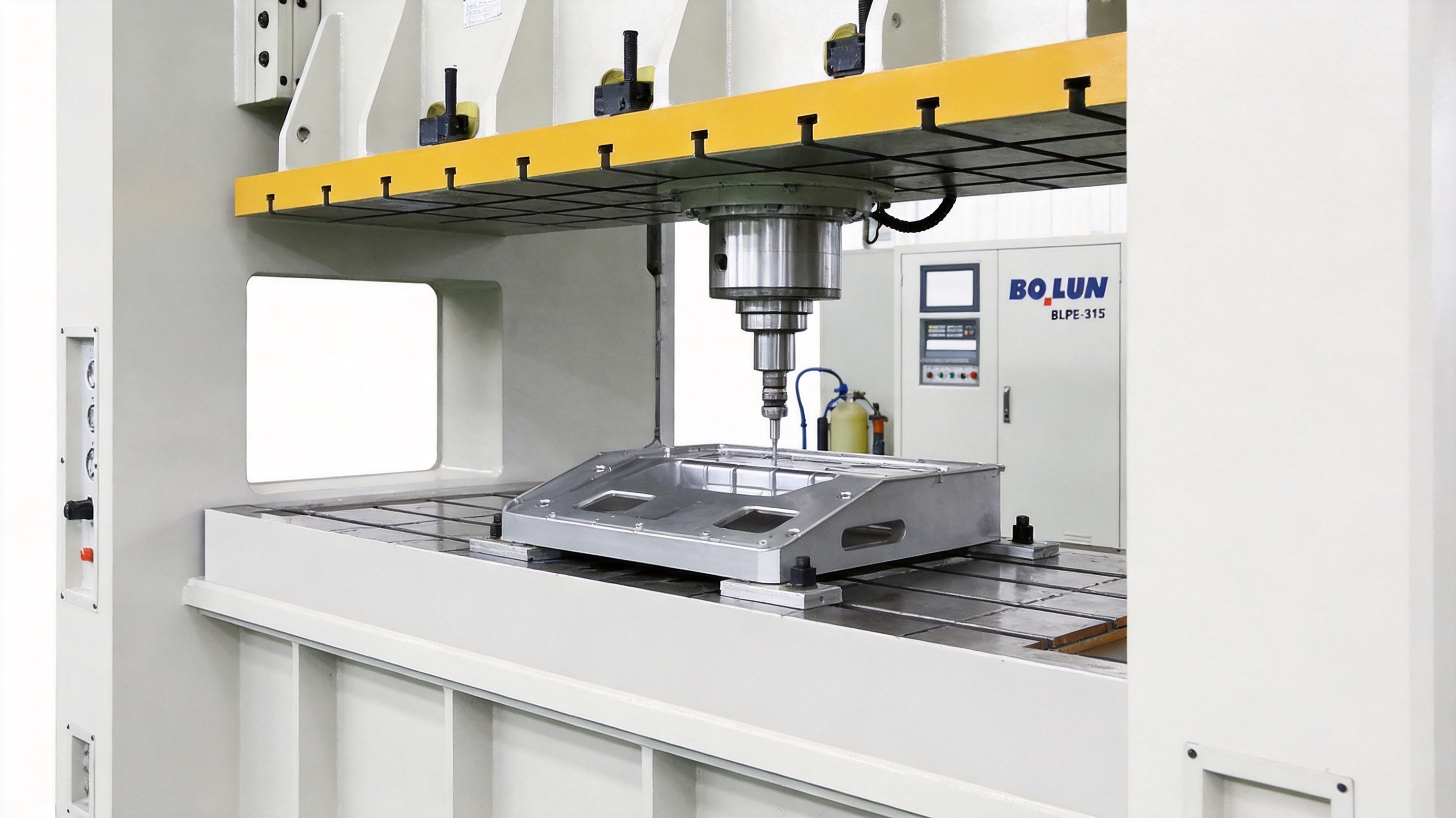
Zhejiang Bolun High-Precision Machinery Co., Ltd. is located in Zhejiang, one of China’s important manufacturing regions. The company has approximately two decades of experience in machinery manufacturing and has developed capabilities in the research, design, production, sales, and service of forming equipment.
The company’s manufacturing approach covers the full process from basic design and core component development to precision processing, assembly, inspection, and final delivery. This integrated structure can help improve communication between engineering and production teams. It also allows the manufacturer to coordinate machine configuration, component selection, control requirements, and customer-specific modifications within one production system.
Precision processing is particularly important for a high-capacity press. Frame sections, slide components, guide surfaces, worktable areas, and drive-related parts must be manufactured and assembled with appropriate accuracy. If mating surfaces or guide components are not correctly processed, the final press may experience alignment problems, uneven loading, or premature wear.
Bolun emphasizes advanced precision processing equipment and a mature industrial environment. These capabilities support the production of heavy machinery with demanding dimensional and performance requirements. A strong manufacturing environment also improves the company’s ability to handle customized specifications, including special worktable dimensions, non-standard stroke requirements, automation interfaces, safety configurations, and application-specific tooling conditions.
Quality control in press manufacturing must extend beyond final appearance. The machine’s long-term performance depends on the quality of steel, castings, machined surfaces, bearings, drive components, electrical equipment, lubrication elements, safety systems, and assembly procedures.
The company states that it operates a finished-product inspection system exceeding ordinary industry requirements. A comprehensive inspection program may include dimensional verification, visual checks, electrical testing, dry-cycle operation, load-related evaluation, slide parallelism checks, die-height adjustment verification, lubrication-system testing, emergency-stop testing, and photo-electronic safety inspection.
Each inspection stage contributes to reliability. Dimensional checks confirm that major components meet engineering requirements. Assembly checks verify that parts are correctly fitted and adjusted. Functional tests confirm that the press responds correctly to operating commands. Safety tests verify that protective devices perform as intended. Documentation of these activities helps establish traceability and provides customers with greater confidence in the delivered machine.
Quality is also influenced by process discipline. A manufacturer with standardized work instructions, trained technicians, controlled assembly areas, and clear inspection responsibilities is better positioned to produce consistent machines. This is particularly important for heavy presses because corrective work after installation can be expensive and disruptive.
Industrial customers rarely have identical production conditions. One factory may require a large worktable for automotive panels, while another may need a special feeder interface, unusual die height, customized safety guarding, or integration with a robotic line. The ability to adapt the press to a customer’s process can be as important as the standard specification.
Bolun provides non-standard design and manufacturing capabilities for products with special specifications and functions. This supports the development of application-specific solutions rather than forcing every customer to use exactly the same configuration. Customization may involve mechanical dimensions, electrical controls, operating modes, material-handling equipment, lubrication arrangements, die protection, or production-line communication.
Before customization begins, the customer should provide detailed technical information. Important data includes material type, thickness range, blank dimensions, finished-part size, forming method, die weight, die height, required stroke, cycle rate, production volume, feeding direction, automation concept, factory conditions, and applicable safety standards.
A structured technical review helps determine whether the press capacity is appropriate. Nominal tonnage must be compared with the actual force curve of the process, not merely the maximum force required at one point. Tool dimensions, off-center loads, energy consumption, cycle time, and required slide control should also be reviewed.
The BLPE-315 can be considered for operations such as large-part blanking, bending, shallow drawing, panel forming, embossing, multi-stage stamping, and heavy appliance component production. The final suitability depends on the material and tooling. Deep drawing, for example, may require additional analysis of blank-holder force, material flow, lubrication, forming depth, and draw-bead configuration.
For automotive applications, the press may support structural brackets, reinforcement parts, chassis-related components, body subassemblies, and other stamped products. For appliance manufacturing, it may be used for panels, covers, housings, frames, and internal structural pieces. In general industrial production, the machine can support fabricated parts that demand high force and broad tooling support.
Application engineering should confirm the process window before production begins. Trial forming, die spotting, sample inspection, and parameter optimization can help establish the correct operating speed, die height, lubrication level, and material-handling sequence.
Correct installation is essential for preserving the accuracy and service life of a heavy-duty press. The foundation must be capable of supporting the equipment and managing dynamic forces. The machine should be leveled according to the manufacturer’s instructions, with particular attention to bed stability and column alignment.
Factory planning should include transport routes, lifting equipment, access for future maintenance, electrical supply, compressed air, ventilation, lighting, operator clearance, die storage, and material flow. The 1200 mm working-face height and large overall dimensions should be considered when arranging feeders, conveyors, platforms, and guarding.
Compressed air is specified at 0.55 MPa. The air supply should be clean, dry, and stable, with appropriate filtration and moisture control. Fluctuating or contaminated air can affect pneumatic components and may interfere with reliable operation of auxiliary systems.
Before production, operators should verify that the die is securely mounted, the work area is clear, safety equipment is functional, lubrication is available, and the selected die height is correct. The first cycles after a die change should be performed under controlled conditions. Abnormal noise, vibration, heating, lubrication alarms, or control responses should be investigated immediately.
Daily maintenance may include checking lubricant level, inspecting visible hoses and lines, confirming safety-device function, cleaning the table and slide area, checking for abnormal leakage, and observing the machine during operation. Weekly or monthly inspections may include fastener checks, electrical cabinet inspection, guide condition, brake and clutch response, motor condition, and foundation connections.
Maintenance intervals should be adjusted according to production volume, operating speed, material characteristics, and environmental conditions. A press running heavy dies at a high cycle rate requires more frequent inspection than a machine performing occasional light forming.
Maintenance records should include operating hours, lubrication activities, fault history, replaced parts, die-related incidents, safety tests, and accuracy checks. This information helps identify trends before they develop into serious failures. It also supports production planning by allowing maintenance to be scheduled during planned downtime.
The BLPE-315 is suited to industries where large workpieces, high-strength materials, or demanding forming processes are common. Automotive production is one of the most relevant applications because vehicle components often require broad dies, stable slide control, and repeatable forming under high load.
Heavy appliance manufacturing is another suitable field. Washing machine cabinets, refrigerator panels, oven structures, air-conditioning components, and other large sheet-metal parts may benefit from the press’s wide working area and substantial capacity. The machine can also be considered for electrical enclosures, industrial cabinets, construction components, agricultural machinery parts, and general fabricated products.
In each application, productivity depends on the relationship between the press and the production system. A high-capacity machine can increase output only when material supply, die changeover, part removal, quality inspection, and maintenance are properly coordinated. The BLPE-315 provides the mechanical platform, but process engineering determines how effectively that platform is used.
One important value of a heavy-duty press is process consolidation. A larger machine may allow several forming operations to be combined into one die or one production sequence. This can reduce intermediate handling, improve dimensional consistency, and simplify production logistics. However, consolidation must be evaluated carefully to ensure that the die, material, and press can handle the combined load and energy requirements.
Equipment selection should begin with the product and process rather than with a preferred machine model. The manufacturer should identify the maximum forming force, force position within the stroke, die dimensions, die weight, working height, material type, production volume, desired cycle rate, and automation requirements.
Capacity should include a reasonable operating margin. Running a press continuously at the absolute limit can increase stress and reduce the available flexibility for material variation, die wear, or future product changes. A 3150 kN press may be appropriate when the calculated process requirement is below the rated capacity and the load distribution is compatible with the machine’s design.
The working envelope is equally important. A die may fit within the nominal table dimensions but still interfere with columns, side openings, feeders, cushions, or safety guarding. Buyers should review detailed drawings and confirm the complete die envelope before ordering.
Accuracy requirements should also be defined. The press’s GB/JIS Class 1 punch accuracy provides a useful reference, but final part accuracy depends on the entire process. Tool precision, material consistency, lubrication, foundation stability, and inspection capability must be considered together.
Finally, the customer should evaluate the supplier’s engineering, manufacturing, quality assurance, installation, training, spare-parts, and service capabilities. A supplier that can provide a coordinated solution may offer more value than one that supplies only the machine body.
A press is a complex system containing mechanical, electrical, pneumatic, lubrication, safety, and control elements. Problems often occur at the interfaces between these systems. For example, a die may require a certain stroke and height, while the feeder requires a particular opening and timing sequence. A safety device must protect the operator without unnecessarily interrupting the production cycle. Lubrication must support moving components under the actual load and speed conditions.
An integrated manufacturer can review these relationships during the design stage. This reduces the risk of discovering compatibility problems after installation. It also creates a clearer chain of technical responsibility, which can simplify commissioning and future modifications.
Bolun’s stated capabilities in research and development, design, production, sales, and service support this integrated approach. Its experience in forging and casting machinery provides a foundation for understanding high-load industrial equipment. Its non-standard design capability allows the company to respond to production requirements that fall outside a basic catalog configuration.
The company’s philosophy of combining technology development with disciplined production management is relevant to customers seeking long-term equipment value. Advanced machinery is most effective when supported by reliable manufacturing processes, accurate inspection, skilled assembly, responsive service, and practical application knowledge.
Energy efficiency in a press depends on the motor, transmission, cycle rate, flywheel system, operating schedule, and process design. The most efficient production strategy is not necessarily the highest speed. Instead, it is the operating condition that produces acceptable parts at the required rate while minimizing idle running, scrap, die damage, and unnecessary adjustment.
The BLPE-315 can contribute to operational efficiency through its stable forming platform, controlled die-height adjustment, and automatic lubrication system. Improved repeatability reduces the number of rejected parts caused by setup variation. Reliable lubrication helps avoid energy losses associated with excessive friction and reduces the frequency of component replacement.
Maintenance also has an environmental dimension. Extending the service life of guides, bearings, drive components, and tooling reduces the consumption of replacement parts and the downtime associated with repairs. Proper lubricant management is important, and used lubricants should be handled and disposed of according to applicable environmental requirements.
Factories should evaluate the complete production line when seeking efficiency improvements. Material utilization, blank layout, die design, scrap recovery, automation, part handling, and preventive maintenance may offer greater savings than press speed alone.
Heavy industrial equipment requires support throughout its service life. Pre-sales consultation should establish the correct capacity, working dimensions, tooling requirements, factory conditions, and automation concept. During production and delivery, customers need clear technical documentation, inspection information, installation guidance, and commissioning support.
After installation, operators and maintenance personnel should receive practical training. This may include startup and shutdown procedures, operating modes, die-height adjustment, lubrication checks, safety-device testing, alarm response, daily inspection, and basic troubleshooting.
Long-term support may include spare parts, technical consultation, preventive maintenance recommendations, control-system assistance, and refurbishment planning. A supplier that remains engaged after delivery can help customers maintain productivity and respond to changing product requirements.
Zhejiang Bolun High-Precision Machinery Co., Ltd. presents itself as a customer-oriented manufacturer with service coverage extending from pre-sales consultation through after-sales support. This approach is important because the success of a press purchase is measured by sustained production performance, not simply by delivery of the equipment.
Before purchasing a BLPE-315 or a comparable heavy-duty press, manufacturers should prepare a detailed evaluation checklist. The first item is the forming process. Confirm the material grade, thickness, blank size, required force, force location, and expected cycle rate.
The second item is tooling compatibility. Confirm die height, die weight, table dimensions, slide dimensions, mounting-hole arrangement, feeding direction, side access, and clearance for sensors or auxiliary devices.
The third item is factory infrastructure. Verify foundation requirements, electrical capacity, compressed-air quality, transport access, lifting capability, lighting, ventilation, and space for maintenance.
The fourth item is safety. Review photo-electronic protection, emergency-stop functions, guarding, setup modes, lockout procedures, operator access, and compliance with the standards applicable in the installation location.
The fifth item is support. Ask for information about inspection, installation, commissioning, training, warranty, spare parts, service response, and recommended maintenance schedules.
The sixth item is future flexibility. Consider whether the press can accommodate new dies, higher production volumes, automation upgrades, control modifications, or product changes. A machine selected only for today’s product may become restrictive as the factory develops.
The BLPE-315 is a closed-type double-point mechanical power press designed for high-capacity industrial stamping and forming. Its three-section frame and double-point slide arrangement are intended to support large dies and demanding load conditions.
The nominal capacity is 3150 kN. The suitability of this capacity depends on the forming-force curve, material, die design, load distribution, and operating conditions of the intended application.
The described BLPE-315 V configuration has a 300 mm slide stroke. This provides substantial vertical travel for large or complex forming dies.
The maximum die height is specified as 615 mm. Buyers should confirm the final die-height range and adjustment details for the exact machine configuration before placing an order.
The listed operating range is approximately 20 to 35 strokes per minute. The appropriate speed depends on the workpiece, die, material, forming method, automation system, and required quality level.
The machine is specified with a 30 kW main motor in a four-pole configuration. The complete drive performance depends on the motor, transmission, flywheel, clutch and brake system, controls, and operating conditions.
A double-point design distributes slide-driving force across two points. This can improve slide balance and control during wide-die or off-center forming operations, reducing the risk of uneven loading compared with a single-point arrangement.
A closed-type frame provides a continuous structural load path around the working area. This generally offers greater resistance to frame deformation than an open-sided design when the machine is subjected to high or distributed forming loads.
Yes. The BLPE-315 incorporates an electric automatic lubrication system. The system is intended to provide controlled lubrication to critical moving components, although regular inspection of lubricant level, lines, pump operation, and lubricant condition remains necessary.
The machine includes an integrated photo-electronic safety device and sensitive control systems. The equipment must be correctly installed, tested, maintained, and used together with proper guarding, operating procedures, and personnel training.
Yes. Its industrial working area and control architecture make it suitable for potential integration with feeders, transfer systems, robotic handling, conveyors, die sensors, and scrap-removal equipment. The exact interface and automation design should be confirmed during technical planning.
Potential applications include automotive components, heavy appliances, industrial enclosures, structural sheet-metal parts, agricultural machinery components, electrical cabinets, and other products requiring high forming force and broad tooling support.
It provides a direct indication of the selected die-height setting during setup. This can improve adjustment efficiency, reduce manual measurement, and support repeatable changeovers when the same product is manufactured again.
Customers should review forming force, material, die dimensions, die weight, stroke, die height, cycle rate, table size, automation, foundation, power supply, compressed air, safety requirements, installation conditions, maintenance, and after-sales support.
Zhejiang Bolun High-Precision Machinery Co., Ltd. provides research and development, engineering design, precision processing, machine assembly, inspection, sales, customization, and service. The company states that it can provide non-standard design and manufacturing for special specifications and functions.
The BLPE-315 high-capacity heavy-duty closed-type double-point press is designed for manufacturers that require substantial force, broad tooling capacity, stable slide control, and dependable production performance. Its 3150 kN nominal capacity, 300 mm slide stroke, 615 mm maximum die height, 30 kW main motor, three-section frame, and wide working area make it a strong candidate for automotive, appliance, and general industrial forming applications.
Its key advantages arise from the combination of systems rather than from any single specification. The closed-type structure supports high-load rigidity. The double-point slide helps manage wide and unevenly distributed forming loads. Electric die-height adjustment improves setup control. Automatic lubrication supports service life and maintenance consistency. Photo-electronic protection and sensitive controls contribute to a safer production environment.
Compared with lower-capacity or less rigid presses, the machine offers greater forming capability and improved flexibility for large dies. Compared with other heavy-duty presses, its value should be evaluated through frame construction, slide balance, working dimensions, maintenance systems, manufacturing quality, customization capability, and supplier support.
Zhejiang Bolun High-Precision Machinery Co., Ltd. strengthens the product offering through integrated engineering, precision manufacturing, quality inspection, non-standard design, and customer-oriented service. For customers selecting a long-term industrial asset, this combination of machine capability and manufacturing support can be as important as the rated tonnage itself.
With appropriate tooling, installation, operation, maintenance, and process control, the BLPE-315 can serve as a reliable foundation for high-volume forming operations. It is not merely a source of pressing force; it is a complete production platform intended to help manufacturers improve repeatability, protect tooling, increase uptime, and build a more capable industrial manufacturing line.
1. Zhejiang Bolun High-Precision Machinery Co., Ltd. Product information for the BLPE-315 closed-type double-point press.
2. Zhejiang Bolun High-Precision Machinery Co., Ltd. General technical information for BLPE-series closed-type power presses.
3. General principles of mechanical power press design, structural rigidity, slide guidance, and industrial forming equipment.
4. General guidance on safeguarding, photo-electronic protection, emergency-stop systems, and safe operation of power presses.
5. General maintenance practices for mechanical presses, automatic lubrication systems, industrial drives, and forming machinery.
6. General engineering principles for sheet-metal stamping, blanking, bending, drawing, die design, and production-line integration.


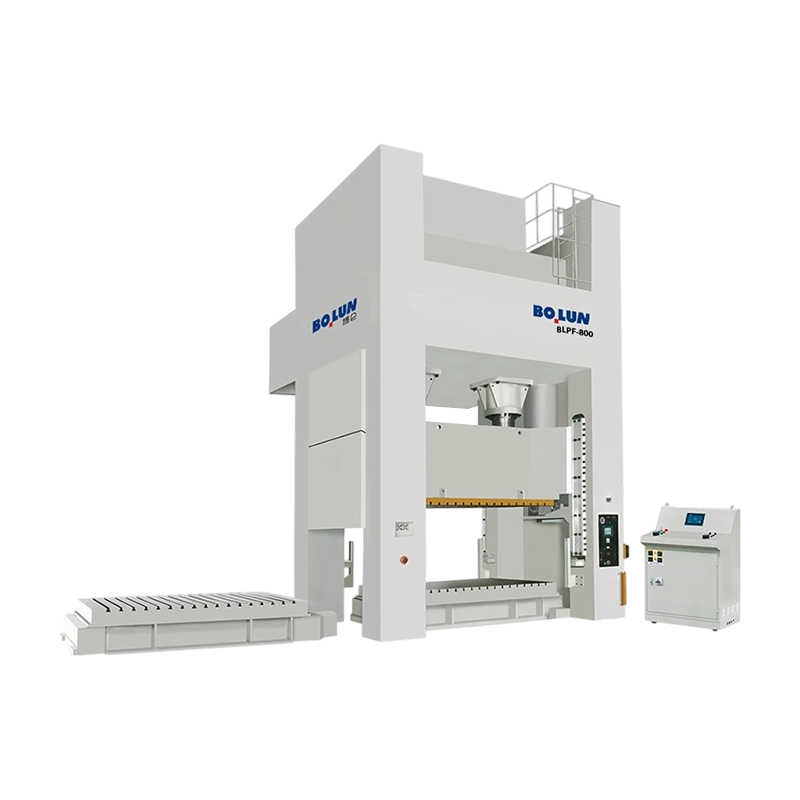
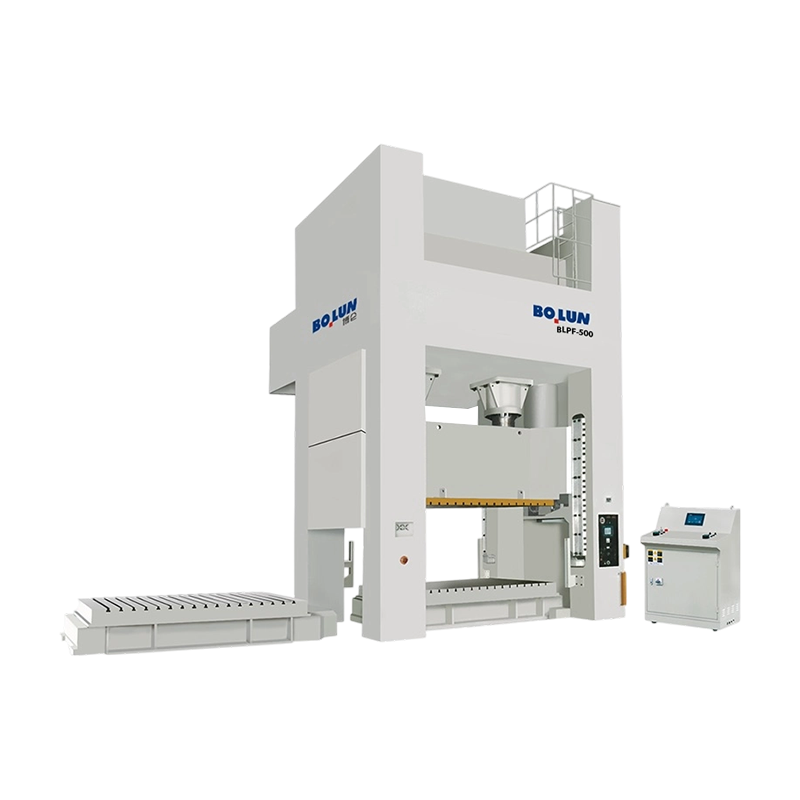
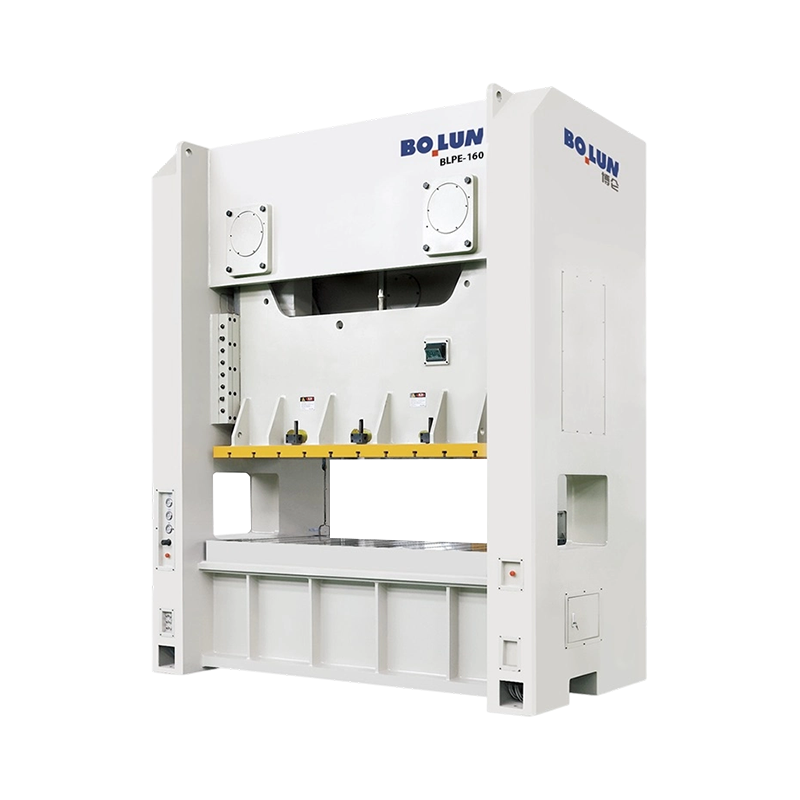
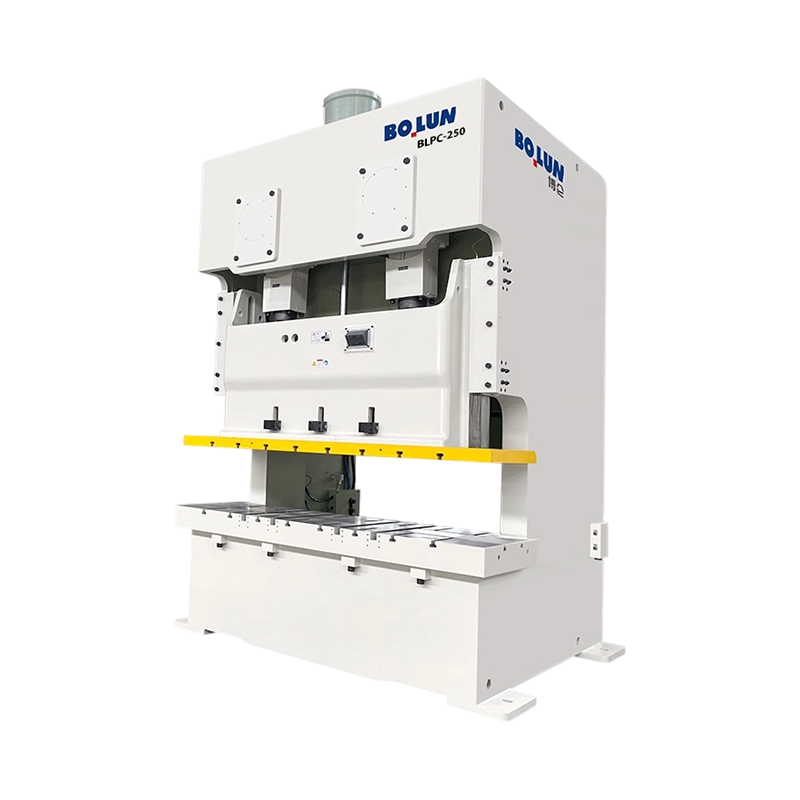
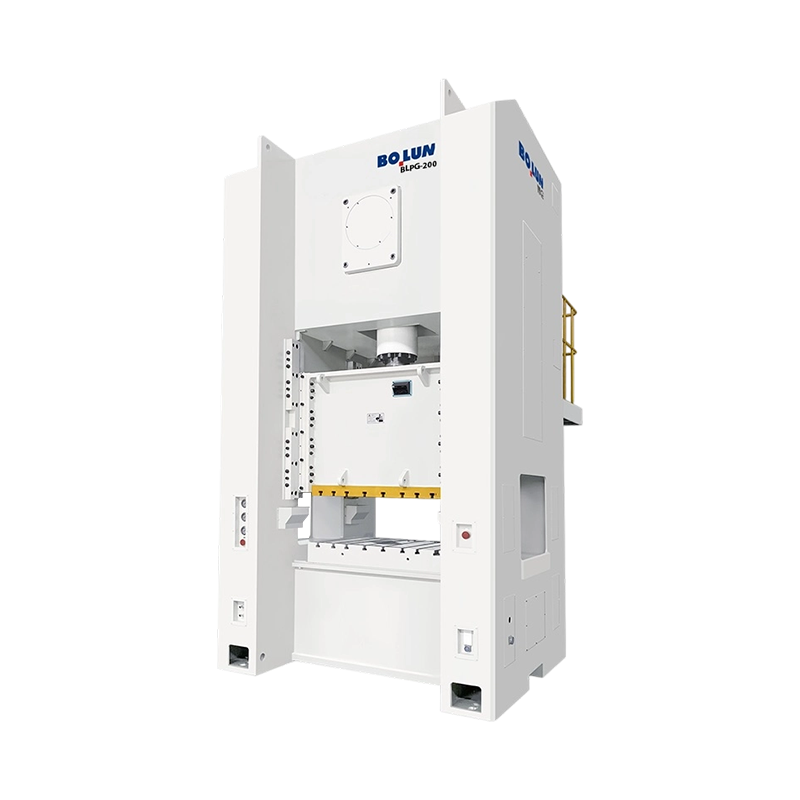
Two presses can both carry a 200-tonne nameplate and still produce very differe...
What Is a Power Press? A power press — also called a stamping press or punch pr...
Start With the Purchase Decision, Not the Definitions A procurement engineer co...
A fastener plant in Taizhou receives a request from an automotive tier-one supp...
In the fields of metal forming, sheet metal fabrication, blanking, and punching,...
A production manager at a mid-size metal component plant recently faced a probl...
Contact Us

topbolun@gmail.com

+86-575-83362228

+86-13735238388
+86-18667502750

+86-575-83362999

+8618667502750

No.1 Linjiang Road East, Xiaren, Jinting Town, Shengzhou City, Zhejiang Province, China
Ready to Begin?
Get in Touch

Now!

ZHEJIANG BOLUN
 English
 中文简体