
In modern metal forming, manufacturers are under constant pressure to raise output, stabilize quality, reduce scrap, and handle increasingly complex parts without losing control of production cost. The open-type single-point servo power press described in this article is designed for exactly that environment: high-load stamping, thick-material forming, programmable slide motion, reliable tonnage monitoring, and intelligent operator control. With a nominal capacity of 1600 kN, continuous working energy of 9000 J, and a large 1200 × 760 mm worktable, this machine is positioned as a heavy-duty solution for automotive parts, appliance components, hardware production, electrical enclosures, structural brackets, and other demanding stamped products.
Unlike a conventional mechanical press that depends mainly on fixed crank motion, this servo-driven press allows the slide movement to be programmed according to the forming process. That means the operator can adjust motion profiles for drawing, bending, embossing, blanking, coining, and progressive stamping applications. The result is more flexible production, better repeatability, improved die protection, and more stable forming performance when working with challenging materials.
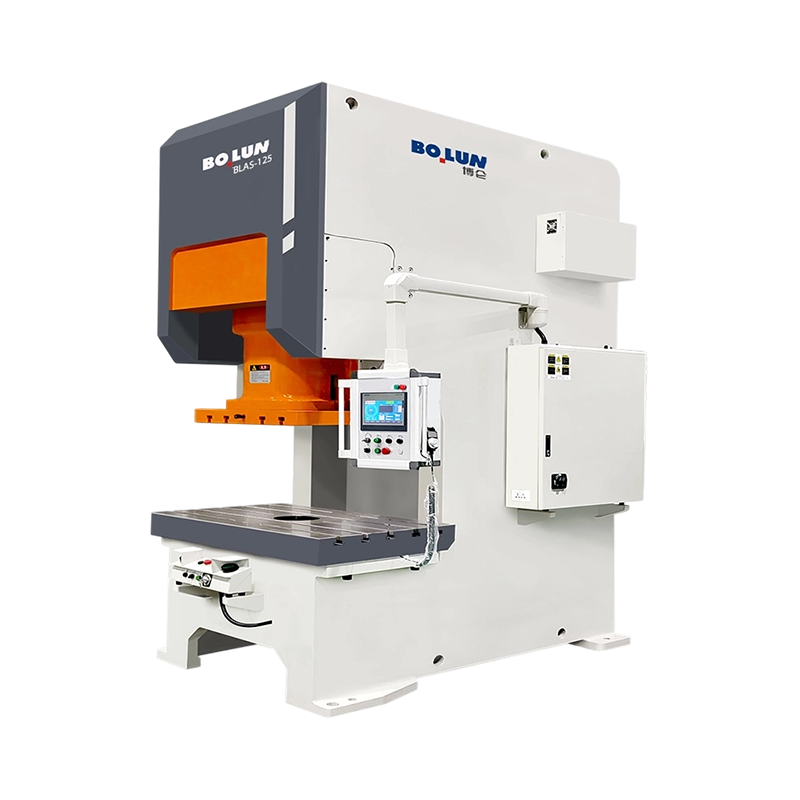
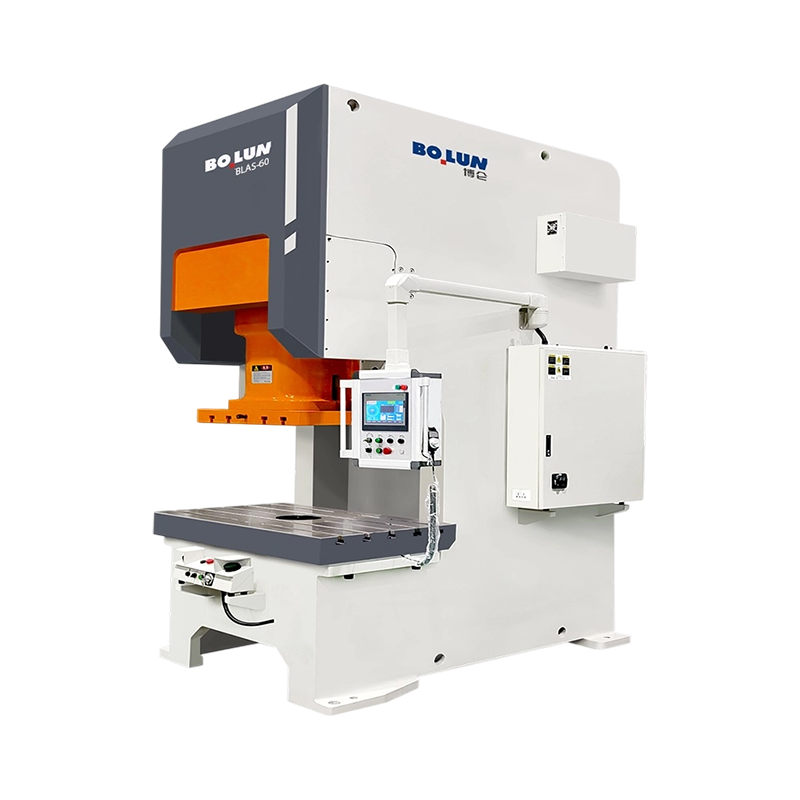
BLAS-160 Heavy-Duty Digital-Forming Open-Type Single-Point Servo Power Press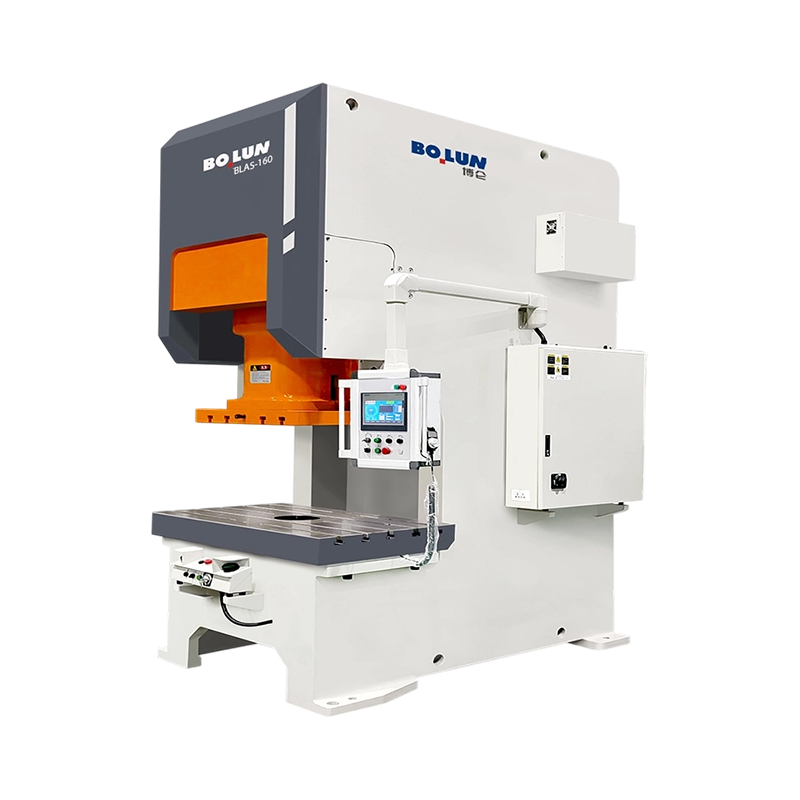
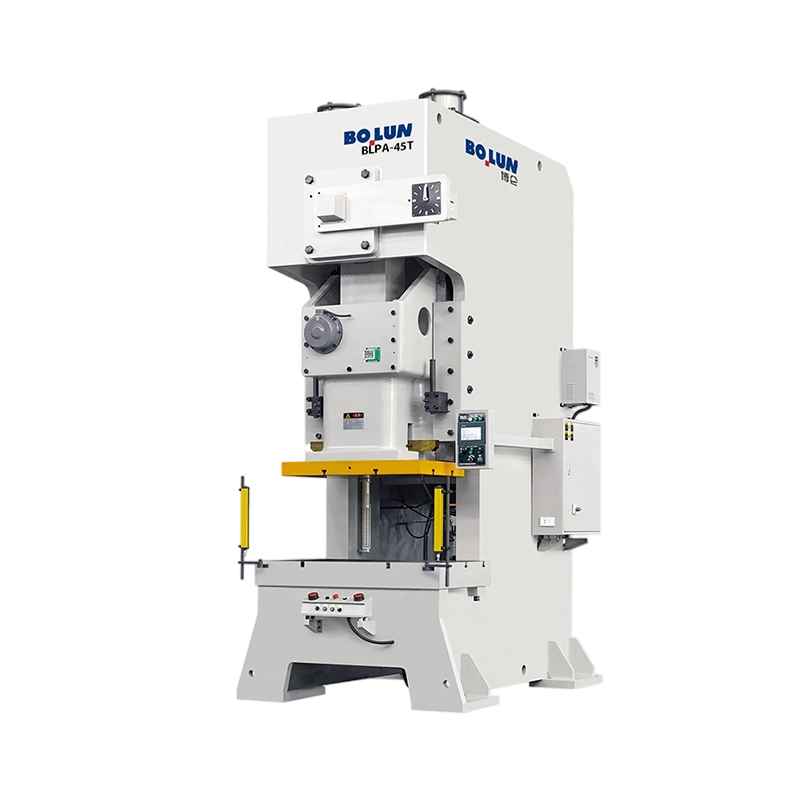
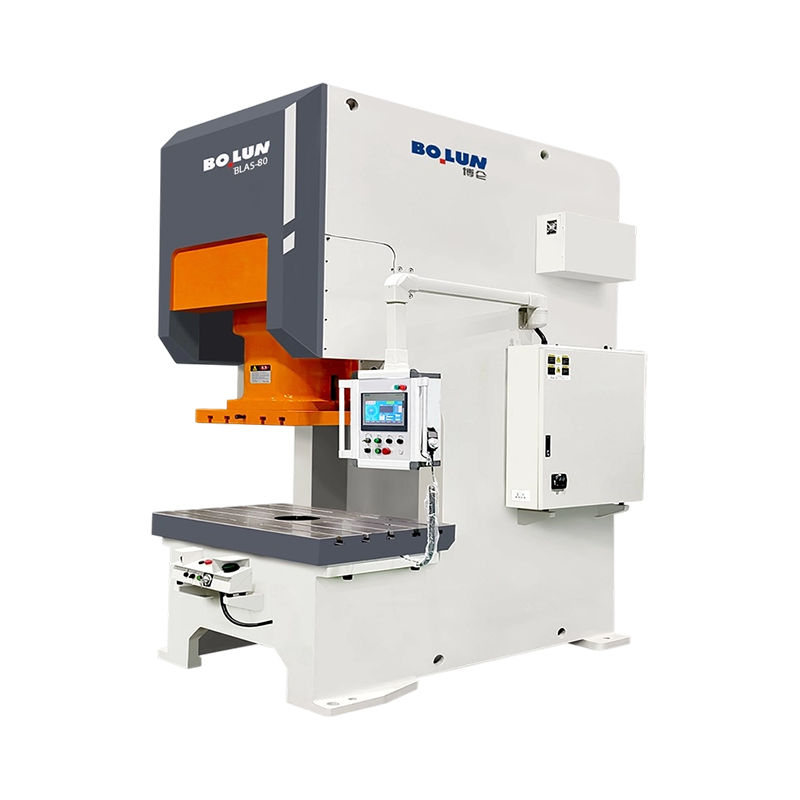
This machine belongs to the open-type power press category, more specifically an open-type single-point servo power press. The open-type frame offers convenient access from the front and sides, making die installation, material feeding, maintenance, and production observation easier than in many more enclosed configurations. For manufacturers that require flexible operation, frequent die changes, and efficient line integration, the open-type structure is often a practical and economical choice.
Compared with many standard open-type mechanical presses, this servo model has a stronger emphasis on digital forming control. It is not simply a press that moves up and down at a fixed rhythm. It is a programmable production platform that can store die parameters, control slide motion with greater precision, and provide real-time load feedback through a tonnage monitoring system. These features help factories move from operator-dependent stamping toward more consistent, data-supported manufacturing.
The 1600 kN nominal capacity places the press in a heavy-duty range suitable for larger dies and higher forming loads. The 9000 J continuous working energy supports stable operation in demanding applications where energy delivery is just as important as peak capacity. In many stamping jobs, insufficient energy can cause unstable forming, speed reduction, or uneven part quality. A press with both high capacity and adequate working energy is better prepared for thick materials and parts requiring significant deformation.
The machine’s main specifications define its capability. The nominal capacity is 1600 kN, giving it the strength needed for high-load stamping. The nominal stroke is 5 mm, and the slide stroke is 200 mm, providing a practical working range for many dies. The press can operate at up to approximately 50 strokes per minute, depending on forming requirements and production conditions. The maximum die height is 400 mm, and the die height adjustment is 100 mm, allowing flexible setup for different tooling packages.
The worktable size of 1200 × 760 × 150 mm provides a robust platform for larger and heavier dies. This is important for industries such as automotive and home appliance manufacturing, where dies can be wide, complex, and heavy. The slide bottom size of 720 × 580 × 90 mm supports stable force transmission to the die set. The distance between columns is 750 mm, and the throat depth is 390 mm, offering practical access and die accommodation within the open-type frame structure.
The machine also includes a cushion capacity of 100 kN, with a cushion working stroke of 80 mm and an effective cushion area of 540 × 350 mm. This makes it useful for applications requiring blank holding, drawing support, or controlled material flow. The punch accuracy is specified to JIS B 6402 Level 1, reflecting a focus on precision and repeatability. The required air pressure is 0.55 MPa, which aligns with typical industrial compressed air systems.
| Item | Specification | Production Significance |
| Nominal Capacity | 1600 kN | Supports high-load stamping and thick-material forming |
| Continuous Working Energy | 9000 J | Improves forming stability under demanding workloads |
| Slide Stroke | 200 mm | Provides a practical range for deep and complex forming tasks |
| Strokes Per Minute | Up to approximately 50 SPM | Balances productivity with heavy-duty forming control |
| Maximum Die Height | 400 mm | Allows installation of larger tooling packages |
| Worktable Size | 1200 × 760 × 150 mm | Accommodates large and heavy-duty dies |
| Die Height Adjustment | 100 mm | Supports efficient die setup and process changeover |
| Cushion Capacity | 100 kN | Assists drawing and controlled material flow |
| Accuracy Standard | JIS B 6402 Level 1 | Provides reliable forming precision for industrial production |
The most important advantage of this press over conventional competitors is the servo-driven system. In a traditional flywheel-based mechanical press, slide motion is largely determined by the crank mechanism. Although such presses are durable and productive, they offer limited control over speed, dwell, and movement profile during the forming cycle. For simple blanking or punching, this may be sufficient. For advanced forming, however, fixed motion can limit quality and process flexibility.
A servo power press changes this relationship. Instead of forcing every die to adapt to a fixed mechanical motion, the press can adapt its motion to the die and material. The operator can program different slide profiles, slow down during critical forming zones, increase speed during non-forming travel, and create repeatable motion patterns for stored die parameters. This is especially valuable for forming thicker materials, high-strength steel, stainless steel, aluminum alloys, and parts with complex geometries.
Servo motion also supports better energy management. Rather than relying only on rotational inertia, the servo system can deliver controlled torque and speed based on process demand. For manufacturers, this can mean improved consistency, reduced shock, better die life, and lower scrap rates. In competitive production environments, these improvements directly affect profitability. A press that reduces trial-and-error adjustment and stabilizes production faster can provide significant long-term value.
In comparison with many competitor presses that only offer basic digital readouts or limited automation options, this machine integrates programmable motion, tonnage monitoring, and a color touch-screen human-machine interface. These features support a more intelligent production model. Operators can view load information, adjust parameters, and manage forming conditions through a clear control interface rather than relying only on manual experience.
The 1200 × 760 mm worktable is a major practical advantage. Many factories face limitations when their press bed is too small for modern tooling. Dies used in automotive brackets, appliance panels, electrical components, and industrial hardware often require greater bed area and better support. If the worktable is undersized, the manufacturer may need to redesign tooling, limit production options, or use a more expensive press than necessary.
With its large worktable and 150 mm table thickness, this press provides a solid foundation for heavy dies. The slide bottom size of 720 × 580 mm helps transfer force effectively to the tooling. The 750 mm distance between columns and 390 mm throat depth further improve flexibility for die placement, feeding direction, and maintenance access.
For progressive die stamping, the open structure can support efficient material feeding and observation. For single-operation dies, the accessible frame simplifies die loading and manual inspection. For manufacturers running multiple part families, the combination of open access and programmable servo control helps reduce changeover complexity.
Competitor machines in the same capacity class may provide nominal force but lack sufficient table area, energy, or motion flexibility. A press must be evaluated as a complete forming system, not only by its tonnage. This machine combines tonnage, energy, table size, die height capacity, digital control, and monitoring features, making it suitable for demanding production environments where multiple factors determine success.
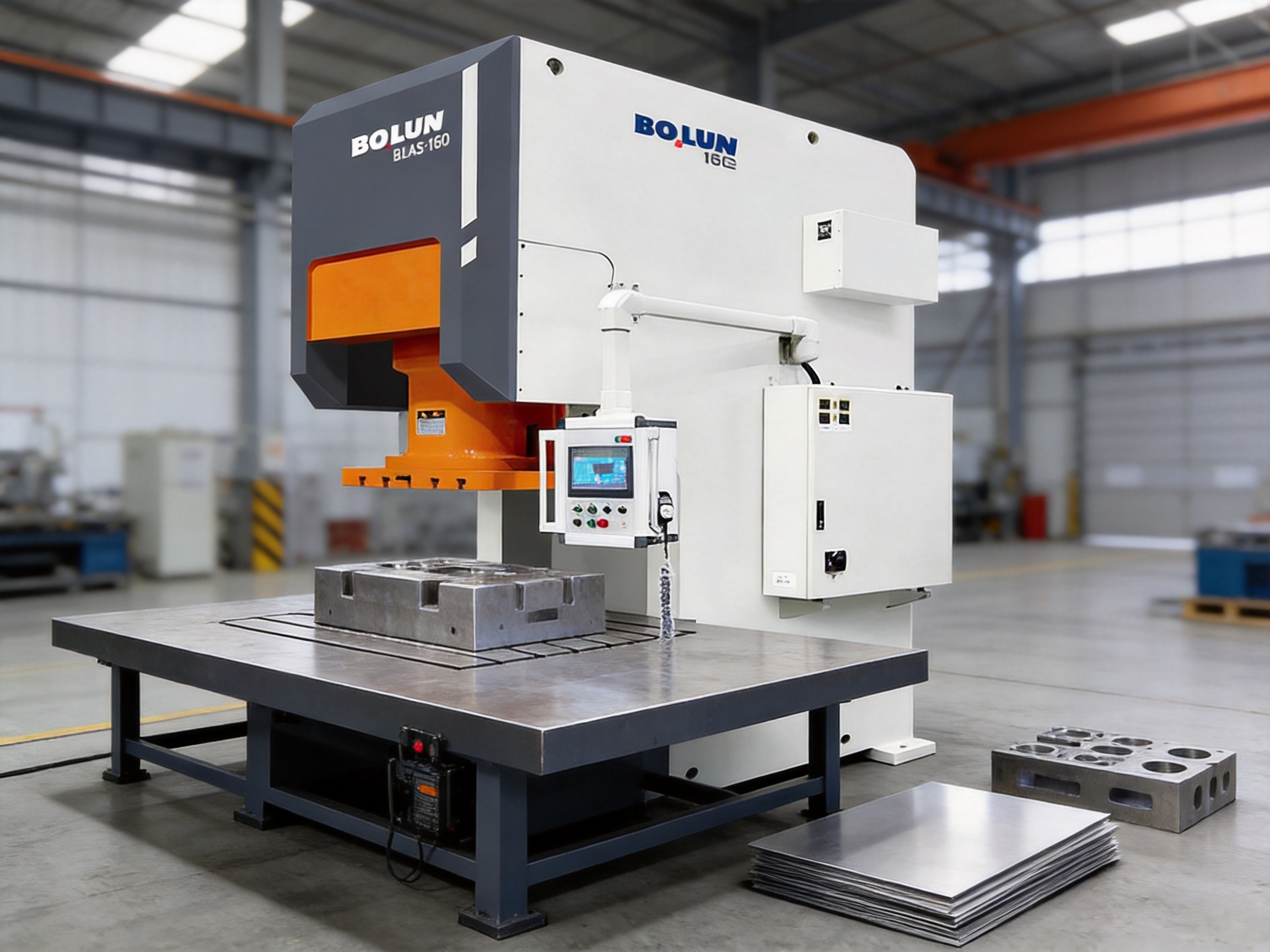
Modern stamping quality depends on repeatability. Even small variations in slide position, forming speed, die alignment, and load distribution can affect part geometry. For high-volume production, these variations can create large losses through scrap, rework, downtime, and customer complaints. The tonnage monitoring system on this press provides real-time load feedback, allowing operators and engineers to observe forming force during production.
Tonnage monitoring is valuable for several reasons. First, it helps detect abnormal loading that may indicate feeding errors, material thickness changes, die damage, or part misplacement. Second, it supports process optimization by showing how different motion profiles affect forming force. Third, it contributes to die protection by helping prevent overload conditions. Fourth, it creates a foundation for more disciplined production management, where process parameters are measured rather than assumed.
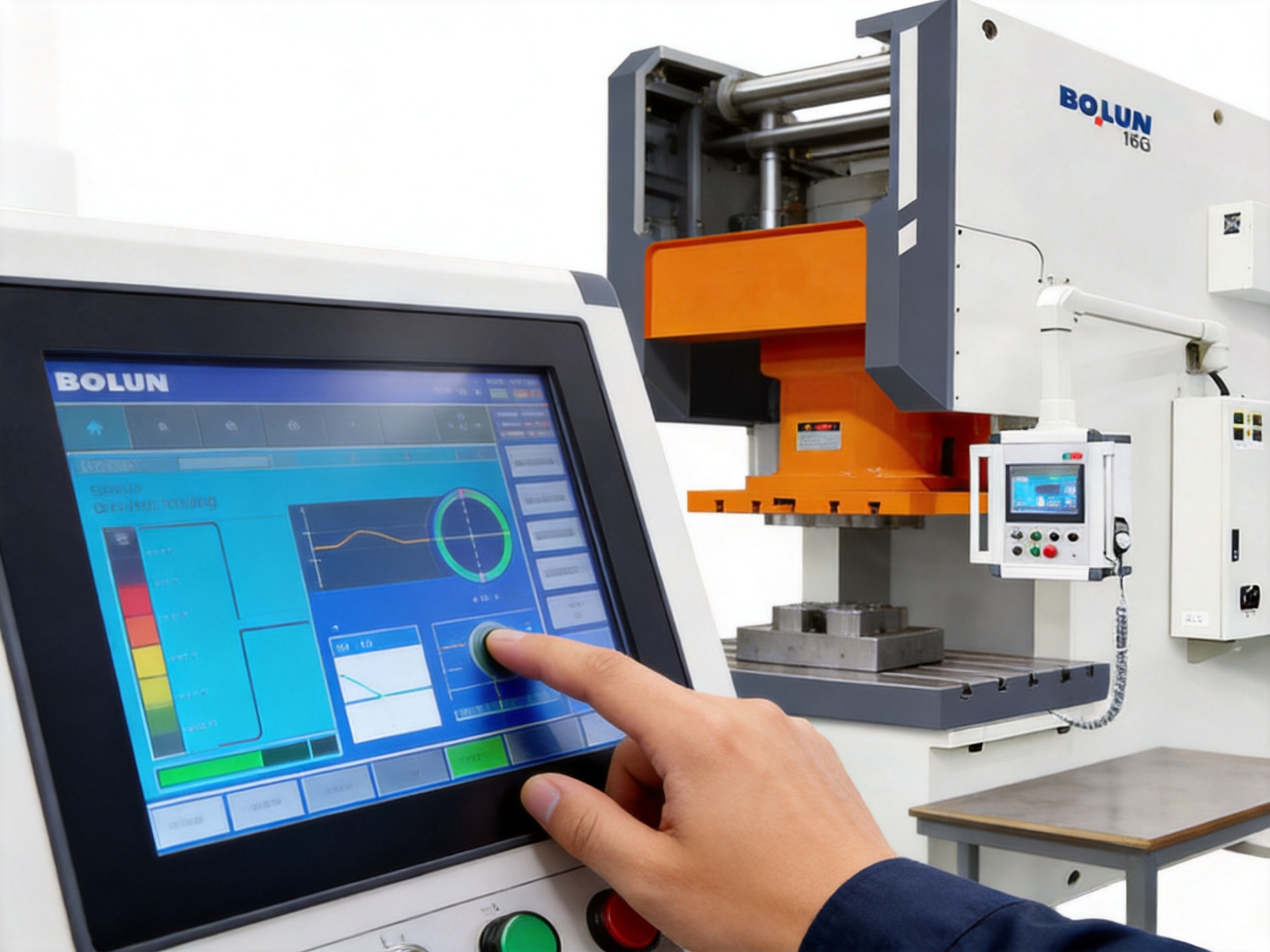
The color touch-screen HMI also improves operational efficiency. A clear interface helps operators set parameters, access stored die data, monitor machine condition, and respond to production changes. In factories with multiple shifts or frequent die changes, this reduces dependence on individual operator memory and improves consistency between teams.
The specified punch accuracy of JIS B 6402 Level 1 further supports precision applications. Accuracy is not only a matter of part dimensions; it also affects die wear, feeding stability, and production reliability. A press built for high precision can help manufacturers maintain tighter tolerances and more consistent output over long production runs.
Thick-material forming places special demands on a press. The machine must provide enough force, enough energy, and sufficient structural rigidity to maintain stable operation. It must also control the forming process to avoid cracks, wrinkles, springback, excessive burrs, and die damage. The 1600 kN nominal capacity and 9000 J continuous working energy make this press suitable for applications that go beyond light sheet metal punching.
When forming thick sheet or high-strength materials, process speed becomes critical. Too fast a forming action may increase shock, noise, heat, and die stress. Too slow a cycle may reduce productivity. Servo motion allows the user to find a better balance. The press can move quickly during approach, slow down during the actual forming zone, and then return efficiently. This intelligent motion can improve part quality while still maintaining practical output.
In deep drawing or material flow applications, the 100 kN cushion capacity and 80 mm cushion stroke provide additional process support. A cushion helps control blank movement, reduce wrinkling, and improve draw consistency. While not every stamping job requires a cushion, having this capability expands the range of parts the press can handle.
Many competitor machines can perform basic stamping well but become less flexible when the part requires controlled forming behavior. The advantage of this servo press is that it provides both heavy-duty mechanical capability and digital process adaptability. This combination is especially important as industries adopt lighter materials, higher-strength alloys, and more complex part designs.
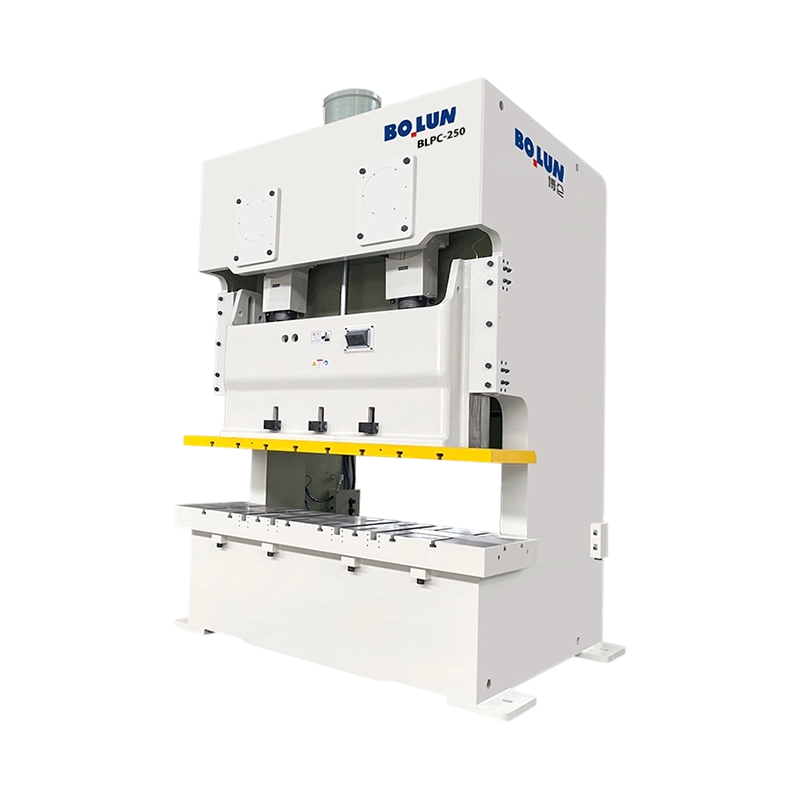
Closed-type presses are often preferred for very high tonnage or applications requiring maximum frame rigidity. However, open-type presses remain highly valuable for many production environments because they offer excellent accessibility. Operators can approach the working area more easily, maintenance technicians can inspect components with less obstruction, and die setters can complete installation tasks more efficiently.
The open-type structure of this press is especially useful for factories that run varied products rather than a single long-term dedicated job. If a manufacturer changes dies frequently, the time saved during setup can become a major productivity advantage. Easier access also supports safer and more convenient inspection when proper guarding and safety procedures are followed.
Open-type presses are also practical for integration with feeders, straighteners, decoilers, transfer devices, and robotic loading systems. The accessible frame gives production engineers more options for line layout. In many workshops, available floor space and material flow are just as important as machine specifications. A machine that combines heavy capacity with flexible access can make line planning easier.
This model’s distance between columns, throat depth, and worktable size contribute to the usefulness of the open frame. Rather than being a small general-purpose machine, it is a heavy-duty open-type press designed for serious production tasks. That makes it attractive for manufacturers that need power and flexibility without immediately moving to a larger and more expensive closed-frame system.
Stamping is no longer only a mechanical process. It is increasingly a data-driven process. Manufacturers want to know the forming load, motion settings, die history, production output, maintenance status, and quality trends. A press equipped with programmable control and monitoring functions supports this transition toward intelligent manufacturing.
Digital forming allows engineers to develop a process recipe for each die. Once the correct parameters are found, they can be stored and reused. This reduces setup time and helps maintain consistency when the die returns to production weeks or months later. It also reduces the risk of incorrect settings when different operators are involved.
The color touch-screen interface makes this digital capability accessible to shop-floor teams. Instead of hiding process settings in complex controls, the HMI presents machine information in a more direct format. Operators can monitor tonnage, adjust parameters, and support production decisions more effectively.
This digital direction creates an advantage over less advanced competitor presses. A low-cost conventional press may appear attractive at purchase, but if it causes longer setup times, more trial runs, higher scrap, and weaker process control, the total cost of ownership can be higher. A servo press with digital forming capability can reduce hidden costs by making production more predictable and easier to standardize.
The value of a power press depends not only on design specifications but also on the manufacturer’s ability to produce precision machinery consistently. Zhejiang Bolun High-Precision Machinery Co., Ltd. is located in Zhejiang, a major center of precision manufacturing in China. With approximately two decades of experience in machinery manufacturing, the company has developed into a modern enterprise focused on high-precision forming equipment. Its operations integrate research and development, design, production, sales, and service.
The company’s manufacturing strength comes from a full-chain approach. Instead of treating the press as a simple assembly of purchased parts, it emphasizes process control from basic design and core component development to precision processing and final machine assembly. This kind of integrated manufacturing system is important for power presses because accuracy, rigidity, vibration control, and long-term durability depend on the relationship between many components.
Advanced precision processing equipment supports the production of critical press parts. Machining quality directly affects slide guidance, frame alignment, table flatness, and transmission performance. If these areas are not controlled properly, the press may lose accuracy over time or produce uneven forming results. By investing in precision processing and disciplined production management, the company strengthens the reliability of its machines under high-intensity industrial use.
The company also emphasizes non-standard customization. Many factories do not need only a catalog machine; they need a press adapted to their material, die, feeding method, safety requirements, factory layout, and production targets. A manufacturer with a strong design team can provide one-stop design and manufacturing services for special specifications and functions. This is a major advantage for customers working in specialized markets or upgrading existing production lines.
Power presses operate under repeated impact loads. Over thousands or millions of cycles, small weaknesses can become serious problems. For this reason, quality control must be more than a final visual inspection. It must cover materials, machining, component fit, assembly accuracy, lubrication, electrical control, motion behavior, safety systems, and final performance testing.
The manufacturer behind this press has established a finished product inspection system that exceeds ordinary industry expectations. This approach is intended to ensure stable precision and long service life under high-intensity operating conditions. Rigorous inspection at every process and component level helps reduce the risk of early failure and improves customer confidence in continuous production.
Quality is also linked to production management. A mature and efficient management system helps ensure that each machine is built according to defined standards rather than individual habits. Consistent documentation, process verification, and final testing all contribute to repeatable quality. For customers investing in heavy-duty equipment, this manufacturing discipline is as important as the nominal machine specifications.
The company’s stated philosophy emphasizes solid accumulation, technical breakthrough, and the idea that pressure becomes power. This philosophy fits the stamping industry well. A power press must convert mechanical pressure into productive value, and a manufacturer must convert engineering pressure into better machines, stronger service, and more dependable customer results.
When evaluating a press, buyers often compare tonnage, price, bed size, speed, and brand reputation. These are important, but they do not fully define production value. The heavy-duty open-type servo press discussed here offers several competitive advantages that should be considered in a complete purchasing decision.
First, it provides programmable servo motion rather than fixed mechanical motion. This gives the user more control over forming speed and slide behavior. In many applications, this can reduce shock, improve part quality, and extend die life. Second, it combines 1600 kN capacity with 9000 J continuous working energy, making it more suitable for demanding operations than machines that offer nominal force but limited energy delivery. Third, the large worktable supports larger dies and gives manufacturers more flexibility for future product changes.
Fourth, the tonnage monitoring system provides real-time feedback that many basic presses do not offer as standard. This supports quality control, overload prevention, and process optimization. Fifth, the color touch-screen HMI improves usability and helps standardize production settings. Sixth, the manufacturer’s integrated R&D, production, inspection, and service system gives customers support beyond machine delivery.
Compared with a closed-type power press, this open-type model may offer easier access, quicker die changes, and more flexible line integration. Compared with lighter open-type presses, it offers greater capacity, stronger energy capability, and a more advanced servo control package. Compared with conventional mechanical presses, it provides stronger digital forming adaptability. For many factories, this combination creates an excellent balance between power, flexibility, and production intelligence.
Automotive component production is one of the most important application areas for a press of this capacity. Parts such as brackets, reinforcements, structural plates, clips, covers, and mounting components often require stable forming force and accurate repeatability. As automotive materials become more diverse, including high-strength steel and lightweight alloys, the ability to adjust slide motion becomes increasingly valuable.
Home appliance manufacturing is another strong application field. Appliance parts may include panels, frames, supports, covers, hinge parts, and internal structural components. These products require reliable dimensional control and efficient production. The large worktable is useful for appliance dies, which can be wider than simple small-part tooling. Servo control helps reduce defects and maintain stable forming across long production runs.
Electrical and electronics-related metalwork can also benefit from this machine. Enclosures, mounting plates, connector parts, shielding components, and hardware assemblies often require clean punching, bending, and forming. The precision and repeatability of the press support consistent downstream assembly.
General industrial hardware manufacturers can use the press for brackets, stamped plates, hinges, supports, tools, and custom metal components. Because the machine supports stored die parameters and programmable motion, it is well suited for factories that produce many different parts rather than only one high-volume product.
A good machine should help operators work more efficiently. The touch-screen HMI, stored parameters, and tonnage monitoring system all support this goal. Operators can access relevant settings, observe forming load, and adjust the process with greater confidence. This reduces the learning curve for new jobs and helps experienced operators work more consistently.
Stored die parameters are especially useful in factories with repeated production orders. Once a die has been tested and optimized, the press can retain the required settings. When the job returns, setup can begin from a known baseline rather than from memory or handwritten notes. This reduces setup time and makes production planning more reliable.
Real-time feedback also supports communication between operators, engineers, and managers. If a problem occurs, the team can analyze load behavior and machine settings rather than relying only on visual inspection of defective parts. This improves problem-solving and supports continuous improvement.
From a management perspective, a servo press can support lean manufacturing goals. Reduced scrap, faster setup, improved die protection, and more consistent quality all contribute to better equipment effectiveness. Although the initial investment may be higher than a basic mechanical press, the long-term value can be greater when the machine is used in demanding production.
Heavy-duty stamping equipment must be designed for long-term service. Maintenance access, component quality, lubrication, alignment stability, and control reliability all affect uptime. The open-type structure provides practical access for inspection and maintenance. Technicians can more easily observe the working area, inspect die setup, and perform routine checks.
Servo systems also require disciplined maintenance and proper operation. Electrical control components, drive systems, sensors, and the HMI should be protected from harsh workshop conditions. Operators should follow recommended procedures for startup, shutdown, parameter changes, and overload response. When used correctly, the digital control system becomes a reliability advantage because it helps detect abnormal conditions early.
The manufacturer’s service system covers pre-sales consultation, in-sales support, and after-sales guarantees. This is important because press selection is not only a purchase decision; it is a production engineering decision. Customers may need help selecting capacity, confirming die compatibility, planning line layout, and training operators. Strong service support reduces risk and helps customers achieve full machine value sooner.
The 1600 kN capacity range is important because it bridges the gap between medium-capacity general presses and very large dedicated stamping equipment. For many manufacturers, a smaller press may not provide enough force, energy, or table size for future product development. A much larger press may be more expensive, require more floor space, and consume more resources than necessary. A 1600 kN open-type servo press can offer a strong balance.
The 200 mm slide stroke and 400 mm maximum die height make the machine suitable for a wide variety of dies. The 100 mm die height adjustment supports practical setup flexibility. The approximately 50 SPM maximum speed is appropriate for heavy-duty forming where process control and die protection are more important than extreme high-speed operation.
This capacity class is also suitable for manufacturers upgrading from conventional open-type presses. They may already have experience with open-frame operation but need greater process control and better forming capability. Moving to a servo press allows them to modernize production without completely changing their manufacturing philosophy.
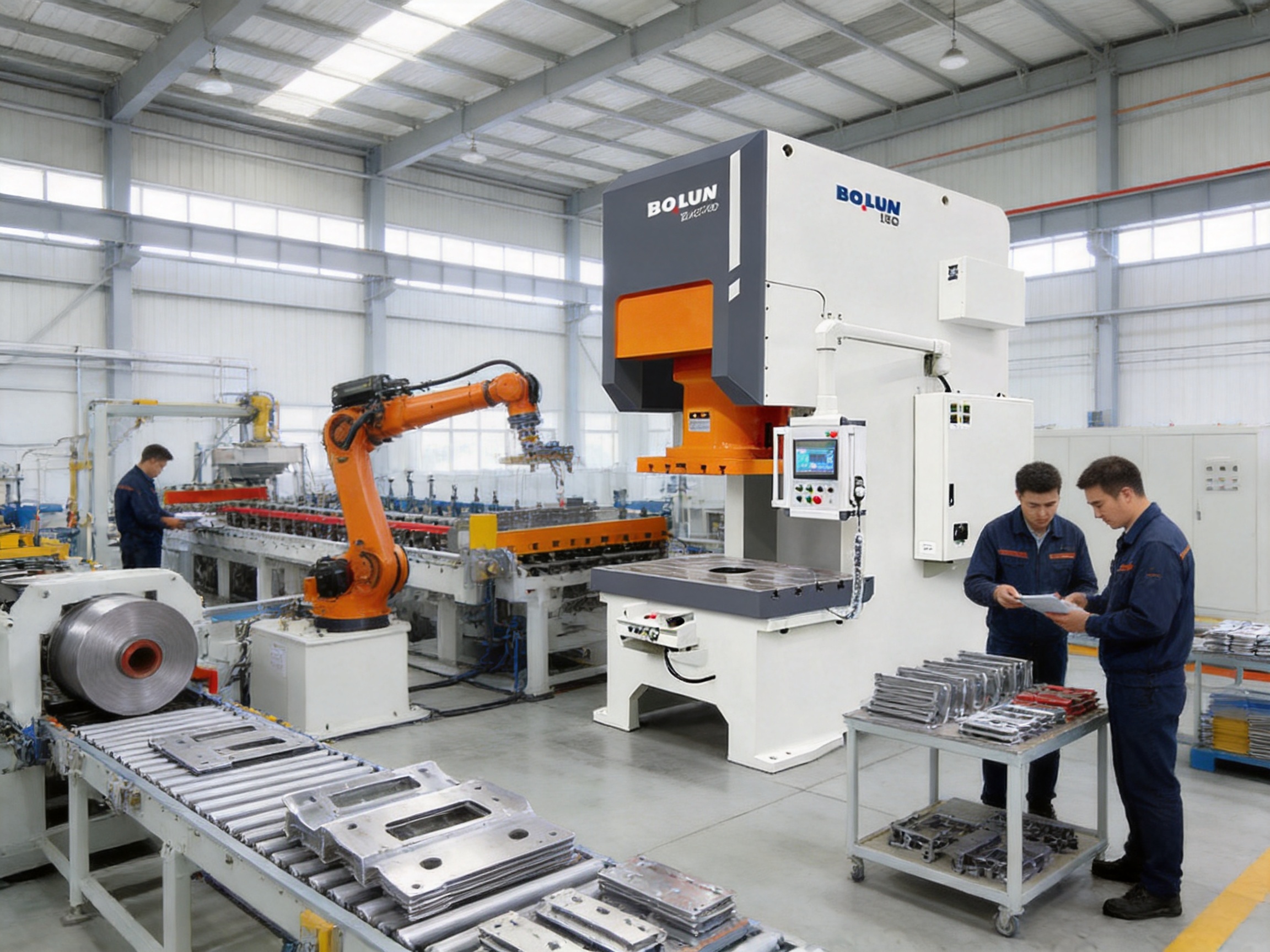
A press rarely works alone. It is often integrated with coil feeding systems, straighteners, decoilers, lubrication systems, scrap conveyors, transfer mechanisms, safety devices, and quality inspection stations. The open-type frame and programmable control make this machine suitable for integration into automated or semi-automated production lines.
For coil-fed production, programmable slide motion can be coordinated with feeding timing. Smooth and repeatable motion helps protect both the material and the die. For transfer or robotic loading, the controlled slide cycle can help create stable timing windows. For manual or semi-automatic production, the clear HMI and accessible structure support practical operation.
Line integration also benefits from the manufacturer’s customization capability. Different customers may need special electrical interfaces, safety configurations, feeding heights, table requirements, or automation compatibility. A manufacturer with strong design and engineering resources can better support these needs than a supplier offering only standard machines.
Manufacturers increasingly evaluate equipment based on total cost of ownership rather than only purchase price. A lower-cost press may become expensive if it creates high scrap, frequent downtime, long setup times, or limited flexibility. A servo press with programmable forming capability can help reduce these hidden costs.
Energy efficiency is one area where servo systems can offer advantages depending on application and operating mode. By controlling motion more intelligently, the press can avoid unnecessary movement behavior and better match energy use to process demand. Reduced shock and improved forming control may also extend die life, lowering tooling cost over time.
Scrap reduction is another major factor. If programmable slide motion and tonnage monitoring reduce defects even slightly, the savings can be significant in high-volume production. Material costs, labor, machine time, and downstream rework all contribute to the true cost of scrap. Better process control helps protect profit margins.
Flexibility also affects long-term value. A machine that can handle many part types, store die parameters, and adapt to future production requirements is less likely to become obsolete. For manufacturers facing changing customer demands, this flexibility is a strategic advantage.
Zhejiang Bolun High-Precision Machinery Co., Ltd. provides value through more than machine production. The company combines technical design, production management, quality inspection, customization, and service. This integrated capability is important for customers who need reliable equipment and practical manufacturing support.
The company’s location in Zhejiang gives it access to a strong industrial environment and manufacturing supply chain. Its experience in forging and casting machinery contributes to understanding heavy structures, load behavior, machining accuracy, and long-term equipment reliability. Its focus on intelligent and digital stamping equipment aligns with the future direction of the industry.
The company’s management philosophy emphasizes rigorous work, openness, mutual support, and commitment to quality. For customers, this means the manufacturer is not only selling a machine but also supporting a production solution. Pre-sales consultation can help customers choose the right model and configuration. In-sales support can help ensure correct manufacturing and delivery coordination. After-sales service can help maintain long-term productivity.
Before purchasing a press of this type, customers should evaluate their maximum forming force, energy requirements, die size, material thickness, production speed, part accuracy, and automation plans. It is also important to consider future products, not only current jobs. A press with extra table size, programmable motion, and strong energy capacity may provide valuable flexibility as production needs change.
Customers should also review die height requirements. The 400 mm maximum die height and 100 mm adjustment range are suitable for many industrial applications, but each die should be checked carefully. The 1200 × 760 mm worktable should be compared with die footprint, clamping method, feeding direction, and maintenance access.
Air pressure, foundation requirements, electrical supply, safety guarding, and operator training should also be planned before installation. A high-performance servo press delivers the best results when the full production environment is prepared properly. The manufacturer’s consultation and support services can help customers avoid mistakes during selection and installation.
It is a heavy-duty open-type single-point servo power press designed for digital forming, high-load stamping, thick-material processing, and flexible production with programmable slide motion.
The nominal capacity is 1600 kN, making it suitable for demanding industrial stamping applications that require strong forming force.
Continuous working energy indicates the machine’s ability to deliver forming energy during production. The 9000 J energy rating helps support stable forming, especially for thick materials and high-load operations.
Servo control allows the slide motion to be programmed according to the die and material. The press can slow down during forming, speed up during non-forming travel, and repeat optimized motion profiles, improving quality and reducing process variation.
The open-type frame provides easier access for die installation, maintenance, material feeding, and production observation. It is especially useful for factories with frequent die changes or flexible production requirements.
The press is suitable for automotive components, home appliance parts, electrical enclosures, industrial hardware, brackets, supports, panels, and other stamped metal products requiring strength and repeatability.
The tonnage monitoring system provides real-time load feedback. It can help detect abnormal forming conditions, prevent overload, support die protection, and improve process optimization.
The HMI allows operators to view machine information, adjust parameters, manage stored die settings, and monitor production conditions through an intuitive interface.
Compared with conventional fixed-motion mechanical presses, this servo press provides programmable slide motion, better process adaptability, improved repeatability, and stronger digital control for complex forming applications.
A power press depends on precision machining, strong assembly quality, accurate alignment, reliable control systems, and strict inspection. The manufacturer’s integrated R&D, production, customization, and quality control capabilities help ensure long-term machine performance.
The heavy-duty open-type single-point servo power press represents a strong solution for manufacturers that need more than basic stamping capacity. With 1600 kN nominal force, 9000 J continuous working energy, a 1200 × 760 mm worktable, programmable servo motion, tonnage monitoring, and a color touch-screen HMI, it combines mechanical strength with digital process control.
Its advantages over many competing presses are clear. It offers greater forming flexibility than conventional mechanical presses, more intelligent monitoring than basic open-type models, and easier access than many closed-frame alternatives. It is especially valuable for thick-material forming, high-load stamping, large die applications, and factories seeking repeatable quality with reduced setup dependence.
Behind the machine is a manufacturer with deep experience in precision machinery, integrated production capability, advanced processing equipment, strict inspection systems, and a commitment to intelligent stamping technology. This manufacturing strength adds confidence for customers who require not only a press, but a reliable forming solution supported by engineering knowledge and long-term service.
For automotive, appliance, hardware, electrical, and general industrial manufacturers, this press offers a practical path toward stronger production control, better die utilization, improved part consistency, and future-ready stamping capability. In an industry where pressure must become productivity, a digitally controlled servo power press provides the strength, precision, and intelligence required for modern metal forming.
Schuler Group. Metal Forming Handbook.
Society of Manufacturing Engineers. Fundamentals of Tool Design.
Altan, T., and Tekkaya, A. E. Sheet Metal Forming: Processes and Applications.
Japan Industrial Standards Committee. JIS B 6402: Mechanical Presses Accuracy Standards.
Kalpakjian, S., and Schmid, S. R. Manufacturing Engineering and Technology.
ASM International. Forming and Forging Handbook.


Understanding Mechanical Power Presses and Their Essential Functions A mechani...
What Is a Power Press? A power press — also called a stamping press or punch pr...
In the fields of metal forming, sheet metal fabrication, blanking, and punching,...
Power press machines are classified in two main ways: by frame construction, w...
As the manufacturing industry moves steadily toward automation and smart product...
Power Press Technology Overview: From Fundamentals to Equipment Selection In the...
Contact Us

bolunpress@gmail.com

+86-575-83362228

+86-15158259588

+86-575-83362999

+86-15158259588

Hangzhou Office Add: No. 332 Wangjiang East Road, Shangcheng District

No.1 Linjiang Road East, Xiaren, Jinting Town, Shengzhou City, Zhejiang Province, China
Ready to Begin?
Get in Touch

Now!

ZHEJIANG BOLUN
 English
 中文简体
中文简体