
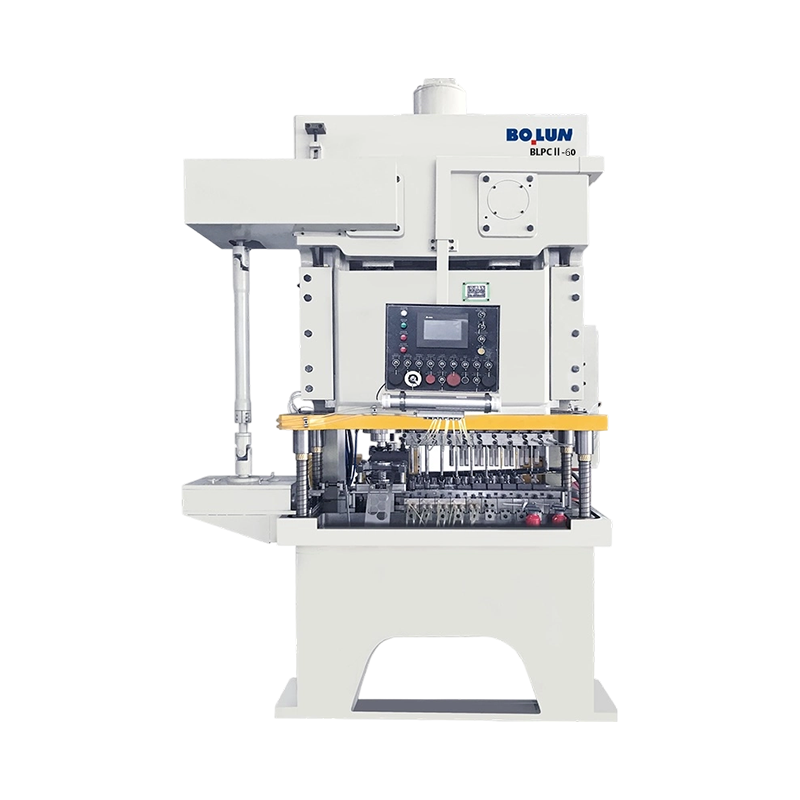
The BLKP-260 Agile Precision Cold Forging Toggle Type Power Press is a specialized forming machine developed for manufacturers that require high force, stable deformation control, repeatable accuracy, and efficient production of precision metal components. With a nominal capacity of 2600 kN, a compact but capable 500 × 600 mm worktable, a 120 mm slide stroke, and variable-speed operation up to 50 strokes per minute in its adjustable configuration, the machine is positioned for demanding cold forging applications in electronics, small hardware, precision fasteners, connectors, compact structural parts, and other formed metal products where material flow control is more important than simple cutting speed.
Unlike conventional stamping presses that are often optimized primarily for blanking, piercing, or shallow forming, this cold forging toggle type power press is engineered around a toggle linkage mechanism that changes the slide motion profile near bottom dead center. The reduced slide speed in the critical forming zone supports controlled plastic deformation, improved die filling, more stable dimensional results, and better surface quality. For manufacturers working with small precision parts, this characteristic can become a major competitive advantage because it helps reduce scrap, supports consistent production, and improves utilization of raw material compared with machining or cutting-based production methods.
BLKP-260 Agile Precision Cold Forging Toggle Type Power Press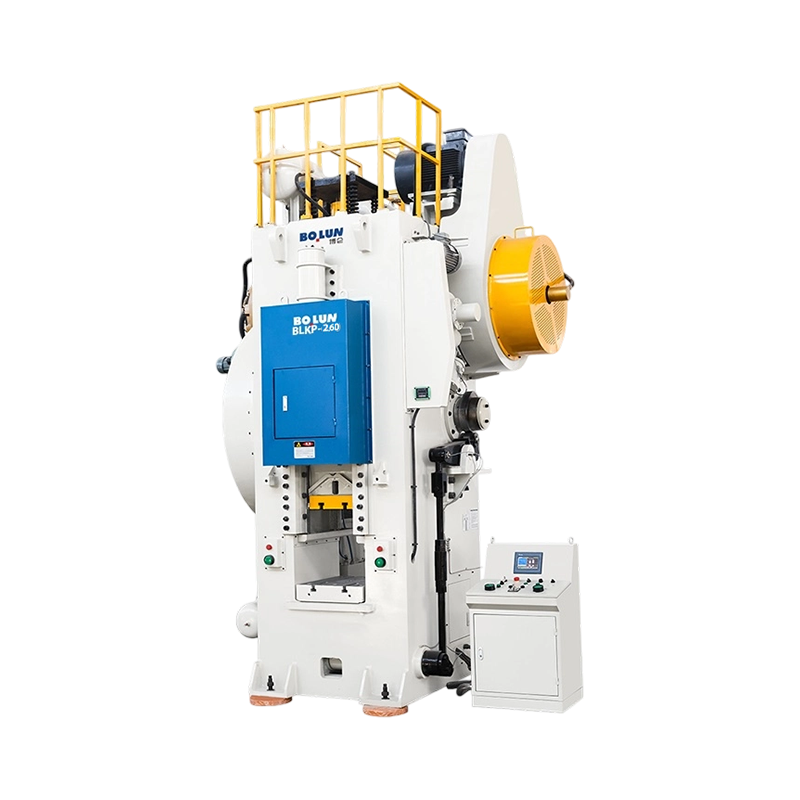
The BLKP-260 belongs to a specialized class of power press equipment designed for cold forging rather than only general stamping. Cold forging requires more than tonnage; it requires rigidity, accurate slide guidance, reliable die height management, stable repeatability, and a motion curve that supports gradual and controlled forming. The machine is especially relevant for factories that need to transform metal blanks into precise shapes through compressive force while maintaining surface integrity and dimensional consistency.
In modern manufacturing, small metal parts are increasingly expected to meet strict tolerances while being produced in large volumes. Electronics manufacturers need terminals, shielding components, miniature housings, contact parts, rivets, and fastening elements. Hardware producers need pins, inserts, caps, nuts, sleeves, and shaped components. Automotive and appliance supply chains require consistent batches of compact formed parts. In these industries, production cost is not only defined by machine purchase price. It is also defined by die life, scrap rate, cycle stability, operator convenience, maintenance burden, and the ability to maintain repeatable forming conditions over long production runs.
The BLKP-260 addresses these needs by combining a 2600 kN nominal capacity with controlled toggle motion and a programmable control platform. This combination allows the machine to serve as a productive forming solution where an ordinary press may be too fast through the forming zone, insufficiently controlled at bottom dead center, or less stable for progressive cold forming work. The product therefore competes not merely as a press, but as a forming system for precision-oriented production environments.
The model BLKP-260 is the entry model in a broader cold forging toggle press range that also includes higher-capacity machines. Its 2600 kN nominal capacity provides sufficient forming force for many small and medium precision parts. The nominal pressure stroke of 4 mm indicates the short range around the critical forming position where the rated force is available, which is typical for mechanical power presses designed to deliver strong forming pressure near the bottom of the stroke. The 120 mm slide stroke provides practical die opening and feeding space for compact cold forging operations.
The standard speed configuration is 40 strokes per minute, while the variable-speed configuration supports approximately 30 to 50 strokes per minute. For cold forging, speed flexibility is important because different materials, lubricants, die designs, and part geometries may require different forming rhythms. A fixed-speed machine can be productive for one job but less ideal for another. A variable-speed configuration gives production engineers more room to optimize between throughput, forming stability, vibration behavior, feeding synchronization, and thermal conditions at the die interface.
The machine includes a maximum die height of 370 mm and a die height adjustment range of 15 mm. The digital die height indicator with 0.1 mm accuracy supports precise setup and repeatable changeover. For cold forging, small die height deviations can strongly influence forming load, part thickness, die filling, and tool stress. The ability to monitor and adjust die height accurately helps operators return to proven process settings and reduce trial-and-error during setup.
| Item | BLKP-260 Specification | Practical Meaning for Production |
| Nominal Capacity | 2600 kN | Provides strong forming force for precision cold forging of small and medium metal parts |
| Nominal Pressure Stroke | 4 mm | Delivers rated pressure near the critical bottom forming zone |
| Slide Stroke | 120 mm | Supports practical die opening, feeding, and part ejection space |
| Strokes per Minute | 40 standard; 30 to 50 variable-speed configuration | Allows productivity and forming control to be balanced for different jobs |
| Maximum Die Height | 370 mm | Accommodates compact cold forging die sets |
| Worktable Size | 500 × 600 × 100 mm | Provides a stable platform for precision tooling |
| Slide Bottom Size | 400 × 420 mm | Supports secure tool mounting and alignment |
| Maximum Upper Die Weight | 500 kg | Allows robust die construction for high-pressure forming |
| Main Motor | 25 kW, 4-pole | Provides the drive power needed for efficient mechanical operation |
| Air Pressure | 0.55 MPa | Supports pneumatic systems used in machine operation |
| Mold Pad Capacity | 100 kN | Supports lower ejection or auxiliary forming requirements |
| Ram Stroke | 50 mm | Provides practical lower top material movement for part release or process assistance |
The toggle mechanism is one of the defining features of the BLKP-260. In a conventional crank press, the slide motion is determined by the crank radius and connecting rod geometry. The slide accelerates and decelerates in a predictable pattern, but it may still pass through the forming zone at a speed that is not ideal for cold forging of precision parts. The toggle system changes the mechanical relationship between the drive and the slide so that movement slows near bottom dead center, where the metal is under the highest forming pressure.
This slower movement near the end of the stroke offers several advantages. First, it gives material more time to flow into the die cavity under compression. Second, it helps reduce sudden shock loading on the tooling. Third, it can improve the final surface quality of the forged part because the deformation is more controlled. Fourth, it supports repeatability by making the critical forming phase less abrupt. These benefits are especially valuable for miniature parts, high-precision shapes, and parts with features that require stable die filling.
Compared with competitor machines that rely on ordinary crank mechanisms for cold forging tasks, a toggle type press can provide better forming behavior without simply increasing machine size. Higher tonnage alone does not solve forming instability if the slide motion is poorly matched to the process. The BLKP-260 is therefore designed to provide a more process-focused solution: enough force, stable structure, and a motion profile suitable for high-pressure plastic deformation.
Cold forging is sensitive to process variation. A small difference in die closing height can affect part dimensions, tool load, and material flow. The BLKP-260 uses a digital die height indicator with 0.1 mm accuracy, allowing operators and technicians to set and verify tooling position with confidence. This feature contributes to repeatable setup, faster job restoration, and more reliable production when the same product is manufactured repeatedly over time.
The PLC control system adds another layer of production consistency. A programmable logic controller can coordinate machine operation, monitoring, safety interlocks, stroke settings, speed-related functions, and auxiliary actions depending on configuration. In a precision manufacturing environment, such control is important because it reduces dependence on manual judgement alone. Operators can follow established procedures, engineers can define stable process windows, and maintenance teams can diagnose operating states more systematically.
Against lower-end competitors that may depend heavily on manual control, simpler electrical logic, or less precise setup feedback, the BLKP-260 provides a more modern control foundation. This does not only improve convenience; it supports industrial discipline. Repeatable production is built from repeatable machine settings, repeatable die installation, repeatable motion, and repeatable operator routines. The control system contributes directly to these objectives.
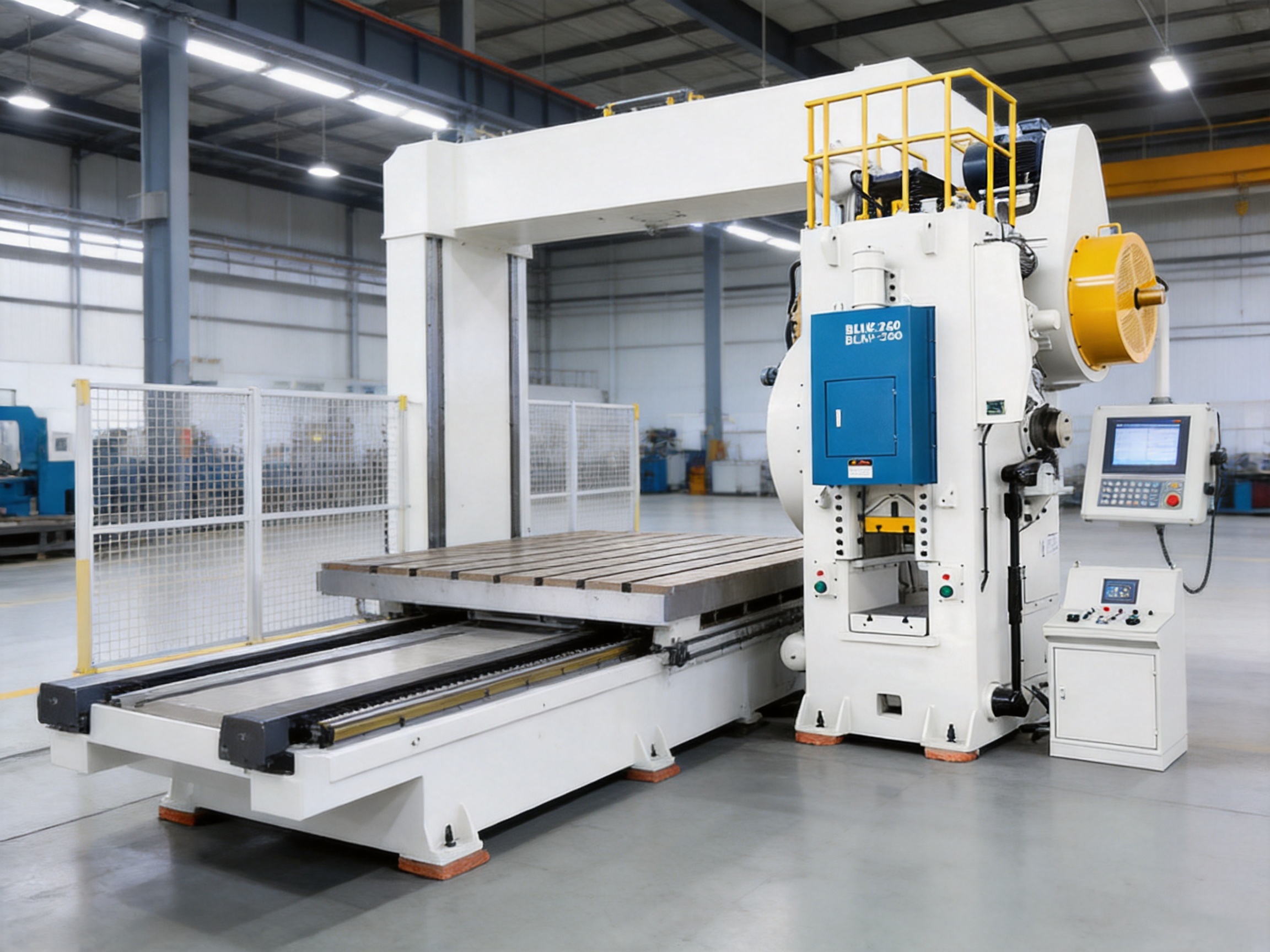
The 500 × 600 × 100 mm worktable of the BLKP-260 is sized for compact precision forging dies while maintaining a stable base for forming loads. A cold forging die does not simply need to fit on a table; it must be supported properly so that load distribution, alignment, and clamping remain reliable. The machine’s slide bottom size of 400 × 420 mm provides a matching upper interface for die mounting, helping create the structural relationship needed for consistent closure between upper and lower tooling.
In cold forging, tooling is often expensive and highly engineered. Tool steels, inserts, punches, guide components, ejectors, and lubrication systems must function under high pressure. A press that lacks rigidity or accurate alignment can shorten die life and create inconsistent products. The BLKP-260 is designed around the needs of precision metal forming, where the die set and the press must work as one system rather than as separate components.
The maximum upper die weight of 500 kg allows the use of strong die assemblies for demanding applications. This is important because cold forging tools may require reinforced structures, complex inserts, and precise guiding elements. A machine that can support a robust upper die gives tooling engineers greater flexibility to design for durability, part quality, and maintainability.
One of the most important advantages of cold forging is material efficiency. Traditional machining removes material to create a final shape. Cutting, milling, turning, or grinding can produce accurate components, but they often generate chips and waste. Cold forging reshapes the material, allowing manufacturers to produce near-net or net-shape parts with higher material utilization. For high-volume production, even a small reduction in material waste can create substantial long-term savings.
The BLKP-260 supports this advantage by delivering controlled forming pressure in a high-productivity mechanical press format. With operating speeds reaching up to 50 strokes per minute in variable-speed configuration, the machine can provide efficient output while maintaining control in the forming zone. This balance is important because a cold forging line must not sacrifice part quality for speed. If defects increase, the apparent productivity of a faster machine quickly disappears through inspection losses, rework, tool damage, and scrap.
Compared with competitor solutions based on slower hydraulic systems, the mechanical toggle press can offer higher cyclic productivity for suitable parts. Compared with ordinary high-speed stamping presses, it offers a more appropriate force-motion relationship for cold forging. This middle ground is where the BLKP-260 becomes valuable: it combines mechanical production speed with a forming-oriented motion curve.
Cold forged parts can achieve excellent surface finish when material flow, lubrication, die condition, and press motion are well controlled. The BLKP-260 contributes to this outcome through its toggle linkage and stable pressure delivery near bottom dead center. When the slide slows during the most intense forming phase, the material can be compressed into the die shape with less abrupt impact. This supports smoother surfaces and more consistent feature formation, especially for small hardware and electronics components where appearance and contact reliability may matter.
Dimensional stability is equally important. A component that looks acceptable may still fail if its thickness, height, diameter, shoulder, groove, or formed edge falls outside tolerance. The machine’s digital die height indication, controlled slide behavior, and PLC-based operation all contribute to repeatable production. The worktable and slide dimensions support stable die mounting, while the machine’s rated capacity ensures that force is available for the intended forming range.
Against lower-cost presses that may show greater variation over long runs, this model’s value lies in process confidence. For a manufacturer, stable production means fewer interruptions, fewer operator adjustments, better quality documentation, and improved customer trust. In supply chains where parts are inspected strictly, consistency can be more valuable than nominal speed alone.
Electronics manufacturing often requires small conductive, shielding, fastening, and structural metal parts. These parts may include terminals, connector elements, contact springs, miniature sleeves, shaped rivets, battery components, sensor housings, grounding parts, and micro-fastening hardware. Many of these items are produced in large quantities, and their geometry must remain highly consistent because they interact with plastic housings, circuit boards, contacts, and automated assembly equipment.
The BLKP-260 is suitable for such environments because it provides controlled cold forging for small precision components. The machine’s speed range supports volume production, while the toggle motion helps protect the forming process from excessive impact during final compression. For electronics suppliers, the ability to maintain stable forming results can reduce downstream assembly problems. If a small terminal or insert is inconsistent, the problem may appear later during automated insertion, soldering, assembly, or electrical testing. Therefore, better forming control at the press stage supports quality throughout the entire production chain.
Material utilization is also important in electronics, where copper alloys, stainless steels, aluminum alloys, and specialty materials can be costly. Cold forging can reduce waste compared with subtractive processing, especially when parts are designed for near-net forming. By supporting precision deformation rather than excessive cutting, the BLKP-260 helps manufacturers pursue both cost efficiency and sustainability.
Small hardware production includes a broad range of formed parts such as rivets, pins, bushings, caps, inserts, washers with formed features, small shafts, lock parts, hinge components, and special fasteners. Many hardware components appear simple, yet they must be produced at low cost with dependable dimensions. The difficulty often lies in maintaining consistency across millions of pieces rather than producing a single acceptable sample.
The BLKP-260 is well matched to this type of production because its forming force, worktable size, and controlled slide motion are appropriate for compact tooling. The machine can be integrated into production systems where feeding, lubrication, part removal, and inspection are organized around stable press cycles. The mold pad capacity of 100 kN and ram stroke of 50 mm can support lower ejection or auxiliary movement needs, depending on die design and process requirements.
Compared with general-purpose presses used for hardware production, a cold forging toggle type press can improve the forming conditions for parts that require more than flat stamping. It is particularly useful when metal must be upset, extruded, coined, headed, or shaped under compression. These operations benefit from a strong and controlled force profile near the bottom of the stroke.
A power press used for cold forging must withstand repeated high-load cycles. The forming force is transmitted through the frame, drive system, linkage, slide, bolster, and foundation. If any part of the system lacks strength or precision, the result may be vibration, deflection, accelerated wear, misalignment, or inconsistent product quality. The BLKP-260 is designed for precision cold forging and therefore emphasizes stable mechanical performance under high-pressure forming conditions.
Machine reliability is not created by one feature alone. It depends on the integration of structural design, material selection, machining accuracy, assembly quality, lubrication management, electrical control, and final inspection. Zhejiang Bolun High-Precision Machinery Co., Ltd. supports this integration through a full-chain manufacturing approach that covers design, core component development, precision processing, final assembly, inspection, sales support, and after-sales service.
For customers comparing equipment suppliers, this manufacturing capability matters. Some competitors may assemble machines from outsourced systems without deep control over core processes. A manufacturer with internal design and processing strengths can respond more effectively to special requirements, maintain tighter quality control, and improve product design based on production feedback. This is particularly valuable in forming equipment, where machine performance depends on the relationship between structure, drive, control, and tooling interface.
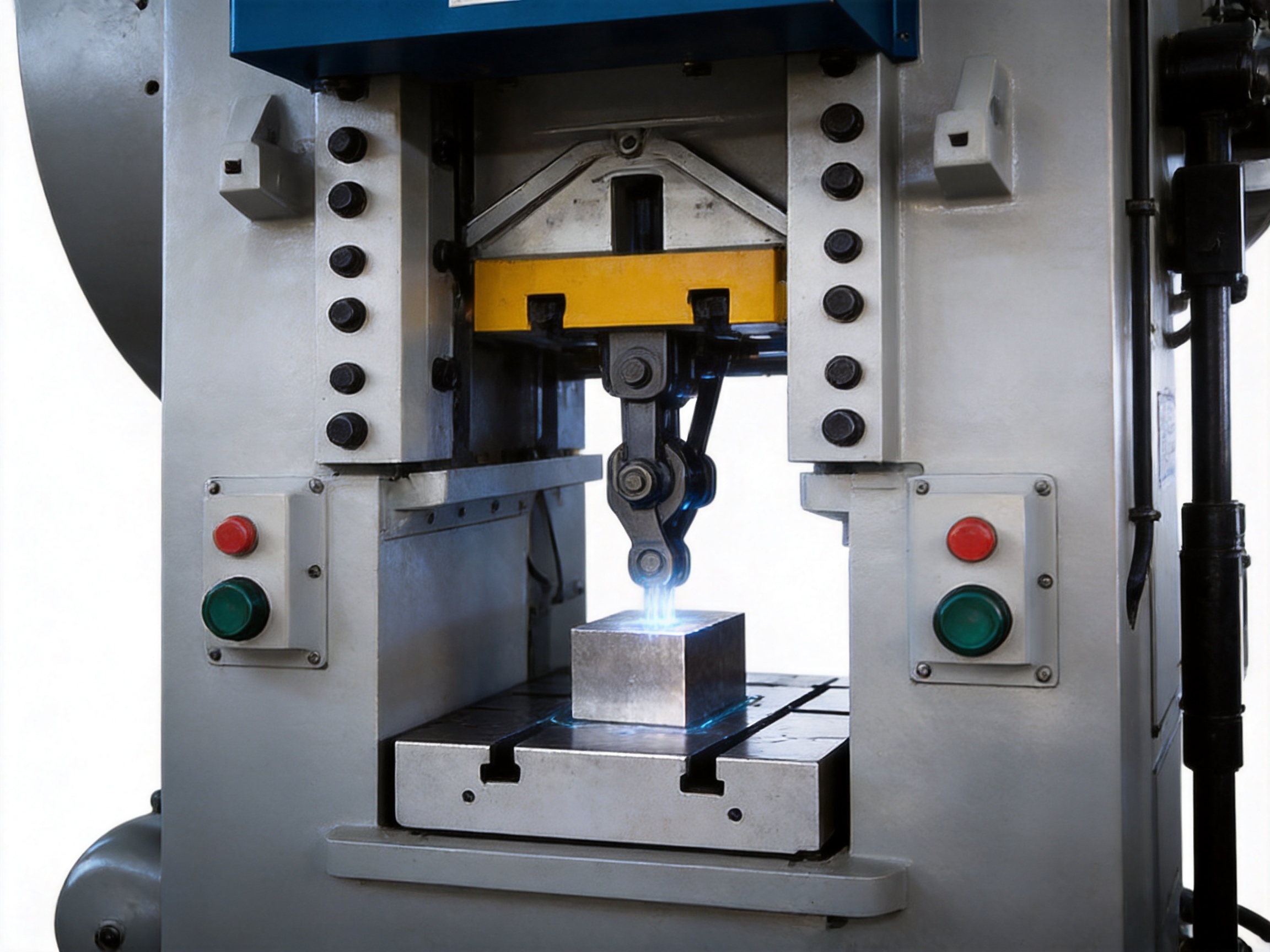
The company behind the BLKP-260 is located in Zhejiang, a region recognized for precision manufacturing and industrial supply chain strength. With two decades of experience in machinery manufacturing, the company has developed from a production enterprise into a modern manufacturer of high-precision forming equipment. Its operations integrate research and development, design, production, sales, and service, allowing product knowledge to move across departments rather than remaining isolated.
Advanced manufacturing for a power press begins with engineering design. The design team must calculate loads, determine structural proportions, select appropriate mechanisms, define precision requirements, and consider how customers will install, operate, maintain, and integrate the machine. For a cold forging toggle type press, the design must also consider the special motion requirements and force transmission characteristics of the toggle linkage. The machine must not only produce force; it must produce force in the correct way.
Precision processing is another key step. Critical components must be machined accurately to support alignment, smooth motion, and reliable assembly. In a power press, the relationship between slide guide surfaces, table plane, drive components, and connecting mechanisms affects forming accuracy. Advanced processing equipment and controlled machining procedures help reduce accumulated error. This is especially important for cold forging, where small misalignments can become large problems under high pressure.
Assembly quality is equally important. Even well-machined parts can fail to deliver expected performance if assembly is careless. Skilled assembly teams must manage fitting, alignment, lubrication pathways, drive installation, control wiring, safety functions, and final motion checks. A mature production management system helps ensure that each process is completed consistently. The company’s emphasis on rigorous, efficient, and professional production management supports stable machine quality.
Quality is especially important for industrial equipment because customers expect machines to operate for many years under demanding conditions. The company has established a finished product inspection system that exceeds ordinary expectations within the industry. This inspection approach focuses on every process and every component, ensuring that machine performance is not left to chance. For a power press, inspection may include dimensional checks, assembly verification, control function testing, running tests, safety confirmation, and final evaluation before delivery.
Such quality control gives the BLKP-260 an advantage over competitors that may focus only on apparent specifications. Two machines can list similar nominal capacity and speed, yet perform very differently in production. The difference may appear in vibration, oil leakage, control stability, slide accuracy, noise, die life, adjustment convenience, or long-term reliability. A strict inspection culture reduces the risk that hidden defects reach the customer’s factory.
Customers purchasing cold forging equipment should evaluate not only the machine model but also the manufacturer’s system. A strong production and inspection system supports consistent equipment quality across multiple units. This is important for factories planning to expand production lines, standardize equipment, or purchase additional presses in the future. When a supplier can deliver repeatable machine quality, the customer can plan process development with greater confidence.
Cold forging applications vary widely. A part may require special die height, feeding method, ejection system, lubrication arrangement, protective guarding, speed requirement, control function, or production layout. The company’s ability to provide non-standard customization is therefore a major strength. Rather than forcing every customer into a fixed configuration, the engineering team can support special specifications and functions based on real production needs.
This capability is important when a customer is moving from machining to cold forging, developing a new product family, upgrading from a conventional press, or building an automated production cell. In these situations, the press must match the die, the material, the operator workflow, and the surrounding equipment. A supplier with design and manufacturing depth can discuss practical solutions rather than only selling catalog machines.
For the BLKP-260, customization may involve variable-speed operation, integration with feeding equipment, control interface adjustments, tooling support discussions, or production line planning. The key advantage is not merely the possibility of adding options, but the manufacturer’s ability to understand why those options matter. Engineering support helps customers achieve stable production faster and reduces avoidable mistakes during installation and commissioning.
Many small metal parts can be made by machining, but machining often removes a significant portion of the original material. It also requires cutting tools, tool changes, coolant management, chip handling, and sometimes multiple operations. For complex high-volume parts, machining can become expensive even if each operation appears simple. Cold forging changes the cost structure by shaping material under pressure, often producing strong parts with better material utilization and faster cycle times.
The BLKP-260 supports this transition by providing the force and control required for compact cold forged components. Instead of producing chips, the process can move material into the desired shape. This can improve raw material economy and reduce waste handling. In addition, cold working can improve certain mechanical properties through strain hardening and grain flow, depending on material and part geometry. While not every machined part can be converted to cold forging, many high-volume components can benefit from redesign for forming.
Compared with machining centers, a power press may also offer lower cycle time per part once tooling is developed. The tradeoff is that cold forging requires careful die design and initial investment in tooling. For high-volume production, however, the per-part savings can be substantial. The BLKP-260 is particularly valuable when a manufacturer has repeat demand, stable product geometry, and a need for consistent high-volume output.
Ordinary stamping presses are widely used for blanking, piercing, bending, and shallow drawing. They are highly productive and cost-effective for many sheet metal operations. However, cold forging creates different demands. The material may be compressed into a die cavity, extruded, coined, or upset under high pressure. The process places greater emphasis on slide rigidity, bottom dead center behavior, die closure control, and forming force delivery.
The BLKP-260 provides a competitive advantage through its toggle type structure. The slower slide speed near bottom dead center distinguishes it from many general-purpose crank presses. This characteristic helps manage deformation in the critical forming phase. When a manufacturer attempts cold forging on a standard press, the process may be more sensitive to impact, tool wear, incomplete filling, or dimensional variation. A dedicated cold forging toggle press is more suitable for applications where forming quality is the priority.
This does not mean ordinary presses are inferior for all work. They remain effective for many operations. The point is that the BLKP-260 is engineered for a more specific forming purpose. When the application requires high-pressure precision deformation, the specialized design provides advantages that a general-purpose machine may not offer.
Hydraulic presses are valued for controllable pressure, flexible stroke, and steady pressing force. They can be excellent for certain forming operations, especially where long dwell, deep forming, or flexible pressure control is required. However, hydraulic systems are often slower than mechanical presses in high-volume cyclic production. They may also require more attention to hydraulic oil systems, seals, temperature control, and energy consumption during certain operating patterns.
The BLKP-260 offers an alternative for parts suitable for mechanical cold forging. Its mechanical drive and toggle motion can provide faster cyclic output while still slowing the slide near the critical forming zone. This gives manufacturers a way to combine productivity with controlled deformation. For small precision components made in large quantities, this balance can be more attractive than the slower cycle characteristics of many hydraulic solutions.
In competitive terms, the machine is not simply replacing hydraulic presses; it serves a different optimization point. It is best understood as a high-productivity precision forming machine for applications where mechanical press speed and toggle forming behavior align with the part requirements.
A precision press must be usable by real production teams. Features such as digital die height indication, PLC control, and practical adjustment ranges help operators set up and monitor the machine more efficiently. When a job is repeated, technicians can use recorded die height values and process parameters to return to stable production conditions. This reduces downtime and improves confidence during changeover.
Operator convenience also supports quality. If setup is difficult, inconsistent, or dependent on individual experience, variation increases. If the machine provides clear indicators and controlled operation, the process becomes easier to standardize. Standardization is important for factories pursuing lean manufacturing, quality certification, customer audits, or multi-shift production.
The BLKP-260 therefore provides value beyond its mechanical specifications. It helps create an operating environment where process knowledge can be captured and repeated. This is one of the practical differences between a precision forming machine and a basic press.
Manufacturing is moving toward intelligent, digital, and connected production. Even when a machine is fundamentally mechanical, its control system, setup indicators, and auxiliary interfaces can support a more modern production environment. The PLC control platform of the BLKP-260 provides a foundation for organized machine operation and potential integration with production management practices.
In a modern factory, a cold forging press may work with coil or blank feeding equipment, lubrication systems, part collection conveyors, inspection stations, sound enclosures, safety guarding, and robotic handling. The press must provide stable cyclic behavior so that surrounding equipment can be synchronized. Speed variation can be useful when matching the press to feeding and inspection capability.
The manufacturer’s focus on intelligent and digital stamping equipment development supports future-oriented production needs. Customers investing in new equipment want machines that can serve not only current jobs but also future process upgrades. A press with a reliable control foundation and strong mechanical structure is better positioned for long-term integration.
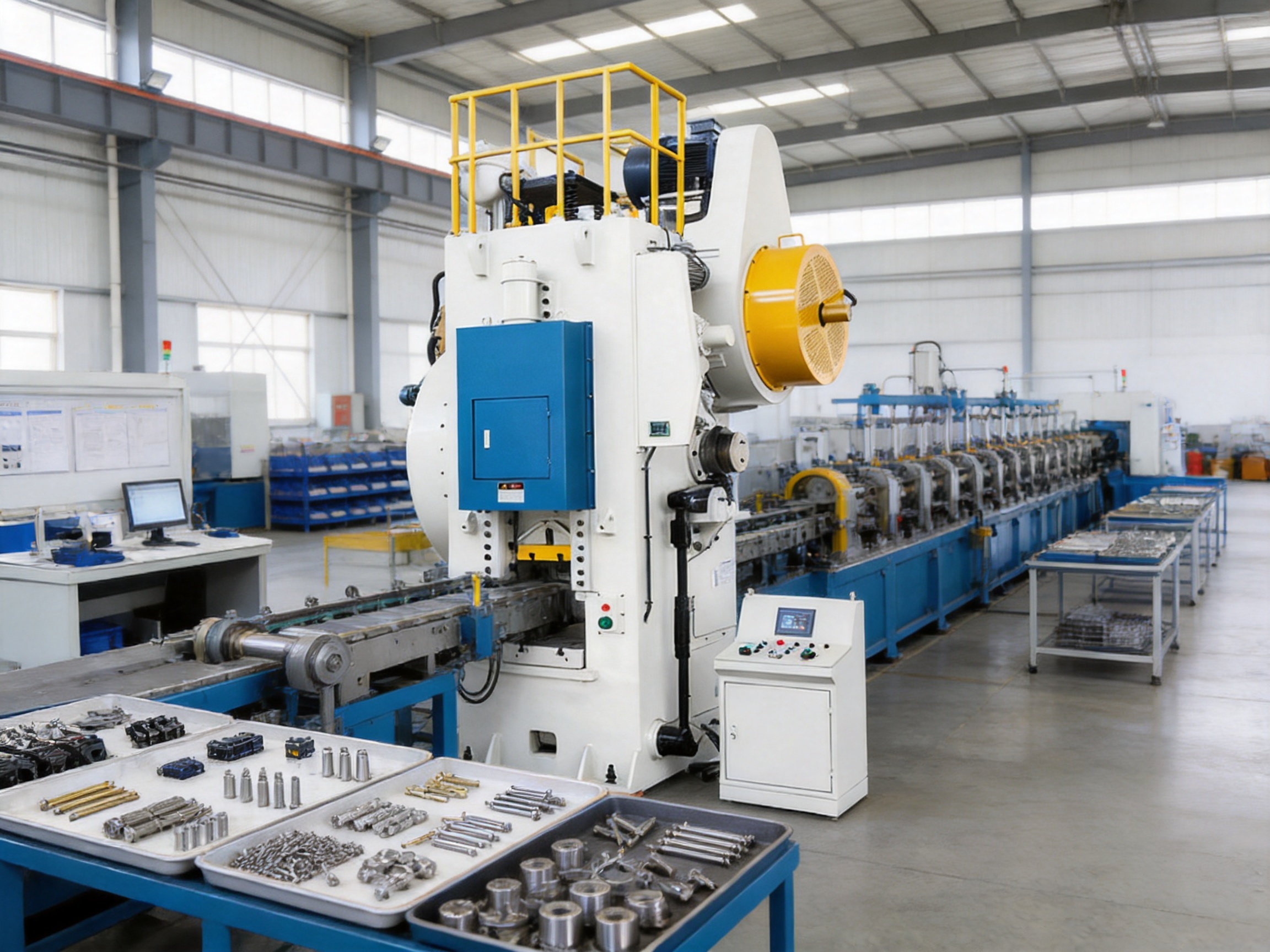
Zhejiang Bolun High-Precision Machinery Co., Ltd. has spent two decades building experience in machinery manufacturing. This background gives the company an understanding of both machine design and the practical realities of industrial production. It has developed a professional, mature, and efficient production management system and focuses on providing industrial machine tool solutions for customers worldwide.
The company’s philosophy emphasizes technological innovation, quality, service, and continuous improvement. Its “Technology First” strategy is reflected in full-chain production capability, non-standard customization, and an international management perspective. These strengths matter for customers purchasing a cold forging toggle type power press because the machine must perform reliably in demanding conditions, often as a central asset in a production line.
The company also emphasizes customer-oriented service before, during, and after sales. Pre-sales consultation helps customers select appropriate equipment and clarify process requirements. In-sales support assists with order execution and technical coordination. After-sales service supports installation, troubleshooting, maintenance, and long-term customer confidence. For industrial equipment, service capability can be as important as the machine itself because downtime directly affects production output.
The BLKP-260 stands out because it combines a dedicated cold forging motion profile, practical production speed, precision setup tools, and a manufacturing background focused on high-precision forming equipment. Many competing presses may offer force, speed, or price, but not all deliver the combination needed for stable precision cold forging. The toggle mechanism, digital die height indicator, PLC control system, and robust tooling support work together to create a complete forming solution.
Its 2600 kN capacity gives it enough force for many compact metal components without moving customers immediately into a larger and more expensive machine class. Its worktable size is suitable for precision die sets without requiring excessive floor space. Its variable-speed operation helps users optimize process conditions. Its controlled slide speed near bottom dead center supports improved forming quality. These features create value in real production, where quality and uptime are often more important than headline specifications.
The company’s advanced manufacturing processes further strengthen the product’s competitive position. Precision machining, mature assembly systems, rigorous final inspection, design capability, and customization support all reduce the risks associated with purchasing industrial equipment. Customers are not only buying a press; they are buying the engineering, manufacturing discipline, and service system behind it.
The BLKP-260 is well suited for manufacturers producing high-volume precision metal components by cold forging. It is especially appropriate for companies in electronics, electrical hardware, small appliance components, precision fasteners, miniature mechanical parts, and industrial hardware. It is also suitable for factories seeking to improve material utilization by replacing selected cutting or machining operations with forming processes.
The machine is a strong option for customers who require stable deformation control, repeatable die setup, and reliable production speed. It may also benefit companies that already use ordinary stamping presses but now need better cold forging capability. For production engineers, the BLKP-260 provides a platform for developing forming processes that demand more controlled bottom dead center behavior than a standard crank press can provide.
Customers with very large parts or unusually high forming loads may require larger models in the same series. However, for small and medium precision parts, the BLKP-260 offers a balanced combination of capacity, size, speed, and control. Its value lies in matching machine capability to real production needs rather than oversizing equipment unnecessarily.
To obtain the best results from the BLKP-260, manufacturers should treat the machine, die, material, lubricant, feeding system, and operator procedure as one integrated process. Cold forging quality depends on all of these factors. Proper die design is essential because the tool must guide material flow, withstand high pressure, and allow reliable part ejection. Material preparation should ensure consistent blank dimensions, surface condition, and mechanical properties.
Lubrication also plays a major role in cold forging. The correct lubricant reduces friction, improves die filling, protects tool surfaces, and contributes to consistent part quality. Press speed should be selected based on material behavior, die design, and production targets. Faster operation is not always better if it increases tool wear or reduces quality. The machine’s variable-speed capability allows engineers to identify a practical operating window.
Regular maintenance is also necessary. Slide guides, linkage components, lubrication systems, electrical controls, pneumatic systems, and safety devices should be checked according to established schedules. A well-maintained press maintains accuracy longer and protects the customer’s tooling investment. The manufacturer’s service system can support customers in developing proper maintenance practices.
The economic value of the BLKP-260 should be evaluated over its full service life. Initial purchase cost is important, but it is only one part of total ownership cost. A machine that reduces scrap, improves die life, shortens setup time, increases output, and supports stable quality can produce significant savings over years of production. For high-volume components, even small per-part improvements can create large financial impact.
Material savings are one of the clearest benefits. By forming rather than cutting, manufacturers can reduce waste. Cycle productivity is another benefit. Mechanical operation at suitable strokes per minute can support high output. Quality stability reduces inspection failures and customer complaints. Accurate die height indication shortens repeated setup. PLC control reduces operational uncertainty. Reliable construction reduces downtime.
Competitor machines with lower upfront price may not provide the same life-cycle value if they require more adjustment, produce more variation, or shorten die life. The BLKP-260 competes on the basis of production stability and precision forming capability, not simply price. For serious manufacturers, that distinction is critical.
Sustainability in metalworking is often associated with energy efficiency, material utilization, waste reduction, and long equipment life. Cold forging supports sustainability because it can produce parts with less material waste than machining. The BLKP-260 contributes by enabling efficient forming of precision components, helping customers reduce scrap and make better use of raw materials.
Long machine life is also part of sustainability. A durable press that maintains performance over many years reduces the need for frequent replacement and lowers the environmental burden associated with manufacturing new equipment. Rigorous quality control, robust mechanical design, and proper maintenance all support longer service life.
In addition, stable production reduces defective parts. Every rejected component represents wasted material, machine time, labor, and energy. By supporting repeatable forming behavior, the BLKP-260 helps improve overall resource efficiency in the production process.
The BLKP-260 is mainly used for precision cold forging of small and medium metal components. It is suitable for electronics parts, small hardware, precision fasteners, compact formed parts, and other applications requiring controlled plastic deformation under high pressure.
The toggle mechanism reduces slide speed near bottom dead center, where the most critical forming occurs. This helps improve material flow, reduce abrupt impact, support die filling, and enhance dimensional repeatability compared with many ordinary crank press designs.
The machine supports cold forging, a process that reshapes material instead of removing it as chips. Compared with cutting or machining, cold forging can reduce waste and improve raw material efficiency, especially in high-volume production.
The machine provides a nominal capacity of 2600 kN, making it suitable for many compact precision forming applications that require strong compressive force.
Variable-speed operation allows engineers to adjust the production rhythm according to material, die design, lubrication, feeding conditions, and quality requirements. This flexibility helps balance productivity and forming stability.
The digital die height indicator provides 0.1 mm accuracy, allowing operators to set and repeat tooling positions more reliably. This reduces setup uncertainty and supports consistent forming results during repeated production runs.
A hydraulic press can offer flexible pressure control, but it is often slower in high-volume cyclic production. The BLKP-260 provides mechanical productivity while using toggle motion to improve control near the forming zone, making it advantageous for suitable precision cold forging tasks.
Zhejiang Bolun High-Precision Machinery Co., Ltd. provides support through design capability, production experience, non-standard customization, pre-sales consultation, in-sales coordination, and after-sales service. This helps customers select, install, and operate equipment more confidently.
The BLKP-260 Agile Precision Cold Forging Toggle Type Power Press is a focused solution for manufacturers that need controlled force, repeatable accuracy, and efficient production of precision metal parts. Its 2600 kN nominal capacity, toggle linkage system, practical worktable size, digital die height indication, PLC control, and variable-speed capability combine to support demanding cold forging applications. Rather than relying on tonnage alone, the machine provides a motion profile and control foundation suited to real forming requirements.
Its advantages over ordinary stamping presses, many lower-end competitors, and some hydraulic alternatives are rooted in the balance between productivity and deformation control. The slower slide speed near bottom dead center improves the forming environment for small precision components. The digital setup and PLC system support repeatability. The manufacturer’s advanced production processes, quality control culture, customization capability, and service system strengthen the machine’s long-term value.
For electronics, small hardware, and precision metal component manufacturers, the BLKP-260 offers more than a press. It offers a path toward stable cold forging production, improved material utilization, better surface quality, and stronger competitiveness in high-volume manufacturing. As industries continue to demand lighter, smaller, more precise, and more cost-efficient metal components, specialized cold forging toggle type power presses will remain essential equipment for advanced forming operations.
Altan, T., Ngaile, G., and Shen, G. Cold and Hot Forging: Fundamentals and Applications. ASM International.
Kalpakjian, S., and Schmid, S. Manufacturing Engineering and Technology. Pearson Education.
Schey, J. A. Introduction to Manufacturing Processes. McGraw-Hill Education.
Wagoner, R. H., and Chenot, J. L. Metal Forming Analysis. Cambridge University Press.
ASM Handbook, Volume 14A: Metalworking: Bulk Forming. ASM International.
DIN and ISO technical literature on mechanical presses, press safety, and metal forming equipment.
Industry practice documents on cold forging die design, press selection, and high-volume precision forming.


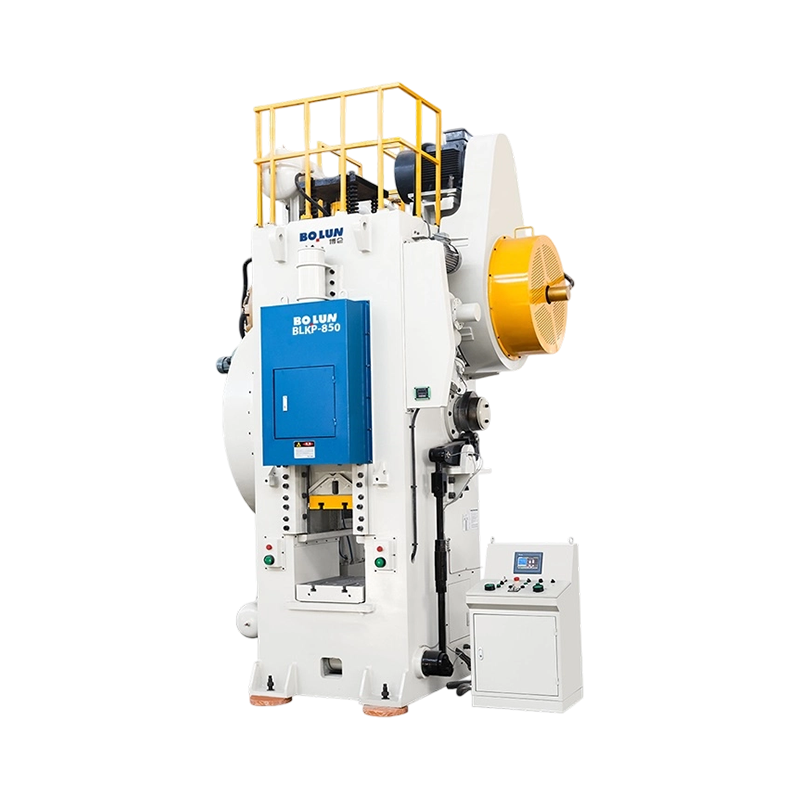
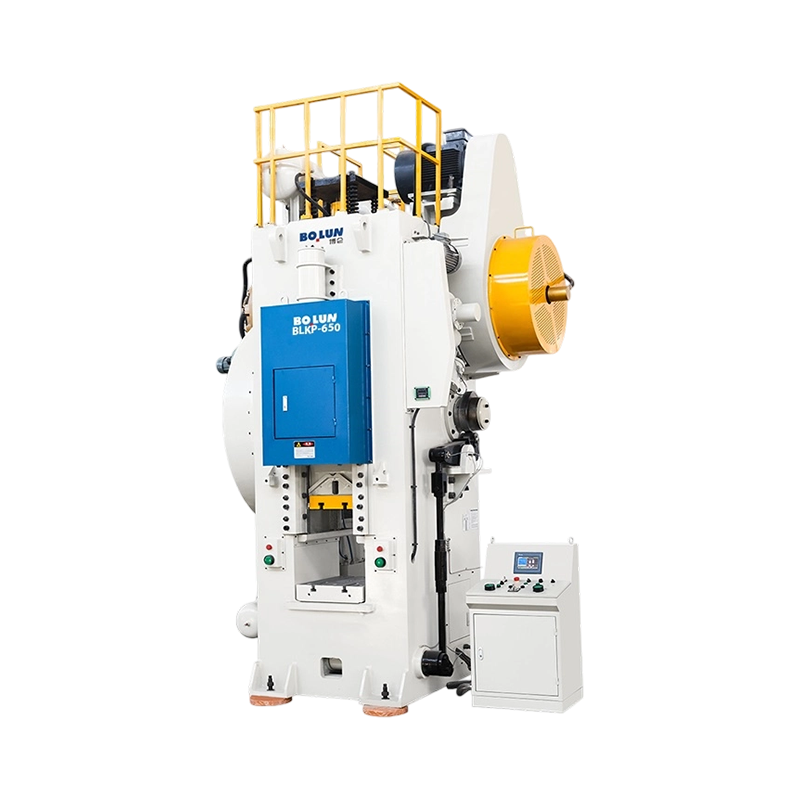
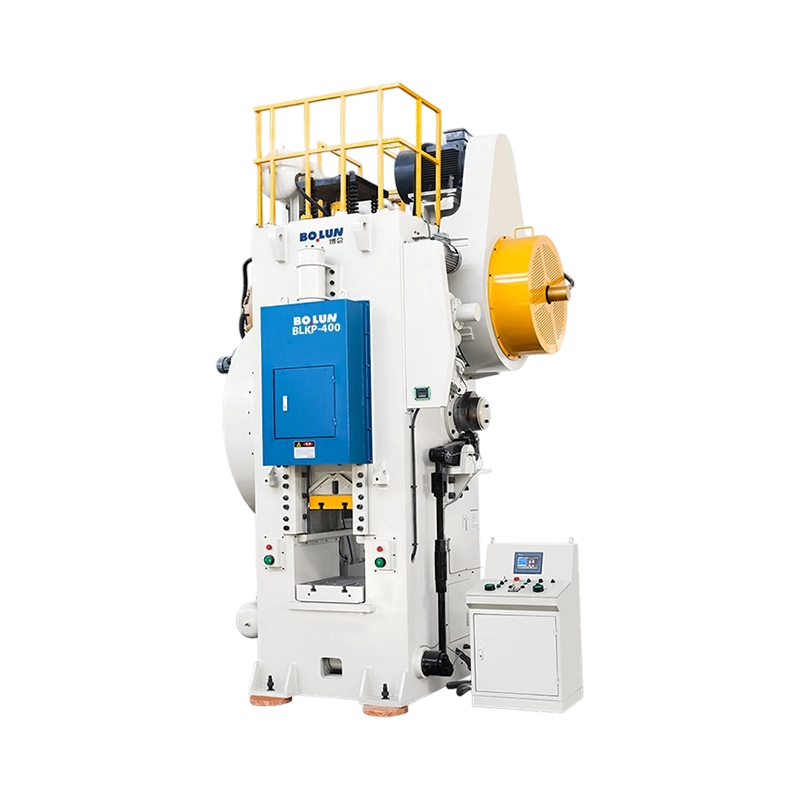
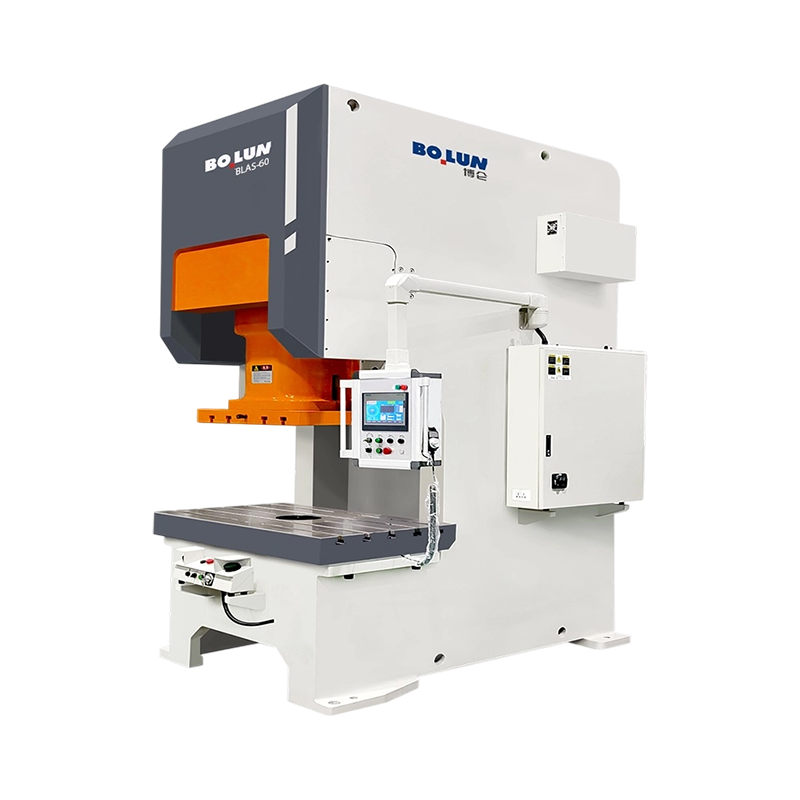
Power press machines are classified in two main ways: by frame construction, w...
What Is a Power Press? A power press — also called a stamping press or punch pr...
Understanding Mechanical Power Presses and Their Essential Functions A mechani...
A cold forging die rarely announces its failure in advance. One day the press r...
In the fields of metal forming, sheet metal fabrication, blanking, and punching,...
ZHEJIANG BOLUN INTELLIGENT EQUIPMENT IMPORT & EXPORT TRADING proudly showcas...
Contact Us

bolunpress@gmail.com

+86-575-83362228

+86-15158259588

+86-575-83362999

+86-15158259588

Hangzhou Office Add: No. 332 Wangjiang East Road, Shangcheng District

No.1 Linjiang Road East, Xiaren, Jinting Town, Shengzhou City, Zhejiang Province, China
Ready to Begin?
Get in Touch

Now!

ZHEJIANG BOLUN
 English
 中文简体
中文简体