
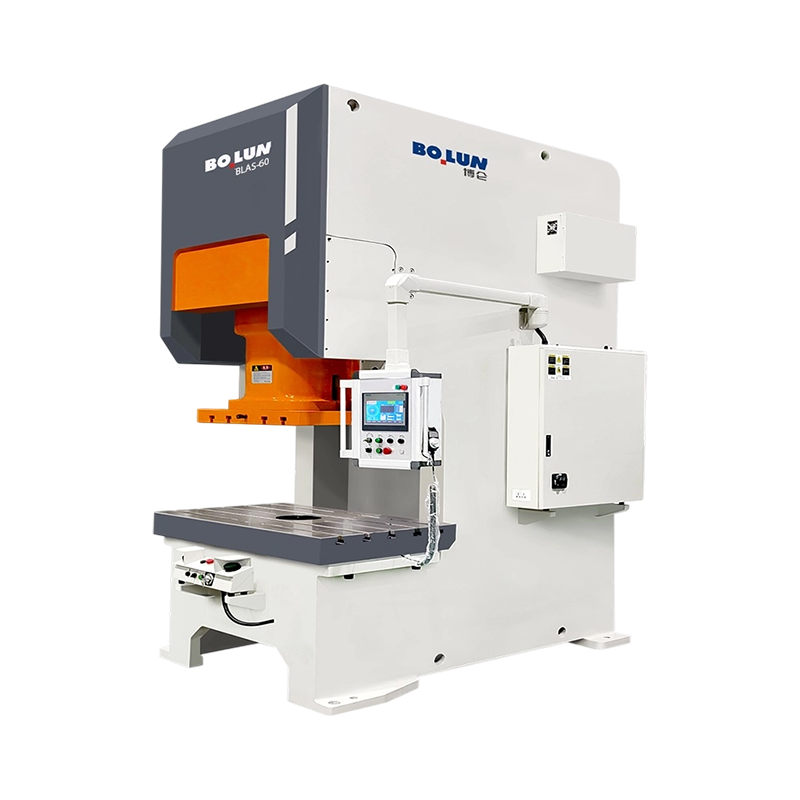
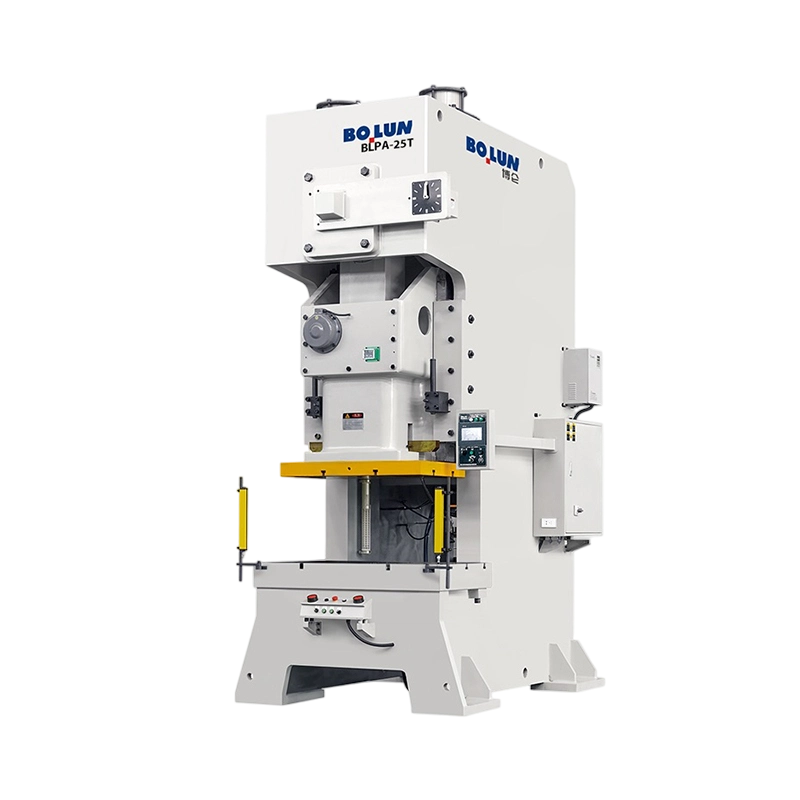
The BLAS-80 Multi-Mode Motion Open-Type Single-Point Servo Power Press is designed for manufacturers that require more than basic mechanical stamping. With an enhanced nominal capacity of 800 kN, programmable slide motion, a spacious worktable, high positioning flexibility, and JIS B 6402 Level 1 punch accuracy, it provides a practical solution for demanding forming and precision stamping operations.
Unlike a conventional mechanical press that operates according to a fixed crank motion, the BLAS-80 allows operators to control the slide speed and position throughout the working cycle. This multi-mode motion capability helps manufacturers adapt the machine to different materials, die designs, production speeds, and forming requirements. It can improve forming quality in applications where a standard press may produce excessive springback, wrinkling, cracking, inconsistent draw depth, or unstable material flow.
The machine is manufactured by Zhejiang Bolun High-Precision Machinery Co., Ltd., a Chinese manufacturer specializing in high-precision forming equipment, power presses, forging machinery, and customized industrial machine tools. The company integrates product research and development, mechanical design, component manufacturing, assembly, inspection, sales, and service within one production system. This integrated approach supports consistent machine quality and allows the manufacturer to respond to non-standard production requirements.
For buyers evaluating servo presses, open-type power presses, and precision stamping equipment, the BLAS-80 combines the accessible working area of an open-front press with the programmable flexibility of servo-driven motion. It is suitable for operations involving sheet metal forming, precision blanking, shallow drawing, embossing, bending, coining, calibration, and other processes that benefit from controlled slide movement.
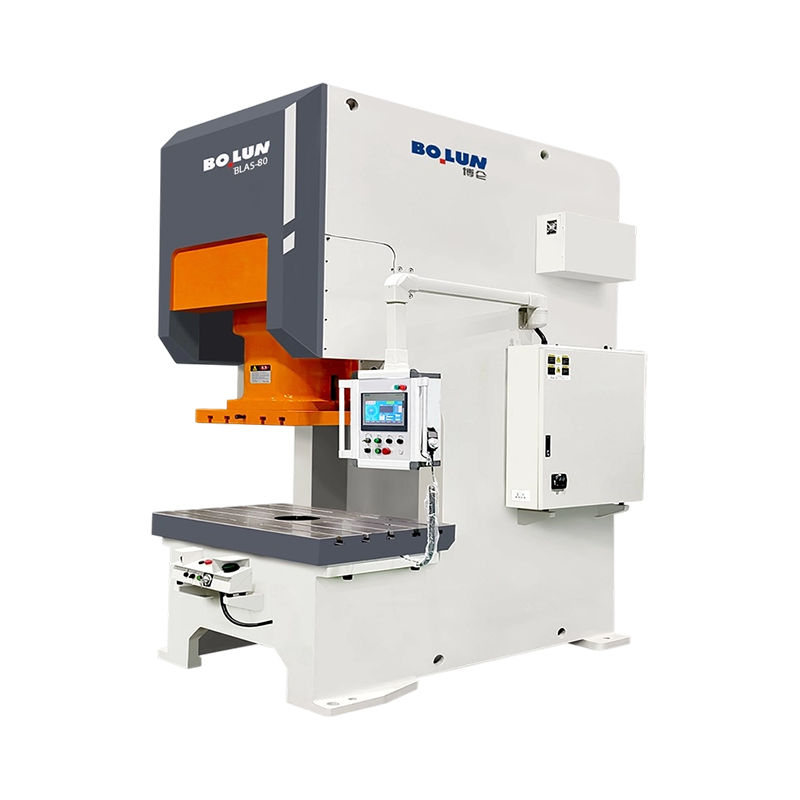
BLAS-80 Multi-Mode Motion Open-Type Single-Point Servo Power Press
The BLAS-80 is an open-type, single-point servo power press with a nominal capacity of 800 kN. The designation places it within a family of servo presses that also includes models with nominal capacities ranging from 600 kN to 4000 kN. Within this range, the BLAS-80 represents a balanced configuration for medium-to-heavy precision stamping applications.
Its 800 kN nominal capacity provides substantially more forming force than smaller 600 kN equipment while retaining a relatively compact open-type machine layout. This makes the press suitable for manufacturers that need additional force for thicker sheet materials, larger components, more complex dies, or operations requiring a greater safety margin between the calculated forming load and the available press capacity.
The machine uses a single-point slide structure. A single-point drive arrangement can provide a direct and stable connection between the drive mechanism and the slide, supporting controlled movement across the working area. Proper die installation, machine leveling, lubrication, and load distribution remain essential, but the configuration is well suited to general precision stamping and forming applications.
The BLAS-80 also includes a programmable slide movement system. The operator can set slide speed and position at different stages of the cycle rather than relying only on a fixed-speed descent and return. This feature enables the press to operate in different motion modes according to the material and die process.
For example, the slide can be programmed for a faster approach, a slower forming stage, a controlled dwell near the bottom position, and a rapid return. A slow approach can improve safety and reduce unnecessary impact. A controlled forming speed can support better material flow. A pause at a selected position can help stabilize the workpiece, allow material redistribution, or improve the effect of a forming operation. The exact settings depend on the die, material, lubrication, tooling conditions, and required production rate.
The press features a 1000 x 600 mm worktable with a listed thickness of 100 mm. This work area offers useful space for medium-sized dies, auxiliary tooling, guide components, transfer arrangements, and workpiece positioning equipment. The slide bottom size is listed as 560 x 460 x 70 mm, which provides a compatible mounting area for many precision stamping dies within the machine’s capacity and dimensional limits.
The following table summarizes the principal published specifications for the BLAS-80 model. These values should be confirmed against the final technical quotation, electrical configuration, tooling requirements, and applicable regional standards before purchase.
| Item | BLAS-80 Specification |
| Machine type | Open-type single-point servo power press |
| Nominal capacity | 800 kN |
| Nominal stroke | 5 mm |
| Continuous work energy | 4100 J |
| Slide stroke | 150 mm |
| Strokes per minute | Approximately 75 S.P.M. |
| Maximum die height | 330 mm |
| Die height adjustment | 80 mm |
| Throat depth | 310 mm |
| Worktable size | 1000 x 600 x 100 mm |
| Slide bottom size | 560 x 460 x 70 mm |
| Distance between columns | 600 mm |
| Height of working face | 830 mm |
| Shank hole diameter | 50 mm |
| Die height adjustment motor | 0.4 kW |
| Cushion capacity | 36 kN |
| Cushion working stroke | 70 mm |
| Effective cushion area | 440 x 300 mm |
| Punch accuracy | JIS B 6402 Level 1 |
| Air pressure | 0.55 MPa |
The specification table includes both nominal stroke and slide stroke because these values describe different technical characteristics. The nominal stroke is listed as 5 mm, while the slide stroke is listed as 150 mm. In practical terms, the nominal stroke relates to the rated operating condition or nominal capacity point, whereas the slide stroke describes the total movement available to the slide. Buyers should request the machine’s detailed technical drawings and operating definitions when comparing specifications between different manufacturers.
The most important difference between the BLAS-80 and a conventional fixed-motion mechanical press is the ability to program slide speed and position. In a traditional mechanical press, slide motion is largely determined by the crankshaft, eccentric mechanism, or other fixed mechanical transmission. Although production speed may be adjustable within a limited range, the motion profile is not normally freely programmable at every stage of the cycle.
The BLAS-80 provides a more adaptable motion profile. Operators can define how the slide approaches the material, how it performs the forming operation, whether it pauses at a selected point, and how it returns to the upper position. This flexibility is valuable when a single production line handles multiple materials or when a forming process requires more precise control than a standard mechanical cycle can provide.
A controlled approach allows the slide to move toward the workpiece at a suitable speed before the forming stage begins. This can reduce unnecessary shock, assist with die engagement, and provide more predictable contact between the punch, blank holder, and material. It can also make die trials easier because the operator can adjust motion without immediately operating at the highest production speed.
Different materials respond differently to forming speed. High-strength steel, stainless steel, aluminum alloys, copper alloys, and coated materials may each require different forming conditions. A slower forming section can provide more time for material flow and may help reduce tearing or unstable deformation. In other applications, a faster movement may be preferred to achieve production targets. The programmable servo system gives the production engineer greater freedom to match slide motion to the process.
The ability to establish a pause at a selected slide position is particularly useful for difficult-to-process materials and precision forming operations. A dwell can allow stresses to stabilize, assist with material seating, improve embossing definition, and support more consistent bottoming or calibration. It can also provide additional time for a die function that depends on a controlled position rather than an immediate return stroke.
A pause does not automatically guarantee improved results. The correct dwell position and duration must be established through die trials and process validation. However, the machine’s ability to create such a motion profile gives engineers a wider process window than a standard fixed-cycle press.
The return stroke can also be programmed to suit the application. A rapid return may help maximize production output, while a controlled return can reduce the risk of workpiece lifting, die interference, or deformation after forming. The appropriate setting depends on the part geometry, ejection system, automation equipment, and die design.
With an 800 kN nominal capacity, the BLAS-80 is intended for applications requiring a substantial forming force. A higher nominal capacity can help accommodate thicker materials, larger projected forming areas, higher-strength alloys, and more demanding die operations. It can also provide greater flexibility when one press must support several product families.
Nominal capacity should always be evaluated together with the point at which the capacity is available in the slide stroke. Press capacity is not necessarily constant throughout the entire stroke. The force required by a die must be compared with the press manufacturer’s allowable load curve, die design, material characteristics, and operating conditions. The BLAS-80’s rated capacity is an important starting point, but final application approval should be based on an engineering review.
The listed continuous work energy is 4100 J. Energy capacity is relevant when the machine performs repeated forming operations at production speed. A press must not only generate the required force; it must also manage the energy associated with repeated deformation, acceleration, deceleration, and cycling. Evaluating both force and energy helps manufacturers select equipment that can operate reliably under continuous production conditions.
The 150 mm slide stroke gives the machine useful working travel for a range of dies. It can accommodate processes requiring significant punch movement, material clearance, or tool opening height. The maximum die height is listed as 330 mm, with 80 mm of die height adjustment. This adjustment range assists with die setup and helps operators accommodate different tooling dimensions while maintaining a suitable working position.
For manufacturers working with thicker or more resistant materials, the BLAS-80 can offer advantages over smaller open-type presses. Compared with a lower-capacity press, it may reduce the need to divide a forming process into multiple operations, provided that the die design and load requirements are suitable. It may also support larger tools and improve production planning by allowing more components to be processed on the same machine.
Precision stamping depends on more than nominal force. Slide guidance, frame rigidity, die mounting, table flatness, alignment, lubrication, material consistency, and process control all influence the final part. The BLAS-80 is specified with JIS B 6402 Level 1 punch accuracy, indicating a high level of positioning and alignment performance within the manufacturer’s stated testing conditions.
High accuracy is valuable in applications where dimensional variation must be controlled over long production runs. It can support more consistent punch-to-die clearance, more stable cutting edges, and improved repeatability of formed features. Stable operation may also extend die life by reducing uneven loading and unnecessary wear.
The open-type frame provides convenient access to the die area from the front and sides. This accessibility can shorten setup time and simplify inspection, part removal, die cleaning, and maintenance. It is especially useful in job shops and production environments where tooling changes are frequent.
At the same time, an open-type design must be used with appropriate guarding and safety systems. The working area should be protected by suitable light curtains, two-hand controls, fixed guards, interlocked access points, or other systems required by the applicable safety standard and risk assessment. Open access is a productivity advantage only when it is combined with disciplined machine safeguarding.
The 1000 x 600 mm table provides a broad base for dies and fixtures. A larger table can simplify tool layout, improve access to mounting points, and provide room for sensors, guide rails, material positioning components, and automated feeding equipment. The 100 mm table thickness also contributes to a substantial working platform, although the final die installation must consider loading, support, clamping, and mounting-hole arrangements.
The 560 x 460 mm slide bottom offers a corresponding mounting surface. Matching the slide and table dimensions is essential for proper force transmission. Die designers should verify the location of mounting holes, shank dimensions, working height, clearance, and the load distribution across the tooling.
The BLAS-80 includes a specialized hand-wheel micro-movement function. This feature allows fine manual movement of the slide during setup, die adjustment, alignment, and inspection. Micro-movement is valuable when the operator needs to position the punch or slide precisely without using a full automatic cycle.
During die installation, small positional changes can make the difference between correct alignment and premature tool wear. A hand-wheel function can help the operator observe the relationship between the punch, die, stripper, guide pins, and workpiece. It can also assist with checking clearance and confirming that the die moves freely before production begins.
As with all manual setup functions, micro-movement should be governed by the machine’s safety procedures. Operators must follow the manufacturer’s instructions and ensure that hands and body parts remain outside hazardous zones unless the machine is in a properly controlled setup condition.
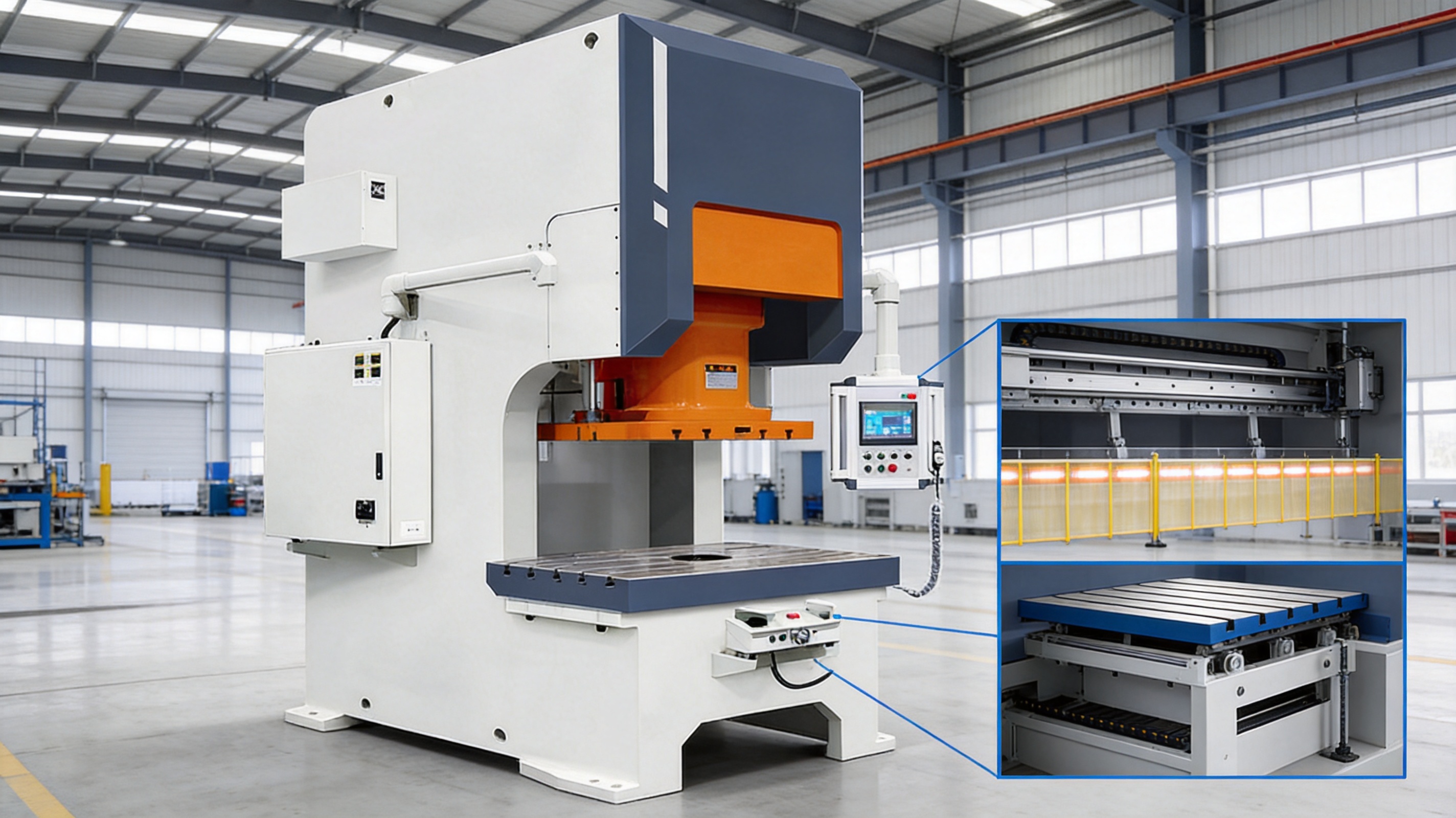
Conventional mechanical presses remain valuable for high-volume, repetitive stamping. They are often selected for their simple cycle structure, established maintenance practices, and high production rates. However, their fixed motion profile can limit the ability to optimize forming conditions for different materials and tools.
The BLAS-80 offers several advantages in applications where motion flexibility is important.
A traditional mechanical cycle may force the operator to accept the same speed pattern for every product. The BLAS-80 allows the motion profile to be adapted to the material. This can be beneficial when a production facility processes a mixture of mild steel, high-strength steel, stainless steel, aluminum, brass, copper, or coated sheet. Each material may have different requirements for forming speed, dwell, and return movement.
During die trials, engineers can adjust the slide motion to identify a more stable process window. Instead of modifying the die immediately to compensate for a fixed machine cycle, the team can first examine whether a different approach speed, forming speed, or dwell position produces better results. This can reduce trial-and-error time and help identify the root cause of forming defects.
Controlled slide movement may help improve the consistency of difficult forming operations. Depending on the process, it can reduce shock loading, improve material flow, support more stable embossing, and reduce variation between cycles. The actual improvement depends on die construction, material quality, lubrication, and correct programming, but the machine provides the control necessary to pursue these improvements.
A programmable servo press can perform a broader range of operations than a machine with only one fixed motion pattern. Manufacturers may use the BLAS-80 for blanking, bending, shallow drawing, embossing, forming, coining, and calibration. This versatility can help reduce the number of specialized machines required for medium-volume or diversified production.
Job shops and manufacturers with frequent product changes often need flexible equipment rather than a machine optimized for only one part. The BLAS-80’s programmable movement and accessible open-type layout can support faster setup development across different dies. Its broad worktable and adjustable die height further support tooling flexibility.
The BLAS-80 is not simply a larger version of a light-duty machine. Its 800 kN nominal capacity provides additional capability for operations that may exceed the practical limits of a smaller press.
Thicker sheet materials require greater force and may produce higher elastic recovery after forming. A press with insufficient capacity may experience excessive deflection, unstable operation, overload alarms, or reduced die life. Selecting a higher-capacity machine can provide a more appropriate operating margin, provided that the die and process are correctly matched.
The BLAS-80 also provides a 600 mm distance between columns and a 1000 x 600 mm table. These dimensions permit the use of larger dies than many compact presses. More die space can be important when the tool includes multiple stations, blank holders, sensors, automatic feeders, pilot pins, or part ejection components.
Its 310 mm throat depth provides useful front-to-back working clearance. Throat depth is especially relevant for larger components and tools where the forming position is set away from the front edge of the frame. It can also influence the placement of auxiliary equipment and the accessibility of the die during setup.
The BLAS-80 can be applied to a wide range of metal forming and precision stamping processes. The following examples describe potential applications; final suitability must be confirmed through material, die, and load calculations.
Precision blanking requires accurate alignment, controlled clearance, and repeatable slide movement. The BLAS-80’s stated punch accuracy and programmable motion can support stable cutting conditions. A suitable die must be designed for the material thickness, shear characteristics, required edge quality, and expected production volume.
Sheet metal bending and forming may benefit from controlled approach and return speeds. The programmable slide can be adjusted to reduce sudden impact and improve repeatability. The 800 kN capacity provides additional flexibility for larger or thicker workpieces when compared with lower-capacity equipment.
Embossing and coining operations often require a controlled force application and accurate bottom position. A programmed dwell can help maintain pressure long enough to define the feature consistently. The exact process must consider material hardness, embossing depth, tool geometry, and energy requirements.
Shallow drawing operations are sensitive to material flow, blank-holder force, lubrication, and punch speed. A servo-controlled movement profile can provide a slower forming stage or a selected pause to support process development. The integrated cushion specification of 36 kN with a 70 mm working stroke may be useful in compatible applications, subject to detailed die and process analysis.
Calibration operations require repeatable positioning and controlled force. The BLAS-80 can be configured for processes that need a consistent final forming position. The hand-wheel micro-movement function may assist with initial die alignment and setup checks.
Manufacturers producing multiple parts on one press can benefit from programmable recipes. Different dies may use different motion profiles, speed limits, dwell positions, and production rates. Proper recipe management can make changeovers more systematic, although operators must verify every setting before production begins.
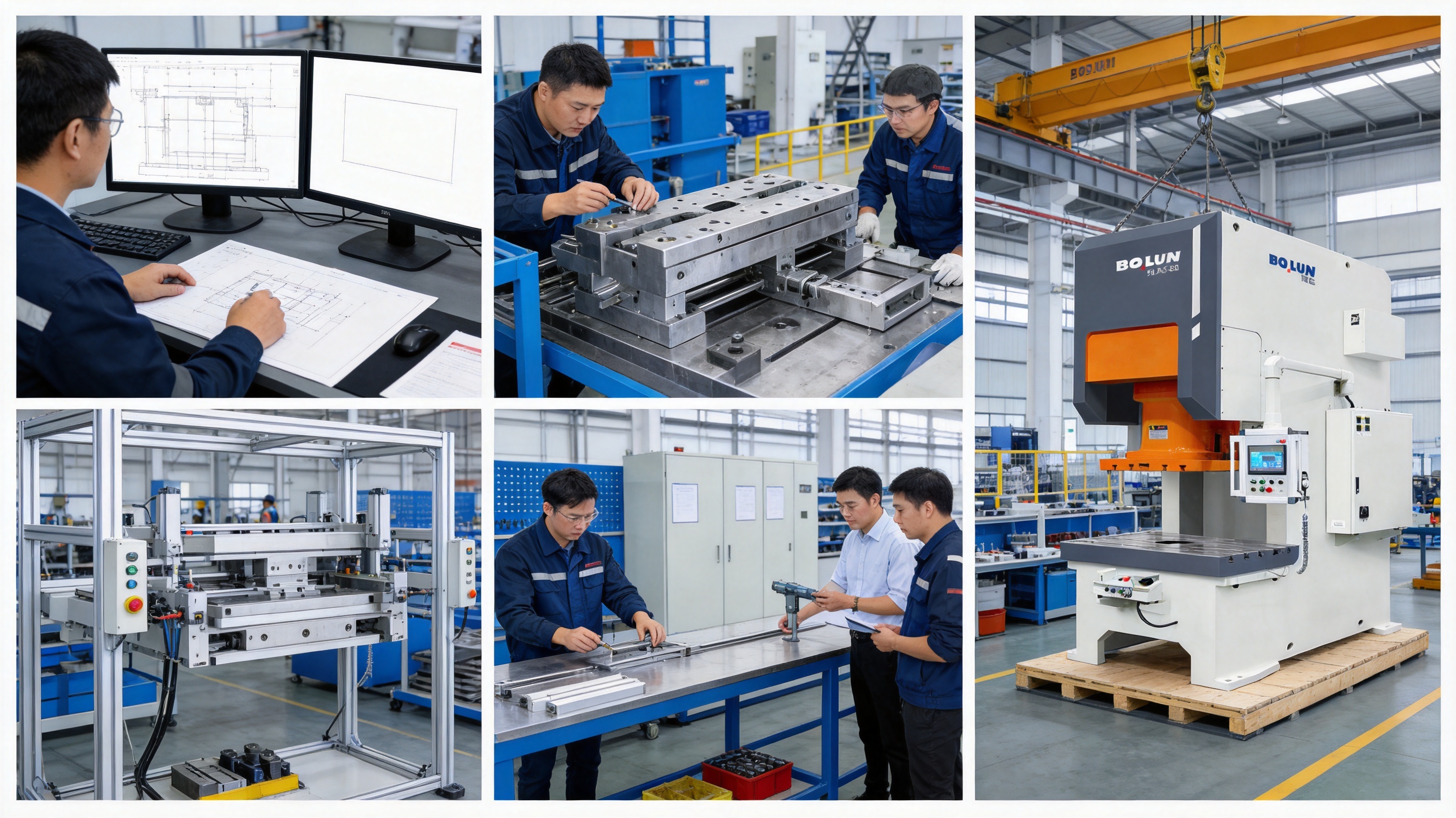
The performance of a power press depends heavily on the quality of its engineering, machining, assembly, inspection, and service support. Zhejiang Bolun High-Precision Machinery Co., Ltd. has developed its operations around high-precision forming equipment and integrates research and development, design, production, sales, and service.
The company is located in Zhejiang, a major manufacturing region in China with extensive capabilities in machinery, metalworking, automation, and industrial supply chains. This industrial environment can support access to specialized manufacturing resources, skilled technical personnel, precision machining services, and component suppliers.
According to the supplied company information, the manufacturer has approximately two decades of experience in the machinery manufacturing industry. Over this period, it has developed a production management system covering basic design, core component development, precision processing, machine assembly, inspection, and customer service.
An integrated research and development structure allows machine design to be connected directly with production experience. Engineers can evaluate the relationship between frame construction, drive system behavior, slide guidance, die space, control functions, and maintenance requirements. This is important for servo presses because mechanical performance and electronic control must work together as one system.
The manufacturer’s emphasis on technology and precision forming supports the development of equipment for customers with specialized requirements. Instead of treating every project as a standard catalog sale, the company can assess non-standard specifications, special functions, working dimensions, and production conditions.
Precision press manufacturing requires accurate machining of structural and functional components. The frame, slide, guide surfaces, table, drive components, and die-height adjustment system must be produced and assembled within controlled tolerances. Poor machining or inconsistent assembly can affect alignment, noise, vibration, die life, and product quality.
The company describes its production system as covering advanced precision processing equipment and a mature industrial environment. Such capabilities are important for producing a press that can maintain accuracy under repeated load. Quality machining also supports serviceability because accurately manufactured components are easier to inspect, replace, and adjust.
Many stamping projects cannot be solved with a standard machine alone. Customers may need special table dimensions, different automation interfaces, custom safety enclosures, modified working heights, additional cushions, particular electrical systems, or integration with transfer and feeding equipment.
Bolun’s stated non-standard customization capabilities allow the company to provide one-stop design and manufacturing services for special specifications and functions. For buyers, this can simplify project coordination because the press manufacturer can participate in the engineering process rather than supplying an isolated machine.
The company reports a finished-product inspection system that covers processes and components. For precision machinery, inspection should include dimensional verification, alignment checks, functional testing, control-system testing, lubrication inspection, safety-system validation, and trial operation under suitable conditions.
A systematic inspection process helps identify issues before shipment. It also provides a basis for documenting machine performance and supporting commissioning at the customer’s facility. Buyers should request the specific inspection records, acceptance criteria, and test procedures included with their order.
Press equipment is a long-term production asset. The initial purchase is only one part of the ownership experience. Application consultation, die compatibility review, installation support, operator training, troubleshooting, spare parts, and preventive maintenance all influence the machine’s total value.
The manufacturer describes a customer-oriented service system that covers pre-sales consultation, in-sales support, and after-sales guarantees. This structure is particularly useful for servo press buyers who may need assistance developing motion programs or integrating the press into an existing production line.
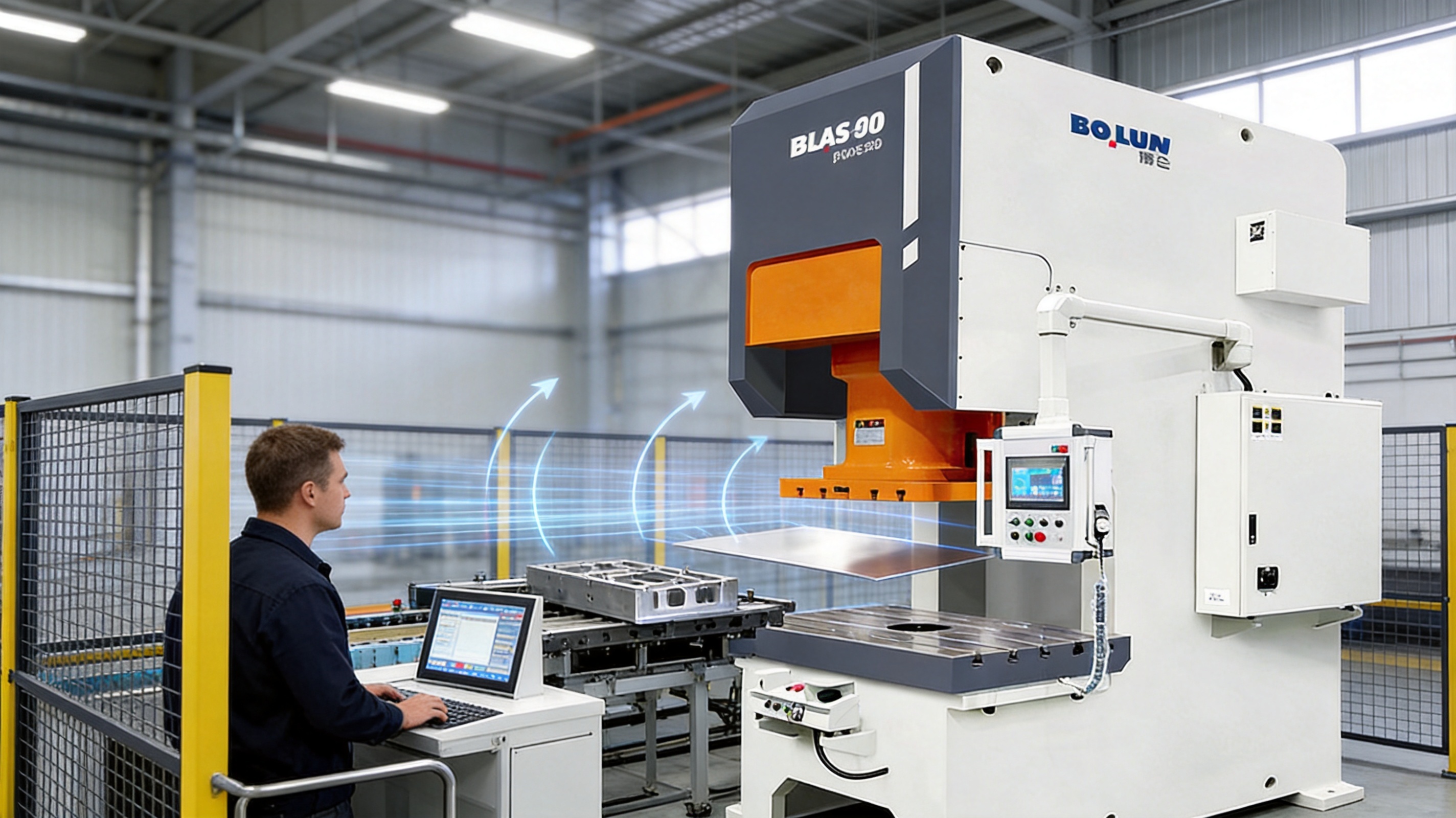
A high-quality press begins with engineering analysis. Before manufacturing, the design team must consider the required capacity, stroke, speed, table dimensions, die height, throat depth, working height, drive requirements, control architecture, and safety functions. These factors must be balanced so that the machine performs reliably without unnecessary complexity.
The frame must resist repeated forming loads while maintaining suitable alignment between the slide and table. Structural rigidity influences die life, part consistency, vibration, and noise. The open-type configuration provides accessibility, but the frame still requires careful engineering to manage deflection and maintain precision during operation.
The slide must travel smoothly and accurately through its working range. Guide surfaces and related components must be manufactured and adjusted carefully. Proper guidance helps maintain punch-to-die alignment and reduces uneven loading. It also supports the stated accuracy performance of the machine.
The servo system must coordinate motor output, slide position, speed, acceleration, deceleration, and operating mode. A reliable control architecture should provide repeatable motion, clear parameter settings, fault monitoring, and appropriate protection against incorrect operation.
Motion programming should be treated as part of the forming process rather than merely a machine setting. The program must correspond to the die sequence and material behavior. Production personnel should record proven parameters, control access to critical settings, and validate the first parts after any change.
The BLAS-80 includes an 80 mm die-height adjustment range and a 0.4 kW die-height adjustment motor. This mechanism assists with setting the machine for different tools. Accurate die-height adjustment is essential for achieving the desired bottom position, maintaining correct shut height, and avoiding excessive loading on the die or press.
The listed cushion capacity is 36 kN, with a working stroke of 70 mm and an effective area of 440 x 300 mm. A cushion can support forming operations that require controlled force beneath the workpiece, including compatible drawing and forming processes. The cushion settings must be matched to the die design and material to avoid wrinkles, tearing, or inconsistent forming.
Final assembly is where machined components, electrical systems, servo equipment, control devices, lubrication systems, and safety functions are brought together. Assembly accuracy is as important as component accuracy. After assembly, the machine should undergo functional tests, dry-cycle tests, slide movement checks, die-height adjustment checks, emergency-stop tests, and accuracy verification.
Commissioning at the customer’s site should include leveling, anchoring where required, connection of utilities, inspection of the electrical supply, verification of air pressure, and testing with the customer’s tooling. Operators should receive training in normal operation, setup, programming, alarm response, lubrication, and routine inspection.
Production efficiency is not determined only by strokes per minute. A press that operates quickly but produces frequent defects, die damage, lengthy adjustments, or unplanned downtime may deliver lower overall productivity than a more controllable machine.
The BLAS-80’s listed speed is approximately 75 strokes per minute. This provides a useful production rate for many stamping operations, while the servo motion system allows the speed profile to be optimized instead of using the same movement throughout the cycle. In suitable applications, this balance can help manufacturers achieve productive output while maintaining forming stability.
Programmable motion may reduce the need for repeated manual adjustments during die trials. Once a successful motion profile is established, it can be stored and reused for future production. This can improve repeatability between shifts and reduce dependence on individual operator experience.
The open front and accessible work area can also support faster tooling changes and inspection. A larger table gives technicians more room to work around the die, while the hand-wheel micro-movement function assists with careful alignment. Together, these features may reduce setup time and help shorten the transition from one product to another.
Improved process stability can contribute to lower scrap rates. If a controlled slide profile reduces defects such as cracks, wrinkles, incomplete forming, or inconsistent embossing, the amount of rejected material may decrease. The financial benefit depends on material cost, production volume, part value, and the specific defect rate before and after implementation.
When selecting stamping equipment, buyers commonly compare open-type mechanical presses, closed-type presses, hydraulic presses, and servo presses. Each type has different strengths.
Open-type mechanical presses offer convenient access, relatively simple operation, and good suitability for general stamping. They are often cost-effective for repetitive work. However, their slide motion is normally fixed or only moderately adjustable. The BLAS-80 provides the familiar accessibility of an open-type press while adding programmable servo movement.
Closed-type presses generally provide a more enclosed and rigid frame structure and are often selected for larger dies, higher loads, or applications requiring greater support across the working area. They may require more floor space and provide less open access. The BLAS-80 is better suited to applications where front and side accessibility, flexible tooling, and a more compact open-type configuration are priorities.
Hydraulic presses can provide highly controllable force and slide movement, including long dwell periods and variable pressure. They are useful for deep drawing, compression forming, and processes requiring sustained pressure. However, hydraulic systems may have different speed, energy consumption, maintenance, and production-cycle characteristics. The BLAS-80 offers servo-controlled motion with the cycle behavior and productivity expectations associated with a mechanical power press.
Some servo presses provide programmable movement but may differ in capacity, table dimensions, accuracy, control interface, or customization options. The BLAS-80 distinguishes itself through its 800 kN capacity, 1000 x 600 mm worktable, 310 mm throat depth, 150 mm slide stroke, hand-wheel micro-movement function, custom slide pauses, and stated JIS B 6402 Level 1 punch accuracy.
Correct installation is essential for maintaining precision. The foundation must be suitable for the machine’s weight, dynamic loading, and operating environment. The press should be leveled according to the manufacturer’s instructions, and the required anchoring or vibration-control arrangements should be completed before production.
Electrical installation should be performed by qualified personnel. The incoming power supply, grounding, control cabinet, servo drive, emergency circuits, and safety devices must be checked before operation. The specified air pressure is 0.55 MPa, and the plant air system should be clean, stable, and adequately sized for the machine’s requirements.
Before installing a die, operators should inspect the table and slide surfaces, confirm the die weight and dimensions, verify the shank diameter, and check that the die height is within the machine’s range. The die should be securely clamped and aligned. The hand-wheel micro-movement function can be used during controlled setup to check clearance and movement.
Routine maintenance should include lubrication, inspection of guide components, checking of fasteners, examination of electrical connections, monitoring of abnormal noise or vibration, inspection of air lines, and verification of safety devices. The maintenance schedule should be based on operating hours, cycle count, material conditions, environment, and the manufacturer’s service instructions.
Servo presses can provide extensive programming flexibility, but incorrect parameters can create risks. Operators should use approved recipes, confirm die and material information, perform a first-piece inspection, and stop the machine if abnormal conditions occur. Any modification to the motion program should be documented and reviewed.
Before ordering a BLAS-80, a buyer should prepare a complete application profile. This should include the material type, thickness, blank dimensions, finished part dimensions, forming process, required force, die weight, die height, production rate, automation method, and quality requirements.
The buyer should also provide sample drawings and, where possible, trial materials. The manufacturer can then evaluate whether the 800 kN capacity, 150 mm slide stroke, 330 mm maximum die height, 80 mm adjustment range, cushion characteristics, and table dimensions are suitable.
Special requirements should be identified early. These may include automatic coil feeding, transfer systems, robotic loading, die protection sensors, part ejection, safety fencing, special voltage, data communication, customized working height, or integration with factory production software.
Application testing is recommended for difficult materials or complex dies. Testing can help determine the best slide speed, dwell position, cycle rate, cushion setting, and lubrication method. It can also confirm part quality and identify any necessary die modifications before full production.
The value of a power press should be evaluated over its complete service life. Purchase price is important, but buyers should also consider energy use, uptime, die life, scrap rate, setup time, maintenance, operator training, spare parts, and technical support.
The BLAS-80 can create value through its ability to serve multiple forming tasks. A manufacturer may use one programmable press for several product families instead of purchasing separate machines for every specialized process. This flexibility can be especially useful for contract manufacturers and companies that experience changing customer requirements.
Higher process control may also help protect expensive dies. Controlled approach, forming, dwell, and return motion can reduce unnecessary shock and improve alignment when correctly configured. Longer die life can lower tooling costs and reduce interruptions for repair or adjustment.
The company’s integrated manufacturing and service capabilities add another aspect to total value. A manufacturer that can support design, customization, assembly, inspection, installation, and after-sales service may provide a more coordinated project experience than a supplier that only delivers a standard machine.
The BLAS-80 has a nominal capacity of 800 kN. The actual suitability of the machine depends on where the required force occurs in the stroke and whether the die load remains within the manufacturer’s allowable load and energy limits.
The main difference is its programmable servo-driven slide motion. Operators can set slide speed and position at different stages of the cycle, including custom pauses. This provides greater flexibility for materials and forming processes that do not perform well with a fixed mechanical motion profile.
Its 800 kN capacity provides greater forming force than lower-capacity models and can support thicker or stronger materials in suitable applications. Material thickness, tensile strength, part geometry, die design, required force, and energy must be evaluated before production approval.
The published worktable size is 1000 x 600 x 100 mm. The table should be checked against the die footprint, clamping arrangement, mounting holes, automation equipment, and required working clearances.
The listed slide stroke is 150 mm. The technical data also lists a nominal stroke of 5 mm, which describes a different rated characteristic. Buyers should refer to the final technical documentation for the precise definition of each value.
Yes. The listed cushion capacity is 36 kN, with a 70 mm working stroke and an effective area of 440 x 300 mm. The cushion is intended for compatible forming applications and must be matched to the die and process requirements.
The maximum die height is listed as 330 mm, with an 80 mm die-height adjustment range. The actual setup must account for the die’s closed height, required stroke, material thickness, stripper movement, and safety clearances.
The open-type layout and programmable servo motion can support integration with feeding, transfer, robotic, or part-ejection systems. The exact integration requires a project-specific review of timing, signals, safety circuits, material handling, and control communication.
The published specification states JIS B 6402 Level 1 punch accuracy. Actual acceptance testing should be conducted according to the agreed technical specification and testing conditions.
It provides fine manual slide movement during setup, die alignment, inspection, and adjustment. It can help operators position the slide carefully when checking punch-to-die alignment and tooling clearance.
The listed speed is approximately 75 strokes per minute. The practical speed depends on the programmed motion profile, die design, material, forming process, automation system, and quality requirements.
The manufacturer states that it provides non-standard customization and one-stop design and manufacturing services. Possible requirements should be discussed during the technical evaluation rather than assumed to be included in the standard configuration.
Buyers should confirm capacity, load position, energy requirements, slide stroke, die height, table and slide dimensions, throat depth, cushion specifications, electrical requirements, safety equipment, automation interfaces, installation conditions, warranty coverage, spare parts, and service arrangements.
Potential users include metal stamping contractors, automotive component suppliers, appliance manufacturers, electrical and electronic hardware producers, industrial component manufacturers, precision hardware companies, and general sheet metal forming businesses.
Yes. Operators should be trained in machine controls, servo motion programming, die installation, hand-wheel operation, safety systems, emergency procedures, inspection, lubrication, and routine maintenance. Training is particularly important because programmable motion provides more settings that can affect the forming process.
The BLAS-80 Multi-Mode Motion Open-Type Single-Point Servo Power Press is a versatile precision forming machine for manufacturers that need higher capacity and greater process control than a conventional open-type mechanical press can provide. Its 800 kN nominal capacity supports more demanding forming work, while its programmable slide speed, position control, and custom pause functions provide flexibility for difficult materials and complex die processes.
The 1000 x 600 mm worktable, 310 mm throat depth, 150 mm slide stroke, 330 mm maximum die height, 80 mm die-height adjustment, integrated cushion, and hand-wheel micro-movement function create a practical working platform for medium-sized precision dies. The stated JIS B 6402 Level 1 punch accuracy further supports applications where alignment and repeatability are important.
Its competitive advantage is not based on capacity alone. The combination of servo motion, open access, programmable forming conditions, setup flexibility, and a substantial working area allows the press to address a broader range of production requirements. Compared with a fixed-motion press, it can provide a wider process-development window. Compared with a smaller-capacity machine, it can accommodate greater forming force and larger tooling. Compared with a highly specialized press, it may offer more general-purpose flexibility.
The manufacturer strengthens this product offering through integrated research and development, precision processing, assembly, inspection, customization, and customer service. Its focus on high-precision machinery and intelligent forming equipment provides a foundation for supporting both standard and specialized industrial applications.
For the best results, the BLAS-80 should be selected through a complete engineering review that includes part drawings, material data, die calculations, production targets, automation needs, and safety requirements. When correctly matched with the tooling and process, it can become a reliable foundation for precise, flexible, and efficient stamping production.
1. Zhejiang Bolun High-Precision Machinery Co., Ltd., BLAS Servo Power Press Technical Data, supplied product information.
2. Zhejiang Bolun High-Precision Machinery Co., Ltd., Company Profile and Manufacturing Capability Statement, supplied corporate information.
3. Japanese Industrial Standards, JIS B 6402, Mechanical Press Accuracy and Testing Principles.
4. General principles of sheet metal forming, press selection, die design, and production process engineering.
5. Industrial power press safety, guarding, operator training, and preventive maintenance practices.


What Is a Power Press? A power press — also called a stamping press or punch pr...
Understanding Mechanical Power Presses and Their Essential Functions A mechani...
In the fields of metal forming, sheet metal fabrication, blanking, and punching,...
Power press machines are classified in two main ways: by frame construction, w...
Power Press Technology Overview: From Fundamentals to Equipment Selection In the...
ZHEJIANG BOLUN INTELLIGENT EQUIPMENT IMPORT & EXPORT TRADING proudly showcas...
Contact Us

bolunpress@gmail.com

+86-575-83362228

+86-15158259588

+86-575-83362999

+86-15158259588

Hangzhou Office Add: No. 332 Wangjiang East Road, Shangcheng District

No.1 Linjiang Road East, Xiaren, Jinting Town, Shengzhou City, Zhejiang Province, China
Ready to Begin?
Get in Touch

Now!

ZHEJIANG BOLUN
 English
 中文简体
中文简体