
In modern sheet-metal processing, production managers increasingly need forming equipment that combines speed, accuracy, stability, and working clearance. The open-gap deep-throat power press is designed for this exact environment: it provides easy access to the working area, supports specialized tooling, and allows operators to handle wider or more complex workpieces without sacrificing forming consistency. The BLPS-35 Versatile High-Stability Open-Gap Deep-Throat Power Press is a 350 kN machine built for manufacturers that require reliable high-speed performance, deep working reach, and stable precision in demanding stamping and forming operations.
This press is positioned for precision metal forming applications where a standard open-type press may not provide enough throat depth, enough mold flexibility, or enough structural stability under continuous production. With a nominal force of 350 kN, a maximum operating speed of 180 strokes per minute, a 780 × 340 mm worktable, die height up to 250 mm, and a deep throat range of 500–1200 mm, the machine offers a balanced combination of forming capability and production efficiency. It is especially suitable for parts that require greater clearance from the frame center, improved material handling, and repeatable accuracy during high-speed operations.
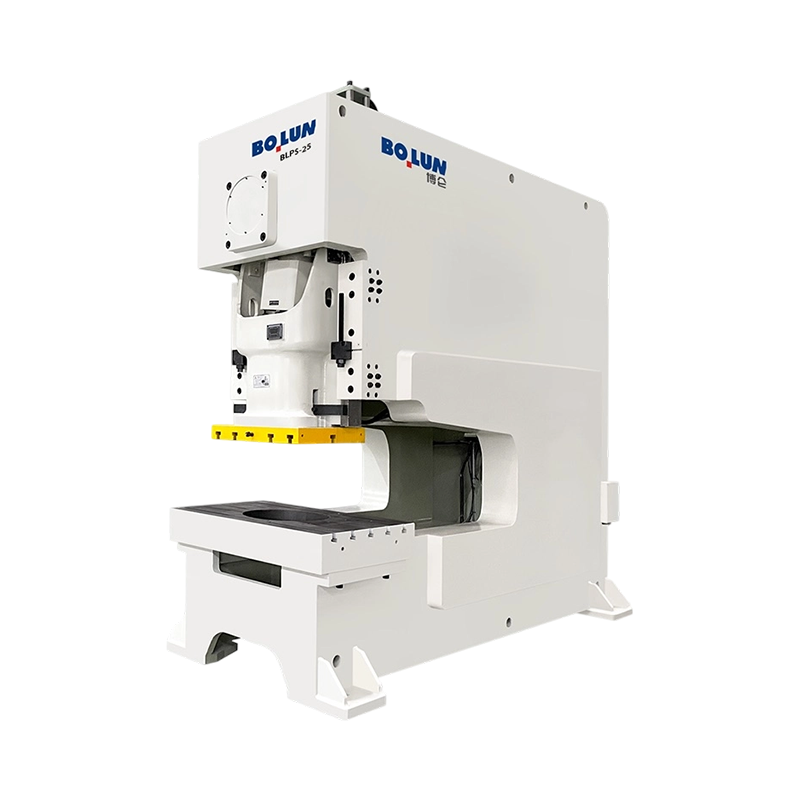
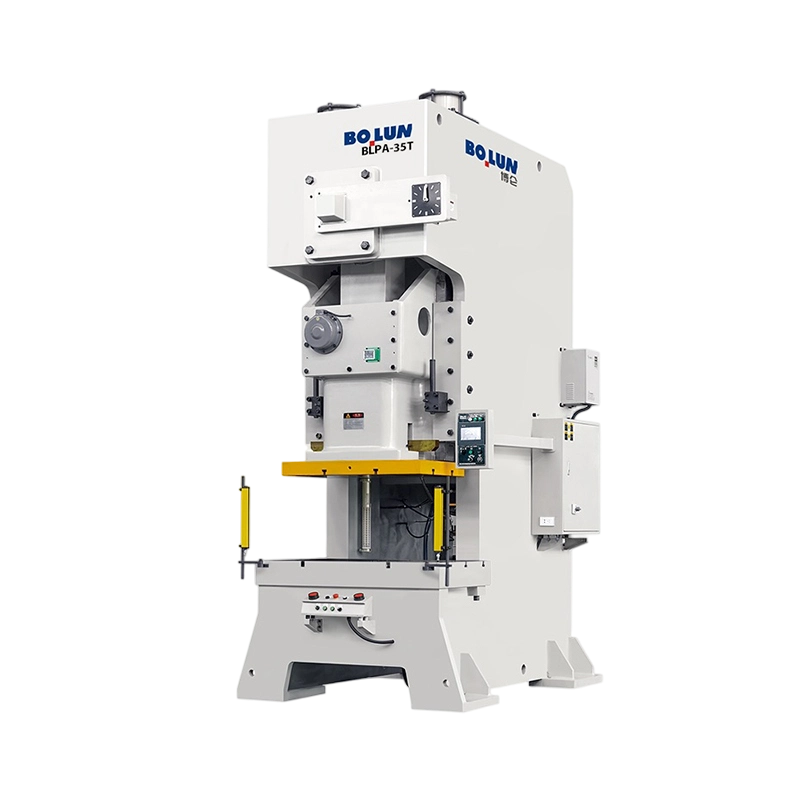
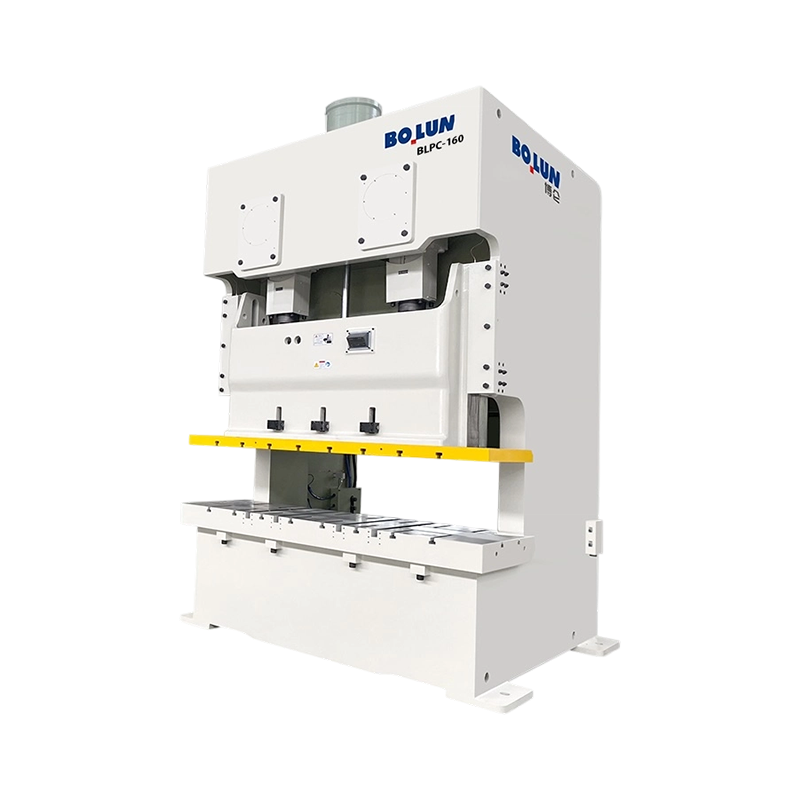
BLPS-35 Versatile High-Stability Open-Gap Deep-Throat Power Press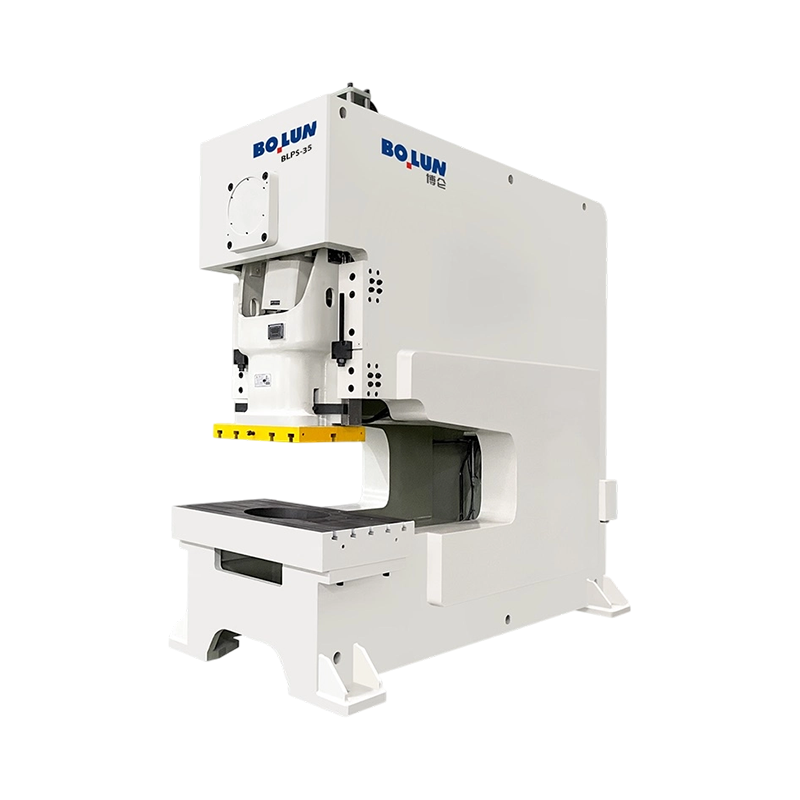
Power presses are commonly classified into open-type power presses, closed-type power presses, and other specialized power presses. Each structure has its own advantages. Closed-type presses usually provide strong rigidity and are frequently used for heavier forming processes. Standard open-type presses are valued for accessibility and easier die setting. However, many manufacturers need a press that offers the accessibility of an open frame while extending the working reach beyond conventional throat depth. This is where an open-gap deep-throat power press becomes especially useful.
The BLPS-35 belongs to this specialized open-gap deep-throat category. Its deep throat design allows the die area to be positioned farther from the frame center, creating more clearance for long strips, wider sheets, and workpieces that require nonstandard feeding paths. This structure helps manufacturers complete complex forming tasks that might be inconvenient or inefficient on a standard open-type power press. For operations involving electrical components, metal fittings, hardware parts, light structural pieces, brackets, stamped plates, and precision formed components, the machine provides a practical production platform.
Compared with ordinary open-type power presses, the main competitive advantage of this model is not only deeper working clearance, but also the ability to maintain stable performance at high speed. The press is engineered with uniform load distribution and a vibration-damping structure, reducing the negative effects of repeated impact forces. This is important because high-speed stamping can easily amplify frame vibration, tool wear, and dimensional inconsistency if the machine structure is not properly designed. The BLPS-35 addresses this challenge by combining speed with stability.
The value of a power press should be evaluated through a combination of force capacity, working area, rigidity, operating speed, die compatibility, motor power, and structural reliability. A machine with high nominal force but poor stability may not support precision production. A machine with good accessibility but insufficient throat depth may limit product design. A machine with high speed but weak vibration control may reduce tool life and increase scrap rate. The BLPS-35 is designed to balance these factors for practical industrial use.
| Item | Specification or Feature | Production Value |
|---|---|---|
| Press Type | Open-gap deep-throat power press | Combines open access with extended working reach |
| Nominal Force | 350 kN | Supports a wide range of medium-duty precision forming tasks |
| Maximum Speed | Up to 180 strokes per minute | Improves output in continuous stamping operations |
| Worktable Size | 780 × 340 mm | Provides practical die support and workpiece handling space |
| Die Height | Up to 250 mm | Allows compatibility with more specialized molds |
| Main Motor Power | 3 kW | Offers efficient drive performance for stable production |
| Deep Throat Range | 500–1200 mm | Enables greater clearance from the frame center |
| Structural Feature | Uniform load distribution and vibration damping | Helps maintain accuracy and reduce forming instability |
The nominal force of 350 kN makes the press suitable for a broad range of forming processes, including blanking, punching, bending, shallow drawing, embossing, and forming of metal components within appropriate material and die limits. This capacity is particularly useful for manufacturers that need more force than small benchtop or light-duty presses can provide, but do not require the higher cost and larger footprint of heavy closed-frame presses.
The maximum speed of 180 strokes per minute offers a major production advantage. High-speed operation can significantly reduce unit production time, especially when the press is combined with suitable feeding systems, progressive dies, or repetitive punching tools. However, speed alone is not enough. The press must maintain alignment, reduce vibration, and provide stable output during repeated cycles. The design emphasis on high stability helps the machine support consistent dimensional control during continuous production.
The 780 × 340 mm worktable gives operators a useful platform for mounting dies and managing workpieces. In many stamping operations, worktable size directly affects die selection, fixture layout, and operator convenience. A compact table can limit the use of progressive dies or specialized tooling, while an appropriately sized table improves flexibility. The BLPS-35 offers enough table area for many medium-scale precision applications while retaining the accessibility expected from an open-type press.
The extended die height of up to 250 mm is another important feature. Die height affects the type and size of molds that can be used. A greater die height range allows manufacturers to use taller, more complex, or more specialized dies without redesigning the entire process. This flexibility is valuable for factories that process multiple product types or frequently change tooling for customized production runs.
The defining advantage of this machine is its 500–1200 mm deep throat design. In a conventional open-type press, the distance from the frame to the working center is limited. This can become a major restriction when processing wide sheets, long strips, large panels, or parts that require forming away from the material edge. A deep-throat structure extends the working area, enabling the operator or automatic feeding equipment to position material more freely.
This extended clearance provides several practical benefits. First, it allows forming operations to be performed farther inside a workpiece rather than only near the edge. Second, it reduces interference between the workpiece and the press frame. Third, it improves the handling of irregularly shaped materials. Fourth, it supports tooling layouts that would be difficult on a standard open-back or open-gap press. For manufacturers that regularly encounter complex workpiece geometry, the deep throat can directly improve productivity and reduce setup limitations.
Compared with many competing machines in the same general press category, the BLPS-35 provides a stronger balance between accessibility and forming stability. Some deep-throat presses sacrifice rigidity because the extended throat increases leverage and structural stress during impact. If the frame is not properly designed, deflection can increase and accuracy can decline. This model is described with uniform load distribution and vibration-damping structure, helping it resist instability while still offering extended clearance.
The open-gap configuration also supports easier die installation, inspection, and maintenance. Operators can access the working area more easily than with many closed-frame machines. This can reduce downtime during die changes and adjustment. For factories with small-batch or multi-variety production requirements, faster tool setup can be as important as high-speed operation. The machine therefore offers value not only during continuous production but also during changeover-intensive manufacturing.
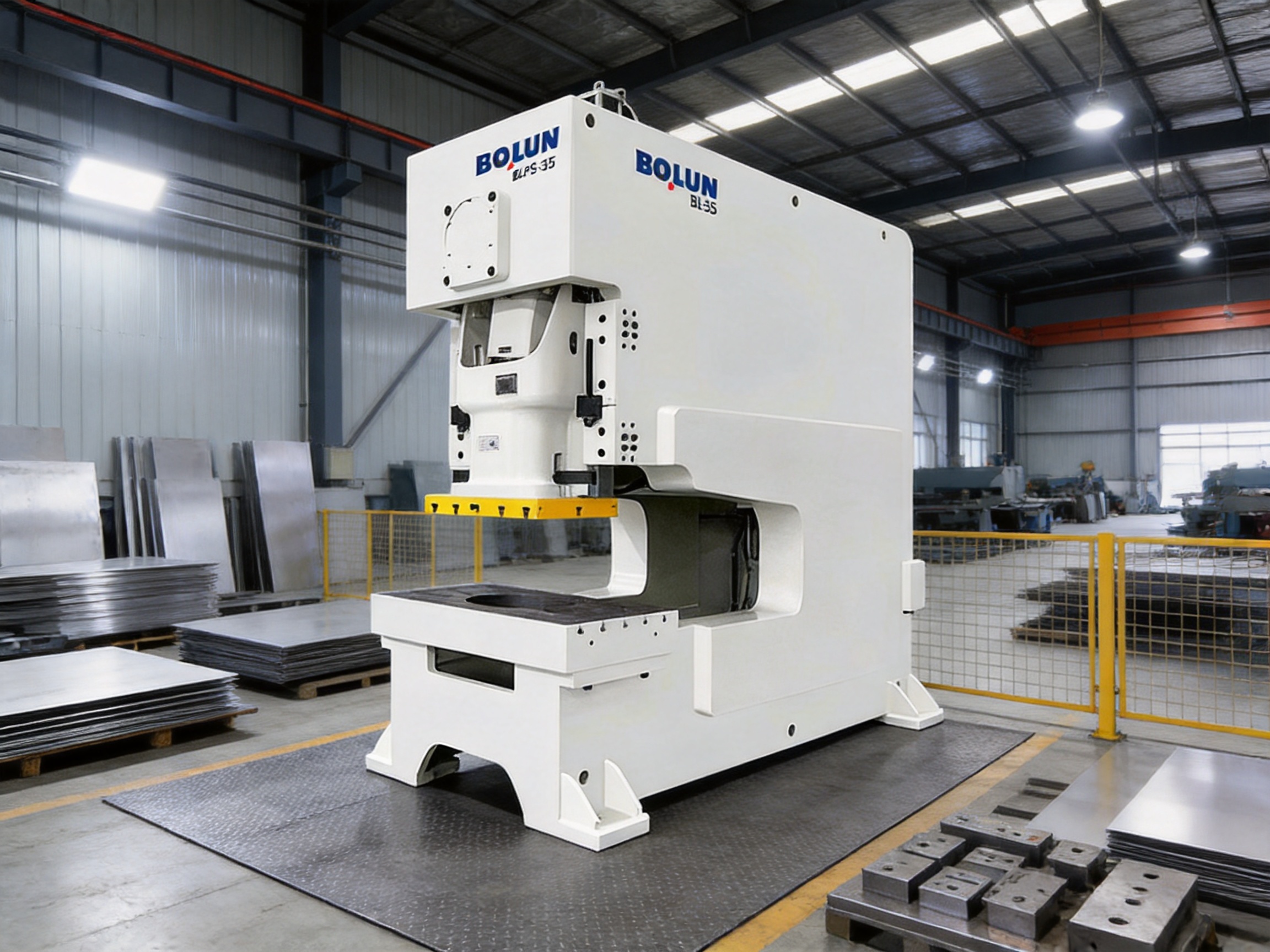
Stability is one of the most important indicators of a high-quality power press. During stamping, the slide, die, frame, and workpiece experience repeated impact forces. If the press structure transmits excessive vibration or allows uneven loading, the result may include inconsistent part dimensions, increased burrs, poor surface quality, faster die wear, and higher maintenance costs. A stable press reduces these risks and improves the reliability of the entire production process.
The BLPS-35 is characterized by uniform load distribution. This means the press is designed to manage forming forces in a balanced manner rather than concentrating stress in isolated structural areas. Uniform load distribution helps protect the frame, improves slide behavior, and contributes to better forming accuracy. For precision metal forming, this is especially important because even small variations in stroke behavior can affect product quality.
The vibration-damping structure further improves machine performance. Vibration control is essential at high operating speeds. At up to 180 strokes per minute, each cycle occurs quickly, and any uncontrolled vibration can accumulate into measurable instability. By reducing vibration, the press helps maintain more consistent die engagement and reduces the likelihood of tool chatter. This advantage is particularly meaningful for manufacturers producing parts with tight tolerances or requiring stable edge quality.
Compared with lower-cost presses that focus mainly on nominal tonnage, a high-stability machine can offer better long-term economic value. A press that produces fewer defective parts, requires fewer die corrections, and maintains alignment over extended production periods can reduce total cost of ownership. In competitive manufacturing, the lowest purchase price is not always the lowest operating cost. Stability, service life, and repeatability often determine the real value of press equipment.
The ability to reach up to 180 strokes per minute makes this power press suitable for production lines where output efficiency matters. In stamping operations, productivity depends on stroke rate, feeding speed, die design, material handling, and downtime. A faster press can increase output, but only when the rest of the process can keep pace. The BLPS-35 provides a strong foundation for high-speed production by combining speed with the structural features needed for consistency.
High-speed performance is useful in industries where parts are produced in large quantities. Examples include small metal brackets, connectors, clips, electrical contact components, appliance hardware, and general stamped fittings. These parts often require repeatable forming and punching operations. When the press operates smoothly and consistently, manufacturers can maintain output while reducing the need for frequent inspection adjustments.
The 3 kW main motor supports efficient driving performance. Motor efficiency and drive reliability influence both energy consumption and operating stability. For a 350 kN open-gap deep-throat press, the motor must provide dependable power without excessive waste. This contributes to practical daily use, especially in factories that operate multiple presses or run long production shifts.
Another efficiency advantage comes from die compatibility. With a die height of up to 250 mm and a substantial worktable, the machine can accommodate a broader range of tooling. This helps production teams use the same press for multiple parts, reducing equipment redundancy. Instead of purchasing several specialized machines for different tooling requirements, a manufacturer may use the BLPS-35 as a flexible press platform for varied precision forming tasks.
The machine is suitable for precision metal forming applications requiring high stability, large working clearance, and consistent high-speed performance. Its open-gap deep-throat design makes it particularly valuable when the workpiece cannot be easily processed on a standard throat press. In many factories, production challenges are not caused by insufficient tonnage alone; they are caused by limited access, limited clearance, and limited die space. This press helps solve those practical limitations.
Common application areas may include punching and forming metal plates, producing hardware components, shaping appliance parts, forming electrical accessories, processing automotive-related light components, and manufacturing general industrial brackets or supports. Because the machine supports greater clearance from the frame center, it can be used for parts where the forming position is located farther from the material edge. This expands design possibilities and reduces the need for secondary positioning operations.
The press can also be useful in operations involving specialized molds. Specialized dies often require more space, more careful alignment, or nonstandard workpiece access. The 250 mm die height and deep throat allow manufacturers to install tooling that may not fit comfortably on smaller or shallower presses. This is valuable for companies that handle customized production or develop new products with evolving die requirements.
For medium-duty production environments, the machine provides a practical compromise between the accessibility of open-type presses and the working reach required for complex forming. It is not merely a general-purpose press with a deeper frame; it is designed to maintain high stability while providing expanded clearance. This makes it suitable for manufacturers that want flexibility without giving up forming quality.
When comparing power presses, many buyers first look at nominal force. However, two machines with the same nominal force can perform very differently in real production. Frame design, vibration control, throat depth, worktable dimensions, die height, and manufacturing quality all affect practical results. The BLPS-35 stands out because it addresses multiple production concerns at the same time.
Compared with a standard open-type power press, this model offers a deeper throat and greater working clearance. Standard open-type presses are often easier to access but may restrict workpiece size and forming position. If a factory frequently processes wider material, a standard press can require extra handling steps or may be unable to complete the operation at all. The deep throat of this machine reduces those limitations and improves operational flexibility.
Compared with many closed-type presses, the BLPS-35 offers easier access to the working area. Closed-type presses may provide high rigidity, but they can be less convenient for certain die-setting and material-handling tasks. For applications that do not require a heavy closed-frame structure, an open-gap deep-throat press can provide a more efficient and accessible solution. The open design helps operators observe, adjust, and maintain the tooling area more easily.
Compared with lower-grade deep-throat presses, the advantage is stability. Deep-throat designs can be vulnerable to deflection if the frame is not engineered properly. A machine that simply extends throat depth without improving load management may suffer from reduced accuracy. The BLPS-35 emphasizes uniform load distribution and vibration damping, helping it provide a more dependable forming platform.
Compared with machines that have limited die height, this press provides greater tooling flexibility. The ability to use molds up to 250 mm in die height makes the machine more adaptable to specialized production. In modern manufacturing, tooling requirements can change quickly as customers request new parts or design modifications. A press with broader die compatibility helps the factory respond faster.
The quality of a power press depends not only on its specifications but also on the manufacturing system behind it. Zhejiang Bolun High-Precision Machinery Co., Ltd. is located in Zhejiang, a key region of China’s precision manufacturing industry. With approximately two decades of experience in machinery manufacturing, the company has developed into a modern enterprise integrating research and development, design, production, sales, and service.
The company’s strength comes from deep industry accumulation and continuous technical improvement. Power press manufacturing requires more than assembling parts. It requires understanding frame stress, slide movement, machining accuracy, component durability, operator usability, and long-term service needs. A mature production management system helps ensure that each machine is built with stable quality and consistent performance.
Bolun emphasizes a full-chain production system. This means the company pays attention to the complete process from basic design and core component development to precision machining and final machine assembly. For power presses, full-chain control is important because each production stage affects final accuracy. If the frame is not machined accurately, if the slide is not fitted properly, or if the drive system is not assembled with care, the press may not perform reliably in the field.
The company also provides non-standard customization capabilities. This is particularly relevant for deep-throat press users, because many customers who require a deep throat also have specialized production conditions. They may need unique worktable arrangements, special clearance requirements, customized safety configurations, or integration with feeding equipment. A manufacturer with customization capability can better support these customers than a supplier offering only standard models.
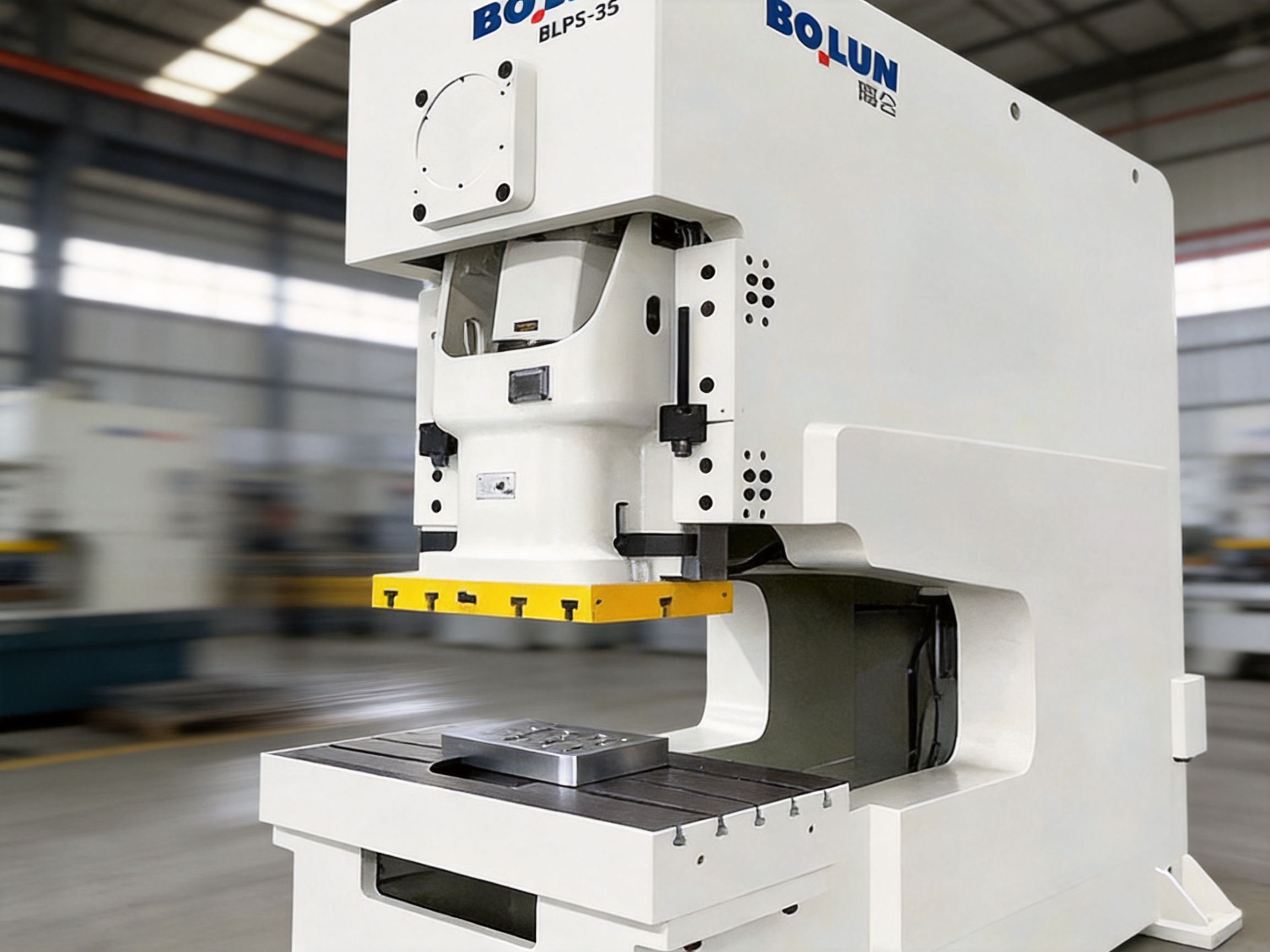
High-precision forming equipment must be manufactured under strict process control. A press is exposed to repeated impact loads, and small production errors can become major performance issues over time. Bolun has established a finished product inspection system that exceeds common industry requirements. Rigorous inspection of processes and components helps ensure stable precision and long service life under high-intensity operating conditions.
Quality control in press manufacturing generally involves material inspection, casting or structural component evaluation, machining accuracy checks, assembly verification, lubrication system inspection, motion testing, electrical system testing, and final operation trials. A mature inspection system reduces the chance that hidden defects will reach the customer. It also helps improve consistency from one machine to another.
The company’s advanced precision processing equipment supports accurate component manufacturing. Precision machining is essential for parts such as the slide, guide surfaces, crankshaft-related components, worktable surfaces, and frame connection areas. When these components are processed accurately, the final press can maintain better alignment and smoother movement. This contributes to the stability that users expect from the BLPS-35.
Modern production management also improves delivery reliability. A company that combines international management experience with local manufacturing efficiency can control cost while maintaining quality. This is an important advantage in the global press market, where customers want reliable equipment, responsive service, and competitive value. Efficient management reduces production waste and helps maintain stable output quality.
The BLPS-35 reflects an engineering philosophy centered on practical manufacturing needs. Instead of focusing on one specification alone, the machine combines force, speed, throat depth, die compatibility, and structural stability. This balanced design is important because stamping operations are system-based. A press must work together with dies, materials, feeding systems, operators, maintenance practices, and production schedules.
The open-gap deep-throat layout demonstrates attention to real-world handling challenges. Many production teams face situations where workpieces are too wide or too long for conventional throat depth. In these cases, an ordinary press may force the operator to reposition the material multiple times or use additional secondary processing. A deep-throat press reduces this difficulty by giving the production team more freedom at the point of forming.
The high-stability structure demonstrates attention to precision and durability. Forming accuracy depends on the machine’s ability to control repeated force. If each stroke behaves consistently, the die can produce stable parts. If the machine vibrates excessively or deflects unevenly, the die may produce inconsistent results even if the tooling is well designed. Therefore, structural stability directly supports product quality.
The operating speed demonstrates attention to productivity. A machine that can reach 180 strokes per minute can help manufacturers increase output when paired with proper tooling and feeding. In competitive industries, output per hour affects pricing, delivery, and profitability. By supporting high-speed operation, the press helps customers improve production efficiency.
In addition to technical specifications, operator convenience is an important factor in equipment selection. A press that is easier to set up, inspect, and maintain can reduce downtime and improve daily productivity. The open-gap structure provides easier access to the working zone than more enclosed designs. Operators can more conveniently install dies, check alignment, remove scrap, and observe the forming process.
The worktable size also supports practical operation. A 780 × 340 mm table provides a stable area for die installation while keeping the machine appropriate for medium-duty production environments. The table supports the use of fixtures and molds that require sufficient mounting space. Proper worktable support helps maintain die stability, which is important for both accuracy and tool life.
Maintenance value comes from stable design and quality manufacturing. A vibration-damping structure may help reduce mechanical stress, which can contribute to longer service life for the machine and tooling. Reduced vibration can also improve the working environment by lowering impact harshness. While maintenance practices will always depend on correct lubrication, inspection, and operation, a well-designed machine gives users a stronger foundation for reliable service.
For factories that operate multiple shifts, maintenance efficiency becomes especially important. Equipment downtime can disrupt production schedules and delay customer deliveries. A press that maintains stable performance and allows accessible inspection can support more predictable production planning. This is one reason why structural quality and after-sales service should be considered alongside purchase price.
Manufacturing markets are increasingly moving toward flexible production. Customers may request small batches, customized parts, rapid design changes, or specialized forming processes. Equipment must therefore support adaptability. The BLPS-35 is well suited to this trend because its deep throat, extended die height, and stable structure create flexibility for multiple production scenarios.
For customized forming tasks, the ability to position material farther from the frame center can be decisive. A part design may require punching or forming in a location that is not accessible with a standard press. Instead of redesigning the part or adding another machine, the manufacturer can use the deep-throat capability to complete the operation more efficiently. This improves engineering flexibility and shortens production preparation time.
The company’s non-standard customization ability further strengthens this value. Customers who need special specifications can work with a manufacturer capable of design and production adjustments. This is a major advantage over suppliers that only provide fixed models. Customization support can include machine configuration, application consultation, tooling accommodation, and production-line integration discussions.
Because the company integrates research, design, production, sales, and service, it can better understand customer requirements across the entire equipment lifecycle. This integrated capability helps ensure that the machine is not only sold as a product but supported as part of a production solution. For customers investing in stamping equipment, this service-oriented approach reduces risk.
The total value of a power press includes purchase cost, productivity, part quality, tool life, maintenance needs, energy use, flexibility, service support, and long-term reliability. The BLPS-35 is designed to provide value across these areas. Its 350 kN nominal force supports useful forming capacity. Its 180 strokes per minute speed supports productivity. Its deep throat supports special workpiece handling. Its stable structure supports accuracy and durability.
For manufacturers comparing different presses, it is important to consider the cost of limitations. A cheaper press with insufficient throat depth may require extra handling, additional operations, or even a second machine. A press with poor stability may increase scrap and tool wear. A press with limited die height may restrict future product development. These hidden costs can exceed the initial price difference between machines.
The BLPS-35 helps reduce these risks by offering a more complete capability set. It is not simply a high-speed press, not simply a deep-throat press, and not simply a medium-force machine. Its value comes from the combination of these characteristics. This makes it suitable for factories that need a dependable and flexible forming platform for precision metal components.
The company’s manufacturing strength adds another layer of value. A mature production system, advanced processing equipment, strict inspection, and customer-oriented service support the machine’s long-term reliability. In industrial equipment purchasing, supplier capability is as important as product specification. A strong manufacturer can provide better quality control, better customization, and better service response.
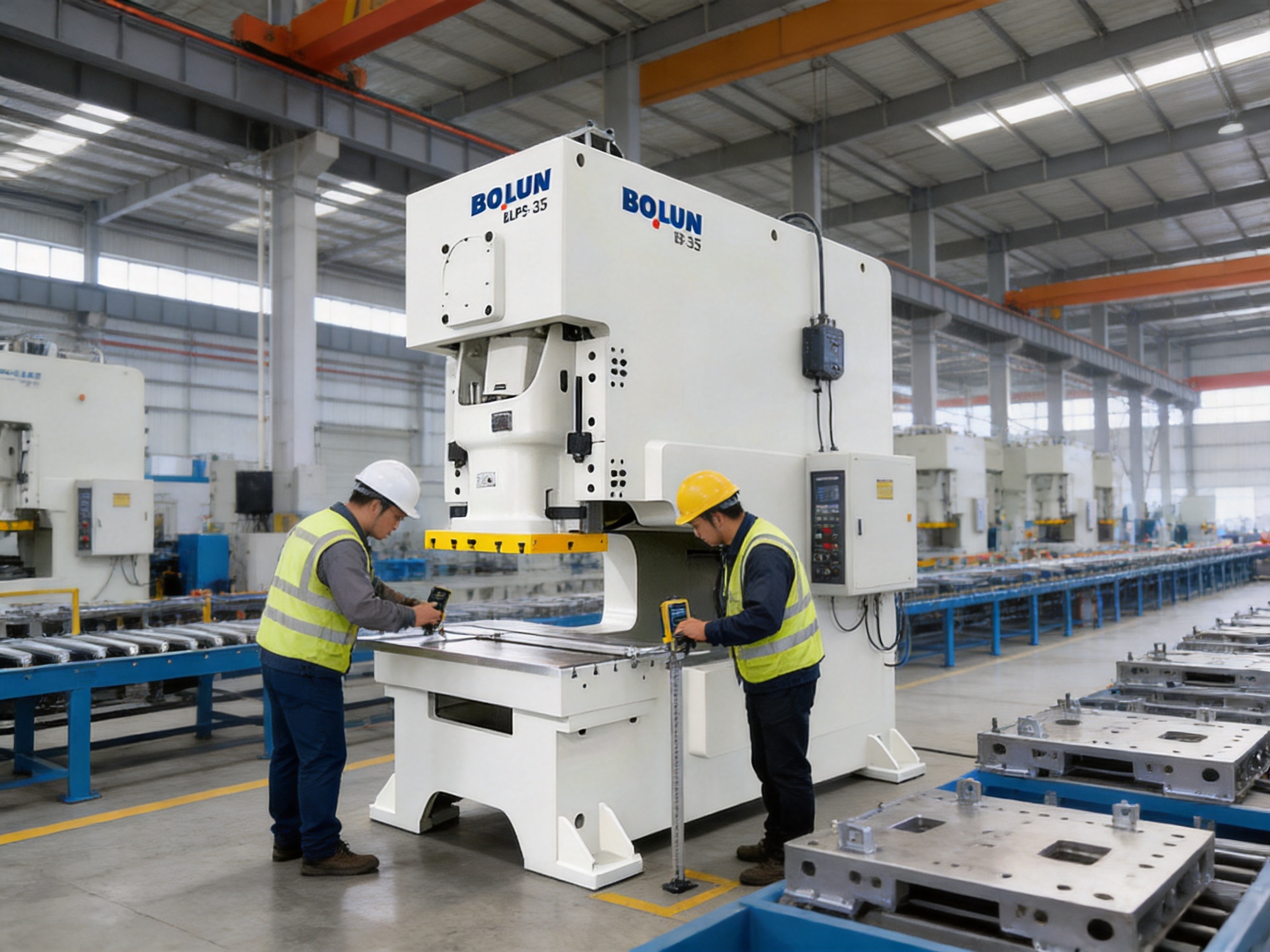
It is an open-gap deep-throat power press. This means it combines the accessibility of an open-type press with an extended throat structure that provides greater clearance from the frame center.
The machine provides a nominal force of 350 kN, making it suitable for many medium-duty precision metal forming, punching, bending, blanking, and related stamping applications.
The 500–1200 mm deep throat allows workpieces to be positioned farther inside the machine, reducing interference from the frame and supporting wider sheets, longer strips, and complex forming positions.
The press can operate at up to 180 strokes per minute. This high-speed capability helps improve production output when the machine is matched with suitable dies, feeding systems, and materials.
The machine is characterized by uniform load distribution and a vibration-damping structure. These features help reduce vibration, control impact forces, and maintain accuracy during repeated high-speed cycles.
The worktable measures 780 × 340 mm. This provides practical support for die installation and workpiece handling in medium-duty precision forming operations.
The press supports an extended die height of up to 250 mm, allowing compatibility with a wider range of specialized molds and tooling arrangements.
Compared with a standard open-type press, this model offers much greater throat depth and working clearance while maintaining high stability. This makes it better suited for complex workpieces and forming positions farther from the material edge.
A closed-type press may offer strong rigidity for heavy-duty forming, but it can be less accessible. This open-gap deep-throat press provides easier working-area access and better handling flexibility for applications that do not require a heavy closed-frame structure.
Manufacturers producing precision metal parts, hardware components, electrical accessories, brackets, formed plates, appliance fittings, and customized stamped parts can benefit from its combination of force, speed, clearance, and stability.
Power press quality depends heavily on design, machining, assembly, inspection, and service. Zhejiang Bolun High-Precision Machinery Co., Ltd. has experience in high-precision forming equipment manufacturing, advanced processing capability, strict inspection systems, and customization support, all of which contribute to reliable equipment performance.
The BLPS-35 Versatile High-Stability Open-Gap Deep-Throat Power Press is a practical solution for manufacturers that require precision, speed, clearance, and flexibility in one machine. Its 350 kN nominal force, 180 strokes per minute maximum speed, 780 × 340 mm worktable, 250 mm die height, 3 kW main motor, and 500–1200 mm deep throat design create a strong platform for complex forming operations.
Its main competitive advantages are clear. It provides more working reach than ordinary open-type presses, easier access than many closed-type presses, stronger stability than lower-grade deep-throat designs, and better tooling flexibility than presses with limited die height. The combination of uniform load distribution and vibration damping helps maintain accuracy during high-speed production, making the machine suitable for precision metal forming applications where consistency matters.
Behind the product is a manufacturer with strong technical accumulation, integrated design and production capability, advanced processing equipment, non-standard customization experience, and strict quality inspection. These strengths support the machine’s long-term value and help customers obtain not only a press, but a reliable forming equipment solution. For factories seeking a high-stability, deep-clearance, high-speed press for specialized metal forming, this machine represents a capable and competitive choice.
Altan, T., and Tekkaya, A. E. Sheet Metal Forming: Fundamentals and Applications. ASM International.
Boljanovic, V. Sheet Metal Forming Processes and Die Design. Industrial Press.
Kalpakjian, S., and Schmid, S. R. Manufacturing Engineering and Technology. Pearson.
Suchy, I. Handbook of Die Design. McGraw-Hill Education.
Society of Manufacturing Engineers. Tool and Manufacturing Engineers Handbook: Forming. SME.
Groover, M. P. Fundamentals of Modern Manufacturing: Materials, Processes, and Systems. Wiley.


Contact Us

bolunpress@gmail.com

+86-575-83362228

+86-15158259588

+86-575-83362999

+86-15158259588

Hangzhou Office Add: No. 332 Wangjiang East Road, Shangcheng District

No.1 Linjiang Road East, Xiaren, Jinting Town, Shengzhou City, Zhejiang Province, China
Ready to Begin?
Get in Touch

Now!

ZHEJIANG BOLUN
 English
 中文简体
中文简体