
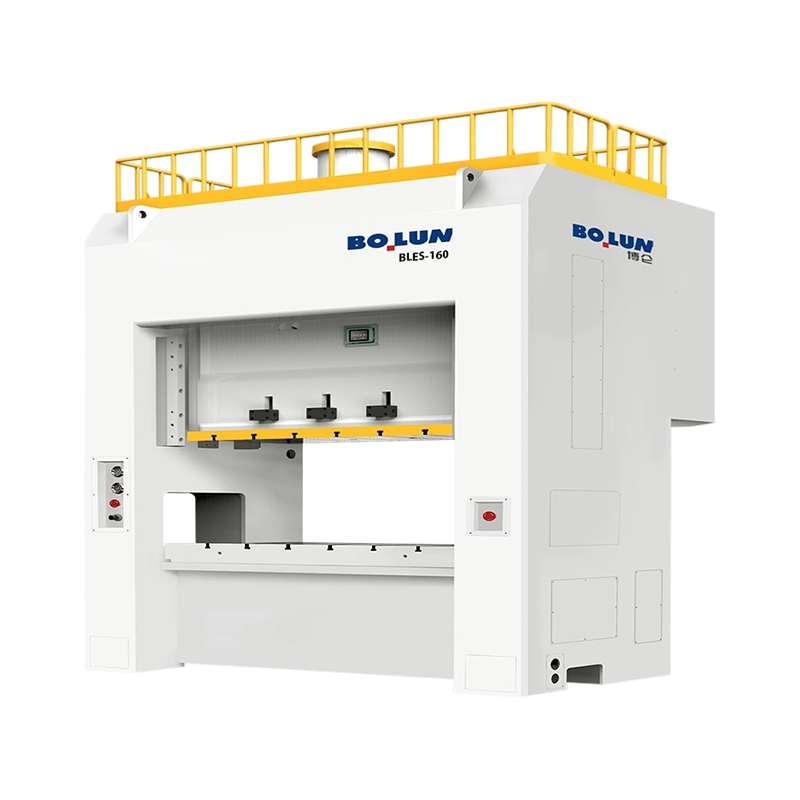
The BLES-160 Agile Precision Closed-Frame Double-Point Servo Power Press is engineered for manufacturers that require high-accuracy, high-repeatability, and high-efficiency stamping in demanding production environments. With a nominal capacity of 1600 kN, a closed-frame double-point structure, a servo-driven slide system, and a large 1800 × 760 mm worktable, this machine is designed to support precision blanking, forming, pulsing, and high-speed automated stamping applications. It is especially suitable for electronic components, precision hardware parts, and continuous production lines where dimensional stability, controlled forming motion, and reliable long-term operation are essential.
In modern stamping operations, manufacturers are no longer satisfied with simple mechanical output. They need forming equipment that can deliver intelligent motion control, reduce vibration, maintain accuracy over long production runs, adapt to different dies, and integrate smoothly with automated feeding and transfer systems. The BLES-160 answers these needs by combining servo press technology with a rigid closed-frame structure and precision manufacturing quality. Instead of relying only on fixed crank motion, the servo system directly controls slide movement, allowing the operator to select optimized motion curves for different materials, thicknesses, forming depths, and part geometries.
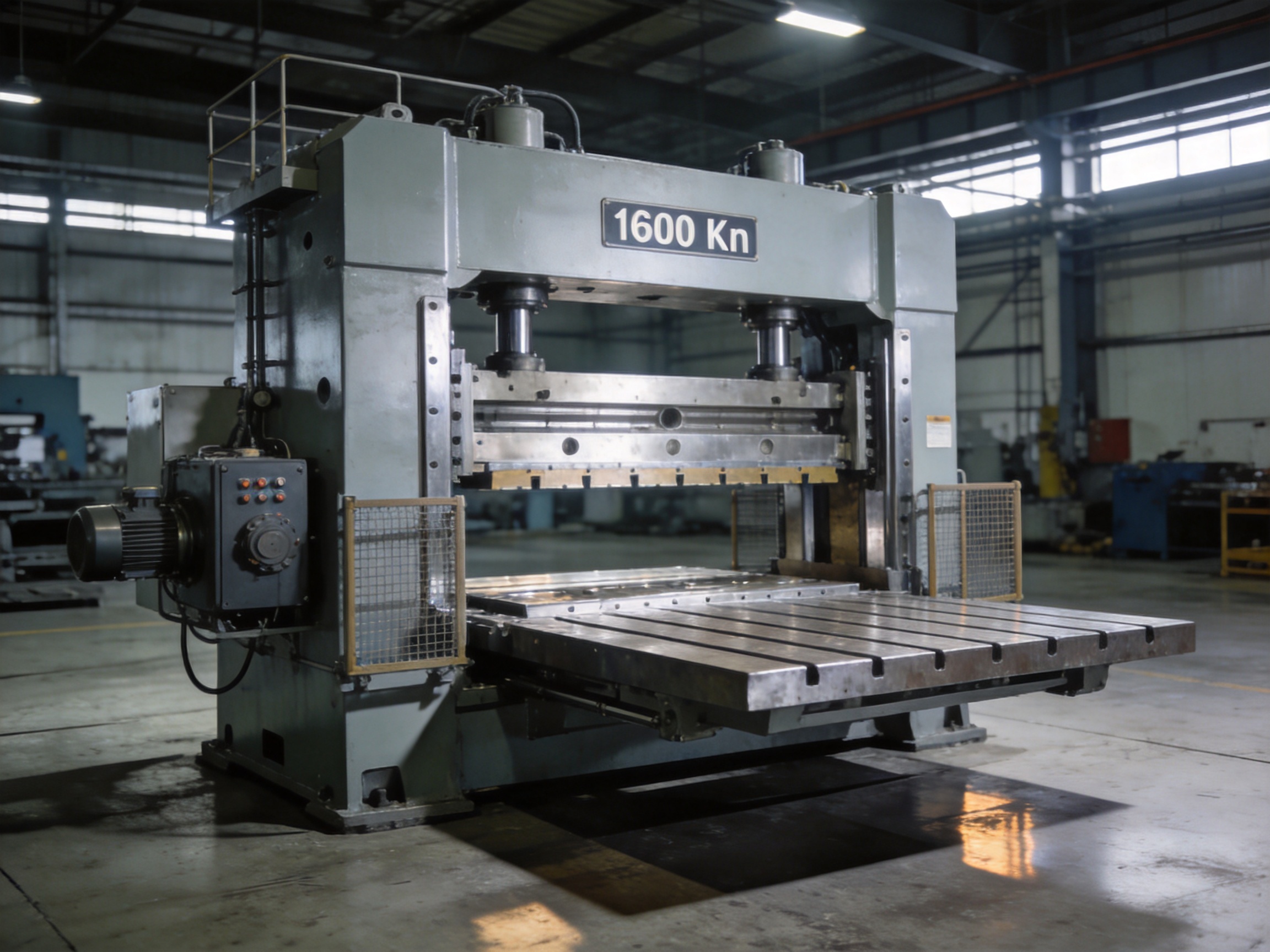
The BLES-160 belongs to the closed-frame double-point servo power press category. This type of machine is commonly selected when a stamping operation requires both structural rigidity and slide parallelism across a wider working area. Compared with open-type power presses, a closed-frame press offers better resistance to deflection under load. Compared with conventional mechanical presses using fixed motion, a servo power press provides more freedom in slide speed, dwell, acceleration, and return movement. The result is a forming platform that is more flexible, more precise, and better suited to advanced production requirements.
The nominal capacity of 1600 kN places this model in a highly practical range for medium-to-large precision stamping operations. It can support a wide variety of dies, including progressive dies, compound dies, and selected transfer tooling arrangements. The 1800 × 760 mm worktable provides enough space for complex die setups, multi-station layouts, and automated feeding configurations. For manufacturers producing electronic parts, metal connectors, shielding components, brackets, precision hardware, or thin-gauge formed parts, this combination of capacity, table size, and servo control offers a strong balance between productivity and accuracy.
One of the key advantages of the BLES-160 is its ability to operate at approximately 55 strokes per minute while maintaining stable precision. In precision stamping, speed alone is not enough. A machine must also preserve slide accuracy, reduce abnormal vibration, and ensure that each stroke follows the programmed curve consistently. The BLES-160 is built to meet these requirements by integrating rigid mechanical construction with electronic motion control. This makes it suitable for high-speed automated lines where uptime, repeatability, and product consistency directly affect profitability.
At the center of the BLES-160 is a servo-driven slide system. In a traditional mechanical press, the slide motion is largely determined by the geometry of the crankshaft and connecting rod. While this is robust and familiar, it limits the manufacturer to a fixed motion profile. A servo press changes this approach by using a controlled drive system that can modify the slide trajectory according to process needs. This is especially valuable when forming delicate parts, working with thin materials, or reducing impact at the point of contact.
The BLES-160 includes nine built-in motion curves, including precision blanking and pulsing modes. These curves allow users to select a motion pattern that better matches the forming process. For example, a precision blanking operation may benefit from controlled approach speed and stable working speed near the bottom dead center. A pulsing mode can help with forming operations that require stepwise material flow or reduced forming stress. By choosing the correct curve, manufacturers can improve part quality, reduce noise, reduce die shock, extend tooling life, and stabilize production.
The closed-frame double-point design is another important feature. A double-point press uses two driving points to distribute force more evenly across the slide. This is beneficial for wide dies and multi-station tooling, where uneven loading can lead to part variation, die wear, or premature mechanical stress. The closed-frame structure further reinforces the machine body, reducing frame opening and deformation during loading. Together, these features help the BLES-160 maintain high precision during repeated high-load cycles.
| Feature | Specification or Capability | Manufacturing Benefit |
|---|---|---|
| Nominal Capacity | 1600 kN | Supports precision stamping of electronic and hardware components with stable forming force. |
| Frame Type | Closed-frame double-point structure | Improves rigidity, slide balance, and resistance to deformation under load. |
| Drive System | Servo-driven slide motion | Allows programmable curves, reduced impact, and optimized forming control. |
| Worktable Size | 1800 × 760 mm | Provides flexible space for complex dies and automated production layouts. |
| Operating Speed | Approximately 55 strokes per minute | Supports efficient continuous production while preserving process stability. |
| Motion Curves | 9 built-in curves, including precision blanking and pulsing modes | Improves forming consistency, reduces vibration, and supports diverse materials. |
| Precision Standard | JIS B 6402 Class 1 | Ensures high machine accuracy for demanding dimensional requirements. |
| Application Fields | Electronic components, precision hardware, automated stamping lines | Matches the needs of high-volume, high-accuracy production environments. |
Servo press technology has become increasingly important because many modern stamped parts are smaller, thinner, more complex, and more dimensionally sensitive than traditional stamped products. Electronic components, battery-related parts, connectors, micro brackets, and precision hardware often require close tolerances and excellent surface quality. If the slide movement is too abrupt, the material may crack, burrs may increase, springback may become difficult to control, or the die may suffer excessive shock. Servo control helps solve these problems by giving the manufacturer command over the entire slide cycle.
With a programmable slide motion, the BLES-160 can approach the material quickly to save cycle time, slow down during the actual forming zone to improve quality, dwell near bottom dead center if required, and return rapidly after forming is complete. This flexibility can reduce unnecessary energy consumption and improve forming results. The press does not simply move up and down; it moves according to the needs of the part. This is a major advantage over conventional competitors that only provide fixed mechanical motion.
Servo control is also valuable for process development. When engineers introduce a new die or test a new material, they can adjust the slide curve rather than immediately changing die geometry. This reduces trial-and-error time and helps shorten product development cycles. In industries where part designs change frequently, the ability to adapt press motion is a competitive advantage. The BLES-160 supports this need by offering built-in curves that are practical for real production conditions, not just theoretical laboratory operation.
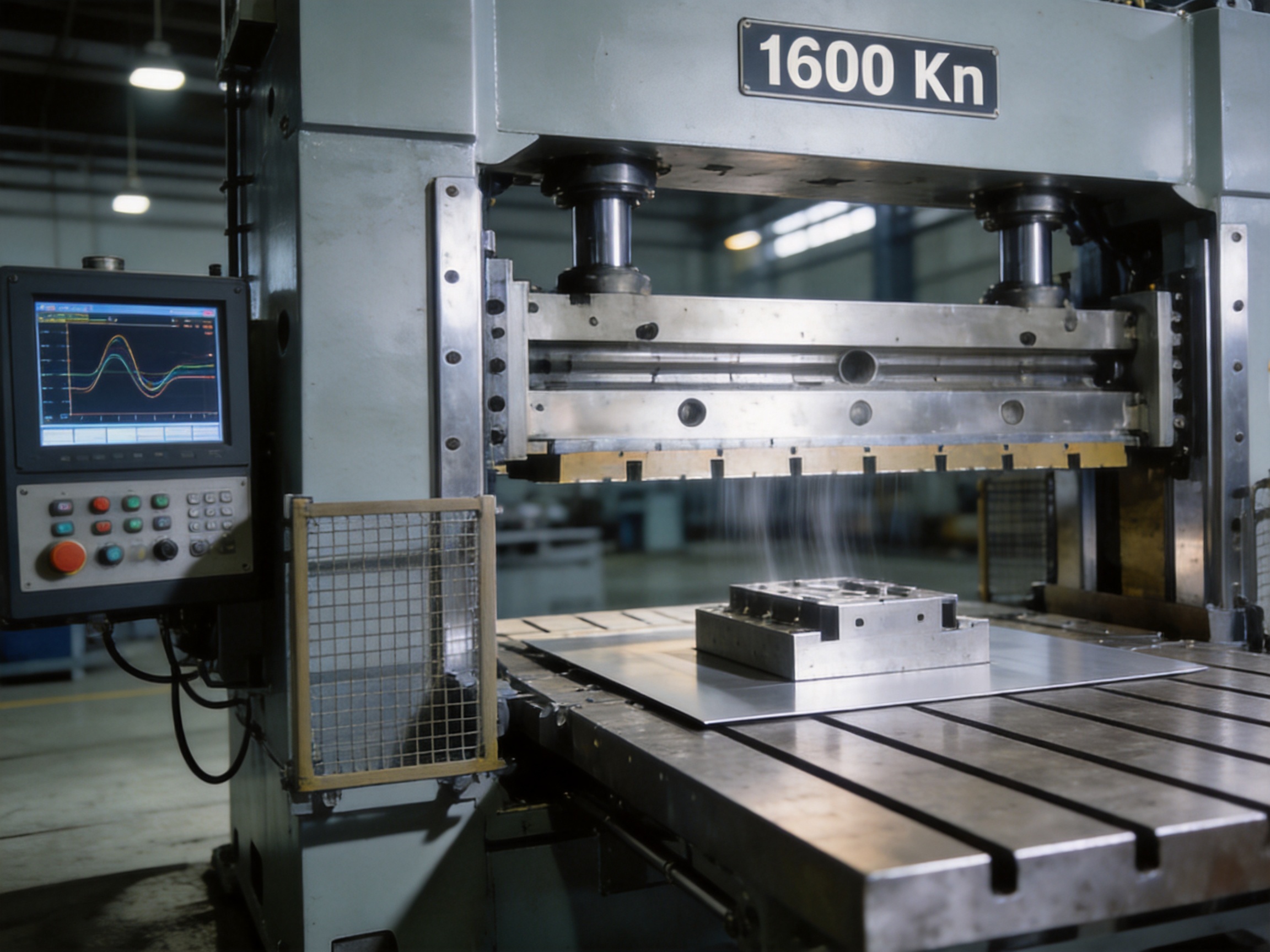
The BLES-160 provides several advantages over ordinary open-type presses, conventional crank presses, and less advanced servo machines. The first advantage is rigidity. Open-type presses are easy to access and suitable for many general stamping tasks, but they are more vulnerable to frame deflection when subjected to higher or offset loads. For precision production, even small deformation can affect part dimensions and die alignment. The closed-frame structure of the BLES-160 offers better support and greater resistance to load-induced distortion, making it more suitable for precision and high-volume applications.
The second advantage is double-point force distribution. Some single-point presses are effective for smaller dies, but when the die is wider or the load is distributed across multiple stations, single-point driving can create uneven slide behavior. The BLES-160 uses a double-point configuration to improve balance across the slide. This supports more consistent contact between upper and lower tooling, improves die life, and helps reduce dimensional differences between the left and right sides of a stamped part.
The third advantage is programmable servo motion. Many competitor presses still rely on fixed crank mechanisms. Although these machines can be productive, they lack the ability to modify forming speed at critical points in the stroke. The BLES-160 allows the user to choose motion curves that reduce impact, suppress vibration, and optimize material flow. This is important for precision blanking, shallow drawing, embossing, coining, and forming of sensitive materials.
The fourth advantage is operating stability at speed. A press that reaches high strokes per minute but produces unstable results does not create true productivity. The BLES-160 is designed to run at approximately 55 strokes per minute while maintaining controlled slide movement and high precision. This makes it valuable for automated stamping lines, where the press must synchronize with feeders, straighteners, decoilers, and part collection systems. Reliable synchronization reduces misfeeds, scrap, and downtime.
The fifth advantage is precision compliance. Maintaining JIS B 6402 Class 1 precision demonstrates a commitment to accurate machine geometry and consistent performance. In a competitive market, many presses may appear similar by capacity rating, but their long-term performance can differ significantly. A press built to a high precision standard gives manufacturers confidence that the machine can support demanding dies and repeatable production for years.
JIS B 6402 Class 1 precision is a meaningful indicator for manufacturers that care about accuracy. Power press precision involves more than the visible movement of the slide. It includes frame alignment, slide parallelism, bolster flatness, guide accuracy, load behavior, and the relationship between moving and fixed elements. When these factors are controlled, the die operates in a more stable environment. This directly affects burr height, hole position, bend angle, flatness, and part-to-part repeatability.
For electronic and precision hardware parts, dimensional reliability can determine whether a stamped component can be assembled automatically. A small error in hole location, contact geometry, or part flatness may cause assembly failure, electrical instability, or rejection by downstream quality inspection. The BLES-160 is designed to reduce these risks by providing a stable machine foundation and controlled motion. Its accuracy is not only beneficial at the moment of installation; it is also important throughout long production campaigns.
Dimensional reliability also reduces hidden costs. When a press produces consistent parts, operators spend less time sorting defects, toolmakers spend less time correcting abnormal wear, and production managers experience fewer unplanned interruptions. This creates economic value beyond the purchase price of the machine. For manufacturers comparing equipment options, the BLES-160 should be evaluated not only as a press, but also as a long-term production quality platform.
The 1800 × 760 mm worktable is one of the practical strengths of the BLES-160. A larger table gives tooling engineers more flexibility when designing dies. Progressive dies often require multiple stations for piercing, trimming, forming, bending, and final separation. If the table is too small, die design becomes constrained, and manufacturers may need to compromise on station layout or process sequence. The BLES-160 provides a spacious platform for complex die systems, helping engineers design more reliable and efficient tooling.
A generous worktable also supports automation. Modern stamping lines may include servo feeders, coil handling equipment, sensors, conveyors, lubricators, and part transfer devices. The press must provide enough space and stability to support integration with these systems. The BLES-160 is suitable for production lines where material is fed continuously and parts are produced at consistent speed. Its closed-frame rigidity and servo movement help maintain synchronization between the press and peripheral equipment.
For manufacturers that serve multiple customers or produce a variety of parts, die flexibility is especially important. A press that can handle different tooling layouts allows the factory to respond quickly to new orders. Instead of dedicating the machine to only one narrow product family, users can apply it to multiple precision stamping programs. This increases equipment utilization and improves return on investment.
Vibration and noise are common challenges in stamping workshops. They affect operator comfort, machine life, tooling condition, and part quality. In a conventional press, the impact at material contact can be abrupt, especially when running at higher speeds. This impact may create shock waves through the frame and die set. Over time, excessive vibration can loosen components, accelerate wear, and produce inconsistent part dimensions.
The BLES-160 addresses these challenges through servo-controlled motion curves and rigid construction. By controlling the slide speed during the forming zone, the press can reduce impact force and improve the smoothness of the stamping action. Pulsing and precision blanking modes can also help manage material deformation more gradually. Reduced vibration contributes to longer die life, improved surface finish, and lower workshop noise.
Lower noise is not just a comfort benefit. It can improve the working environment and support compliance with factory noise management goals. A quieter and smoother press line is easier to monitor because abnormal sounds become more noticeable. Maintenance teams can detect changes in machine behavior earlier, allowing preventive action before a small problem becomes a major breakdown.
The performance of a high-precision press depends heavily on the manufacturer’s design, machining, assembly, inspection, and service capabilities. Zhejiang Bolun High-Precision Machinery Co., Ltd. is located in Zhejiang, a region known for strong manufacturing resources and industrial supply chains. With about two decades of experience in machinery manufacturing, the company has developed into a modern enterprise focused on high-precision forming equipment. Its operations integrate research and development, design, production, sales, and service.
One of the company’s major strengths is its full-chain production approach. This means that the company does not treat the press as a simple assembly of purchased parts. Instead, it manages key stages from basic design and core component development to precision processing and final machine assembly. A full-chain system gives better control over quality, delivery, customization, and technical improvement. It also allows engineers to optimize components as part of a complete press system rather than as isolated parts.
The company emphasizes technological innovation as a core development engine. This is important because servo power presses are not only mechanical products; they are electromechanical systems that require integration between structure, drive control, operating software, lubrication, safety, and automation interfaces. A manufacturer with strong design and production knowledge can better balance these factors. The BLES-160 reflects this approach by combining mechanical rigidity with intelligent motion control and practical production features.
High-precision forming equipment requires accurate machining of large components. The frame, slide, bolster, guiding surfaces, and transmission-related structures must be processed with strict control of geometry. If a major part is not machined correctly, the press may show uneven load behavior, poor slide parallelism, or premature wear. Zhejiang Bolun High-Precision Machinery Co., Ltd. uses advanced precision processing equipment and a mature industrial environment to support stable manufacturing quality.
Assembly is equally important. Even well-machined components must be aligned, fitted, and tested correctly. In a closed-frame double-point servo press, the relationship between the two driving points, the slide guides, and the worktable must be carefully controlled. Proper assembly helps ensure that the press performs consistently under real production loads. The company’s mature production management system supports this process by standardizing operations and applying rigorous quality control at each stage.
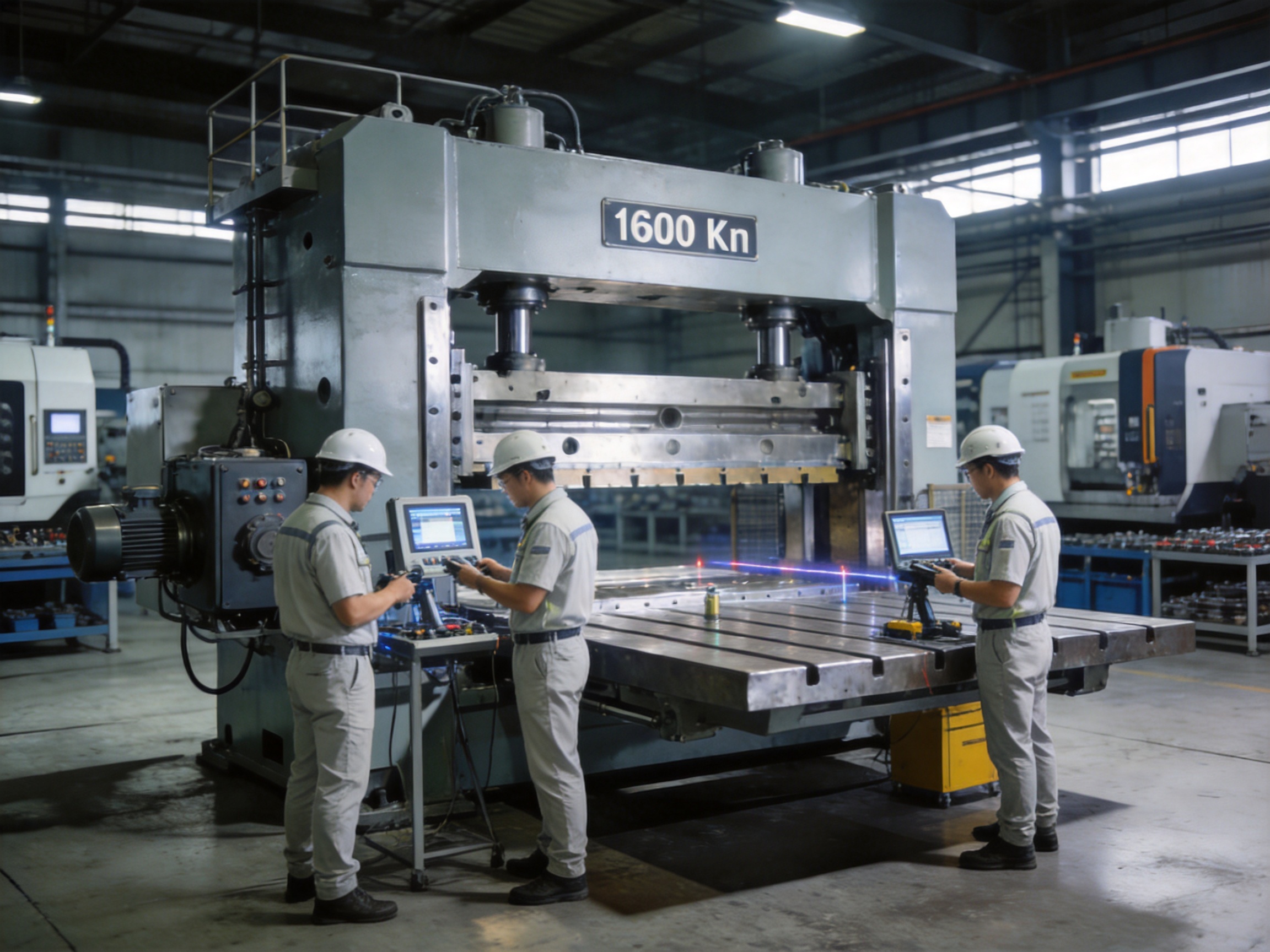
Inspection is another core strength. The company has established a finished product inspection system that exceeds ordinary industry standards. This approach is valuable because a press may look complete before it has proven its accuracy, stability, and operational reliability. Inspection should confirm mechanical precision, movement behavior, control functions, safety systems, and performance consistency. By applying strict inspection to every process and component, the company aims to ensure long service life under high-intensity operating conditions.
Many stamping manufacturers do not operate under identical conditions. Materials, die sizes, part shapes, automation requirements, factory layouts, and quality targets can differ greatly. A standard press may solve part of the problem, but some customers require special specifications or functions. Zhejiang Bolun High-Precision Machinery Co., Ltd. has developed non-standard customization capabilities supported by a robust design team. This enables the company to provide one-stop design and manufacturing services for customers with special production needs.
Customization may involve table configuration, automation compatibility, control preferences, special safety arrangements, production line integration, or adjustments to match specific dies. The value of customization is not merely convenience. It can determine whether a stamping line reaches its expected efficiency. When the press, die, feeder, and production environment are properly matched, the entire process becomes more stable and easier to manage.
One-stop service also reduces communication risk. When a customer works with a manufacturer that understands design, production, and application requirements, technical questions can be addressed more efficiently. Pre-sales consultation helps identify the right equipment configuration. In-sales support helps coordinate manufacturing, delivery, and installation planning. After-sales service helps maintain performance over the machine’s lifecycle. This complete service structure strengthens the value of the BLES-160 as a production investment.
Quality is described as the lifeline of the company, and this philosophy is especially relevant for press manufacturing. A power press operates under repeated load, often for long hours, and sometimes in demanding high-speed production. Any weakness in design, material, machining, assembly, or inspection can eventually appear as downtime or quality problems. For this reason, reliable press manufacturing requires discipline at every level.
The company’s work style is characterized by being steadfast, rigorous, open, and mutually supportive. Its core philosophy, “Accumulate Richly and Break Forth Thinly; Pressure is Power,” reflects a belief in long-term accumulation, technical depth, and resilience. In the context of the BLES-160, this philosophy translates into an emphasis on stable precision, durable structure, thoughtful engineering, and customer-oriented support.
Long-term reliability is a major purchasing factor for manufacturers. A low-cost press that requires frequent adjustment, causes die damage, or produces unstable parts may become expensive over time. By contrast, a well-built servo press can reduce scrap, improve die life, support faster setup, and maintain stable production. The BLES-160 is positioned as a machine for companies that evaluate equipment based on total production value rather than only initial cost.
Electronic component production often involves thin materials, small features, strict tolerances, and high production volumes. Parts may include terminals, shields, clips, frames, connector elements, and other precision metal components. These parts must often meet dimensional, surface, and functional requirements. Because many electronic parts are assembled automatically, consistency is critical. Even a small change in part geometry can disrupt assembly equipment or affect product performance.
The BLES-160 is well suited to these requirements because it combines precision, speed, and programmable motion. Precision blanking curves can help control burrs and improve edge quality. Controlled slide movement can reduce deformation in delicate features. The double-point closed-frame structure supports wide progressive dies that are common in electronic part production. The machine’s stable operation at approximately 55 strokes per minute supports efficient output while maintaining process control.
Electronic industry customers also value repeatability across long production runs. A press that performs well only during initial setup but drifts during continuous operation can create hidden quality risks. The BLES-160’s rigid structure, Class 1 precision, and servo control help support repeatable performance, making it a strong choice for manufacturers that supply demanding downstream industries.
Precision hardware parts include brackets, clips, washers, fastener-related parts, small structural components, and formed metal pieces used in consumer products, appliances, electrical equipment, and industrial assemblies. These parts may appear simple, but their production can involve strict requirements for flatness, hole accuracy, bending angle, and surface quality. Competitive hardware manufacturers need equipment that supports both productivity and quality.
The BLES-160 offers clear benefits for this field. Its 1600 kN capacity provides enough forming force for a broad range of hardware applications. Its large worktable supports multi-station dies that can complete several operations in one continuous process. Servo motion curves can be selected to reduce forming shock and improve consistency. The result is a press that can help manufacturers reduce scrap, improve die performance, and respond to different product orders.
For hardware producers competing in global supply chains, stable delivery and consistent quality are essential. The BLES-160 supports these goals by improving process control and equipment reliability. It gives manufacturers the ability to produce accurate parts repeatedly, which helps build customer trust and strengthens competitiveness.
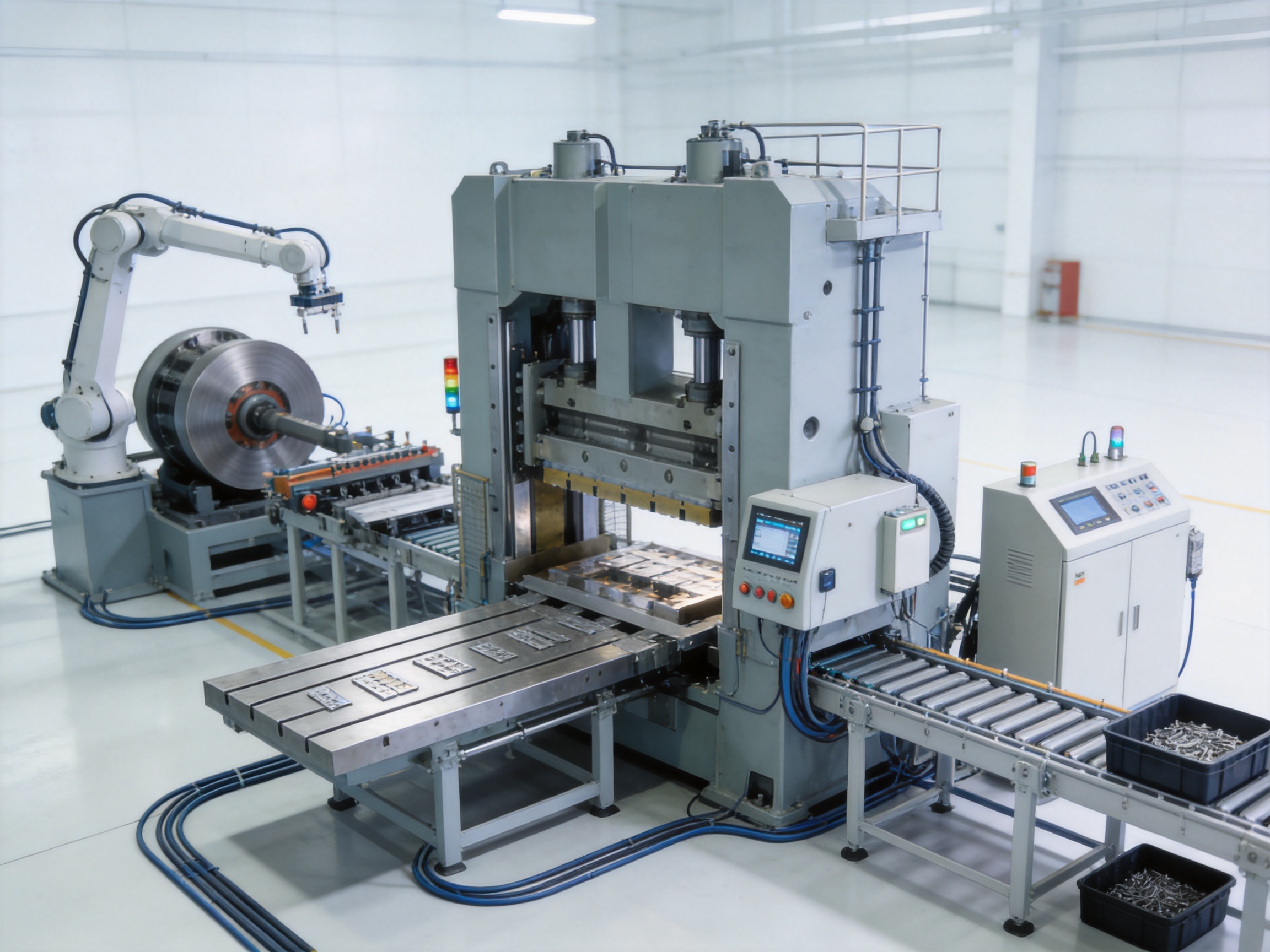
Automation is now a major direction in stamping production. Automated lines can reduce labor intensity, improve safety, increase consistency, and raise output. However, automation also requires the press to operate with predictable motion and stable timing. If press motion is unstable, feeders and transfer devices may experience misalignment or timing errors. The BLES-160’s servo-driven system and stable high-speed operation make it suitable for automated stamping environments.
In a typical automated line, the press may be integrated with a decoiler, straightener, servo feeder, lubrication system, die protection sensors, scrap handling equipment, and part collection systems. The press becomes the central machine in a coordinated production cell. Its motion profile affects the timing of all connected systems. With programmable servo control, the BLES-160 can better match the requirements of the line, improving synchronization and reducing unnecessary downtime.
Automation also benefits from diagnostic and process stability. When a machine runs smoothly and consistently, it is easier to identify abnormal conditions. Die protection sensors and feeding controls can work more effectively when the press provides repeatable motion. This supports safer and more efficient production.
Servo presses can offer productivity advantages because they allow the slide to move quickly during non-forming portions of the stroke and more slowly during critical forming portions. This helps preserve part quality without sacrificing total cycle efficiency. The BLES-160’s ability to reach approximately 55 strokes per minute while controlling motion makes it suitable for manufacturers that need a balance between speed and precision.
Energy efficiency depends on the application, motion curve, duty cycle, and production mode. However, servo technology can help reduce inefficient motion and unnecessary mechanical impact. By optimizing the slide cycle, manufacturers may reduce waste associated with rejected parts, die damage, and rework. In many factories, these indirect savings are as important as direct energy savings.
Productivity should be measured by good parts per hour, not only by strokes per minute. A press that runs fast but creates scrap is not productive. The BLES-160 improves true productivity by supporting stable forming conditions, reducing vibration, and helping maintain die alignment. This leads to more qualified output and more predictable production planning.
Modern stamping equipment must support operators and engineers with practical control options. The nine built-in motion curves of the BLES-160 simplify process setup by giving users prepared motion profiles for different forming needs. Operators do not have to rely entirely on manual adjustment or mechanical compromise. Instead, they can select a curve that matches the process and refine production parameters according to the material and die behavior.
This improves process control and supports knowledge transfer within the factory. When a successful curve and setup are identified, they can become part of the production standard for that part. This helps reduce variation between shifts and operators. It also supports faster restart after die changes or production interruptions.
For engineering teams, the ability to modify slide motion provides a powerful tool for troubleshooting. If a part shows cracking, springback, excessive burr, or surface damage, engineers can evaluate whether a motion curve adjustment improves the result. This adds flexibility that conventional presses cannot easily provide.
Open-type power presses are widely used because they offer convenient die access, simple operation, and cost-effective performance for many general applications. However, for high-precision or wider-die stamping, their open structure can be a limitation. Under load, an open frame may experience angular deflection that affects the relationship between the slide and bolster. This can cause uneven die clearance, inconsistent part quality, and increased tooling stress.
The BLES-160’s closed-frame design is better suited for applications where rigidity and precision are more important than open-front accessibility. The closed frame surrounds the working area with a stronger structural loop, improving resistance to deformation. For manufacturers producing precision parts in high volume, this rigidity can deliver significant quality benefits. While an open-type press may be suitable for lighter and less demanding work, the BLES-160 is positioned for advanced forming operations where accuracy cannot be compromised.
Conventional closed-type mechanical presses provide strong frames and reliable performance, but many use fixed mechanical motion. Their slide speed near the forming area is determined by mechanical design and cannot be freely adjusted for each part. This can be a disadvantage when producing complex precision parts or when working with materials that require controlled deformation.
The BLES-160 maintains the rigidity advantages of a closed-type press while adding servo-controlled flexibility. This is a key differentiator. It gives manufacturers the structure they need for accuracy and the motion intelligence they need for process optimization. In competitive production, this combination can reduce die trials, improve product quality, and expand the range of applications the press can handle.
The direction of the stamping industry is toward intelligent, digital, flexible, and high-precision production. Customers expect shorter development cycles, smaller batch flexibility, higher quality, and stable cost control. Equipment must therefore support both productivity and adaptability. The BLES-160 is aligned with this direction because it combines servo motion, precision structure, flexible worktable capacity, and suitability for automation.
Zhejiang Bolun High-Precision Machinery Co., Ltd. continues to focus on high-end, precision, and advanced manufacturing fields. The company is increasing attention to intelligent and digital stamping equipment, optimizing resource allocation, stabilizing product quality, and enhancing the value of the industrial chain. This strategic direction supports the long-term development of products such as the BLES-160 and helps customers prepare for more advanced production requirements.
For manufacturers planning equipment investment, future readiness matters. A press purchased today may be expected to support production for many years. Choosing a servo press with strong structural precision and customization support gives the factory more room to adapt as product designs and market needs change.
The BLES-160 is a closed-frame double-point servo power press designed for precision stamping. It combines a rigid closed-frame structure, double-point slide drive, and programmable servo motion control.
The machine has a nominal capacity of 1600 kN, making it suitable for a wide range of precision electronic and hardware stamping applications.
The closed-frame structure improves rigidity and reduces deformation under load. This helps maintain die alignment, slide accuracy, and consistent part dimensions during continuous production.
The double-point design distributes force more evenly across the slide, which is especially beneficial for wider dies and multi-station tooling. It helps improve slide balance and reduce uneven die wear.
Servo control allows the slide motion to be programmed according to the process. The press can move quickly during non-forming portions of the stroke and slow down during critical forming areas, improving material flow, reducing impact, and supporting better part consistency.
The BLES-160 includes nine built-in motion curves, including precision blanking and pulsing modes. These curves help operators select suitable slide movement for different materials and forming processes.
The worktable size is 1800 × 760 mm, providing space for complex dies, progressive tooling, and automated production arrangements.
The press can operate at approximately 55 strokes per minute, supporting efficient production while maintaining controlled slide motion and process stability.
The BLES-160 maintains JIS B 6402 Class 1 precision, supporting high machine accuracy and stable dimensional performance.
The press is suitable for electronic components, precision hardware parts, and high-speed automated stamping production lines. It is especially valuable where dimensional accuracy, repeatability, and die life are important.
Compared with conventional fixed-motion mechanical presses, the BLES-160 provides programmable servo motion. This allows better process optimization, reduced vibration, lower die shock, and improved flexibility for different parts and materials.
The machine is supported by advanced precision processing equipment, full-chain production capability, strict finished product inspection, non-standard customization ability, and integrated R&D, design, production, sales, and service resources.
The BLES-160 Agile Precision Closed-Frame Double-Point Servo Power Press is a strong solution for manufacturers seeking high-accuracy, flexible, and efficient stamping equipment. Its 1600 kN nominal capacity, closed-frame double-point structure, servo-driven slide system, 1800 × 760 mm worktable, nine built-in motion curves, and JIS B 6402 Class 1 precision make it suitable for demanding production environments. It is not merely a press with high capacity; it is a process-control platform designed to improve forming consistency, reduce vibration and noise, protect tooling, and support automated production.
Compared with many competitor machines, the BLES-160 offers a more advanced combination of structural rigidity and motion intelligence. It provides the precision advantages of a closed-frame press, the balance of double-point drive, and the adaptability of servo control. For electronic component manufacturers, precision hardware producers, and factories building automated stamping lines, these advantages can translate into better part quality, higher qualified output, reduced tooling stress, and improved long-term productivity.
The strength of the machine is also supported by the manufacturing capability of Zhejiang Bolun High-Precision Machinery Co., Ltd. With two decades of industry accumulation, a full-chain production system, advanced processing resources, strict quality inspection, customization capability, and customer-oriented service, the company provides more than equipment. It provides a foundation for stable, intelligent, and future-ready stamping production.
1. Japan Industrial Standards Committee. JIS B 6402: Test Code for Performance and Accuracy of Mechanical Presses.
2. Altan, T., and Tekkaya, A. E. Sheet Metal Forming: Processes and Applications. ASM International.
3. Schuler GmbH. Metal Forming Handbook. Springer.
4. Lange, K. Handbook of Metal Forming. Society of Manufacturing Engineers.
5. Society of Manufacturing Engineers. Fundamentals of Tool Design.
6. Groover, M. P. Fundamentals of Modern Manufacturing: Materials, Processes, and Systems. Wiley.


Contact Us

bolunpress@gmail.com

+86-575-83362228

+86-15158259588

+86-575-83362999

+86-15158259588

Hangzhou Office Add: No. 332 Wangjiang East Road, Shangcheng District

No.1 Linjiang Road East, Xiaren, Jinting Town, Shengzhou City, Zhejiang Province, China
Ready to Begin?
Get in Touch

Now!

ZHEJIANG BOLUN
 English
 中文简体
中文简体