
In precision stamping, the difference between acceptable production and excellent production is increasingly defined by motion control, repeatability, forming stability, and the ability to adapt quickly to changing part requirements. The BLAS-60 Agile Precision Open-Type Single-Point Servo Power Press is designed for manufacturers that need more than a conventional press. With a nominal capacity of 600 kN, a 900 × 520 mm worktable, high-response servo drive technology, direct slider control, programmable forming curves, hydraulic overload protection, and an intuitive color touch-screen HMI, this machine provides a powerful platform for precision electronic components, hardware parts, and other high-value stamped products.
Unlike traditional open-type mechanical presses that rely on fixed crank motion, the BLAS-60 servo power press offers flexible slider movement. This allows users to program speed, position, and motion profiles according to the actual forming process. The result is improved dimensional stability, reduced noise and vibration, enhanced die protection, and better control over difficult forming operations. For manufacturers facing shorter production cycles, more complex part geometries, and higher quality expectations, this type of servo-driven press represents a practical step toward intelligent stamping.
BLAS-60 Agile Precision Open-Type Single-Point Servo Power Press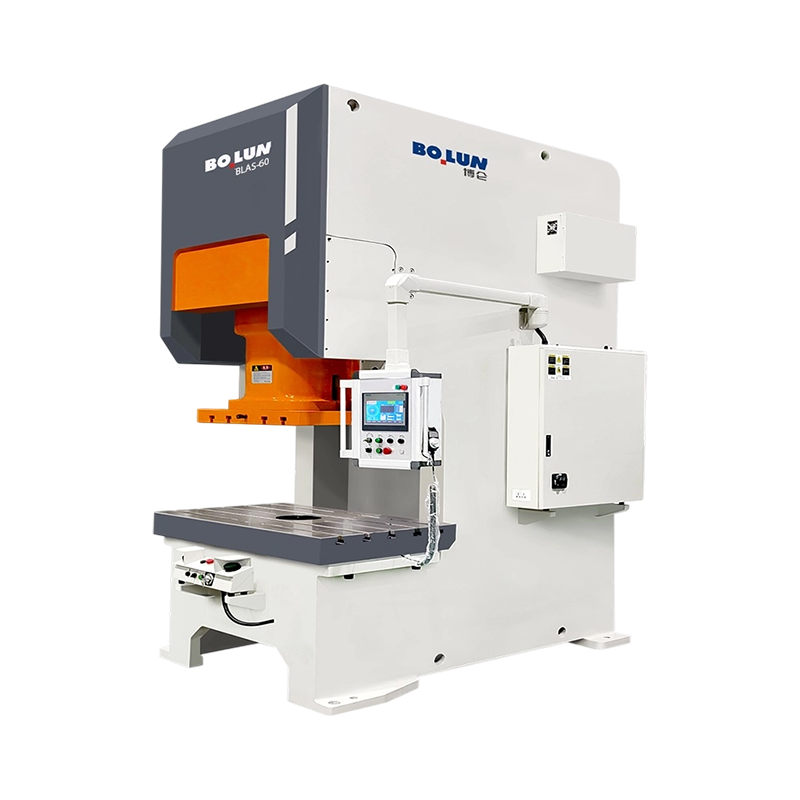
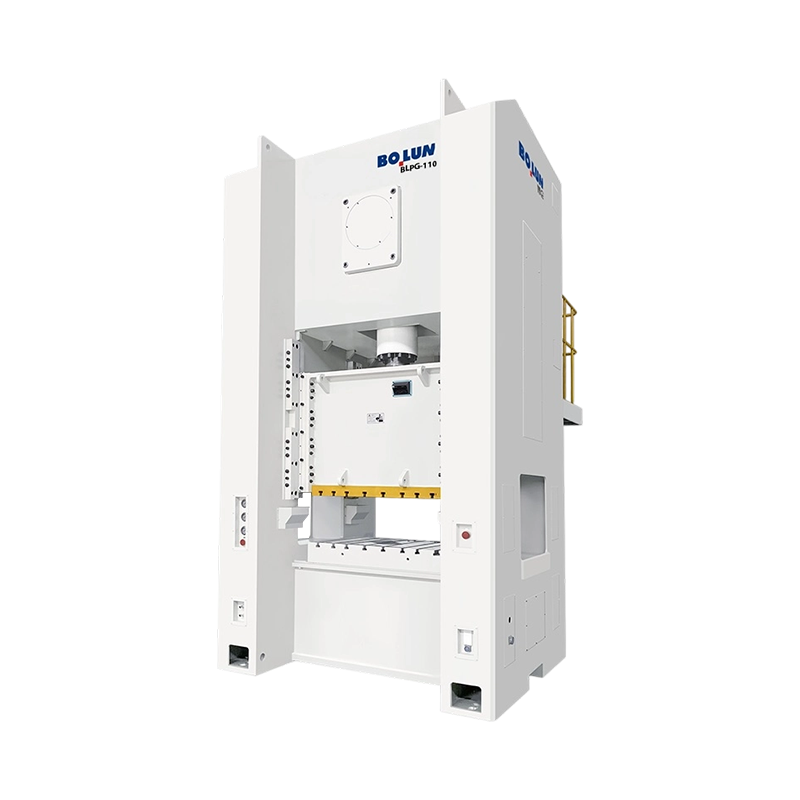
The BLAS-60 is an open-type single-point servo power press developed for high-precision stamping applications. Its 600 kN nominal capacity makes it suitable for a broad range of medium and small metal forming operations, especially where accuracy, repeatability, and process flexibility are important. The open-type frame provides convenient access for die installation, material feeding, maintenance, and operator observation, while the single-point structure offers efficient force transmission for parts that do not require multi-point slide support.
At the heart of the machine is a high-torque servo motor system. Instead of depending on a conventional flywheel-driven mechanism with a largely fixed motion curve, the BLAS-60 uses servo control to manage the slider directly. This enables the press to adjust its motion according to the forming task. For example, the slider can approach quickly, slow down during the forming zone, dwell or pulse at a defined position, and then return rapidly. Such control gives manufacturers the ability to improve part quality while reducing unnecessary mechanical stress.
The press is equipped with nine integrated motion curves, including modes suitable for precision blanking and pulse forming. These curves help operators choose appropriate forming behavior without having to build every process from scratch. At the same time, the programmable nature of the system supports process optimization for different materials, thicknesses, die structures, and production goals. This balance of preset intelligence and adjustable flexibility is one of the major advantages of the machine.
Its 900 × 520 mm worktable provides practical space for a range of dies and tooling layouts. The machine also incorporates hydraulic overload protection, an important safeguard for die and press safety. If abnormal load conditions occur, the system helps reduce the risk of serious mechanical damage. A color touch-screen human-machine interface further improves usability by allowing operators to set parameters, monitor operation, and make adjustments with greater clarity.
| Item | Description | Manufacturing Value |
|---|---|---|
| Nominal Capacity | 600 kN | Suitable for precision stamping of electronic, hardware, and formed metal components |
| Press Type | Open-type single-point servo power press | Convenient access, efficient operation, and flexible die handling |
| Drive System | High-torque servo motor | Programmable motion, high response, and improved forming control |
| Slider Control | Direct servo-controlled slider movement | Adjustable speed, position, and motion curves for different forming processes |
| Worktable Size | 900 × 520 mm | Supports practical tooling arrangements for medium and small precision parts |
| Motion Curves | 9 integrated curves | Includes precision blanking and pulse forming modes for process optimization |
| Protection System | Hydraulic overload protection | Helps protect press structure, dies, and production stability |
| Control Interface | Color touch-screen HMI | Clear parameter control, easier setup, and better operator interaction |
Servo technology has changed the expectations for stamping equipment. In conventional mechanical presses, the slide motion is determined mainly by crank geometry and rotational speed. Although this approach is reliable and widely used, it gives limited control over the forming phase. If a process requires a slower forming speed, a dwell at bottom dead center, or a special motion sequence, a traditional machine may need mechanical compromises or additional equipment. In many cases, the operator must accept the limitations of the press rather than tailoring the press to the process.
The BLAS-60 addresses this limitation by allowing the motion of the slider to be programmed. This means the press can operate quickly during non-forming travel and carefully during the forming zone. When producing precision parts, this is extremely valuable. A slower forming speed at the moment of material deformation can reduce impact, improve surface quality, lower vibration, and enhance dimensional consistency. A rapid return stroke can preserve productivity, so quality improvements do not necessarily require a major reduction in output.
Servo-driven control also contributes to better die life. Dies are expensive assets, and their wear directly affects product quality and production cost. Sudden impact, excessive vibration, misalignment, and overload conditions can shorten die life. By controlling the forming speed and load characteristics more precisely, the BLAS-60 helps create a gentler, more predictable forming environment. In high-volume manufacturing, even small improvements in die life can create significant economic value.
Another important benefit is energy management. Traditional presses often keep large rotating masses moving continuously. Servo systems can be more responsive to actual production needs, particularly in operations where motion profiles are optimized for the task. While real energy savings depend on the application, production rhythm, and factory conditions, servo technology generally provides a more intelligent relationship between motion and energy use. This is increasingly important as manufacturers look for ways to reduce operating costs and support sustainable production goals.
The BLAS-60 has several competitive advantages when compared with conventional open-type mechanical presses and less advanced servo presses. The first advantage is motion flexibility. Many standard presses offer high speed and strong output, but their fixed slide curve limits process control. The BLAS-60 gives the user the ability to match the motion profile to the part. This is especially valuable when working with thin materials, delicate electronic components, precision blanking processes, or parts requiring controlled deformation.
The second advantage is forming accuracy. In precision manufacturing, accuracy is not only a matter of machine rigidity; it also depends on how force is applied. A machine that strikes too aggressively may create burrs, distortion, springback variation, or surface defects. By adjusting speed and position, the BLAS-60 supports smoother forming behavior. This can help reduce scrap, improve first-pass yield, and support more stable mass production.
The third advantage is process adaptability. Modern factories rarely produce only one part for a long period. Product lifecycles are shorter, customer demands are more varied, and batch sizes can change quickly. A press with programmable curves can adapt to different dies and materials more efficiently than a machine requiring extensive mechanical adjustment. The color touch-screen interface also helps simplify parameter management, making setup and changeover more controlled.
The fourth advantage is lower noise and vibration. Stamping operations are often associated with loud impact and mechanical shock. A servo power press can reduce unnecessary impact by slowing the slider at the critical forming point. This improves the working environment and may reduce stress on surrounding equipment. For factories focused on lean manufacturing, occupational comfort, and stable equipment performance, reduced vibration can be a meaningful benefit.
The fifth advantage is intelligent protection. The hydraulic overload protection system helps protect the press and die from abnormal conditions. Competitor machines without effective overload response may suffer costly damage when misfeeds, tooling problems, or unexpected load spikes occur. The BLAS-60’s protection approach supports safer and more reliable production.
The open-type press structure remains popular because it offers excellent accessibility. Operators and maintenance personnel can approach the working area more conveniently, which simplifies die loading, adjustment, inspection, and maintenance. For many precision stamping applications, this ease of access improves daily efficiency. The BLAS-60 combines the convenience of an open-type design with the advanced control benefits of servo technology.
In many factories, open-type presses are used with coil feeding systems, progressive dies, transfer operations, or manual and semi-automatic part handling. The accessible structure of the BLAS-60 makes it suitable for integration into different production arrangements. Its 900 × 520 mm table supports practical tooling while maintaining a compact and efficient machine layout. This makes it especially useful for manufacturers producing electronic terminals, brackets, small hardware components, precision metal pieces, connectors, and similar parts.
The single-point configuration is efficient for centrally loaded tooling and many medium-sized dies. It provides a straightforward mechanical structure and is well suited to operations where the forming force is concentrated near the center. For manufacturers that do not require the larger footprint or multi-point support of closed-type or double-point presses, the BLAS-60 offers a strong balance of accessibility, performance, and cost-effectiveness.
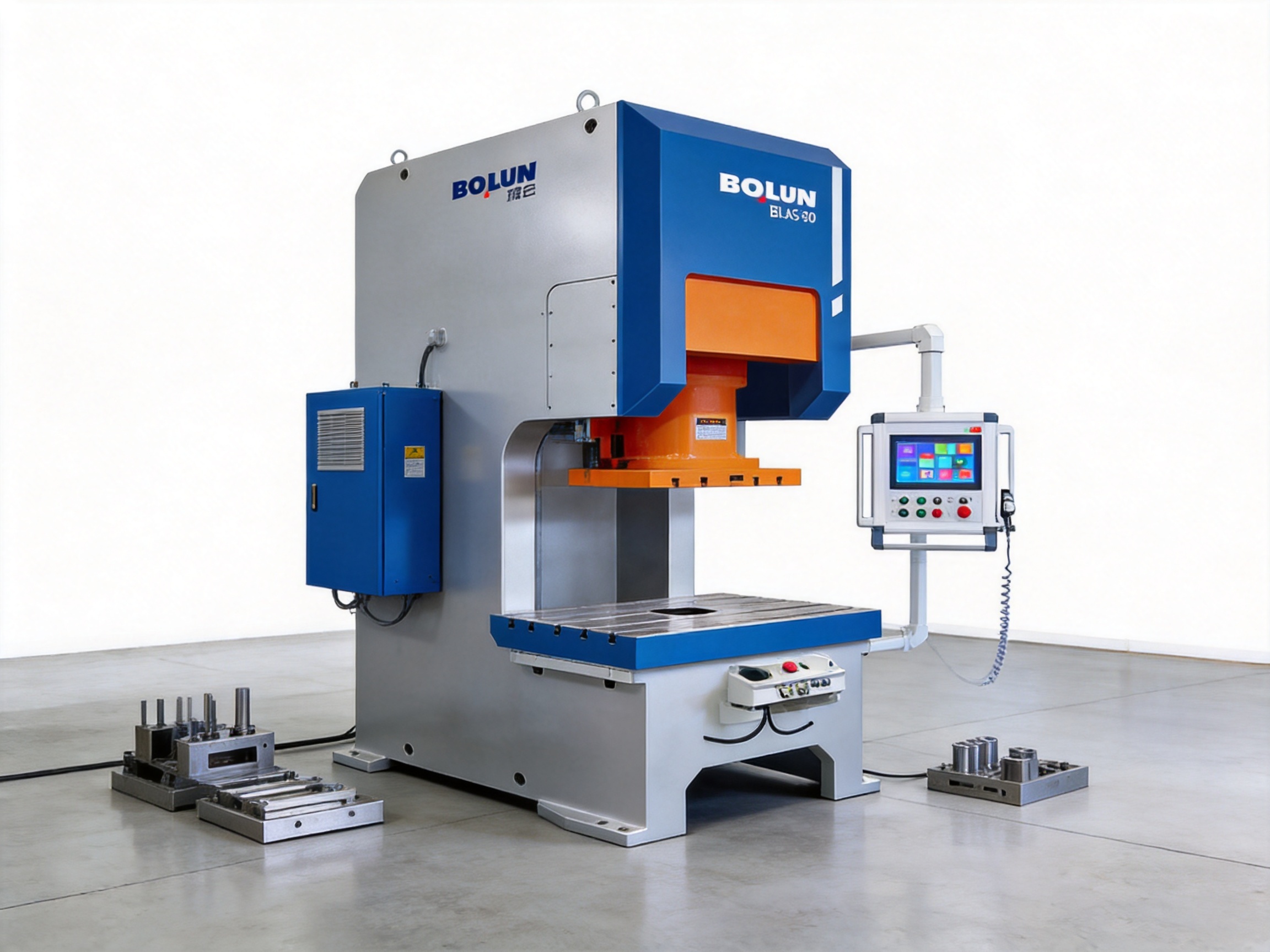
One of the most important features of the BLAS-60 is its set of nine integrated motion curves. These motion modes allow the press to serve different forming requirements without being limited to a single mechanical rhythm. Precision blanking may require controlled speed through the cutting zone to reduce burr formation and maintain edge quality. Pulse forming may require repeated or specially controlled movement at a defined position to improve material flow or forming accuracy. Other applications may benefit from rapid approach, slow pressing, dwell, or rapid return.
This flexibility allows manufacturers to experiment, optimize, and standardize processes. During trial production, engineers can test different motion profiles to identify the best balance between part quality and cycle time. Once the optimal profile is found, the parameters can be used consistently for mass production. This contributes to repeatability and reduces dependence on operator intuition alone.
Programmable curves are also valuable when working with different materials. Stainless steel, copper alloy, aluminum, and various carbon steels can respond differently during stamping. Material thickness, hardness, elasticity, and surface condition all influence forming results. A servo press gives process engineers another control variable: the motion of the slide. Instead of changing only die clearance, lubrication, feeding accuracy, or press speed, engineers can refine how the press moves during the most important part of the stroke.
For manufacturers serving multiple industries, this adaptability can create a competitive advantage. A factory using a flexible servo press may be able to accept a wider range of orders, reduce trial-and-error time, and respond faster to customer changes. In this sense, the BLAS-60 is not merely a machine for one product; it is a flexible production asset.
Direct slider control is central to the performance of the BLAS-60. In precision stamping, the slide position, speed, and response must be controlled reliably. The high-torque servo motor allows the machine to respond quickly to programmed commands. This high response supports consistent movement and better control during complex forming operations.
High dynamic accuracy is particularly important in electronic and hardware component manufacturing. Many of these parts are small, thin, and dimensionally sensitive. A slight variation in forming depth, cutting quality, or bending angle can affect assembly performance. Connectors, terminals, shields, brackets, clips, contact parts, and precision hardware often require tight tolerances and stable repeatability. The BLAS-60 is designed to support these requirements by combining servo motion control with a robust press structure and reliable overload protection.
In addition to part quality, dynamic accuracy helps improve process diagnosis. When a machine can control and repeat motion precisely, engineers can more easily identify whether a defect originates from material variation, die condition, feeding accuracy, or forming parameters. This clarity supports continuous improvement and reduces unnecessary adjustment.
Stamping operations involve high forces, and overload protection is essential. The BLAS-60 is equipped with a hydraulic overload protection system to support safe and stable operation. In real production, abnormal loads can occur for many reasons: material misfeed, double-sheet feeding, die obstruction, incorrect setup, tool wear, or unexpected material hardness. Without proper protection, such events may damage the die, deform press components, interrupt production, and create safety risks.
Hydraulic overload protection helps limit damage by responding to excessive force conditions. This is especially important in precision stamping, where tooling can be expensive and lead times for replacement parts may be long. By protecting the die and machine, the system supports better equipment availability and lower maintenance risk.
Safety is not only about emergency response; it is also about stable process control. When the press operates with programmable motion, clear parameter settings, and overload protection, the production environment becomes more predictable. Operators can work with greater confidence, and managers can plan production with less uncertainty.
The BLAS-60 includes a color touch-screen human-machine interface designed to make operation clearer and more efficient. A modern press must communicate information effectively to operators, technicians, and engineers. Parameters such as motion curve selection, speed settings, position control, production counts, and operating status should be easy to access and understand. A clear HMI reduces the likelihood of setup errors and supports faster changeover.
For factories moving toward digital and intelligent manufacturing, the HMI is more than a control panel. It is the operator’s gateway to process standardization. When parameters are visible, adjustable, and repeatable, the factory can build more consistent operating procedures. This helps reduce dependence on individual experience and supports training for new personnel.
Compared with older press controls, a color touch-screen interface improves usability. Operators can interact with the machine more intuitively, and maintenance personnel can access information more efficiently. In high-mix production environments, this convenience is valuable because frequent product changes require reliable parameter management.
The BLAS-60 is particularly suitable for high-precision electronic and hardware component manufacturing. Electronic components often require small metal parts with excellent dimensional accuracy, stable flatness, clean edges, and reliable repeatability. Hardware components may require stronger forming force, consistent bending, clean punching, or accurate blanking. The 600 kN capacity provides a useful range for many such applications.
Potential applications include connector parts, terminal pieces, shielding covers, spring clips, brackets, precision washers, small structural hardware, decorative metal parts, electrical contact components, and other stamped products requiring controlled forming behavior. The programmable servo motion is useful when materials are thin, when burr control is important, or when deformation must be carefully managed.
In progressive die production, consistent slide behavior supports reliable feeding and forming at each station. In single-operation stamping, the operator can choose a motion curve suitable for the specific operation. In prototype or trial production, engineers can use the machine’s flexibility to explore process windows before transferring parameters to mass production.
The BLAS-60 also supports manufacturers that produce parts for customers with strict quality requirements. When customers demand stable dimensions and documented process control, a servo-driven press provides a stronger foundation than a conventional press with limited motion adjustment. The ability to fine-tune the forming process helps manufacturers meet demanding specifications and reduce variation.
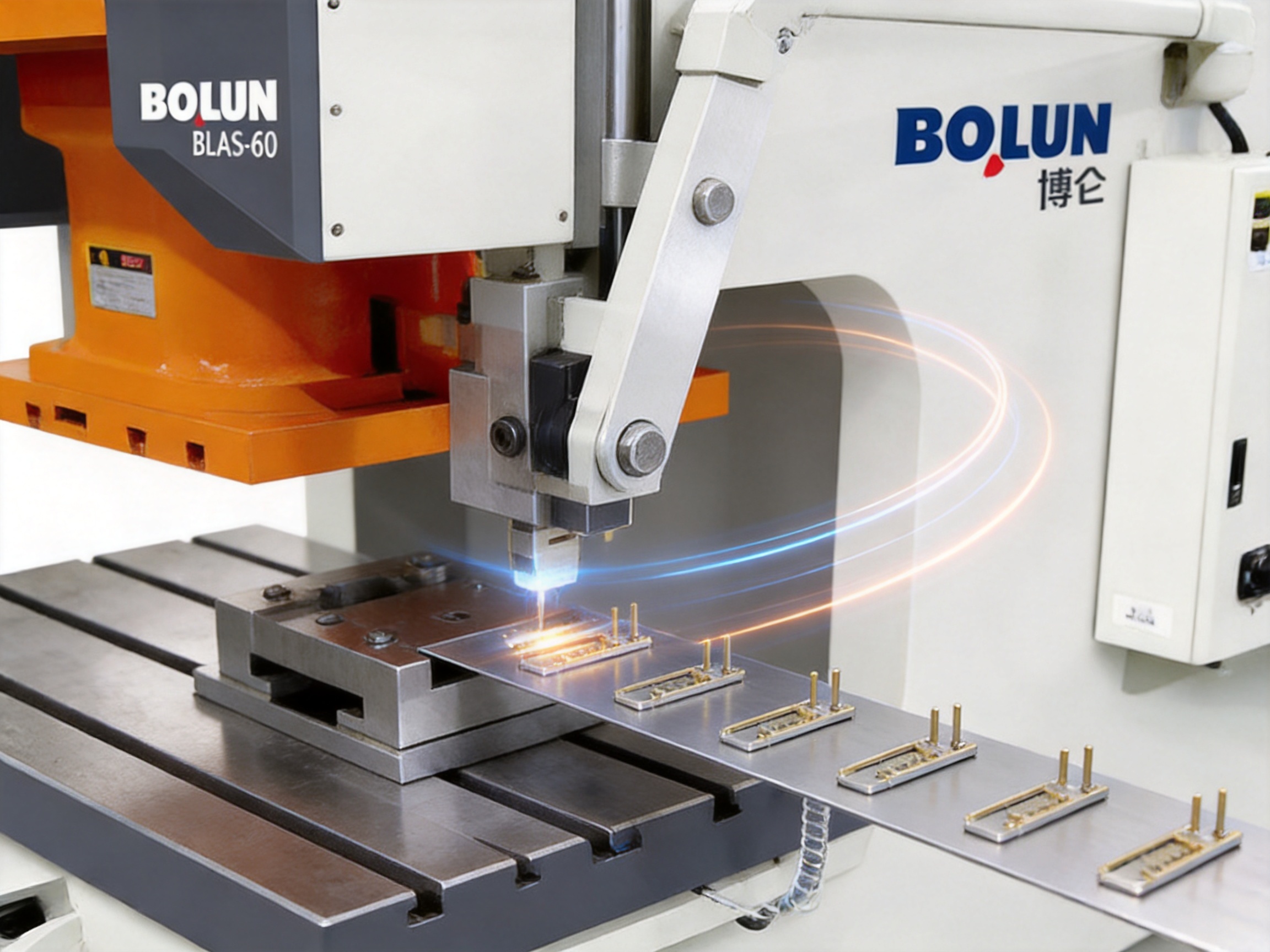
The quality of a press depends not only on its design concept but also on the manufacturing capability behind it. Zhejiang Bolun High-Precision Machinery Co., Ltd. is located in Zhejiang, a major region of China’s precision manufacturing industry. With approximately two decades of experience in machinery manufacturing, the company has developed into a modern enterprise integrating research and development, design, production, sales, and service.
The company’s strength lies in its full-chain production capability. From basic design and core component development to final machine assembly, Bolun focuses on controlling key stages of the manufacturing process. This integrated approach helps maintain consistency and supports continuous improvement. When a manufacturer understands both the design and production details of its equipment, it can respond more effectively to customer requirements and quality challenges.
Advanced precision processing equipment plays an important role in the company’s production system. Power presses require accurate machining, stable assembly, and careful inspection. Frame accuracy, slide guidance, component alignment, and transmission quality all affect final performance. A servo press with advanced motion control must also be built on a reliable mechanical foundation. Without precise manufacturing, even the best control system cannot deliver stable long-term results.
Bolun also emphasizes non-standard customization. Many manufacturers have special requirements related to tooling, feeding systems, automation integration, safety configuration, production layout, or part characteristics. A company with strong design and manufacturing capability can provide customized solutions rather than only standard machines. This is especially important in precision forming, where the best solution often depends on the customer’s product, material, die design, and production rhythm.
Quality control is a central element of Bolun’s manufacturing philosophy. The company has established a finished product inspection system that exceeds ordinary industry expectations, with rigorous checks on processes and components. For a power press, quality cannot be inspected only at the end. It must be built into each stage: material selection, machining, heat treatment where applicable, component assembly, hydraulic system installation, electrical control setup, servo calibration, final testing, and documentation.
Stable precision under high-intensity operating conditions requires disciplined production management. Stamping equipment operates repeatedly under load, often for long shifts and high production volumes. Small weaknesses in machining or assembly can develop into vibration, wear, accuracy loss, or downtime. By controlling every process and every component, Bolun aims to ensure long service life and stable precision.
Quality also affects customer confidence. When a manufacturer invests in a servo power press, it expects not only immediate performance but also long-term reliability. A machine that maintains accuracy, responds consistently, and requires manageable maintenance gives the customer a stronger return on investment. This is one of the reasons that manufacturing process strength matters as much as product features.
Bolun’s design team supports one-stop design and manufacturing services for products with special specifications and functions. This capability is important because modern stamping factories often require more than a catalog machine. They may need integration with automatic feeding lines, special safety devices, customized worktable arrangements, process-specific motion settings, or adaptation to unique tooling.
A strong R&D and design capability allows the company to understand customer needs at the process level. Instead of simply supplying equipment, it can help identify suitable press configurations, forming approaches, and production solutions. This consultative approach is valuable for customers developing new products or upgrading from conventional mechanical presses to servo-driven equipment.
Customization also helps manufacturers improve competitiveness. If a press can be adapted to a specific production need, the customer may achieve better output, higher quality, or lower labor requirements. In a global market where manufacturers compete on precision, delivery time, and cost, the ability to optimize equipment around the product is a major advantage.
Bolun actively adopts advanced international production management experience and combines it with China’s local manufacturing environment. This approach helps create a scientific, humane, and efficient management system. In practical terms, good production management supports stable delivery, consistent quality, orderly assembly, traceable inspection, and responsive service.
International perspective is particularly important in the machinery industry because customers may have different expectations for documentation, safety, maintenance, communication, and after-sales support. A company serving global customers must think beyond machine construction. It must consider usability, training, spare parts, service response, and long-term cooperation.
The BLAS-60 reflects this broader manufacturing philosophy. Its servo control system, HMI, overload protection, and flexible motion curves are aligned with the global trend toward intelligent, efficient, and process-oriented stamping equipment. For customers seeking to modernize production, the machine offers a practical combination of advanced technology and industrial usability.
When evaluating a power press, the purchase price is only one part of the decision. Total cost of ownership includes energy use, die life, scrap rate, maintenance, setup time, downtime, labor efficiency, part quality, and production flexibility. The BLAS-60 can contribute to cost reduction in several ways.
First, programmable motion can reduce scrap by improving process stability. Fewer defective parts mean lower material waste and less rework. Second, controlled forming can reduce die stress, potentially extending die life and reducing tooling costs. Third, faster changeover through parameter control and HMI operation can increase productive time. Fourth, reduced vibration may lower maintenance pressure on the machine and surrounding equipment. Fifth, the ability to handle multiple process requirements improves equipment utilization.
In many factories, a press that can adapt to new products is more valuable than a press that is efficient only for one job. The BLAS-60 gives manufacturers the ability to respond to changing orders and customer specifications. This flexibility helps protect the equipment investment over time.
Not all servo presses offer the same value. Some machines may include servo drive technology but lack strong mechanical design, reliable overload protection, effective HMI control, or manufacturing quality. The BLAS-60 is positioned as a balanced solution combining high-response servo drive, direct slider control, integrated motion curves, practical worktable size, and safety protection.
A servo system must be matched with a stable machine structure. If the frame, slide guidance, or assembly precision is weak, the benefits of servo control are limited. Bolun’s experience in high-precision forming equipment and its focus on rigorous inspection help support the mechanical foundation required for servo performance. This makes the BLAS-60 more than a control upgrade; it is a complete press solution for precision stamping.
Another difference is process usability. A machine may be technically capable, but if operators cannot easily set and manage parameters, the value is reduced. The BLAS-60’s color touch-screen HMI and integrated motion curves make advanced control more accessible in daily production. This practical usability is important for real factory environments.
The global machinery industry is moving toward intelligent and digital production. Manufacturers want equipment that can support process data, repeatable settings, controlled operation, and flexible production planning. The BLAS-60 aligns with this direction through servo-driven motion control and user-friendly parameter management.
Although stamping remains a physical forming process, digital control changes how the process is managed. Instead of relying only on mechanical adjustment and operator feel, engineers can define motion profiles and standardize settings. This improves process repeatability and supports systematic improvement. Over time, factories can build knowledge around specific materials, dies, and products, using machine parameters as part of their production database.
For companies seeking to upgrade from traditional stamping equipment, the BLAS-60 offers a practical bridge toward smarter production. It does not require abandoning proven stamping principles; rather, it enhances them with precise motion control, better safety, and improved usability.
A high-performance press must be supported by reliable service. Bolun provides a customer-oriented service system covering pre-sales consultation, in-sales support, and after-sales guarantees. This full-cycle support helps customers select suitable equipment, implement production plans, and maintain long-term machine performance.
Pre-sales consultation is important because the correct press selection depends on part size, material, thickness, forming force, die design, production volume, and automation plans. In-sales support helps ensure that machine configuration and delivery match the customer’s needs. After-sales service supports installation, training, maintenance, troubleshooting, and long-term cooperation.
For international customers, responsive communication and technical understanding are especially important. A supplier with experience, production capability, and service awareness can reduce the risks associated with equipment investment. The BLAS-60 is therefore supported not only by its technical features but also by the company’s broader commitment to customer success.
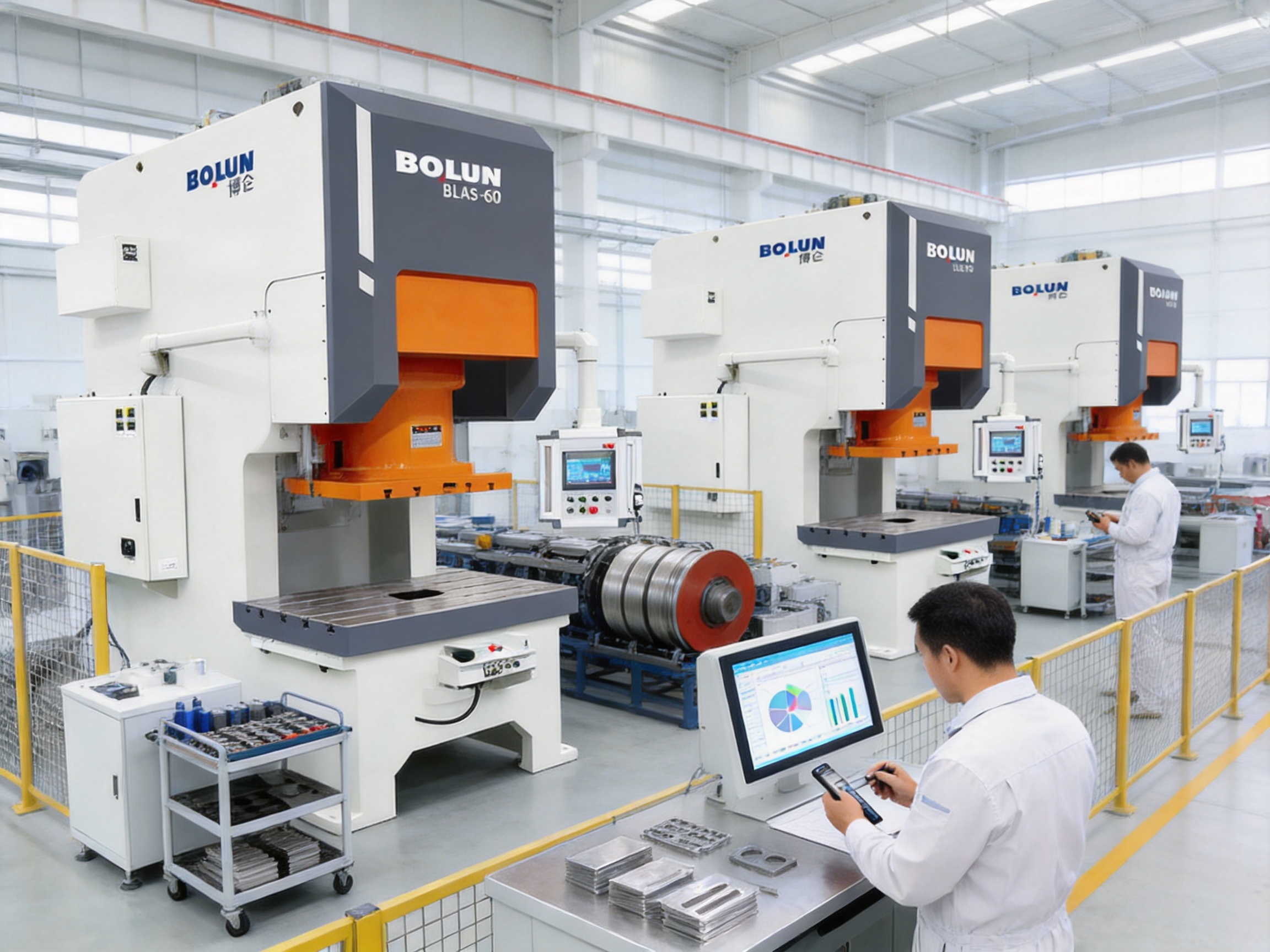
Factory managers are responsible for productivity, quality, cost, safety, and delivery. The BLAS-60 supports these goals by offering a combination of reliable capacity and intelligent control. Its 600 kN rating provides useful forming capability, while servo motion control supports process optimization. The open-type design supports convenient operation and maintenance, and the HMI improves daily usability.
From a management perspective, the machine can help reduce uncertainty. Programmable settings make processes easier to repeat. Overload protection reduces the risk of serious equipment damage. Flexible motion curves allow engineers to solve forming problems without immediately investing in new tooling or additional machines. Better control can improve product consistency, supporting customer satisfaction and fewer quality disputes.
For production planning, the ability to run different products on one adaptable press is valuable. It can improve equipment utilization and make the factory more responsive to market changes. In industries where product models change frequently, flexibility can be as important as speed.
Process engineers need tools that allow them to control variables and improve outcomes. The BLAS-60 gives engineers a wider process window by allowing motion profile adjustment. If a part has burr problems, deformation issues, springback variation, or surface defects, engineers can test different slide speeds, dwell behavior, and forming curves. This makes troubleshooting more systematic.
The integrated curves reduce the complexity of servo operation. Engineers can begin with established motion modes and then refine parameters according to test results. This is more efficient than working with a machine that offers no motion flexibility. It also supports better communication between engineering and production teams because settings can be documented and repeated.
For new product development, the BLAS-60 can shorten trial cycles. Instead of modifying tooling repeatedly to compensate for forming behavior, engineers can first explore whether motion control improves the result. This may reduce development cost and speed up production readiness.
Operators benefit from a machine that is accessible, clear, and stable. The open-type structure provides convenient access to the working area, while the color touch-screen HMI makes settings and status information easier to understand. Reduced vibration and controlled motion can also improve the working environment.
A machine with clear controls helps reduce operational mistakes. When parameters are organized and visible, operators can follow standard procedures more easily. This is especially useful during product changeover, shift changes, or training of new personnel. The hydraulic overload protection system also provides an additional layer of confidence during production.
In a modern factory, operator skill remains important, but equipment should support the operator rather than create unnecessary difficulty. The BLAS-60 is designed to combine advanced capability with practical usability.
Before selecting the BLAS-60, manufacturers should evaluate their part requirements, material types, forming force needs, die dimensions, production speed expectations, and automation plans. The 600 kN capacity and 900 × 520 mm worktable are suitable for many precision stamping applications, but final selection should always be based on actual process conditions.
Manufacturers upgrading from conventional mechanical presses should also consider how servo motion control can be integrated into their production methods. Operators and engineers may need training to fully use programmable curves. However, once the factory builds experience, the benefits can be substantial.
It is also wise to consider future production needs. If a factory expects more precision components, more product variation, or stricter customer requirements, a flexible servo press can provide long-term value. The BLAS-60 is designed for such forward-looking manufacturers.
The BLAS-60 is an open-type single-point servo power press with a nominal capacity of 600 kN. It is designed for precision stamping applications requiring programmable motion control, forming accuracy, and process flexibility.
The main advantage is programmable slider motion. The press can control speed, position, and motion curves according to the forming process, unlike conventional mechanical presses that rely on a fixed slide motion. This improves forming stability, accuracy, and adaptability.
It is suitable for high-precision electronic components, hardware parts, connectors, terminals, brackets, clips, shielding covers, precision blanking parts, and other stamped metal components requiring stable quality and controlled forming behavior.
By slowing the slider during the critical forming stage and optimizing the motion curve, the press can reduce impact shock. This helps lower noise and vibration compared with machines that strike with a fixed high-impact motion.
The nine motion curves give users practical options for different forming processes, including precision blanking and pulse forming. They help operators and engineers optimize part quality, forming speed, and die protection without relying on only one fixed motion pattern.
Hydraulic overload protection helps protect the press and die when abnormal force occurs. It reduces the risk of serious damage caused by misfeeds, tooling problems, or unexpected load conditions.
The HMI makes machine settings, parameter adjustment, and operating status easier to manage. It supports faster setup, clearer operation, and better process standardization.
The open-type structure provides convenient access to the work area. This helps with die installation, adjustment, maintenance, observation, and integration with feeding or automation systems.
Compared with conventional fixed-motion presses, the BLAS-60 offers programmable servo motion, better forming control, improved process flexibility, reduced vibration, and stronger support for precision manufacturing. These advantages can help reduce scrap, improve quality, and extend die life.
Zhejiang Bolun High-Precision Machinery Co., Ltd. has experience in precision machinery manufacturing, integrated R&D and production capability, advanced processing equipment, non-standard customization ability, strict inspection systems, and customer-oriented service. These strengths support the machine’s reliability and long-term value.
The BLAS-60 Agile Precision Open-Type Single-Point Servo Power Press is a strong solution for manufacturers seeking higher stamping accuracy, greater process flexibility, and more intelligent production control. Its 600 kN nominal capacity, 900 × 520 mm worktable, high-torque servo motor, direct slider control, nine integrated motion curves, hydraulic overload protection, and color touch-screen HMI create a balanced platform for precision electronic and hardware component manufacturing.
Its advantages over conventional competitor presses are clear. Programmable motion improves forming control. Controlled speed reduces vibration and noise. Flexible curves support different materials and tooling requirements. Hydraulic overload protection improves safety and equipment protection. A user-friendly HMI supports standardization and efficient operation. Together, these features help manufacturers improve quality, reduce waste, protect tooling, and respond faster to changing production demands.
Equally important is the manufacturing strength behind the product. Zhejiang Bolun High-Precision Machinery Co., Ltd. combines R&D, design, production, sales, and service with advanced processing capability, strict quality control, customization experience, and a global service mindset. This foundation supports not only the performance of the BLAS-60 but also the long-term confidence of customers investing in intelligent stamping equipment.
For factories that need precision, flexibility, and reliable manufacturing value, the BLAS-60 represents a modern approach to open-type servo stamping. It is not simply a replacement for a traditional press; it is an upgrade in how forming motion is controlled, how production quality is managed, and how stamping equipment contributes to competitive manufacturing.
Altan, T., and Tekkaya, A. E. Sheet Metal Forming: Fundamentals and Applications. ASM International.
Kalpakjian, S., and Schmid, S. R. Manufacturing Engineering and Technology. Pearson Education.
Groover, M. P. Fundamentals of Modern Manufacturing: Materials, Processes, and Systems. Wiley.
Society of Manufacturing Engineers. Tool and Manufacturing Engineers Handbook: Forming. SME.
Boljanovic, V. Sheet Metal Forming Processes and Die Design. Industrial Press.
International Academy for Production Engineering. CIRP Encyclopedia of Production Engineering. Springer.


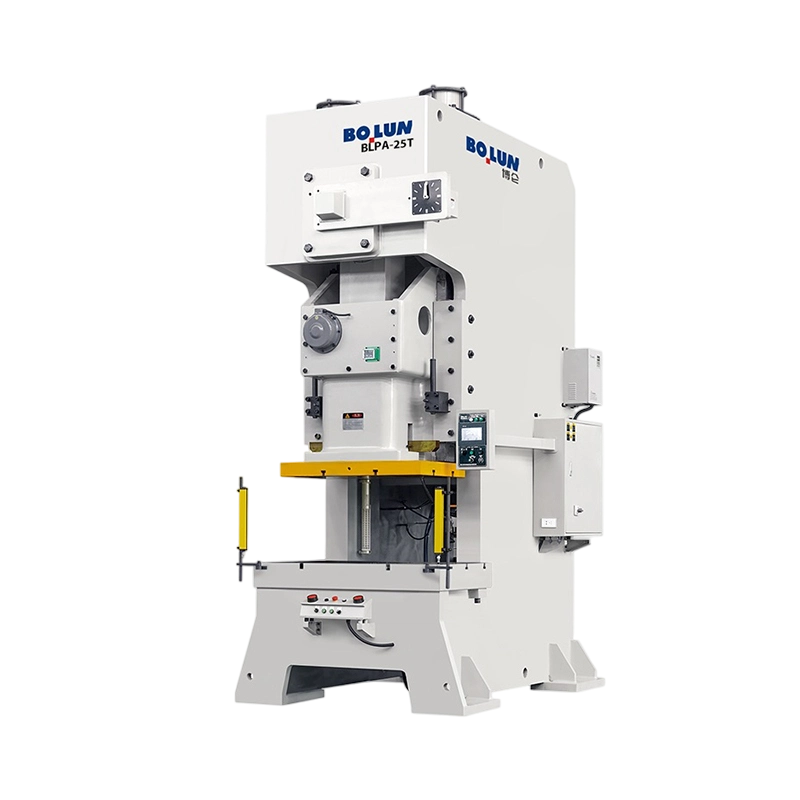
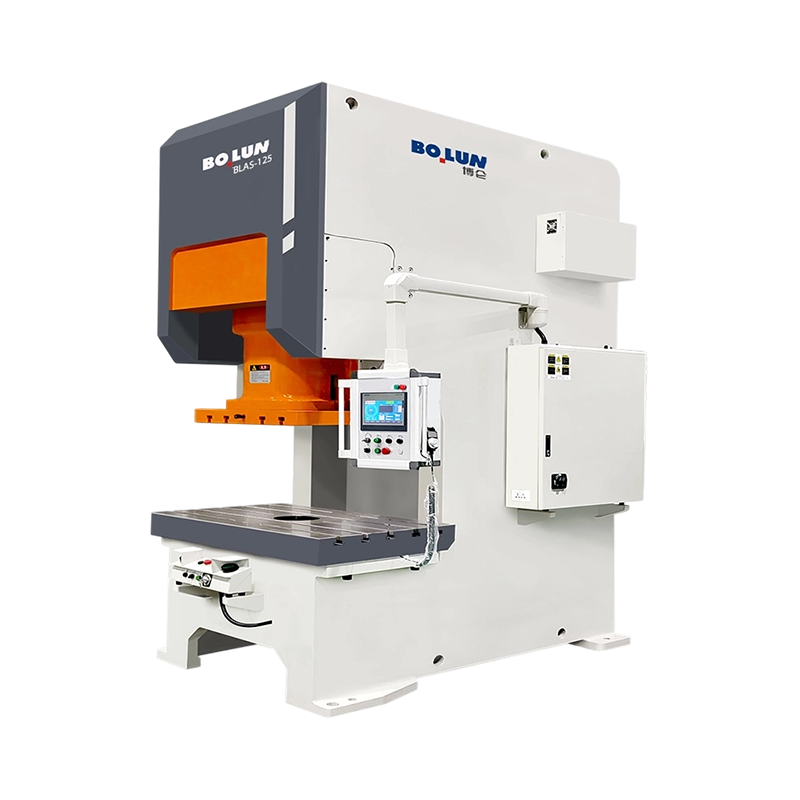
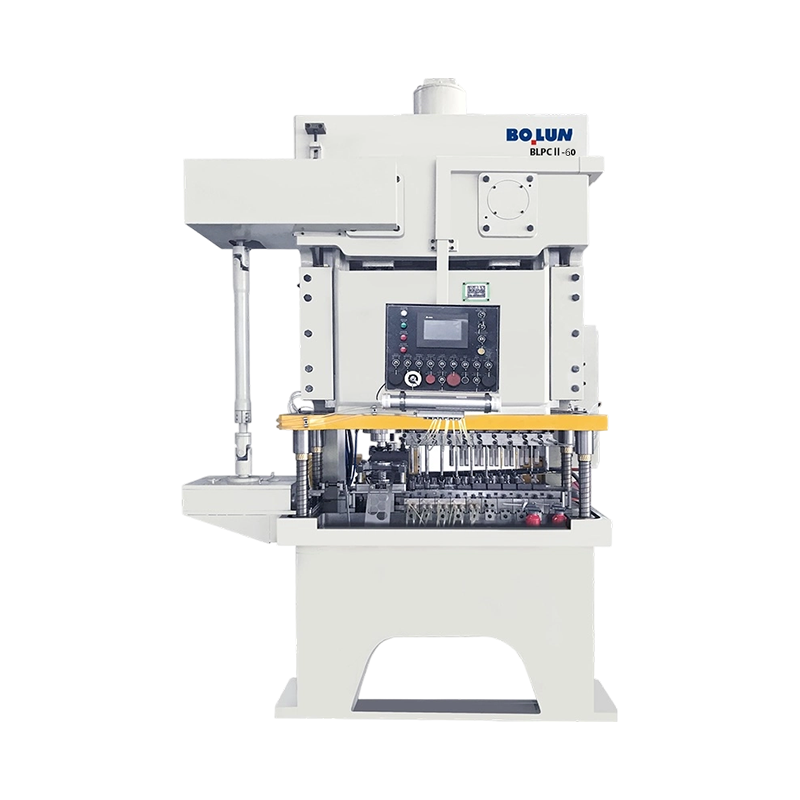
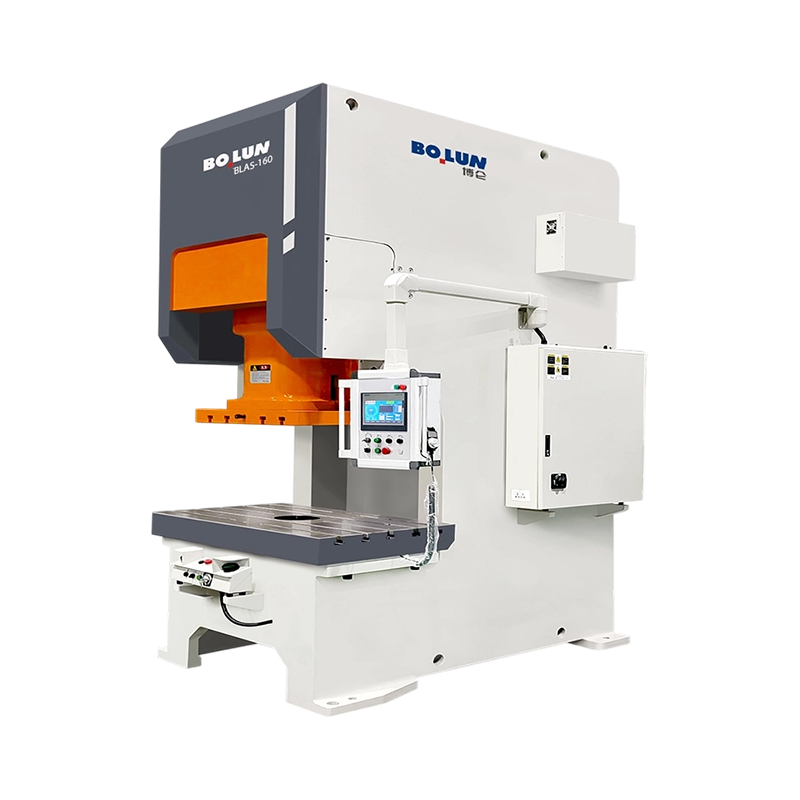
Understanding Mechanical Power Presses and Their Essential Functions A mechani...
What Is a Power Press? A power press — also called a stamping press or punch pr...
In the fields of metal forming, sheet metal fabrication, blanking, and punching,...
Power press machines are classified in two main ways: by frame construction, w...
As the manufacturing industry moves steadily toward automation and smart product...
In modern manufacturing, cold forging is widely used in the automotive, aerospac...
Contact Us

bolunpress@gmail.com

+86-575-83362228

+86-15158259588

+86-575-83362999

+86-15158259588

Hangzhou Office Add: No. 332 Wangjiang East Road, Shangcheng District

No.1 Linjiang Road East, Xiaren, Jinting Town, Shengzhou City, Zhejiang Province, China
Ready to Begin?
Get in Touch

Now!

ZHEJIANG BOLUN
 English
 中文简体
中文简体