
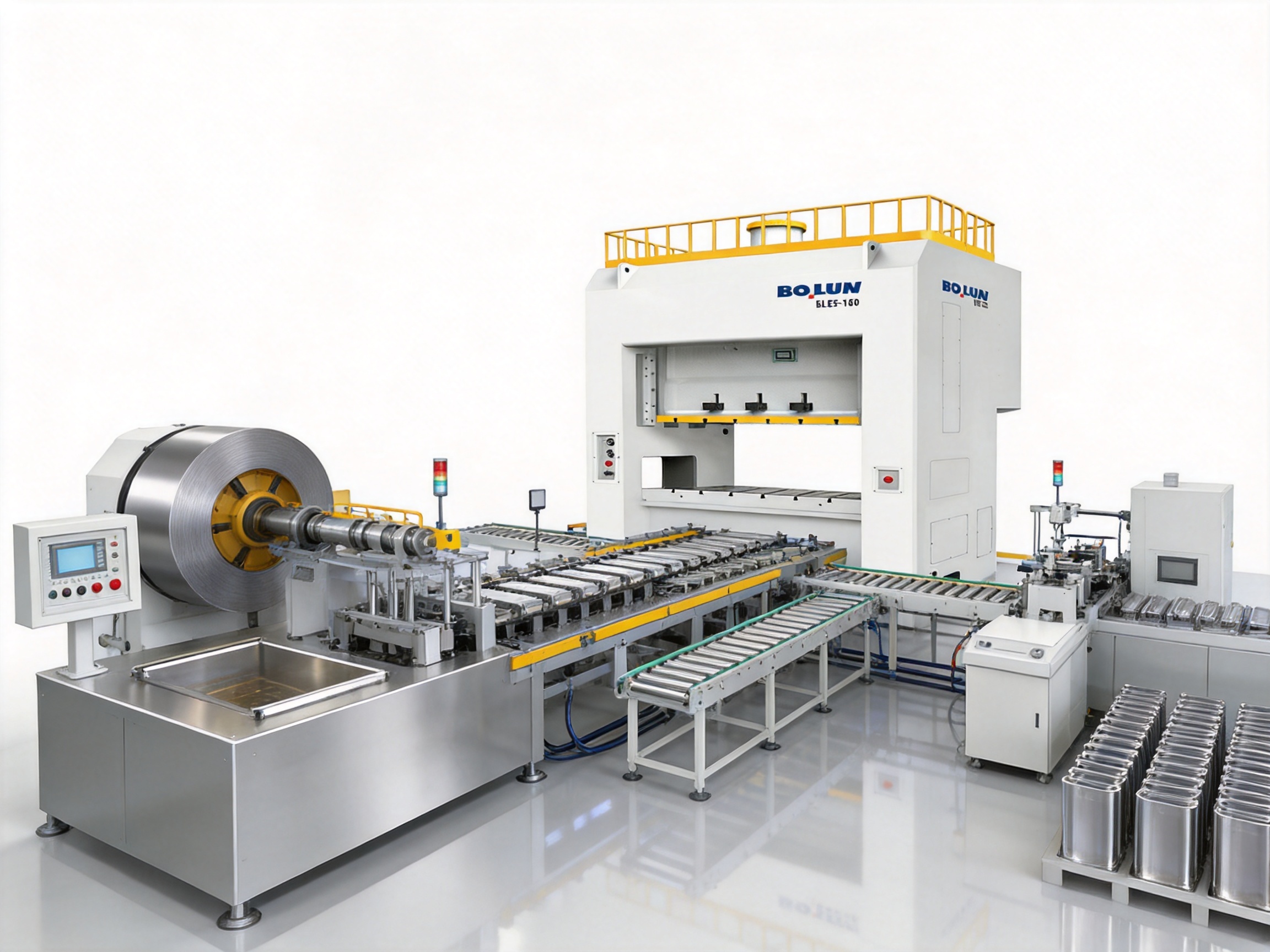
Modern stamping manufacturers are under constant pressure to produce more parts in less time while maintaining tight dimensional tolerances, consistent surface quality, low operating noise, and dependable equipment availability. These demands are especially significant in electronic components, precision hardware, appliance parts, automotive subcomponents, and other products manufactured through repeated blanking, forming, piercing, bending, and progressive-die operations. A press selected for these applications must provide more than a high nominal capacity. It must combine structural rigidity, accurate slide guidance, controllable motion, efficient production capability, flexible die accommodation, and stable long-term performance.
The BLES-160 Agile Precision Closed-Frame Double-Point Servo Power Press is designed to address these requirements. With a nominal capacity of 1,600 kN, a worktable measuring 1,800 × 760 mm, a maximum speed of approximately 55 strokes per minute, and direct servo control of slide movement, the machine is suited to high-accuracy stamping operations in which process stability is as important as production output. Its closed-frame, double-point arrangement supports balanced force transmission across the die area, while programmable motion curves give manufacturers greater control over the forming process than a conventional fixed-motion mechanical press.
The equipment is part of a broader precision press platform covering capacities from 1,600 kN to 8,000 kN. This product family allows users to select a machine according to material strength, die dimensions, production speed, part size, and forming energy. The BLES-160 is the entry model within the listed range, yet it provides the speed and control features required by demanding precision applications. Its compact capacity class makes it practical for manufacturers that need a capable servo press without immediately moving to the footprint, energy requirements, and investment level associated with larger machines.
Traditional mechanical presses generally operate with a fixed crank or eccentric motion. The slide follows a predetermined stroke profile, and the operator has limited ability to adjust the motion during the forming cycle. This arrangement is effective for many high-volume applications, but it can restrict process optimization when a part requires controlled forming speed, a dwell period, a special blanking profile, or reduced impact at the beginning and end of the working stroke.
A servo power press replaces the limitations of a fixed motion cycle with electronically controlled slide movement. The servo drive directly manages the slide profile, allowing the operator or production engineer to select a motion pattern that better matches the die and material. The result is greater flexibility in how the press approaches the workpiece, applies forming force, completes the forming stroke, and returns to the top position.
For precision stamping, this control can provide several practical benefits. A slower slide speed through a critical forming zone may reduce material tearing, wrinkling, springback, and sudden impact. A controlled dwell near the bottom of the stroke may improve material flow and help the workpiece conform to the die. A faster return movement can shorten the non-working portion of the cycle and increase productivity. A pulsing or specialized blanking profile can help manage cutting forces and reduce the transmission of shock into the die and press frame.
The BLES-160 includes nine built-in motion curves. These curves are intended to support different process requirements, including precision blanking and pulsing modes. Instead of treating every die as if it required the same motion, production personnel can select a suitable curve and adjust the process around the characteristics of the material and tooling. This is particularly valuable when one press serves multiple product families and must change from simple blanking to more complex forming operations.
Servo motion also gives manufacturers a path toward improved repeatability. When slide movement is electronically regulated, the production cycle can be reproduced more consistently than when it depends only on a fixed mechanical profile and changing operating conditions. Consistent motion can help stabilize part dimensions, die wear patterns, material flow, and process timing. It also supports more systematic process development because engineers can compare results under defined motion conditions.
The BLES-160 uses a closed-frame structure with two-point slide support. This configuration is important for dies that distribute forming loads over a broad working area. In a single-point arrangement, force is introduced through a central connection, and uneven die loading can create a greater tendency toward tilting or localized deflection. A double-point system applies the driving force through two connection areas, helping maintain a more balanced relationship between the slide, die, and worktable.
The closed frame contributes to overall rigidity. During stamping, the frame must withstand repeated compressive and tensile forces without excessive deformation. Structural deflection can affect die alignment, part dimensions, tool life, and noise. A rigid closed-frame design helps create a stable working platform, particularly when the die is large relative to the press capacity or when the operation involves repeated high-speed cycling.
Balanced two-point operation is also beneficial for progressive dies and transfer-related tooling. When the material strip moves through several stations, even small differences in slide alignment can accumulate into problems such as uneven cutting clearance, inconsistent forming height, or premature wear on guide components. A double-point structure supports more uniform slide travel across the working width, which can improve the conditions under which the die operates.
The press has a worktable size of 1,800 × 760 mm and a slide bottom size of 1,600 × 650 mm. These dimensions provide a practical die-mounting area for electronic parts, precision hardware, small appliance components, and other medium-sized stamped products. The available side opening of 700 × 450 mm provides access for tooling installation, maintenance, inspection, and material-handling arrangements.
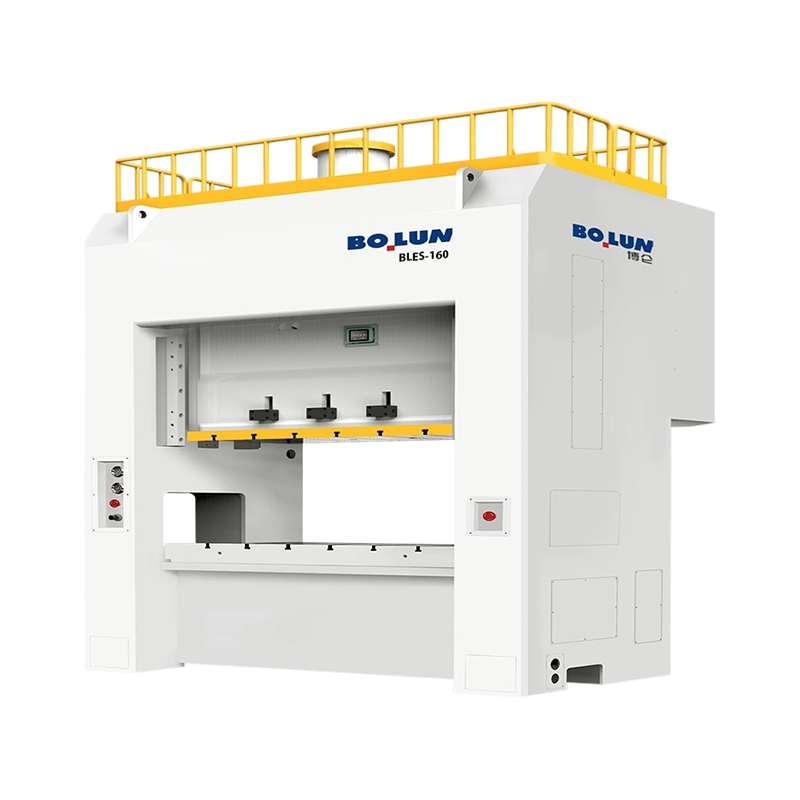
BLES-160 Agile Precision Closed-Frame Double-Point Servo Power Press
The BLES-160 delivers a nominal capacity of 1,600 kN. Nominal capacity is typically specified at a defined point near the bottom of the slide stroke, so actual die selection must always consider the required force curve, material characteristics, working stroke, and tooling design. Nevertheless, the 1,600 kN rating places the press in a useful range for precision production where substantial forming force is required but the application does not justify a larger 2,000 kN or 2,500 kN platform.
The nominal pressure stroke is 6 mm. This value identifies the designated stroke location at which the nominal capacity is available. The total slide stroke is 180 mm, giving the machine sufficient travel for a wide range of blanking and forming dies. The maximum die height is 450 mm, with 100 mm of die-height adjustment. Together, these specifications support flexible tooling arrangements and allow production teams to accommodate dies with different shut heights within the permitted range.
At approximately 55 strokes per minute, the BLES-160 provides the highest listed speed in the product family. This makes it particularly suitable for high-speed automated stamping lines in which a combination of stable motion and repeatable feeding is required. The practical output of a line will depend on the selected motion curve, the material feed system, the number of operations per stroke, the die design, the required quality inspection, and the time needed for loading and unloading. Even so, the rated speed provides a strong production foundation.
| Specification | BLES-160 Value | Production Significance |
|---|---|---|
| Nominal capacity | 1,600 kN | Supports medium-to-heavy precision stamping and forming applications |
| Nominal pressure stroke | 6 mm | Defines the rated force point near the bottom of the working stroke |
| Continuous working energy | 9,000 J | Helps assess suitability for repeated forming and blanking cycles |
| Slide stroke | 180 mm | Provides travel for varied die and forming requirements |
| Strokes per minute | Approximately 55 S.P.M. | Supports high-speed production when tooling and feeding systems are synchronized |
| Maximum die height | 450 mm | Allows installation of relatively substantial dies |
| Die-height adjustment | 100 mm | Improves tooling flexibility and setup control |
| Side opening | 700 × 450 mm | Facilitates access for dies, maintenance, and material handling |
| Worktable size | 1,800 × 760 mm | Accommodates a broad range of precision stamping dies |
| Slide bottom size | 1,600 × 650 mm | Provides a large mounting surface above the die |
| Punch accuracy | JIS B 6402 Class 1 | Supports stable dimensional performance in continuous production |
| Air pressure | 0.55 MPa | Defines the stated operating requirement for pneumatic functions |
| Press structure | One-piece closed frame | Contributes to rigidity and stable force transmission |
Precision stamping is not defined by a single measurement. It depends on the relationship between press rigidity, slide guidance, die accuracy, material consistency, feed control, lubrication, operating parameters, and inspection. A press can have a high capacity and fast speed but still be unsuitable for precision work if it introduces excessive vibration or loses alignment during repeated cycles.
The BLES-160 is specified to maintain JIS B 6402 Class 1 punch accuracy. This stated accuracy level gives users a recognized reference for evaluating press precision. It is especially relevant to manufacturers supplying parts where dimensional variation, burr height, hole position, flatness, and repeatability must remain within controlled limits over extended production runs.
A rigid closed frame and balanced double-point drive help create the mechanical foundation for this performance. Servo control adds a second layer of process stability by regulating the slide motion. Together, these features are intended to reduce unnecessary movement, impact, and vibration that may otherwise be transferred to the die. Lower vibration can help protect delicate tooling elements, reduce noise in the production area, and improve the consistency of small or thin-gauge components.
Stable operation is also important for downstream automation. Automated feeders, transfer devices, sensors, inspection systems, and collection units all depend on predictable timing. When the press cycle is consistent, these systems can be synchronized more effectively. This can reduce misfeeds, improve sensor reliability, and decrease the risk of a part being presented to the next station at the wrong moment.
Manufacturers should view the stated accuracy as a press capability rather than a guarantee of final part accuracy under every condition. Tool construction, strip layout, material properties, temperature, lubrication, operator setup, and maintenance all influence results. The benefit of a high-precision press is that it gives the complete production system a more stable and repeatable mechanical base.
One of the most valuable advantages of a servo press is the ability to adapt slide motion to the operation. A blanking die may benefit from a controlled approach and a carefully managed cutting event. A forming die may require a reduced speed through the forming zone to avoid cracking. A shallow draw may need a different profile from a deep forming process. A die producing a delicate electronic contact may require gentle movement to protect narrow features and maintain dimensional consistency.
The nine built-in motion curves in the BLES-160 are intended to make this adaptation practical. Precision blanking modes can be used when the cutting process demands controlled engagement between punch and die. Pulsing modes can help manage the way force is introduced into the workpiece and tooling. Other available curves can be selected according to the required balance between speed, forming behavior, energy use, and surface quality.
Motion control can also help reduce the compromise between quality and output. In a conventional press, a manufacturer may reduce the overall speed to solve a quality issue, even though the problem occurs only during one portion of the cycle. A servo press can potentially slow the slide in the critical forming region and accelerate it during the return or approach phases. This approach may preserve quality while retaining a competitive cycle time.
Process development becomes more structured when engineers can document a motion curve as part of the production recipe. Instead of relying only on mechanical adjustments or operator experience, the team can record the selected curve, speed settings, die height, material specification, lubrication conditions, and feed timing. This supports repeatable setup after a die change and helps transfer production knowledge between shifts and facilities.
The advantages are especially relevant to manufacturers with many short- and medium-run orders. A press that can be tuned through software or control settings may reduce the need for major mechanical changes when switching between part types. Shorter setup learning curves and more adaptable production recipes can improve utilization of the equipment.
A conventional mechanical press remains a productive solution for many applications, particularly when one die runs continuously at a fixed speed and the forming process is not sensitive to slide motion. However, the BLES-160 offers several advantages where process flexibility and precision are priorities.
The fixed motion of a traditional crank press can make it difficult to optimize a die for different materials or part geometries. The servo-controlled BLES-160 allows motion selection to become part of the process design. This is valuable when a manufacturer produces a varied product portfolio or regularly introduces new components.
A controlled servo profile can moderate sudden changes in slide speed and force. Reduced impact may benefit the die, the press frame, the foundation, and the working environment. It may also help preserve the sharp edges and close clearances required by precision tooling.
Forming quality depends heavily on how quickly material is moved through the die. By controlling the slide profile, the press can give the material more favorable conditions during critical stages. This can support improved surface quality and lower the risk of defects, although the final result remains dependent on die design and material selection.
With a maximum listed speed of approximately 55 strokes per minute, the BLES-160 is suitable for high-speed applications. At the same time, servo control enables the press to operate at a speed appropriate to the product rather than forcing every job to use the same rate. A manufacturer can prioritize output for a robust blanking job or prioritize quality for a demanding forming job.
Predictable servo motion and repeatable cycle timing are useful in automated production. The press can be integrated with feeders, transfer mechanisms, sensors, and inspection equipment when the line is correctly engineered. The broad worktable and double-point arrangement further support dies designed for continuous strip processing.
Press structure has a direct relationship with tool alignment and production stability. Less rigid or inadequately supported structures may experience greater deflection under load, particularly when the die is wide or the force is not distributed evenly. The closed-frame configuration of the BLES-160 creates a more enclosed load path and supports the use of precision dies over repeated cycles.
The double-point arrangement is another important distinction. It helps maintain balanced slide movement across the working area, which can be valuable for dies with multiple stations. Balanced movement may reduce uneven loading on guide posts, punches, inserts, and die plates. Over time, this can contribute to more uniform wear and fewer unexpected tooling adjustments.
These structural benefits are not limited to one product category. Electronic component manufacturers may use them to maintain small hole positions and narrow material features. Precision hardware producers may benefit from stable flatness and repeatable forming heights. High-speed stamping lines may benefit from reduced vibration and improved synchronization between the press and feeder.
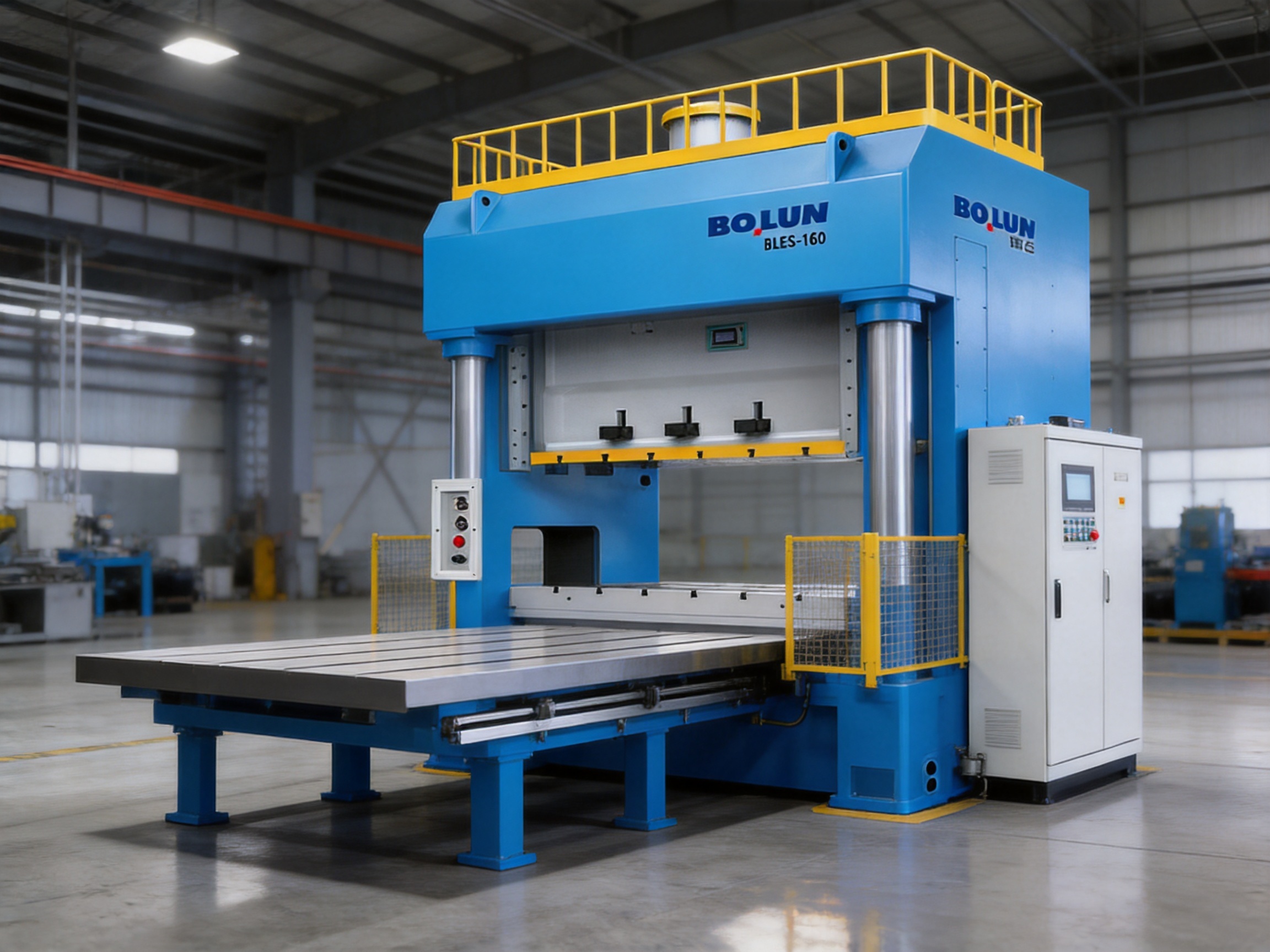
Electronic components often combine small dimensions with demanding dimensional requirements. Connectors, terminals, shielding parts, clips, spring components, and conductive hardware may require precise blanking, bending, piercing, and forming. These parts can be sensitive to burrs, distortion, surface damage, and inconsistent spring characteristics.
The BLES-160 is suitable for these operations when paired with an appropriately engineered die and material-feed system. Its precision rating, controlled slide movement, and high listed speed provide a useful platform for continuous production. The nine motion curves can help manufacturers adapt the process to thin materials, complex features, and different stages of a progressive die.
Precision hardware products include brackets, clips, retaining parts, washers, fasteners, support plates, and formed metal components. These parts often require multiple operations in one die or a sequence of progressive stations. Consistency in hole location, edge condition, forming angle, and overall profile is important for assembly compatibility.
A rigid double-point press can support more balanced operation across a wide die, while the servo system can help engineers tune the forming cycle. The 1,800 × 760 mm table provides space for dies that are larger than those used on small single-point presses, while the 1,600 kN capacity covers a broad range of medium-duty precision hardware.
Production lines that use coil feeding and automated collection require reliable press timing. A speed of approximately 55 strokes per minute gives the BLES-160 a strong basis for automated output. The final line speed will depend on material thickness, strip pitch, die stations, feeder performance, and the required inspection process, but the machine is designed for production environments where repeatability and integration are essential.
The machine can be applied to blanking, piercing, bending, shallow forming, and combined stamping operations. Precision blanking may benefit from a specialized motion curve that controls the cutting event. Forming operations may benefit from a profile that reduces slide speed in the most sensitive portion of the stroke. The ability to select an appropriate motion strategy expands the range of tooling that can be operated on one press.
Die compatibility is a major factor in press selection. A machine may have sufficient capacity but still be unsuitable if the worktable is too small, the die height is outside the adjustment range, or the slide bottom does not provide enough mounting area. The BLES-160 addresses these practical requirements with a 1,800 × 760 mm worktable and a 1,600 × 650 mm slide bottom.
The maximum die height is 450 mm, and die-height adjustment is 100 mm. These dimensions provide flexibility when selecting progressive dies, compound dies, and multi-operation tooling. Before installation, users should confirm the actual die shut height, bolster opening, clamping arrangement, feed-line height, and required clearance. The stated dimensions are important planning references, but a complete tooling review is necessary before final purchase.
The 700 × 450 mm side opening can simplify access to the die area. Side access may be useful when installing long dies, routing strip material, inspecting sensors, adjusting tooling, or connecting auxiliary equipment. It can also help maintenance personnel reach components that would be difficult to access from the front alone.
Tooling flexibility has a direct effect on return on investment. A press that can accommodate several dies and product families may achieve a higher utilization rate than a machine dedicated to only one narrow application. The BLES-160 is therefore appropriate for manufacturers that want one precision platform capable of supporting multiple production programs.
Zhejiang Bolun High-Precision Machinery Co., Ltd. is based in Zhejiang, China, a region recognized for its strong manufacturing network and industrial supply chain. The company has approximately two decades of experience in machinery manufacturing and integrates research and development, design, production, sales, and service. This integrated structure is important for complex equipment because performance depends on coordination among engineering, machining, assembly, electrical control, testing, and customer support.
The company emphasizes technology-led development and maintains capabilities in precision processing, core component development, machine assembly, and non-standard customization. These capabilities allow the manufacturer to respond to applications that cannot be addressed by a standard catalog configuration. Customization may involve die dimensions, feeding arrangements, automation interfaces, motion requirements, safety systems, control functions, or other production-specific details.
A complete production chain can improve communication between design and manufacturing teams. When engineers understand the actual capabilities of machining and assembly operations, they can design components that are practical to produce and service. When production teams can provide feedback to engineering, recurring issues can be addressed at the source rather than through repeated manual correction.
Precision processing equipment is particularly important for a servo press. Frame components, slide assemblies, guide structures, drive elements, and die-mounting surfaces must be manufactured and assembled within controlled tolerances. Machining quality influences alignment, parallelism, surface contact, and load distribution. These factors are directly related to the press’s ability to maintain stable performance during repeated operation.
The company also describes a finished-product inspection system covering individual components, manufacturing processes, and complete machine performance. A rigorous inspection program may include dimensional checks, alignment verification, functional testing, control-system checks, no-load operation, loaded operation, safety confirmation, and final documentation. Such procedures help identify issues before shipment and provide customers with greater confidence during installation.
Press design begins with the relationship between capacity, stroke, speed, frame geometry, slide guidance, die space, energy, and control requirements. A precision servo press must be engineered as a complete system rather than as a conventional mechanical press with a servo motor added afterward. The drive, frame, slide, control system, lubrication, pneumatic functions, and safety architecture must work together.
The BLES-160 reflects this integrated approach through its combination of closed-frame construction, double-point operation, servo motion, built-in motion curves, and precision specification. Each feature supports the others. The frame provides rigidity, the two-point system balances the load, the servo drive controls movement, and the motion curves allow the operator to adapt performance to the die.
Large press components require stable machining practices. Worktable surfaces, slide bottoms, mounting holes, guide elements, and frame interfaces must be processed accurately so that the die and slide remain properly aligned. Modern precision machining, combined with inspection at important stages, helps limit cumulative error.
Manufacturing precision is not achieved through machining alone. Workholding, temperature management, tool condition, measurement methods, and operator discipline all influence the result. A mature manufacturer therefore needs controlled procedures from raw component preparation through final assembly.
Assembly is where individual components become a functioning press. Slide guidance, double-point connections, drive components, sensors, electrical cabinets, pneumatic circuits, and safety devices must be installed and adjusted as a coordinated system. Alignment checks are essential because small errors can affect die life and part quality even when individual components meet their own dimensional specifications.
Final alignment and functional testing should verify smooth slide movement, correct control response, die-height adjustment, emergency-stop behavior, sensor functions, lubrication, pneumatic operation, and abnormal-condition protection. These checks are particularly important for servo equipment because the motion-control system must respond correctly throughout the complete cycle.
Different industries require different combinations of press, die, automation, and inspection equipment. The supplier’s non-standard design capability allows it to develop solutions for special dimensions, unusual material feeds, custom motion requirements, and integrated production lines. This is a significant advantage over suppliers that offer only fixed configurations.
Customization should begin with a clear technical review. The customer should provide material grade, thickness, coil width, part dimensions, production target, die layout, required force, stroke requirements, automation details, and quality standards. The supplier can then determine whether the BLES-160 is suitable or whether another capacity in the product family would be more appropriate.
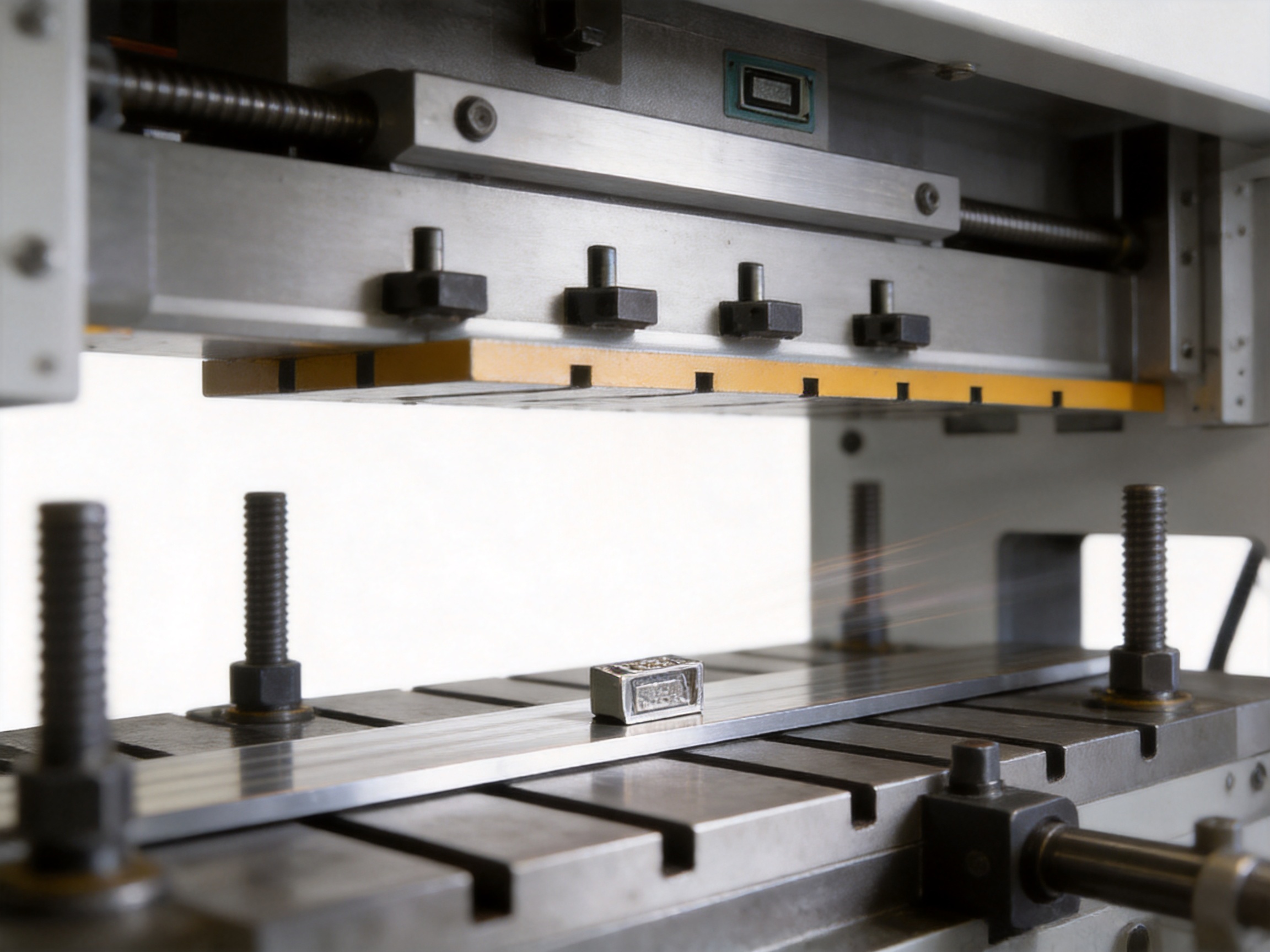
Servo power presses can improve the working environment by allowing more controlled movement and reducing unnecessary mechanical impact. Lower vibration and noise are valuable in facilities where several machines operate in close proximity. A more comfortable environment may also support better operator concentration and reduce fatigue.
Energy performance depends on the complete machine design, operating profile, production rate, motor control, and auxiliary equipment. A servo system can regulate energy delivery according to the selected motion and load conditions rather than relying on a continuously fixed operating pattern. Manufacturers should evaluate actual energy consumption using their specific material, die, and production schedule rather than assuming that every application will achieve the same result.
Noise reduction is also influenced by die clearance, material properties, lubrication, cutting geometry, foundation design, and maintenance. The press’s controlled motion and rigid frame can help reduce vibration, but correct tooling and installation remain essential. A well-designed die mounted on a stable foundation will normally produce better environmental performance than a poorly matched die on any press.
Long-term productivity depends on preventive maintenance. The BLES-160 should be operated according to the supplier’s maintenance instructions, including inspection of lubrication systems, guide components, drive connections, sensors, pneumatic circuits, fasteners, electrical cabinets, and safety devices. Regular maintenance helps preserve accuracy and identify wear before it becomes a production interruption.
Servo systems require attention to both mechanical and electrical conditions. Operators should monitor unusual vibration, temperature, noise, cycle irregularity, error messages, and changes in forming results. A change in part quality may indicate die wear, material variation, feed misalignment, lubrication problems, or press conditions. Early diagnosis can prevent more serious damage.
Die maintenance is equally important. Even a highly accurate press cannot compensate for excessive die wear, incorrect clearance, damaged guide elements, or poor strip alignment. A planned maintenance program should coordinate press inspection with die inspection so that the complete stamping system remains in good condition.
Service support is another strength of an integrated machinery supplier. Assistance may include application consultation before purchase, installation guidance, commissioning support, operator training, spare-parts coordination, troubleshooting, and after-sales service. Customers should clarify the scope of service, expected response times, documentation, warranty terms, and training arrangements during the purchasing process.
The BLES-160 is appropriate when the required force, die size, speed, and process characteristics fall within its stated capabilities. Selection should begin with the actual stamping operation rather than the nominal capacity alone. Engineers should calculate the force required for blanking, piercing, bending, forming, and stripping, then account for material variation and the complete force curve of the die.
Die dimensions must be compared with the worktable, slide bottom, maximum die height, adjustment range, and side opening. The die must also be compatible with the press’s mounting method, feed height, safety system, and automation arrangement. If the tooling is near the upper limit of any dimension, a larger press may provide a more comfortable operating margin.
Production speed should be assessed realistically. The listed approximately 55 strokes per minute is an important reference for the BLES-160, but actual output depends on the die and line. A complex progressive die may require a lower speed than a simple blanking die. The correct objective is not always maximum strokes per minute; it is the highest stable speed that produces acceptable quality, die life, and operating cost.
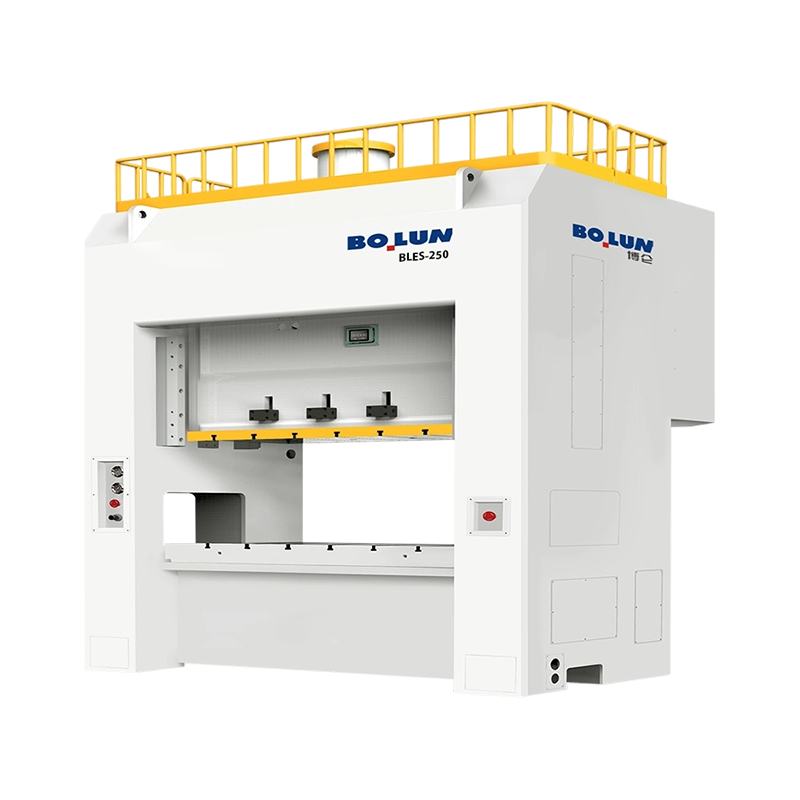
Manufacturers should also consider future production needs. If product sizes or forming forces are expected to increase, the broader family includes larger models such as the BLES-200, BLES-250, BLES-315, BLES-400, BLES-500, BLES-630, and BLES-800. These models offer progressively higher capacities and larger working dimensions. Selecting a platform with a realistic growth margin can reduce the need for premature equipment replacement.
A suitable foundation is essential for precision press performance. The customer should prepare the installation area according to the supplier’s foundation drawings, load requirements, leveling requirements, electrical specifications, ventilation conditions, and access requirements. The press should be positioned so that operators and maintenance personnel can safely reach the work area, control cabinet, lubrication points, and service components.
Commissioning should include leveling, alignment verification, electrical connection, pneumatic connection at the specified 0.55 MPa air pressure, safety-system testing, dry cycling, and trial production. Trial stamping should begin with conservative settings and approved material. Engineers can then evaluate part dimensions, burrs, forming angles, surface condition, noise, vibration, and feed synchronization.
Production recipes should be documented after successful commissioning. The record may include motion curve, stroke rate, die height, material specification, feed pitch, lubrication settings, sensor positions, and inspection criteria. This documentation supports repeatability when the job is restarted after a production interruption or transferred to another shift.
The BLES-160 is an agile precision closed-frame double-point servo power press. It has a nominal capacity of 1,600 kN and is designed for high-accuracy stamping, blanking, forming, and automated production applications.
The BLES-160 is rated at approximately 55 strokes per minute. Actual production speed should be established through die trials because material, tooling, feed equipment, motion curve, and quality requirements all affect the appropriate operating rate.
The servo system directly controls slide movement. This allows the operator or process engineer to select different motion curves for different stamping operations, including precision blanking and pulsing modes. It can improve process flexibility, forming control, and repeatability compared with a fixed-motion press.
A double-point structure applies and guides force through two connection areas. This helps balance slide movement across the die width and can reduce tilting, uneven loading, and localized tooling wear during production.
The worktable measures 1,800 × 760 mm, and the slide bottom measures 1,600 × 650 mm. These dimensions provide space for a wide range of medium-sized precision stamping dies.
The maximum die height is 450 mm, with 100 mm of die-height adjustment. Customers should verify the complete die shut-height and mounting requirements before confirming compatibility.
The press is specified with JIS B 6402 Class 1 punch accuracy. Final part accuracy will also depend on tooling, material, lubrication, feeding, setup, and maintenance.
Typical applications include electronic components, precision hardware, clips, terminals, brackets, conductive parts, small formed components, and high-speed automated stamping production. The exact application should be confirmed through a technical review and die trial.
The supplier offers non-standard design and manufacturing capabilities. Customization may include special worktable arrangements, feeding systems, automation interfaces, motion requirements, safety functions, and other production-specific features.
The decision should consider required stamping force, die dimensions, working energy, speed, material thickness, future production requirements, and available floor space. The BLES-160 is suitable when the application fits its 1,600 kN capacity and stated working dimensions. A larger model may be preferable when the die or force requirement is close to the machine limits.
The listed air-pressure requirement is 0.55 MPa. The customer should confirm the required air volume, filtration, dryness, and connection specifications with the supplier before installation.
A purchasing review should include the press capacity, force curve, die dimensions, stroke, speed, worktable, slide bottom, die-height range, automation compatibility, electrical requirements, air requirements, safety functions, foundation, commissioning, training, warranty, spare parts, and after-sales support.
The BLES-160 combines a 1,600 kN nominal capacity with servo-controlled slide movement, a closed-frame double-point structure, approximately 55 strokes per minute, a 1,800 × 760 mm worktable, and JIS B 6402 Class 1 precision. These characteristics make it a strong option for manufacturers that require a balance of production speed, tooling flexibility, structural stability, and controlled forming performance.
Its most important distinction is the combination of mechanical rigidity and programmable motion. The closed frame and double-point arrangement provide a stable foundation for precision dies, while the servo system allows the forming process to be adapted through nine built-in motion curves. This gives users more flexibility than a conventional fixed-motion press and can support improved quality, reduced vibration, better tooling conditions, and more consistent automated production.
The manufacturing capabilities of Zhejiang Bolun High-Precision Machinery Co., Ltd. further support the product. The company combines design, precision processing, assembly, inspection, customization, sales, and service within one organization. Its experience in high-precision machinery, attention to quality control, and ability to develop non-standard solutions are valuable for customers purchasing equipment as part of a complete production system rather than as an isolated machine.
For manufacturers of electronic components, precision hardware, and other stamped products, the BLES-160 offers a practical platform for high-accuracy production. A final equipment decision should always be based on a detailed technical review, including die evaluation, material trials, production targets, foundation planning, automation integration, and service requirements. When correctly matched with tooling and process conditions, the press can provide a reliable foundation for efficient and repeatable precision stamping.
1. JIS B 6402, Machine Tools—Test Conditions for Presses and Related Accuracy Evaluation Principles.
2. Metal Forming Handbook, principles of blanking, bending, drawing, forming force, and die design.
3. Industrial Press Selection Guidelines, capacity calculation, die compatibility, safety, and production planning.
4. Servo Press Technology References, programmable slide motion, forming control, energy management, and automation integration.
5. Precision Stamping Process Engineering Notes, tooling alignment, material flow, burr control, and continuous-production quality management.
6. Manufacturer technical specifications for the BLES series precision closed-frame servo power press.


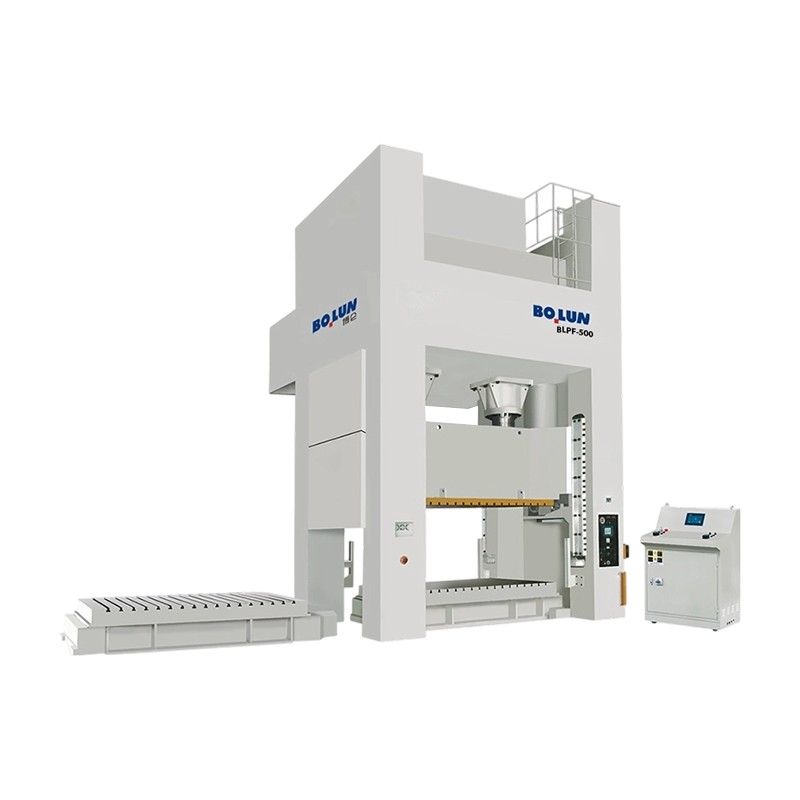
What Is a Power Press? A power press — also called a stamping press or punch pr...
Power press machines are classified in two main ways: by frame construction, w...
Understanding Mechanical Power Presses and Their Essential Functions A mechani...
In the fields of metal forming, sheet metal fabrication, blanking, and punching,...
As the manufacturing industry moves steadily toward automation and smart product...
In modern manufacturing, cold forging is widely used in the automotive, aerospac...
Contact Us

bolunpress@gmail.com

+86-575-83362228

+86-15158259588

+86-575-83362999

+86-15158259588

Hangzhou Office Add: No. 332 Wangjiang East Road, Shangcheng District

No.1 Linjiang Road East, Xiaren, Jinting Town, Shengzhou City, Zhejiang Province, China
Ready to Begin?
Get in Touch

Now!

ZHEJIANG BOLUN
 English
 中文简体
中文简体