Modern metal forming operations increasingly require more than high nominal force and fast production cycles. Manufacturers of electronic components, hardware parts, precision terminals, brackets, small structural parts, and other stamped products must achieve consistent dimensional accuracy while managing material variation, complex forming sequences, short product life cycles, and demanding delivery schedules. Conventional mechanical presses remain valuable for many applications, but their fixed motion characteristics can limit process flexibility when a component requires carefully controlled speed, dwell, forming, or return movement.
The BLAS-60 Agile Precision Open-Type Single-Point Servo Power Press is designed for this more demanding production environment. With a nominal capacity of 600 kN, direct servo-driven slide control, programmable motion profiles, integrated precision functions, and a rigid open-front structure, it provides a practical combination of forming power, dynamic control, operating flexibility, and production stability. The machine is intended for manufacturers that need repeatable stamping quality without giving up productivity or the convenience of an accessible open-type press.
Its principal distinction is the ability to control the slide according to the needs of the process rather than forcing every operation to follow one fixed mechanical cycle. Operators can configure speed, position, acceleration, deceleration, and forming behavior for different dies and materials. This capability can support improved forming accuracy, reduced shock loading, lower noise and vibration, and better adaptation to difficult stamping conditions.
The BLAS-60 belongs to a broader servo press platform that extends from 600 kN to 4,000 kN. This product family gives manufacturers a consistent equipment concept across different capacity requirements. The BLAS-60 is the smallest listed model in the series, making it particularly suitable for precision components and medium-duty forming operations where control quality, tool access, and efficient floor-space utilization are important.
A conventional mechanical press normally uses a crankshaft, eccentric mechanism, or link arrangement to determine the slide movement. The motion is established by the geometry of the drive system. Although this approach is efficient and reliable, the operator has limited ability to change the movement profile for a specific material or die. The slide speed, position behavior, and time spent near the bottom dead center are generally connected to the mechanical design of the press.
A servo-driven press uses a high-torque servo motor and a control system to manage slide movement directly. Instead of relying solely on a fixed crank motion, the machine can execute programmed movement curves. This allows the press to slow down during critical forming stages, pause or dwell at a selected position, move rapidly through non-forming areas, and adjust the return movement to suit the transfer or feeding system.
For precision stamping, this flexibility can be significant. A controlled approach may reduce the impact between the punch and material. A slower forming segment may improve material flow and reduce the risk of tearing. A dwell period can help stabilize a formed feature before the slide retracts. A carefully managed return profile may reduce part movement and improve compatibility with automated feeding equipment.
The benefits are not limited to one individual component. Once motion profiles are stored in the control system, a production team can recall and refine them for different dies. This can shorten setup development, make process knowledge easier to retain, and reduce dependence on purely manual adjustments. In a high-mix production environment, programmable motion is especially valuable because one machine may need to process several product families during the same working week.
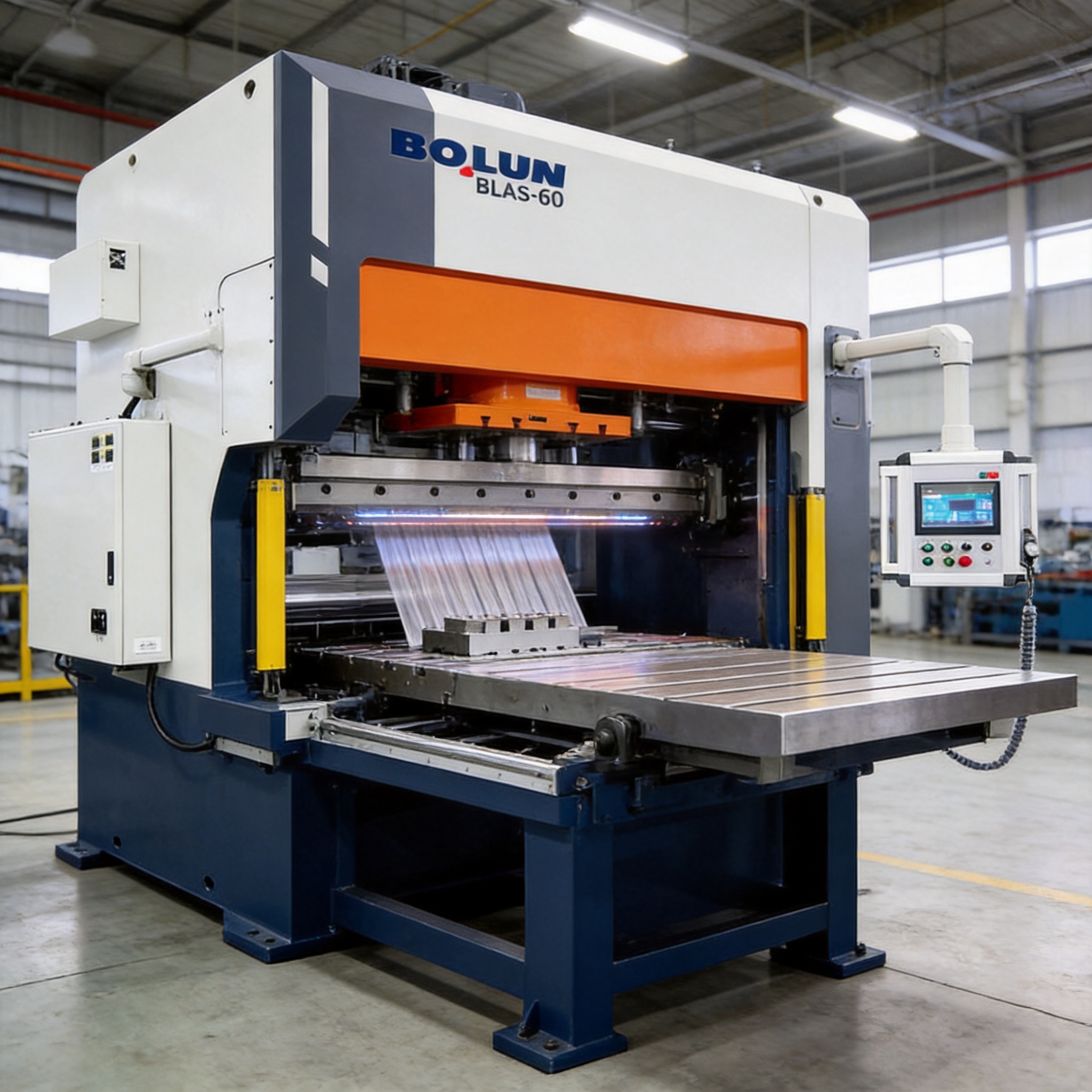
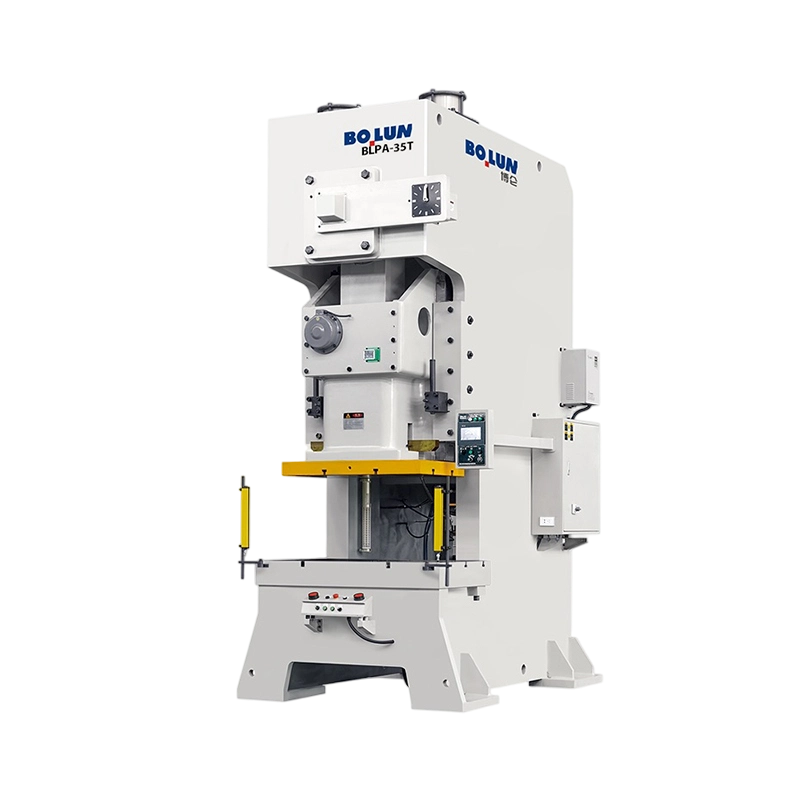
The BLAS-60 is an open-type, single-point servo power press with a nominal capacity of 600 kN. Its configuration combines a front-accessible frame with servo-controlled slide movement. The open front supports convenient die loading, inspection, cleaning, and part removal. The single-point drive structure is appropriate for many general stamping and precision forming applications in which balanced tooling and accurate vertical slide guidance are required.
The machine provides a 900 × 520 mm worktable, with a listed table thickness and structure dimension of 90 mm in the supplied specification. The slide bottom measures 500 × 400 mm, allowing the press to accommodate a broad range of dies within its capacity class. A throat depth of 270 mm provides working clearance between the slide centerline and the frame, supporting practical access for component forming and die arrangement.
The maximum die height is 300 mm, with 70 mm of die-height adjustment. This range allows the machine to accommodate dies of different construction and working requirements. A 50 mm shank hole is provided for compatible tooling. The working face height is listed as 800 mm, supporting an operator-friendly working position and convenient integration with feeding, inspection, and collection systems.
With a nominal capacity of 600 kN, the press is suitable for a wide range of medium-duty operations. Depending on the material, die design, tonnage distribution, and required stroke, applications may include blanking, piercing, bending, shallow drawing, coining, embossing, precision forming, and progressive-die stamping. Actual suitability should always be confirmed through engineering calculations, trial production, and die validation.
| Specification | BLAS-60 Value | Production Significance |
|---|---|---|
| Press type | Open-type single-point servo power press | Accessible front working area with programmable slide movement |
| Nominal capacity | 600 kN | Supports medium-duty precision stamping and forming |
| Nominal stroke | 4 mm | Rated capacity point for the specified nominal force |
| Continuous work energy | 3,000 J | Indicates available continuous operating energy for production planning |
| Slide stroke | 130 mm | Provides working movement for a range of stamping dies |
| Speed | Approximately 85 strokes per minute | Supports productive cycle rates for suitable applications |
| Maximum die height | 300 mm | Allows compatibility with substantial tooling assemblies |
| Die-height adjustment | 70 mm | Enables setup adaptation for different dies and forming conditions |
| Throat depth | 270 mm | Provides useful front-to-back working clearance |
| Worktable size | 900 × 520 × 90 mm | Accommodates a wide range of dies and auxiliary tooling |
| Slide bottom size | 500 × 400 × 70 mm | Defines the mounting area available on the slide |
| Distance between columns | 534 mm | Supports die width and access planning |
| Shank hole diameter | 50 mm | Provides a standard mounting provision for compatible tooling |
| Cushion capacity | 36 kN | Supports controlled counterforce and forming assistance |
| Cushion working stroke | 70 mm | Provides useful movement for die cushion applications |
| Effective cushion area | 350 × 235 mm | Defines the active cushion support area |
| Punch accuracy | JIS B 6402 Level 1 | Indicates a high precision classification under the stated standard |
| Air pressure | 0.55 MPa | Required operating pressure for the specified pneumatic functions |
The direct servo drive is the central feature of the BLAS-60. A high-torque servo motor supplies controlled movement to the slide, while the machine control system coordinates position and velocity. This design makes it possible to develop motion curves for the particular forming task rather than treating all dies as if they require the same slide behavior.
In a conventional production environment, operators may compensate for process limitations by changing die geometry, reducing speed, adding lubrication, or accepting a larger process window. These measures can be useful, but they may not address the underlying problem when the material requires a different speed profile. Servo control adds another important process variable: the movement of the press itself.
The BLAS-60 supports nine integrated motion curves, including precision blanking and pulse forming modes. These functions are intended to provide a selection of ready-to-use control strategies for different forming conditions. Precision blanking can benefit from controlled movement and reduced impact during the cutting stage. Pulse forming can be useful where repeated or carefully managed forming action is needed. The exact result depends on the selected die, material, lubrication, clearance, and production parameters.
Programmable motion can also help separate non-forming travel from forming travel. The slide may move more quickly while approaching the working zone, then slow down at the critical forming position. After the operation, the return movement can be configured to support safe part removal and coordination with automation. This approach can improve cycle efficiency without requiring the entire stroke to operate at one conservative speed.
Another advantage is process repeatability. Once a successful motion curve has been developed, it can be recorded as part of the job parameters. When the same die is installed again, the operator can reload the stored settings and perform a controlled verification rather than rebuilding the process from the beginning. This contributes to more consistent changeovers and helps preserve production experience within the machine’s control system.
Precision blanking requires stable control of the cutting event. Excessive impact, unwanted vibration, poor die alignment, or uncontrolled slide movement can affect edge quality, flatness, burr formation, and tool life. The BLAS-60’s servo-controlled motion and high-precision construction are intended to provide a more stable working condition for such operations.
By using a suitable precision blanking curve, the press can be configured to approach the material in a controlled manner and maintain an appropriate forming speed through the critical portion of the stroke. This does not eliminate the need for correctly designed tooling. Die clearance, punch condition, stripper force, material hardness, lubrication, and alignment remain fundamental. However, programmable press movement provides an additional method for optimizing the complete process.
Pulse forming refers to a controlled forming approach involving repeated or specially shaped movement behavior. It can help manufacturers investigate forming methods that are difficult to achieve using a fixed-speed press. For example, a process may benefit from a short controlled movement followed by a stabilization period, or from a sequence that reduces sudden loading. The integrated motion options give process engineers a practical starting point for developing these methods.
These features can be particularly relevant to electronic and hardware component production. Such components may have small dimensions, narrow tolerances, delicate features, thin material sections, or surfaces that must remain visually acceptable. The machine’s motion control can be adjusted to protect forming quality while maintaining an economically useful production rate.
The BLAS-60 has a nominal capacity of 600 kN and a continuous work energy specification of 3,000 J. Capacity indicates the rated forming force under the stated nominal condition, while energy describes the available operating energy for the machine’s continuous work requirements. These values should be considered together with the actual force and energy profile of the die.
Press selection should never be based on tonnage alone. A die may require relatively low average force but produce a sharp peak load. Another process may require a high amount of energy over a longer part of the stroke. The distance from the bottom dead center, material strength, thickness, contact area, speed, and operation type all influence the machine requirement. The BLAS-60 provides a strong 600 kN class platform, but each application should be checked against engineering data before production approval.
The listed slide stroke is 130 mm, while the approximate speed is 85 strokes per minute. This combination provides a useful balance for precision component stamping. The actual production rate will depend on the selected motion curve, stroke utilization, die design, material feeding method, inspection requirements, lubrication, and safety conditions. Servo control makes it possible to select a slower cycle for delicate work or a faster profile for simpler operations, provided that the process remains within the machine’s rated limits.
Because the motion can be tailored, manufacturers do not necessarily need to choose between quality and productivity as rigid alternatives. A high-speed profile may be used during open travel, while a controlled slower profile is used during forming. This can reduce unnecessary cycle time while protecting the critical part of the operation.
The open-type press configuration provides practical advantages for small and medium-sized stamping operations. The front working area is accessible, which simplifies die installation, visual inspection, cleaning, maintenance, and manual or automated part handling. Compared with a fully enclosed structure, an open front can make the machine easier to integrate with feeding equipment and auxiliary devices.
The 900 × 520 mm worktable gives the BLAS-60 a useful tooling platform for its capacity class. The table can support progressive dies, compound dies, blanking tools, bending tools, and special-purpose fixtures, subject to the tool’s weight, dimensions, mounting pattern, and pressure distribution. The slide bottom size of 500 × 400 mm provides a corresponding mounting area for compatible upper die assemblies.
A throat depth of 270 mm helps provide working access behind the die centerline. This is important when a die includes multiple stations, a side-forming feature, or a feeding path that extends into the press. The distance between columns is listed as 534 mm, which should be considered during die layout and automation planning.
The 70 mm die-height adjustment allows operators to accommodate different tooling dimensions and establish the correct working position. Accurate adjustment is important for maintaining the intended forming relationship between the upper and lower die. It also supports repeatable setup when dies are changed between product orders.
Overload protection is an essential element of press safety and equipment preservation. During stamping, overload may occur because of an incorrect material thickness, improper die clearance, a feeding error, a foreign object, a setup mistake, or a sudden change in forming conditions. Excessive force can damage the die, slide, connecting parts, or frame if it is not controlled.
The BLAS-60 is equipped with a hydraulic overload protection system. This system is intended to help protect the machine and tooling by responding when the forming load exceeds the permitted condition. Hydraulic protection can provide a rapid protective response while allowing the press to return to service after the cause of the overload has been identified and corrected.
Overload protection should not be treated as a substitute for correct die design, preventive maintenance, or operator training. It is one part of a complete protection strategy. Correct setup procedures, die sensors, material detection, regular inspection, and appropriate production limits remain important. Nevertheless, hydraulic overload protection provides valuable security in demanding production environments and can reduce the consequences of unexpected loading events.
The color touch-screen human-machine interface gives operators a clear method for viewing and adjusting production parameters. A modern HMI can improve accessibility by presenting motion settings, operating status, alarms, job information, and adjustment functions in an organized interface. This is especially useful for a servo press because the machine has more configurable variables than a basic fixed-motion mechanical press.
Operators can use the interface to select motion curves, manage working parameters, monitor machine status, and carry out controlled setup adjustments. The ability to adjust speed and position profiles can reduce the need for mechanical intervention during process development. Once a stable process has been established, the corresponding values can be documented as part of the production recipe.
A well-managed HMI also supports communication between production personnel and engineering teams. Engineers can define approved parameter ranges, while operators can make adjustments within controlled limits. Alarm information can help maintenance personnel identify the source of a problem more quickly. Clear displays also reduce the possibility of incorrect settings caused by ambiguous controls or handwritten instructions.
For high-mix production, the HMI is particularly valuable. Different dies may require different speeds, positions, dwell times, and return behaviors. Stored job parameters can help make these differences visible and repeatable. The machine can therefore serve not only as a forming device but also as a platform for preserving process knowledge.
The supplied specification lists punch accuracy as JIS B 6402 Level 1. This indicates a high level of precision under the referenced press accuracy classification. Accurate press construction is important because die performance depends on the relative position of the upper and lower tooling. If the slide movement is unstable or the alignment changes under load, the resulting part quality and die life may be affected.
Press accuracy is influenced by multiple factors, including frame stiffness, guide design, manufacturing precision, assembly quality, lubrication, foundation conditions, die condition, and the distribution of forming force. Servo control adds another dimension by enabling a carefully managed slide movement. When combined with rigid construction and correct maintenance, this can support repeatable production.
Reduced vibration and noise are also important quality considerations. Sudden impact and unstable movement can transmit shock through the press, die, and material. Controlled acceleration and deceleration can reduce unnecessary dynamic effects. A quieter and smoother machine may also improve the working environment and make abnormal sounds easier to detect during operation.
It is important to distinguish between press accuracy and finished-part accuracy. A highly accurate press cannot compensate for an incorrectly designed die, unsuitable material, poor lubrication, excessive clearance, or inaccurate feeding. The best results come from integrating the press, die, material, feeder, sensors, and inspection method into one controlled process.
The BLAS-60 is intended for high-precision electronic and hardware component manufacturing, but its use can extend to many related stamping applications. Typical candidates include terminals, connectors, electrical contact components, small brackets, clips, covers, shields, precision washers, formed hardware pieces, and other products requiring repeatable punching or forming.
For electronic components, the machine’s controllable movement can be useful when working with thin strip material, narrow features, or parts that require carefully managed blanking. Controlled motion may help reduce burrs, deformation, and surface damage when the die and material are properly matched.
For hardware components, the 600 kN capacity and 130 mm slide stroke provide flexibility for blanking, bending, embossing, and shallow drawing. The open front can simplify the use of coil feeders, transfer devices, hand loading systems, and collection equipment. The programmable press cycle can be adjusted according to whether the priority is high-speed production, controlled forming, or improved part handling.
The machine may also suit prototype and development work. A servo press can help engineers evaluate different forming profiles without replacing the basic machine drive arrangement. This can shorten the path from trial tooling to stable mass production, particularly when the final product requires a motion profile that is not available from a conventional mechanical press.
The most important advantage over a conventional fixed-motion press is flexibility. A mechanical press may be highly productive for a specific operation, but its movement is usually determined by the crank or linkage design. The BLAS-60 can be programmed for multiple motion requirements, giving users greater freedom during process development and production changeover.
Another advantage is the potential to reduce forming shock. By controlling the slide speed as it enters the material, the machine can reduce abrupt loading in suitable applications. Lower dynamic shock may support better surface quality, lower vibration, improved operator comfort, and reduced stress on tooling. The exact outcome depends on process design, but the ability to control movement is a meaningful engineering advantage.
Servo control may also improve energy management in some production conditions. The motor does not need to follow one fixed cycle for every job. The machine can use a suitable movement profile rather than operating all stages at an unnecessarily high speed. Actual energy consumption depends on the motor system, duty cycle, load, acceleration, and operating settings, so energy performance should be evaluated using application-specific measurements.
Setup flexibility is another differentiator. When a product changes, the operator can select or create a different motion curve. This may reduce the need for extensive mechanical changes and can make one press useful for a wider range of products. For manufacturers producing several part families, this flexibility may improve equipment utilization.
Compared with a basic servo press that offers only speed adjustment, the BLAS-60 is presented with nine integrated motion curves, including specialized precision blanking and pulse forming modes. These built-in options can provide a more practical starting point for production engineers than a system requiring every movement sequence to be created from the beginning.
Not all servo presses provide the same degree of practical process control. Some systems may offer servo drive technology but have limited motion programming, restricted adjustment ranges, or interfaces that are difficult for operators to use. The BLAS-60 combines direct slide control with a color touch-screen HMI and integrated motion curves, giving the operator a more accessible process-management system.
The machine also combines servo control with hydraulic overload protection and a precision-rated structure. This is important because motion flexibility alone does not guarantee reliable production. A useful press must provide a balanced combination of drive performance, structural accuracy, overload protection, tooling compatibility, and operator control.
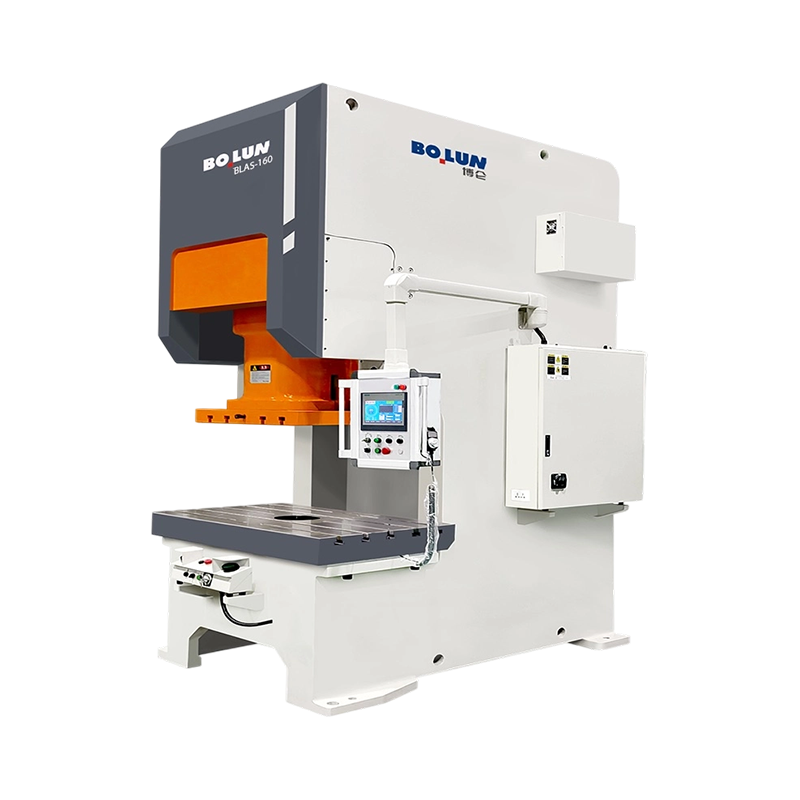
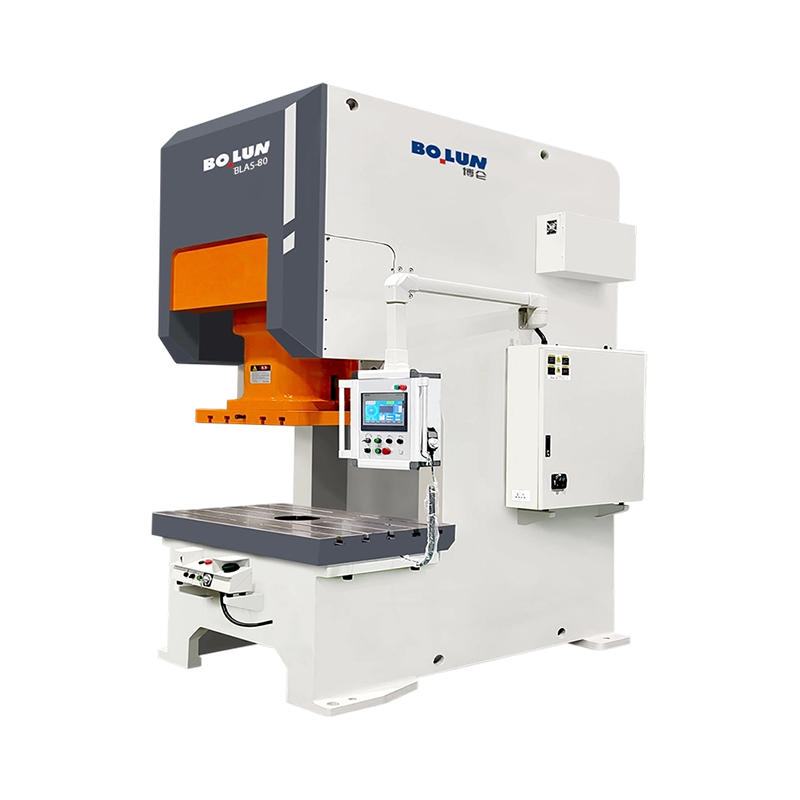
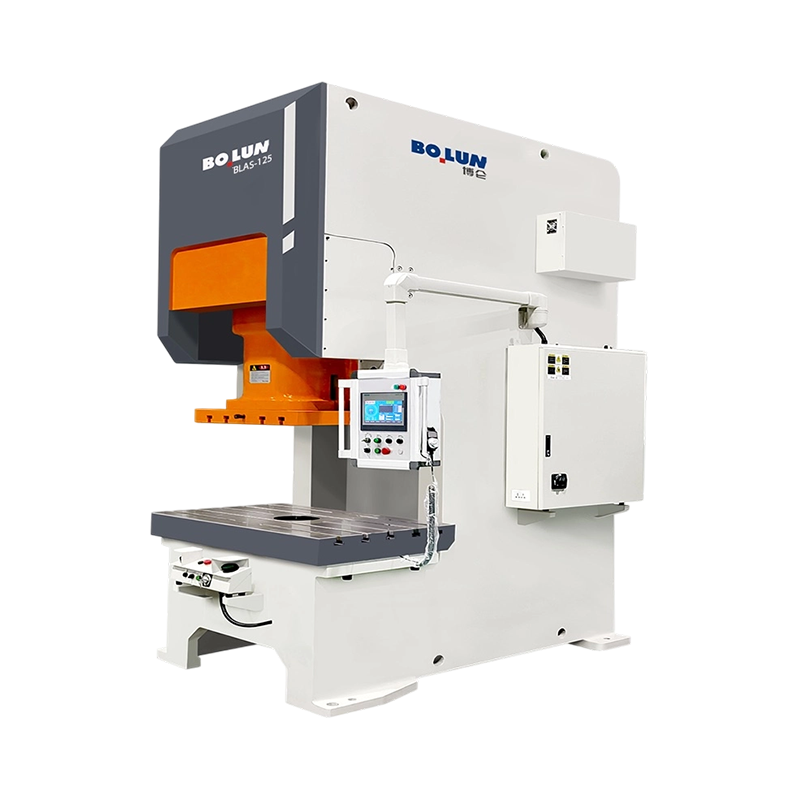
The product family approach is another strength. The same general design philosophy extends from BLAS-60 through higher-capacity models such as BLAS-80, BLAS-125, BLAS-160, BLAS-200, BLAS-260, BLAS-315, and BLAS-400. Manufacturers that grow their production capacity or operate multiple plants may benefit from using related equipment with familiar operating concepts.
| Model | Nominal Capacity | Slide Stroke | Approximate Speed | Worktable Size |
|---|---|---|---|---|
| BLAS-60 | 600 kN | 130 mm | Approximately 85 S.P.M. | 900 × 520 × 90 mm |
| BLAS-80 | 800 kN | 150 mm | Approximately 75 S.P.M. | 1,000 × 600 × 100 mm |
| BLAS-125 | 1,250 kN | 180 mm | Approximately 65 S.P.M. | 1,150 × 680 × 120 mm |
| BLAS-160 | 1,600 kN | 200 mm | Approximately 50 S.P.M. | 1,200 × 760 × 150 mm |
| BLAS-200 | 2,000 kN | 200 mm | Approximately 50 S.P.M. | 1,400 × 820 × 160 mm |
| BLAS-260 | 2,600 kN | 250 mm | Approximately 40 S.P.M. | 1,550 × 840 × 180 mm |
| BLAS-315 | 3,150 kN | 250 mm | Approximately 40 S.P.M. | 1,650 × 880 × 180 mm |
| BLAS-400 | 4,000 kN | 250 mm | Approximately 35 S.P.M. | 1,860 × 900 × 200 mm |
The series data shows a clear progression in force, working area, slide stroke, and die capacity. The BLAS-60 prioritizes speed and compact precision production, while larger models provide greater forming capacity and tooling space. This allows users to select a press according to actual load requirements instead of purchasing a larger machine than necessary.
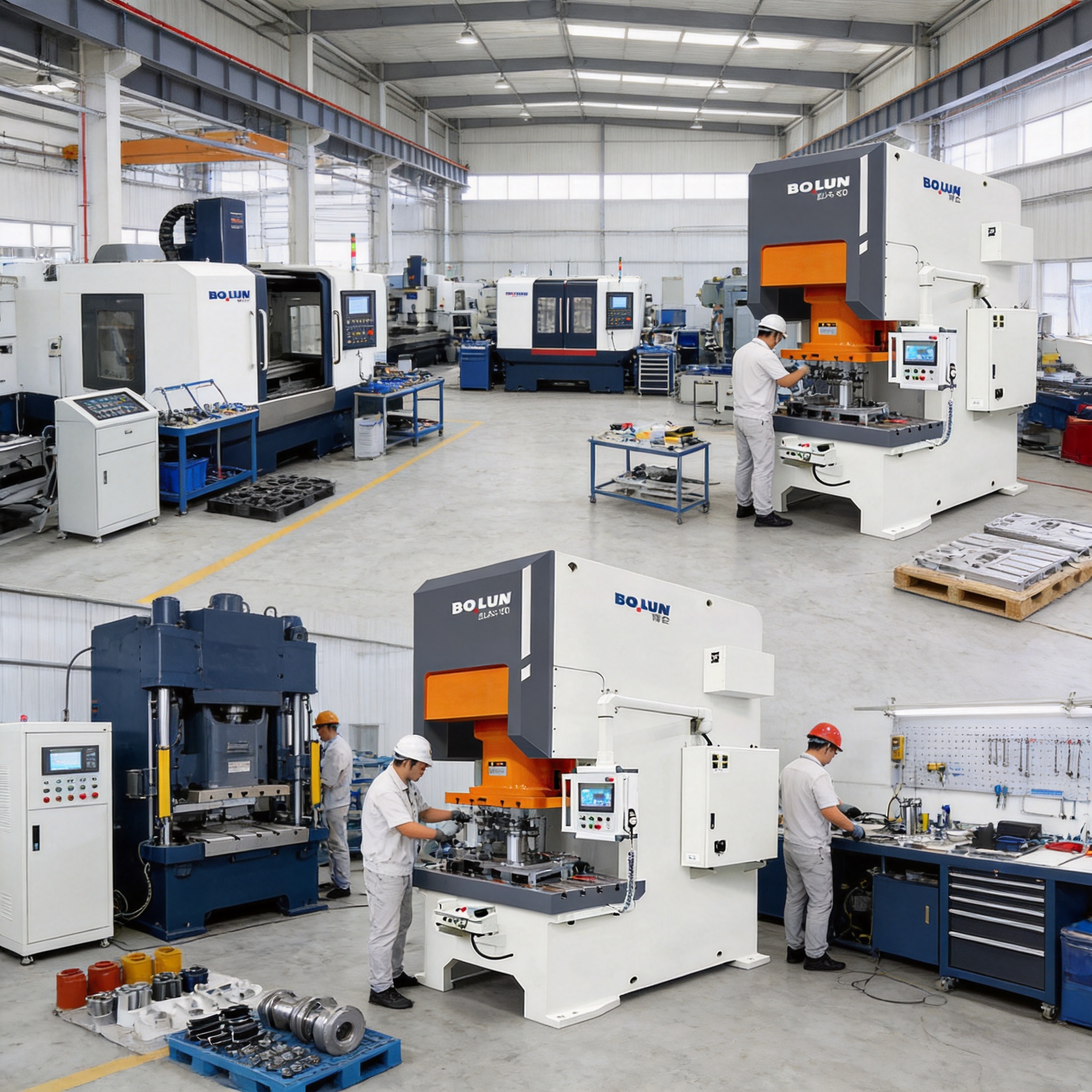
Zhejiang Bolun High-Precision Machinery Co., Ltd. is described as an integrated manufacturer covering research and development, design, production, sales, and service. The company has approximately two decades of experience in machinery manufacturing and operates in Zhejiang, a major center of China’s industrial and precision manufacturing activity.
The company’s manufacturing approach emphasizes the integration of basic design, core component development, precision processing, and final assembly. This type of production structure can help maintain stronger control over dimensional accuracy and quality consistency than a business that relies entirely on unrelated external assembly processes.
Advanced precision processing equipment is identified as part of the company’s industrial foundation. Precision machining is especially important for servo power presses because frame components, slide guides, mounting surfaces, drive elements, and die interfaces must work together accurately. Stable machining and inspection practices help reduce variation between individual machines and support the stated precision objectives.
The company also promotes non-standard customization capability. This is valuable for manufacturers that require special worktable arrangements, automation interfaces, feeding systems, safety configurations, die cushions, or motion sequences. Customization should be managed through clear engineering specifications and validation, but the ability to adapt the machine to a customer’s process can be a major advantage over standardized equipment with limited modification options.
A full-chain production system can also improve communication between design and manufacturing teams. When a product is developed, engineers can consider manufacturability, serviceability, component availability, assembly sequence, and inspection requirements from the beginning. This may help reduce delays and improve the consistency of the finished machine.
Press reliability depends on more than the strength of the frame. It requires controlled material selection, accurate machining, correct assembly, verified electrical and hydraulic systems, functional testing, and documented inspection. The manufacturer describes a finished-product inspection system that checks processes and components against demanding quality requirements.
For the BLAS-60, quality control should cover the structure, slide guidance, servo drive, motion control, hydraulic overload protection, cushion system, HMI, pneumatic functions, worktable, tooling interfaces, and safety equipment. Inspection of these systems helps verify that the press performs consistently under operating conditions rather than only appearing correct during assembly.
Long service life is also influenced by preventive maintenance. A well-manufactured press still requires proper lubrication, inspection of fasteners and connections, cleaning of sensors, verification of hydraulic pressure, and periodic checking of slide accuracy. The manufacturer’s service system is intended to support customers through pre-sales consultation, in-sales assistance, and after-sales support.
For international buyers, service capability is an important part of the purchasing decision. Documentation, spare-parts planning, operator training, troubleshooting support, and response procedures all contribute to total equipment value. A press that is technically capable but difficult to maintain may create unnecessary production risk. An integrated supplier with design, manufacturing, and service resources can provide a more complete project solution.
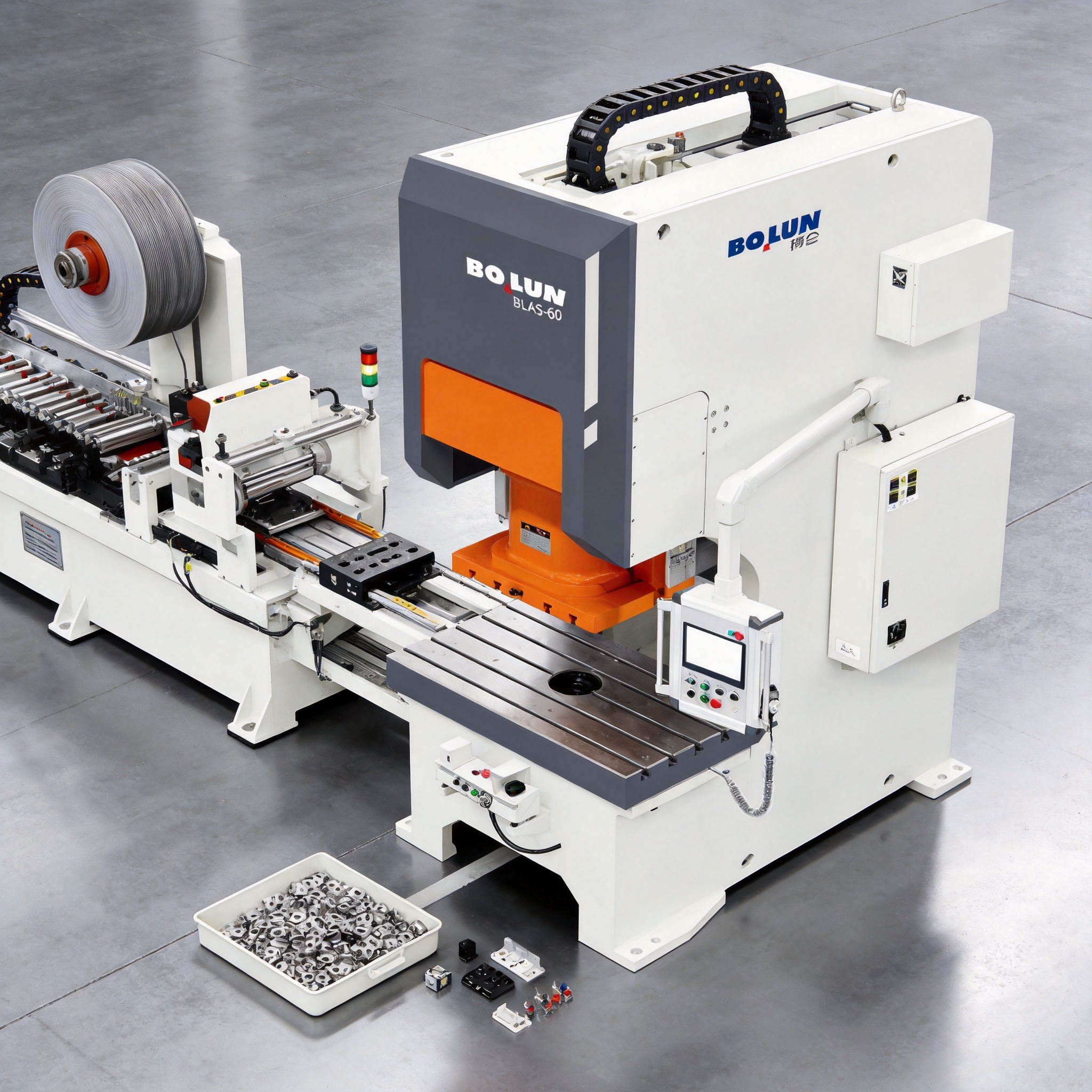
The BLAS-60 can be considered for integration with coil feeding, straightening, lubrication, transfer, inspection, and part collection systems. The open-type structure and programmable slide movement are useful foundations for automation because the tooling area is accessible and the cycle can be coordinated with external equipment.
A feeder may require the slide to remain at a particular position during material advance. A transfer system may need a defined timing relationship between the end of the forming stroke and the beginning of the return movement. A vision inspection system may require consistent part presentation. Servo control can help engineers establish these timing relationships more precisely than a fixed-motion cycle.
Automation design must include physical clearance, electrical communication, guarding, emergency stops, die sensors, material detection, and safe restart procedures. The press should be evaluated as part of the complete production cell. The machine’s motion flexibility is valuable, but the overall line must be validated for safety and synchronized operation.
Before installation, the buyer should confirm the foundation design, floor loading, access route, power supply, compressed-air quality, ventilation, ambient conditions, and space for maintenance. The work area should provide sufficient clearance around the machine for die handling, electrical inspection, lubrication, and safe operator movement.
The listed air pressure is 0.55 MPa. The factory air supply should be capable of maintaining the required pressure during the complete production cycle, with appropriate filtration and moisture control. Unstable or contaminated air can affect pneumatic devices and reduce operating reliability.
Commissioning should begin with a mechanical inspection and a no-load test. The team should verify slide movement, die-height adjustment, HMI functions, hydraulic overload protection, cushion behavior, emergency stops, sensors, and communication with auxiliary equipment. Trial stamping should then proceed at conservative settings before the production profile is optimized.
Operators should be trained in job selection, motion-curve adjustment, die setup, overload response, alarm handling, safe maintenance, and restart procedures. Process engineers should record approved settings for each die, including material information, lubrication, feed pitch, stroke parameters, speed profile, and inspection criteria.
Preventive maintenance is essential for preserving accuracy and reliability. Daily checks may include lubrication status, abnormal noise, air pressure, hydraulic indications, sensor condition, die security, and visible leakage. Periodic checks should include guide components, fasteners, electrical cabinets, cables, hydraulic connections, safety devices, and the accuracy of slide movement.
The servo system should be kept clean and adequately ventilated. Electrical cabinets should be protected from excessive dust, oil mist, and moisture. Cooling and ventilation paths must remain unobstructed. Any alarm or abnormal behavior should be investigated promptly rather than repeatedly reset without identifying the cause.
Tooling maintenance is equally important. A sharp punch, correctly adjusted stripper, suitable die clearance, and stable material feed reduce the load placed on the press. Many apparent press problems originate in the die or feeding system. A complete maintenance program should therefore include both the machine and the process equipment.
Accuracy verification should be performed at planned intervals. Depending on the quality system, this may include checking slide parallelism, die-height repeatability, worktable condition, alignment, and relevant dimensional tolerances. Maintaining accurate records helps identify gradual wear before it affects large quantities of product.
The purchase price of a press is only one part of its economic value. Manufacturers should consider changeover time, scrap rate, die life, energy use, maintenance cost, operator requirements, product flexibility, and machine utilization. A servo press can create value when its programmable movement reduces trial time, improves yield, or allows one machine to perform a broader range of operations.
For high-mix production, the ability to store and recall motion profiles can reduce setup uncertainty. For precision products, controlled forming may help lower the cost of burr removal, rework, and rejected parts. For difficult materials, optimized speed and dwell behavior may improve the process window. These benefits should be measured through actual production trials rather than assumed automatically.
The BLAS-60 may be economically attractive when a manufacturer requires 600 kN capacity but does not need the larger footprint, lower nominal speed, or higher investment associated with a heavier press. Properly matched capacity can reduce unnecessary capital cost while preserving access to servo process control.
The first step is to calculate the required forming force. This calculation should include the material type, tensile and shear strength, thickness, cutting perimeter, bending geometry, drawing ratio, friction, and safety factor. For progressive dies, the force distribution across stations and the possibility of simultaneous operations must also be considered.
The next step is to check energy requirements and the position at which maximum force occurs. The BLAS-60’s nominal capacity is stated at a 4 mm nominal stroke condition, so the die’s actual force curve should be compared with the press rating. A process that requires high force far from the rated point may need a different capacity selection.
Tool dimensions must then be checked against the worktable, slide bottom, throat depth, column spacing, die height, shank hole, and cushion area. The tooling must fit not only physically but also functionally, with adequate space for feeding, sensors, lubrication, part removal, and maintenance.
Finally, the required production speed and motion profile should be evaluated. A high-speed blanking operation may use a different profile from a precision forming or shallow drawing process. Trial production is recommended before final approval, especially for new materials, complex dies, or tight dimensional requirements.
The BLAS-60 is an open-type single-point servo power press with a nominal capacity of 600 kN. It uses a high-torque servo motor and direct slide control for programmable stamping movement.
The main difference is programmable slide movement. The BLAS-60 can use different speed, position, and motion profiles for different forming processes, while a conventional mechanical press generally follows a fixed movement determined by its crank or linkage mechanism.
The listed speed is approximately 85 strokes per minute. The actual speed depends on the selected motion curve, die design, material, feeding system, stroke utilization, and process requirements.
The worktable measures 900 × 520 × 90 mm according to the supplied specification. The compatible die size must also be checked against the slide bottom, column spacing, throat depth, and mounting requirements.
Yes. The machine includes integrated motion curves that support precision blanking applications. Successful precision blanking still requires correct die clearance, material selection, punch condition, stripper control, lubrication, and alignment.
Pulse forming is a controlled forming approach using a special movement sequence or repeated forming behavior. The BLAS-60 provides an integrated pulse forming mode intended to help process engineers develop controlled forming operations for suitable applications.
Yes. The BLAS-60 is equipped with a hydraulic overload protection system designed to help protect the press and die from excessive forming loads.
The maximum die height is listed as 300 mm, with 70 mm of die-height adjustment. Actual compatibility should be confirmed using the complete die assembly and setup requirements.
The listed cushion capacity is 36 kN, with a 70 mm working stroke and an effective cushion area of 350 × 235 mm. The cushion should be matched to the requirements of the selected die and forming operation.
The supplied data lists punch accuracy as JIS B 6402 Level 1. Finished-part accuracy will also depend on the tooling, material, feeding, lubrication, and process conditions.
It is designed for high-precision electronic and hardware component manufacturing. It may be suitable for terminals, connectors, contacts, brackets, shields, and similar products when the required force, die dimensions, material, and tolerance are within the machine’s capabilities.
The open-type design and programmable motion make the press suitable for consideration in automated cells. Final integration requires engineering review of feeders, transfer devices, sensors, guarding, communication, timing, and safety functions.
The product is manufactured by Zhejiang Bolun High-Precision Machinery Co., Ltd., a machinery producer in Zhejiang, China, with capabilities covering research and development, design, precision processing, assembly, sales, and service.
Customers should provide material type and thickness, product drawings, required tolerances, die dimensions, estimated forming force, production volume, desired automation, electrical standards, safety requirements, and any special motion or cushion requirements.
The BLAS-60 Agile Precision Open-Type Single-Point Servo Power Press is designed for manufacturers that require more control than a standard fixed-motion mechanical press can provide. Its 600 kN nominal capacity, 130 mm slide stroke, approximately 85 strokes-per-minute rating, 900 × 520 mm worktable, hydraulic overload protection, and color touch-screen HMI create a balanced platform for precision stamping.
Its most important advantage is direct servo-controlled slide movement. With nine integrated motion curves, including precision blanking and pulse forming modes, the press allows production teams to adjust the machine’s behavior to the material and die. This can support improved forming quality, lower shock and vibration, easier process development, and more repeatable changeovers.
The open-type structure provides convenient die access and supports automation integration. The precision-rated construction, cushion system, adjustable die height, and hydraulic protection contribute to a stable production environment. When combined with correct tooling, material preparation, maintenance, and operator training, the machine can serve demanding electronic, hardware, and general precision forming applications.
The manufacturer’s strengths extend beyond the individual machine. Its integrated approach to research, design, precision processing, assembly, customization, quality inspection, and customer service provides a foundation for complete stamping solutions. For manufacturers seeking a flexible 600 kN servo press with programmable motion and a practical open-front configuration, the BLAS-60 represents a strong option for modern high-accuracy production.
1. Supplied BLAS-60 product specification and technical data sheet.
2. Supplied BLAS servo press series information covering models from BLAS-60 through BLAS-400.
3. JIS B 6402, Machine Tools—Presses—Testing of the Accuracy.
4. General principles of mechanical press selection, die compatibility, forming force calculation, and production safety.
5. General servo motion control practices for precision stamping and metal forming equipment.
6. Manufacturer-provided company information concerning research and development, precision manufacturing, quality management, customization, and service capability.
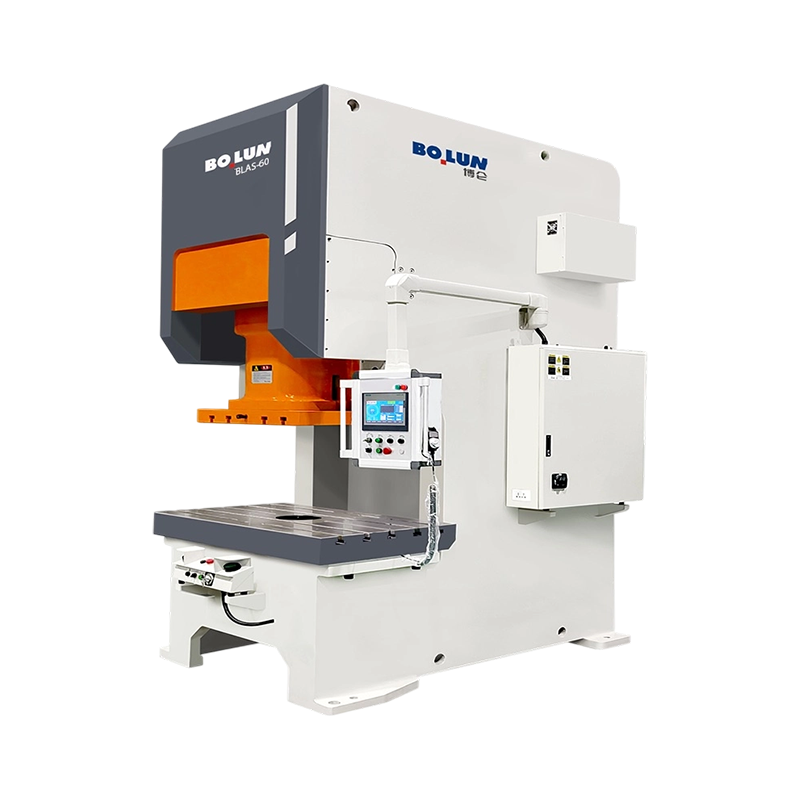
BLAS-60 Agile Precision Open-Type Single-Point Servo Power Press


Understanding Mechanical Power Presses and Their Essential Functions A mechani...
A buyer comparing a 45-ton open-gap press for a bracket line often receives two...
A tooling engineer quotes a new bracket program and specifies a 160-ton press. ...
Two presses can both carry a 200-tonne nameplate and still produce very differe...
What Is a Power Press? A power press — also called a stamping press or punch pr...
Power press machines are classified in two main ways: by frame construction, w...
Contact Us

topbolun@gmail.com

+86-575-83362228

+86-13735238388
+86-18667502750

+86-575-83362999

+8618667502750

No.1 Linjiang Road East, Xiaren, Jinting Town, Shengzhou City, Zhejiang Province, China
Ready to Begin?
Get in Touch

Now!

ZHEJIANG BOLUN
 English
 中文简体