Modern metal-forming production increasingly demands equipment that can combine very high forming force, long and controllable slide movement, structural stability, operating safety, and dependable repeatability. Large automotive panels, transportation components, industrial enclosures, appliance parts, agricultural machinery components, and other deep-drawn products often require more than a conventional short-stroke mechanical press can provide. They need a machine that can maintain force over a substantial portion of the forming cycle while controlling material flow and minimizing deformation of the press structure.
The BLPF-630 Deep-Stroke High-Force Closed-Type Double-Point Eccentric Gear Power Press is designed for precisely these demanding applications. With a nominal capacity of 6,300 kN, a 400 mm slide stroke, a 3,300 × 1,300 mm worktable, and an 800 kN cushion capacity, it provides a powerful platform for large-scale stamping, deep drawing, stretching, and complex forming operations. Its closed-type, three-section frame and double-point eccentric gear drive are configured to support high-load production while maintaining balanced force transmission between the slide and the working area.
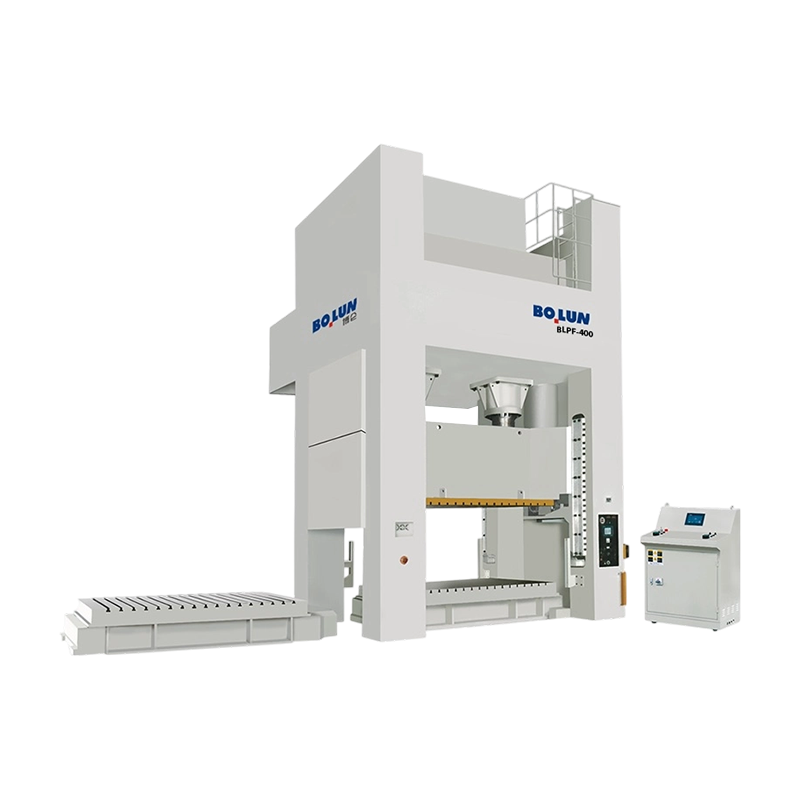
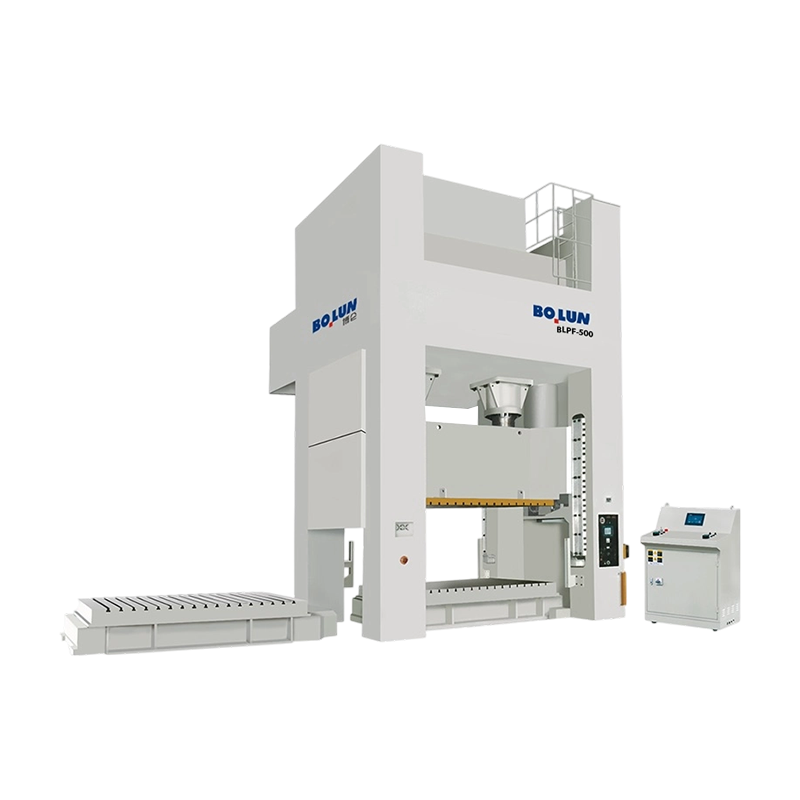
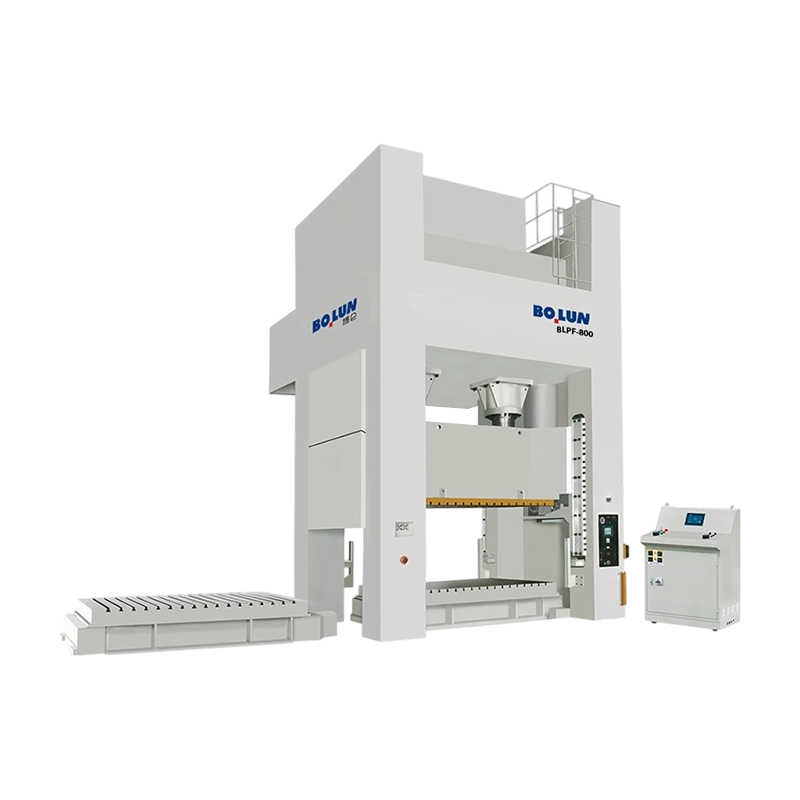
The machine is part of a broader range that includes 4,000 kN, 5,000 kN, 6,300 kN, 8,000 kN, 10,000 kN, and 12,500 kN models. Within this range, the BLPF-630 represents a substantial middle-to-high capacity solution for manufacturers that require significant forming power and deep-stroke capability without immediately moving to the largest equipment class. It is suitable for factories seeking a reliable foundation for large dies, complex components, and high-intensity industrial production.
This article examines the design, performance, manufacturing strengths, application advantages, process-control features, and selection considerations associated with the BLPF-630. It also explains why its combination of eccentric gear transmission, double-point operation, deep stroke, large die space, cushion performance, and safety monitoring can offer important advantages over more basic press configurations.
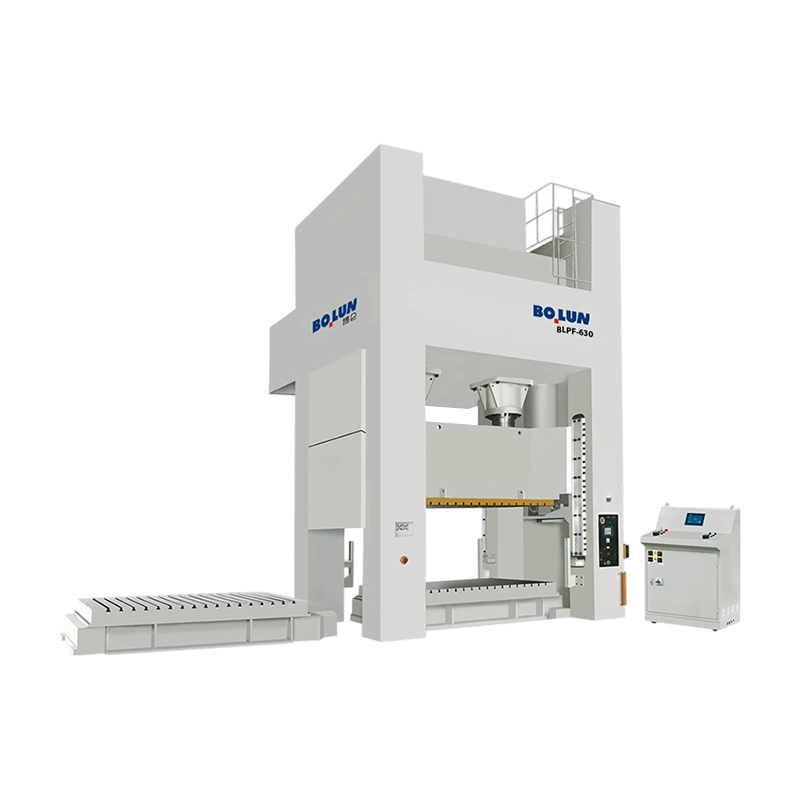
BLPF-630 Robust Deep-Stroke Closed-Type Double-Point eccentric gear Power Press
The BLPF-630 is a closed-type double-point eccentric gear power press developed for heavy-duty forming work. Its 6,300 kN nominal capacity places it in a class intended for large, thick, or difficult-to-form components. The closed frame provides a stable working envelope around the die area, while the double-point slide connection helps distribute the driving force across the width of the slide.
Unlike a small or medium-sized press primarily intended for blanking and shallow stamping, the BLPF-630 is configured for processes in which the workpiece must travel a considerable distance through the die. Its 400 mm slide stroke gives the tooling greater working depth and provides additional forming travel for stretching and deep drawing. This extended movement can be particularly valuable when producing components with significant sidewalls, deep cavities, large radii, or multiple forming stages.
The press has a maximum die height of 800 mm and a die-height adjustment range of 300 mm. These dimensions create flexibility when installing dies of different configurations. Tooling engineers can use the available die space for progressive forming arrangements, transfer tooling, multi-operation dies, or large individual dies that require considerable vertical clearance.
The worktable measures 3,300 × 1,300 mm, while the slide bottom measures 3,100 × 1,400 mm. This broad working area supports large-format dies and gives manufacturers more freedom when arranging forming stations, guide systems, cushions, and material-handling equipment. The 1,400 mm slide-bottom depth is also relevant for complex tooling layouts that need substantial support underneath the slide.
Operating speed is specified at 15 to 25 strokes per minute. This range reflects the machine’s intended use in high-force forming rather than lightweight, high-speed blanking. The actual production rate depends on material type, draw depth, die design, lubrication, feeding method, part geometry, and the required dwell or transfer sequence. For deep drawing and stretching, a controlled and stable cycle is often more valuable than maximum speed alone.
The main motor specification is 55 kW × 4, and the required air pressure is 0.55 MPa. The press also includes an 800 kN cushion with a 140 mm working stroke. This cushion system supports controlled material flow during drawing and can help reduce wrinkling, tearing, and uncontrolled movement of the blank when properly matched to the die and process parameters.
| Item | Specification |
|---|---|
| Model | BLPF-630 |
| Press type | Closed-type double-point eccentric gear power press |
| Nominal capacity | 6,300 kN |
| Nominal pressure stroke | 10 mm |
| Slide stroke | 400 mm |
| Strokes per minute | 15–25 S.P.M. |
| Maximum die height | 800 mm |
| Die height adjustment | 300 mm |
| Worktable size | 3,300 × 1,300 mm |
| Slide bottom size | 3,100 × 1,400 mm |
| Height of working face | 750 mm |
| Distance between columns | 3,750 mm |
| Main motor | 55 kW × 4 |
| Air pressure | 0.55 MPa |
| Cushion capacity | 800 kN |
| Cushion working stroke | 140 mm |
The specifications illustrate the balance of the machine. The BLPF-630 is not defined by capacity alone. Its value comes from the way force, working space, stroke length, cushion performance, and structural design work together as an integrated forming system.
High-force forming places significant loads on every part of a press. When the frame, slide, bolster, or columns deflect excessively, the consequences can include uneven die contact, inconsistent product dimensions, premature die wear, increased noise, and unstable material flow. Structural rigidity is therefore one of the most important factors separating a heavy-duty industrial press from a basic machine intended for lighter operations.
The BLPF-630 uses a high-rigidity three-section frame. A closed-type structure forms a stable load path around the die space, allowing the press to resist the forces generated during forming. The three-section arrangement is engineered to provide a robust foundation for the columns, working table, and upper drive assembly. It also supports the machine’s ability to handle substantial loads without relying solely on individual components to absorb stress.
In practical terms, a rigid frame helps preserve the relationship between the upper and lower die during the forming cycle. This is especially important for large dies, where small angular or vertical changes can produce significant differences across the workpiece. Stable alignment supports more uniform forming, reduces the risk of localized overload, and helps protect expensive tooling.
Structural rigidity also contributes to long-term production consistency. A machine that maintains its geometry under repeated high-load cycles can deliver more predictable results from one batch to the next. This makes it easier for process engineers to establish die settings, cushion pressure, lubrication conditions, and material specifications that remain stable during extended production.
Compared with open-frame or less rigid press configurations, a closed-type design can offer better resistance to spreading and deflection around the working area. It is particularly appropriate for large components and operations where the forming force is distributed over a broad die surface. The result is a platform better suited to demanding dies and high-intensity production environments.
The double-point eccentric gear drive is a central feature of the BLPF-630. In a double-point press, the slide is driven at two separated points rather than through a single central connection. This arrangement distributes the driving force across the width of the slide and helps manage the torque created by off-center or asymmetrical loading.
Large dies do not always experience perfectly uniform loads. A component may have different draw depths on the left and right sides, or the workpiece may enter a complex forming stage in which resistance varies across the die. A single-point drive can be more sensitive to tilting under these conditions. The double-point arrangement helps provide a more balanced connection between the drive system and the slide.
The eccentric gear system is designed to transmit substantial mechanical force through a controlled motion cycle. Gear-driven power transmission can provide the mechanical advantage needed for high-capacity forming and can support a consistent relationship between the motor, drive components, crank or eccentric movement, and slide travel.
For manufacturers, the practical advantages include improved load distribution, better suitability for wide dies, reduced tendency toward slide skew under appropriate operating conditions, and a more stable working relationship between the upper and lower tooling. These characteristics are valuable when the die width is considerable or when the process includes uneven resistance.
The combination of a double-point connection and eccentric gear drive also helps distinguish the BLPF-630 from simpler single-point presses. While single-point machines may be effective for many applications, the double-point configuration is more appropriate when the tooling is wide, the forming loads are high, or the process requires careful control of parallelism and alignment.
As with every mechanical press, correct die installation, regular lubrication, proper adjustment, and adherence to rated operating conditions remain essential. The drive system provides a strong engineering foundation, but production performance ultimately depends on the complete interaction among the machine, tooling, material, and operating procedure.
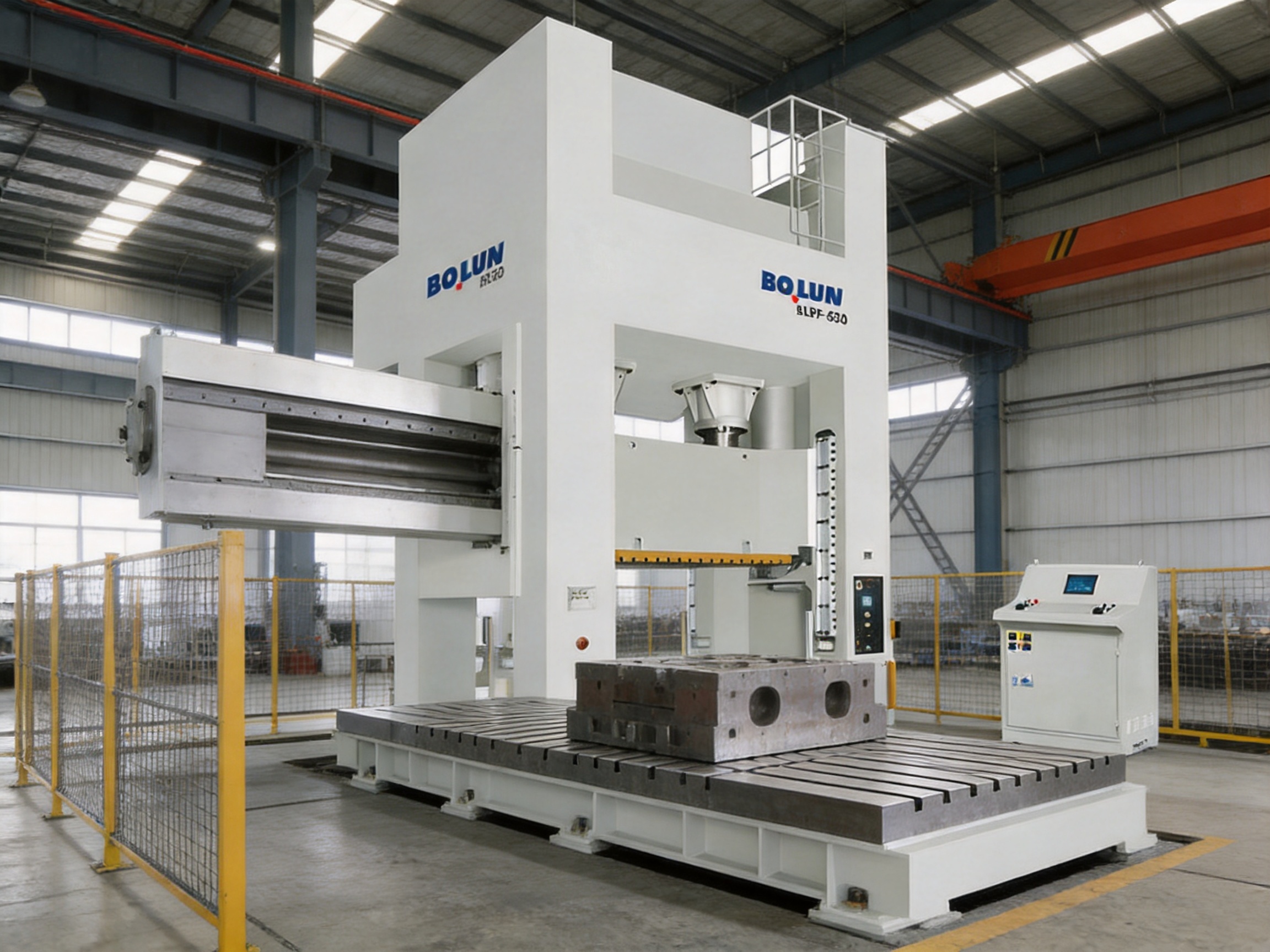
The 400 mm slide stroke is one of the most important performance features of the BLPF-630. Deep drawing and stretching require sufficient travel to move the material into the die while maintaining an appropriate forming path. If the stroke is too short, the part may not be fully formed, the die may require additional stages, or the tooling may need a more complicated mechanism to achieve the required geometry.
A long stroke gives die designers greater flexibility. It can accommodate taller components, deeper cavities, and forming sequences that require the blank holder or punch to travel through a substantial vertical distance. It may also make it easier to provide clearance for loading and unloading large workpieces.
Deep drawing is a controlled material-flow process. The blank must move into the die without excessive wrinkling, tearing, thinning, or uncontrolled sliding. The press therefore needs more than a high nominal capacity. It must deliver a stable movement profile and maintain adequate control over the forming force throughout the stroke.
The BLPF-630’s extended stroke works together with its 800 kN cushion. During a drawing operation, the cushion can apply controlled resistance to the blank holder or lower tooling. This resistance influences how the material flows from the flange into the cavity. When adjusted correctly, it can help maintain the balance between preventing wrinkles and avoiding excessive tensile stress that could cause tearing.
The 140 mm cushion working stroke provides room for the cushion system to respond during the forming cycle. This is particularly useful for components that require significant material movement and controlled pressure throughout the operation. The final process parameters must be established through die trials and material testing, but the available cushion capacity and stroke provide a strong mechanical basis for such work.
A long-stroke press can also reduce the need for compromise in part design. Components with deep sidewalls, large transition radii, or substantial forming depth may be produced with fewer restrictions than on a short-stroke machine. This can simplify the overall production route and create opportunities to combine operations that would otherwise need separate equipment.
When using the BLPF-630 for deep drawing, manufacturers should evaluate blank diameter, material grade, sheet thickness, draw ratio, lubrication, blank-holder force, punch radius, die radius, forming speed, and the number of required stages. The press provides the capacity and movement needed for demanding work, but successful forming still depends on matching the tool and process to the material.
For stretching operations, the machine’s structural stiffness and double-point drive are particularly relevant. Stretch forming can create significant and sometimes uneven resistance across the die. A stable slide and rigid frame help maintain more consistent contact between the tooling surfaces, while the controlled cushion can support the required material tension.
Large-scale stamping projects often involve dies that are wide, heavy, and technically complex. The BLPF-630 addresses this requirement with a 3,300 × 1,300 mm worktable and a 3,100 × 1,400 mm slide bottom. These dimensions provide a broad foundation for installing large dies and associated components.
The worktable must support the lower die, cushion arrangements, guide elements, and any required material-location devices. A generous table area allows the die to be designed with appropriate margins and support points rather than being forced into a restricted layout. It can also simplify access during die installation, inspection, and maintenance.
The slide bottom provides the upper mounting area for the die. Its size is important when the upper tool contains large forming surfaces, multiple punches, pressure pads, or complex guided assemblies. The relationship between the slide bottom and the worktable gives tooling engineers the space needed to create a balanced die package.
A maximum die height of 800 mm and a 300 mm die-height adjustment range offer additional flexibility. Different products may require different die heights depending on the forming depth, cushion arrangement, transfer clearance, and construction of the tooling. The adjustment system allows the machine to be adapted to a range of production programs without changing the basic press structure.
The 750 mm working-face height is also relevant to plant layout and operator access. It places the working area at a practical elevation for tooling activities while allowing the machine to be integrated with loading, unloading, and material-transfer equipment. In an automated production line, the available space around the press can be coordinated with feeders, robots, conveyors, and inspection devices.
The distance between columns is specified at 3,750 mm. This wide opening supports large-format tooling and provides access for handling sizeable blanks and finished parts. It can be an important consideration for factories producing panels, structural members, covers, frames, and other large components.
The cushion system is essential in many drawing and stretching operations. Its purpose is not simply to support the die. It applies controlled force to the blank holder or lower tooling so that the material enters the die at an appropriate rate and under suitable tension.
The BLPF-630 provides an 800 kN cushion capacity and a 140 mm cushion working stroke. This specification gives manufacturers a substantial range for controlling material flow in demanding forming applications. The correct cushion setting depends on the material, thickness, blank shape, tooling design, and target geometry.
If the cushion force is too low, the material may flow too freely and create wrinkles, folds, or unstable sidewalls. If the force is too high, the material may be restricted excessively, increasing the possibility of tearing or excessive thinning. The cushion must therefore be calibrated as part of the complete forming process.
The available cushion capacity can also support the production of larger components where the blank area and forming resistance are significant. In combination with the long slide stroke, it gives the press a broader operating envelope than a machine intended only for shallow stamping.
For production engineers, the cushion is an important tool for improving part quality. It can help stabilize the process, reduce trial-and-error during die development, and support repeatable conditions after the correct parameters have been identified. When integrated with tonnage monitoring and production documentation, cushion settings can become part of a controlled process recipe.
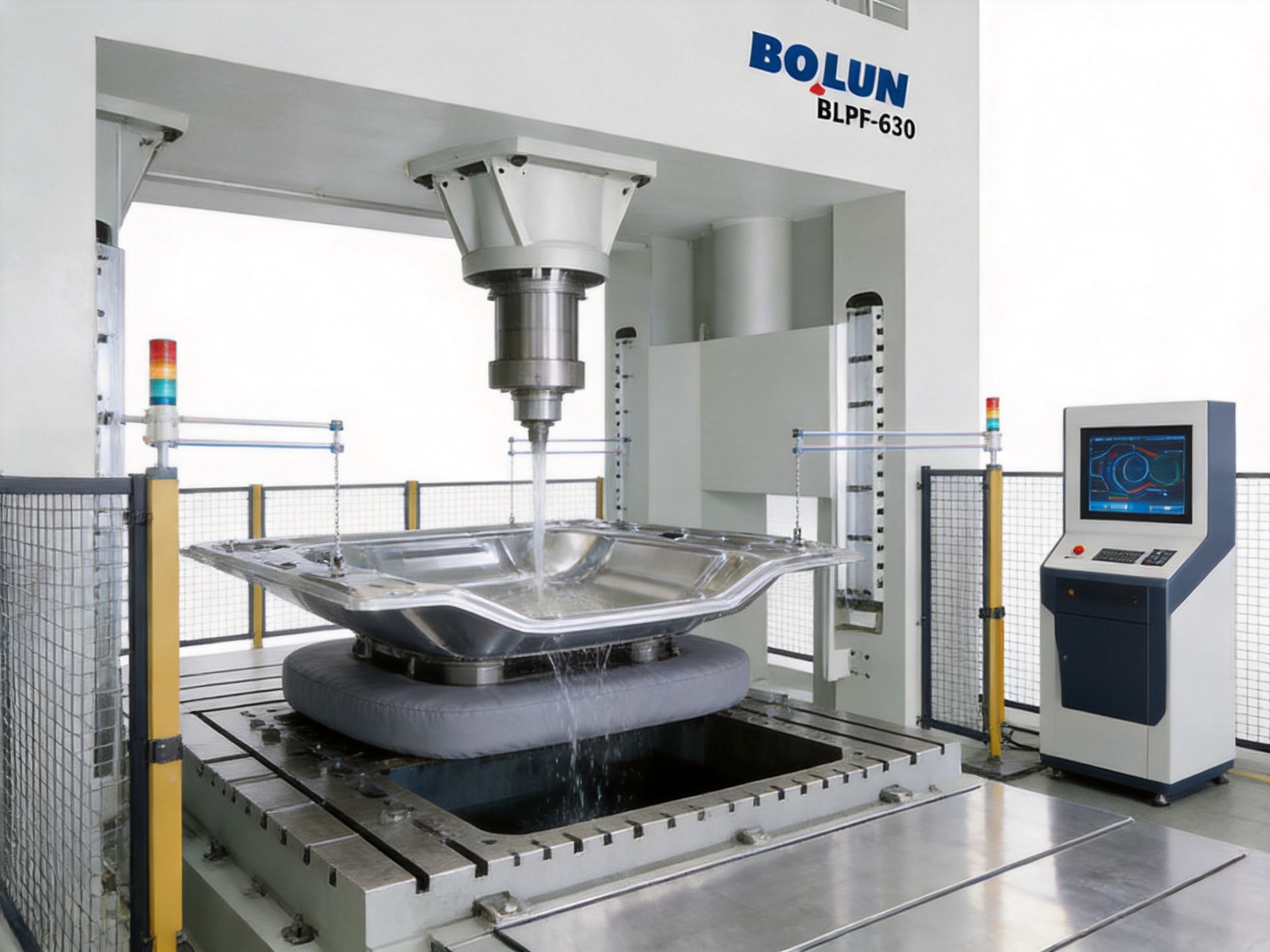
High-force forming requires active awareness of load conditions. A tonnage monitoring system helps operators and production managers observe the press load during operation. This provides useful information about whether the process is working within the expected range and whether abnormal conditions may be developing.
Load monitoring can help identify overloaded conditions, uneven die loading, material changes, incorrect blank placement, die damage, or process deviations. If the measured tonnage pattern differs significantly from the established production baseline, the operator can investigate before the problem leads to extensive scrap or tooling damage.
Monitoring also supports preventive maintenance. Changes in the load profile may indicate altered friction, die wear, lubrication problems, or mechanical conditions that should be examined. By tracking load behavior over time, the production team can move from purely reactive maintenance toward a more evidence-based approach.
For quality assurance, tonnage information can complement dimensional inspection and visual checks. A stable load curve does not replace product inspection, but it provides another process signal. When combined with material traceability and die identification, it can help manufacturers create a more complete record of production conditions.
The nominal pressure stroke of the BLPF-630 is 10 mm. This rating identifies the point at which the nominal capacity is specified and should be considered when planning forming operations. The press should be operated according to its technical documentation, with die design and process settings arranged so that force requirements remain within the rated working envelope.
Large power presses operate with considerable energy and require carefully designed safety systems. The BLPF-630 is equipped with a photoelectric safety device intended to help protect personnel in the operating zone. Such a system can detect an interruption in the protected area and initiate the appropriate safety response in accordance with the machine’s control configuration.
Photoelectric protection is particularly useful in production environments where operators load blanks, remove parts, inspect tooling, or interact with material-handling systems. It provides an additional protective layer alongside guarding, emergency stops, operating procedures, and lockout practices.
Safety performance depends on correct installation, alignment, inspection, and routine testing. The safety device must be integrated into the complete press-control system and maintained according to the manufacturer’s instructions. Operators should receive appropriate training, and no safety device should be bypassed or used outside its intended purpose.
High-capacity press safety also requires attention to die access, maintenance isolation, stored energy, pneumatic systems, electrical systems, and material handling. A well-designed machine provides the foundation, but a safe workplace depends on the interaction among equipment design, plant procedures, operator training, and maintenance discipline.
For factories evaluating competing equipment, safety should be considered as part of the total machine value rather than as an optional accessory. A press that combines production capability with integrated safety monitoring can support more responsible and sustainable operation over its service life.
The 400 mm stroke gives the BLPF-630 an advantage over conventional short-stroke presses when the component requires deep drawing, stretching, or substantial vertical travel. A longer stroke can reduce the need for unusual tooling arrangements and create greater flexibility in part design.
The double-point drive distributes force across two connection points, making the press well suited to broad tooling. This is a meaningful advantage for large panels and components where a single-point drive may be more vulnerable to uneven loading or slide tilting.
The closed-type three-section frame is designed for high-rigidity operation. Compared with less robust open structures, it offers a more stable load path and better support for high-force forming. This can contribute to improved die alignment, reduced structural deflection, and more consistent results.
An 800 kN cushion with a 140 mm working stroke provides stronger material-flow control than a press with a limited or lightly rated cushion. This supports more demanding drawing and stretching processes and can help process engineers manage wrinkling and tearing risks.
The worktable, slide bottom, column spacing, and die-height range provide room for large dies and complex tooling. This reduces restrictions during die development and improves the machine’s ability to serve multiple product programs.
The tonnage monitoring system adds practical process information. Operators can observe load behavior, identify unusual conditions, and support more consistent production control. This is especially valuable in high-force applications where abnormal loading can damage both the machine and the die.
The photoelectric safety device provides an important protective function for the operator area. Combined with proper guarding and operating procedures, it supports a safer production environment than a machine operated without integrated presence detection.
These advantages should be evaluated against the actual production requirement. A high-capacity press is not automatically the best choice for every product. However, for large and complex components requiring deep forming, the BLPF-630 offers a combination of capabilities that conventional short-stroke, single-point, or lower-capacity machines may not provide.
Zhejiang Bolun High-Precision Machinery Co., Ltd. is located in Zhejiang, a major manufacturing region in China. The company has approximately two decades of experience in machinery manufacturing and integrates research and development, design, production, sales, and service.
The company’s production philosophy is based on precision, engineering control, and complete-process management. A large power press cannot be produced reliably through final assembly alone. Its performance depends on the quality of frame fabrication, machining accuracy, drive-component production, surface treatment, assembly discipline, electrical integration, inspection, and commissioning.
Bolun’s manufacturing approach covers the chain from basic design and core component development to final machine assembly. This integrated capability can improve communication between engineering and production teams. It also supports the development of customized machines for applications involving special dimensions, unusual forming requirements, or non-standard functions.
Advanced precision-processing equipment provides the foundation for producing large structural components and critical mechanical parts. Accurate machining of mounting surfaces, guide areas, connection points, and drive components is essential for maintaining press geometry. Proper processing can reduce assembly corrections and support stable operation after commissioning.
The company also emphasizes non-standard customization. Different industries may require different table sizes, die heights, automation interfaces, control functions, cushions, monitoring systems, or material-handling arrangements. A manufacturer with design and production capability under one organization is better positioned to coordinate these requirements and create a machine aligned with the customer’s actual process.
Manufacturing competence is particularly important for a press in the 6,300 kN class. Large components require suitable handling, machining, inspection, and assembly resources. Production must account for dimensional accuracy, stress management, connection quality, surface finish, lubrication paths, electrical reliability, and safe commissioning.
Bolun describes quality as a central part of its manufacturing system. Its finished-product inspection process is intended to exceed basic industry requirements by checking components and assemblies throughout production. A complete quality system should include incoming material verification, machining inspection, dimensional measurement, assembly checks, electrical testing, safety-function testing, and final performance validation.
For buyers, this process-oriented approach is important because the service life of a heavy-duty press depends on many details that may not be visible after installation. The accuracy of a mounting surface, the alignment of a drive connection, the quality of a bearing fit, and the reliability of a safety circuit can each influence long-term performance.
Rigorous inspection also helps create a stronger basis for technical documentation and after-sales service. When production records, inspection results, and commissioning data are properly managed, service engineers can diagnose problems more efficiently and provide more precise support.
Technology development is identified as a major part of Bolun’s strategy. The company combines engineering design with manufacturing experience to improve forming equipment and address customer-specific requirements. In practice, this can involve adapting the machine to a particular die, integrating monitoring equipment, adjusting the working envelope, or developing interfaces for automated production.
High-precision forming equipment is increasingly connected to digital production systems. Tonnage monitoring, process records, machine-status information, and maintenance data can all contribute to more intelligent manufacturing. A press manufacturer that continues to invest in technical development is better positioned to respond to these trends.
The BLPF-630 can serve a wide range of industries that require high-force and deep-stroke forming. Automotive manufacturing is one important area, especially for large body panels, structural parts, chassis-related components, and other products requiring substantial die dimensions and controlled drawing.
Transportation equipment manufacturers may also use this type of press for rail, commercial vehicle, agricultural machinery, and specialized transportation components. These parts often require a combination of strength, dimensional stability, and large forming depth.
Appliance production can benefit from the machine’s working area when manufacturing large housings, covers, structural panels, and deep shells. The long stroke and cushion system can support products with substantial depth and visible surfaces that require controlled forming quality.
Industrial equipment manufacturers may use the BLPF-630 for enclosures, frames, brackets, guards, tanks, and formed structural components. The exact application depends on material grade, thickness, geometry, tooling design, and force calculations.
The machine may also be suitable for general metal-forming subcontractors. Job shops that serve multiple industries can benefit from a broad working envelope and a capacity level capable of handling diverse large-format dies. The ability to accommodate different die heights and production requirements can improve equipment utilization.
A press of this size requires careful planning before delivery and installation. The plant must evaluate foundation requirements, transportation routes, lifting capacity, electrical supply, compressed-air quality, working clearances, ventilation, lighting, and material flow. The final installation should follow approved technical documentation and local safety regulations.
Commissioning should include mechanical inspection, lubrication verification, drive-system checks, slide movement tests, die-height adjustment checks, cushion testing, tonnage-monitoring verification, and photoelectric safety-device testing. The press should not enter full production until the machine and tooling have been confirmed to operate correctly together.
Operators should be trained in start-up, shutdown, die installation, adjustment, safety-device testing, abnormal-condition response, and routine inspection. Maintenance personnel should understand lubrication points, wear components, pneumatic requirements, electrical isolation, and the correct procedure for working inside the press area.
Regular maintenance is essential for preserving the advantages of the BLPF-630. Lubrication schedules should be followed carefully, particularly for high-load drive components, bearings, gears, guides, and other moving parts. Bolted connections, guards, sensors, pneumatic lines, and safety circuits should be checked at defined intervals.
The tonnage monitoring system can support maintenance by providing a reference for normal operation. A gradual change in load behavior may justify inspection before a major failure occurs. Similarly, unusual noise, vibration, temperature, or slide movement should be treated as a reason for investigation rather than ignored.
Die maintenance is equally important. Even a highly rigid press cannot compensate for damaged, poorly aligned, or improperly lubricated tooling. The die should be checked for wear, guide condition, clearance, surface damage, and correct mounting. Maintaining the tooling protects both product quality and the press.
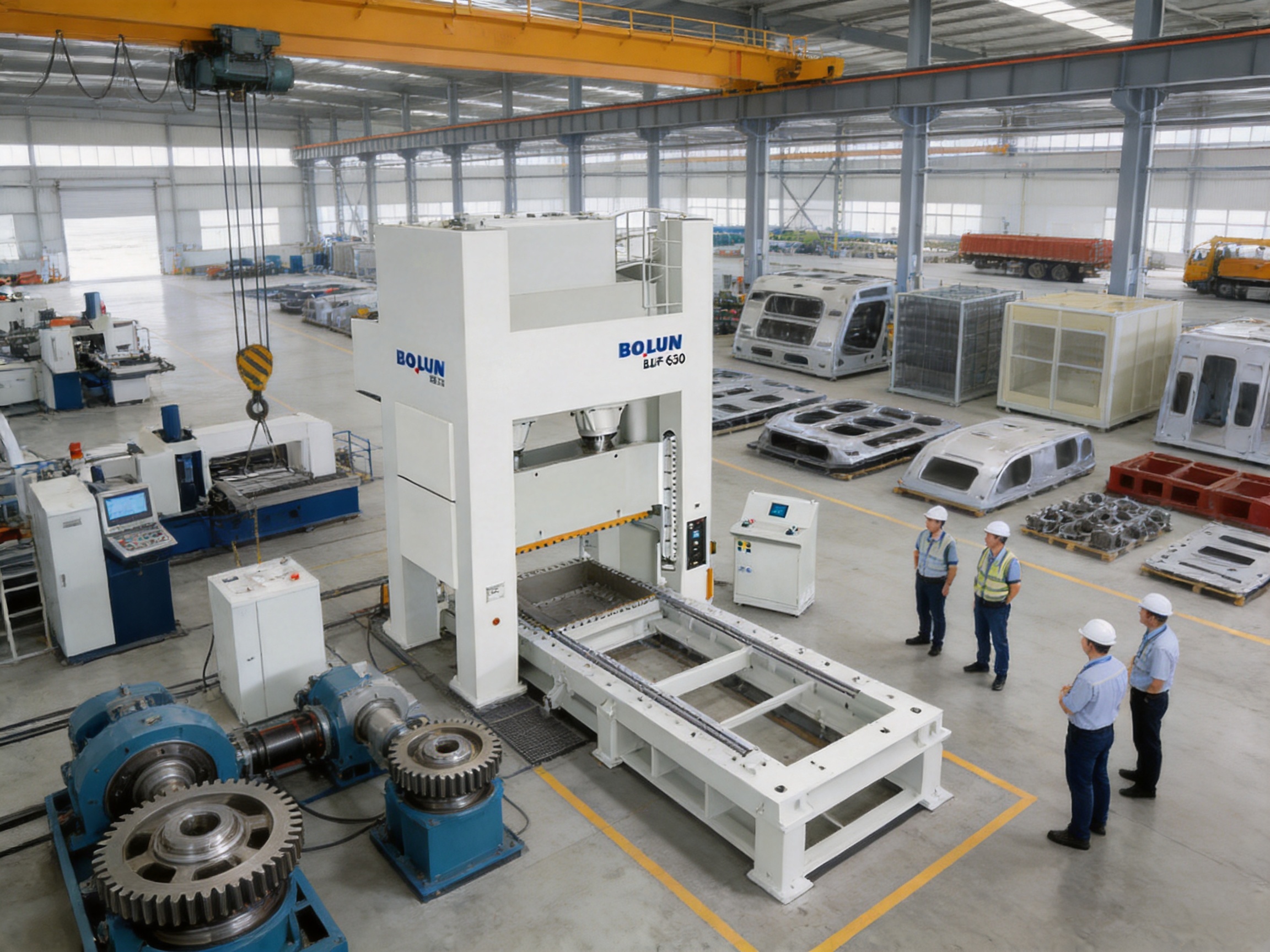
Capacity selection should begin with a complete forming-force calculation. The required force depends on material strength, sheet thickness, perimeter length, draw depth, friction, forming method, blank-holder force, and the geometry of the part. The calculated force should be compared with the press rating and the location of the load within the rated operating envelope.
Stroke selection is equally important. A 400 mm stroke can be valuable for deep components, but the required stroke should be determined from the actual die movement, forming depth, loading clearance, and cushion behavior. Selecting a press solely on nominal tonnage may lead to insufficient movement or limited die flexibility.
Buyers should also evaluate the worktable, slide-bottom size, die height, column spacing, cushion capacity, cushion stroke, speed range, and automation compatibility. These dimensions often determine whether a press can support the intended die more directly than the nominal force rating.
Production volume should be considered carefully. The BLPF-630 operates at 15 to 25 strokes per minute, but the practical rate for a deep-drawing process may be lower depending on forming conditions and handling requirements. A stable cycle with good part quality is generally more valuable than a nominally higher speed that creates defects or accelerates tool wear.
Energy consumption, maintenance resources, spare-parts availability, operator training, and after-sales support should also be included in the total cost of ownership. A machine that is technically suitable but difficult to service may create unnecessary downtime. Supplier communication and documentation are therefore important elements of the purchasing decision.
Bolun integrates pre-sales consultation, in-sales support, and after-sales service into its customer-oriented approach. For a large press, support begins before the machine is ordered. Technical discussions may cover product drawings, material information, die dimensions, production targets, force calculations, cushion requirements, automation, plant conditions, and safety expectations.
During manufacturing, communication regarding specifications, inspection milestones, delivery planning, and installation requirements helps reduce uncertainty. For customized equipment, this coordination is especially important because changes to the working envelope or control system may affect several parts of the machine.
After installation, service includes commissioning guidance, operator training, maintenance recommendations, troubleshooting, and technical communication. A long-term service relationship can help the customer make better use of the machine and respond more quickly when operating conditions change.
Bolun’s stated philosophy emphasizes stable quality, technical innovation, credit, and mutual cooperation. These principles are relevant to industrial equipment because a press is normally expected to operate for many years. The value of the machine is therefore connected not only to its initial specification but also to the manufacturer’s ability to support it throughout its working life.
The BLPF-630 is a closed-type double-point eccentric gear power press designed for high-force stamping, deep drawing, stretching, and other demanding metal-forming operations.
The nominal capacity is 6,300 kN. This rating should be considered together with the specified nominal pressure stroke, die design, load location, and the manufacturer’s operating instructions.
The 400 mm stroke provides substantial forming travel for deep drawing, stretching, tall components, and tooling that requires a large vertical movement. It can provide more flexibility than a short-stroke machine for complex forming applications.
The double-point drive connects the slide at two separated positions, helping distribute force across the slide and supporting stable operation with wide or unevenly loaded dies.
A closed-type frame provides a stable load path around the die area and is designed to resist structural deflection during high-force operation. This can support better die alignment, more consistent forming, and reduced stress on the machine and tooling.
The BLPF-630 has an 800 kN cushion capacity and a 140 mm cushion working stroke. The cushion helps control material flow during deep drawing and stretching.
Yes. The 3,300 × 1,300 mm worktable, 3,100 × 1,400 mm slide bottom, 3,750 mm column spacing, and 800 mm maximum die height provide a large working envelope for substantial dies and components.
The machine includes a photoelectric safety device for protection in the operating area. It must be correctly installed, maintained, and used together with guarding, emergency stops, training, and proper workplace procedures.
The tonnage monitoring system provides information about the load generated during the forming cycle. It can help identify overloads, abnormal loading, process changes, die problems, or material-placement issues.
Potential applications include automotive, transportation equipment, agricultural machinery, appliances, industrial equipment, metal enclosures, structural components, and general large-format stamping and forming.
No single press is suitable for every product. The application must be evaluated according to material, thickness, part geometry, draw ratio, required force, die dimensions, production volume, cushion requirements, and automation needs.
A buyer should provide product drawings, material grade and thickness, estimated production volume, blank size, die dimensions, required stroke, target cycle rate, forming-force calculations, cushion requirements, automation expectations, plant conditions, and applicable safety standards.
The BLPF-630 is a powerful forming solution for manufacturers that require more than basic stamping capability. Its 6,300 kN nominal capacity, 400 mm slide stroke, high-rigidity closed-type three-section frame, double-point eccentric gear drive, broad die space, 800 kN cushion, tonnage monitoring system, and photoelectric safety device create a comprehensive platform for heavy-duty production.
Its primary advantages are most apparent in deep drawing, stretching, and the forming of large or complex components. The long stroke provides greater forming depth, the double-point drive supports wide dies and balanced force transmission, and the rigid frame helps control structural deflection. The cushion system supports material-flow management, while load monitoring adds process visibility and safety equipment contributes to responsible operation.
The machine’s value is further supported by the manufacturing capabilities of Zhejiang Bolun High-Precision Machinery Co., Ltd. The company combines research and development, precision processing, assembly, inspection, customization, sales, and service. Its integrated approach is intended to deliver equipment that is not only powerful but also adaptable, maintainable, and suitable for long-term industrial use.
For companies evaluating a heavy-duty press, the BLPF-630 should be considered as a complete forming system rather than simply a 6,300 kN machine. Its suitability depends on the relationship among press capacity, stroke, die dimensions, cushion performance, monitoring, safety, tooling, material, and production objectives. When these factors are correctly matched, the BLPF-630 can provide a stable and flexible foundation for demanding metal-forming operations.
1. BLPF Series Technical Specification Sheet, Closed-Type Double-Point Eccentric Gear Power Presses.
2. BLPF-630 Product Data and Performance Information, Zhejiang Bolun High-Precision Machinery Co., Ltd.
3. General Principles of Mechanical Press Design and Metal Forming Equipment Engineering.
4. Industrial Guidelines for Deep Drawing, Stretch Forming, Blank-Holder Control, and Cushion Systems.
5. General Safety Principles for Power Presses, Machine Guarding, Presence-Sensing Devices, and Maintenance Isolation.
6. Manufacturing Quality-Control Practices for Large-Scale Precision Machinery.


Two presses can both carry a 200-tonne nameplate and still produce very differe...
What Is a Power Press? A power press — also called a stamping press or punch pr...
A production manager at a mid-size metal component plant recently faced a probl...
A buyer comparing a 45-ton open-gap press for a bracket line often receives two...
Start With the Purchase Decision, Not the Definitions A procurement engineer co...
A tooling engineer quotes a new bracket program and specifies a 160-ton press. ...
Contact Us

topbolun@gmail.com

+86-575-83362228

+86-13735238388
+86-18667502750

+86-575-83362999

+8618667502750

No.1 Linjiang Road East, Xiaren, Jinting Town, Shengzhou City, Zhejiang Province, China
Ready to Begin?
Get in Touch

Now!

ZHEJIANG BOLUN
 English
 中文简体