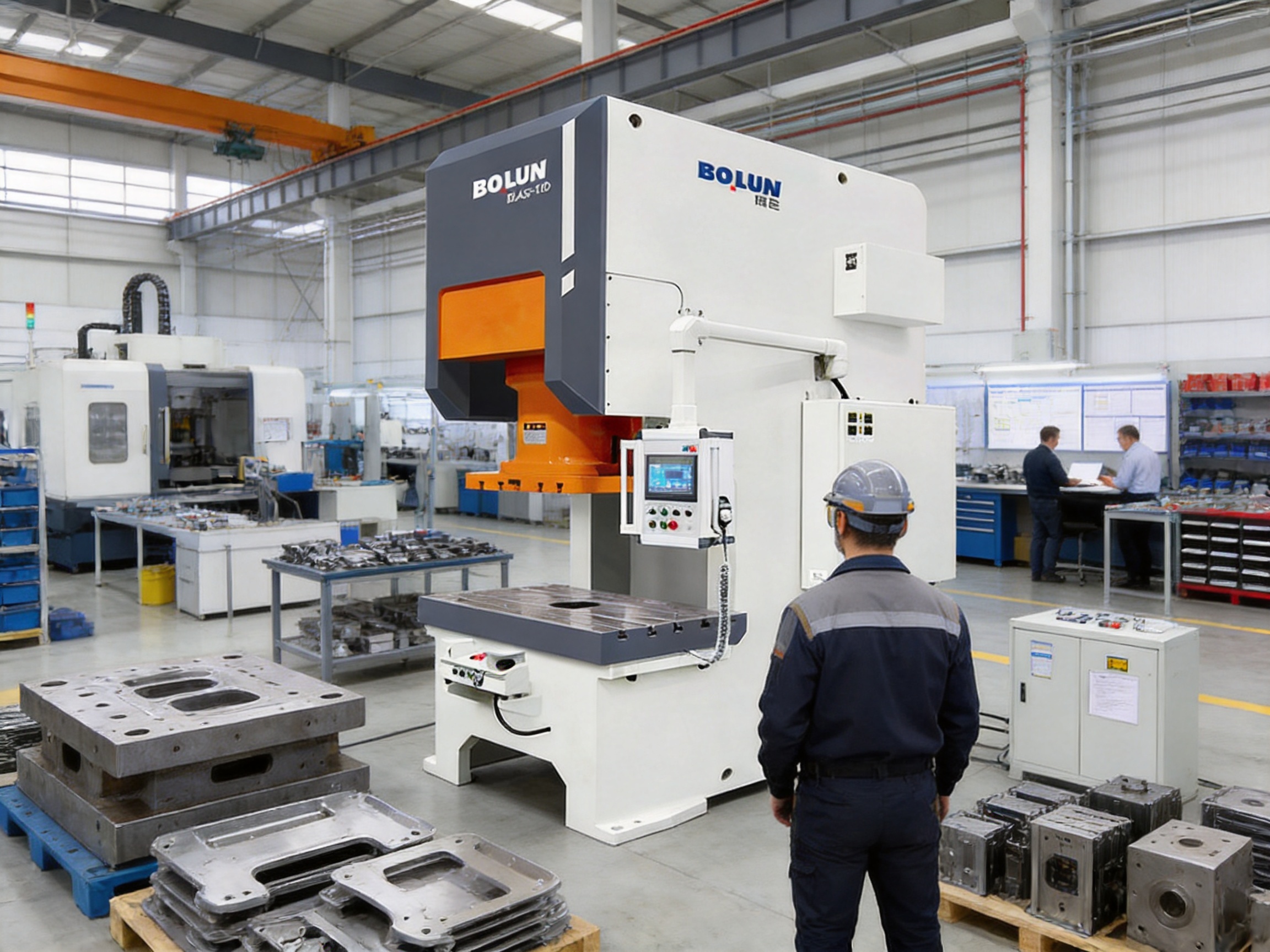
Modern metal-forming operations require more than high nominal capacity. Manufacturers must also achieve repeatable forming quality, efficient die utilization, controlled energy consumption, rapid setup, and dependable operation over long production cycles. The BLAS-160 Heavy-Duty Digital-Forming Open-Type Single-Point Servo Power Press is designed to address these requirements in demanding stamping environments where stable force, flexible slide motion, and practical die access are essential.
With a nominal capacity of 1600 kN and a maximum continuous working energy of 9000 J, the BLAS-160 is positioned for high-load forming work involving thick sheet materials, demanding components, and large dies. Its open-type construction provides convenient access to the working area, while the single-point drive configuration supports a balanced and stable stamping process. A servo-driven system enables programmable slide motion, allowing production engineers to adapt the forming cycle to the material, die geometry, and required forming sequence.
The press combines a large 1200 × 760 mm worktable, a 720 × 580 mm slide bottom, a 200 mm slide stroke, and a rated speed of approximately 50 strokes per minute. These specifications provide a useful balance between working capacity, die space, production speed, and process control. The machine also includes tonnage monitoring and a color touch-screen human-machine interface, helping operators supervise load conditions and adjust production parameters with greater clarity.
Manufactured by Zhejiang Bolun High-Precision Machinery Co., Ltd., the BLAS-160 reflects a manufacturing philosophy based on precision engineering, integrated production, customization, and quality control. The company combines research and development, machine design, component processing, assembly, testing, sales, and service within one industrial organization. This integrated approach is particularly valuable for customers purchasing high-capacity equipment, because the performance of a power press depends not only on its nominal rating but also on structural design, machining accuracy, control integration, assembly discipline, and after-sales support.
Power presses are central to many forming processes, including blanking, bending, drawing, embossing, coining, piercing, and progressive or transfer die operations. In light-duty applications, a conventional mechanical press may be sufficient. However, when materials become thicker, dies become larger, or forming sequences become more sensitive, the machine must deliver more controlled force and more predictable motion.
A heavy-duty open-type servo press responds to these challenges by combining the mechanical strength required for high-load work with digital control of the slide. Instead of relying only on a fixed motion profile, the operator or process engineer can define a motion pattern appropriate to the tooling and material. The slide can be programmed to move rapidly where no forming work is taking place, slow down during critical contact, dwell where forming stability is important, and return efficiently after the operation.
This flexibility can improve the relationship between productivity and quality. A high-speed cycle is not always the best cycle if it produces wrinkling, springback, tearing, die shock, or inconsistent part dimensions. Conversely, a slow cycle may protect quality but reduce production output. Programmable motion allows the process to be adjusted more precisely instead of forcing every application to use the same fixed stroke behavior.
The BLAS-160 is especially relevant for manufacturers working with medium-to-heavy sheet metal components. Its 1600 kN nominal capacity supports substantial forming loads, while its 9000 J continuous work energy provides a useful operating margin for demanding applications. The combination is suitable for production environments where the press must maintain stable performance across repeated high-load cycles.
The following table summarizes the principal technical data of the BLAS-160. Values are presented according to the supplied product information. Final configuration, auxiliary equipment, electrical requirements, and die-related parameters should be confirmed during technical consultation and order review.
| Specification | Value |
|---|---|
| Product model | BLAS-160 |
| Machine type | Open-type single-point servo power press |
| Nominal capacity | 1600 kN |
| Nominal stroke | 5 mm |
| Continuous work energy | 9000 J |
| Slide stroke | 200 mm |
| Strokes per minute | Approximately 50 S.P.M. |
| Maximum die height | 400 mm |
| Die height adjustment | 100 mm |
| Throat depth | 390 mm |
| Worktable size | 1200 × 760 × 150 mm |
| Slide bottom size | 720 × 580 × 90 mm |
| Distance between columns | 750 mm |
| Height of working face | 915 mm |
| Shank hole diameter | 65 mm |
| Die height adjuster motor | 1.1 kW |
| Cushion capacity | 100 kN |
| Cushion working stroke | 80 mm |
| Effective cushion area | 540 × 350 mm |
| Punch accuracy | JIS B 6402 Level 1 |
| Air pressure | 0.55 MPa |
These specifications show that the BLAS-160 is designed as a substantial production machine rather than a basic general-purpose press. The worktable and slide dimensions provide space for large dies, while the 390 mm throat depth offers practical access for components with considerable forming depth. The 100 mm die height adjustment range helps accommodate different tooling arrangements and simplifies the setup process.
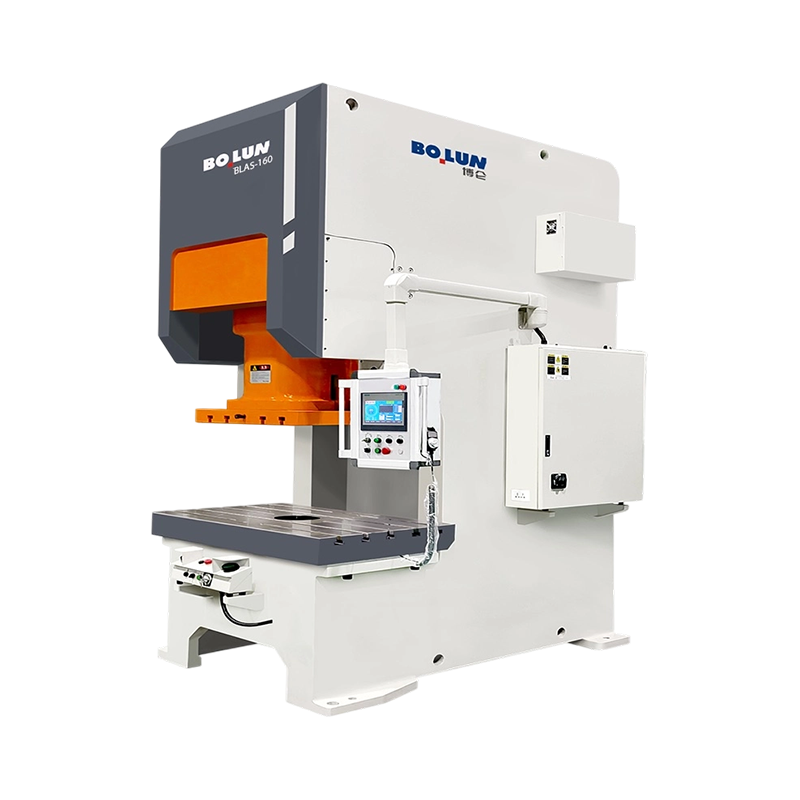
BLAS-160 Heavy-Duty Digital-Forming Open-Type Single-Point Servo Power Press
Nominal capacity is one of the first specifications considered when selecting a power press. A machine rated at 1600 kN is capable of supporting forming applications that exceed the practical range of smaller presses. This additional capacity can be important for thick materials, large projected forming areas, high-strength steels, and operations requiring a substantial force reserve.
However, capacity must be evaluated together with die dimensions, stroke, working energy, speed, and the actual position of peak forming force within the stroke. A press should not be selected only because its tonnage appears sufficient. The forming load must be distributed appropriately, and the die must be compatible with the available work area and slide mounting surface.
The BLAS-160 provides a strong combination of capacity and working space. Its 1200 × 760 mm worktable gives manufacturers room to install larger tools used for automotive brackets, structural panels, appliance parts, electrical enclosures, agricultural components, and general industrial hardware. The 720 × 580 mm slide bottom provides a corresponding mounting surface for the upper die assembly.
The 9000 J continuous work energy is another important advantage. Continuous work energy describes the machine’s ability to sustain repeated forming work within an appropriate operating envelope. In practical production, this helps distinguish a press that can briefly reach a high force from one that is designed to perform consistently during ongoing manufacturing cycles.
For customers comparing competing machines, the most meaningful evaluation should include the complete operating profile: rated force, allowable force position, continuous energy, stroke, speed, die weight, worktable stiffness, slide guidance, control response, and duty cycle. The BLAS-160 presents these elements as part of an integrated heavy-duty design rather than as isolated numbers.
The servo system is one of the defining features of the BLAS-160. Traditional mechanical presses typically operate according to a fixed crank motion. This arrangement can be highly productive, but it offers limited flexibility when a process requires different slide speeds or dwell positions. Servo-driven operation introduces a higher degree of motion control.
With programmable motion, the slide profile can be adapted to the forming process. A production team may select a faster approach movement to reduce non-forming time, a controlled forming speed to improve material flow, and a suitable return profile to support efficient part removal. For sensitive forming operations, a dwell or low-speed section may help stabilize the material while it is being shaped.
Digital forming control is also valuable when one machine is used for multiple dies. Each die may require a different stroke profile, speed setting, approach position, or production sequence. Stored die parameters can reduce repeated manual adjustment and help maintain consistency when production switches between product families.
Programmable motion may provide several practical benefits:
First, it can improve process repeatability. Once a suitable motion profile has been established, the same settings can be recalled for later production runs. This is useful when the same component is manufactured in batches or across multiple shifts.
Second, it can help manage material behavior. Different materials respond differently to forming speed, contact time, and deformation rate. A servo-controlled slide gives process engineers more options for responding to those differences.
Third, it can reduce unnecessary mechanical shock. Controlled acceleration and deceleration can support smoother operation, particularly when large dies or heavy workpieces are involved.
Fourth, it can help coordinate the press with peripheral equipment. Where the production line includes feeders, transfer devices, sensors, or automated unloading systems, programmable movement may make timing adjustments easier.
Finally, servo control can support product development. During die trials, engineers can evaluate multiple motion profiles without changing the fundamental mechanical structure of the machine. This shortens the path between trial forming and stable production.
The color touch-screen HMI gives operators a direct interface for viewing and adjusting machine parameters. A clear interface is important on a high-capacity press because operators must understand the machine state before starting, stopping, or modifying a cycle.
The HMI can support the presentation of operating data such as selected stroke settings, speed parameters, die information, production status, and load feedback. User-friendly visualization can reduce the risk of incorrect settings and make training easier for new operators.
A modern HMI also contributes to standardized production. Instead of relying only on handwritten settings or individual operator memory, manufacturers can create a repeatable digital setup procedure. This approach supports better shift-to-shift consistency and provides a clearer basis for process troubleshooting.
High-capacity forming equipment must be operated with awareness of the force being generated during each cycle. The BLAS-160 is equipped with a tonnage monitoring system that provides real-time load feedback. This feature helps production personnel observe whether the forming process is operating within its intended load range.
Load monitoring can support several aspects of production management. It may help identify an abnormal increase in forming force caused by incorrect material placement, die damage, material variation, a blocked scrap path, or an incorrect setup. Early recognition of such conditions can reduce the likelihood of tool damage and unplanned downtime.
It can also support process verification. If a stable production process normally produces a consistent load pattern, substantial deviation may indicate that the material or die condition has changed. Monitoring does not replace proper inspection, maintenance, or safety procedures, but it adds useful information to the production control system.
For customers comparing the BLAS-160 with less digitally equipped machines, the combination of tonnage monitoring and a programmable HMI is a meaningful differentiator. The press is not only applying force; it is also providing operators with information that can support more informed decisions.
Load monitoring is particularly useful in high-volume production because small process deviations can become expensive when multiplied over thousands of parts. A controlled and visible process helps reduce scrap, protect expensive tooling, and support more consistent component quality.
Die size is a major consideration in press selection. A press with insufficient table space may force a manufacturer to use smaller tools, redesign established tooling, or divide an operation into multiple stages. The BLAS-160’s 1200 × 760 mm worktable provides a substantial working surface for large stamping dies.
The 150 mm table thickness contributes to the heavy-duty character of the working area. The slide bottom measures 720 × 580 × 90 mm, providing a broad upper mounting surface. These dimensions are suitable for a wide range of industrial dies, although final die compatibility must always be verified against actual tool weight, mounting holes, center of pressure, shut height, and operating force.
The 400 mm maximum die height and 100 mm die height adjustment range allow the press to accommodate tooling with different vertical requirements. Die height adjustment is important during setup because it enables the working position to be matched to the die and part geometry. A motorized 1.1 kW die height adjustment system can make this procedure more efficient than manual adjustment on comparable equipment.
The 390 mm throat depth provides useful reach from the front of the machine toward the working center. For open-type press operations, this dimension influences the size and shape of parts that can be positioned effectively within the die area.
The distance between columns is 750 mm. Together with the throat depth and worktable dimensions, this gives the BLAS-160 a practical working envelope for components that are wider or deeper than those normally handled on smaller open-front presses.
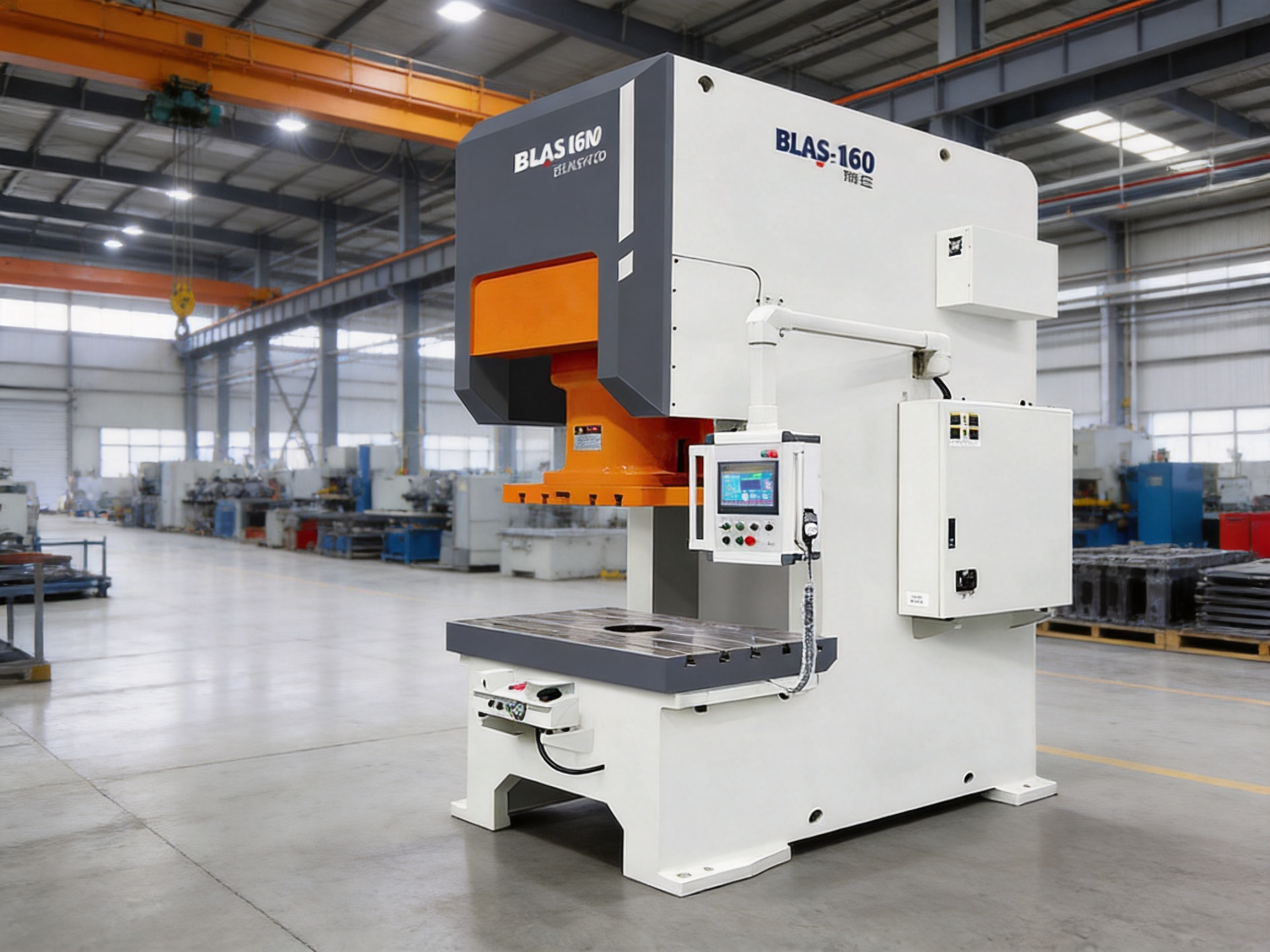
The BLAS-160 includes a cushion with a capacity of 100 kN, an 80 mm working stroke, and an effective area of 540 × 350 mm. A press cushion can play an important role in forming operations that require support from below the workpiece or controlled resistance during deformation.
Depending on the die design, the cushion may help support blank holding, drawing, forming, or part ejection functions. It can contribute to more stable material flow by applying an appropriate counterforce beneath the workpiece. This is especially relevant in operations where uncontrolled movement of the blank could lead to wrinkles, distortion, or inconsistent dimensions.
The cushion also expands the range of applications that can be considered for the machine. Without an appropriate lower support system, certain forming processes may require additional equipment or a more complex die structure. The integrated cushion capacity of the BLAS-160 provides tooling designers with another process option.
As with all press specifications, the cushion parameters should be evaluated together with the actual die requirements. The required force, stroke, timing, contact area, and control method depend on the application. A technical review should confirm whether the cushion configuration is appropriate for the intended material and forming sequence.
The BLAS-160 can be considered for a broad range of high-load stamping and forming applications. Its capacity and working dimensions make it relevant to industries that use medium and heavy sheet-metal components.
Automotive suppliers often need equipment capable of producing brackets, reinforcement parts, suspension-related components, seat structures, body hardware, and other formed parts. These components may require high forming force, repeatable dimensions, and reliable operation across long production runs.
The BLAS-160’s large worktable supports substantial tooling, while the servo motion system may assist with forming sequences involving controlled contact and material flow. Tonnage monitoring provides additional information for managing tool and process stability.
Appliance manufacturers commonly produce structural brackets, panels, housings, support components, and internal reinforcement parts. Product variety can be high, meaning that a press may need to accommodate multiple dies and frequent production changes.
Stored die parameters and digital setup functions can be useful in this environment. Once a validated configuration has been established for a particular die, it can be recalled more easily during a later production run. This can help reduce setup variation and shorten changeover activity.
Electrical cabinets, control boxes, machine guards, and industrial enclosures often require accurate bending, piercing, embossing, and forming operations. The press’s work area and programmable stroke control can support tooling designed for these components.
Industrial hardware producers may manufacture mounting plates, structural fittings, brackets, flanges, and reinforcement elements. These applications can benefit from a strong press frame, adequate tonnage, and flexible motion control, particularly where several product designs are manufactured on the same machine.
Agricultural machinery and construction equipment often include thick-gauge brackets and formed structural parts. Such components may require considerable force and a robust die. The BLAS-160 provides a capacity level suitable for many of these operations, subject to engineering verification of the required forming load and die configuration.
Every press must be selected according to the application, but the BLAS-160 offers several advantages when compared with conventional fixed-motion presses or smaller-capacity machines.
A fixed-motion press may perform well in standardized operations, but it can be less adaptable when a process needs a modified speed profile or dwell position. The BLAS-160’s servo-driven programmable motion provides more process flexibility and can support a wider range of die requirements.
At 1600 kN, the machine offers more forming capacity than small and medium open-type presses. This can allow manufacturers to consolidate operations, use larger tools, or process thicker materials without moving immediately to a much larger closed-type press.
The color touch-screen HMI and tonnage monitoring system give operators more information than a basic manually adjusted machine. Better visibility supports faster diagnosis, more consistent setups, and stronger process documentation.
The 1200 × 760 mm worktable and 750 mm distance between columns provide practical space for large dies. This can reduce the need for extensive tooling redesign when moving from smaller production equipment.
Stored die parameters and programmable motion profiles can help reduce variation caused by manual adjustments. Repeatability is especially valuable when multiple shifts or production sites need to manufacture the same component according to a common process standard.
The press combines high force, substantial work energy, servo motion, tonnage monitoring, die height adjustment, and a cushion system in one platform. Customers do not need to evaluate these functions as completely separate additions, although application-specific auxiliary equipment may still be required.
A power press’s useful performance depends on more than its control system. The machine must maintain structural stability under load, provide reliable slide guidance, and preserve alignment between the upper and lower tooling. Precision is therefore influenced by the design and manufacture of the frame, slide, worktable, drive system, adjustment mechanism, and assembly interfaces.
The supplied specification identifies punch accuracy at JIS B 6402 Level 1. This indicates that the machine is designed according to a recognized precision classification. Customers should review the complete acceptance criteria, measurement conditions, and inspection documentation for a specific machine during the purchasing process.
For heavy-duty forming, stiffness is particularly important. Deflection or uneven load distribution can affect part accuracy and accelerate die wear. A stable press structure helps transmit force more predictably through the die. It also supports consistent operation when the machine is used near its intended working range.
Operating consistency is further supported by digital parameter control. Mechanical precision and electronic repeatability work together: the structure must maintain alignment, while the control system must reproduce the intended motion and process settings.
Zhejiang Bolun High-Precision Machinery Co., Ltd. is based in Zhejiang, a region recognized for its developed manufacturing environment and extensive industrial supply chains. The company has approximately two decades of experience in machinery manufacturing and integrates research and development, design, production, sales, and service.
This integrated structure is important for complex industrial machinery. A press manufacturer must coordinate mechanical design, electrical control, precision machining, component selection, assembly, inspection, commissioning, and customer support. When these activities are connected within one organization, technical feedback can move more efficiently between departments.
The company describes a full-chain production system covering basic design, core component development, precision processing, final assembly, and finished-machine inspection. Such a system can provide better control over manufacturing interfaces than a fragmented arrangement in which critical stages are distributed among unrelated suppliers.
Integrated production also supports product customization. Customers may have different requirements for die dimensions, control functions, automation interfaces, working height, safety systems, or auxiliary equipment. A manufacturer with in-house design and engineering resources is better positioned to evaluate such requirements as part of a complete machine solution.
Precision processing equipment is essential for producing press components that must maintain accurate dimensions and reliable alignment. Machined surfaces, mounting interfaces, guidance components, and structural parts all influence the final performance of the machine.
The manufacturer’s stated emphasis on advanced precision processing supports the goal of producing equipment suitable for high-accuracy forming. Machining quality should be verified through inspection records, dimensional reports, assembly checks, and machine acceptance testing.
Servo presses require coordinated development across mechanical, electrical, software, and process-control disciplines. Research and development capability allows the manufacturer to refine motion control, improve user interfaces, adapt machines to special applications, and respond to changes in customer requirements.
The company also states that it provides non-standard customization. This is useful for customers whose production needs cannot be met by a standard catalog configuration. A custom solution should be developed through a documented technical process that defines load requirements, die details, production speed, automation interfaces, safety provisions, utilities, and acceptance criteria.
The company identifies quality as a central part of its manufacturing philosophy and describes a finished-product inspection system covering processes and components. For heavy machinery, quality assurance should include incoming component checks, machining inspection, assembly verification, electrical testing, no-load and loaded trial operation, control-system validation, and final documentation.
A systematic inspection program helps reduce the risk that a minor manufacturing deviation will become a major operating problem after installation. It also provides customers with greater confidence when evaluating equipment for high-intensity production.
Power presses are long-term production assets. Customers require more than delivery; they need technical consultation before purchase, installation support, commissioning assistance, operator guidance, spare-parts coordination, and after-sales service.
The company describes a service system covering pre-sales, in-sales, and after-sales stages. This customer-oriented model is particularly relevant for servo presses because successful implementation may involve die trials, parameter development, operator training, maintenance planning, and integration with other production equipment.
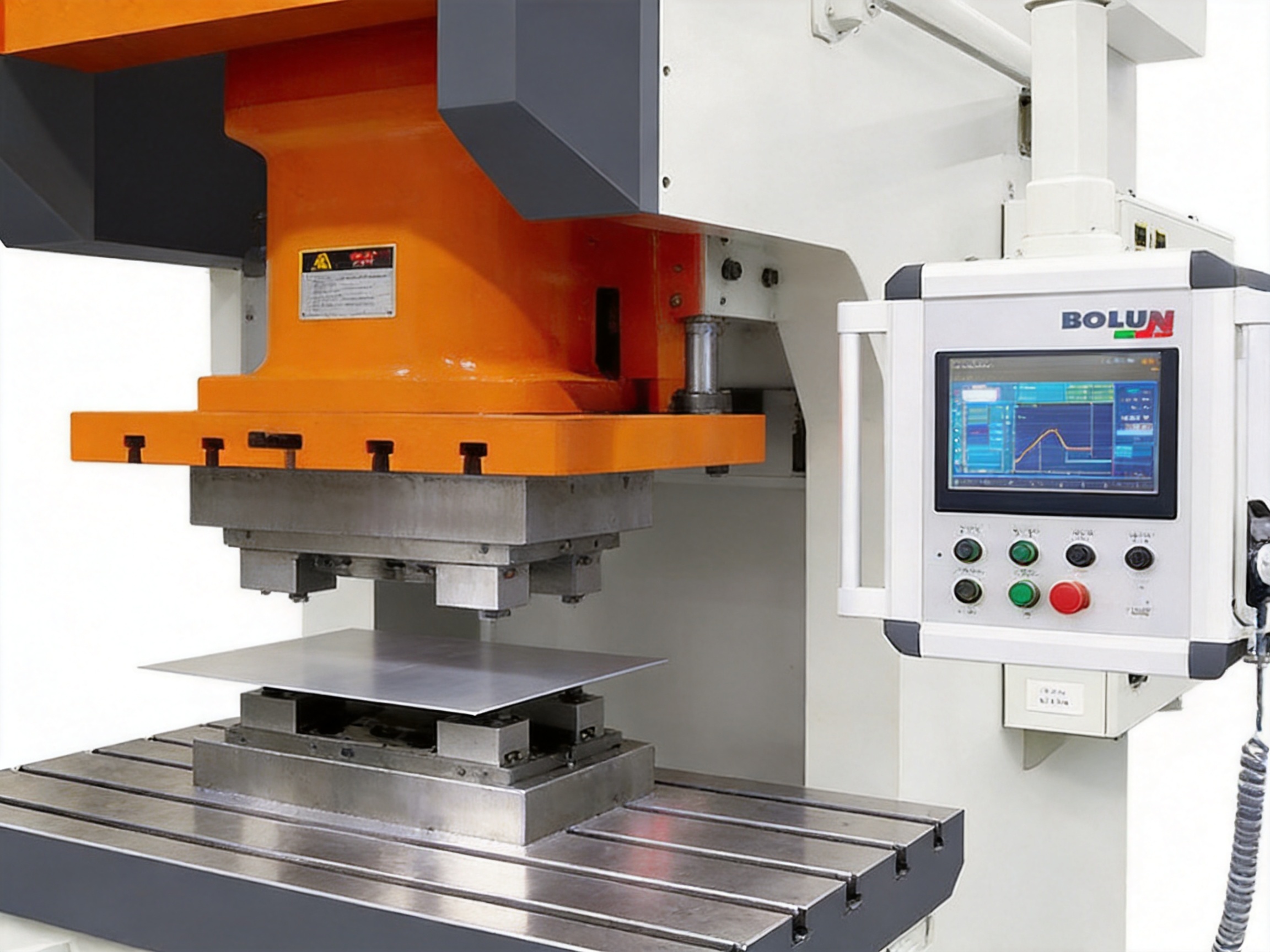
Proper installation is essential for achieving the expected performance of the BLAS-160. The foundation, machine leveling, electrical supply, air supply, access space, die handling arrangements, and safety perimeter should be prepared before delivery. The installation plan should also account for the weight and dimensions of the machine, the route from unloading to the final position, and the requirements of lifting equipment.
Commissioning normally includes mechanical inspection, electrical connection, control-system verification, lubrication checks, air-pressure confirmation, die height adjustment, and test operation. The operator interface should be reviewed to confirm that the intended parameters are displayed and controlled correctly.
Before production begins, process qualification should be performed with the actual material and tooling. This may include:
Reviewing the blank dimensions and material grade.
Confirming die mounting and alignment.
Checking the die height and slide position.
Setting an appropriate motion profile.
Verifying cushion force and stroke where applicable.
Observing tonnage behavior during trial cycles.
Inspecting part dimensions and surface quality.
Recording approved production parameters.
A documented qualification process creates a useful reference for future production. It also helps distinguish machine-related issues from problems caused by material, tooling, lubrication, or part handling.
Routine maintenance helps protect the precision and availability of a high-capacity servo press. Maintenance activities should follow the manufacturer’s instructions and the actual production duty cycle.
Operators and maintenance personnel should regularly inspect lubrication points, slide guidance, die height adjustment components, cushion-related elements, electrical cabinets, sensors, cables, air connections, and guarding systems. Abnormal noise, vibration, temperature, leakage, load behavior, or motion response should be investigated promptly.
The tonnage monitoring system can support maintenance by providing information about changes in the forming process. A gradual increase in load may indicate die wear, material changes, alignment issues, or a developing mechanical problem. Trend information should be combined with physical inspection and production-quality data.
Servo systems also require attention to electrical connections, cooling, control cabinets, motor condition, and software-related alarms. Preventive maintenance is generally more economical than waiting for an unexpected failure during a critical production order.
Tooling maintenance is equally important. A press may be mechanically sound, but damaged or poorly maintained dies can create excessive loads and inconsistent parts. The machine, die, material, and process should therefore be managed as one production system.
High-capacity presses must be operated only by trained personnel under established safety procedures. The machine should be installed and used in accordance with applicable local regulations, risk assessments, and the manufacturer’s operating instructions.
Safety systems may include guarding, emergency stops, control interlocks, two-hand controls, light curtains, die protection, overload protection, and safe maintenance procedures, depending on the final configuration and regulatory requirements. Customers should confirm the included safety equipment and any required optional devices before placing an order.
Operators should never reach into the die area during an operating cycle. Die installation, adjustment, inspection, and maintenance must be carried out using approved lockout and isolation procedures. Any alteration to safety circuits or protective devices should be prohibited unless performed by qualified personnel following a documented engineering process.
Training should cover normal operation, setup, die change, parameter selection, alarm response, emergency stopping, inspection, and routine maintenance. A clear division of responsibility between operators, maintenance technicians, process engineers, and supervisors helps reduce operational risk.
Before selecting the BLAS-160, a customer should prepare a complete application profile. This profile should identify the material type, thickness, blank size, required forming operation, projected forming area, expected peak load, production volume, target cycle time, die dimensions, die weight, and automation requirements.
The nominal capacity of 1600 kN should be compared with the actual load curve of the operation. The position of peak force within the stroke is important, as is the continuous energy requirement. The die must fit within the worktable, slide, throat, and shut-height ranges without creating an unfavorable load condition.
Customers should also determine whether the integrated cushion capacity and working stroke meet the forming requirements. If the process requires a feeder, transfer system, coil line, robot, or automatic part removal, these interfaces should be discussed at the engineering stage.
Production planning should consider the benefits of programmable motion. If the factory produces many parts with different forming requirements, servo flexibility may provide a stronger return than a simpler fixed-motion machine. If the operation is highly standardized, the main advantages may instead be high capacity, worktable size, monitoring, and repeatability.
The value of a power press should be evaluated over its operating life rather than by purchase price alone. Important factors include productivity, scrap rate, changeover time, die life, energy use, maintenance cost, service availability, operator training, and the ability to adapt to future products.
The BLAS-160 can create value by supporting larger or more demanding components, reducing the need to outsource certain operations, and allowing a broader selection of dies to be used on one machine. Its digital controls may reduce setup variation, while load monitoring may help identify process abnormalities earlier.
Servo motion can also support product diversification. As customers introduce new components or materials, a programmable press may be adapted through process parameters rather than requiring immediate mechanical modification. This does not eliminate the need for engineering work, but it can provide more options during development and production optimization.
The company’s integrated manufacturing and service capabilities add another dimension to operational value. Customers can work with a supplier that provides machine design, production, customization, inspection, delivery support, and after-sales assistance within a coordinated framework.
When comparing the BLAS-160 with competing machines, buyers should ask practical technical questions rather than focusing on nominal capacity alone.
What is the allowable forming load at the required point in the stroke?
How are motion profiles created, stored, and recalled?
What information does the tonnage monitoring system display and record?
Which safety devices are included in the standard configuration?
What are the die weight, slide load, and worktable loading limits?
How is the cushion controlled, and what parameters can be adjusted?
What inspection and acceptance records are provided before shipment?
What installation, commissioning, and operator training services are available?
Which spare parts and maintenance tools are recommended for the first years of operation?
Can the control system communicate with existing automation or production management systems?
How are customized specifications reviewed, documented, and approved?
These questions help customers understand the complete solution and ensure that the selected press is aligned with the actual production process.
The BLAS-160 has a nominal capacity of 1600 kN. This capacity is intended for high-load stamping and forming applications, subject to proper evaluation of the die, material, force position, and operating conditions.
It is an open-type single-point servo power press. Its open construction supports convenient access to the work area, while the single-point drive and servo system provide controlled slide movement.
The maximum continuous work energy listed for the BLAS-160 is 9000 J. This specification should be considered together with forming force, stroke position, material behavior, and production duty cycle.
The listed speed is approximately 50 strokes per minute. Actual production speed depends on the die, material, forming process, motion profile, feeding method, safety requirements, and quality targets.
The worktable measures 1200 × 760 × 150 mm. Customers should verify the complete die footprint, mounting arrangement, weight, and center of pressure before installation.
Yes. The servo-driven system supports programmable slide motion. Motion parameters can be configured to suit different die requirements and may be stored as part of a repeatable production setup.
Tonnage monitoring provides real-time load feedback. It can help operators observe process stability, identify abnormal load conditions, support troubleshooting, and protect tooling when used together with proper inspection and safety procedures.
Yes. The listed cushion capacity is 100 kN, with an 80 mm working stroke and an effective area of 540 × 350 mm. The final suitability of the cushion depends on the specific forming operation and die design.
The maximum die height is listed as 400 mm, with a 100 mm die height adjustment range. Actual die compatibility should be confirmed using the complete tooling dimensions and press setup requirements.
Potential applications include automotive components, appliance parts, industrial hardware, electrical enclosures, agricultural equipment components, construction machinery parts, and other high-load sheet-metal forming products.
The BLAS-160 combines heavy-duty capacity with servo-controlled programmable motion, a color touch-screen HMI, and tonnage monitoring. These features provide greater control and process visibility than a basic fixed-motion press.
Customers should confirm material specifications, forming load, die dimensions, die weight, required speed, cushion requirements, automation interfaces, electrical and air utilities, safety equipment, installation conditions, acceptance criteria, and after-sales support.
The BLAS-160 Heavy-Duty Digital-Forming Open-Type Single-Point Servo Power Press is designed for manufacturers that require substantial forming capacity together with flexible digital control. Its 1600 kN nominal capacity, 9000 J continuous work energy, 1200 × 760 mm worktable, 200 mm slide stroke, and approximately 50 strokes-per-minute operating speed create a strong platform for demanding stamping work.
The machine’s principal differentiators are the combination of high-load capability, programmable servo motion, tonnage monitoring, touch-screen operation, large die space, motorized die height adjustment, and an integrated cushion system. These functions can support stable forming, repeatable production, easier setup, and more informed process management.
Its value is further supported by the manufacturer’s integrated approach to research and development, precision processing, assembly, inspection, customization, and service. For customers seeking a press for automotive, appliance, industrial, electrical, agricultural, or general heavy-duty forming applications, the BLAS-160 provides a technically capable option that can be evaluated against both current production needs and future manufacturing requirements.
As with any high-capacity machine, final selection should be based on a detailed technical review of the material, die, forming load, duty cycle, safety requirements, automation, and acceptance standards. When correctly matched to the application and properly maintained, the BLAS-160 can serve as a reliable foundation for efficient and digitally controlled metal-forming production.
1. Zhejiang Bolun High-Precision Machinery Co., Ltd. Product specification information for the BLAS-160 Heavy-Duty Digital-Forming Open-Type Single-Point Servo Power Press.
2. Zhejiang Bolun High-Precision Machinery Co., Ltd. Corporate information concerning research and development, precision processing, quality assurance, customization, and technical service.
3. JIS B 6402. Accuracy requirements and inspection principles for metalworking presses.
4. General principles of mechanical press selection, die compatibility, forming-force evaluation, and production-process qualification.
5. General industrial guidance for power-press installation, operation, preventive maintenance, machine guarding, and operator safety.


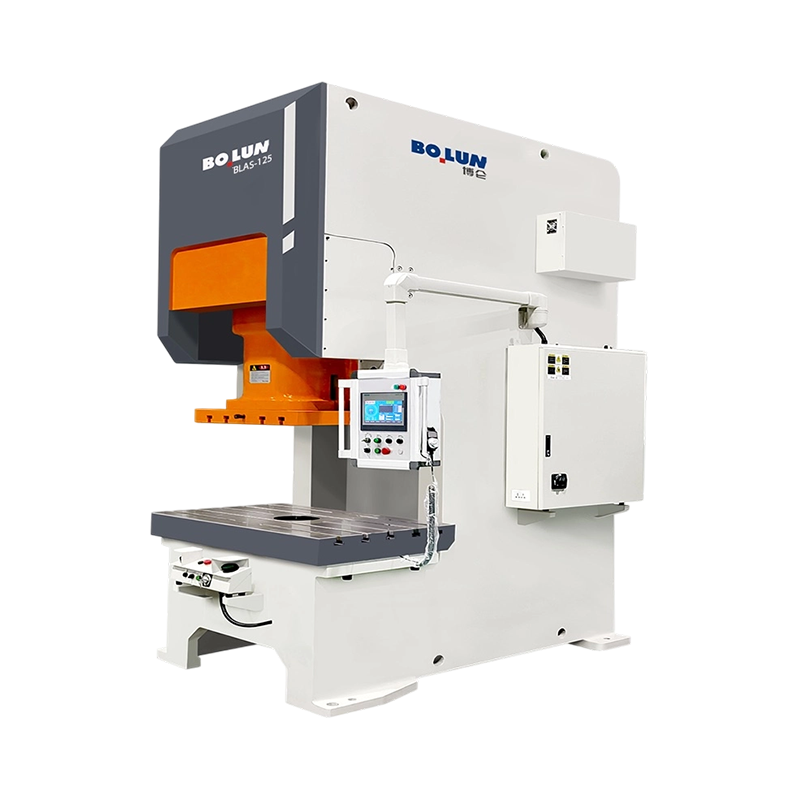
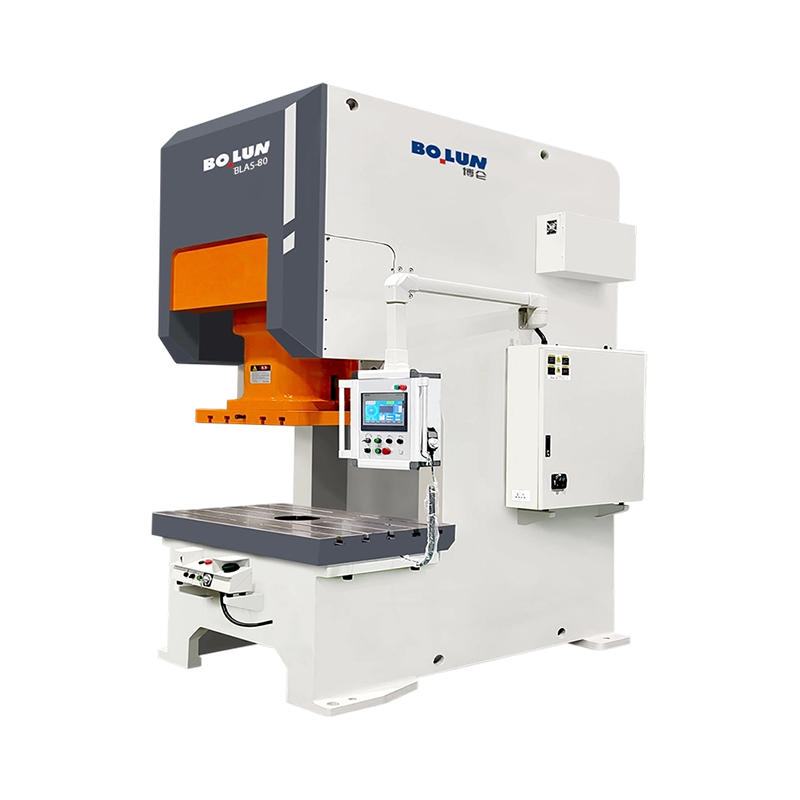
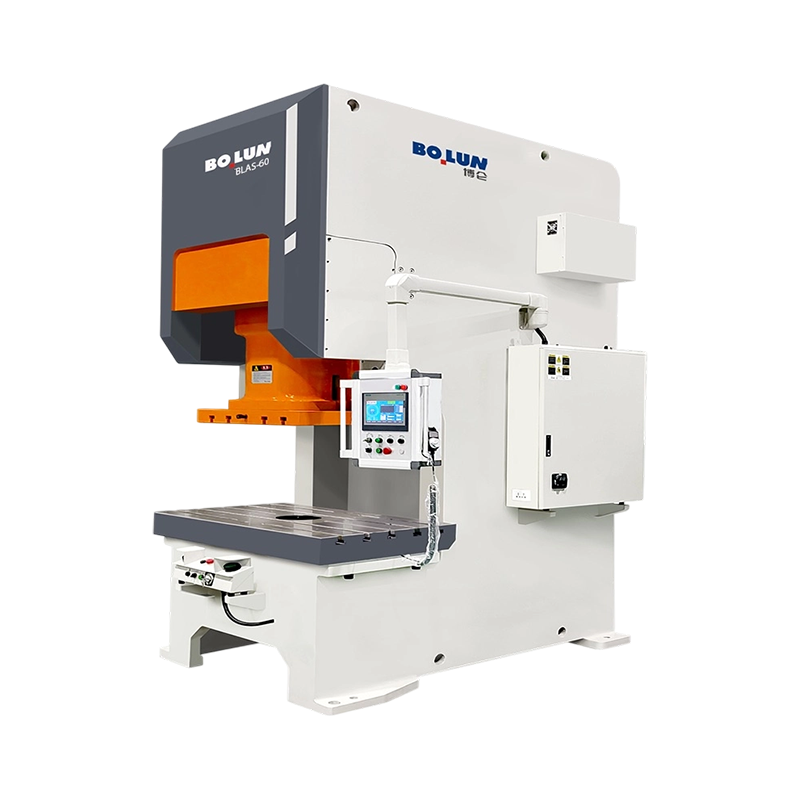
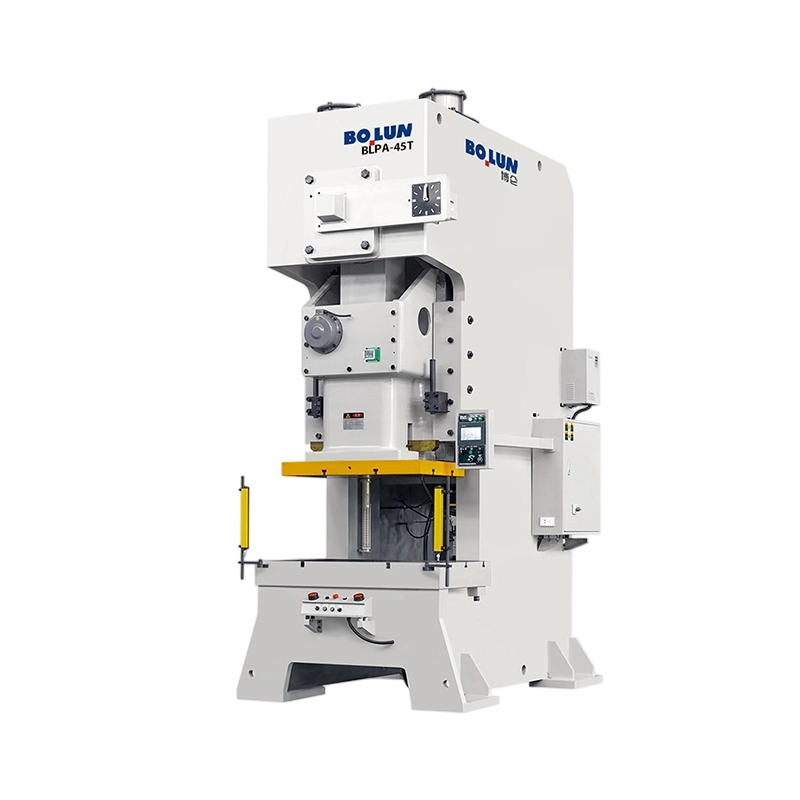
A buyer comparing a 45-ton open-gap press for a bracket line often receives two...
What Is a Power Press? A power press — also called a stamping press or punch pr...
Understanding Mechanical Power Presses and Their Essential Functions A mechani...
In the fields of metal forming, sheet metal fabrication, blanking, and punching,...
A fastener plant in Taizhou receives a request from an automotive tier-one supp...
Two presses can both carry a 200-tonne nameplate and still produce very differe...
Contact Us

topbolun@gmail.com

+86-575-83362228

+86-13735238388
+86-18667502750

+86-575-83362999

+8618667502750

No.1 Linjiang Road East, Xiaren, Jinting Town, Shengzhou City, Zhejiang Province, China
Ready to Begin?
Get in Touch

Now!

ZHEJIANG BOLUN
 English
 中文简体