
In modern metal forming, manufacturers need power presses that can combine strength, accessibility, repeatability, and production safety without forcing operators to compromise on process flexibility. The robust large-capacity open-gap deep-throat power press is designed precisely for this environment. As an open-type press with an extended throat depth and enlarged working area, it serves production lines that require deep-reach stamping, medium-duty forming, bending, punching, trimming, and specialized operations on larger or irregular workpieces.
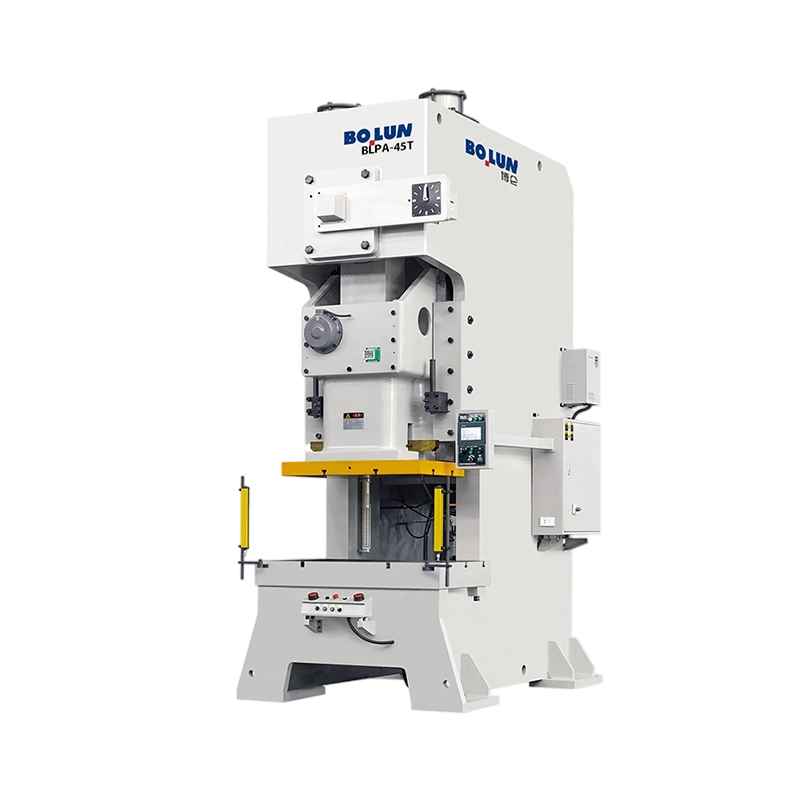
The machine discussed in this article is a 450 kN open-gap deep-throat power press engineered for high-demand industrial applications. It is built around a reinforced, heat-treated, welded steel frame, an enlarged 850 × 440 mm worktable, a 4 kW main motor, hydraulic overload protection, and high-sensitivity dual solenoid valve control. These elements create a press platform suitable for continuous industrial use, where both load-bearing strength and operator control are critical.
Unlike many standard open-back or small-gap presses, a deep-throat configuration gives users more space between the slide centerline and the frame. This additional reach is valuable when processing wide plates, long strips, larger panels, or components that must be positioned deeper into the working zone. For factories that handle multiple product formats, the result is more freedom in tooling design, easier workpiece handling, and broader production coverage from a single machine platform.
The manufacturer, Zhejiang Bolun High-Precision Machinery Co., Ltd., brings two decades of experience in forming equipment manufacturing, integrating research and development, design, production, sales, and service. Its strengths include full-chain production capability, non-standard customization, precision processing equipment, strict finished-product inspection, and a customer-oriented service system. These strengths are especially important for a power press because long-term accuracy depends not only on the nominal force rating, but also on frame design, machining quality, assembly discipline, and inspection standards.
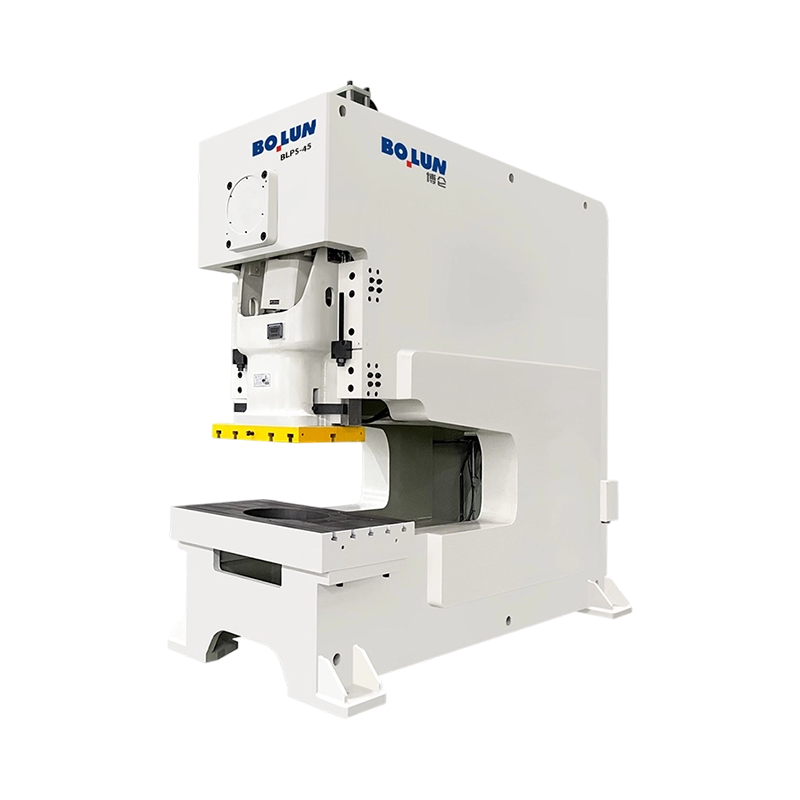
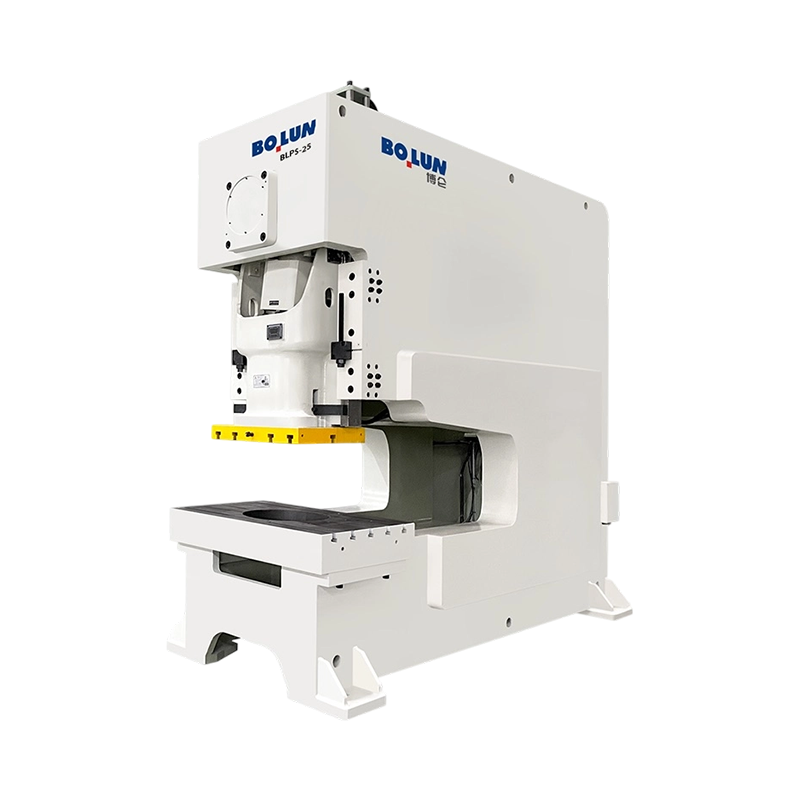
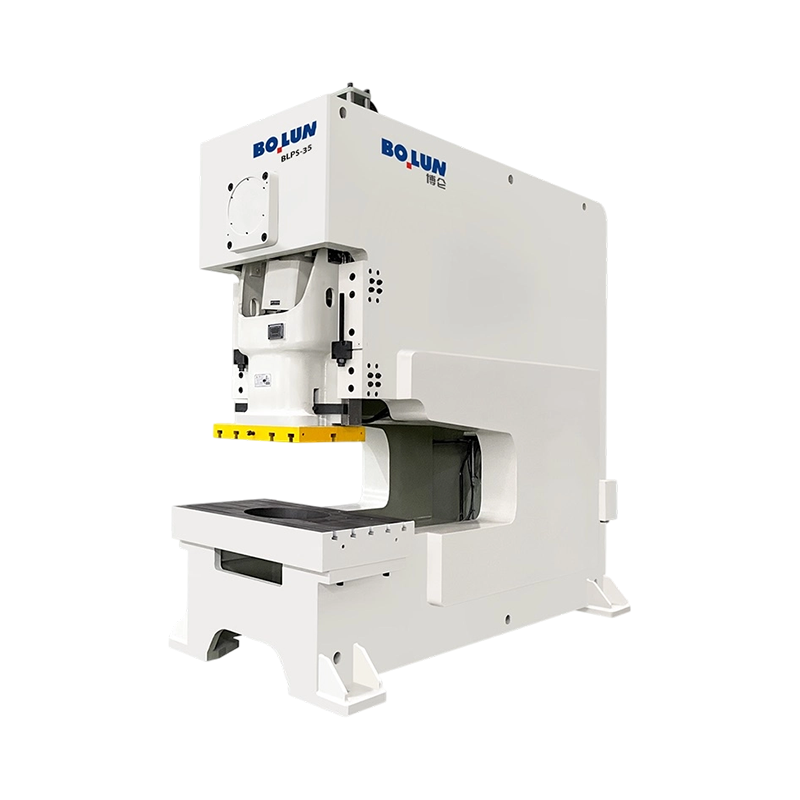
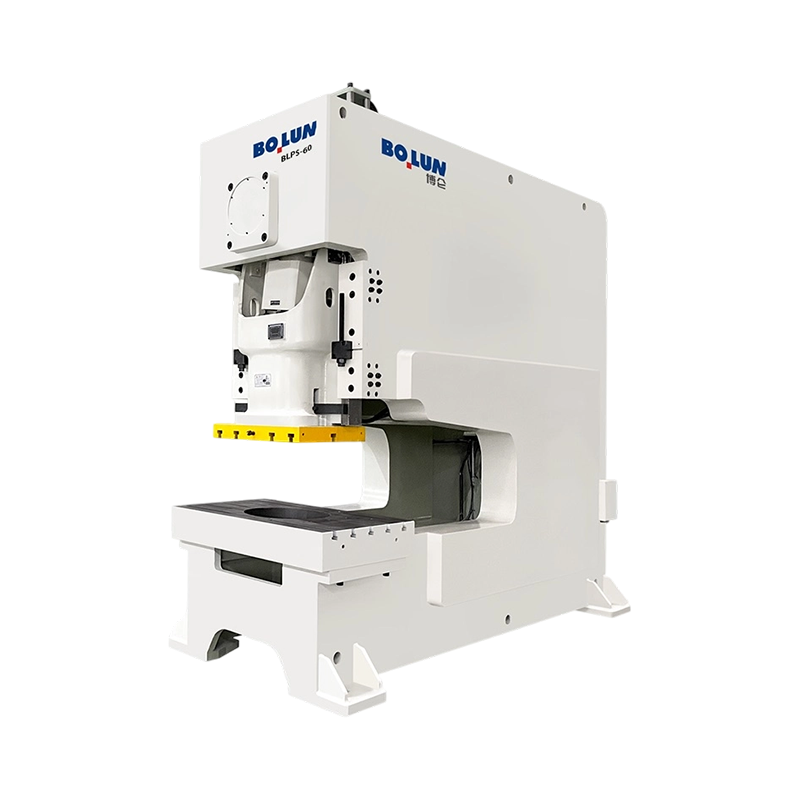
BLPS-45 Robust Large-Capacity Open-Gap Deep-Throat Power Press
An open-gap deep-throat power press is a specialized variation of an open-type mechanical press. It retains the accessibility of an open frame while extending the throat depth to accommodate workpieces that cannot be easily positioned in a conventional short-throat press. This makes the machine useful in stamping shops, metal fabrication plants, appliance parts manufacturing, hardware production, electrical enclosure manufacturing, automotive component preparation, and other forming environments.
The term “open-gap” emphasizes the open access around the working zone. Operators and automation devices can approach the die area more easily than with many closed-frame designs. This access is beneficial for manual loading, semi-automatic feeding, fixture placement, visual inspection, and quick die changes. At the same time, the “deep-throat” layout expands the usable processing range by allowing material to extend farther into the machine before reaching the frame.
For many manufacturers, the challenge is to balance accessibility with rigidity. A fully closed press usually offers excellent frame stiffness, but it may reduce access and flexibility. A light open press offers convenience, but may suffer from deflection under heavy or eccentric loads. The machine described here addresses this issue through a reinforced welded steel frame that has been heat-treated to improve structural stability and reduce residual stress. This design choice helps the press maintain better rigidity during demanding production cycles.
The 450 kN nominal force rating places the machine in a practical range for medium-duty stamping and forming. It is strong enough for a wide variety of sheet metal operations, yet not unnecessarily oversized for factories that need efficient energy use, manageable installation, and flexible tooling. The press is therefore well suited for users seeking a powerful but adaptable solution rather than a single-purpose machine.
The main value of this power press lies in its combination of force capacity, working reach, enlarged table size, and process reliability. A nominal force of 450 kN gives it the strength needed for numerous forming tasks, while the 850 × 440 mm worktable gives operators and tooling designers a generous platform for dies, fixtures, guides, and material supports. The expanded die height adjustment range further improves usability across different dies and production requirements.
Many production managers face the same recurring problem: one machine may be strong enough but lacks access; another may be easy to load but lacks rigidity; a third may be suitable for small parts but cannot accommodate longer or wider components. The open-gap deep-throat press is positioned to reduce these limitations. Its structure allows deeper material entry, while the reinforced frame and protection systems support stable operation under repeated loading.
The machine can be applied to medium-duty forging-related forming, deep-reach stamping, blanking, piercing, shallow drawing, bending, embossing, trimming, and compound die operations within the press’s force and tooling limits. It is particularly attractive for manufacturers producing parts with asymmetric shapes, large edges, long flanges, or features located away from the edge of the material. In these cases, standard short-throat presses may require secondary handling or special fixtures, while a deep-throat press can often complete the operation more directly.
Because the machine integrates hydraulic overload protection, it also helps protect the press and tooling from accidental overload conditions. Overload events can occur due to incorrect material thickness, tooling misalignment, double-sheet feeding, improper die setting, or foreign objects in the die area. A protection system reduces the risk of severe damage and helps support continuous production safety. In competitive manufacturing, preventing downtime is often as valuable as increasing speed.
The technical configuration of the press reflects a practical engineering philosophy: strengthen the load path, increase working flexibility, protect the machine from abnormal conditions, and improve control response. The core elements include a reinforced welded frame, heat treatment, enlarged worktable, extended die height adjustability, 4 kW motor drive, hydraulic overload protection, and high-sensitivity dual solenoid valve control.
| Feature | Specification or Description | Production Benefit |
|---|---|---|
| Press Type | Open-gap deep-throat power press | Improved access and deeper workpiece positioning |
| Nominal Force | 450 kN | Suitable for medium-duty stamping and forming tasks |
| Frame Structure | Reinforced heat-treated welded steel frame | Higher rigidity and reduced elastic deformation under load |
| Worktable Size | 850 × 440 mm | Supports larger dies, fixtures, and wider workpieces |
| Main Motor | 4 kW | Provides stable power for continuous industrial use |
| Protection Device | Hydraulic overload protection | Helps prevent machine and tooling damage during abnormal loads |
| Control System | High-sensitivity dual solenoid valve control | Supports precise stop-start response and operational stability |
| Application Range | Stamping, forming, deep-reach operations, medium-duty processing | Broad production flexibility for diverse part families |
The reinforced frame is one of the most important characteristics. In press design, the frame must resist vertical force, bending moments, vibration, and side loading from imperfect die conditions. A weak frame can deform, causing poor part quality, increased die wear, and inconsistent clearances. By using a reinforced welded steel structure and heat treatment, the machine is designed to support more stable performance over long operating periods.
The enlarged worktable is another major advantage. A larger table does not merely hold larger dies; it also gives production engineers more options for guide systems, material stops, clamps, sensors, and auxiliary supports. This can reduce tooling compromises and improve part consistency. For factories running many different jobs, a larger table can make the same press more useful across multiple product categories.
The extended die height adjustment range contributes to tool compatibility. Different dies require different shut heights, and a narrow adjustment range can limit usable tooling. With improved adjustment flexibility, operators can set up more tools without major modifications. This reduces changeover complexity and can improve equipment utilization.
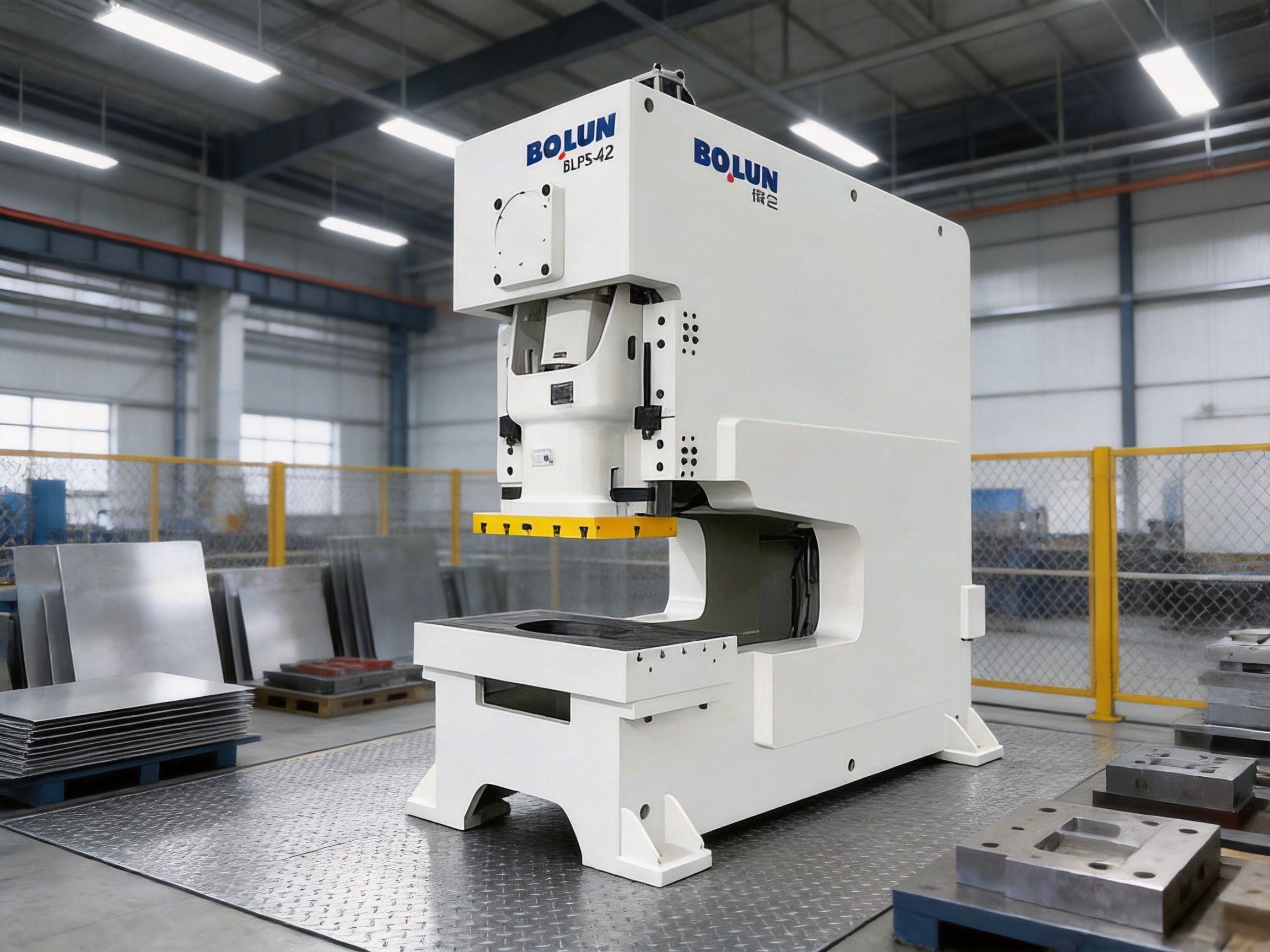
The performance of any mechanical power press begins with the frame. The frame is the backbone that absorbs and transmits forming forces. In an open-type machine, frame engineering is especially important because the structure must offer access without sacrificing too much stiffness. This press uses a welded steel frame with reinforcement and heat treatment, creating a practical balance between manufacturing efficiency, strength, and dimensional stability.
Welded steel construction allows the manufacturer to optimize the frame geometry for heavy industrial use. Reinforcement can be placed where stress concentration is expected, such as around the throat, table support, side walls, and load transfer sections. Compared with lighter open-frame presses, a reinforced design reduces the tendency for the frame to open under load. This is important because even small elastic deformation can affect die alignment and part repeatability.
Heat treatment plays a critical role after welding. Welding introduces residual stresses into the steel structure. If these stresses are not properly controlled, the frame may distort during machining, assembly, transportation, or long-term operation. Heat treatment helps stabilize the structure, reduce internal stress, and improve the foundation for precision machining. The result is a more reliable press body with better long-term dimensional behavior.
In practical production, rigidity affects more than the machine itself. It affects tool life, product accuracy, noise, vibration, maintenance intervals, and operator confidence. A press with better rigidity can help maintain more consistent die clearances, especially during repeated cycles. This is valuable for blanking and piercing, where clearance consistency influences burr height and edge quality. It also benefits forming operations where uneven deflection can cause inconsistent angles or part geometry.
Compared with low-cost presses that focus primarily on initial purchase price, this machine is positioned as a more robust production asset. The difference becomes clear over time. A cheaper press may appear adequate at first, but if it suffers from frame distortion, frequent adjustment, unstable part quality, or premature tooling wear, the total cost of ownership can become much higher. A stronger and better-stabilized frame helps reduce these hidden costs.
The deep-throat configuration is one of the defining strengths of the machine. In a conventional open press, the throat depth limits how far a workpiece can be inserted into the die area. For small parts, this may not matter. However, for large sheets, long strips, panels, or components with features located far from an edge, throat depth becomes a decisive factor.
A deep-throat press gives tooling designers more freedom. They can position forming stations deeper into the workpiece and design processes that would otherwise require larger closed-frame equipment or multiple handling steps. This can simplify production planning and reduce secondary operations. In some cases, a deep-throat press can replace a less flexible standard press and allow the factory to accept a wider variety of orders.
Another advantage is easier handling of irregular parts. Many real production parts are not simple rectangles. They may include flanges, cutouts, curved sections, or pre-formed features that interfere with machine access. The deep-throat opening improves the ability to place such parts correctly. When operators have more positioning space, they can work more efficiently and reduce the risk of damaging semi-finished components.
For semi-automatic or automated feeding systems, the extended throat can also be beneficial. Material guides, rollers, positioning devices, and fixtures may require space around the die area. A larger working envelope makes it easier to integrate auxiliary devices. Although each automation project must be engineered according to the specific production process, the open and deep structure provides a more accommodating foundation.
Competitor machines with shorter throat depth may be sufficient for narrow parts but can become restrictive when product geometry changes. In contrast, this open-gap deep-throat press offers a broader operating range, which is valuable in markets where customers frequently change designs, batch sizes, or material specifications.
The 850 × 440 mm worktable is an important feature for manufacturers seeking versatility. A large worktable gives more support to dies and fixtures and allows production engineers to plan stable tooling layouts. It also provides room for positioning accessories, material supports, and part handling aids.
In press operations, the table is not simply a flat surface. It is part of the precision system that supports the lower die and transfers force into the frame. If the table is too small, tooling may overhang or require special adapters, which can reduce stability. A larger worktable helps distribute loads more effectively and gives designers a better foundation for reliable setups.
For complex forming operations, an enlarged table may allow multi-step or compound tooling within the press capacity. It can also support dies used for parts with wide flanges or asymmetric geometry. This is especially useful for factories handling mixed production, where one press may need to run different products during the same week.
Compared with competitors that offer smaller tables in similar nominal-force ranges, the larger platform can reduce the need for custom base plates and extra tooling modifications. This can shorten setup time and lower tooling costs. Over many jobs, these savings can become significant.
The table size also helps improve operator ergonomics. With adequate space around the die, operators can position materials more confidently and avoid awkward handling. Good ergonomics can support productivity, reduce fatigue, and improve safety behavior. Although machine safeguards and operating procedures remain essential, a well-proportioned working area contributes to a better production environment.
Die height adjustment is a key factor in press usability. Every die has a required shut height, and production facilities often use tooling from multiple sources or for different product generations. If a press has limited adjustment range, some dies may be difficult or impossible to use without modifications. This can reduce equipment flexibility and increase tooling cost.
The extended die height adjustment range of this press improves compatibility with varied tooling. It allows the machine to adapt to dies for stamping, bending, shallow drawing, trimming, and specialized forming tasks. This is especially valuable for job shops and component manufacturers that process diverse orders rather than a single fixed product.
Tooling flexibility also helps companies respond to customer requirements. In fast-changing markets, production teams may need to introduce new dies, revise existing dies, or run small batches for trial production. A press with better adjustment capability can support these changes more easily. It allows the factory to use its equipment more intensively and avoid unnecessary investment in additional presses for minor tooling differences.
From a maintenance perspective, appropriate die height adjustment also reduces the temptation to use unsafe or improvised setup methods. When a machine can accommodate the correct tooling height, operators are less likely to rely on unsuitable spacers or modifications. This supports safer and more standardized production practices.
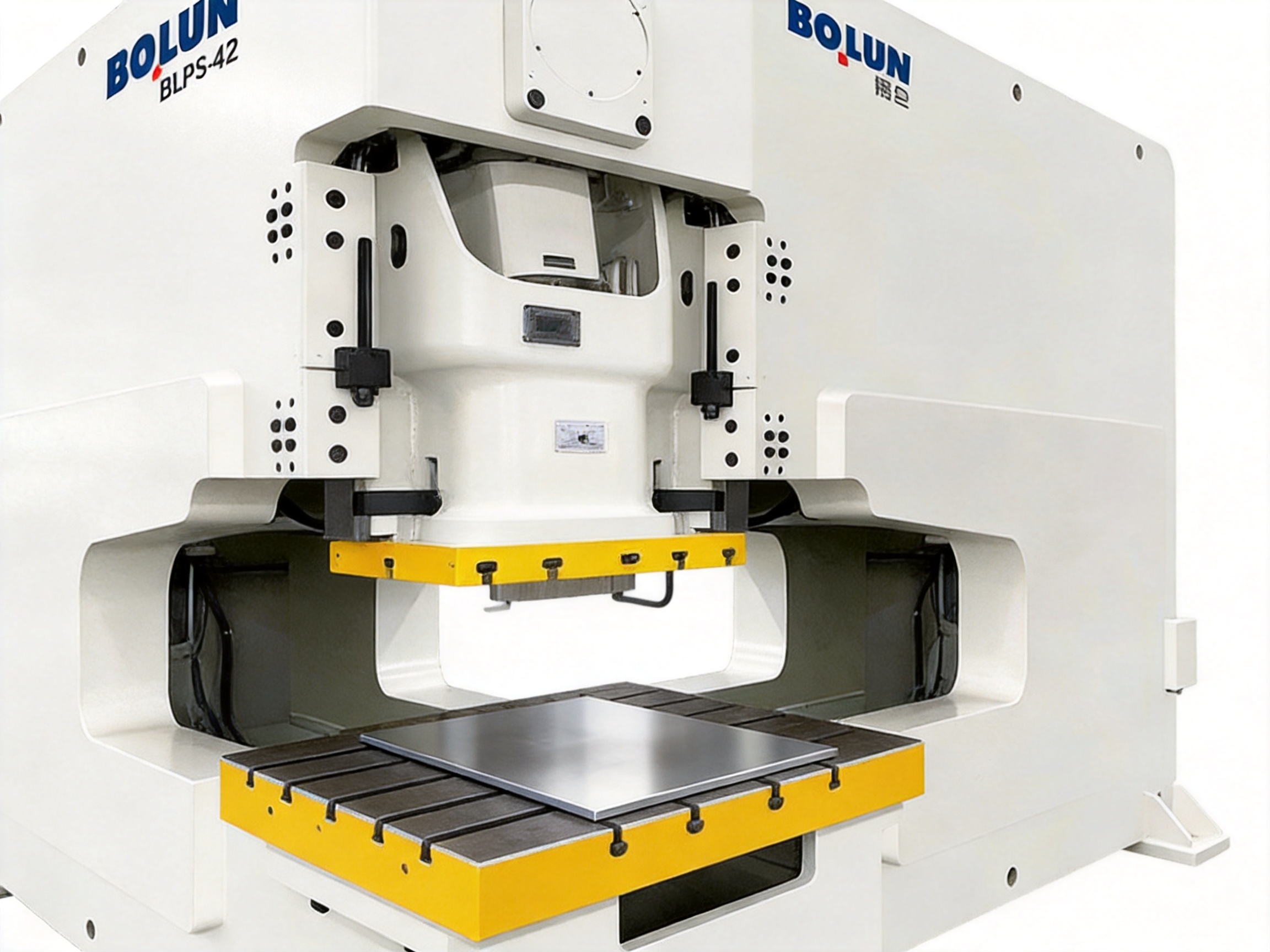
Hydraulic overload protection is one of the most important safety and reliability features in a modern press. Overload is a common risk in forming operations. It may result from incorrect material thickness, improper feeding, wrong die setup, material overlap, tool wear, foreign objects, or process miscalculation. Without overload protection, such events can damage the press frame, crank mechanism, slide, die set, or worktable.
The hydraulic overload protection device helps reduce the consequences of abnormal load conditions. When the force exceeds a safe threshold, the system can respond to protect the machine from excessive stress. This is particularly important for high-capacity continuous production cycles, where even a single serious overload event can stop a production line and cause expensive repairs.
For manufacturers, protection is not only a technical feature; it is a financial advantage. Tooling can be expensive, delivery schedules can be tight, and downtime can disrupt customer commitments. A press equipped with overload protection provides an additional layer of defense against production accidents. This contributes to better equipment availability and more predictable manufacturing performance.
Compared with basic power presses that lack advanced overload protection, this machine offers a more responsible solution for factories with demanding workloads. It supports a production philosophy based on prevention rather than reaction. Instead of accepting damage as an unavoidable risk, the machine integrates protective engineering into its core configuration.
Hydraulic overload protection is also valuable during die trials and process development. When new tooling is introduced, forming force may not be perfectly predicted. Protection helps reduce risk while engineers optimize settings. This makes the machine useful not only for mass production but also for flexible manufacturing environments where process changes occur regularly.
Control response is central to press operation. A press must start, stop, and cycle with predictable behavior. High-sensitivity dual solenoid valve control supports precise stop-start response and operational stability. This feature is particularly important in continuous production and in operations where operator timing, feeding accuracy, or tooling protection matters.
Dual solenoid valve control can improve reliability by providing controlled actuation and response redundancy within the designed control architecture. A sensitive control system helps ensure that commands are executed promptly and consistently. In press work, hesitation, delayed stopping, or unstable response can affect productivity and safety. Therefore, responsive control is a significant advantage.
For operators, predictable machine response builds confidence. When a press behaves consistently, workers can follow standard procedures more effectively. For production managers, stable control supports repeatable cycle timing and easier integration with auxiliary equipment. For maintenance teams, a well-designed control system can help reduce troubleshooting complexity compared with inconsistent or outdated actuation systems.
Competitor machines with simpler control arrangements may be acceptable for basic tasks, but they may not offer the same level of precision or operational assurance under higher-demand cycles. The high-sensitivity control configuration strengthens this press’s suitability for industrial environments where stability and responsiveness are required every shift.
The 4 kW main motor provides the drive foundation for the press. Motor sizing in a press must match the intended force range, cycle requirements, and mechanical design. A properly selected motor supports stable operation without unnecessary energy consumption or inadequate performance. In this machine, the motor is matched to a 450 kN press platform intended for medium-duty industrial use.
Continuous production places demands on every part of the drive system. The motor, transmission, clutch and brake system, bearings, lubrication points, and frame must work together under repeated load. A robust press is not defined by a single specification but by the way all systems interact. The drive system must deliver power reliably, while the frame must resist deformation and the control system must maintain cycle consistency.
For factories seeking dependable output, the combination of motor power, structural rigidity, and overload protection is more meaningful than speed alone. A press that runs quickly but requires frequent adjustment or suffers from downtime may be less productive than a press that operates steadily and predictably. This machine is engineered for operational stability, which is a key advantage in real industrial conditions.
Energy efficiency should also be understood in practical terms. An oversized press may consume more resources than necessary for medium-duty work, while an undersized press may operate near its limits and wear faster. A 450 kN platform offers a balanced solution for many sheet metal and forming applications, allowing users to match machine capability to typical production needs.
The quality of a power press depends heavily on the manufacturer’s production system. Zhejiang Bolun High-Precision Machinery Co., Ltd. operates as a modern machinery enterprise integrating research and development, design, production, sales, and service. This integrated model enables better control over product design, component quality, assembly methods, customization, and after-sales support.
The company is located in Zhejiang, one of China’s important regions for precision manufacturing. With two decades of deep experience in machinery manufacturing, it has developed a mature production management system for forming equipment. Its development has been driven by technical accumulation, process improvement, and a focus on high-precision industrial machine tools.
One of the company’s major strengths is its full-chain production capability. In press manufacturing, full-chain capability can include design, structural fabrication, machining, component preparation, assembly, inspection, and service coordination. This reduces dependence on fragmented external processes and gives the manufacturer better control over quality consistency.
The company also emphasizes non-standard customization. This is significant because press users often have special requirements, such as unique table dimensions, stroke preferences, automation interfaces, feeding systems, guarding arrangements, control preferences, or production-specific tooling support. A manufacturer with a capable design team can adapt equipment to the customer’s production environment more effectively than a supplier offering only standard machines.
Advanced precision processing equipment supports the machining of key structural and mechanical surfaces. Accurate machining is essential for slide guidance, table flatness, bearing alignment, and assembly precision. Even a strong frame will not deliver reliable results if the machined surfaces are inaccurate. Therefore, precision processing capability directly influences machine performance.
Quality control is described as the lifeline of the manufacturer. For power presses, this philosophy is essential because a press is a long-term capital asset. Customers expect stable precision, safe operation, and long service life under high-intensity conditions. Achieving this requires inspection at each stage rather than only a final visual check.
A rigorous finished product inspection system can examine structural integrity, assembly quality, operating response, control performance, lubrication, protective devices, slide movement, noise, vibration, and other machine behaviors. By exceeding ordinary industry inspection practices, the manufacturer aims to ensure that each machine delivered to the customer has reliable baseline performance.
Process control also reduces variation between machines. In industrial procurement, customers need confidence that a machine’s performance will match the specification and that repeat orders will maintain the same standard. A disciplined production management system supports this consistency. It also helps identify and correct issues before the equipment reaches the customer’s site.
Compared with competitors that compete primarily on price, a manufacturer with stronger inspection culture offers a different value proposition. The customer may gain lower lifetime risk, better support, more stable production, and fewer unexpected problems. In heavy equipment, the lowest purchase price is rarely the same as the lowest lifetime cost.
Inspection is especially important for open-gap deep-throat presses because the frame geometry and throat structure must resist deformation under load. Proper inspection helps verify that welding, heat treatment, machining, and assembly have produced a stable and functional press body. This is part of the reason the machine is positioned for high-demand industrial use rather than occasional light-duty operation.
Modern manufacturing increasingly requires equipment that can adapt to specific production needs. Standard machines remain useful, but many factories benefit from customization. Zhejiang Bolun’s design team provides one-stop design and manufacturing services for products with special specifications and functions. This capability is particularly relevant to power presses because the machine often becomes part of a broader production system.
Customization may involve worktable configuration, control options, feeding compatibility, safety devices, die mounting details, material handling solutions, or integration with peripheral equipment. It may also involve adapting the press to special materials, part geometries, or production sequences. The ability to discuss these requirements with an experienced manufacturer helps customers choose a press that fits real production rather than a generic catalog description.
Application engineering can reduce the risk of mismatched equipment. For example, a customer may know the part size and material but may need support in evaluating press force, throat depth, die height, and table requirements. A knowledgeable supplier can help analyze these factors and recommend suitable configurations. This support is valuable before purchase, during installation, and after production begins.
Non-standard customization also strengthens the machine’s competitive position. Many competitors offer standard open-type presses, but not all can provide tailored solutions backed by in-house design and production. For customers with special process requirements, customization capability can be the difference between a press that merely operates and a press that genuinely improves production efficiency.
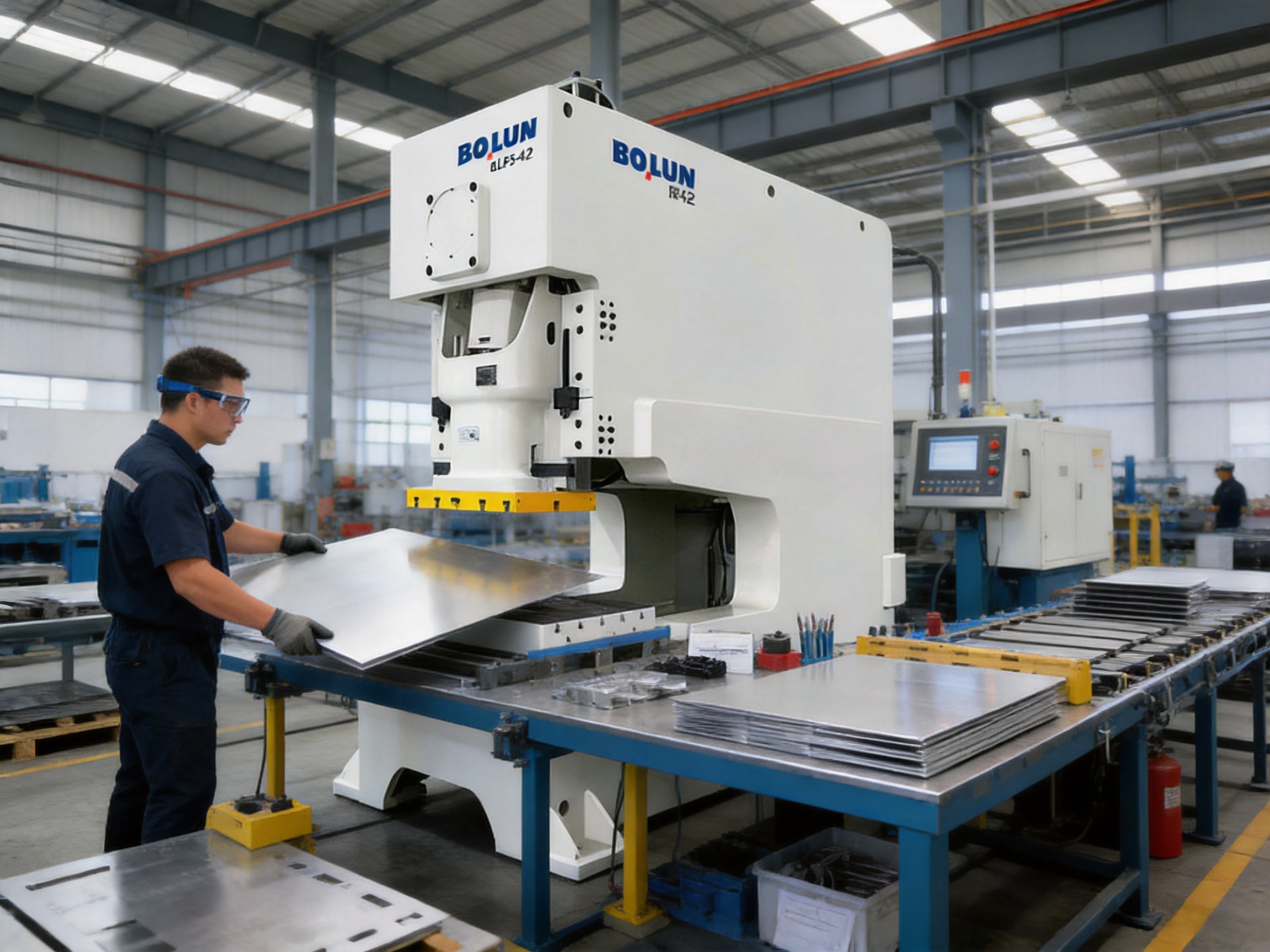
The competitive advantages of this open-gap deep-throat power press can be understood through real production concerns: flexibility, rigidity, protection, control response, table size, tooling compatibility, and manufacturer support. These factors determine how useful the machine will be after installation.
First, the deep-throat design gives the machine a clear advantage over standard short-throat open presses. It allows deeper workpiece entry and supports wider processing possibilities. For customers producing larger panels, longer strips, or parts with remote features, this can directly reduce handling complexity and increase process options.
Second, the reinforced heat-treated welded frame gives it an advantage over lighter open-frame competitors. Open presses are often selected for access, but some are too flexible for heavier work. The reinforced structure addresses this limitation by improving rigidity and reducing elastic deformation under load.
Third, the 850 × 440 mm worktable provides more production flexibility than smaller tables. Larger tooling, better support, and easier fixture placement help improve setup quality. In varied production environments, table size can strongly influence how many jobs a press can handle effectively.
Fourth, hydraulic overload protection offers a major advantage over basic presses without comparable protection. Tooling accidents and overload events can be costly. Built-in protection supports equipment safety and helps reduce downtime risk.
Fifth, high-sensitivity dual solenoid valve control improves machine response and operational consistency. Stable control is important for operator confidence, production rhythm, and integration with supporting equipment.
Sixth, the manufacturer’s advanced production and inspection system strengthens the value of the machine. A power press should not be judged only by a specification sheet. The quality of welding, heat treatment, machining, assembly, inspection, and service all influence long-term performance. The company’s two decades of experience and integrated production model provide a stronger foundation for reliable equipment supply.
This press is suitable for a wide range of industrial applications. In metal stamping, it can perform blanking, punching, piercing, trimming, and forming within its rated capacity. In sheet metal fabrication, it can support bending, embossing, light drawing, and feature forming. In hardware manufacturing, it may be used for brackets, plates, covers, hinges, connectors, and other metal components. In appliance and electrical industries, it can help produce panels, mounting parts, reinforcement pieces, and enclosure-related components.
The deep-throat feature is particularly useful when part geometry requires forming away from the material edge. For example, a wide metal sheet may need holes or embossing at a central location. A standard press may not provide enough reach, forcing the factory to use a larger machine or redesign the process. A deep-throat press can often handle such work more efficiently.
In medium-duty forming, the 450 kN force rating provides enough capability for many common materials and thicknesses, depending on die design and process requirements. Production engineers should always calculate required tonnage before operation, considering material type, thickness, cutting length, forming complexity, and safety margin. When matched correctly, the press can provide stable performance across repeated cycles.
The machine is also useful for job shops because job shops often face changing customer orders. They need versatile equipment that can handle different part sizes and tooling setups. A press with an enlarged table, deep throat, and adjustable die height gives such shops more flexibility and better utilization.
Long-term value in a press comes from stable operation, reduced downtime, good part quality, manageable maintenance, and support from the manufacturer. Initial purchase price matters, but it is only one part of the ownership equation. A press that performs reliably for years can generate far greater value than a low-cost machine that causes frequent interruptions.
The reinforced frame supports long-term value by reducing deformation and preserving alignment. The hydraulic overload protection supports value by preventing severe damage. The responsive control system supports value by improving operating consistency. The enlarged table and deep throat support value by expanding the machine’s usable application range. Together, these features make the press a practical investment for manufacturers seeking both strength and flexibility.
Maintenance planning is also important. A well-built press should be operated according to correct lubrication, inspection, and setup procedures. Operators should monitor abnormal noise, vibration, temperature, and control response. Tooling should be kept in good condition, and overload events should be investigated rather than ignored. With proper maintenance, the machine’s structural and control advantages can be preserved over a long service life.
The manufacturer’s service philosophy includes pre-sales consultation, in-sales support, and after-sales guarantees. This service coverage helps customers make informed equipment choices, complete smoother installation and commissioning, and receive support when operational questions arise. In international manufacturing, service responsiveness is a key part of supplier value.
Power press buyers sometimes focus heavily on nominal force while overlooking manufacturing process quality. However, two presses with the same force rating can perform very differently. Differences in steel quality, welding procedure, stress relief, machining accuracy, slide alignment, assembly discipline, control system quality, and inspection standards can all affect real performance.
A heat-treated welded frame requires careful process control. The welding sequence must manage distortion. Heat treatment must be appropriate for stress reduction. Machining must be performed after structural stabilization to achieve accurate surfaces. Assembly must align moving components correctly. Testing must verify operational response. If any stage is weak, final performance may suffer.
Zhejiang Bolun’s emphasis on technological innovation and full-chain production is therefore directly relevant to the machine. It allows the company to coordinate the entire manufacturing path from design to final inspection. This reduces the risk that critical quality factors will be lost between separate suppliers. It also supports customization because design changes can be connected to production realities.
The company’s management philosophy combines international production management experience with China’s local manufacturing environment. This can help create a system that is efficient, practical, and quality-focused. For customers, the benefit is equipment that reflects both engineering discipline and manufacturing cost effectiveness.
When selecting this type of power press, buyers should evaluate several factors. The first is required forming force. The 450 kN rating must be suitable for the intended operations with an appropriate safety margin. The second is workpiece size and required throat depth. Buyers should confirm that the deep-throat configuration provides enough reach for current and future parts.
The third factor is tool size. The 850 × 440 mm worktable offers broad flexibility, but the die footprint, mounting requirements, and material flow should still be checked. The fourth factor is die height. The extended adjustment range improves compatibility, but each major die should be reviewed. The fifth factor is production mode: manual, semi-automatic, or automated. The open configuration can support different modes, but safety systems and feeding devices should be planned correctly.
The sixth factor is facility conditions. Installation space, foundation, power supply, material handling, operator access, maintenance clearance, and safety regulations should all be considered. The seventh factor is supplier capability. Buyers should choose not only a machine but also a manufacturing partner capable of technical communication, customization, quality assurance, and after-sales support.
For companies comparing alternatives, it is useful to look beyond catalog specifications. A lower-cost press with a smaller table, weaker frame, shorter throat, limited adjustment, or basic protection may not deliver the same production value. The better choice is the machine that aligns with long-term manufacturing goals.
It is an open-gap deep-throat power press. It belongs to the open-type power press category and is designed for applications that require easy access to the working area and deeper workpiece positioning than standard short-throat presses.
The machine provides a nominal force of 450 kN, making it suitable for many medium-duty stamping, forming, punching, trimming, bending, and related metal processing operations within appropriate tooling and material limits.
The deep-throat design allows workpieces to be inserted farther into the press. This is valuable for wide sheets, long strips, large panels, or parts with features located away from the material edge. It increases process flexibility compared with conventional short-throat open presses.
The reinforced welded steel frame improves rigidity and helps reduce elastic deformation during heavy loading. Heat treatment helps relieve residual stress after welding, supporting long-term dimensional stability and more reliable press performance.
The enlarged worktable provides more room for dies, fixtures, material supports, and positioning devices. It helps accommodate larger tooling and improves flexibility for manufacturers that process different part sizes or change jobs frequently.
Hydraulic overload protection helps protect the press and tooling when abnormal loads occur. It reduces the risk of serious damage caused by incorrect material, misfeeding, die misalignment, double-sheet feeding, or other overload conditions.
This control configuration supports precise stop-start response and stable operation. It improves operator confidence, supports repeatable cycle behavior, and contributes to safer and more predictable production.
Compared with many lower-cost presses, this machine offers a stronger frame, deeper throat, larger worktable, hydraulic overload protection, responsive control, and support from an experienced manufacturer with advanced production and inspection capabilities. These features can reduce hidden costs related to downtime, tooling wear, setup limitations, and unstable quality.
Yes. The manufacturer has non-standard customization capability supported by an experienced design team. Customers can discuss special specifications, production requirements, tooling needs, and functional preferences to obtain a more suitable solution.
It can be used in metal stamping, sheet metal fabrication, hardware production, electrical component manufacturing, appliance parts production, automotive-related component preparation, and other industries requiring medium-duty forming with improved workpiece access.
The robust large-capacity open-gap deep-throat power press is a strong and flexible solution for manufacturers that need more than a basic stamping machine. With a 450 kN nominal force, reinforced heat-treated welded steel frame, 850 × 440 mm enlarged worktable, extended die height adjustment, 4 kW main motor, hydraulic overload protection, and high-sensitivity dual solenoid valve control, it is engineered for demanding industrial production environments.
Its deep-throat structure expands processing possibilities, especially for larger and more complex workpieces. Its reinforced frame improves rigidity, while the enlarged table and adjustable die height increase tooling compatibility. Its overload protection and responsive control system support safe, stable, and continuous production. These advantages make it more capable than many conventional open presses that are limited by shorter throat depth, smaller tables, weaker structures, or simpler protection systems.
The machine’s value is further strengthened by the manufacturing capabilities of Zhejiang Bolun High-Precision Machinery Co., Ltd. With two decades of machinery manufacturing experience, integrated R&D and production, advanced precision processing equipment, non-standard customization, rigorous inspection, and customer-oriented service, the company provides not just a press but a complete equipment solution. For manufacturers seeking higher flexibility, stronger reliability, and better long-term value in medium-duty forming operations, this open-gap deep-throat power press is a compelling choice.
Altan, T., and Tekkaya, A. E. Sheet Metal Forming: Fundamentals and Applications. ASM International.
Kalpakjian, S., and Schmid, S. R. Manufacturing Engineering and Technology. Pearson.
Suchy, I. Handbook of Die Design. McGraw-Hill Education.
Groover, M. P. Fundamentals of Modern Manufacturing: Materials, Processes, and Systems. Wiley.
Society of Manufacturing Engineers. Tool and Manufacturing Engineers Handbook: Forming. SME.
Boljanovic, V. Sheet Metal Forming Processes and Die Design. Industrial Press.


Understanding Mechanical Power Presses and Their Essential Functions A mechani...
What Is a Power Press? A power press — also called a stamping press or punch pr...
In the fields of metal forming, sheet metal fabrication, blanking, and punching,...
Power press machines are classified in two main ways: by frame construction, w...
As the manufacturing industry moves steadily toward automation and smart product...
In modern manufacturing, cold forging is widely used in the automotive, aerospac...
Contact Us

bolunpress@gmail.com

+86-575-83362228

+86-15158259588

+86-575-83362999

+86-15158259588

Hangzhou Office Add: No. 332 Wangjiang East Road, Shangcheng District

No.1 Linjiang Road East, Xiaren, Jinting Town, Shengzhou City, Zhejiang Province, China
Ready to Begin?
Get in Touch

Now!

ZHEJIANG BOLUN
 English
 中文简体
中文简体