
In modern sheet metal forming, the demand for higher productivity, improved dimensional consistency, and more flexible processing of wide materials has pushed manufacturers to look beyond standard press configurations. The compact precision open-gap deep-throat power press is designed to answer this demand by combining the accessibility of an open-type structure with an extended throat depth that allows operators and automation systems to handle large sheet metal components more efficiently. The BLPS-25 Compact Precision Open-Gap Deep-Throat Power Press represents this specialized direction in power press engineering, offering a nominal capacity of 250 kN, a deep throat range from 500 mm to 1200 mm, and high-speed operation of up to 180 strokes per minute.
This machine is not merely a smaller open press with a longer reach. It is engineered as a practical solution for manufacturers that need speed, reach, rigidity, and stable forming performance within a space-conscious footprint. For workshops producing hardware parts, electrical components, electronic housings, appliance parts, thin sheet metal brackets, and other wide-panel stampings, a standard press may require repeated repositioning, additional handling, or a larger and more expensive press configuration. By contrast, the BLPS-25 gives users the ability to process wider workpieces with improved access to the working area, while maintaining the precision and reliability expected from modern forming equipment.
Zhejiang Bolun High-Precision Machinery Co., Ltd. develops and manufactures this product from its production base in Zhejiang, one of China’s important regions for precision machinery and industrial manufacturing. With approximately two decades of experience in machinery manufacturing, the company integrates research and development, mechanical design, production, assembly, inspection, sales, and service. Its emphasis on high-precision forming equipment, non-standard customization, and rigorous quality control gives the BLPS-25 a competitive foundation not only as a product, but also as part of a broader manufacturing capability.
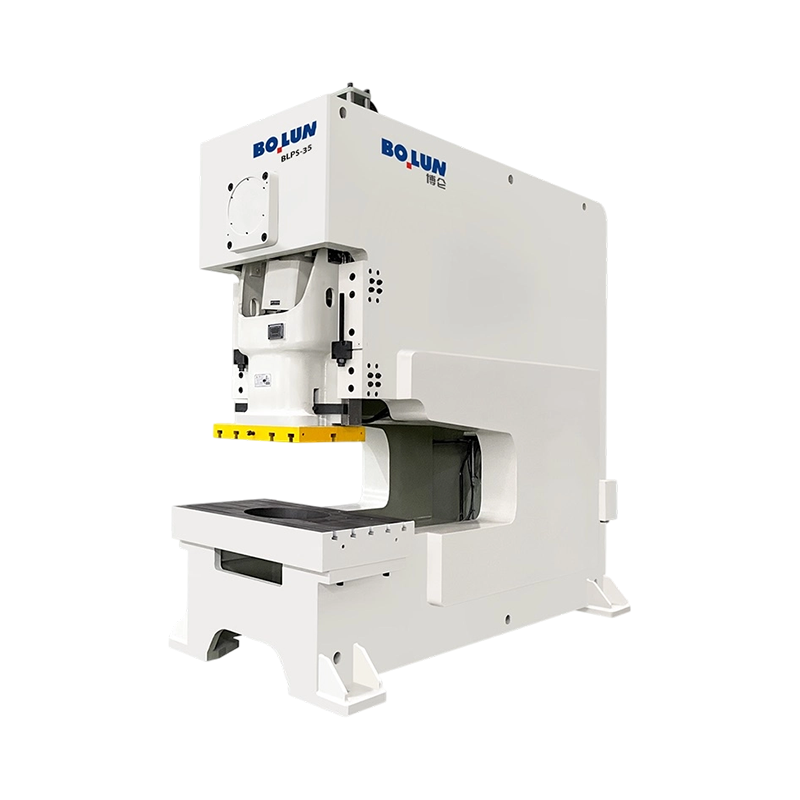
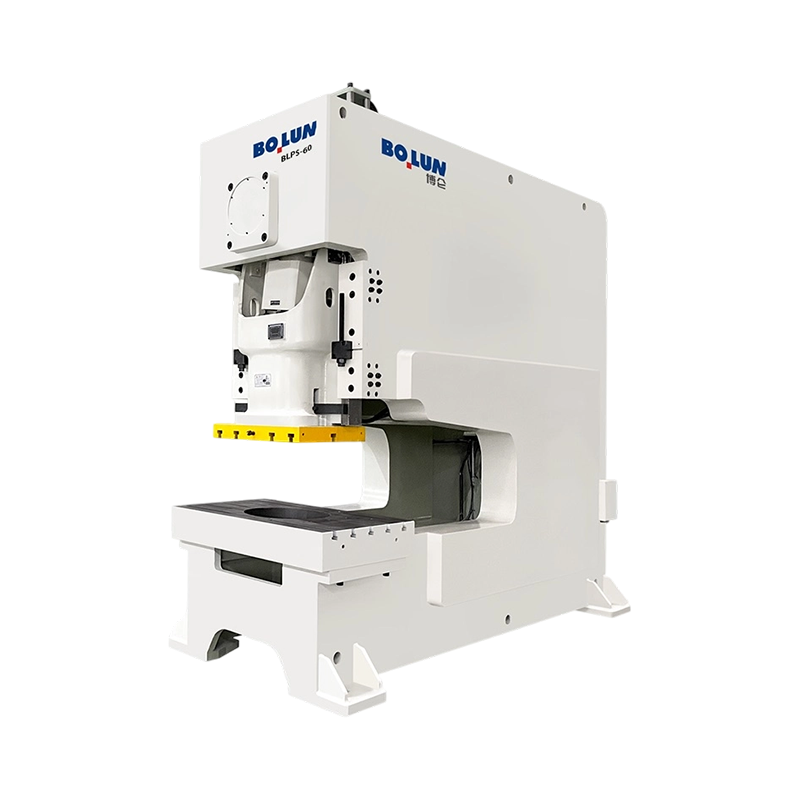
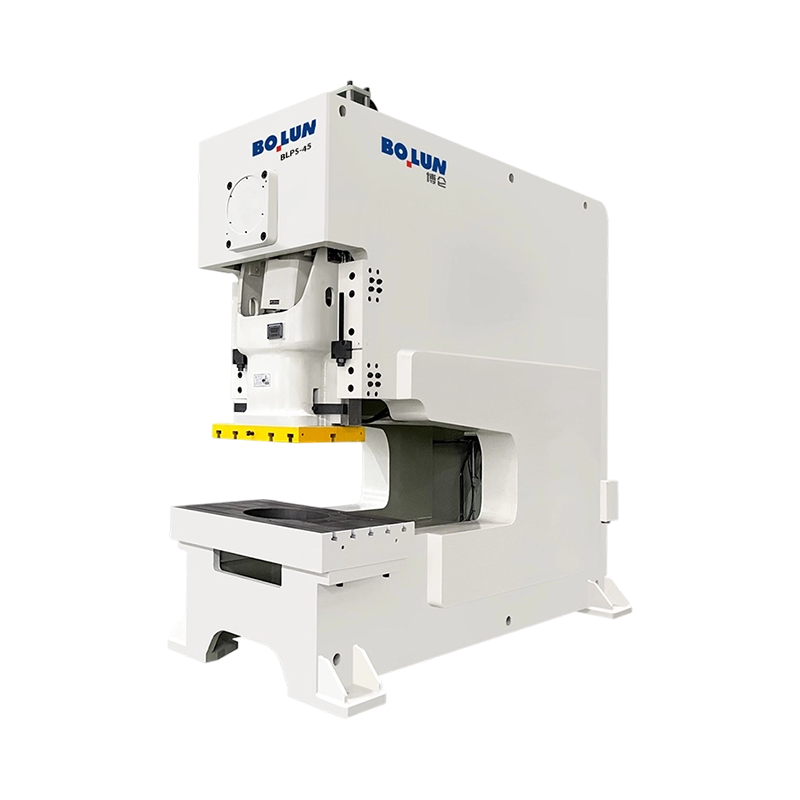
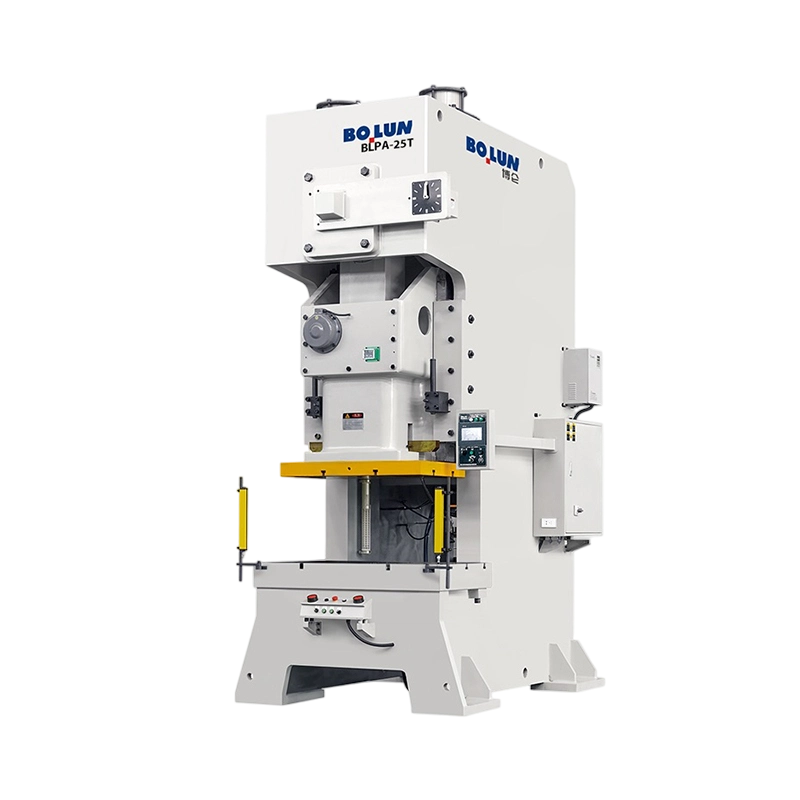
BLPS-25 Compact Precision Open-Gap Deep-Throat Power Press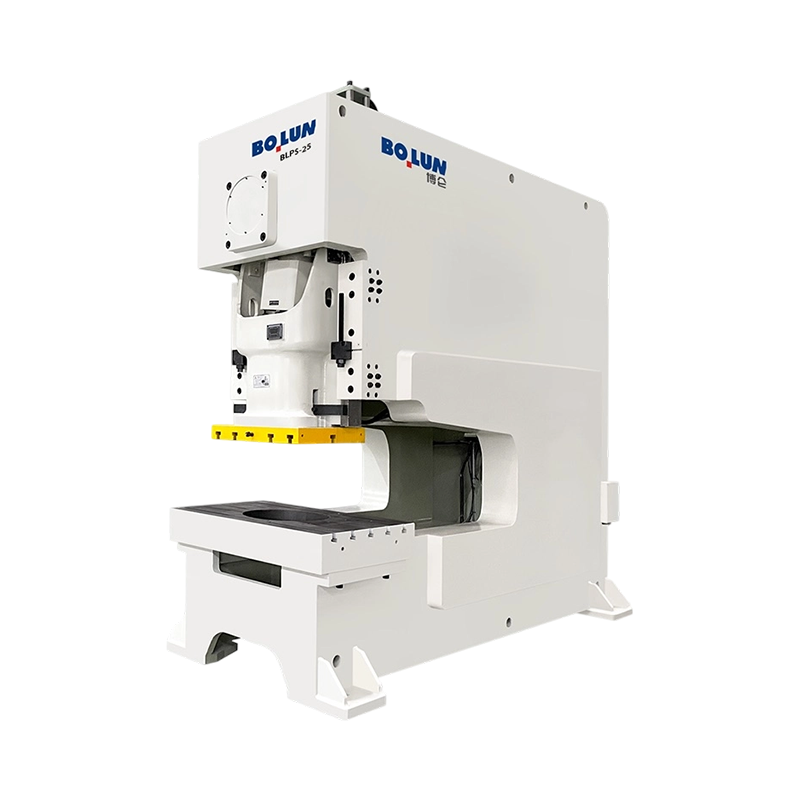
The BLPS-25 belongs to the open-type power press family and is specifically configured as an open-gap deep-throat power press. Open-type presses are valued for their accessibility because the operator can approach the die area easily from the front and sides. This arrangement is particularly useful in production settings that require frequent die changes, manual loading, semi-automatic feeding, or the processing of materials with irregular dimensions. However, many conventional open-type presses have limited throat depth, meaning the distance from the center of the slide to the frame is not sufficient for wide sheets or large panels.
The deep-throat design addresses this limitation. With a throat depth range of 500 mm to 1200 mm, the BLPS-25 allows wider sheet metal to enter the working area without interference from the press frame. This is important in industries where parts are not necessarily thick or extremely heavy, but are broad, flat, and difficult to reach using ordinary presses. A large panel, enclosure plate, electronic component sheet, or elongated hardware blank may need a stamping point far from the edge of the material. The extended throat makes that possible without requiring the user to invest in a much larger closed-frame press.
The machine’s 250 kN nominal capacity is well suited for many medium-light and precision sheet metal operations. It is not designed to replace heavy-duty presses intended for very thick plate forming, but it offers a strong balance for applications where speed, accessibility, and reach are more important than extreme tonnage. This makes it a practical choice for workshops seeking efficient output of small-to-medium metal parts from large sheets or wide strips.
The BLPS-25 integrates a group of technical features that support its role as a compact, accurate, and efficient stamping solution. Its high-rigidity steel frame is designed to resist deformation during repeated stamping cycles. Rigidity is critical in any press because frame deflection can affect die alignment, part accuracy, and tool life. In deep-throat machines, rigidity becomes even more important because the extended reach can increase the mechanical demands placed on the frame. A well-built steel structure helps ensure that the press remains stable even under continuous high-speed operation.
The machine is powered by a 2.2 kW main motor, providing the drive needed for efficient production while maintaining an energy-conscious configuration. For manufacturers concerned about operating cost, this motor capacity offers a practical balance between power and efficiency. The ability to reach up to 180 strokes per minute under high-speed operating conditions allows the BLPS-25 to support productivity-focused production lines, especially when working with thin sheet metal components that can be stamped rapidly.
Another important feature is the sensitive dry clutch brake. In stamping production, clutch and brake performance influence not only productivity but also safety, control, and repeatability. A responsive clutch brake helps the operator or control system manage press engagement and stopping behavior more effectively. This is particularly valuable in applications requiring accurate single-stroke operation, controlled feeding, or alignment-sensitive stamping.
The BLPS-25 also includes a manual slide adjustment device. Slide adjustment is essential when changing dies, setting shut height, or fine-tuning the forming process. A manual adjustment system provides a direct and reliable method for setup, especially in production environments where simplicity, durability, and maintainability are valued. Instead of relying on overly complex adjustment mechanisms, the machine gives operators a straightforward way to configure the press according to tooling and workpiece requirements.
| Item | Specification or Feature | Production Benefit |
|---|---|---|
| Machine Type | Open-gap deep-throat power press | Improved accessibility for wide sheet metal and large components |
| Nominal Capacity | 250 kN | Suitable for medium-light precision stamping applications |
| Throat Depth | 500 mm to 1200 mm | Allows stamping points farther from the material edge |
| Main Motor | 2.2 kW | Balanced power consumption and production capability |
| Maximum Speed | Up to 180 strokes per minute | Supports high-output stamping of suitable sheet metal parts |
| Frame | High-rigidity steel structure | Enhances stability, precision, and die alignment |
| Clutch Brake | Sensitive dry clutch brake | Improves control, response, and operational reliability |
| Slide Adjustment | Manual slide adjustment device | Simplifies die setup and process tuning |
In many stamping operations, the press capacity alone does not determine whether a machine is suitable. Reach can be equally important. A conventional press may have enough tonnage to stamp a part, but if the frame prevents the material from being positioned correctly, the press cannot perform the job efficiently. Operators may need to rotate the workpiece, stamp in multiple stages, use special fixtures, or move the work to a larger and more expensive machine.
The deep-throat configuration solves this challenge by increasing the working distance between the press frame and the slide centerline. For wide panels or long blanks, this allows the die to contact areas that would otherwise be unreachable. The BLPS-25 is therefore especially useful for sheet metal components that have forming, punching, notching, embossing, or marking positions located away from the edge of the material.
Compared with standard open-type presses, the advantage is immediate: fewer positioning restrictions. This can reduce material handling time, improve workflow, and support more flexible part design. In some cases, one deep-throat press can handle jobs that would otherwise require multiple setups. For manufacturers producing diverse parts in small and medium batches, this flexibility can be as valuable as speed.
Compared with many closed-type presses, the advantage is accessibility and cost-effectiveness. Closed-frame presses are often chosen for high tonnage and high rigidity, but they may be larger, more expensive, and less convenient for certain wide-sheet operations. The BLPS-25 gives users a focused alternative when the application requires moderate capacity, long reach, and open access rather than maximum forming force.
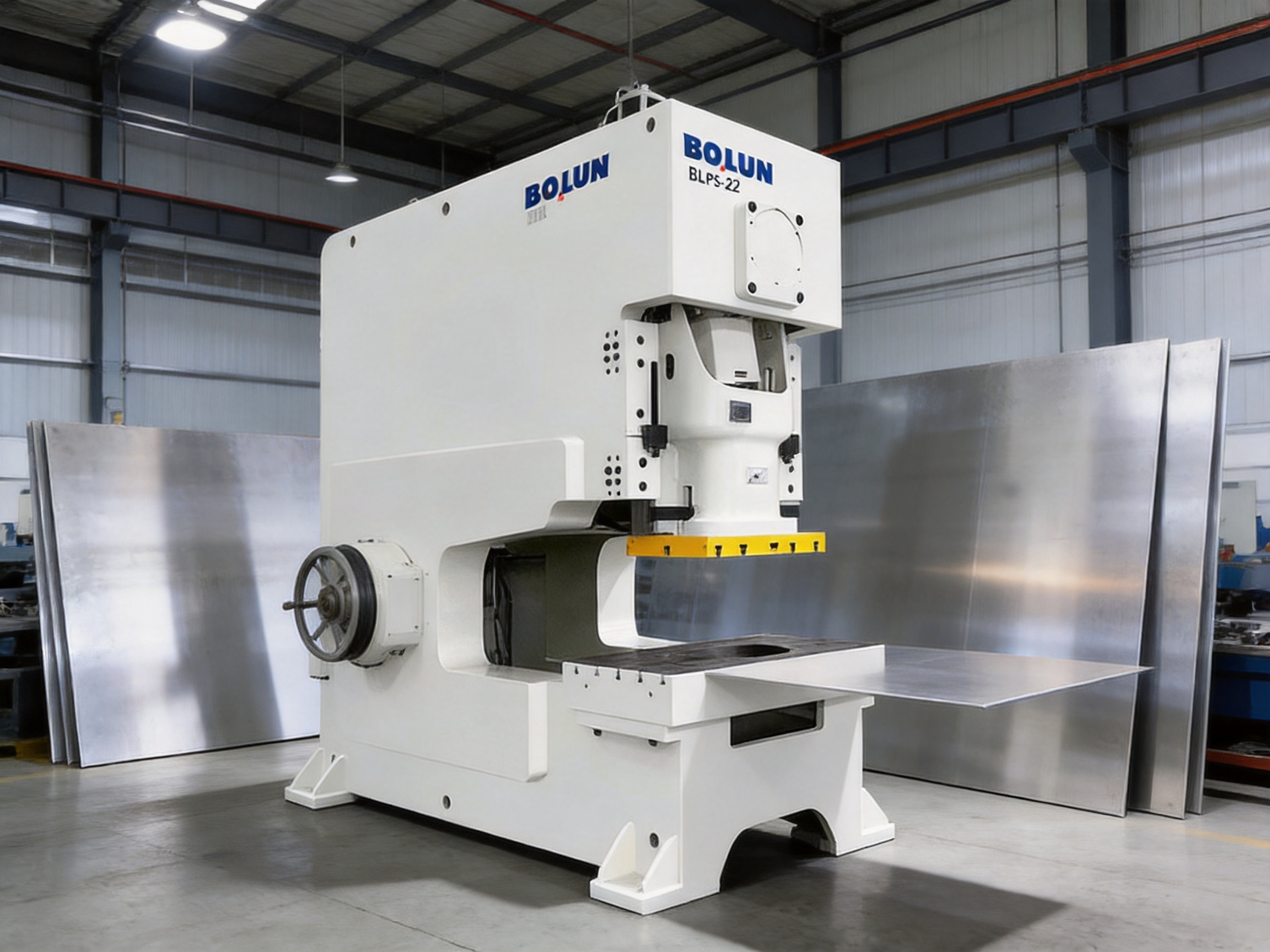
One of the strongest competitive advantages of the BLPS-25 is its combination of compact structure and extended throat depth. Many machines with long reach become bulky, heavy, or difficult to integrate into smaller production spaces. The BLPS-25 is designed as a compact precision press, making it attractive for factories where floor space must be used efficiently. This is particularly relevant for workshops that already operate multiple machines and need to add capability without reorganizing the entire production layout.
Another advantage is the balance between speed and stability. Reaching up to 180 strokes per minute gives the machine strong productivity potential for suitable materials and tooling. However, high speed is only useful if the press remains stable. The high-rigidity steel frame supports consistent operation, helping reduce the risk of vibration-related inconsistency. In comparison, lower-rigidity competitor machines may experience accuracy loss, faster die wear, or unstable output when operated at higher speeds.
The extended throat depth from 500 mm to 1200 mm also creates a more versatile processing window. Some competitor presses may offer open access but limited throat reach, while others may offer deep throat configurations but with less attention to compactness or high-speed performance. The BLPS-25 brings these elements together in a focused machine for wide sheet metal stamping.
The sensitive dry clutch brake provides another important difference. A press that starts and stops predictably is easier to control, especially during setup, trial runs, and single-stroke production. In competitor machines with less responsive clutch and brake systems, operators may experience reduced confidence during precision work. The BLPS-25 supports safer and more accurate operation by giving the user better control over machine cycling.
Manual slide adjustment may seem simple, but in many production environments simplicity is a major advantage. Complex adjustment systems can require specialized maintenance, create downtime when faults occur, or raise the initial cost of the machine. The BLPS-25 uses a practical manual adjustment approach that supports die setup while preserving mechanical reliability. For many users, this results in easier operation and lower maintenance burden.
The steel frame is the foundation of press performance. Every stamping operation generates force that travels through the slide, die, workpiece, bed, and frame. If the frame lacks rigidity, the machine can deflect during the working stroke. Even small deflections may influence part dimensions, surface quality, burr formation, and tool life. In high-speed production, repeated deflection can also contribute to fatigue and inconsistent results.
For a deep-throat press, structural rigidity is especially important because the throat extension changes the geometry of force transmission. A longer throat may increase the tendency for frame opening or angular deflection if the frame is not properly designed and manufactured. The BLPS-25 addresses this by using a high-rigidity steel frame intended to maintain stability under repeated operation.
Precision is not achieved by one component alone. It depends on the relationship between frame strength, slide movement, die alignment, clutch response, motor performance, and manufacturing accuracy. Zhejiang Bolun High-Precision Machinery Co., Ltd. emphasizes high-precision forming equipment and complete production control, which supports the consistent mechanical quality required for reliable operation. By controlling design, component processing, assembly, and inspection, the company can better ensure that the finished machine performs as intended.
Speed is a direct factor in stamping productivity. When tooling, material feeding, and part removal are properly matched to the press, a higher stroke rate can significantly increase output. The BLPS-25 can operate at up to 180 strokes per minute, allowing it to serve high-efficiency production of thin sheet metal components and precision parts.
High-speed capability is particularly useful for electronic component manufacturing, hardware production, and other industries where large volumes of small or medium parts are required. For example, brackets, clips, terminals, shielding plates, reinforcement pieces, and light structural elements may require repetitive forming or punching. When the press can cycle quickly and consistently, the production line can achieve better throughput.
However, speed must be supported by proper machine design. If a press runs quickly but lacks rigidity or control, the result may be excessive vibration, inconsistent part quality, and increased die maintenance. The BLPS-25 is designed to provide a balance: enough speed for efficient production, enough reach for wide materials, and enough structural stability for consistent stamping.
In comparison with slower competitor machines, the BLPS-25 may help reduce unit production time. In comparison with machines that offer high speed but limited throat depth, it provides greater flexibility for wide workpieces. This balance can improve return on investment for manufacturers that handle a variety of parts rather than a single narrow product range.
The BLPS-25 is especially suitable for specialized hardware and electronic component manufacturing. These industries often require precise, repeatable stamping of thin to medium sheet metal. Parts may be small individually, but they are often produced from wider strips or sheets, making throat depth important. A deep-throat press can reach the stamping area without forcing the operator to cut material into smaller blanks prematurely.
Hardware manufacturers can use this type of machine for parts such as plates, brackets, clips, washers, light hinges, support pieces, punched panels, and shaped metal accessories. The open-gap design provides accessibility for loading and unloading, while the deep throat supports workpieces with broader dimensions. The compact structure also helps smaller workshops add capability without installing oversized equipment.
Electronic component manufacturers may use the press for shielding parts, connector-related components, small structural frames, mounting plates, and other stamped pieces requiring clean geometry and repeatable accuracy. In electronics production, consistency is essential because parts often must fit into assemblies with limited tolerance. The machine’s stable frame and responsive clutch brake support this need for repeatability.
In appliance, lighting, instrumentation, and general metal fabrication sectors, the same advantages apply. Wide panels may need holes, slots, ribs, marks, or formed edges at locations far from the material boundary. The BLPS-25 provides an efficient method for these operations when the forming force requirement is within its 250 kN capacity.
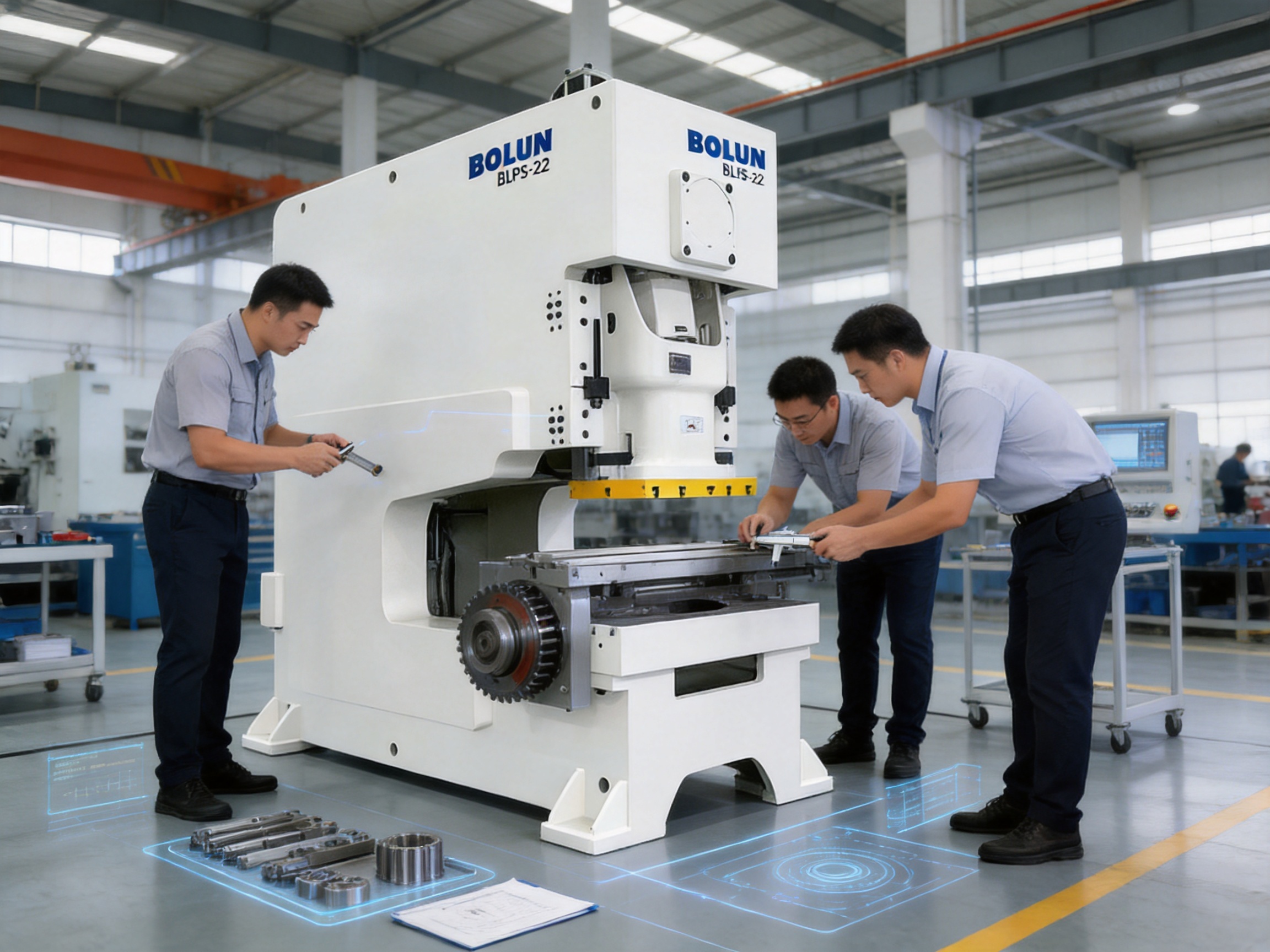
A power press is only as reliable as the manufacturer’s engineering and production system. Zhejiang Bolun High-Precision Machinery Co., Ltd. has developed from years of experience in machinery manufacturing and has built a production model that integrates research, design, processing, assembly, inspection, sales, and service. This integrated approach is important because press performance depends on many linked processes. A strong design must be supported by accurate machining, careful assembly, and strict inspection.
The company operates in Zhejiang, a region known for precision manufacturing resources, industrial supply chains, skilled labor, and machinery expertise. This environment supports access to processing capability, material suppliers, component manufacturing, and technical talent. The company’s experience in forging and casting machinery further strengthens its understanding of structural components, mechanical loading, and equipment durability.
One of the company’s major strengths is its full-chain production concept. Rather than treating the power press as a collection of purchased parts assembled together, the company emphasizes control over the process from basic design and core component development to final machine assembly. This approach helps improve consistency and allows technical feedback from production and service to influence future product improvements.
Another strength is non-standard customization capability. Many manufacturers cannot solve all production needs with catalog machines alone. Sheet size, die layout, part geometry, automation interface, and factory space constraints may require special specifications or functional adjustments. Zhejiang Bolun’s design team provides one-stop design and manufacturing support for products with special requirements, helping customers obtain equipment that better matches actual production conditions.
The company’s manufacturing philosophy combines advanced international production management concepts with the realities of China’s industrial manufacturing environment. This means that production is not based only on experience, but also on systematic planning, process control, and efficiency improvement. A scientific and humane management system helps organize resources, control production quality, and maintain delivery capability.
Quality control is especially important in press manufacturing because failures can be costly. A poorly manufactured press may produce inaccurate parts, damage dies, create safety concerns, or require frequent repair. Zhejiang Bolun treats quality as a core requirement and has established a finished product inspection system that exceeds ordinary industry expectations. Each process and component is subject to rigorous control to support stable precision and long service life under high-intensity operating conditions.
For the BLPS-25, quality control begins with the structural components. The steel frame must be manufactured to achieve the required rigidity and alignment. Machined surfaces must support proper slide movement and die installation. Mechanical drive components must be assembled with attention to fit, balance, and operating smoothness. The clutch brake must be checked for sensitivity and response. The slide adjustment system must operate reliably. Final inspection confirms that the machine is ready for industrial operation.
This disciplined production process gives the BLPS-25 an advantage over machines produced with less consistent quality systems. In competitive markets, two machines may appear similar in external structure, but their long-term performance can differ significantly. The difference often comes from manufacturing accuracy, component quality, assembly discipline, and inspection procedures.
The BLPS-25 reflects a design philosophy centered on practical precision. It does not attempt to be the largest or most complex press in a factory. Instead, it is designed to solve a specific problem: how to stamp wide sheet metal components efficiently with a compact open-type machine. This clarity of purpose is one of its strengths.
Practical precision means that the machine provides the functions users need without unnecessary complexity. The high-rigidity frame supports accuracy. The deep throat supports wide material access. The 2.2 kW motor supports efficient operation. The dry clutch brake supports control. The manual slide adjustment supports easy setup. Each feature contributes directly to production usefulness.
This approach also benefits maintenance. Machines with overly complicated systems may create difficulties for workshops with limited maintenance staff. The BLPS-25 uses a straightforward mechanical configuration that operators and technicians can understand more easily. This can reduce downtime and improve confidence in daily operation.
For many manufacturers, the best equipment is not always the most expensive or technically complex. It is the machine that fits the production task, runs consistently, is easy to set up, and provides dependable output. The BLPS-25 is positioned to meet that need.
Manufacturers considering the BLPS-25 can expect several operational benefits when the machine is properly matched to the application. The first is improved processing flexibility. The deep-throat structure allows a wider range of workpiece sizes, making it easier to handle jobs that standard presses cannot reach. This can expand a factory’s service capability and reduce the need to outsource certain wide-sheet operations.
The second benefit is improved production efficiency. With high-speed operation up to 180 strokes per minute, the press can increase output for suitable parts. When paired with appropriate feeding and handling methods, this speed can help manufacturers reduce cycle time and increase daily production capacity.
The third benefit is better use of floor space. Because the machine is compact compared with many larger alternatives, it can be integrated into existing workshops more easily. This is valuable for factories that must improve productivity without expanding their facility.
The fourth benefit is improved setup convenience. The open-gap structure and manual slide adjustment make die installation and process tuning more accessible. In production environments with frequent part changes, easier setup can reduce non-productive time.
The fifth benefit is long-term value. A machine built with a rigid frame, reliable clutch brake, and strict manufacturing quality can provide stable service over time. Long service life and consistent output contribute to lower total production cost.
Power presses are commonly classified into open-type power presses, closed-type power presses, and other specialized press types. Each category has advantages. Open-type presses provide accessibility and are widely used for general stamping. Closed-type presses offer high rigidity and are often preferred for heavier or more demanding operations. Other power presses may include specialized machines for unique production needs.
The BLPS-25 occupies a focused position within the open-type category. Its open-gap deep-throat structure gives it more reach than many standard open presses while preserving convenient access. This makes it particularly suitable for wide but not extremely heavy parts. Compared with a standard open press, it offers superior material reach. Compared with a closed-type press, it offers easier access and often a more practical footprint for moderate-capacity tasks.
Closed-type presses may still be preferred for very high tonnage or operations requiring maximum frame symmetry. However, for manufacturers stamping broad sheets within a 250 kN force range, a closed-type press may be unnecessarily large or costly. The BLPS-25 provides a more targeted solution. It allows the user to solve reach-related production problems without overinvesting in a machine designed for heavier work than the application requires.
Other specialized presses may offer automation, servo drive systems, or unique forming functions. Yet specialization can bring higher cost and complexity. The BLPS-25 focuses on a proven mechanical approach with practical features. It is a strong option for users who need reliable high-speed stamping of wide materials rather than a highly complex system.
Equipment investment does not end when the machine leaves the factory. Customers need consultation before purchase, support during selection and delivery, and reliable service after installation. Zhejiang Bolun High-Precision Machinery Co., Ltd. emphasizes a customer-oriented service system covering pre-sales consultation, in-sales support, and after-sales guarantees.
Pre-sales support helps customers determine whether the BLPS-25 is suitable for their parts, materials, tonnage requirements, throat depth needs, and production rhythm. This is important because choosing the wrong press can lead to inefficiency or quality problems. Proper selection considers not only nominal capacity but also die dimensions, part layout, material thickness, feeding method, and available factory space.
In-sales support helps coordinate production, delivery, documentation, and technical communication. For customized requirements, engineering communication is especially important. The company’s non-standard design capability allows customers to discuss special specifications and production needs more effectively.
After-sales service supports long-term confidence. Even reliable machinery requires installation guidance, operation training, maintenance knowledge, and replacement parts planning. A manufacturer with a complete service attitude helps customers protect their investment and maintain stable production.
The global stamping industry is moving toward higher precision, improved efficiency, digital management, and more intelligent production systems. Although the BLPS-25 is a practical mechanical press, it fits into this future by providing a stable forming platform. Intelligent manufacturing begins with reliable equipment. If the base machine is unstable, automation and digital systems cannot produce consistent results.
Zhejiang Bolun has stated its intention to continue investing in intelligent and digital stamping equipment while optimizing corporate resources and improving product quality. This direction is important for customers who expect their suppliers to evolve with industry trends. A machine purchased today should come from a manufacturer capable of supporting tomorrow’s production expectations.
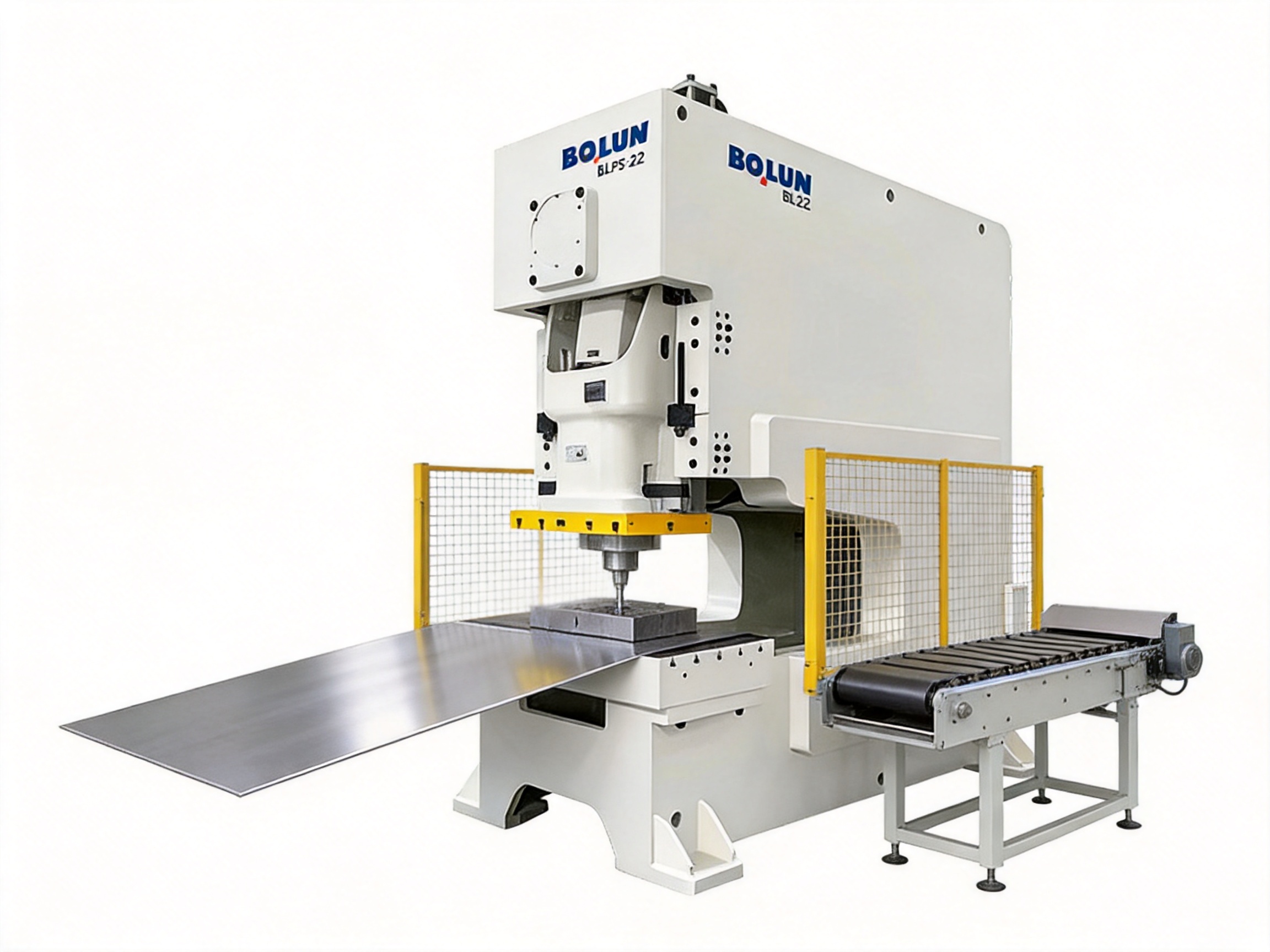
The BLPS-25 can serve as part of a modern production cell when integrated with suitable feeding, positioning, guarding, and collection systems. Its high-speed capability makes it compatible with productivity-focused workflows. Its open structure supports manual or semi-automatic operation. Its deep throat makes it useful for workpieces that may not fit standard automation concepts easily. As factories adopt more flexible production models, this type of adaptable press becomes increasingly valuable.
Every power press must be operated with proper safety measures. The BLPS-25 provides mechanical capability, but safe production depends on correct installation, operator training, die setup, guarding, maintenance, and compliance with local regulations. The sensitive dry clutch brake supports controllability, but it does not replace the need for safe operating procedures.
Users should ensure that the press is installed on a suitable foundation or stable floor, aligned correctly, and operated within rated capacity. Dies should be designed and maintained properly. Operators should understand stroke control, slide adjustment, emergency procedures, lubrication requirements, and safe material handling. Where necessary, safety guards, two-hand controls, light curtains, or other protective devices should be used according to applicable standards and production conditions.
Responsible operation also includes regular inspection. Fasteners, clutch brake performance, slide movement, lubrication points, electrical components, and frame condition should be checked according to maintenance schedules. A well-maintained press provides better accuracy, longer service life, and safer operation.
The economic value of the BLPS-25 comes from its ability to solve specific production problems efficiently. If a manufacturer frequently handles wide sheet metal components that standard presses cannot reach, the machine can reduce setup complications and improve process flow. If production requires high stroke rates for thin metal parts, the speed capability can increase output. If floor space is limited, the compact structure can prevent the need for costly facility changes.
Return on investment is influenced by several factors: number of parts produced, reduction in handling time, reduction in outsourced operations, die change frequency, operator efficiency, maintenance cost, energy consumption, and part quality. The BLPS-25 contributes positively to these areas by combining moderate power, high speed, long reach, and reliable construction.
Compared with buying a larger press simply to gain reach, the BLPS-25 may offer a more economical alternative. Compared with continuing to use standard presses with inefficient repositioning, it may improve throughput and reduce labor burden. Compared with low-cost machines that lack rigidity or inspection discipline, it may deliver better long-term value through more stable output and reduced downtime.
The BLPS-25 is a compact precision open-gap deep-throat power press. It belongs to the open-type power press category and is designed for high-speed stamping of wide sheet metal components.
The nominal capacity is 250 kN, making it suitable for many medium-light sheet metal stamping, punching, and forming applications.
The deep-throat design provides a throat depth range from 500 mm to 1200 mm, allowing the press to reach stamping positions farther from the edge of wide materials. This helps process large sheets that standard presses may not accommodate.
The machine can reach up to 180 strokes per minute under suitable high-speed operating conditions, supporting efficient production of compatible sheet metal parts.
It is suitable for hardware manufacturing, electronic component production, appliance parts, lighting components, instrumentation parts, and general sheet metal fabrication where wide workpieces and repeatable stamping are required.
Compared with standard open-type presses, the BLPS-25 offers greater throat depth and improved ability to process wide materials while retaining the accessibility of an open structure.
Closed-type presses may provide higher rigidity for heavy-duty work, but they are often larger and less accessible. The BLPS-25 is more suitable when the application requires moderate capacity, compact size, open access, and long reach.
The sensitive dry clutch brake improves machine control by supporting responsive engagement and stopping behavior. This helps during setup, single-stroke operation, and precision stamping.
A rigid frame helps reduce deformation during stamping, supporting die alignment, part consistency, and long-term stability, especially important in a deep-throat press structure.
The machine is supported by Zhejiang Bolun High-Precision Machinery Co., Ltd.’s integrated capabilities in research, design, production, assembly, inspection, customization, and service. The company emphasizes precision manufacturing, strict quality control, and customer-oriented support.
The BLPS-25 Compact Precision Open-Gap Deep-Throat Power Press is a focused solution for manufacturers that need to stamp wide sheet metal components efficiently without moving to oversized or unnecessarily complex equipment. With 250 kN nominal capacity, 500 mm to 1200 mm throat depth, a 2.2 kW main motor, high-speed operation up to 180 strokes per minute, a high-rigidity steel frame, a sensitive dry clutch brake, and manual slide adjustment, it offers a balanced combination of reach, speed, control, and practical precision.
Its advantages over conventional competitor machines are clear. It provides more reach than many standard open presses, better accessibility than many closed-frame alternatives, more practical simplicity than overly complex specialized systems, and stronger long-term confidence through disciplined manufacturing and inspection. For hardware, electronics, appliance, and sheet metal manufacturers, it can improve flexibility, reduce handling challenges, support high-output production, and make better use of workshop space.
Behind the product is a manufacturer with deep experience in precision machinery, full-chain production capability, non-standard customization strength, advanced management concepts, and a quality-first philosophy. Zhejiang Bolun High-Precision Machinery Co., Ltd. combines technical development with practical manufacturing discipline, giving customers not only a machine but also a dependable equipment partner.
As global manufacturing continues to emphasize precision, efficiency, flexibility, and intelligent development, compact deep-throat press technology will remain important for producers working with wide sheet metal parts. The BLPS-25 stands as a practical and competitive example of this direction: compact enough for efficient workshops, strong enough for demanding repetitive stamping, fast enough for productivity-focused production, and flexible enough to reach where ordinary presses cannot.
1. Altan, T., and Tekkaya, A. E. Sheet Metal Forming: Fundamentals and Applications. ASM International.
2. Lange, K. Handbook of Metal Forming. Society of Manufacturing Engineers.
3. Kalpakjian, S., and Schmid, S. R. Manufacturing Engineering and Technology. Pearson Education.
4. Groover, M. P. Fundamentals of Modern Manufacturing: Materials, Processes, and Systems. Wiley.
5. Society of Manufacturing Engineers. Tool and Manufacturing Engineers Handbook: Forming. SME.
6. Boljanovic, V. Sheet Metal Forming Processes and Die Design. Industrial Press.
7. American National Standards Institute. Safety Requirements for Mechanical Power Presses.
8. International Organization for Standardization. Machine Tools and Industrial Forming Equipment Standards.


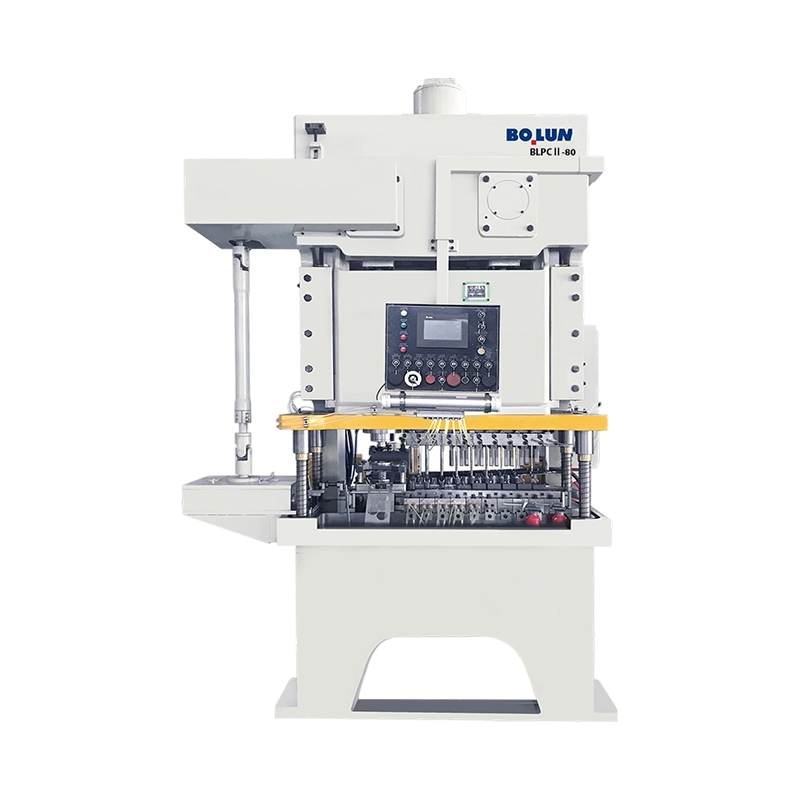
Understanding Mechanical Power Presses and Their Essential Functions A mechani...
What Is a Power Press? A power press — also called a stamping press or punch pr...
In the fields of metal forming, sheet metal fabrication, blanking, and punching,...
Power press machines are classified in two main ways: by frame construction, w...
As the manufacturing industry moves steadily toward automation and smart product...
In modern manufacturing, cold forging is widely used in the automotive, aerospac...
Contact Us

bolunpress@gmail.com

+86-575-83362228

+86-15158259588

+86-575-83362999

+86-15158259588

Hangzhou Office Add: No. 332 Wangjiang East Road, Shangcheng District

No.1 Linjiang Road East, Xiaren, Jinting Town, Shengzhou City, Zhejiang Province, China
Ready to Begin?
Get in Touch

Now!

ZHEJIANG BOLUN
 English
 中文简体
中文简体