
In modern metal forming, the demand for stronger parts, tighter tolerances, higher material utilization, and more stable mass production has pushed manufacturers toward specialized cold forging equipment. The BLKP-650 Robust High-Deformation Cold Forging Toggle Type Power Press is designed for precisely this production environment. With a nominal capacity of 6500 kN, an 8 mm nominal pressure stroke, a 600 × 700 mm worktable, and an integrated ejector system driven by a crankshaft cam and rocker mechanism, this press is engineered for heavy compression, deep cold forging, and forming tasks that require sustained pressure during the most critical deformation stage.
The product belongs to the cold forging toggle type power press category and is especially suitable for applications where simple impact force is not enough. Many conventional presses can deliver high instantaneous force, but cold forging of thick-gauge or high-resistance parts often requires controlled pressure, stable slide motion, rigid structural support, accurate bottom-dead-center performance, and reliable part ejection. The BLKP-650 addresses these requirements with a high-rigidity frame, a load detection safety system, and a mechanical architecture intended to support stable material flow during complex forming operations.
Zhejiang Bolun High-Precision Machinery Co., Ltd. positions this product within a broader strategy of high-precision forming equipment manufacturing. The company integrates research and development, design, production, sales, and service, and it has built its competitive strength on precision processing capability, non-standard customization, strict inspection, and accumulated experience in forging and casting machinery. In practical production terms, this means customers are not only purchasing a machine, but also gaining access to a manufacturing partner capable of supporting selection, process planning, customization, installation, and long-term use.
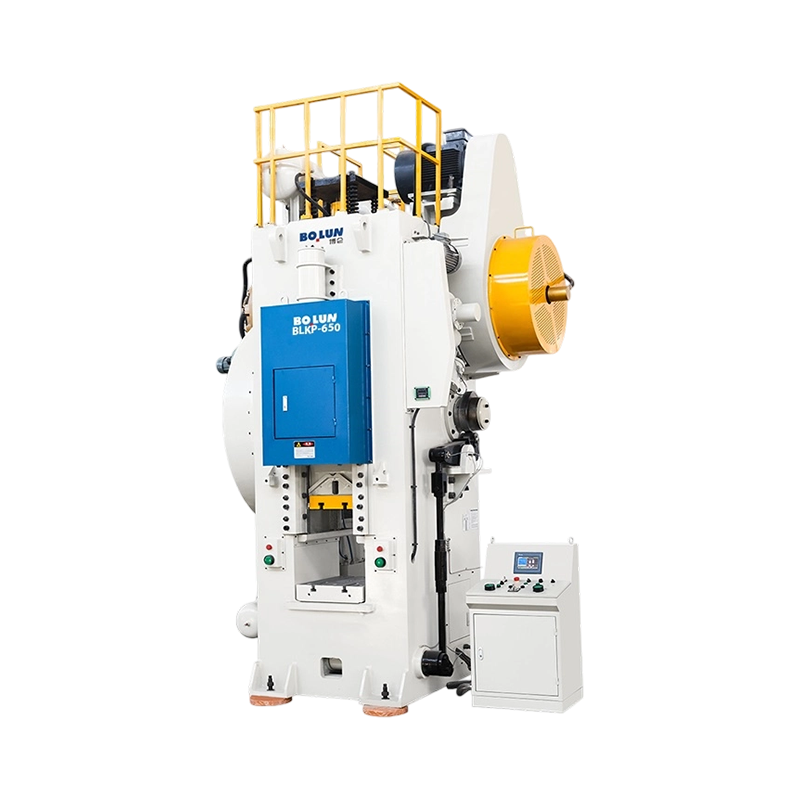
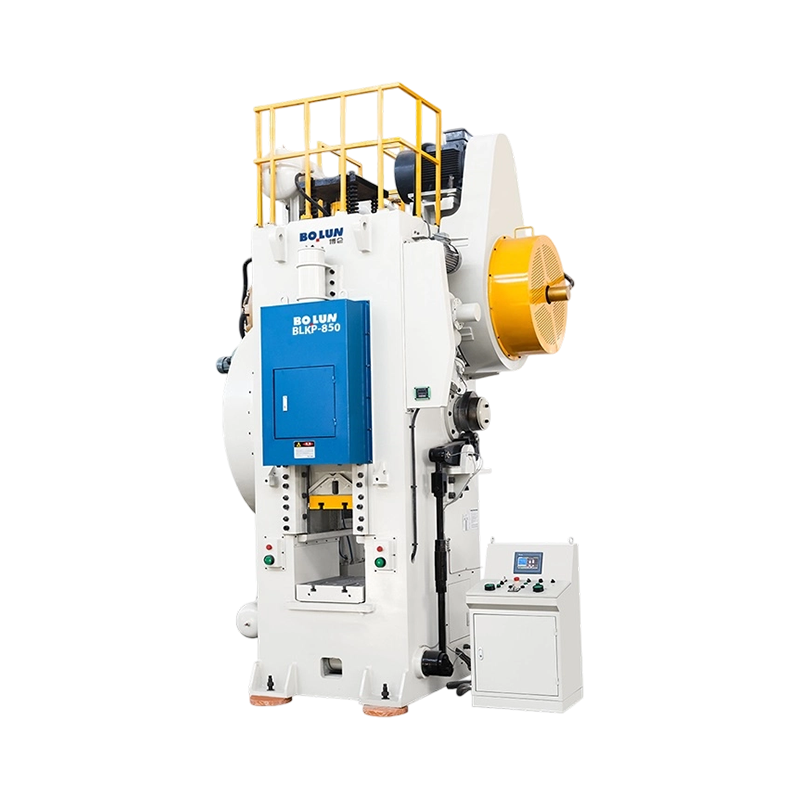
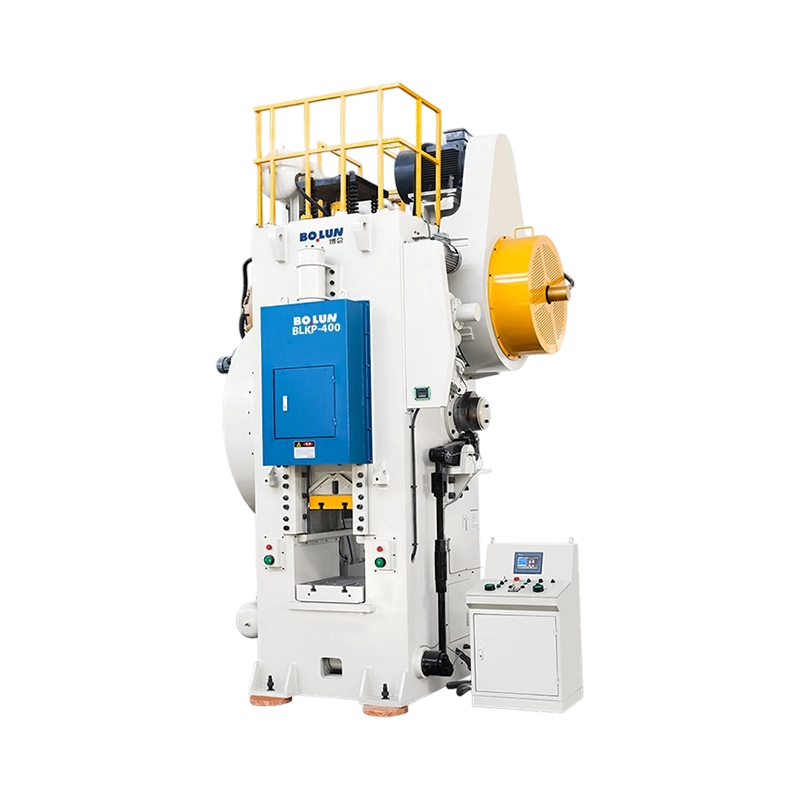
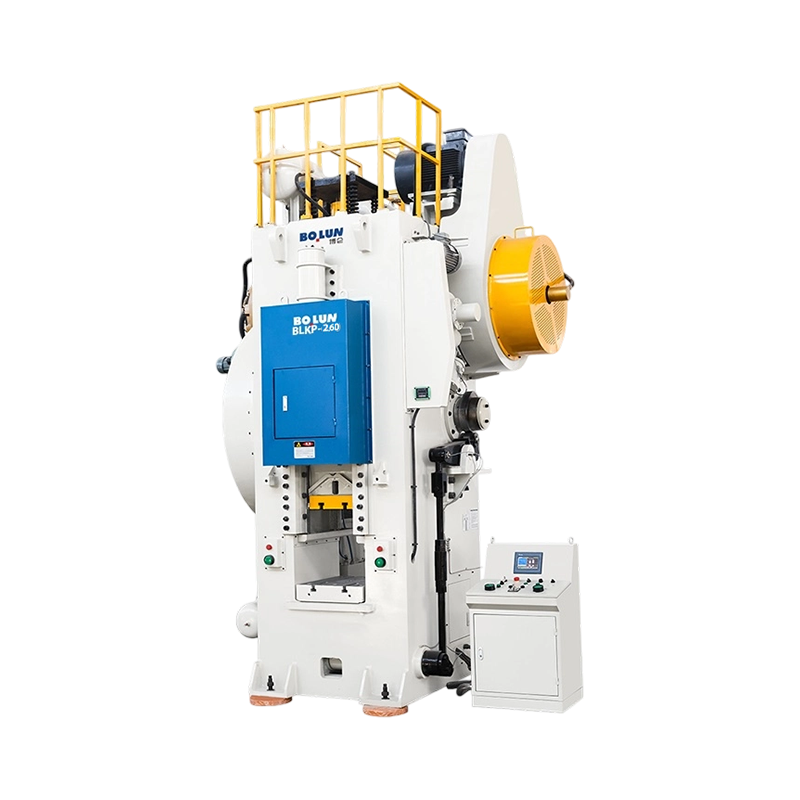
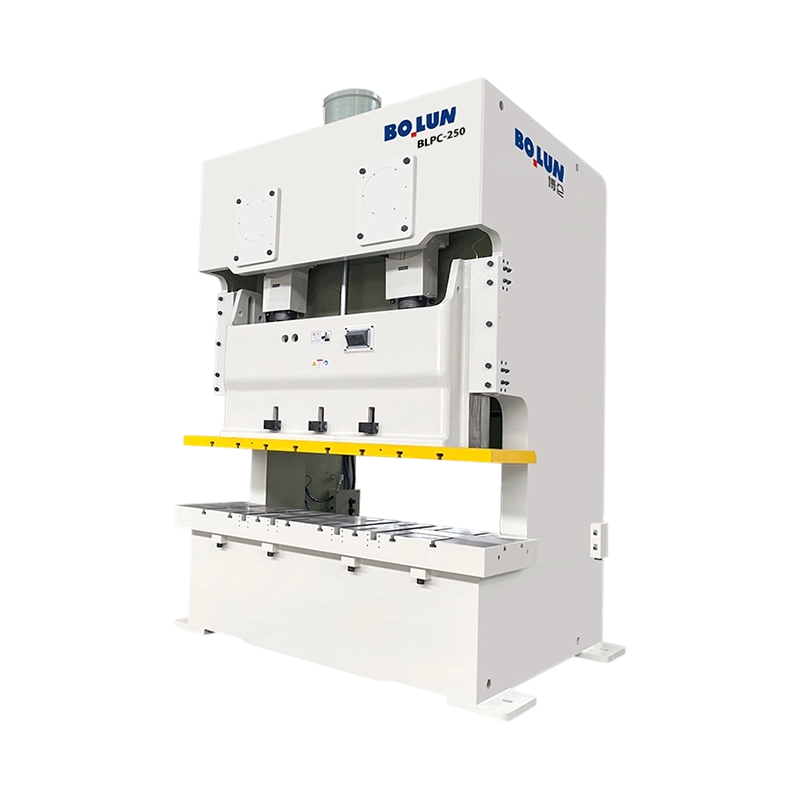
BLKP-650 Robust High-Deformation Cold Forging Toggle Type Power Press
Cold forging is a forming process in which metal is shaped at or near room temperature through compressive force. Compared with machining, cold forging can significantly improve material utilization because the part is formed rather than cut from a larger blank. Compared with hot forging, cold forging can offer better surface quality, improved dimensional accuracy, and favorable work-hardening characteristics. However, these advantages come with technical challenges. The forming load is often high, the material flow path may be complex, and tooling must withstand severe stress.
For manufacturers producing shafts, gear blanks, fastener parts, precision sleeves, structural components, automotive parts, or industrial hardware, the press must do more than move a slide up and down. It must maintain rigidity, transmit power efficiently, control forming behavior near the bottom of the stroke, protect the die system from overload, and remove the finished or semi-finished component consistently. A machine that lacks stiffness may cause uneven part dimensions, premature die wear, or unstable forming. A machine with insufficient pressure control may struggle during deep deformation. A machine with poor ejection may slow the cycle and create handling problems.
The toggle type mechanism used in the BLKP-650 is particularly valuable for cold forging because it can provide strong force concentration near the lower part of the stroke. This is where the material is usually undergoing the most difficult transformation. Instead of relying only on high speed or sudden impact, the press is designed to support the forming stage with a more suitable pressure characteristic. The 8 mm nominal pressure stroke is important because it indicates the zone in which the machine can maintain effective forming pressure. For thick-gauge and high-resistance parts, this pressure behavior is a key advantage.
The BLKP-650 is a robust high-deformation cold forging toggle type power press with a nominal capacity of 6500 kN. This capacity level places it in a class intended for demanding production, where heavy compression forces are needed and where the press must remain stable under repeated high-load cycles. The machine is not merely a general-purpose press adapted for cold forging; it is designed with cold forging behavior in mind, including the need for pressure concentration, frame stiffness, load detection, and reliable ejection.
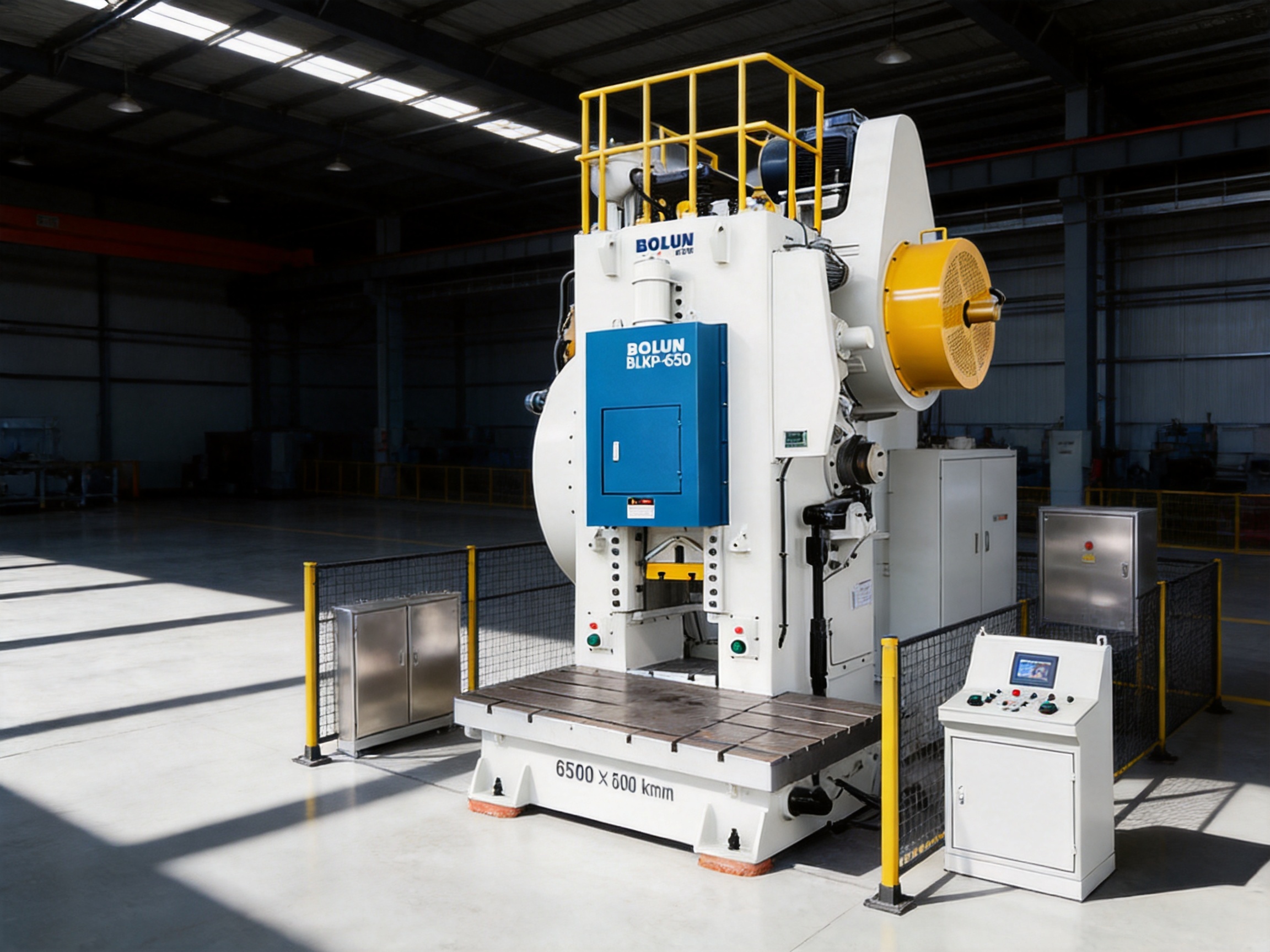
The worktable size of 600 × 700 mm provides a practical foundation for a range of die configurations. This table area supports tooling arrangements for deep forming, extrusion-type operations, upsetting, multi-step forging concepts, and specialized component production. The integrated ejector system, driven by a crankshaft cam and rocker mechanism, enhances production continuity by helping remove formed parts after compression. In cold forging, ejection is not a secondary function. Parts can adhere to tooling due to high contact pressure, surface friction, and geometric locking. Reliable ejection reduces downtime, protects dies, and helps operators or automation systems maintain a predictable rhythm.
The press also includes a load detection safety system. This feature supports controlled forming performance by monitoring load conditions and helping protect the machine and tooling from abnormal operation. In high-force cold forging, overload is a serious concern. Material variation, lubrication failure, incorrect billet size, die misalignment, or process interruption can produce excessive forming force. Load detection gives the equipment an important layer of operational safety and process awareness.
| Item | Specification or Feature | Production Value |
|---|---|---|
| Product Type | Cold forging toggle type power press | Designed for high-deformation and heavy compression forming |
| Nominal Capacity | 6500 kN | Supports demanding cold forging applications with high forming resistance |
| Nominal Pressure Stroke | 8 mm | Maintains forming pressure during the critical deformation stage |
| Worktable Size | 600 × 700 mm | Accommodates practical die layouts for industrial production |
| Ejector System | Crankshaft cam and rocker mechanism | Improves part removal reliability and production continuity |
| Frame Design | High-rigidity structure | Enhances stability, accuracy, and die life under high load |
| Safety System | Load detection system | Helps prevent overload and supports controlled forming performance |
One of the most important advantages of a toggle type power press is its ability to develop powerful forming force near the bottom of the slide stroke. This characteristic is particularly useful in cold forging because the material often reaches its highest flow resistance at the final stage of compression. In many parts, the early stage of deformation begins with easier material movement, while the final filling of die cavities or the last phase of extrusion requires significantly higher pressure. A press that cannot provide stable force in this region may produce incomplete filling, dimensional inconsistency, or excessive tool wear.
The BLKP-650’s nominal capacity of 6500 kN gives it the strength needed for heavy forming tasks, while the 8 mm nominal pressure stroke supports pressure application during the critical deformation zone. Compared with many general-purpose mechanical presses, this makes it better suited for processes where controlled heavy compression is required rather than simple blanking, shallow forming, or light stamping. In practical manufacturing, this can translate into more consistent parts, fewer rejected components, and improved confidence when forming high-resistance materials or thicker blanks.
Competitors using conventional crank press designs may offer fast cycle rates, but speed alone is not always the deciding factor in cold forging. If the slide motion and force delivery do not match the forming curve of the part, production problems can occur. The BLKP-650 focuses on pressure behavior, structural stiffness, and ejection reliability. This gives it an advantage in applications where forming stability and part quality matter more than simply maximizing strokes per minute.
Frame rigidity is one of the fundamental performance indicators of a cold forging press. During forming, the press frame receives enormous reaction forces from the die and workpiece. If the frame deflects excessively, the effective position of the slide and tooling changes. Even small deflections can affect the dimensional accuracy of cold forged parts because the process often depends on controlled die closure and accurate material confinement. Over time, insufficient rigidity can also accelerate wear in guides, bearings, and tooling.
The BLKP-650 uses a high-rigidity frame to support stable operation during complex cold forging processes. This rigidity helps maintain alignment between the slide and worktable, allowing forming pressure to be distributed more predictably through the tooling. For production teams, the benefit is not only part quality but also process repeatability. A stable machine gives process engineers a better foundation for optimizing billet size, lubrication, die design, and forming sequence.
Compared with lighter or less specialized equipment, a rigid frame can reduce the risk of uneven tool loading. Uneven loading may cause die chipping, eccentric wear, or dimensional drift. In high-volume production, these issues can become costly because they increase tool maintenance frequency and reduce machine availability. The BLKP-650’s structural emphasis helps address these long-term operational concerns.
Cold forged parts frequently require positive ejection. High contact pressure between the part and die surfaces can make simple gravity discharge unreliable. Complex geometry, undercut-like resistance, deep cavities, and surface adhesion can also make ejection difficult. If parts remain in the die, the production cycle may stop, tooling may be damaged, or operators may need to intervene manually. Manual intervention reduces efficiency and may introduce safety risks.
The BLKP-650 is equipped with an integrated ejector system driven by a crankshaft cam and rocker mechanism. This mechanical arrangement provides coordinated ejection action after the forming operation. The advantage of a built-in ejector is that it is not treated as an afterthought. Instead, part removal becomes part of the press’s operating sequence. For cold forging production lines, this can support smoother workflow, more predictable cycle timing, and easier integration with feeding or transfer systems.
When compared with presses that require external or improvised ejection solutions, the integrated system can simplify die design and reduce production uncertainty. It can also help preserve part surface quality by reducing the need for rough manual extraction. In a high-force forming environment, smooth ejection contributes directly to productivity because every delayed part removal event affects output and machine utilization.
High-force cold forging requires disciplined process control. The BLKP-650 includes a load detection safety system that helps monitor forming conditions. This is especially important because cold forging load can change due to several factors. Slight changes in material hardness, billet volume, lubrication quality, die temperature, alignment, or workpiece placement can produce major differences in forming force. Without monitoring, excessive force may damage tooling, overload components, or create unsafe operating conditions.
A load detection safety system helps operators and engineers identify abnormal conditions before they become severe failures. It also supports process standardization by making forming load part of the production data environment. In many manufacturing plants, repeatability is achieved not only through mechanical strength but also through measurable control. When the press can detect load conditions, the production team gains a clearer view of whether the process is running within acceptable limits.
This feature gives the BLKP-650 a practical advantage over simpler machines that rely only on operator experience or mechanical protection. Operator skill is valuable, but modern cold forging increasingly requires data-supported decisions. Load detection helps bridge traditional mechanical forming and contemporary process management by turning force behavior into a monitored production factor.
The 600 × 700 mm worktable gives the BLKP-650 a practical platform for industrial die sets. In cold forging, the worktable must provide sufficient space for the lower die, support plates, ejector arrangements, guide components, and, in some cases, feeding or transfer-related fixtures. A well-sized table is important because tooling engineers need enough layout freedom while preserving stiffness and alignment.
This worktable size supports a range of cold forging applications, from single-operation compression to more complex forming concepts. In high-deformation processes, tooling may include multiple inserts, shrink rings, guiding elements, and ejector components. The table must support these systems without compromising force transmission. The BLKP-650’s table dimension is therefore not merely a static measurement; it is a factor that affects die engineering, maintenance accessibility, and production feasibility.
Compared with smaller press platforms, the 600 × 700 mm worktable can provide better accommodation for robust die assemblies. Compared with oversized general-purpose equipment, the BLKP-650 maintains a focused design for cold forging rather than simply offering a large platform without the proper forming mechanics. This balance is valuable for manufacturers seeking a machine that is strong, practical, and purpose-built.
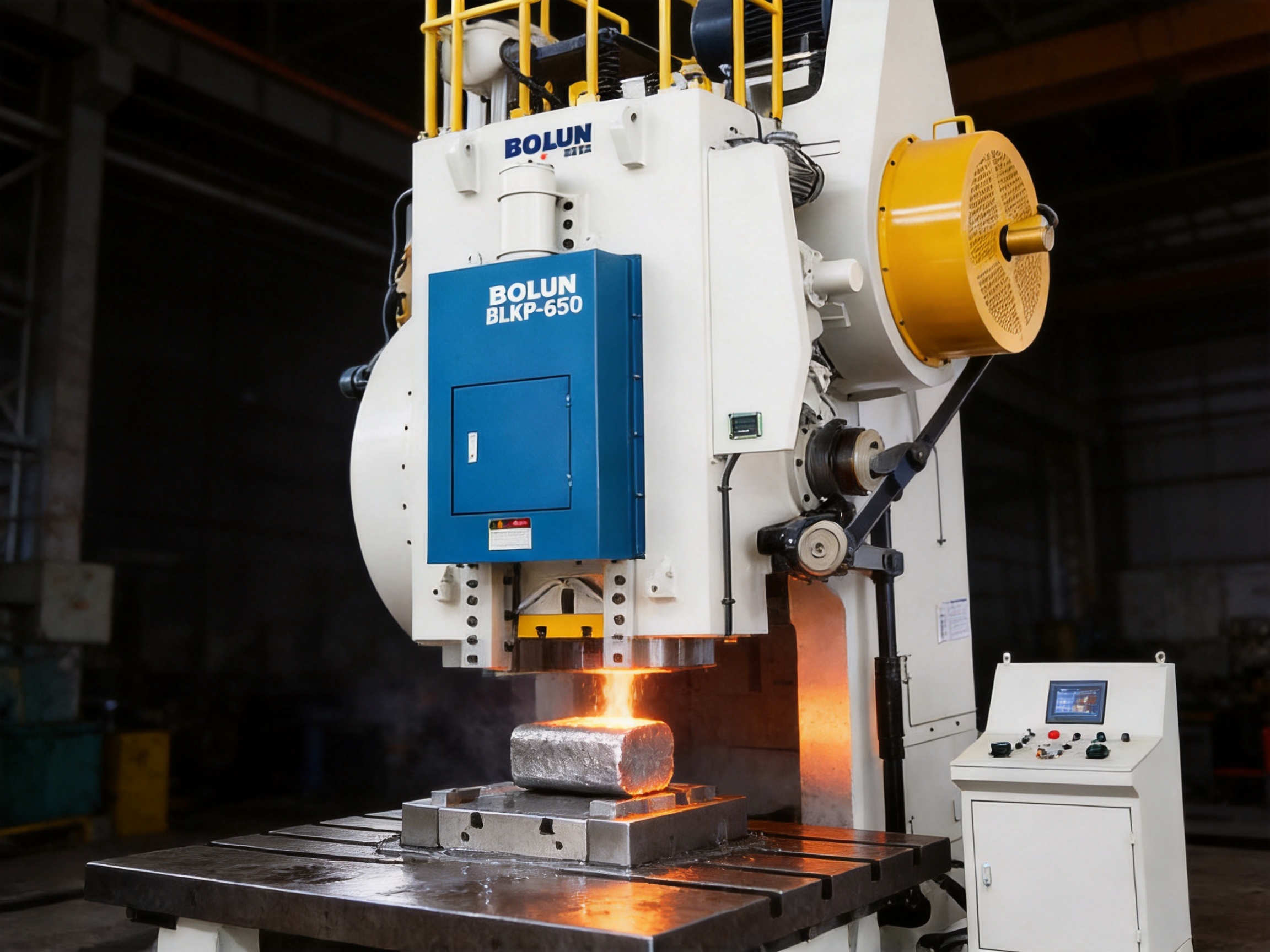
The BLKP-650 is suitable for heavy compression and deep cold forging applications. In such processes, the workpiece may be compressed into a complex die cavity, extruded into a controlled shape, or upset into a thicker form. Typical production goals may include forming near-net-shape parts, improving grain flow, increasing strength through work hardening, and reducing secondary machining. The machine’s force capacity and pressure stroke support these objectives by helping material flow under stable forming conditions.
Deep cold forging requires careful balance between force, lubrication, tooling strength, and part design. If the press cannot sustain pressure at the right point, the material may not fill the die properly. If the frame lacks rigidity, the tooling may separate or misalign under load. If ejection is unreliable, production may become unstable. The BLKP-650 combines these essential elements into one machine architecture, making it suitable for manufacturers that need more than ordinary stamping capability.
Industries that may benefit from this type of equipment include automotive component manufacturing, hardware production, bearing-related parts, fastener and connector manufacturing, machinery components, and precision metal part production. The exact application depends on material, geometry, die design, and production strategy, but the machine’s core strengths are clearly aligned with demanding cold forming tasks.
The BLKP-650 offers several competitive advantages when compared with less specialized press equipment. First, its toggle type mechanism provides strong pressure characteristics near the bottom of the stroke, which is essential for cold forging. Many conventional crank presses are designed for general stamping, blanking, or forming, where the force requirement and deformation behavior differ from deep cold forging. Using a general press for high-deformation cold forging can result in insufficient forming stability, increased tool wear, or inconsistent part quality.
Second, the 6500 kN nominal capacity gives the machine the strength required for serious compression work. Some competing machines may appear economical at first, but if they operate too close to their load limit, long-term reliability may suffer. A press designed with adequate capacity and rigidity can provide a safer process window and better production confidence.
Third, the 8 mm nominal pressure stroke supports pressure maintenance during the critical deformation stage. This is a key difference from machines that reach peak force only at a narrow moment without sustained forming support. Cold forging often requires the press to perform in a controlled pressure zone, not just touch a peak rating.
Fourth, the integrated ejector system improves practical production performance. In real factories, cycle efficiency depends on every step: feeding, forming, ejection, removal, inspection, and repeat. A press that forms well but ejects poorly will still limit output. The BLKP-650 addresses this by including a mechanical ejection solution designed into the machine.
Fifth, the load detection safety system supports safer and more controlled operation. As manufacturers move toward more intelligent and data-aware production, load monitoring becomes increasingly important. The ability to detect abnormal force conditions helps protect investment in both the machine and the tooling.
The strength of a press is not determined only by its specifications. It is also determined by the quality of its design, machining, assembly, inspection, and service support. Zhejiang Bolun High-Precision Machinery Co., Ltd. has developed its position in high-precision forming equipment through two decades of roots in machinery manufacturing. The company integrates R&D, design, production, sales, and service, allowing it to control the product lifecycle more comprehensively than suppliers that focus only on assembly or trading.
The company’s manufacturing philosophy emphasizes technological innovation, full-chain production capability, non-standard customization, and an international management perspective. In the context of the BLKP-650, this means the press is supported by a system that understands both machine structure and customer production needs. Cold forging is rarely a one-size-fits-all process. Customers may need special specifications, function adjustments, tooling considerations, or production line integration support. A manufacturer with design and production depth is better positioned to respond to these requirements.
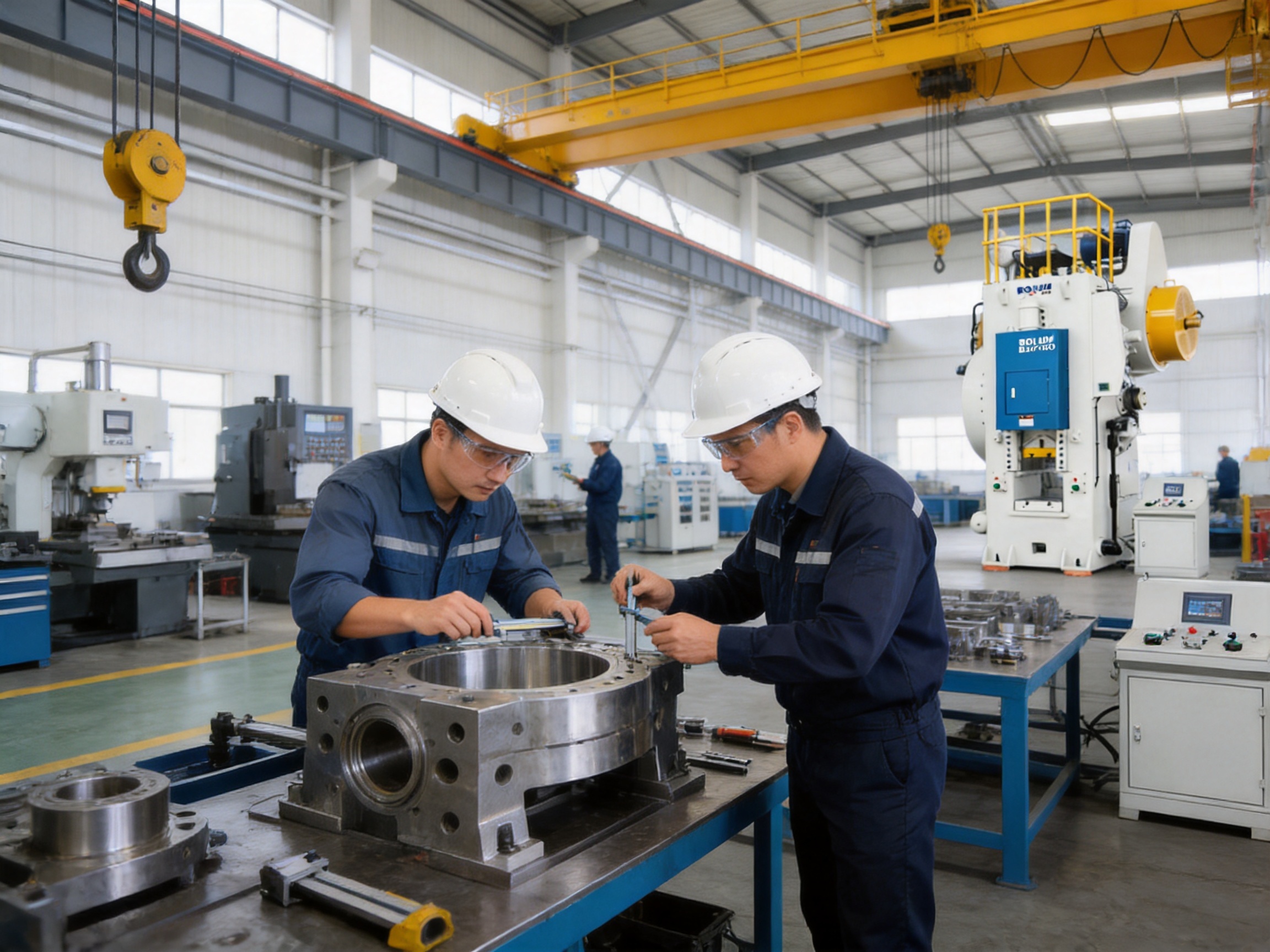
Advanced precision processing equipment also plays an important role. Large press components require accurate machining to ensure alignment, fit, and long-term performance. Slide guides, bearing seats, crankshaft-related components, frame interfaces, and worktable surfaces must be produced and inspected carefully. If these core elements are not accurate, the final press may suffer from vibration, uneven load, poor guiding accuracy, or accelerated wear. By controlling design and core component development through final machine assembly, the company builds a stronger foundation for consistent machine performance.
One of the company’s key strengths is its full-chain production system. This refers to capability across multiple stages, from basic design and core component development to final machine assembly and inspection. For customers, full-chain control can reduce communication gaps and improve accountability. When design, machining, assembly, and service are connected within one system, technical questions can be resolved more efficiently.
Non-standard customization is especially valuable in cold forging. Even when two customers purchase presses with similar capacity, their process requirements may be different. One customer may need a specific ejector timing arrangement, another may require special tooling support, and another may need integration with feeding or automation systems. A company that can provide one-stop design and manufacturing services for special specifications can help customers build more suitable production solutions.
This is an important advantage over competitors that only offer standard catalog machines. Standard equipment may be sufficient for simple stamping, but cold forging often requires process-specific thinking. The BLKP-650, supported by a manufacturer capable of customization, can be adapted more effectively to complex production needs. This ability can reduce the customer’s engineering burden and improve the chance of successful process implementation.
Quality control is central to high-precision machinery. Zhejiang Bolun High-Precision Machinery Co., Ltd. has established a finished product inspection system that exceeds ordinary industry expectations, with rigorous control over processes and components. For a cold forging press, this is essential because the machine must operate under repeated high-intensity loads. Any weakness in material selection, machining accuracy, assembly quality, lubrication path, or alignment can affect reliability.
Inspection is not only about checking the finished machine at the end. Effective quality control involves monitoring every key process. Component accuracy, structural integrity, fit between moving parts, guide clearance, table flatness, system response, and safety functions must all be verified. A press that passes careful inspection before delivery gives customers stronger confidence during installation and production startup.
Compared with lower-cost competitors that may prioritize rapid shipment over inspection depth, a rigorous inspection system can reduce hidden risk. The real cost of a press includes downtime, tooling damage, rejected parts, maintenance labor, and production delays. A machine built and inspected for long service life under high-intensity conditions can offer better long-term value, even if the initial purchasing decision requires more careful evaluation.
The company’s core philosophy includes the idea that pressure is power. In the field of forming equipment, this phrase has technical meaning as well as cultural meaning. Cold forging depends on the controlled application of pressure. The press must transform motor energy and mechanical motion into useful forming work while maintaining accuracy, safety, and repeatability. Pressure must be powerful, but it must also be controlled.
The BLKP-650 reflects this philosophy. Its nominal capacity supports heavy compression. Its pressure stroke supports the critical deformation phase. Its rigid frame resists deformation. Its ejector system manages part release. Its load detection system adds safety and process awareness. These features work together to convert pressure into productive manufacturing capability.
The cultural aspect is also important. Machinery manufacturing requires patience, discipline, and long-term accumulation. The company promotes a work style characterized by steadfastness, rigor, openness, and mutual support. Such values matter in heavy equipment manufacturing because reliability is built through details. A robust press is the result of engineering decisions, skilled machining, careful assembly, and responsible service.
The global machinery industry is moving toward intelligent, digital, and highly integrated production. Press equipment is no longer viewed as an isolated mechanical unit. Increasingly, manufacturers want machines that can fit into data-driven production systems, support process monitoring, reduce unplanned downtime, and improve traceability. Although the BLKP-650 is fundamentally a powerful mechanical forming machine, its load detection system and controlled forming design align with this broader trend.
Load monitoring is one of the first steps toward intelligent forming. When production teams can observe forming force behavior, they can detect material changes, lubrication problems, die wear, or abnormal feeding. Over time, this information can support preventive maintenance and process optimization. The company’s continued investment in intelligent and digital stamping equipment strengthens the relevance of products like the BLKP-650 in modern factories.
Compared with purely traditional equipment, a press designed with safety detection and process control awareness provides a better path toward future upgrades. Manufacturers seeking long-term competitiveness should consider not only current forming capacity but also the machine’s compatibility with improved production management.
For production managers, the BLKP-650 offers practical benefits in several areas. The first is forming stability. Stable forming reduces variation, improves part consistency, and supports predictable production planning. The second is tooling protection. A rigid frame and load detection system help reduce the risk of abnormal force conditions and uneven stress. The third is cycle reliability. Integrated ejection supports smoother part removal and reduces interruptions.
Maintenance teams also benefit from a robust structure and disciplined manufacturing quality. Machines used in heavy cold forging experience significant mechanical stress. A well-built press with accurate components and strong assembly quality can reduce maintenance frequency and make service work more predictable. Operators benefit from clearer process behavior and safety support, while engineers benefit from a stable platform for process development.
From a business perspective, these operational benefits contribute to total cost of ownership. The lowest purchase price is not always the best economic choice. If a cheaper machine causes more downtime, shorter die life, or inconsistent parts, the real production cost may be higher. The BLKP-650 is positioned for manufacturers who value strength, stability, and long-term productivity.
Thick-gauge components require significant forming energy because a larger volume of material must be moved under pressure. Material flow becomes more difficult as contact area increases, friction rises, and die cavities become more restrictive. In these conditions, the press must maintain strong and stable compression. The BLKP-650’s nominal pressure stroke helps maintain forming pressure during the stage when material resistance is highest.
Stable material flow is essential for avoiding defects such as incomplete filling, folds, cracks, excessive flash, or uneven density distribution. While tooling design and lubrication are also critical, the press provides the mechanical foundation. If the machine deflects or lacks sufficient pressure behavior, even well-designed tooling may not perform properly. The BLKP-650’s combination of power, rigidity, and pressure-focused motion supports better material flow control.
Compared with presses that are better suited for sheet metal operations, this machine is more appropriate for bulk forming. Sheet metal stamping and bulk cold forging are different processes. Sheet metal applications often involve cutting, bending, drawing, or shallow forming, while cold forging involves three-dimensional material displacement under compression. The BLKP-650 is designed for the latter, giving it a clear advantage in heavy deformation work.
Heavy forming equipment requires professional support before, during, and after purchase. The company provides a customer-oriented service system covering pre-sales consultation, in-sales support, and after-sales guarantees. This matters because selecting a cold forging press involves many technical decisions. Capacity, die space, worktable size, ejector requirements, material type, production volume, and process route must all be considered.
Pre-sales consultation helps customers determine whether the BLKP-650 matches their forming requirements. In-sales support can help with configuration, production coordination, and delivery preparation. After-sales service supports installation, commissioning, maintenance guidance, and long-term operation. This complete service approach distinguishes the company from suppliers that provide equipment without sufficient technical follow-through.
For manufacturers entering cold forging or upgrading from less capable equipment, service support can be decisive. A powerful press must be correctly installed, aligned, operated, lubricated, and maintained. Technical support reduces the learning curve and helps customers realize the machine’s full value.
Power presses can be broadly understood through categories such as open-type power presses, closed-type power presses, and other specialized power presses. Open-type presses often provide convenient access and are widely used for lighter stamping and forming tasks. Closed-type presses generally offer higher rigidity and better support for heavier loads. Specialized presses, including cold forging toggle type power presses, are developed for processes with specific force and motion requirements.
The BLKP-650 belongs to the specialized cold forging toggle type field. It is not simply an open-type or general closed-type press. Its value lies in the combination of heavy capacity, pressure stroke behavior, rigid construction, ejection function, and load detection. For customers comparing equipment categories, the central question should be the production process. If the task is light punching or simple sheet forming, another press type may be sufficient. If the task involves high-deformation cold forging, deep compression, or demanding bulk material flow, a specialized toggle type press offers stronger process alignment.
This process-focused selection is important because mismatched equipment often leads to hidden costs. A machine that is mechanically capable of moving but not optimized for the forming curve may struggle in production. The BLKP-650 gives customers a press designed around the real demands of cold forging.
The BLKP-650 is designed for heavy compression and deep cold forging applications. Its 6500 kN nominal capacity, 8 mm nominal pressure stroke, high-rigidity frame, and integrated ejector system make it suitable for forming thick-gauge or high-resistance metal components that require stable pressure during critical deformation.
A toggle type mechanism is valuable because it can concentrate strong forming force near the bottom of the stroke, where cold forging usually requires the highest pressure. This supports more stable material flow and helps achieve better die filling and dimensional consistency compared with general-purpose press motion in demanding forging applications.
The 8 mm nominal pressure stroke indicates that the press is designed to maintain effective forming pressure through a defined critical zone. This is important for deep cold forging because the final stage of deformation often requires sustained pressure rather than a brief peak force.
The integrated ejector system, driven by a crankshaft cam and rocker mechanism, helps remove formed parts after compression. This reduces the risk of parts sticking in the die, improves cycle reliability, supports smoother production flow, and can reduce manual intervention.
The load detection safety system monitors forming load conditions and helps identify abnormal operation. It can protect the machine and tooling from overload caused by material variation, poor lubrication, die problems, incorrect billet size, or other process issues.
Ordinary crank presses may be suitable for general stamping or lighter forming, but they may not provide the same pressure behavior near the bottom of the stroke. The BLKP-650 is better aligned with cold forging because it combines high force, a pressure-focused stroke, rigid structure, reliable ejection, and load detection.
Manufacturers producing automotive components, hardware parts, fasteners, sleeves, gear blanks, machinery components, and other precision forged metal parts may benefit from this equipment, depending on part geometry, material, tooling design, and production volume.
A cold forging press depends on precision design, machining, assembly, inspection, and support. Zhejiang Bolun High-Precision Machinery Co., Ltd. integrates R&D, design, production, sales, and service, which helps provide stronger quality control, customization capability, and long-term customer support.
The BLKP-650 Robust High-Deformation Cold Forging Toggle Type Power Press is a specialized solution for manufacturers requiring powerful, stable, and controlled cold forging performance. Its 6500 kN nominal capacity gives it the strength for heavy compression, while the 8 mm nominal pressure stroke supports the critical deformation stage where material flow is most demanding. The 600 × 700 mm worktable provides a practical tooling platform, and the integrated ejector system improves part removal after forming. The high-rigidity frame and load detection safety system further support stable operation, tooling protection, and process control.
Its advantages over many competing or conventional press solutions are found not only in capacity, but in the way its features work together. Heavy cold forging requires the right pressure behavior, strong structure, reliable ejection, and monitored safety. The BLKP-650 is designed around these needs rather than adapted from a less specialized application.
Behind the machine, Zhejiang Bolun High-Precision Machinery Co., Ltd. contributes advanced manufacturing capability, full-chain production, non-standard customization, rigorous inspection, and customer-oriented service. This combination of product design and manufacturing strength gives customers a practical path toward more stable production, improved forming quality, and long-term equipment value. For factories focused on high-deformation cold forging and demanding compression processes, the BLKP-650 represents a robust and purpose-built choice.
Altan, T., Ngaile, G., and Shen, G. Cold and Hot Forging: Fundamentals and Applications. ASM International.
Kalpakjian, S., and Schmid, S. Manufacturing Engineering and Technology. Pearson Education.
Groover, M. P. Fundamentals of Modern Manufacturing: Materials, Processes, and Systems. Wiley.
Schey, J. A. Introduction to Manufacturing Processes. McGraw-Hill Education.
ASM Handbook, Volume 14A: Metalworking: Bulk Forming. ASM International.
Doege, E., and Behrens, B. A. Handbuch Umformtechnik: Grundlagen, Technologien, Maschinen. Springer.


Contact Us

bolunpress@gmail.com

+86-575-83362228

+86-15158259588

+86-575-83362999

+86-15158259588

Hangzhou Office Add: No. 332 Wangjiang East Road, Shangcheng District

No.1 Linjiang Road East, Xiaren, Jinting Town, Shengzhou City, Zhejiang Province, China
Ready to Begin?
Get in Touch

Now!

ZHEJIANG BOLUN
 English
 中文简体
中文简体