
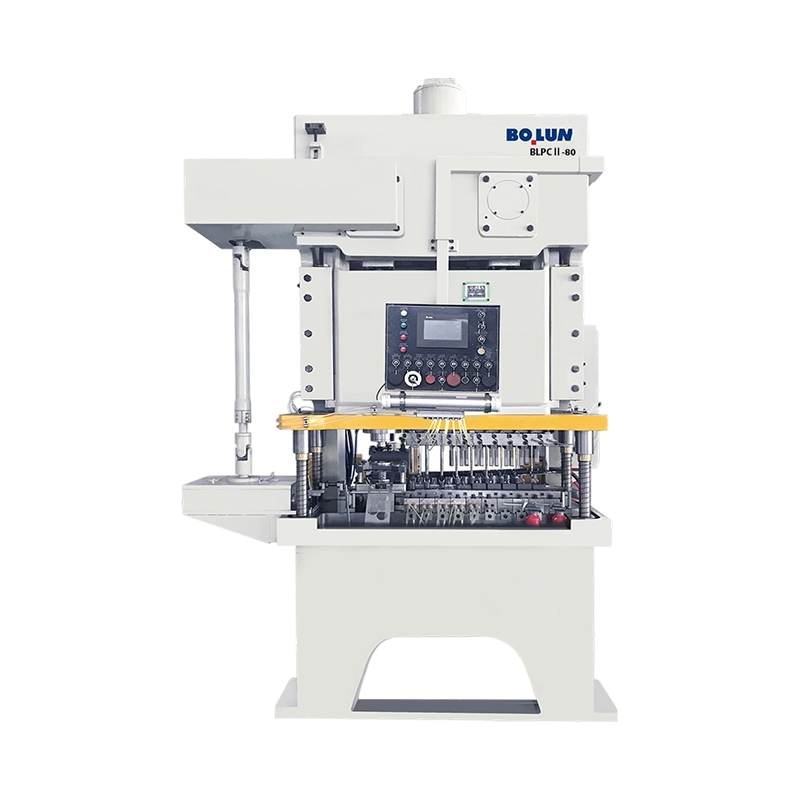
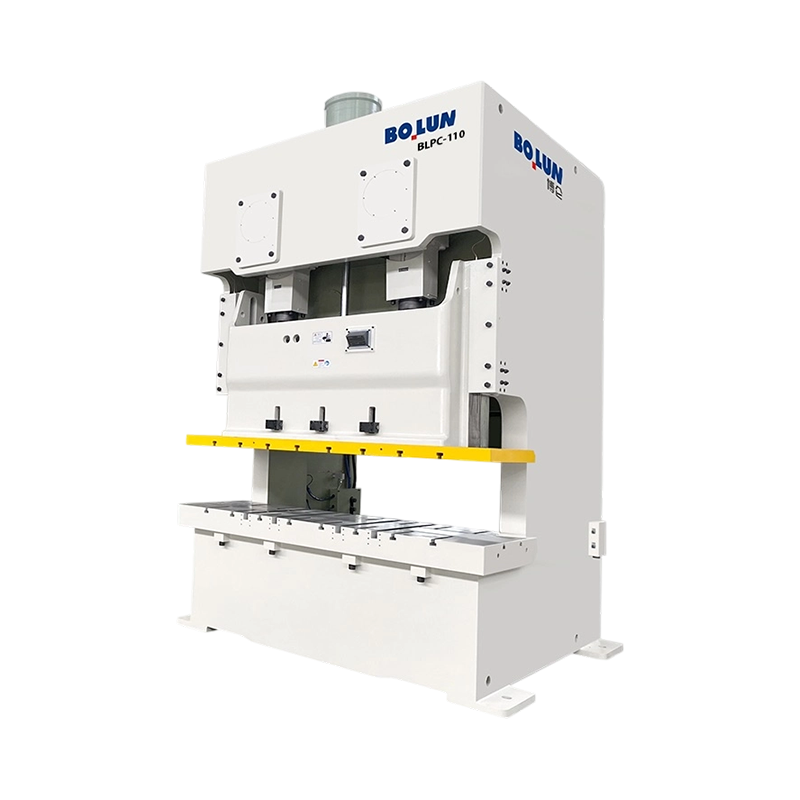
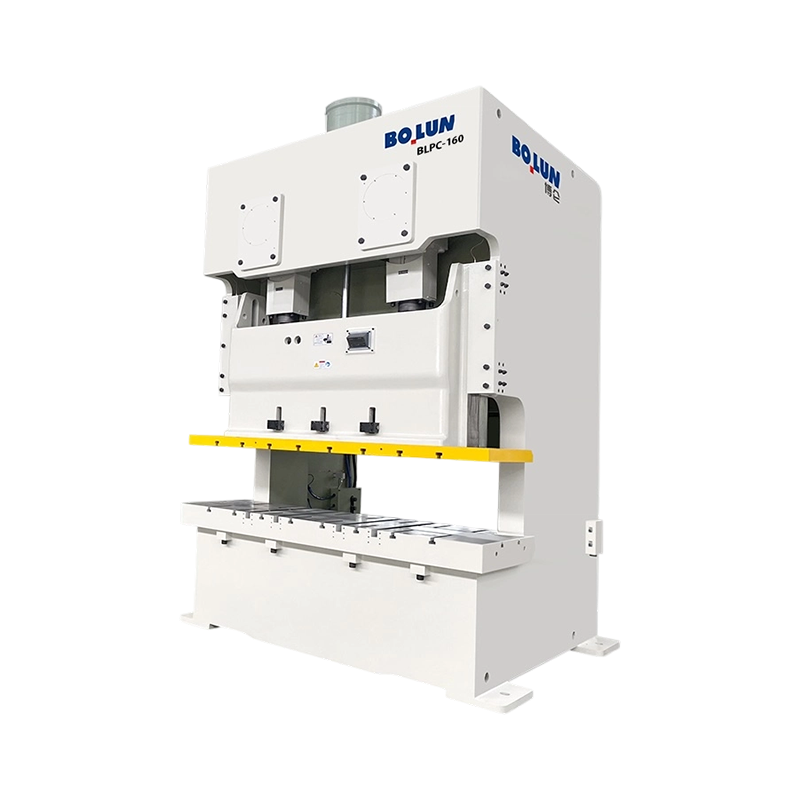
In modern battery manufacturing, precision forming equipment has become a critical foundation for product consistency, material efficiency, and long-term production stability. The BLPC2-80 Multi-Spec High-Precision Open-Type Double-Point Battery Power Press is designed for manufacturers that require a stable, accurate, and adaptable press solution for battery housings, energy storage components, precision metal parts, and complex forming applications. With an 800 kN nominal force, an extended 180 mm slide stroke, a spacious 1600 x 610 mm worktable, and a maximum die height of 320 mm, this machine delivers the structural capacity and forming flexibility required by increasingly demanding industrial production environments.
The machine belongs to the open-type double-point power press category, a configuration valued for its accessibility, operational convenience, and suitability for wide workpieces and progressive die applications. Compared with conventional single-point presses, the double-point structure provides improved slide balance and better force distribution across the working area. Compared with many general-purpose open-type presses, this model is optimized for battery-related production where dimensional stability, clean forming edges, and repeatable motion control are essential. It is especially suitable for deeper battery housings and specialized energy storage components that demand a longer stroke and reliable die accommodation.
Manufactured by Zhejiang Bolun High-Precision Machinery Co., Ltd., the BLPC2-80 reflects a production philosophy built around high-rigidity construction, meticulous machining, integrated lubrication, strict inspection, and customization capability. The company’s long experience in forging and forming machinery allows it to provide equipment that is not only mechanically strong but also adapted to real industrial needs. For customers seeking a high-precision battery power press that can improve forming quality, reduce maintenance pressure, and support multiple die specifications, this product offers a balanced combination of capacity, accuracy, flexibility, and long service life.
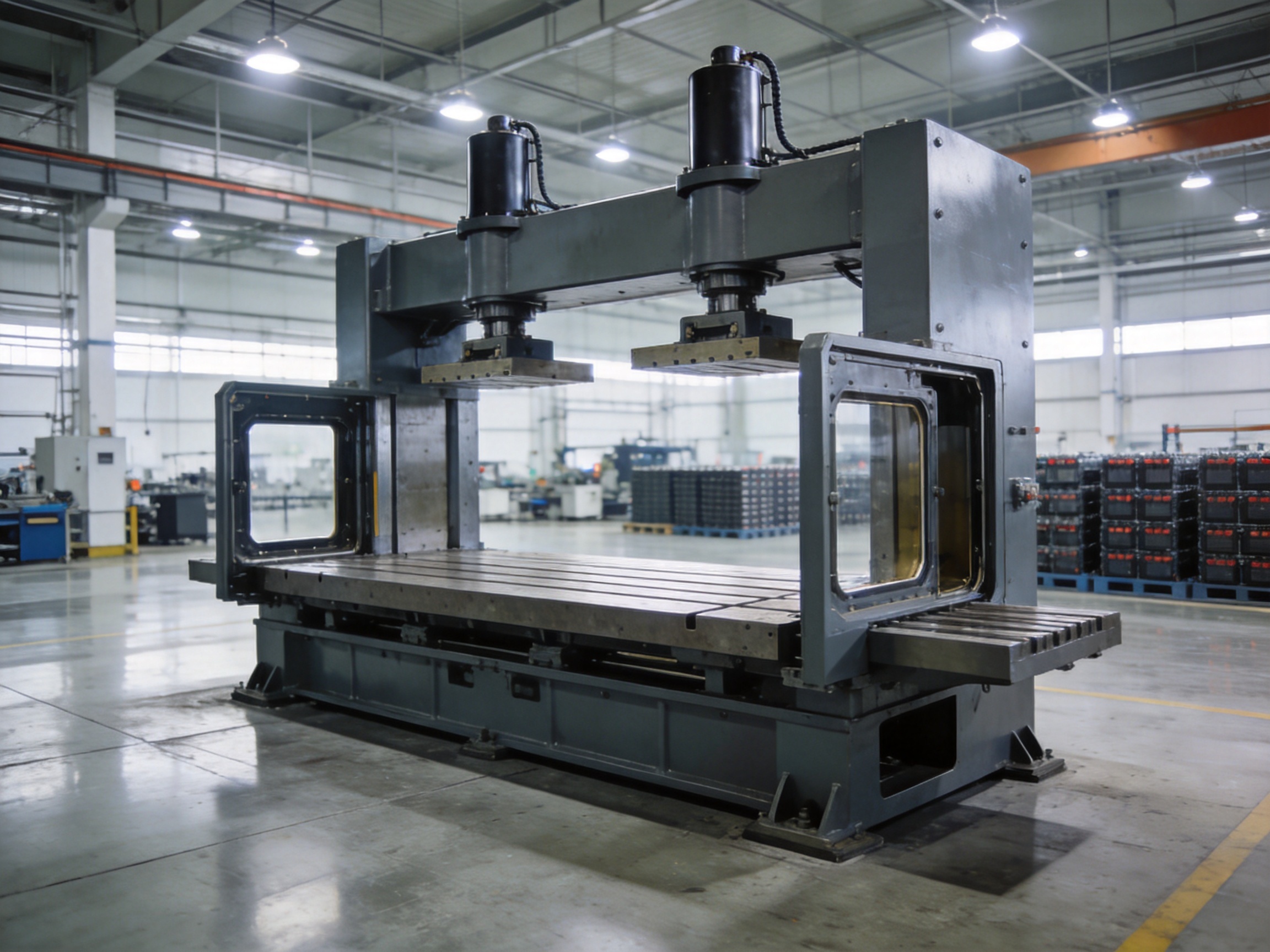
The rapid growth of electric vehicles, portable electronics, grid energy storage, and industrial battery systems has changed the requirements placed on stamping and forming equipment. Battery parts are no longer simple metal shells or basic covers. They are increasingly designed with thinner materials, tighter tolerances, more complicated geometries, and greater expectations for production repeatability. A forming press used in this field must be capable of handling demanding molds, maintaining consistent force output, and supporting stable operation over long production cycles.
The BLPC2-80 is positioned as a multi-spec high-precision open-type double-point battery power press for manufacturers that need more than a basic stamping machine. Its 800 kN nominal force provides sufficient power for a wide range of forming tasks, while its extended slide stroke of 180 mm is particularly useful for deeper drawing and forming processes. In battery housing production, the depth and uniformity of the formed part are important to assembly accuracy, sealing performance, and product safety. A press with insufficient stroke or poor slide stability may cause dimensional deviation, uneven wall thickness, or premature tool wear. The BLPC2-80 is designed to reduce these risks by combining force capacity with structural stiffness and controlled motion.
Its open-type structure offers practical advantages for die installation, operation observation, and maintenance accessibility. Operators can access the working area more easily than with many closed-frame machines, reducing setup complexity and improving production convenience. At the same time, the double-point drive improves the distribution of force across the slide, making the machine more suitable for wide molds and multi-cavity dies. This is particularly valuable for battery component manufacturers that want to improve productivity by forming multiple pieces or larger panels in one stroke.
The machine is also relevant to producers of customized energy storage components. Battery systems vary widely in size, material, and mechanical design. A manufacturer may need to switch between molds for cylindrical cell components, prismatic battery cases, module brackets, sealing plates, heat dissipation parts, and structural covers. The BLPC2-80’s expanded worktable and increased maximum die height provide the flexibility needed to support this diversity, helping manufacturers avoid dependence on multiple specialized machines for moderate variations in tooling requirements.
The most direct technical advantage of the BLPC2-80 is its increased nominal force of 800 kN. In practical production, nominal force determines whether the press can complete forming operations reliably within the designed working range. Insufficient force can lead to incomplete forming, tool overload, unstable part quality, and excessive machine stress. With 800 kN capacity, the BLPC2-80 can handle more demanding battery metal forming applications while maintaining a stable operating reserve for long-term use.
The extended 180 mm slide stroke is another defining feature. Many standard open-type presses are limited in their ability to form deeper components because their slide stroke is too short for certain drawing or shaping processes. The BLPC2-80’s longer stroke provides more forming depth, better die opening clearance, and improved adaptability to specialized molds. This makes it suitable for deeper battery housings, energy storage shells, structural components, and other parts where additional vertical travel is necessary.
The 1600 x 610 mm worktable is designed to accommodate wider dies and more complex mold layouts. For battery manufacturing, where progressive dies and multi-position dies are often used to enhance productivity, table area is a decisive factor. A larger worktable allows the installation of molds that may integrate blanking, piercing, bending, drawing, trimming, and shaping operations. This supports more efficient production planning and can reduce the number of separate machine setups required for a complete part.
The maximum die height of 320 mm expands the machine’s mold compatibility. Die height is especially important when customers use customized tooling, deeper drawing dies, or dies with built-in guide systems and complex mechanisms. A press with limited die height may restrict tooling options and force the manufacturer to redesign molds. By offering increased die height, the BLPC2-80 helps customers maintain flexibility and reduce tooling constraints.
The machine’s high-rigidity steel frame is essential for precision and durability. During every press stroke, the machine structure must withstand repeated impact, load variation, and vibration. If the frame lacks stiffness, the slide may deflect, the die alignment may shift, and the final product may lose dimensional consistency. The BLPC2-80’s rigid steel frame is designed to minimize vibration and deformation, supporting stable forming accuracy even during intensive production.
An integrated electric automatic lubrication system further strengthens the machine’s long-term performance. Lubrication is one of the most important factors in reducing wear between moving components. Manual lubrication can be inconsistent, especially in busy production environments. Automatic lubrication improves reliability by delivering lubrication at appropriate intervals, reducing friction, lowering maintenance risk, and extending the service life of critical mechanical parts.
Item |
Specification or Feature |
Production Value |
|---|---|---|
Product Type |
Open-Type Double-Point Battery Power Press |
Combines accessibility with balanced force distribution for battery component forming. |
Nominal Force |
800 kN |
Provides strong forming capacity for deeper and more demanding metal parts. |
Slide Stroke |
180 mm |
Supports deeper battery housings and specialized energy storage components. |
Worktable Size |
1600 x 610 mm |
Allows wider molds, multi-cavity tooling, and progressive die layouts. |
Maximum Die Height |
320 mm |
Improves mold compatibility and supports customized tooling requirements. |
Frame Structure |
High-rigidity steel frame |
Minimizes vibration and enhances long-term forming stability. |
Lubrication System |
Integrated electric automatic lubrication |
Reduces wear, improves service life, and lowers maintenance dependence. |
Application Focus |
Battery housings and energy storage components |
Meets the needs of modern battery and precision metal forming industries. |
One of the strongest advantages of the BLPC2-80 is its balanced combination of force, stroke, table area, and die height. Some competitor machines may provide adequate nominal force but lack sufficient stroke for deeper forming. Others may have a larger table but limited rigidity or inconsistent lubrication. The BLPC2-80 is designed as an integrated solution, ensuring that each major specification supports the others. This reduces the mismatch often found when customers use a general-purpose press for battery production.
Compared with many standard open-type power presses, the double-point structure of this machine offers superior slide balance. In single-point presses, force is concentrated more centrally, which may be sufficient for smaller dies but less ideal for wide molds. When wide or multi-station dies are used, uneven force distribution can cause die wear, product deviation, or forming instability. The BLPC2-80’s double-point configuration improves load distribution across the slide, helping maintain parallelism and consistency during operation.
The extended 180 mm slide stroke gives this model an advantage over presses designed mainly for shallow stamping. Battery housings and energy storage components often require deeper forming than traditional flat or lightly bent parts. A shorter stroke may restrict the forming process, increase die design difficulty, or limit product types. With its longer stroke, the BLPC2-80 enables manufacturers to pursue deeper and more complex geometries without immediately moving to a larger or more expensive machine category.
The 1600 x 610 mm worktable also improves production flexibility. Competitor presses with smaller worktables may force manufacturers to reduce die size, limit cavity numbers, or divide a process into multiple operations. This can increase labor, floor space, and handling time. The larger worktable of the BLPC2-80 supports more efficient die layouts, helping customers improve throughput and reduce unnecessary production steps.
Another competitive advantage is the maximum die height of 320 mm. Mold designs in battery manufacturing are becoming more complex as components require improved strength, sealing, dimensional accuracy, and assembly compatibility. Taller dies may include precision guide pillars, spring systems, drawing structures, forming inserts, and automatic material handling interfaces. A press with limited die height may prevent the use of such tooling. The BLPC2-80 gives engineers more freedom to design molds according to product needs rather than machine limitations.
The automatic lubrication system also differentiates the machine from basic models that rely heavily on manual lubrication. Manual maintenance routines can vary depending on operator experience, production pressure, and factory management. Inconsistent lubrication increases the risk of wear, noise, heat, and component damage. The integrated electric automatic lubrication system helps maintain mechanical condition more consistently, which is especially important for high-duty production environments.
In addition, the high-rigidity steel frame provides a long-term advantage that may not be immediately visible in simple specification comparisons. Press accuracy is not only determined by rated capacity; it depends heavily on how the frame responds under repeated load. A rigid frame reduces deformation, vibration, and alignment drift. Over time, this contributes to better product consistency, reduced die repair, lower maintenance cost, and longer equipment life.
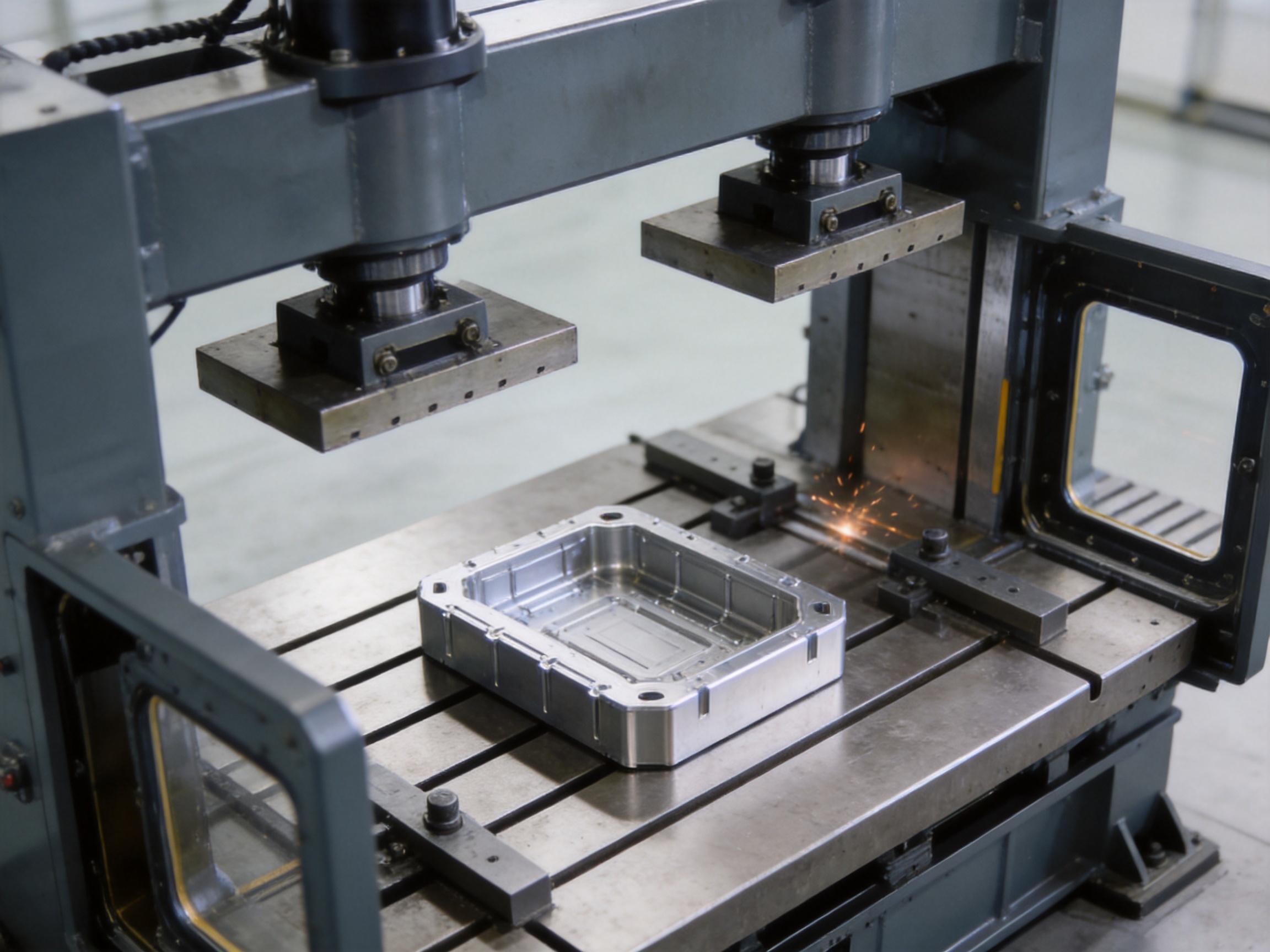
The frame of a power press is the foundation of its forming performance. Every stroke generates mechanical load that travels through the slide, die, worktable, and frame. If the frame is weak or poorly manufactured, the machine may experience vibration, deflection, noise, and inaccurate forming. The BLPC2-80 addresses these challenges with a high-rigidity steel frame designed for stability under repeated industrial operation.
For battery component manufacturing, frame rigidity has a direct impact on part quality. Battery housings and precision energy storage parts often require uniform wall thickness, clean edges, consistent corner formation, and accurate dimensions. Even small deviations can affect assembly, sealing, or downstream welding. A stable press structure helps maintain die alignment and reduces the risk of uneven forming forces. The BLPC2-80’s rigid construction supports these requirements by helping the slide move consistently and by resisting unwanted structural deformation.
Rigidity also influences die life. When a press frame deflects excessively, the die may experience uneven contact, abnormal wear, and localized stress. This can shorten die service life and increase the frequency of maintenance. By minimizing vibration and deformation, the BLPC2-80 helps protect tooling investment. For manufacturers using expensive customized battery molds, this is an important economic benefit.
The frame also contributes to operator confidence and production continuity. A machine that runs smoothly with reduced vibration is easier to monitor, safer to manage, and less likely to require unplanned downtime. In high-volume battery production, downtime can disrupt delivery schedules and increase operating costs. The BLPC2-80’s structure is therefore not merely a mechanical feature; it is a production stability asset.
The 180 mm slide stroke is a central reason why the BLPC2-80 is suitable for modern battery applications. Deeper drawing and forming operations require sufficient vertical travel to allow the material to flow properly into the die cavity. If the slide stroke is too short, the forming operation may become unstable or impossible without redesigning the process. The longer stroke provides the movement range needed for deeper battery housings and specialized components.
In the energy storage sector, component geometry is becoming more diverse. Some parts must provide structural strength, others must assist sealing, and others must support heat management or module assembly. These parts may require multi-stage forming, stretching, bending, and shaping. A longer stroke gives die designers more process freedom and helps manufacturers respond to new product requirements.
The extended stroke also improves die opening clearance. Operators need sufficient space to install, adjust, and remove dies. Automated or semi-automated feeding systems may also require clearance for material movement and part discharge. By offering a longer slide stroke, the BLPC2-80 can simplify setup and improve compatibility with more advanced production arrangements.
Competitor machines with shorter strokes may be suitable for shallow stamping but less efficient for deeper battery housing production. Manufacturers using those machines may need additional operations or alternative equipment, increasing production complexity. The BLPC2-80 helps consolidate forming capability into one robust machine, supporting more efficient process planning.
The 1600 x 610 mm worktable is another major advantage for factories producing multiple battery-related parts. A larger table allows more tooling possibilities and supports production strategies that prioritize efficiency and flexibility. In modern stamping operations, mold design often determines productivity. If the press worktable is too small, the mold must be simplified, split, or redesigned, leading to lower output and higher cost.
With its expanded table, the BLPC2-80 can accommodate wider dies and more complex layouts. This is valuable for progressive dies, where material passes through multiple stations in sequence. A progressive die can combine operations such as blanking, piercing, drawing, bending, trimming, and shaping. The larger the table, the more freedom engineers have to arrange these stations effectively.
For battery manufacturers handling different product sizes, the large table helps reduce equipment limitations. A single machine can be used for various molds within its capacity range, improving utilization and return on investment. This is particularly important for companies that produce customized components or serve multiple customers with changing product demands.
The worktable size also supports better tooling stability. Larger molds need stable support across their base. If a mold extends beyond the ideal support area of a smaller press, vibration and uneven loading may increase. The BLPC2-80’s worktable provides a stronger foundation for wide tooling, helping preserve accuracy and reduce mold stress.
The integrated electric automatic lubrication system is a practical feature that improves reliability in daily operation. Power presses contain numerous moving parts that operate under load and speed. Proper lubrication reduces friction, prevents abnormal wear, controls heat, and supports smooth motion. Inadequate lubrication can quickly lead to increased noise, reduced accuracy, component damage, and unexpected downtime.
By using automatic lubrication, the BLPC2-80 reduces dependence on manual routines. In many factories, operators are responsible for multiple tasks, and lubrication may not always be performed with perfect timing or consistency. Automatic systems help standardize this critical maintenance function. The result is more stable machine condition and improved protection for mechanical components.
Reduced wear also contributes to long-term precision. As moving parts wear, clearances may change and motion accuracy may decline. For battery components, this can gradually affect product quality. The automatic lubrication system helps slow this process and supports consistent forming performance over time.
From a management perspective, automatic lubrication lowers maintenance uncertainty. It allows maintenance teams to focus on planned inspection, die care, and production optimization rather than frequent manual lubrication checks. This can reduce labor pressure and improve overall equipment management.
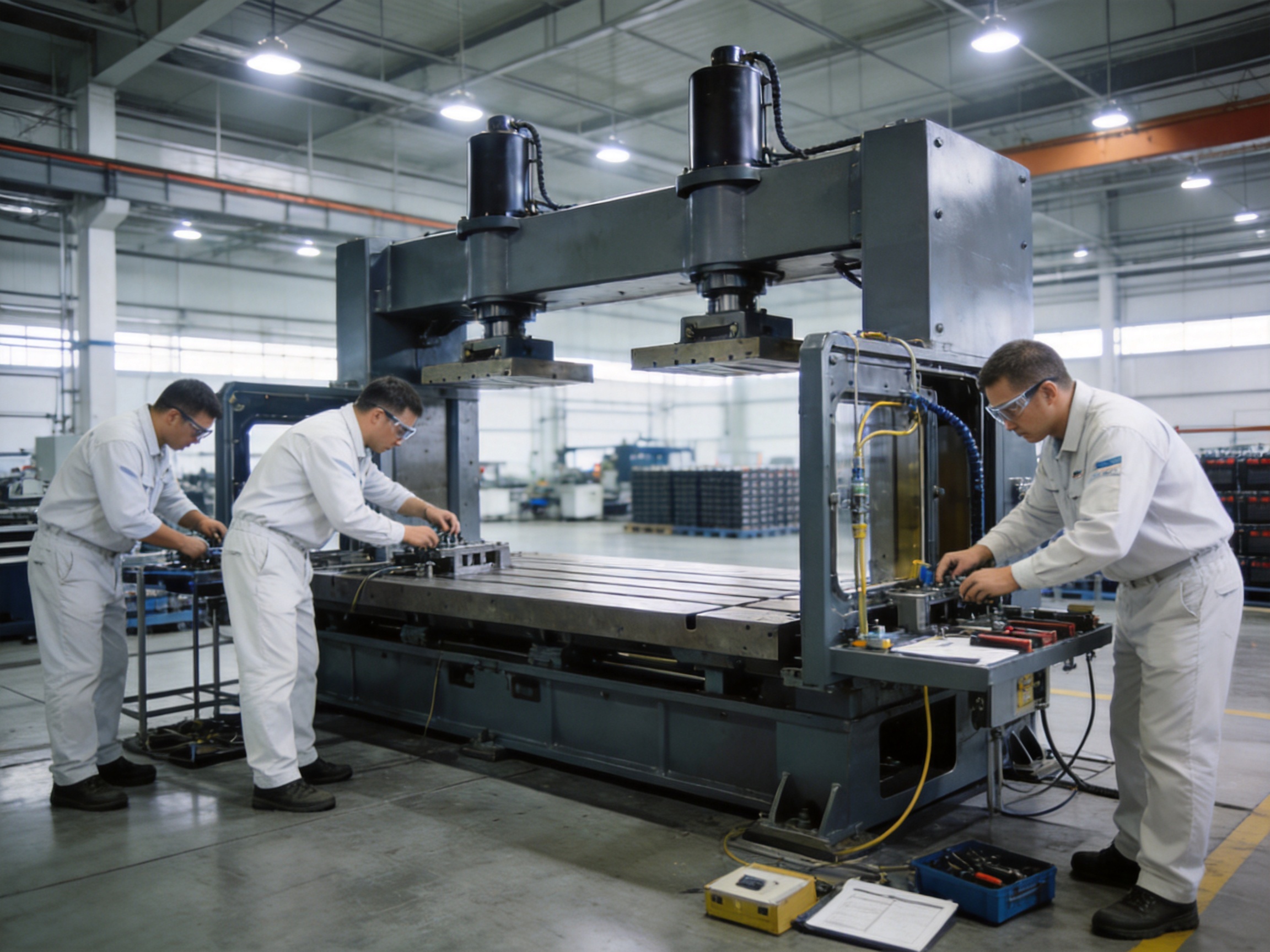
Zhejiang Bolun High-Precision Machinery Co., Ltd. is located in Zhejiang, one of China’s important regions for precision manufacturing. The company has developed over two decades in the machinery manufacturing industry and has become a modern enterprise integrating research and development, design, production, sales, and service. This full-chain capability is important because high-precision forming equipment requires close coordination between design concepts, machining accuracy, assembly quality, testing, and after-sales support.
The company’s manufacturing strength begins with its design and engineering capability. A high-quality power press is not simply assembled from heavy components; it must be engineered to manage load, motion, vibration, lubrication, die compatibility, and operator usability. Bolun’s design team supports standard machine development as well as non-standard customization, allowing customers to obtain equipment adapted to special specifications and functions. This is particularly valuable in the battery industry, where production requirements can change rapidly with new cell formats, module designs, and material choices.
The company emphasizes a full-chain production system. This means that key stages from basic design and core component development to final machine assembly are managed with systematic attention. Such integration helps improve quality control and reduces communication gaps between separate suppliers. When a manufacturer controls more of the production chain, it can better ensure that the final machine meets its intended performance standard.
Precision processing equipment is another important strength. The accuracy of a power press depends heavily on the machining quality of its frame surfaces, slide components, guide systems, connection points, and worktable. Advanced machining capability helps ensure that these elements are produced to tight tolerances. Better machining reduces assembly errors and supports smoother operation after installation.
Bolun also adopts advanced international production management concepts and integrates them with China’s local manufacturing environment. This creates a management system focused on efficiency, practicality, and continuous improvement. For customers, this means not only competitive manufacturing capacity but also more reliable delivery, quality consistency, and service responsiveness.
Quality control is described by the company as its lifeline. The finished product inspection system exceeds typical industry standards and covers every process and component. For a power press, this approach is essential because a small defect in machining, assembly, lubrication, or alignment can lead to significant problems under high-intensity operation. Rigorous inspection helps ensure stable precision and long service life.
The creation of a high-precision power press involves multiple manufacturing stages, each of which influences final performance. The process begins with structural design, material selection, and frame preparation. A strong steel frame must be designed to resist deformation and absorb forming loads. The frame must then be processed with accurate reference surfaces to ensure that the slide, worktable, and die area align correctly.
Machining is a critical stage. Surfaces that guide motion or support dies must be processed with high accuracy. If machining quality is poor, the press may suffer from uneven load, vibration, or shortened component life. Bolun’s investment in precision processing equipment helps address this requirement. The result is a machine that can maintain alignment and stability during demanding production.
Component assembly requires skilled technicians and strict procedures. A power press includes mechanical transmission components, slide systems, lubrication arrangements, electrical controls, safety-related elements, and adjustment mechanisms. Each part must be installed with correct fit and alignment. The automatic lubrication system must be integrated so that critical moving areas receive reliable lubrication during operation.
After assembly, inspection and testing verify the machine’s performance. This may include checking motion stability, lubrication function, structural alignment, operating noise, and forming readiness. For customers, this final inspection provides confidence that the press is not merely complete but properly prepared for production use.
The company’s ability to provide pre-sales consultation, in-sales support, and after-sales guarantees further strengthens the value of the machine. Purchasing a power press is not a simple transaction; it is a production investment. Customers often need help selecting the right press model, understanding tooling compatibility, planning installation, and maintaining equipment. A manufacturer with a complete service system can reduce customer risk and support long-term productivity.
The BLPC2-80 is especially suitable for the production of deeper battery housings. Battery housings must meet strict requirements for shape, strength, and dimensional accuracy. Any inconsistency may affect cell assembly, sealing, internal clearance, or mechanical protection. The machine’s 800 kN force and 180 mm stroke support stable forming for these deeper components.
It can also be used for specialized energy storage components. As energy storage systems become larger and more complex, manufacturers need metal parts for modules, enclosures, connectors, protective structures, and thermal management assemblies. Many of these parts require precision forming rather than simple cutting. The BLPC2-80’s large worktable and die height make it adaptable to these varied requirements.
The press is also valuable for factories producing multiple specifications. In contract manufacturing or component supply, orders may change frequently. A machine with strong mold compatibility allows faster adaptation to different products. The BLPC2-80 supports multi-spec production because it combines adequate force, table size, die height, and stroke range.
Beyond battery applications, the machine may be used for precision metal forming tasks in related industries, provided the material, die, and process requirements match its capacity. Its open-type structure and double-point design make it suitable for many medium-to-large forming operations requiring stable slide movement and accessible operation.
For production managers, the value of a press is measured not only by specifications but also by daily performance. The BLPC2-80 supports productivity through stable operation, mold flexibility, reduced maintenance burden, and suitability for high-demand forming. Its large worktable can help reduce the number of setups required for complex parts. Its automatic lubrication system can reduce unplanned maintenance related to wear. Its rigid frame can help maintain quality consistency over longer production periods.
Production managers also benefit from the machine’s adaptability. In a changing market, equipment that can handle multiple molds and product variations helps reduce investment risk. Instead of purchasing a separate press for every new component type, a factory can use a flexible machine platform within its capacity range. The BLPC2-80 is designed to support this type of production strategy.
Quality managers benefit from improved repeatability. Battery components often require inspection for dimensions, surface quality, and forming consistency. A stable press helps reduce process variation, making it easier to maintain quality standards. Reduced vibration and better slide balance support more predictable forming results.
Maintenance teams benefit from the automatic lubrication system and robust construction. Fewer lubrication errors, less wear, and easier access through the open-type structure can simplify maintenance planning. Over time, this can contribute to lower total cost of ownership.
The open-type double-point design offers a useful balance between accessibility and forming stability. Open-type presses are popular because operators and maintenance personnel can access the working area more easily. This is beneficial for die installation, inspection, cleaning, adjustment, and troubleshooting. In factories where mold changes are frequent, accessibility can significantly improve efficiency.
The double-point drive structure adds an important level of performance. Instead of applying force through a single central point, the double-point arrangement supports a wider slide area and more balanced motion. This is especially useful for wide dies, multi-station processes, and components requiring uniform pressure across a larger working area.
Compared with closed-type presses, open-type machines may offer easier access and simpler operation for certain applications. Compared with single-point open-type machines, double-point open-type presses provide better support for larger tooling. The BLPC2-80 occupies a strong position within this category because it combines the convenience of open-type construction with the improved stability of a double-point design.
For battery component production, where tooling may be wide and forming quality is critical, this design choice is practical. It helps manufacturers achieve efficient mold handling without giving up the stability required for precision parts.
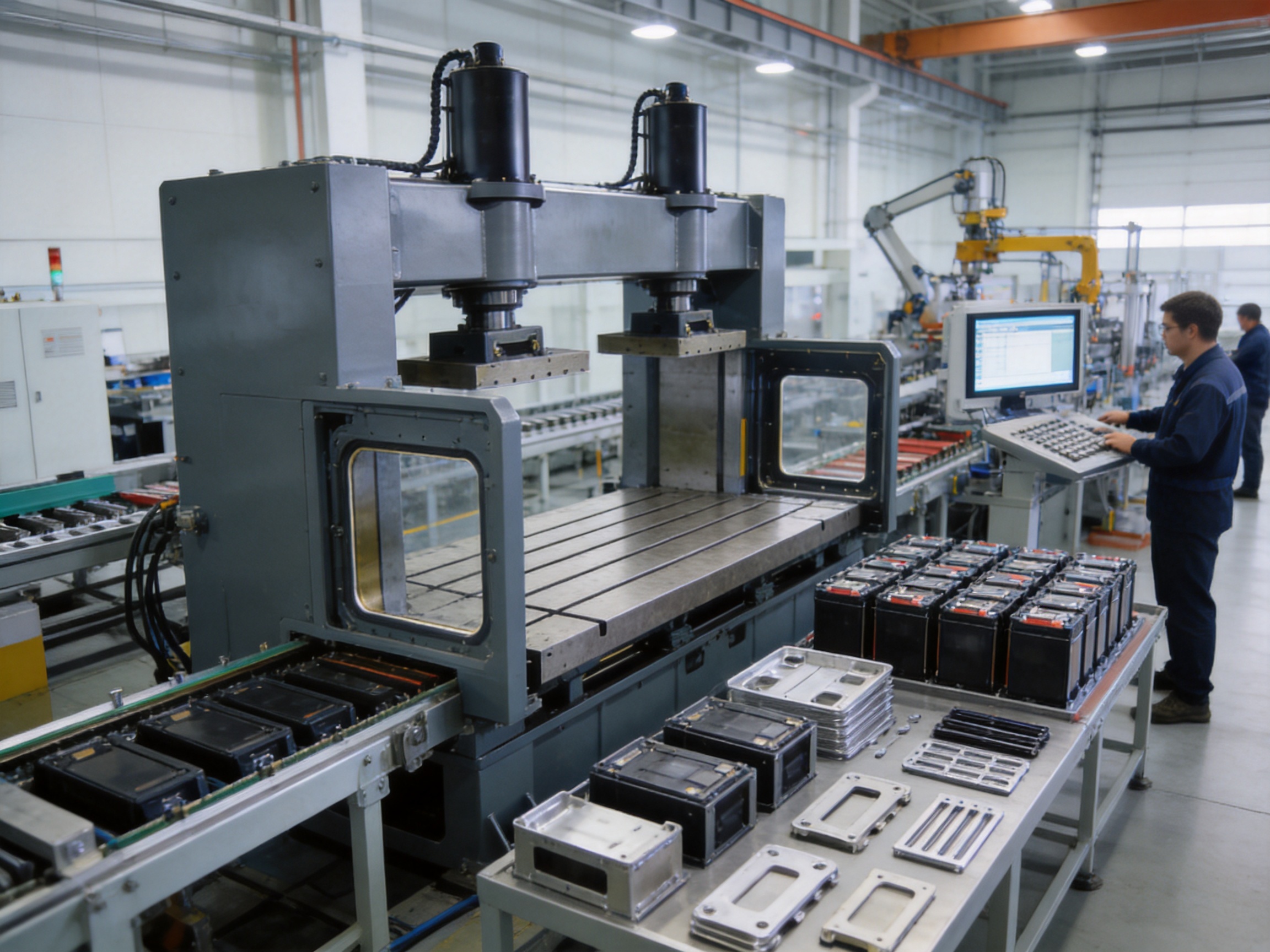
One of the important strengths of Zhejiang Bolun High-Precision Machinery Co., Ltd. is its ability to provide one-stop design and manufacturing services for products with special specifications and functions. In the real manufacturing world, standard machines do not always perfectly match customer needs. Material thickness, part geometry, die size, feeding method, production speed, safety requirements, and factory layout can all influence equipment selection. A supplier with customization capability can help customers build a more suitable production solution.
For the BLPC2-80, customization support may be especially useful for battery manufacturers developing new product lines. Battery technology evolves quickly, and component designs may change as manufacturers pursue higher energy density, better safety, lighter weight, and improved thermal control. Equipment suppliers must be able to respond to such changes. Bolun’s engineering team can work with customers to understand special requirements and provide practical manufacturing guidance.
Customer-oriented service also includes pre-sales consultation. Before purchasing a press, customers need to evaluate whether the machine’s force, stroke, die height, and table size match their production needs. Technical consultation can prevent incorrect equipment selection and reduce future modification costs. During sales and installation, professional support helps customers prepare foundations, plan die installation, and establish operating procedures. After sales, service support helps maintain production continuity.
This service structure gives the BLPC2-80 an advantage over equipment suppliers that offer only basic sales. In precision manufacturing, technical support and equipment quality are closely connected. A machine performs best when it is correctly selected, properly installed, and maintained according to professional standards.
Bolun Machinery’s stated philosophy includes the belief that quality and credit come first. In the machinery industry, reputation is built over years because customers judge equipment by long-term performance. A power press must withstand repeated mechanical stress, often operating for long shifts under demanding conditions. Long-term reliability depends on design, materials, machining, assembly, lubrication, inspection, and service.
The BLPC2-80 reflects this quality philosophy through its structural strength, automatic lubrication, and production-oriented specifications. It is not designed merely to meet a catalog description; it is designed to solve practical production challenges. Its force supports demanding forming, its stroke supports deeper parts, its worktable supports larger molds, and its die height supports tooling flexibility. These features work together to improve production reliability.
Long service life also depends on disciplined inspection. Bolun’s finished product inspection system helps ensure that machines leave the factory in stable condition. Inspection that exceeds industry norms can reduce early failures and improve customer confidence. For manufacturers investing in battery component production, this reliability is essential because equipment downtime can affect large supply chains.
The economic value of the BLPC2-80 can be considered from several perspectives. First, its multi-spec capability improves machine utilization. A press that can accept different dies and produce different parts is more valuable than a machine limited to narrow applications. The large worktable, increased die height, and long stroke allow manufacturers to use the machine for a broader range of products.
Second, stable forming accuracy can reduce scrap. In battery component production, rejected parts waste material, labor, energy, and production time. A rigid frame and balanced double-point structure help maintain consistent forming, reducing the likelihood of dimensional errors. Lower scrap rates directly improve profitability.
Third, automatic lubrication and durable construction can reduce maintenance cost. Unexpected downtime is expensive because it interrupts production schedules and may delay customer deliveries. By reducing wear and supporting stable mechanical operation, the BLPC2-80 helps improve equipment availability.
Fourth, the machine can support productivity improvements through larger and more complex dies. If a manufacturer can combine several operations into a progressive die or increase the number of cavities, output per stroke can improve. The spacious worktable makes such strategies more feasible.
Finally, the machine’s suitability for battery and energy storage applications positions it well in a growing market. Manufacturers investing in equipment for this sector need machines that can adapt to future demand. The BLPC2-80 offers a flexible platform for current and emerging component requirements.
The BLPC2-80 is an open-type double-point battery power press designed for high-precision forming applications, especially battery housings and specialized energy storage components.
The machine provides an increased nominal force of 800 kN, giving it strong forming capacity for demanding metal forming operations.
The extended 180 mm slide stroke allows the press to produce deeper parts and gives die designers more flexibility for complex forming processes. It is particularly useful for deeper battery housings.
The double-point structure improves force distribution across the slide, making the machine more suitable for wide dies, multi-station tooling, and applications requiring balanced forming pressure.
The large worktable supports wider molds, progressive dies, and multi-cavity tooling. It improves production flexibility and can help increase output efficiency.
The increased die height improves compatibility with taller and more complex molds. This allows customers to use specialized tooling without being overly restricted by machine dimensions.
The integrated electric automatic lubrication system reduces friction and wear, improves mechanical reliability, supports long-term accuracy, and lowers dependence on manual lubrication routines.
Battery manufacturing requires accurate, repeatable, and stable forming. The BLPC2-80 combines strong force, long stroke, large table area, rigid construction, and automatic lubrication, making it well suited for battery housings and energy storage components.
Compared with many conventional open-type presses, the BLPC2-80 offers a stronger combination of 800 kN force, 180 mm stroke, large worktable, 320 mm die height, double-point stability, and automatic lubrication. This makes it more adaptable and reliable for precision battery component production.
The machine is manufactured by Zhejiang Bolun High-Precision Machinery Co., Ltd., a company located in Zhejiang, China, with extensive experience in high-precision forming equipment, integrated manufacturing, customization, and service support.
The BLPC2-80 Multi-Spec High-Precision Open-Type Double-Point Battery Power Press is a strong solution for manufacturers seeking reliable, flexible, and accurate forming equipment for battery and energy storage applications. Its 800 kN nominal force provides the strength required for demanding parts, while its 180 mm slide stroke supports deeper forming tasks. The 1600 x 610 mm worktable and 320 mm maximum die height give customers the flexibility to use a wide range of molds, including larger and more complex tooling.
Beyond specifications, the machine’s value lies in its integrated design. The open-type structure improves accessibility, the double-point configuration improves slide balance, the high-rigidity steel frame supports long-term accuracy, and the automatic lubrication system reduces wear and maintenance pressure. Together, these features help manufacturers improve product consistency, protect tooling, reduce downtime, and adapt to changing production needs.
The manufacturing strength of Zhejiang Bolun High-Precision Machinery Co., Ltd. further enhances the product’s competitiveness. With two decades of experience, advanced processing equipment, a full-chain production system, non-standard customization capability, strict inspection, and customer-oriented service, the company provides more than a machine; it provides a practical production solution for high-precision forming.
As the battery and energy storage industries continue to expand, manufacturers need forming equipment that can keep pace with higher standards and changing product designs. The BLPC2-80 is built for that future. It offers the power, precision, flexibility, and reliability needed to support advanced battery component manufacturing and broader precision metal forming applications.
Bolun Machinery Product Technical Materials: BLPC2-80 Multi-Spec High-Precision Open-Type Double-Point Battery Power Press.
Zhejiang Bolun High-Precision Machinery Co., Ltd. Company Profile and Manufacturing Capability Statement.
Metal Forming Handbook: Principles of Mechanical Press Design and Precision Stamping Applications.
Industrial Press Maintenance Guidelines: Lubrication, Alignment, and Long-Term Reliability Practices.
Battery Manufacturing Engineering Notes: Forming Requirements for Battery Housings and Energy Storage Metal Components.


Understanding Mechanical Power Presses and Their Essential Functions A mechani...
What Is a Power Press? A power press — also called a stamping press or punch pr...
In the fields of metal forming, sheet metal fabrication, blanking, and punching,...
Power press machines are classified in two main ways: by frame construction, w...
As the manufacturing industry moves steadily toward automation and smart product...
In modern manufacturing, cold forging is widely used in the automotive, aerospac...
Contact Us

bolunpress@gmail.com

+86-575-83362228

+86-15158259588

+86-575-83362999

+86-15158259588

Hangzhou Office Add: No. 332 Wangjiang East Road, Shangcheng District

No.1 Linjiang Road East, Xiaren, Jinting Town, Shengzhou City, Zhejiang Province, China
Ready to Begin?
Get in Touch

Now!

ZHEJIANG BOLUN
 English
 中文简体
中文简体