
Modern sheet metal manufacturers are under continuous pressure to improve forming quality, increase production efficiency, control operating costs, and maintain reliable delivery schedules. These demands are especially significant in industries that process large panels and structural components, including automotive manufacturing, home appliance production, electrical equipment, industrial enclosures, and general fabrication. Selecting the correct press machine is therefore not simply a matter of choosing the highest nominal capacity. The machine must also provide sufficient working space, stable structural rigidity, accurate die adjustment, dependable safety protection, efficient energy transmission, and long-term serviceability.
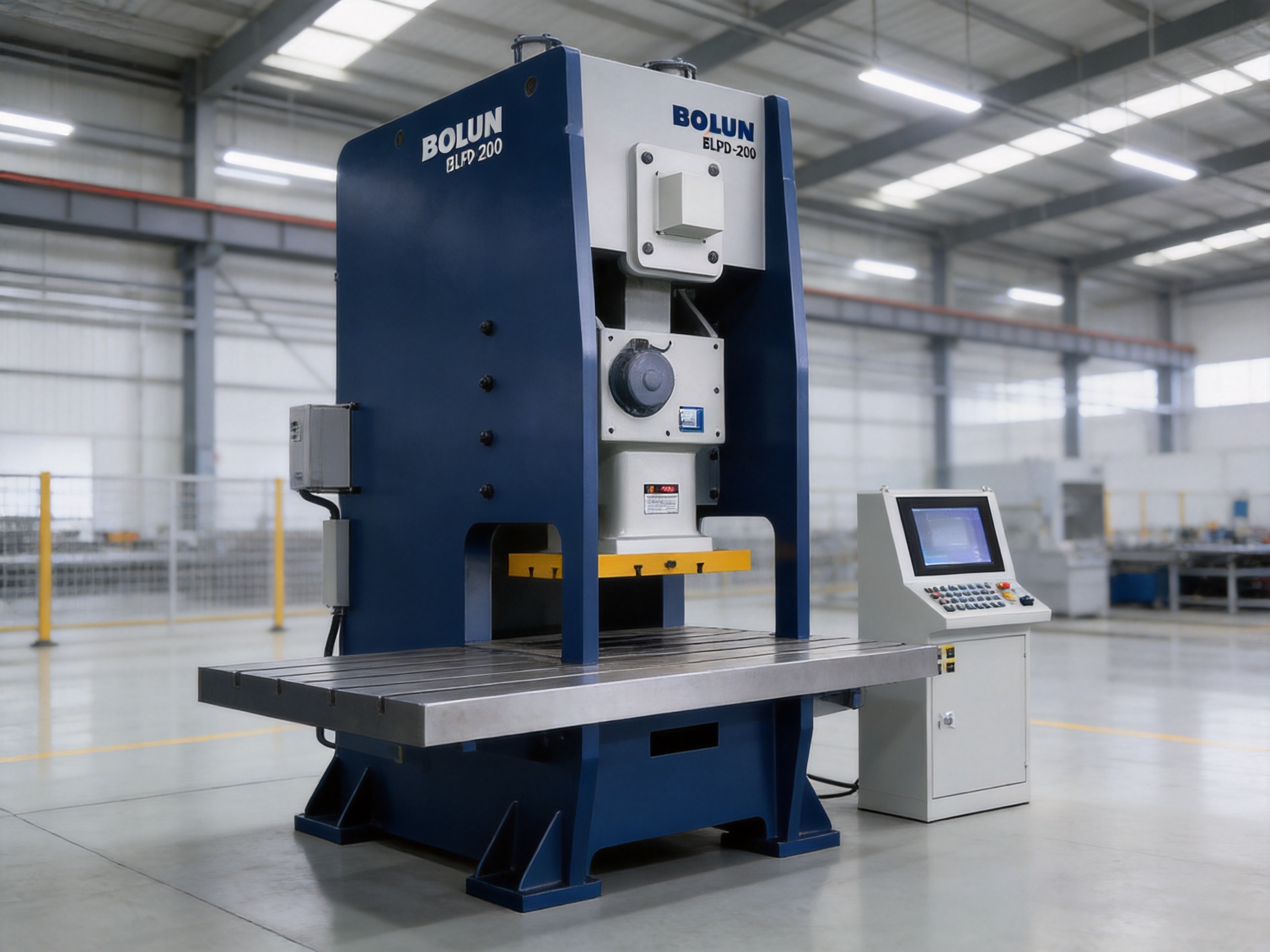
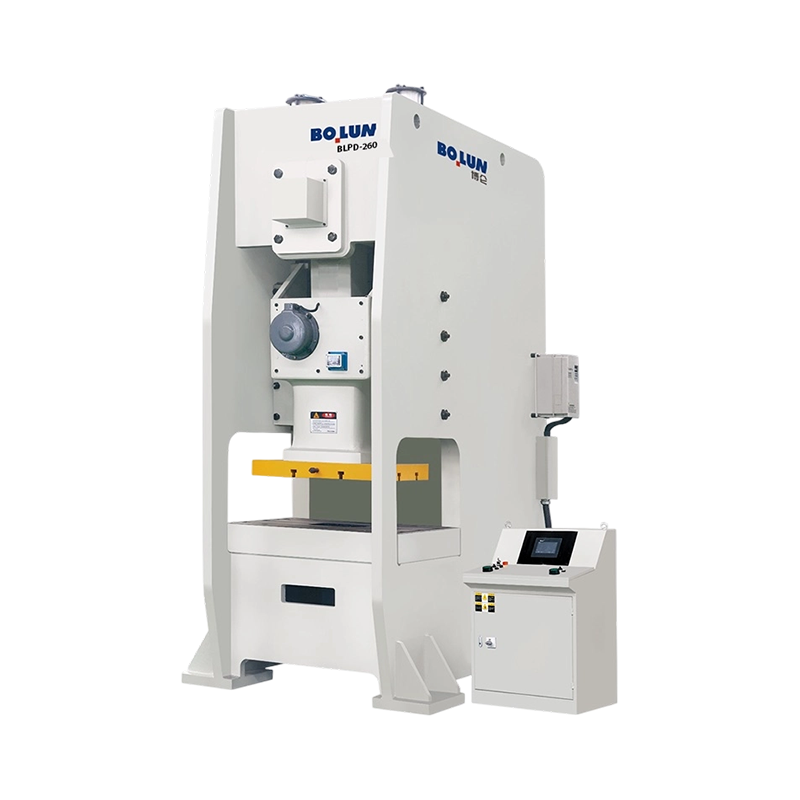
The BLPD-200 Heavy-Duty Large-Format Semi-Closed Single-Point Power Press is designed to address these requirements in a balanced and production-oriented configuration. With a nominal capacity of 2,000 kN, the press is suited to demanding forming, blanking, piercing, bending, shallow drawing, and related sheet metal operations. Its large 1,140 × 820 mm worktable, 1,140 mm column distance, 24.5-ton machine body, and 18.5 kW main motor create a platform for processing wide workpieces and installing substantial dies.
As a semi-closed single-point press, the BLPD-200 combines the accessible operating characteristics of an open-front structure with the strength and stability required for medium-to-heavy industrial stamping. It is intended for manufacturers that need more than a compact general-purpose press but may not require the complete enclosure or significantly larger footprint associated with some high-capacity press lines. The result is a practical machine architecture for flexible production environments.
This article examines the machine’s technical configuration, operating advantages, structural design, manufacturing strengths, application value, maintenance considerations, and comparison with alternative press solutions. It also explains how the equipment can support automated production and how buyers can evaluate whether the BLPD-200 is appropriate for their dies, materials, process sequence, and factory conditions.
The BLPD-200 belongs to the semi-closed single-point power press category. Its nominal capacity is 2,000 kN, equivalent to approximately 200 metric tons of nominal pressing force. This capacity places it in a useful range for manufacturers that process larger sheet components while still requiring a machine that can support varied production tasks rather than one highly specialized operation.
Nominal capacity describes the rated force available at the specified nominal pressure stroke. In practical use, the selected forming process must be matched with the press force curve, material thickness, die design, forming depth, required stroke, and operating speed. The BLPD-200 provides a substantial force reserve for many medium- and large-format sheet metal applications, but final process validation should always be based on the actual stamping load and die conditions.
The press is particularly valuable where large workpieces must be positioned, transferred, or removed with reasonable accessibility. A 1,140 mm column distance gives the working area more lateral clearance than smaller press models. This is important when operators or transfer systems handle wide blanks, when dies require side access, or when a production line includes feeding, gauging, inspection, and part-removal equipment around the press.
The 1,140 × 820 mm worktable offers an appropriate mounting area for large dies while retaining a manageable overall machine footprint. The table thickness is specified as 160 mm, contributing to the rigidity of the die-supporting structure. Together with the slide bottom size of 1,030 × 630 × 90 mm, the configuration provides a broad interface between the press and the tooling system.
For production planners, the machine’s value lies in the relationship between capacity, work area, stroke, speed, adjustment range, and structural mass. A press with high tonnage but insufficient table area may restrict die selection. A press with a large table but inadequate rigidity may produce unstable results. The BLPD-200 is configured to address these factors as an integrated system.
Large-format stamping requires more than force. Die dimensions, blank size, part geometry, material flow, operator access, and transfer path all affect production performance. The BLPD-200’s large table and column spacing support the installation of dies that would be difficult to accommodate on smaller equipment.
The worktable measures 1,140 mm in length and 820 mm in width, with a listed thickness of 160 mm. This provides a solid base for die components and helps distribute forming loads across the machine frame. The slide bottom measures 1,030 × 630 × 90 mm, allowing suitable upper die mounting for a wide range of automotive, appliance, and general industrial tools.
The 1,140 mm distance between columns is another important feature. Wide column clearance improves accessibility from the front and sides of the working zone. It can simplify die installation, reduce interference during material loading, and make it easier to integrate conveyors, automatic feeders, robotic handling devices, or transfer mechanisms.
Large working space also creates advantages during tooling maintenance. Dies frequently require inspection, lubrication, adjustment, insert replacement, or cleaning. When the press opening is restrictive, these tasks can consume additional time and increase handling risk. A more accessible working area allows maintenance personnel to work more efficiently while following appropriate lockout and safety procedures.
Compared with smaller presses in the same general product family, the BLPD-200 offers a significant increase in table dimensions, column distance, and available force. Compared with some larger presses, it can offer a more compact and economical option when a 2,600 kN, 3,150 kN, or higher-capacity model is unnecessary. This balance is valuable for factories that need large-format capability without automatically moving to the next equipment class.
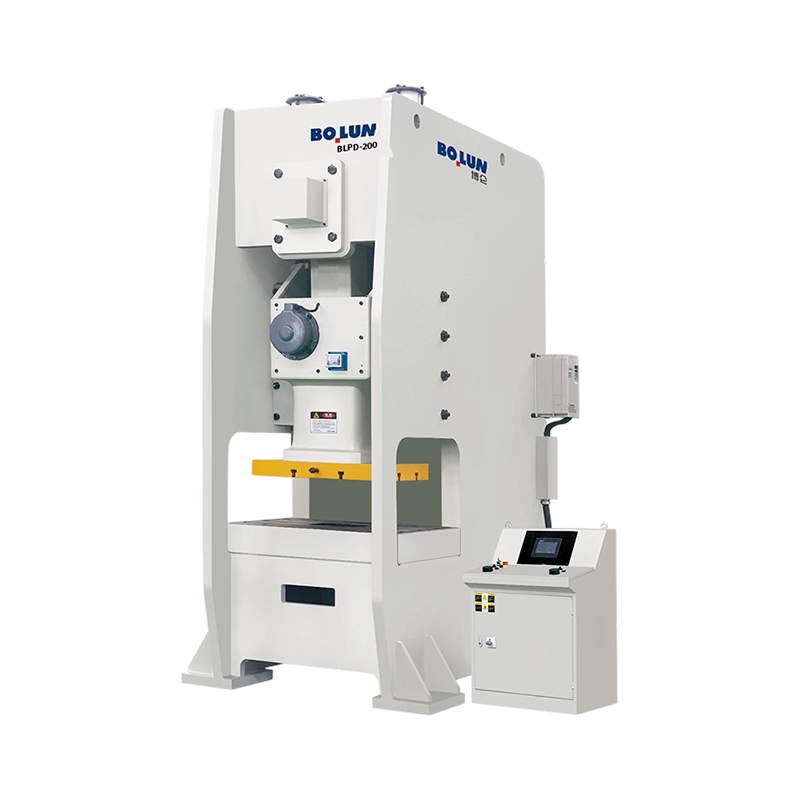
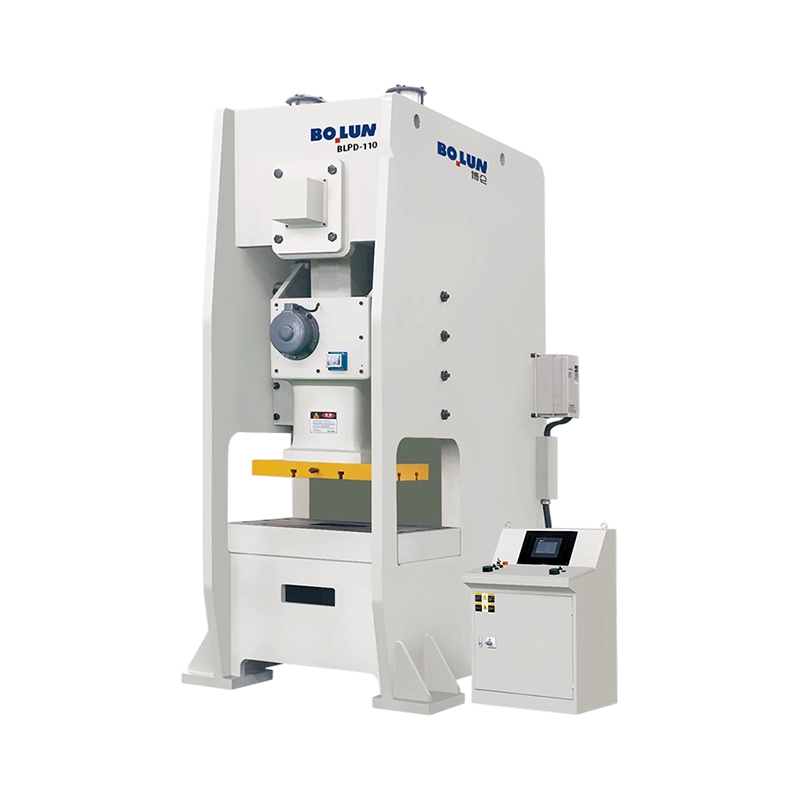
BLPD-200 Heavy-Duty Large-Format Semi-Closed Single-Point Power Press
Press rigidity has a direct relationship with forming accuracy, die life, noise, vibration, and production consistency. During stamping, the frame and working components are exposed to repeated high loads. If the structure deflects excessively, the load may not be distributed evenly across the die. This can lead to uneven wear, dimensional variation, burrs, premature tooling damage, or unstable product quality.
The BLPD-200 has a listed press weight of 24.5 tons. This substantial mass is not merely a logistical specification; it reflects the need for a stable load-bearing foundation. A heavier, properly engineered frame can help reduce vibration and resist movement during repeated forming cycles. This is particularly useful when the press operates continuously or when the tooling produces significant impact and dynamic loads.
The machine is described as having a heat-treated, high-rigidity frame. Heat treatment can improve the mechanical stability of structural components by relieving internal stresses and supporting consistent performance after machining. In a large press frame, control of residual stress is important because dimensional movement can affect guide alignment, table flatness, and long-term accuracy.
High-rigidity construction is especially relevant for large panels. Wide workpieces can magnify small variations in slide parallelism, die alignment, or table deflection. A stable frame helps maintain the geometric relationship between the upper and lower die assemblies. This supports repeatable forming conditions across the working area and reduces the likelihood of local quality problems.
In comparison with lightweight presses designed primarily for low-load or intermittent work, a heavy-duty frame offers a stronger foundation for continuous industrial production. It also provides greater confidence when the machine is integrated into a line where stopping the press can interrupt multiple upstream and downstream operations.
Structural rigidity does not eliminate the need for proper installation. The foundation, leveling, anchoring, die mounting, lubrication, and operating parameters must be correctly managed. However, a rigid machine frame provides a more dependable starting point for maintaining accuracy and protecting the tooling system.
The BLPD-200 is equipped with an 18.5 kW main motor. The technical table identifies the motor configuration as 18.5 × 4, indicating a four-pole motor arrangement. This drive provides the mechanical energy required to operate the crank and slide system through repeated forming cycles.
Motor selection affects acceleration, cycle stability, energy use, and the press’s ability to recover between strokes. For large-format work, the drive must support not only the nominal forming operation but also the repeated movement of the slide, connecting mechanisms, tooling, and workpiece. A properly sized motor contributes to stable production and helps avoid excessive strain during normal operation.
The press offers different operating speed ranges depending on the selected V or H configuration shown in the technical data. For the BLPD-200, the listed slide stroke is 200 mm for the V configuration and 100 mm for the H configuration. The corresponding strokes-per-minute ranges are 20–50 S.P.M. for V and 50–70 S.P.M. for H. These options allow the equipment to be considered for different production priorities.
A longer slide stroke can be useful when the die requires greater opening space, more material travel, or a particular forming sequence. A shorter stroke with a higher cycle range may be suitable for shallower operations and higher-throughput work. The correct selection depends on die height, material handling, forming depth, part geometry, and the required production rhythm.
The BLPD-200 has a nominal pressure stroke of 6 mm in the V configuration and 3 mm in the H configuration. This specification identifies the point in the slide cycle where the rated nominal capacity is available. It is essential for process engineers to understand that the full rated force is not available at every position of the stroke. The actual forming load must be calculated in relation to the die’s working position.
Compared with machines that provide only one fixed operating arrangement, the availability of V and H configurations can improve application flexibility. It allows buyers to select a configuration more closely aligned with their production objectives rather than forcing every application into the same speed-and-stroke compromise.
Tooling flexibility is a major factor in press utilization. Manufacturers often use several dies on the same machine, and each die may have different shut heights, guide systems, cushion requirements, and material handling conditions. The BLPD-200 provides a maximum die height of 460 mm in the V configuration and 510 mm in the H configuration, with a die height adjustment range of 110 mm.
This adjustment range supports more efficient setup when changing between tools. The die height adjuster is powered by a 1.1 kW motor. Motorized adjustment reduces manual effort and can shorten setup time when compared with machines that depend on extensive hand adjustment. It also helps the operator make controlled changes during die installation and alignment.
Correct die height adjustment is necessary for safe and accurate operation. The selected setting must account for the actual die construction, material thickness, required bottom dead center position, cushion or pad movement, and clearance between the slide and tooling. Operators should follow approved setup procedures and verify that the die is secured before production begins.
A generous adjustment range can make the press more versatile for contract manufacturers and factories with varied product portfolios. It can also reduce the need to dedicate one machine to one die family. This flexibility may improve equipment utilization and provide a stronger return on the initial investment.
When comparing presses, buyers should evaluate not only the maximum die height but also the adjustment range, adjustment resolution, accessibility of the control system, and repeatability after a setup change. A larger stated range is useful only when it can be applied accurately and safely in real production conditions.
The slide is the primary moving member that transfers forming force to the upper die. Its stroke, speed, alignment, and connection to the drive system influence the final quality of stamped parts. The BLPD-200’s slide dimensions are designed to work with large tooling while maintaining a practical relationship between the upper die and the worktable.
The slide bottom size of 1,030 × 630 × 90 mm provides a broad mounting interface. A properly sized slide helps secure the upper die and supports balanced loading. Balanced loading is important because off-center forces can increase wear on guides, connecting components, and frame sections.
The V configuration provides a 200 mm slide stroke and a range of 20–50 strokes per minute. This arrangement is appropriate for applications requiring a larger opening movement or more forming travel. The H configuration provides a 100 mm stroke and 50–70 strokes per minute, supporting operations where a shorter cycle and higher output are more important than maximum slide travel.
Production managers can use these characteristics to divide applications by process type. Larger or deeper tools may benefit from the V configuration, while repetitive blanking, piercing, or shallow forming operations may be better matched to the H configuration. Actual selection should be confirmed through die trials and cycle-time analysis.
Stable slide movement also supports die protection. If the slide does not move consistently, the die may experience uneven contact or unexpected loading. Regular lubrication, guide inspection, correct die alignment, and compliance with maintenance instructions are essential to preserve the designed performance.
The BLPD-200 includes a mold pad capacity of 140 kN and a ram stroke of 100 mm. The effective cushion area is listed as 710 × 480 mm. These specifications are relevant to forming operations that require support from below the workpiece or controlled material movement during the forming cycle.
A cushion or mold pad can help control the sheet during drawing and forming. It may assist with blank holding, reduce wrinkling, improve material flow, and support the release of the formed component. Its effectiveness depends on the die design, material properties, cushion force, stroke, lubrication, and forming sequence.
The available 140 kN capacity provides useful support for many medium- and large-format tooling arrangements. However, process engineers should calculate the required cushion force instead of assuming that the maximum value is appropriate for every part. Excessive force can restrict material flow or increase tearing, while insufficient force can contribute to wrinkles and dimensional instability.
The 100 mm ram stroke and 710 × 480 mm effective area offer a practical platform for applications that require substantial lower-tool movement. This can be an advantage over simpler presses that do not provide an integrated cushion function. It may also reduce the need for external auxiliary mechanisms, depending on the specific die requirements.
Before purchasing, customers should confirm the cushion pressure control method, synchronization requirements, available interfaces, and compatibility with their dies. The listed technical data establishes the machine’s rated capability, while the final forming result depends on the complete press-tool-material system.
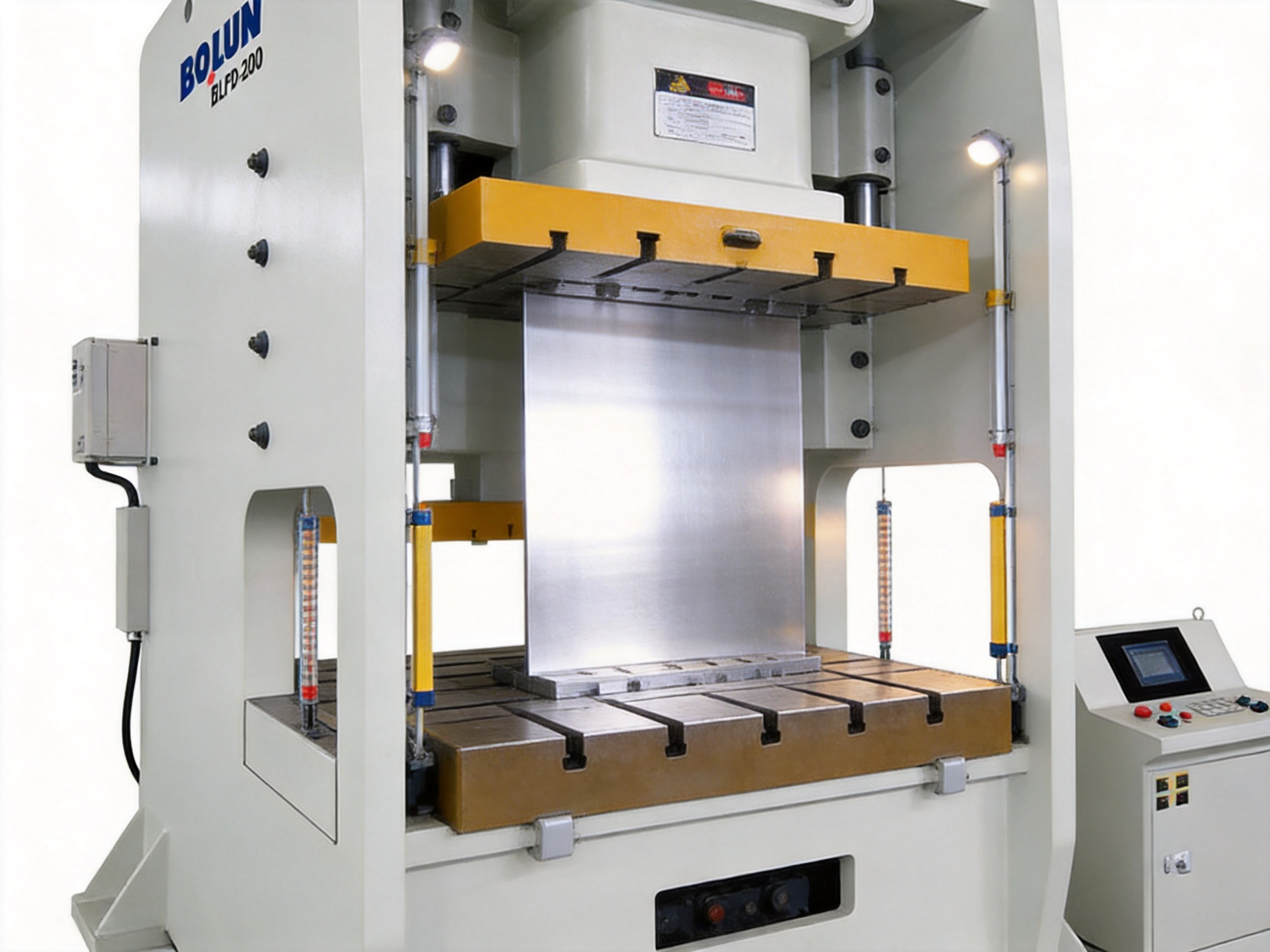
Precision is one of the primary reasons manufacturers select a dedicated power press instead of relying on less rigid or less accurately controlled equipment. The BLPD-200 lists punch accuracy as GB(JIS) 1 class. This indicates a high level of machine precision under the applicable standard classification and provides a basis for consistent die operation.
Accuracy must be considered across the complete machine. Important factors include table flatness, slide parallelism, guide clearance, die height repeatability, crankshaft condition, connection rigidity, foundation stability, and lubrication quality. A press can only deliver its intended accuracy when all these elements are maintained correctly.
For wide panels, accuracy is particularly important because dimensional deviations may appear across a large surface. Even a small angular or parallelism error can affect holes, bends, flanges, and assembly interfaces. A rigid frame and correctly aligned slide help reduce these risks.
The machine’s high-rigidity frame and heavy structure support repeatable operation under continuous load conditions. The manufacturing process also plays an important role. Precision machining of key surfaces, controlled assembly, inspection of moving parts, and finished-machine testing are necessary to ensure that the press performs as designed when delivered to the customer.
Compared with lower-cost presses that may emphasize initial purchase price over precision and service life, a precision-oriented machine can offer lower total production risk. Reduced die wear, fewer rejected parts, more stable setup changes, and better compatibility with automated transfer systems may compensate for a higher initial equipment investment.
Buyers should request inspection records, accuracy standards, acceptance procedures, and test data relevant to their intended application. They should also establish whether the machine will be accepted under a national standard, an international standard, or a customer-specific quality protocol.
Safety protection is essential when operating a high-capacity press. The BLPD-200 is equipped with photo-electronic safety devices to support reliable operation in automated production environments. These devices can help detect an interruption in the protected area and initiate an appropriate machine response when correctly installed, configured, and maintained.
Photo-electronic protection is especially valuable where operators load blanks, remove formed components, adjust material positioning, or interact with a transfer system. It can create a protective field around the hazardous working zone and supplement other safeguarding measures such as control circuits, emergency stops, fixed guards, two-hand controls, and die protection systems.
Safety devices must never be treated as a substitute for proper risk assessment. The press line should be evaluated for pinch points, access routes, unexpected restart, material ejection, die failure, maintenance access, and interaction with robots or conveyors. Safeguarding must comply with the regulations applicable in the country where the machine is installed.
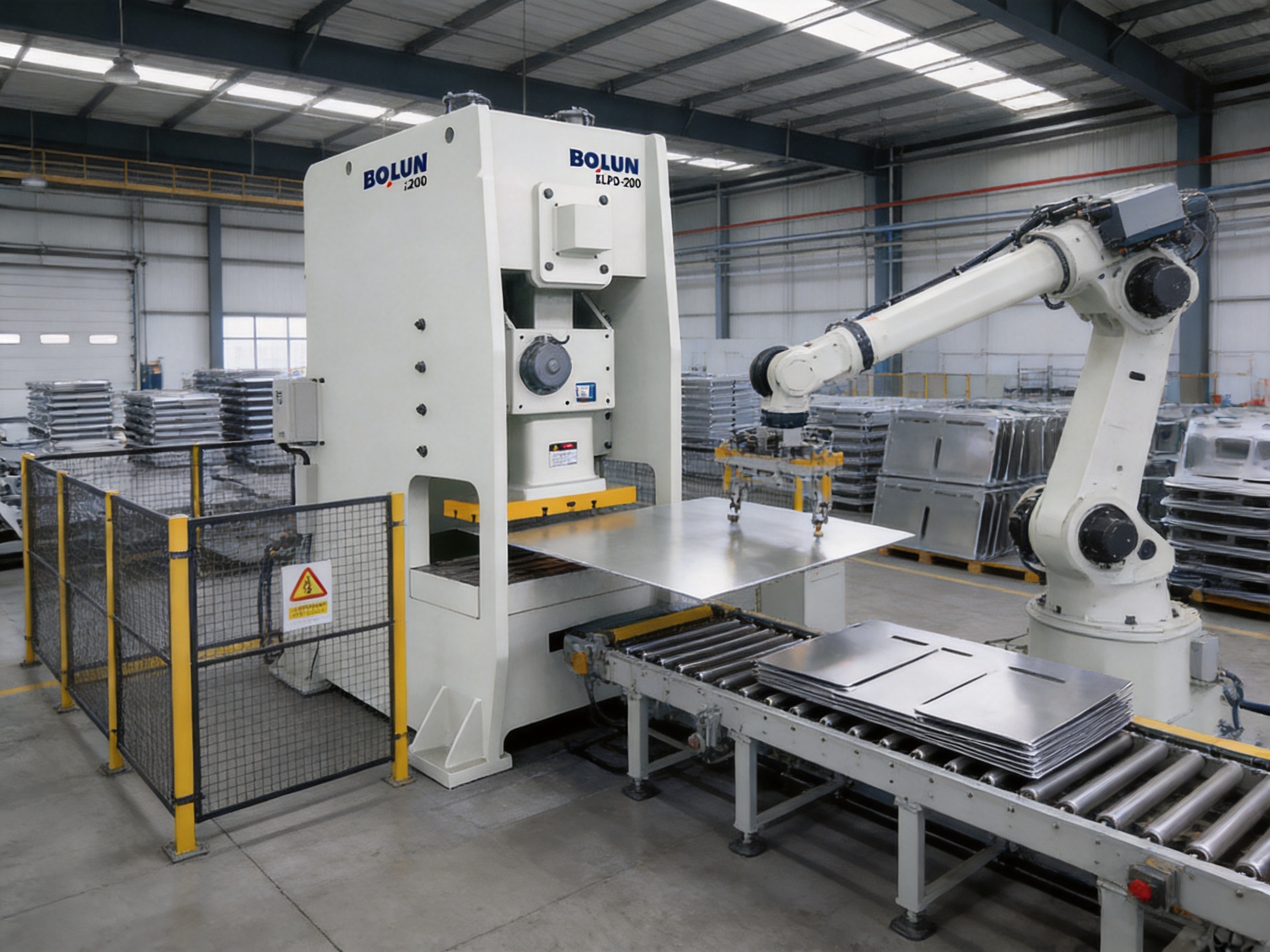
The BLPD-200 is suitable for consideration in automated lines because its working area, capacity, and safety configuration provide a foundation for integration. Automation may include coil feeding, sheet straightening, blank transfer, robotic loading, part removal, inspection, stacking, and production data collection.
A well-integrated automated line can improve repeatability by reducing manual variation. It may also lower handling time, improve operator safety, and support higher utilization. However, successful integration requires coordination between the press manufacturer, die builder, automation supplier, electrical engineer, and end user. Communication signals, cycle timing, die sensors, fault handling, and emergency circuits should be defined before installation.
The capability of a press manufacturer is reflected not only in the product specifications but also in the processes used to design, build, inspect, and support the equipment. Zhejiang Bolun High-Precision Machinery Co., Ltd. integrates research and development, design, production, sales, and service. This integrated structure can improve communication between engineering and manufacturing teams and allow product improvements to be carried through the complete production cycle.
The company is located in Zhejiang, a major center of Chinese precision manufacturing. Its development has been built through approximately two decades of experience in machinery manufacturing, with a focus on forging and casting machinery and high-precision forming equipment.
A modern press manufacturing process normally begins with application analysis and structural design. Engineers evaluate nominal force, frame configuration, crankshaft dimensions, slide movement, die space, motor requirements, safety systems, lubrication, and control logic. For special applications, non-standard design may be required to accommodate unusual workpiece dimensions, production speed, die construction, or automation interfaces.
Bolun’s stated non-standard customization capabilities are relevant to customers whose requirements do not fit a standard catalog model. Customization may involve worktable dimensions, stroke characteristics, die height, feeding direction, safety layout, electrical interfaces, cushion arrangements, or production-line communication. Such modifications should be evaluated carefully because every change can influence frame loading, cycle time, guarding, and maintenance access.
The company also emphasizes advanced precision processing equipment and a production environment covering basic design, core component development, machining, and final assembly. This full-chain approach can support better control over critical parts and reduce dependence on disconnected external processes.
Precision machining is especially important for components such as crankshafts, connecting rods, slide guides, tables, frame interfaces, and die mounting surfaces. Dimensional control at these stages affects the final relationship between the press and the tooling. Proper machining sequences, inspection points, and assembly procedures help reduce cumulative errors.
Heat treatment is another important process for structural stability. The BLPD-200 is specified with a heat-treated high-rigidity frame. Heat treatment and stress-relief procedures can help stabilize the frame before final machining and assembly. This is important for a large machine that must resist repeated forming loads over a long operating life.
Quality control must extend from individual components to the completed press. Bolun describes a finished-product inspection system that covers each process and component. A comprehensive inspection program may include dimensional checks, material verification, heat-treatment review, machining accuracy, alignment inspection, lubrication checks, electrical testing, no-load operation, load testing, safety-device verification, and packaging inspection.
For a press of this size, inspection of the frame and table is particularly important. The machine must be installed on a stable foundation, but its initial geometry should also be verified before shipment. Slide parallelism, table flatness, die height adjustment, guide clearance, and movement smoothness are central acceptance points.
Functional testing should confirm that the slide operates through the specified stroke, the motor and transmission run smoothly, the die height adjuster functions correctly, and the emergency and photo-electronic safety systems respond as intended. If the machine includes a cushion or mold pad, its stroke and rated operation should also be checked.
Documented inspection provides value after installation. It gives the customer a baseline against which future maintenance measurements can be compared. If accuracy changes over time, service technicians can identify whether the cause is wear, incorrect adjustment, lubrication failure, foundation movement, die impact, or another operating condition.
Customers purchasing for regulated industries should request documentation appropriate to their internal quality system. This may include factory acceptance records, inspection certificates, electrical diagrams, manuals, spare-parts lists, lubrication charts, and recommended maintenance intervals.
The BLPD-200 should be evaluated against the actual production requirement rather than against a single headline specification. Its advantages become most apparent when the application requires a combination of large working space, 2,000 kN nominal capacity, structural rigidity, adjustable die height, cushion capability, and automated safety protection.
Smaller open-type presses may be economical for light stamping, small blanks, and limited die sizes. However, they may not provide enough capacity, table area, column clearance, or frame mass for wide automotive and appliance panels. The BLPD-200 offers greater force and a more substantial working envelope, allowing customers to process larger components and install larger dies.
The heavier frame can also provide better resistance to vibration and deflection under high loads. This may improve consistency when the press is used for demanding production cycles. A larger working zone can reduce restrictions during die setup and material handling.
Some general-purpose machines offer a lower purchase price but may be designed for less intensive operating conditions. When used beyond their intended range, lighter presses can experience greater vibration, accelerated wear, or reduced dimensional stability. The BLPD-200 is positioned as a heavy-duty solution, with a 24.5-ton press weight and a heat-treated high-rigidity frame suitable for continuous industrial use.
Presses rated at 2,600 kN, 3,150 kN, 4,000 kN, or more may be necessary for very large or high-load components. However, selecting a larger machine than required can increase capital cost, floor-space requirements, energy consumption, installation complexity, and tooling expense. When the forming load and die dimensions are compatible, the BLPD-200 may offer a more efficient balance between capability and investment.
A press without an appropriate cushion or mold pad may require additional equipment or a more complicated die arrangement for certain forming operations. The BLPD-200 includes a 140 kN mold pad capacity, a 100 mm ram stroke, and a 710 × 480 mm effective cushion area. These features can expand the range of forming processes that can be considered on the machine.
The V and H configurations provide different combinations of stroke and operating speed. This gives production engineers more flexibility when matching the press to the tool. A longer stroke can support greater die opening requirements, while a shorter stroke and higher speed can support repetitive operations where cycle time is the priority.
Manufacturers with integrated engineering and production capabilities may be better positioned to address non-standard requirements. Bolun’s stated design, manufacturing, customization, and service capabilities can be valuable when the customer needs modifications to the work area, automation connection, guarding, cushion system, or control arrangement.
Automotive production is one of the most demanding application areas for sheet metal presses. Components may include brackets, reinforcement parts, structural panels, interior supports, covers, and selected body-related components. These parts often require consistent dimensions, controlled forming, repeatable hole positions, and reliable integration with automated handling systems.
The BLPD-200’s large worktable and column distance support wide automotive dies and larger blanks. Its structural mass helps stabilize the machine under repeated forming loads, while the photo-electronic safety devices support integration into production cells where material movement is automated.
For automotive suppliers, flexibility is important because product programs can change. A press that can accept different die heights, stroke arrangements, and tooling formats may remain useful across multiple contracts. The motorized die height adjustment can help shorten changeover work, provided the tooling and setup procedure are properly standardized.
Automotive production also places a high value on process repeatability. Stable press geometry, correct die alignment, controlled lubrication, consistent material quality, and regular inspection work together to maintain part quality. The BLPD-200 provides the structural platform, while the die and process engineering determine the final result.
Home appliance manufacturers frequently produce large sheet metal housings, panels, doors, covers, and internal structural components. These parts may have broad surfaces that make them sensitive to wrinkles, distortion, scratches, and dimensional variation.
The BLPD-200 can support appliance manufacturing where the die size and forming load fall within its rated range. The broad table allows larger tools to be mounted securely, and the cushion system can assist in controlling material flow during selected drawing or forming operations.
Appliance production often involves a mixture of high-volume products and frequent model changes. The press’s die height adjustment range and configurable stroke-speed options can support a more adaptable production schedule. The ability to connect the press with automatic feeding and unloading equipment may also improve output consistency and reduce manual handling of large panels.
Surface quality is critical for visible appliance parts. Press stability, clean tooling, correct lubrication, controlled material movement, and careful part transfer are necessary to prevent dents and surface marks. The machine should therefore be installed as part of a complete quality-controlled process rather than used as an isolated production asset.
Beyond automotive and appliances, the BLPD-200 may be considered for electrical cabinets, industrial enclosures, agricultural equipment, ventilation components, construction hardware, transportation parts, and other medium- to large-format sheet metal products.
These industries often require a combination of forming, blanking, piercing, bending, and shallow drawing. A flexible power press can reduce the need for separate machines when multiple operations can be performed through compatible dies. The exact suitability depends on the material, thickness, required force, die dimensions, and production rate.
Contract manufacturers can benefit from a machine that accommodates a variety of customer programs. The 2,000 kN capacity provides a useful middle ground: it is more capable than equipment intended for small components, yet potentially more economical than very high-tonnage machinery for applications that do not require extreme force.
The listed overall dimensions for the BLPD-200 are approximately 1,750 × 2,500 × 3,900 mm, although the final arrangement should be confirmed with the supplier because dimensions may vary according to configuration, accessories, guarding, electrical cabinets, and customer-specific options. The press weight is listed as 24.5 tons.
Factory planning must account for the machine footprint, foundation, transport route, crane capacity, service clearance, electrical supply, compressed air, material flow, and safety perimeter. A press of this mass requires careful evaluation of the floor structure and foundation design. Leveling and anchoring should be completed according to the installation documentation.
Service access should be considered at the planning stage. Maintenance personnel need sufficient room to inspect the motor, transmission, lubrication points, electrical systems, safety devices, slide connections, and die adjustment mechanism. Crowding the machine against walls or adjacent equipment may increase maintenance time and reduce safety.
The specified air pressure is 0.55 MPa. The factory air system should provide stable pressure and adequate flow, with filtration and moisture control suitable for the press and associated equipment. If pneumatic accessories or automation are added, their air demand should be included in the total system calculation.
Electrical requirements should be confirmed before shipment. The customer should verify voltage, frequency, control standards, motor protection, grounding, cable routing, and compatibility with the plant’s power-distribution system. An installation checklist prepared jointly by the supplier and customer can prevent avoidable delays.
Heavy-duty construction supports long service life, but maintenance remains essential. A power press operates through repeated mechanical cycles, and small problems can become serious if they are not detected early. Preventive maintenance should include lubrication, inspection of fasteners, examination of guides and connections, motor checks, safety-device testing, die height mechanism inspection, cushion inspection, and cleaning of the working area.
Lubrication is one of the most important maintenance activities. The correct lubricant, quantity, frequency, and application point should follow the manufacturer’s instructions. Too little lubrication can increase friction and wear, while excessive or contaminated lubricant can attract debris and interfere with sensors or tooling.
Operators should monitor unusual noise, vibration, heat, oil leakage, inconsistent slide movement, changes in stopping behavior, or abnormal product quality. These signs may indicate wear, misalignment, lubrication problems, loose components, or control-system issues.
Photo-electronic safety devices must be tested at scheduled intervals. The protected field should remain unobstructed and correctly aligned. Any bypassing or unauthorized modification creates unacceptable risk. Safety inspections should be documented and included in the factory’s machine-maintenance program.
Die changes should be performed using approved lifting equipment and procedures. The press must be placed in a safe state before personnel enter the die area. Tooling should be inspected for cracks, loose inserts, damaged guides, or excessive wear before installation.
Because Bolun provides pre-sales, in-sales, and after-sales support, customers can seek assistance during selection, installation, commissioning, troubleshooting, and parts planning. A service relationship is particularly important for export customers, who should clarify response procedures, remote technical support, spare-parts availability, warranty coverage, and technician training before placing an order.
Before selecting the BLPD-200, the buyer should prepare a detailed application profile. This should include the material type, tensile strength, yield strength, thickness range, blank size, finished-part dimensions, forming operations, target production rate, die weight, die height, required cushion force, and automation method.
The buyer should also determine whether the V or H configuration is more appropriate. The V configuration offers a 200 mm slide stroke, a 6 mm nominal pressure stroke, and 20–50 S.P.M. The H configuration offers a 100 mm slide stroke, a 3 mm nominal pressure stroke, and 50–70 S.P.M. These figures should be compared with the actual die cycle and part-transfer requirements.
Tooling compatibility must be checked carefully. The worktable size is 1,140 × 820 × 160 mm, while the slide bottom is 1,030 × 630 × 90 mm. The die height and adjustment range must also be compared with the customer’s existing and planned dies.
Buyers should review the 140 kN mold pad capacity and 100 mm ram stroke if drawing or controlled material flow is required. They should establish how cushion force is adjusted and whether the control system can coordinate with the die and automation system.
The purchase specification should define the required standards, inspection procedures, safety devices, documentation, spare parts, training, installation responsibilities, and acceptance criteria. Clear technical communication at the quotation stage reduces the risk of misunderstanding later.
Industrial buyers increasingly evaluate machines according to total cost of ownership rather than purchase price alone. Energy consumption, maintenance, downtime, tooling life, product rejection, operator requirements, and service availability all influence the long-term economics of a press.
The 18.5 kW main motor provides the drive power for the BLPD-200. Actual energy consumption depends on operating speed, load profile, idle time, lubrication, auxiliary equipment, and production scheduling. Efficient planning can reduce unnecessary idle operation and improve the utilization of each production cycle.
A rigid frame may support longer tool life by reducing vibration and uneven loading. Improved part consistency can reduce scrap and rework. Motorized die height adjustment may shorten setup time, increasing productive availability when multiple dies are used.
Maintenance planning also affects sustainability. Replacing a low-cost wear component during scheduled maintenance is generally more efficient than repairing extensive secondary damage after a failure. Keeping accurate service records allows managers to identify recurring problems and optimize preventive-maintenance intervals.
The machine’s long-term value should therefore be calculated using expected annual production, changeover frequency, service costs, downtime risk, part quality, and future product flexibility. A press with the right balance of force and working area can remain useful through several product generations.
A successful installation begins with process verification. The customer should confirm that the calculated forming force remains below the machine’s safe operating limits and that the nominal pressure stroke corresponds to the die’s working position. The die should be designed to distribute load appropriately and avoid unnecessary eccentric forces.
During commissioning, technicians should verify machine level, foundation stability, die alignment, stroke settings, die height, cushion operation, lubrication, motor rotation, safety-device response, and emergency-stop behavior. Initial production should begin at a controlled speed while operators inspect part quality and machine behavior.
Production parameters should be recorded after approval. These records may include material specification, die height, stroke, speed, cushion force, lubrication method, feeder timing, and inspection results. Standardized records make future setup changes faster and help identify deviations.
Operators should be trained in normal operation, safe die change, emergency procedures, fault reporting, daily inspection, and prohibited actions. Maintenance staff should receive additional instruction in lubrication, adjustment, safety testing, and troubleshooting.
The best results are achieved when the press, die, material, automation, and inspection system are treated as one production process. The BLPD-200 provides the mechanical foundation, but productivity and quality depend on the disciplined management of the complete system.
The BLPD-200 has a nominal capacity of 2,000 kN. This is approximately equivalent to 200 metric tons of nominal pressing force. The actual allowable forming operation must be evaluated according to the pressure stroke, material, die design, and load distribution.
It is a heavy-duty, large-format, semi-closed single-point power press. This design provides a substantial working area and structural rigidity while retaining practical access for tooling and material handling.
The listed worktable size is 1,140 × 820 × 160 mm. The first two figures describe the working length and width, while the third figure indicates the table thickness.
The distance between columns is listed as 1,140 mm. This clearance is useful for wide blanks, large dies, automatic feeding systems, and maintenance access.
The V configuration has a 200 mm slide stroke, while the H configuration has a 100 mm slide stroke. The appropriate configuration depends on die opening requirements, forming depth, transfer movement, and target cycle rate.
The V configuration is listed at 20–50 strokes per minute, and the H configuration is listed at 50–70 strokes per minute. Actual production speed should be established through process validation and should account for die safety, material handling, and quality requirements.
Yes. The listed mold pad capacity is 140 kN, with a 100 mm ram stroke and an effective cushion area of 710 × 480 mm. The required settings depend on the die and forming process.
The maximum die height is listed as 460 mm for the V configuration and 510 mm for the H configuration. The die height adjustment range is 110 mm.
The main motor is listed as 18.5 kW with a four-pole configuration. A separate 1.1 kW motor is specified for die height adjustment.
It can be considered for automated production lines because it includes photo-electronic safety devices and provides a large working area suitable for feeding and transfer equipment. Final integration requires coordination of mechanical, electrical, control, and safety interfaces.
Typical applications include automotive body and structural components, home appliance housings and panels, electrical enclosures, industrial equipment parts, agricultural machinery components, and other large-format sheet metal products.
A larger press may be necessary for very high-load or very large components, but it also generally requires more investment, floor space, foundation capacity, and energy. The BLPD-200 can be a more efficient choice when the required forming load and die dimensions fit within its rated specifications.
The manufacturer reports non-standard customization capabilities supported by in-house research, design, production, sales, and service functions. Customers should provide detailed application requirements so the engineering team can confirm the feasibility of any modification.
Buyers should confirm material properties, maximum blank size, forming force, die dimensions, die weight, die height, stroke, production speed, cushion requirements, automation interfaces, plant utilities, foundation conditions, safety standards, inspection documents, installation responsibilities, and after-sales support.
The BLPD-200 Heavy-Duty Large-Format Semi-Closed Single-Point Power Press is designed for manufacturers that require a strong and flexible platform for medium- to large-format sheet metal forming. Its 2,000 kN nominal capacity, 1,140 × 820 mm worktable, 1,140 mm column distance, 24.5-ton heat-treated high-rigidity frame, 18.5 kW main motor, adjustable die height, integrated mold pad capability, and photo-electronic safety devices form a balanced industrial configuration.
Its main advantage is not any single specification but the way the specifications work together. The machine provides sufficient force for demanding applications, enough space for wide dies, structural stability for continuous operation, configuration options for different stroke and speed requirements, and a practical foundation for automation.
The manufacturer’s integrated capabilities in research, design, precision processing, assembly, quality control, customization, and service further strengthen the product’s value. For customers seeking a press supplier rather than only a machine transaction, these capabilities can help simplify technical communication and support the equipment throughout its operating life.
As with any industrial press, correct application selection is essential. The machine must be matched with the material, die, forming load, cycle, cushion requirement, automation system, factory foundation, and applicable safety regulations. When these factors are properly evaluated, the BLPD-200 can provide a dependable solution for automotive, appliance, and general industrial sheet metal production.
1. Manufacturer-provided BLPD Series Technical Specification Table, including capacity, stroke, speed, die height, table dimensions, motor rating, cushion data, and overall dimensions.
2. Manufacturer-provided product description for the BLPD-200 Heavy-Duty Large-Format Semi-Closed Single-Point Power Press.
3. General principles of mechanical power press design, frame rigidity, slide movement, die mounting, and forming-load management.
4. General industrial guidance on machine safeguarding, photo-electronic protective devices, emergency stops, and press-line risk assessment.
5. General maintenance practices for mechanical presses, including lubrication, alignment inspection, preventive maintenance, and die-change safety.
6. General sheet metal forming engineering principles covering blank holding, cushion force, material flow, drawing, bending, blanking, and piercing operations.


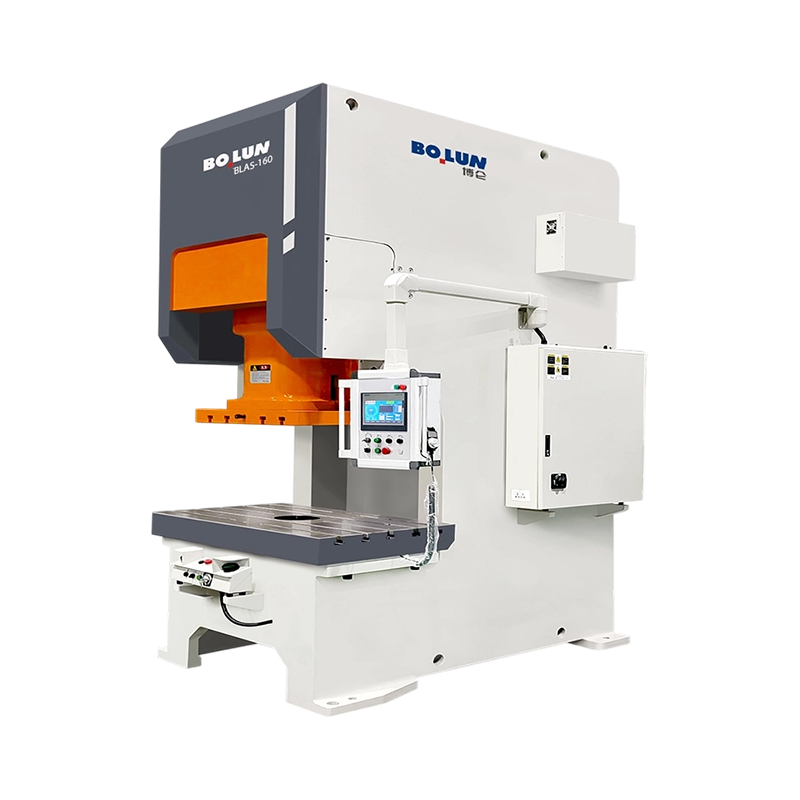
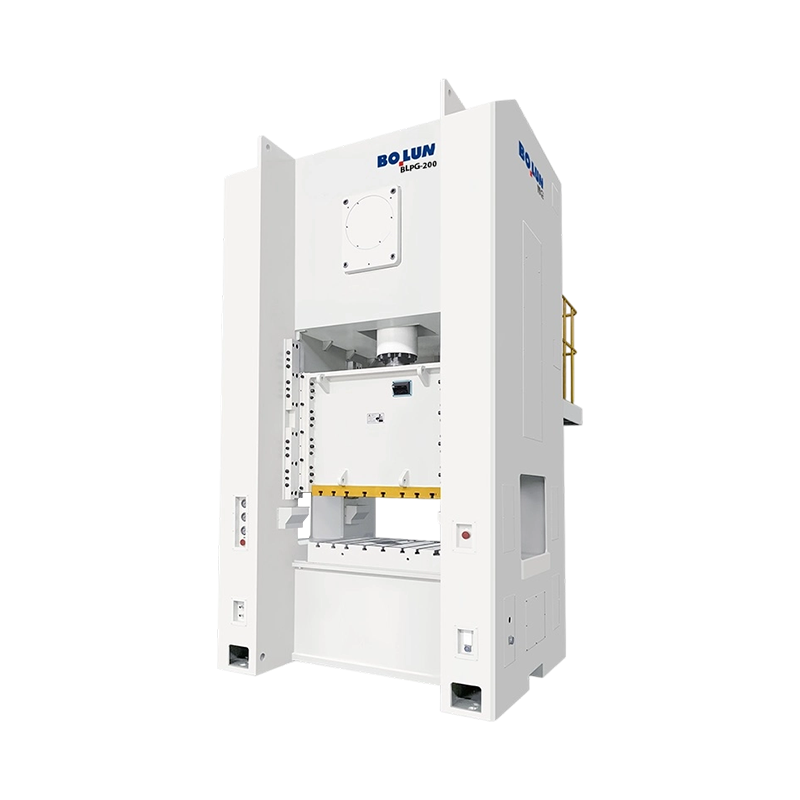
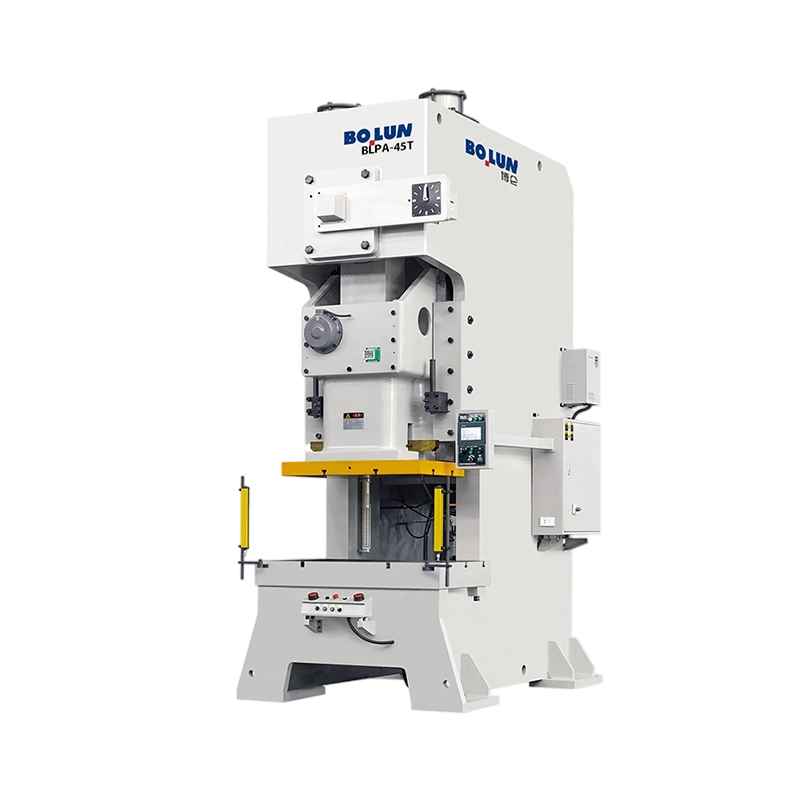
What Is a Power Press? A power press — also called a stamping press or punch pr...
Moscow & St. Petersburg Trade Mission Yields Strong Market Insights and Surg...
Power press machines are classified in two main ways: by frame construction, w...
Understanding Mechanical Power Presses and Their Essential Functions A mechani...
In the fields of metal forming, sheet metal fabrication, blanking, and punching,...
As the manufacturing industry moves steadily toward automation and smart product...
Contact Us

bolunpress@gmail.com

+86-575-83362228

+86-15158259588

+86-575-83362999

+86-15158259588

Hangzhou Office Add: No. 332 Wangjiang East Road, Shangcheng District

No.1 Linjiang Road East, Xiaren, Jinting Town, Shengzhou City, Zhejiang Province, China
Ready to Begin?
Get in Touch

Now!

ZHEJIANG BOLUN
 English
 中文简体
中文简体