Modern metal-forming operations require more than a high nominal tonnage rating. A productive press must combine structural rigidity, controlled motion, dependable overload protection, suitable die space, accurate adjustment, and long-term serviceability. The BLPD-260 Industrial Strength Deep-Stroke Semi-Closed Single-Point Power Press is designed around these requirements. With a nominal capacity of 2,600 kN, a 250 mm slide stroke, a maximum die height of up to 550 mm, and a 22 kW main motor, it is intended for demanding forming, forging, and large-scale stamping applications.
The machine occupies an important position between conventional open-frame presses and larger, more specialized straight-side or closed-type systems. Its semi-closed single-point construction provides a practical balance between accessibility and rigidity. Operators can benefit from comparatively convenient die loading and workpiece handling, while the frame offers the stability required for high-load production. This combination makes the press suitable for manufacturers that need substantial forming force without sacrificing production flexibility.
Applications may include deep drawing, heavy-gauge sheet forming, industrial component production, large stamping operations, forging-related forming work, and other processes in which a long stroke and generous die-height capacity are essential. The press is also suitable for production environments where repeatability, controlled stopping, automatic lubrication, and protection against overload are considered essential rather than optional.
The BLPD-260 is a semi-closed single-point power press developed for continuous industrial use. Its 2,600 kN nominal capacity provides significant forming force for large dies and thick or high-strength materials. The 250 mm slide stroke supports forming operations that cannot be completed effectively with short-stroke equipment. At the same time, the maximum die height of up to 550 mm allows the installation of substantial tooling assemblies and gives designers more freedom when planning multi-stage or deep-forming dies.
The press is built on a high-rigidity frame with a stated machine weight of approximately 32 tons. A heavy machine structure helps resist deflection during pressing. This is important because frame movement can influence dimensional accuracy, die alignment, tool life, and the surface quality of finished parts. A rigid structure also helps the machine maintain stable performance when operating near its rated capacity over extended production cycles.
Power is supplied by a 22 kW, four-pole main motor. The motor and drive train are selected to provide steady torque for demanding forming work. The system is supported by a dual-solenoid-valve arrangement for controlled stopping and dependable actuation. Automatic lubrication reduces the risk of insufficient lubrication at critical points and makes routine maintenance more systematic. Hydraulic overload protection helps protect the press and tooling when abnormal loads occur.
A tonnage monitoring display is integrated into the machine concept to help operators observe forming loads during production. Load visibility is valuable for process control, die protection, troubleshooting, and production documentation. Rather than relying exclusively on the operator’s judgment, the monitoring function provides a clearer indication of how the press is being used and whether a forming process remains within an acceptable working range.
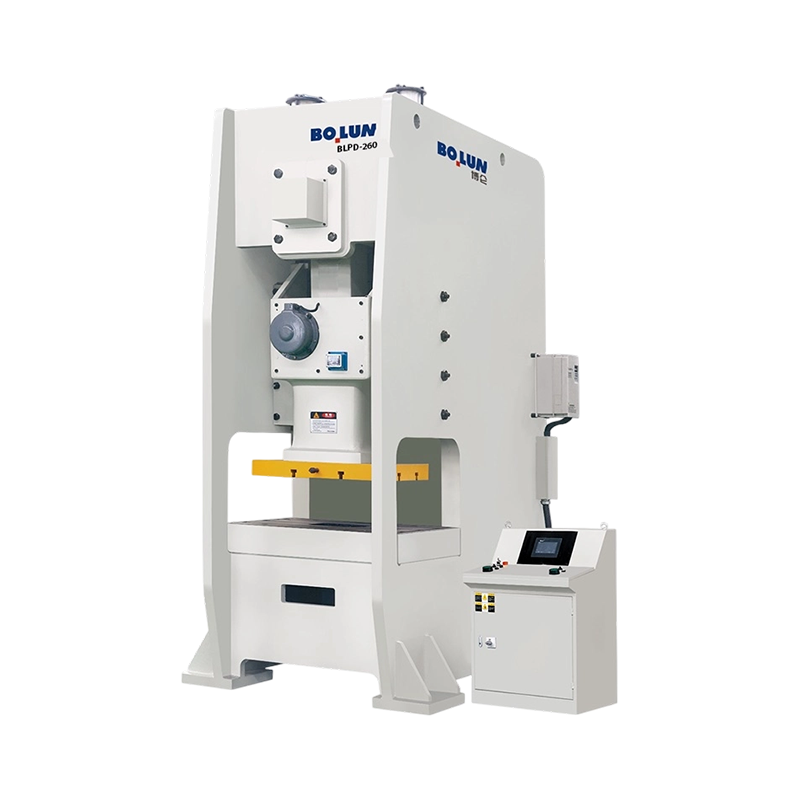
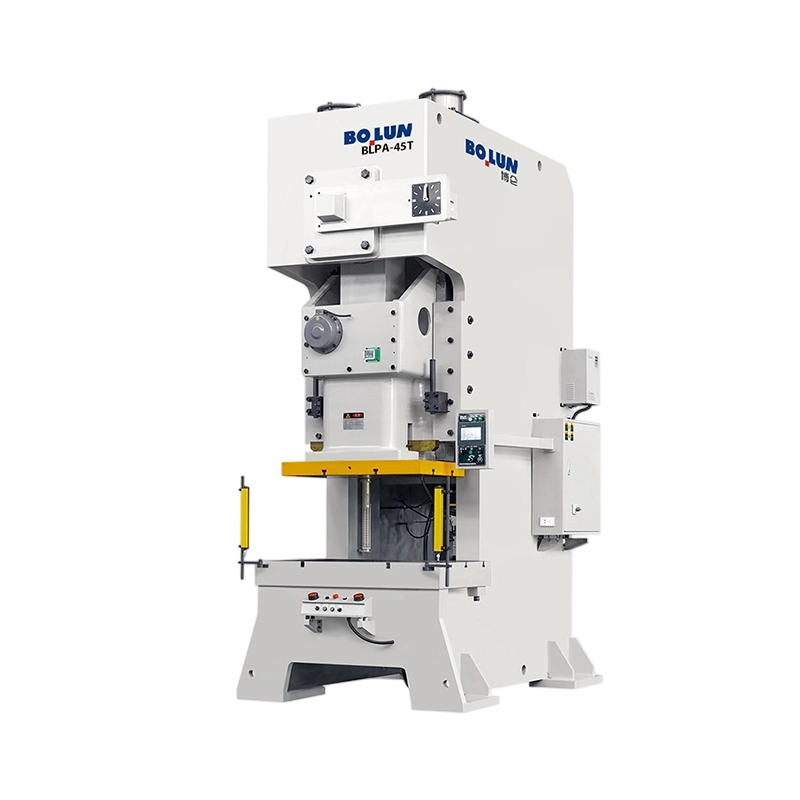
BLPD-260 Industrial Strength Deep-Stroke Semi-Closed Single-Point Power Press
Stroke length is one of the most important specifications when selecting a power press. A short-stroke press may offer high speed, but it can be unsuitable for parts that require substantial material movement, multiple forming stages, or deep penetration into the die. The BLPD-260 provides a 250 mm slide stroke, giving it the working travel needed for deep forming and large dies.
During deep forming, the slide must travel far enough to complete the material transformation without restricting the geometry of the component. A longer stroke can improve process flexibility by allowing the tooling to open sufficiently for loading, unloading, inspection, and part release. It can also accommodate taller dies and forming assemblies that contain guide systems, pads, ejectors, or multiple stations.
Deep-stroke capability is especially useful in the production of housings, structural components, containers, brackets, industrial covers, and other formed parts with considerable vertical depth. It may also support forming operations where a staged movement is necessary to manage material flow. The press does not eliminate the need for correct die design, lubrication, blank-holder control, or material selection, but it provides the mechanical travel needed to implement those processes effectively.
Compared with a press designed primarily for shallow blanking, the BLPD-260 offers a broader process envelope. Its stroke, die-height capacity, and large worktable make it more adaptable to forming work that demands space as well as force. This flexibility can reduce the need to divide production among several smaller machines or to modify large dies simply to fit a restricted press envelope.
A long stroke must be matched with suitable operating speed and tooling design. The BLPD-260 specification table identifies a model-dependent speed range for the V and H configurations. For the BLPD-260, the listed ranges are approximately 20–40 strokes per minute for the V configuration and 40–60 strokes per minute for the H configuration. The appropriate operating speed should be selected according to material, die construction, forming depth, lubrication, load distribution, and required production rate.
High-force forming places significant demands on a press frame. When the slide applies force to the die, the frame, slide, connecting components, and foundation all participate in carrying the load. If rigidity is insufficient, elastic deflection can become large enough to affect part quality or create uneven die loading. The BLPD-260 addresses this challenge through a heavy, high-rigidity construction intended for stable operation under continuous high-load conditions.
The approximately 32-ton machine weight contributes to overall stability. A heavy press is generally less susceptible to movement caused by cyclic acceleration, deceleration, and forming impact. Weight alone does not determine performance, but it can support a more stable mechanical platform when combined with appropriate frame geometry, high-quality castings or fabricated structures, accurate machining, and correct foundation preparation.
Structural rigidity also benefits tooling. Dies are expensive precision assets, and uneven loading can accelerate wear, damage guide components, or create clearance variations. A stable press helps the die operate within its intended alignment range. This may improve the consistency of formed parts and reduce interruptions caused by premature tooling maintenance.
For manufacturers comparing this type of press with lighter competitors, the practical advantage is not simply a larger specification number. The advantage is the ability to maintain a more predictable relationship between the commanded slide movement and the actual forming result. In heavy-duty production, predictable behavior helps process engineers establish repeatable settings and helps maintenance teams identify abnormal conditions earlier.
The press should still be installed on a properly engineered foundation. The foundation must account for machine weight, dynamic forces, anchoring requirements, surrounding equipment, operator access, and local safety regulations. A high-rigidity press performs best when the installation environment supports the same level of stability as the machine itself.
Die compatibility is often the deciding factor in a press purchase. A machine may have sufficient tonnage but still be unsuitable if its table, slide, opening, or adjustment range cannot accommodate the intended tooling. The BLPD-260 offers a maximum die height of up to 550 mm and a die-height adjustment range of 120 mm for the listed H configuration. These dimensions create a useful working envelope for large industrial dies.
The worktable is listed at approximately 1,140 by 840 mm with a table thickness of 180 mm for the BLPD-260 configuration. The slide bottom is listed at approximately 1,130 by 650 mm with a thickness of 100 mm. These dimensions provide broad supporting surfaces for substantial dies and allow manufacturers to distribute tooling loads across a large area.
A generous worktable can be valuable when a die includes multiple forming zones, transfer features, guide pillars, blank holders, or integrated sensors. It also gives tooling engineers more room to design clamping and locating arrangements. In large-part stamping, the available table area can determine whether a die can be mounted directly or must be redesigned into a more complicated arrangement.
The working-face height is listed at approximately 1,020 mm. This height can support practical operator access and integration with material-handling equipment, although the final ergonomic arrangement depends on the installation layout and automation system. When a press is used with coil feeding, transfer devices, robots, or conveyors, the working height should be considered together with the height of the incoming material, die centerline, and discharge equipment.
The distance between columns is listed at approximately 1,230 mm. This dimension is particularly important when wide dies or side-mounted tooling components are used. A larger clear space may simplify die installation and reduce interference between the tooling and the frame. Manufacturers should always compare the actual die envelope, clamping locations, feed direction, and maintenance clearances with the press drawing before ordering.
The 2,600 kN nominal capacity places the BLPD-260 in a heavy industrial class. This capacity is suitable for applications requiring considerable forming force, but press selection should not be based on tonnage alone. The maximum required force, the position at which that force occurs in the stroke, the projected area of the workpiece, material strength, die friction, blank-holder pressure, and production cycle all influence the real operating requirement.
Nominal capacity is typically specified at a particular point in the slide stroke. The BLPD-260 table lists a nominal pressure stroke of 7 mm for the V configuration and 3 mm for the H configuration. This means the relationship between tonnage and slide position must be considered during process planning. Engineers should confirm that the forming load remains within the permissible capacity curve of the selected configuration throughout the operation.
Choosing a press with adequate reserve capacity can improve reliability. If a machine is consistently operated at its limit, small variations in material thickness, hardness, lubrication, die clearance, or blank positioning may create excessive loads. A suitable reserve can reduce the frequency of overload events and support more stable production. However, oversizing a press without considering speed, stroke, die size, and energy consumption may also be inefficient. The correct choice is a balanced one.
The BLPD-260 offers a useful combination of high capacity and deep travel. Some competing machines may provide similar tonnage but a shorter stroke, smaller table, lower die height, or less substantial frame. Others may offer a longer stroke but operate at a lower capacity. The practical strength of this model is the way these specifications work together for large and demanding forming work.
The 22 kW main motor is designed to provide the drive power needed for the machine’s rated forming duties. A four-pole motor configuration is associated with a balanced operating speed and torque characteristic for industrial press applications. The motor must work in combination with the flywheel, clutch-brake system, transmission components, crank mechanism, and control system to deliver smooth and repeatable slide movement.
Stable power transmission matters because inconsistent motion can influence material flow, forming quality, and die wear. In deep forming, the material may be under load for a substantial portion of the cycle. The press therefore needs more than a high peak force; it needs a drive system capable of maintaining controlled movement and recovering efficiently between cycles.
The listed speed range for the BLPD-260 allows users to select a production rate appropriate to the application. Higher speeds may be beneficial for suitable shallow or moderate forming operations, while deeper forming and heavier materials may require a lower speed. Slower operation can allow more controlled material flow, reduce shock, and provide additional time for lubrication, part positioning, and process monitoring.
Production managers can use the available speed range to balance output against product quality and tool life. A press that is capable of different operating rates is more adaptable than a machine optimized for only one production condition. This adaptability is especially important for job shops and manufacturers producing several part families on the same equipment.
Correct commissioning remains essential. The motor, electrical system, clutch-brake assembly, and mechanical transmission should be inspected and adjusted according to the equipment manual. Operators should not increase speed or modify control parameters beyond approved limits without engineering review. Performance advantages are achieved when the drive system is used within its designed operating envelope.
Stopping performance is central to both productivity and safety. A press must stop reliably when the control system issues a stop command, when a safety device is activated, or when an abnormal condition is detected. The BLPD-260 incorporates a dual solenoid valve structure intended to support precise stopping control during operation.
A dual-valve arrangement can provide greater control redundancy than a single-valve arrangement, depending on the specific circuit design and safety architecture. The effectiveness of the system depends on correct valve selection, monitoring, wiring, air quality, brake adjustment, and regular inspection. The feature should therefore be viewed as part of a complete safety and control system rather than as an independent guarantee.
Precise stopping is useful in production processes where the slide must return to a repeatable position. It can assist with die protection, part removal, feeding coordination, and fault recovery. A controlled stop may also reduce the risk of the slide continuing through an unintended cycle when a sensor, interlock, or operator control detects an issue.
The press should be equipped and operated in compliance with applicable local regulations and recognized press-safety practices. Guarding, two-hand controls, presence-sensing devices, emergency stops, die protection, and lockout procedures must be selected according to the risk assessment for the specific production line. The dual solenoid valve structure is a valuable mechanical-control feature, but it must be integrated into the complete safeguarding plan.
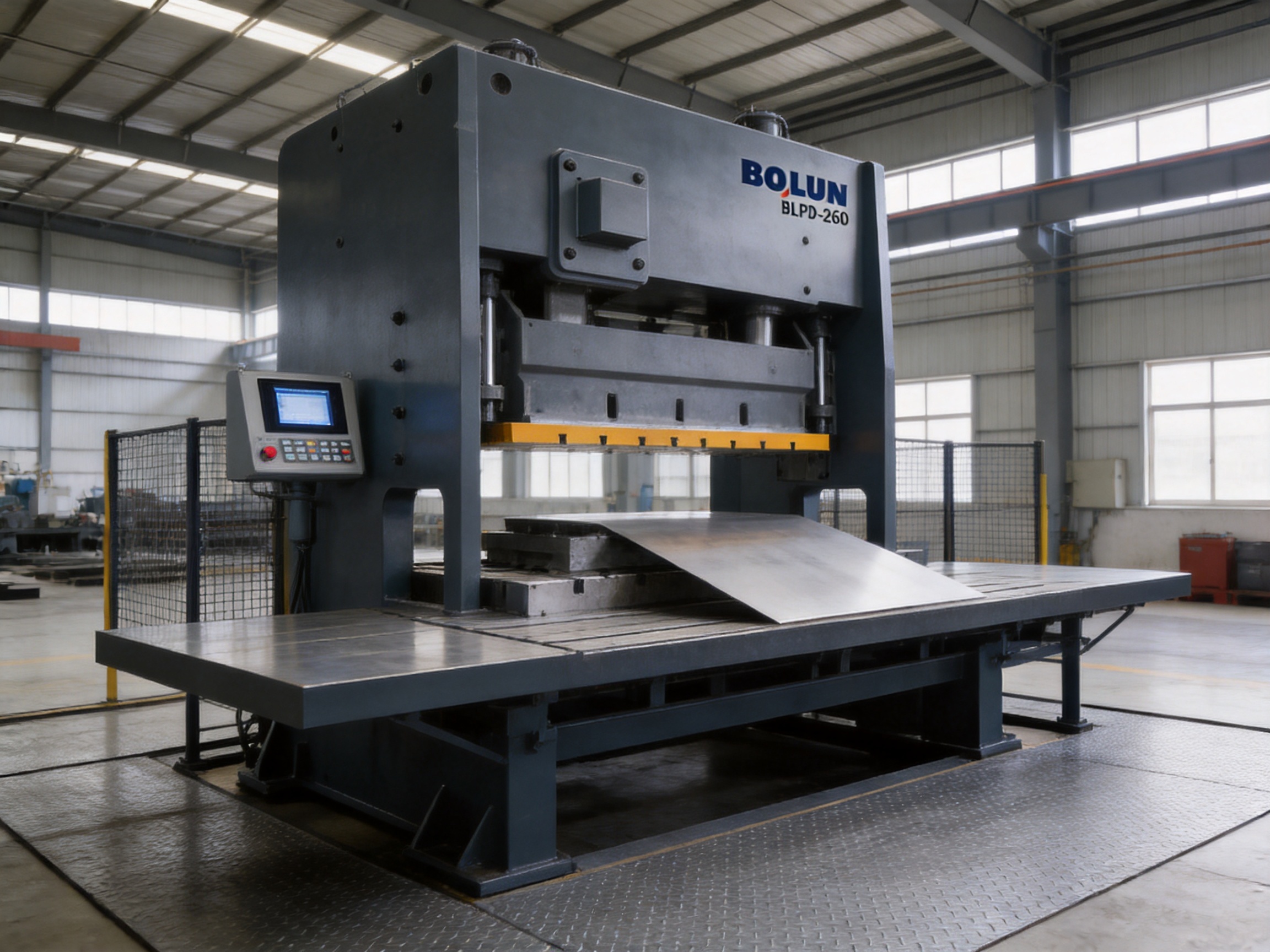
Overload protection is an important defense against unexpected forming resistance. Excessive load may result from incorrect material placement, excessive material thickness, die misalignment, insufficient clearance, foreign objects, or a process that exceeds the intended force. The BLPD-260 includes hydraulic overload protection designed to help safeguard the press and tooling when abnormal force occurs.
When correctly adjusted, hydraulic overload protection can respond to excessive load and reduce the possibility of serious damage to the frame, slide, crankshaft, connecting components, or die. It can also shorten recovery time after an overload event. Without an effective protection system, a single mistake may lead to extended downtime and expensive repairs.
Protection settings should be established by qualified personnel based on the material, die design, rated capacity, and production process. The system should be checked during commissioning and maintained according to the recommended schedule. Operators should be trained to investigate the cause of an overload rather than simply resetting the system and continuing production.
Overload protection also supports a more disciplined approach to process improvement. If repeated overload events occur, the tonnage monitoring display can help identify whether the cause is a material variation, die condition, setup error, or unsuitable process parameter. By combining load visibility with hydraulic protection, the machine can provide both preventive information and responsive protection.
Lubrication affects friction, heat generation, component wear, and operating life. A high-capacity press contains numerous moving interfaces, including bearings, guides, crankshaft components, connecting joints, and other mechanical points that require an appropriate lubrication supply. The BLPD-260 integrates automatic lubrication to make this process more consistent.
Automatic lubrication reduces dependence on manual application intervals. It can deliver lubricant according to a planned cycle, helping maintain a suitable condition during continuous operation. This is particularly useful in production environments where the press runs for long shifts and manual lubrication may be difficult to perform without interrupting output.
Consistent lubrication may reduce avoidable wear and help maintain smoother operation. It can also make maintenance planning more systematic by giving technicians a defined system to inspect, refill, and verify. However, automatic lubrication is not maintenance-free. Reservoir levels, lines, metering points, filters, pump operation, and lubricant compatibility must all be inspected regularly.
Maintenance teams should keep records of lubrication checks, oil or grease replacement, unusual noise, temperature changes, and observed leakage. These records help identify trends before they become failures. A well-maintained lubrication system supports the press’s long-term precision and helps preserve the value of both the machine and its tooling.
The integrated tonnage monitoring display provides operators with information about forming load. This information can be used to confirm that the press is working within the expected range and to identify deviations from established production conditions.
Load monitoring is valuable during die tryout. Engineers can observe how force changes through the stroke and compare actual values with calculations or previous trials. If the load is higher than expected, the team may investigate material hardness, die clearance, lubrication, alignment, or forming sequence. If the load is unusually low, the team may check for incomplete forming, incorrect blank size, or other process issues.
During regular production, tonnage trends can help detect gradual die wear or changes in incoming material. A steady increase in load may indicate sharpening requirements, clearance changes, friction problems, or material variation. Early detection can help prevent poor-quality batches and unplanned downtime.
Monitoring also supports operator training. New operators can learn the normal load profile for a part and recognize when the process is outside its usual range. Supervisors can use the data when reviewing setup quality and machine utilization. Where plant systems permit, tonnage information may also become part of a broader quality or production-recording process.
Load monitoring should be calibrated and interpreted correctly. It is not a replacement for die inspection, dimensional testing, or safety controls. Instead, it is a practical additional source of process information that can improve decision-making.
The stated punch accuracy is GB/JIS Class 1. This indicates that the machine is designed to meet a recognized level of press accuracy under specified inspection conditions. Actual production accuracy will also depend on foundation quality, die precision, material consistency, lubrication, setup procedure, thermal conditions, and maintenance.
Press accuracy is important because the slide must approach the die in a controlled and repeatable manner. Excessive misalignment or deflection can cause uneven clearance, burrs, wrinkles, dimensional variation, and accelerated die wear. A rigid frame, accurate machining, stable guides, and correct adjustment all contribute to maintaining the intended relationship between the slide and the worktable.
Repeatability is especially important for large components. Small deviations can become more noticeable when the part has a large surface area or when several forming features must align with one another. The BLPD-260’s large working envelope and rigid construction are intended to support consistent results in these demanding conditions.
Manufacturers should establish inspection procedures for the complete process. These may include slide parallelism, bolster flatness, die alignment, shut height, pressure settings, lubrication condition, and sample-part dimensions. Periodic inspection helps ensure that the machine continues to perform as designed rather than relying only on the nominal specifications recorded at the time of manufacture.
The BLPD-260 offers several practical advantages over lighter or more limited press designs. Its combination of 2,600 kN capacity, 250 mm stroke, large die height, broad table, and heavy frame makes it suitable for applications that may exceed the working envelope of standard medium-duty presses.
One advantage is process range. A press designed only for short-stroke blanking may require additional equipment for deep forming. The BLPD-260 can support both substantial forming travel and high force, allowing manufacturers to consolidate more work on one machine. This may simplify production planning and reduce the number of setups required for large components.
A second advantage is tooling flexibility. The maximum die height of up to 550 mm and the generous table dimensions give tooling engineers more space. Compared with a machine with a restricted opening or narrow table, this can reduce tooling compromises and make it easier to install complex forming assemblies.
A third advantage is operational protection. Automatic lubrication, hydraulic overload protection, tonnage monitoring, and a dual solenoid valve structure address different aspects of machine reliability. Some competing machines may offer one or two of these features as optional equipment, while the BLPD-260 presents them as integrated elements of the machine concept.
A fourth advantage is suitability for continuous high-load work. The high-rigidity, approximately 32-ton structure is designed to provide a stable foundation for repeated forming. This can be particularly valuable for manufacturers producing thick-gauge parts or operating large dies through long production runs.
Competitor comparison should always include the full technical specification, not only the nominal tonnage. Buyers should compare stroke, nominal pressure point, strokes per minute, die height, adjustment range, table dimensions, slide dimensions, frame opening, motor power, control architecture, overload protection, accuracy, service support, and spare-parts availability. On this broader basis, the BLPD-260 presents a well-balanced solution for demanding industrial stamping.
| Specification | BLPD-260 V Configuration | BLPD-260 H Configuration | Production Relevance |
| Nominal capacity | 2,600 kN | 2,600 kN | Provides substantial force for heavy forming and large stamping work |
| Nominal pressure stroke | 7 mm | 3 mm | Defines the reference point for rated pressing capacity |
| Slide stroke | 250 mm | 150 mm | Supports deep forming or faster, shorter-stroke operations according to configuration |
| Strokes per minute | 20–40 S.P.M. | 40–60 S.P.M. | Allows selection between deeper forming suitability and higher cycle output |
| Maximum die height | 500 mm | 550 mm | Accommodates large tooling assemblies |
| Die-height adjustment | 120 mm | 120 mm | Supports setup flexibility and tooling adjustment |
| Worktable size | 1,140 × 840 × 180 mm | 1,140 × 840 × 180 mm | Provides broad support for large dies |
| Slide bottom size | 1,130 × 650 × 100 mm | 1,130 × 650 × 100 mm | Offers a substantial mounting area for upper tooling |
| Main motor | 22 kW × 4 poles | 22 kW × 4 poles | Delivers drive power for demanding press cycles |
| Machine weight | Approximately 32 tons | Approximately 32 tons | Supports overall structural and dynamic stability |
| Air pressure | 0.55 MPa | 0.55 MPa | Defines the listed pneumatic supply requirement |
The source specification presents V and H variants for several model sizes. The BLPD-260 product description identifies a 250 mm deep stroke and a maximum die height of 550 mm, which corresponds to the deep-stroke H configuration in the supplied table. Buyers should confirm the final configuration, die height, stroke, speed, and electrical details in the approved technical quotation before placing an order.
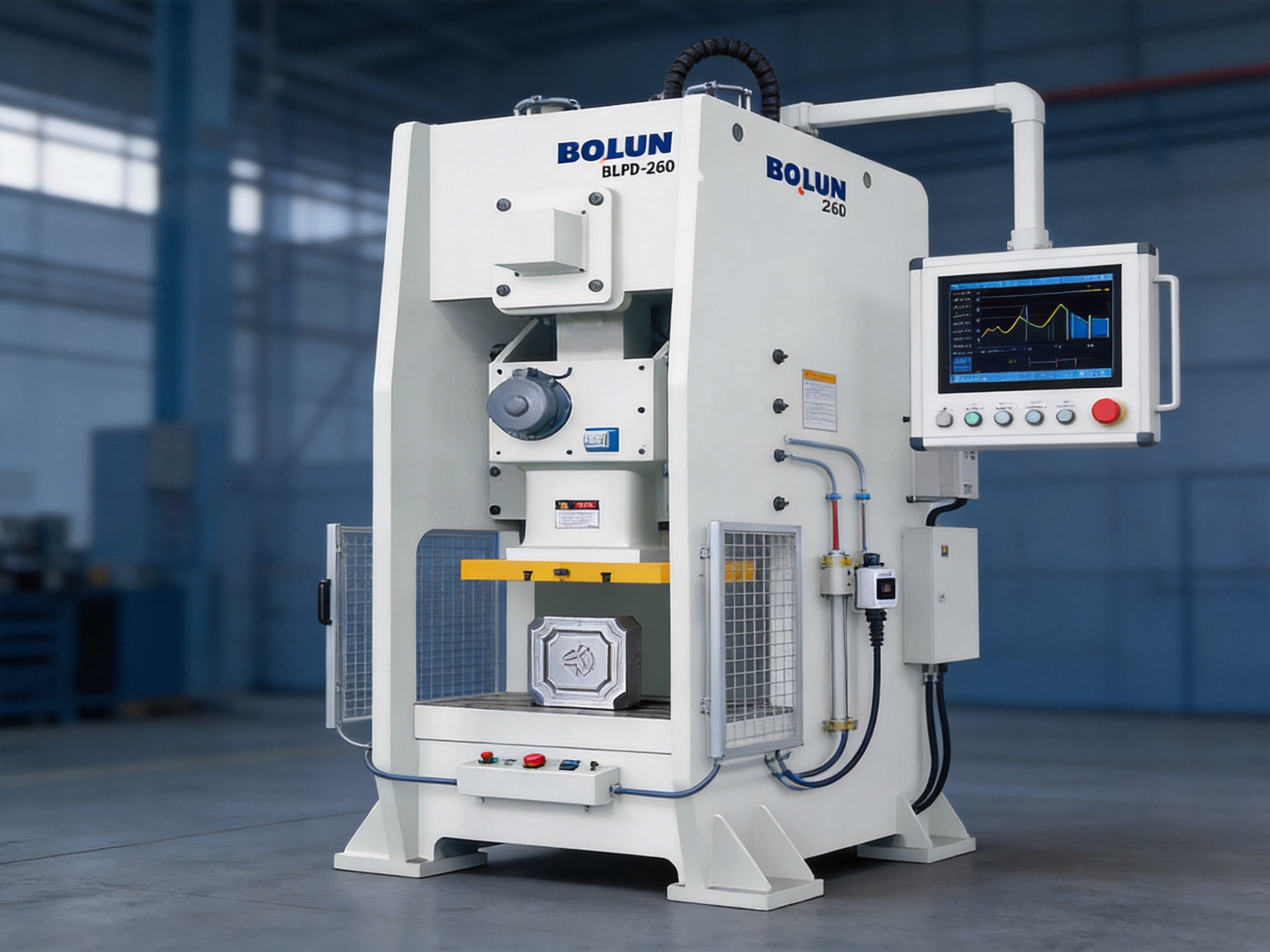
The performance of a heavy power press begins long before final assembly. Frame accuracy, component strength, transmission quality, and control reliability depend on the manufacturing processes used at every stage. The manufacturer behind this product integrates research and development, engineering design, production, sales, and service, supporting a complete process from basic design and core component development to final machine assembly.
A modern manufacturing process begins with engineering analysis. Designers must consider load paths, frame rigidity, slide guidance, crankshaft stresses, die-space requirements, lubrication routes, pneumatic controls, hydraulic protection, and operator safety. This design work is especially important for a machine intended to operate at 2,600 kN, where small weaknesses can become significant under repeated loading.
Precision processing equipment supports the manufacture of critical components. Large frames, tables, slides, shafts, guide surfaces, and mounting areas must be produced within controlled tolerances. Accurate machining helps ensure that the worktable and slide maintain the required relationship. It also supports reliable installation of bearings, guides, cylinders, valves, sensors, and other components.
Core-component development provides greater control over the complete machine. When a manufacturer understands the interaction between the frame, drive train, slide, clutch-brake system, lubrication, and controls, it can optimize the press as an integrated unit rather than simply combining unrelated purchased parts. This approach can improve maintainability and make it easier to adapt a machine to special production requirements.
Final assembly is another essential stage. Assembly technicians must align mechanical components, set clearances, connect lubrication circuits, install hydraulic overload devices, verify pneumatic systems, and configure electrical controls. A high-quality assembly process includes systematic inspection rather than depending only on visual checks. Each functional system must be verified before the machine is released for shipment.
Quality control is a central strength of a precision machinery manufacturer. The manufacturer describes a finished-product inspection system that covers each process and component. Such a system is important because press performance is cumulative: a small machining error, an incorrect bearing fit, a poorly adjusted guide, or an improperly connected sensor can affect the complete machine.
Inspection may include dimensional verification of the frame and table, slide parallelism, die-height adjustment, operating speed, stopping performance, lubrication delivery, overload response, motor operation, and control-panel functions. Accuracy checks should be conducted using appropriate instruments and documented in a traceable manner.
Load-related testing is particularly relevant for a high-capacity press. The machine should be evaluated to confirm that the mechanical structure, drive system, monitoring function, and overload protection operate as intended. Testing under controlled conditions helps identify issues before the press reaches the customer’s production line.
Quality management must continue after delivery. Installation support, commissioning guidance, operator training, preventive maintenance recommendations, and responsive technical service all influence the long-term value of the equipment. A press is a major capital investment, and its effective service life depends on both manufacturing quality and customer support.
The company’s stated approach combines rigorous inspection with a customer-oriented service system covering pre-sales consultation, in-sales support, and after-sales guarantees. This is valuable for international buyers who may need assistance with technical selection, foundation planning, commissioning, spare parts, and process integration.
Industrial stamping requirements vary widely. One customer may need a deep-stroke arrangement for large housings, while another may prioritize faster cycles for a particular blanking or forming process. Die dimensions, material characteristics, production volume, automation requirements, and factory layout all influence the appropriate press configuration.
The manufacturer provides non-standard customization capabilities and one-stop design and manufacturing services for products with special specifications and functions. This capability can be important when standard catalog dimensions do not match the customer’s tooling or process plan.
Customization may involve working height, table arrangement, die-space details, electrical specifications, control interfaces, feeding direction, safety devices, automation connections, or auxiliary equipment. Any customization should be defined during the technical review, with clear drawings and acceptance criteria. This ensures that the final press is aligned with the intended production process.
Engineering support can also help customers avoid selecting a machine based only on the maximum force requirement. A proper review should examine the complete forming cycle, including blank loading, die closing, forming force, pressure position, slide return, part removal, lubrication, and operator access. The result is a more reliable match between press, die, material, and production target.
The 250 mm deep stroke and large die-height capacity make the press suitable for deep-forming applications in which material must travel a considerable distance into the die. Examples may include industrial shells, formed housings, containers, structural covers, and other components with significant depth. The final suitability depends on material properties, blank geometry, draw ratio, lubrication, and the number of forming stages.
Heavy-gauge materials demand greater force and place more stress on dies and press structures. The 2,600 kN capacity and rigid frame provide a strong platform for large sheet-metal components. The tonnage monitoring system can help production teams observe load behavior and identify changes caused by material or tooling conditions.
The broad table and slide dimensions can support dies used for large industrial parts. A generous clear space between columns may also simplify installation and handling. Manufacturers producing construction equipment components, agricultural machinery parts, industrial cabinets, structural brackets, and similar products may benefit from this working envelope.
The press is described as suitable for heavy-duty forging and industrial forming applications. In these operations, process engineering is essential. Forging temperature, material volume, die design, energy requirements, lubrication, and loading conditions must be carefully evaluated. The hydraulic overload system and rigid frame provide useful protection and stability, but each forging process should be validated through technical testing.
Contract manufacturers and job shops often need equipment that can accommodate different dies and part sizes. The BLPD-260’s adjustable die height, large worktable, deep stroke, and variable operating speed provide useful flexibility. This can help a job shop serve several customers without investing in separate presses for every product category.
Before installation, the customer should prepare a foundation capable of supporting the approximately 32-ton press and its operating loads. The foundation plan should consider machine dimensions, anchoring, vibration, access routes, maintenance clearance, electrical supply, compressed air, ventilation, and material-handling requirements.
The listed overall dimensions for the BLPD-260 are approximately 2,180 by 2,850 by 4,470 mm for the relevant configuration. Transport planning should account for the machine’s height, weight distribution, lifting points, door dimensions, floor loading, and the path from unloading to the final location.
The press requires a listed air pressure of 0.55 MPa. The factory air system should provide clean and sufficiently stable compressed air at the required flow rate. Moisture, oil contamination, and pressure fluctuations can influence pneumatic valves and stopping performance. Appropriate filtration and drainage should therefore be included in the plant utility plan.
Commissioning should include leveling, anchoring, electrical inspection, motor rotation verification, control-function testing, emergency-stop testing, lubrication verification, hydraulic overload testing, die-height adjustment, and no-load and loaded trial cycles. The acceptance process should be based on agreed technical standards and documented results.
Operators and maintenance personnel should receive training before production begins. Training should cover normal operation, setup, die installation, safety devices, tonnage monitoring, overload response, lubrication checks, emergency procedures, and lockout practices. Good training helps the customer realize the machine’s technical advantages while reducing avoidable operating errors.
Preventive maintenance is necessary for any high-capacity mechanical press. Maintenance intervals should follow the equipment manual and should be adjusted when operating conditions are especially demanding. Long shifts, high loads, abrasive environments, frequent die changes, or heavy forming materials may require additional inspection.
Daily checks may include lubrication levels, air pressure, oil leakage, abnormal noise, vibration, guarding, emergency-stop function, and display status. Periodic checks may include clutch-brake performance, connecting components, slide guidance, die-height adjustment, hydraulic overload settings, electrical terminals, sensors, and foundation bolts.
Maintenance teams should inspect the condition of the worktable and slide mounting surfaces. Damage, burrs, debris, or uneven clamping can affect die alignment. The die should be installed with suitable fasteners and should be checked for correct seating before production begins.
Monitoring operating trends can improve maintenance planning. A change in tonnage, cycle sound, motor temperature, lubrication consumption, or stopping behavior may indicate an emerging issue. Early intervention is generally less expensive than repairing a major mechanical failure after a breakdown.
Only qualified technicians should adjust safety-related, hydraulic, pneumatic, electrical, or mechanical systems. Replacement parts should meet the required specification. Improvised components or unauthorized modifications may reduce safety and compromise machine performance.
Industrial efficiency includes more than cycle speed. It also involves reducing scrap, minimizing downtime, extending die life, and maintaining consistent product quality. The BLPD-260 supports these goals through load monitoring, controlled operation, automatic lubrication, and overload protection.
Stable forming conditions can reduce variation in finished parts. Better process consistency may lower the number of rejected components and reduce the need for rework. Hydraulic overload protection can help avoid severe damage after an abnormal event, while automatic lubrication may reduce wear-related interruptions.
Operating speed should be selected according to the actual process rather than the maximum available rate. A slightly lower speed may improve material flow and die life in a deep-forming application. Conversely, a suitable shallow-forming process may use a higher rate to improve output. The ability to select an appropriate speed allows production managers to optimize the complete cost per acceptable part.
Energy use should be evaluated together with motor rating, cycle rate, forming load, idle time, and production utilization. Efficient scheduling, reduced setup time, and preventive maintenance can contribute to lower energy consumption per finished component.
Potential buyers should begin by defining the workpiece and process. Important questions include the material type, thickness, tensile strength, blank size, required forming depth, maximum projected area, number of operations, expected production volume, and required dimensional tolerance.
The next step is to compare the die with the press envelope. Confirm die length and width, total die height, upper and lower clamping surfaces, guide arrangement, ejector or cushion requirements, feed direction, transfer clearance, and maintenance access. The BLPD-260’s listed dimensions offer substantial capacity, but every die should be checked against an approved machine drawing.
Buyers should also confirm whether the required BLPD-260 configuration is V or H. The supplied data shows differences between these configurations in stroke, speed, nominal pressure stroke, and maximum die height. The product description emphasizes the 250 mm deep stroke and 550 mm maximum die height, so these points should be explicitly stated in the final quotation and contract.
Production planning should include the intended automation. If the press will be connected to a feeder, robot, transfer system, die cushion, or conveyor, the customer should review signal interfaces, operating sequence, guarding, line speed, and emergency-stop integration. Early coordination reduces the risk of costly modifications after delivery.
Finally, buyers should evaluate the manufacturer’s engineering, quality, and service capabilities. A press is not only a machine body and motor. It is a complete production asset that requires design support, inspection, commissioning, spare parts, technical communication, and after-sales service throughout its operating life.
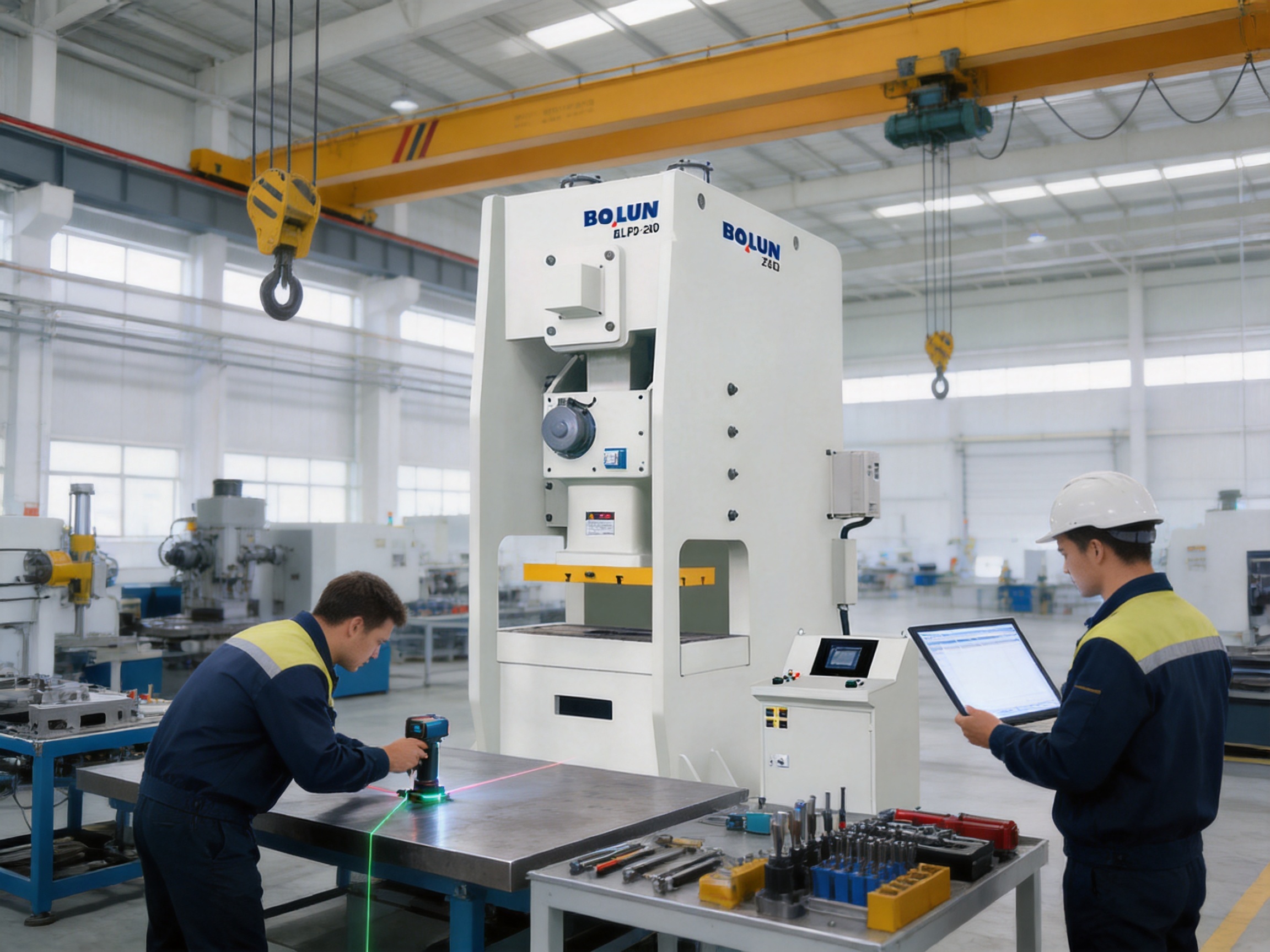
Zhejiang Bolun High-Precision Machinery Co., Ltd. is based in Zhejiang, a major center of China’s precision manufacturing industry. The company has approximately two decades of experience in machinery manufacturing and has developed capabilities covering research and development, design, production, sales, and service.
This integrated structure allows the manufacturer to coordinate product development with manufacturing realities. Engineering teams can design around available processing capabilities, production teams can provide feedback on manufacturability, and service personnel can communicate field experience back to future product improvements.
The company emphasizes a technology-first strategy and maintains a full-chain production system. Its capabilities include precision processing equipment, core-component development, non-standard customization, final assembly, and finished-product inspection. These strengths are relevant to heavy power presses because the quality of the final machine depends on coordination across all of these stages.
Bolun also promotes an international management perspective and provides industrial machine-tool solutions for global customers. International supply requires clear technical documentation, stable quality procedures, export coordination, remote communication, and service responsiveness. These capabilities can help overseas customers manage the practical challenges of purchasing and installing large industrial equipment.
The company’s stated quality philosophy places emphasis on stable precision and long service life under high-intensity operating conditions. This philosophy aligns with the intended use of the BLPD-260, which is designed for demanding forming and stamping environments rather than occasional light-duty operation.
Technical consultation is important before a machine is ordered. Customers may need assistance selecting the correct stroke, configuration, die height, speed range, table size, motor specification, safety arrangement, and auxiliary equipment. A careful consultation helps ensure that the machine is suitable for the planned process.
During production and delivery, project support may include technical drawing confirmation, manufacturing updates, inspection coordination, packing, transportation preparation, installation guidance, and documentation. Large presses require careful handling, and clear communication can reduce risks during each phase.
After installation, service support may include commissioning assistance, operator instruction, maintenance guidance, troubleshooting, and spare-parts coordination. These services are particularly valuable when the customer’s maintenance team is working with a new press design or when the machine is integrated into an automated production line.
A long-term relationship between equipment manufacturer and user can improve machine utilization. Feedback from production helps identify opportunities for process optimization, preventive maintenance, and future customization. The manufacturer’s integrated R&D and service structure provides a foundation for this relationship.
The BLPD-260 is an industrial-strength semi-closed single-point power press. It is designed for deep forming, heavy-duty forging-related forming, and large-scale stamping applications that require high force and substantial slide travel.
The nominal capacity is 2,600 kN. The rated capacity must be considered together with the nominal pressure stroke and the position in the slide cycle where the force is required.
The product description identifies a 250 mm slide stroke. The supplied model table also lists V and H configurations, with the BLPD-260 H configuration showing 250 mm and the V configuration showing 150 mm. The final configuration should be confirmed in the technical order documents.
The product description specifies a maximum die height of 550 mm. In the supplied table, the H configuration is listed at 550 mm, while the V configuration is listed at 500 mm. Buyers should confirm the selected configuration before purchase.
The listed main motor is 22 kW with a four-pole specification. The drive system is intended to provide stable power for high-load forming and stamping cycles.
The supplied table lists approximately 20–40 strokes per minute for the BLPD-260 V configuration and 40–60 strokes per minute for the H configuration. The correct speed depends on forming depth, material, die design, lubrication, load, and production requirements.
The press includes hydraulic overload protection. This system is intended to help protect the machine and die when abnormal or excessive forming resistance occurs. It must be correctly adjusted, inspected, and maintained by qualified personnel.
Yes. A tonnage monitoring display is integrated into the product concept. It can help operators and engineers observe forming loads, identify deviations, support die tryout, and monitor process consistency.
Automatic lubrication helps deliver lubricant to designated points according to a planned cycle. It can improve lubrication consistency, reduce dependence on manual intervals, and support longer service life. The system still requires regular inspection, refilling, and maintenance.
The dual solenoid valve structure supports controlled stopping and actuation. Its effectiveness depends on the complete pneumatic, electrical, brake, and safety-control design. It should be tested regularly and used together with appropriate guarding and safety devices.
The deep-stroke configuration is intended for deep forming and can be suitable for deep drawing when the material, blank size, draw ratio, die design, lubrication, and forming force are within the machine’s capabilities. A process review or trial is recommended for critical parts.
Yes. The BLPD-260 provides a large worktable, broad slide bottom, substantial column opening, and a maximum die height of up to 550 mm in the specified deep-stroke configuration. The actual die must still be checked against mounting, clamping, feed, and maintenance requirements.
The listed press weight is approximately 32 tons. Foundation design, transport planning, lifting, anchoring, and floor-loading calculations should be completed before delivery.
The supplied specification lists an air pressure of 0.55 MPa. The customer should verify the required flow rate and air-quality requirements with the manufacturer before preparing the factory utility connection.
The BLPD-260 offers greater force, a deeper stroke, a larger die envelope, and a heavier high-rigidity structure than many lighter presses. Its integrated overload protection, lubrication, stopping control, and tonnage monitoring also support demanding production. A complete comparison should include all relevant technical and service factors.
Customers should confirm the V or H configuration, stroke, die height, speed range, nominal pressure point, table and slide dimensions, electrical requirements, safety equipment, automation interfaces, foundation requirements, delivery scope, inspection standard, commissioning arrangements, and after-sales support.
The BLPD-260 Industrial Strength Deep-Stroke Semi-Closed Single-Point Power Press is designed for manufacturers that need substantial force, long slide travel, large die capacity, and dependable operation in demanding industrial environments. Its 2,600 kN nominal capacity and 250 mm deep stroke provide the foundation for deep forming and heavy-duty stamping, while the high-rigidity approximately 32-ton frame supports stability under repeated loading.
Its practical advantages extend beyond tonnage. The large worktable, maximum die height of up to 550 mm, 22 kW drive motor, adjustable die height, dual solenoid valve structure, automatic lubrication, hydraulic overload protection, and tonnage monitoring display form a coordinated package for productive and controlled operation.
The manufacturer strengthens this product through integrated engineering, precision processing, customization capability, quality inspection, and customer service. Its experience in research and development, design, production, assembly, and after-sales support provides a solid foundation for supplying heavy industrial forming equipment to customers with demanding technical requirements.
For companies evaluating a large power press, the most important consideration is the relationship between the machine, die, material, process, and production target. When the selected configuration is correctly matched to these requirements, the BLPD-260 can provide a robust platform for deep forming, high-load stamping, and long-term industrial production.
1. Manufacturer-supplied technical specification sheet for the BLPD-260 semi-closed single-point power press.
2. Manufacturer-supplied product description for the BLPD-260 Industrial Strength Deep-Stroke Semi-Closed Single-Point Power Press.
3. General principles of mechanical power press design, capacity rating, die-space planning, and preventive maintenance.
4. Industrial press safety and safeguarding practices for mechanical stamping equipment.
5. Quality-control principles for precision machining, heavy machine assembly, and industrial equipment commissioning.
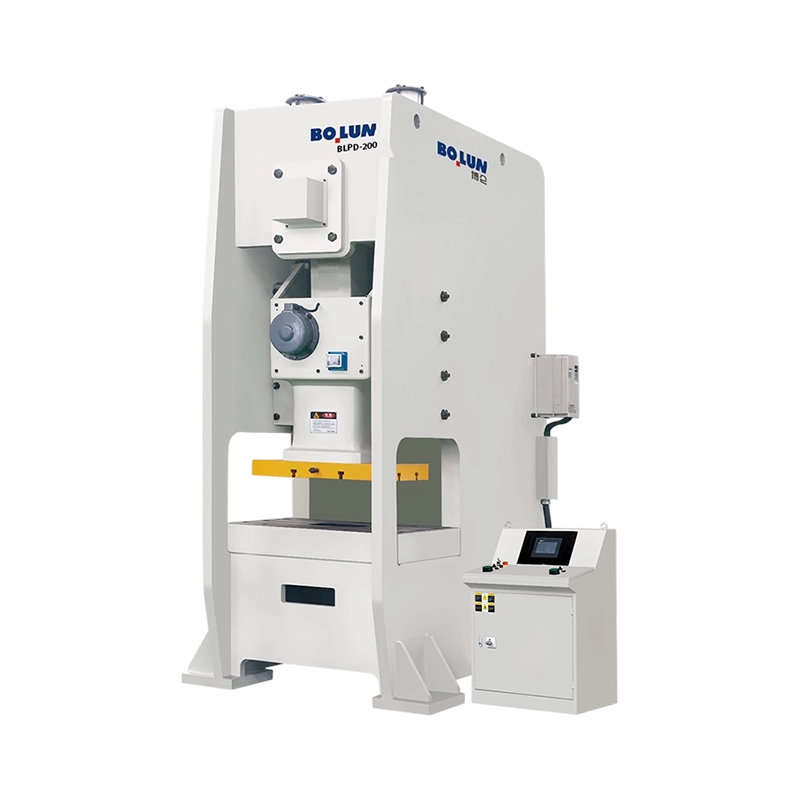


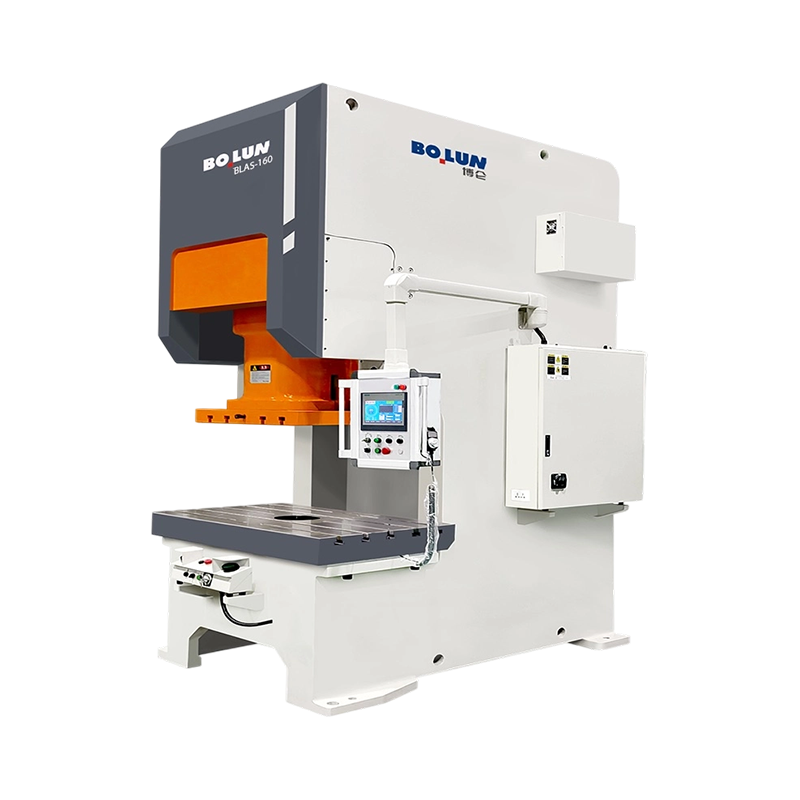
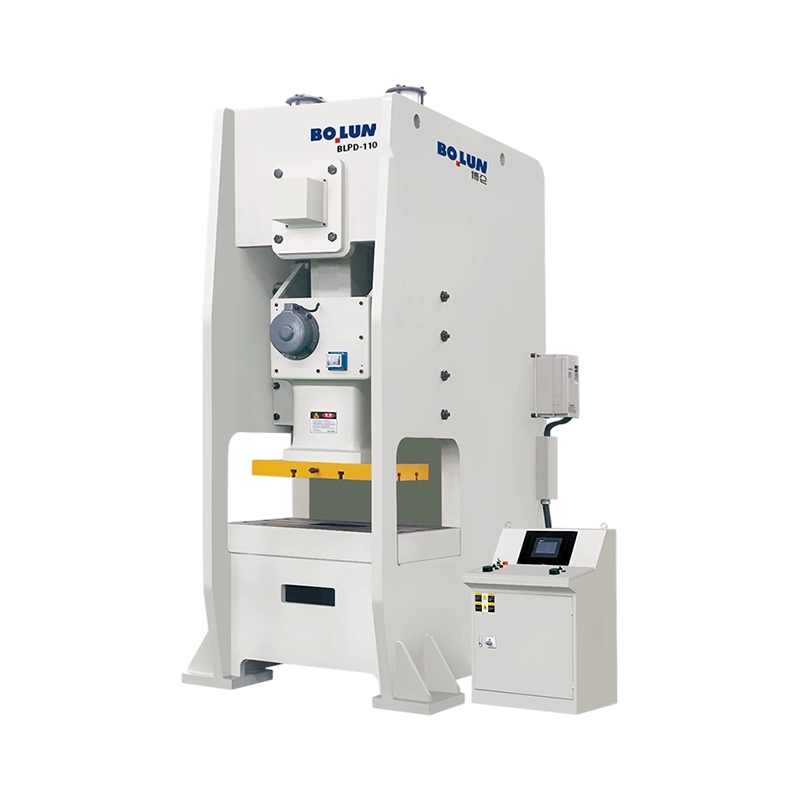
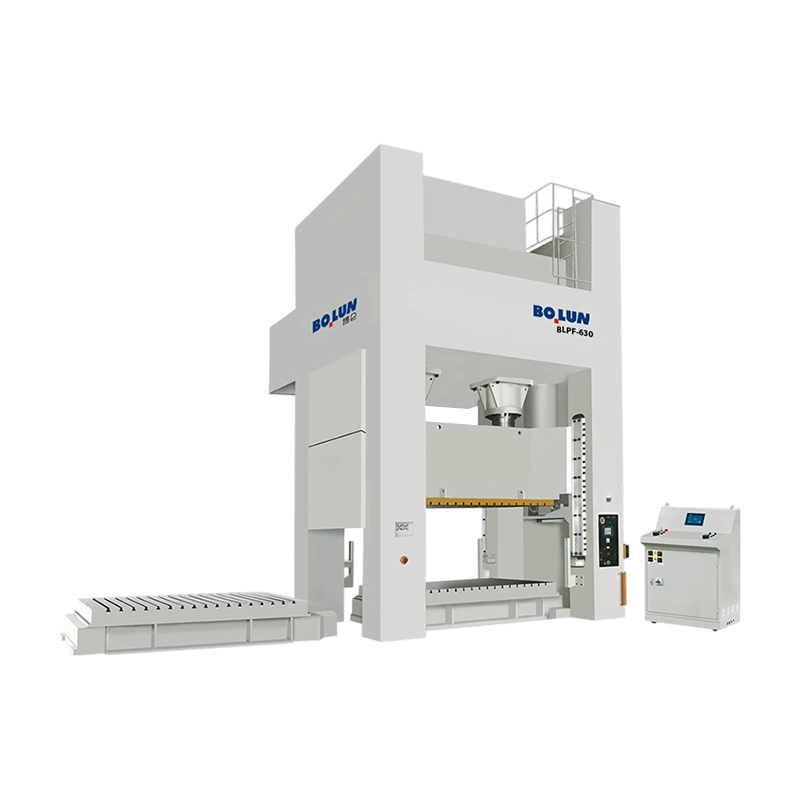
Two presses can both carry a 200-tonne nameplate and still produce very differe...
What Is a Power Press? A power press — also called a stamping press or punch pr...
Start With the Purchase Decision, Not the Definitions A procurement engineer co...
A tooling engineer quotes a new bracket program and specifies a 160-ton press. ...
When you are planning to produce medium or small metal parts in high volumes, t...
A fastener plant in Taizhou receives a request from an automotive tier-one supp...
Contact Us

topbolun@gmail.com

+86-575-83362228

+86-13735238388
+86-18667502750

+86-575-83362999

+8618667502750

No.1 Linjiang Road East, Xiaren, Jinting Town, Shengzhou City, Zhejiang Province, China
Ready to Begin?
Get in Touch

Now!

ZHEJIANG BOLUN
 English
 中文简体