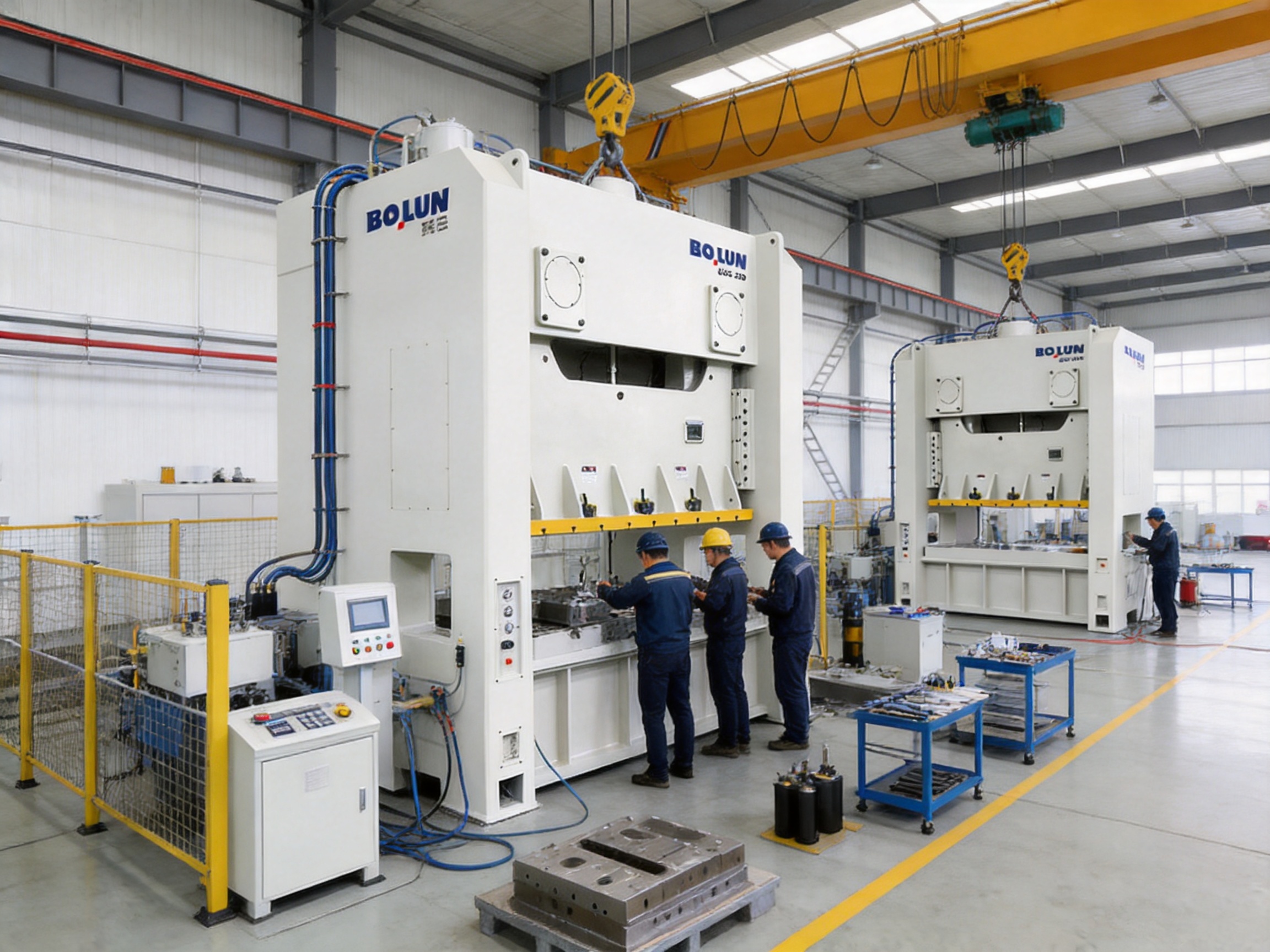
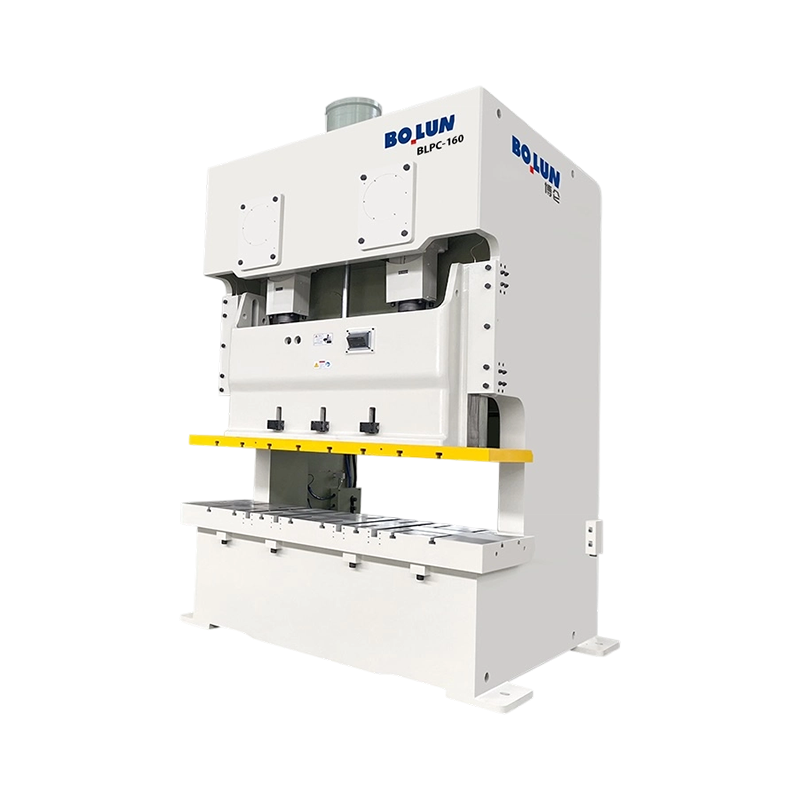
Modern sheet metal manufacturers require more than a high nominal capacity. They need a press that can distribute forming loads evenly, maintain stable slide movement, accommodate large dies, operate efficiently across different production conditions, and protect both tooling and operators during continuous work. The BLPE-200 versatile precision-balanced closed-type double-point press is designed to address these requirements through a combination of 2000 kN nominal capacity, double-point drive architecture, adjustable operating speed, hydraulic overload protection, and a spacious work area.
As a closed-type power press, the machine provides a rigid working structure for demanding stamping and forming operations. Its double-point configuration supports balanced transmission of force across the slide, reducing the tendency toward uneven loading that can occur when large or asymmetrical dies are operated on a single-point press. This characteristic is particularly valuable for automotive components, appliance panels, structural sheet metal parts, and other products that require repeatable forming quality over long production cycles.
The press combines a 250 mm slide stroke with a 2200 × 940 mm worktable. This working envelope provides sufficient room for a broad selection of progressive, drawing, blanking, bending, and compound dies. An 18.5 kW main motor with inverter speed control allows the stroke rate to be adjusted within an operating range of approximately 20 to 70 strokes per minute, depending on the selected configuration, material, die design, and process requirements.
Its value is not limited to the machine frame or drive system. The equipment is supported by the manufacturing capabilities of Zhejiang Bolun High-Precision Machinery Co., Ltd., a Chinese machinery producer with experience in research and development, design, precision processing, assembly, inspection, sales, and service. The company’s integrated production approach helps connect design decisions with manufacturing control, quality verification, and customer-specific engineering.
The BLPE-200 is positioned as a medium-to-heavy-duty closed-type double-point power press for industrial sheet metal forming. Its 2000 kN nominal capacity places it in a class suitable for substantial stamping forces, while its balanced architecture allows the machine to handle dies that require a wider working surface and more uniform load distribution.
Closed-type presses are commonly selected when manufacturers need improved structural stiffness, greater working accuracy, and better control over the relationship between the slide, die, and worktable. Compared with open-frame equipment, a closed-type design can provide a more enclosed and rigid load path. This is important when forming larger components or when the tool must maintain close alignment during repeated cycles.
The double-point arrangement adds another important advantage. Instead of applying the driving force at only one central point, the mechanism transmits force through two points distributed across the slide. This helps minimize slide tilting and supports more consistent contact between the upper and lower die sections. In practical production, balanced force transmission can help reduce uneven die wear, improve dimensional consistency, and maintain more reliable forming conditions.
The machine is therefore suitable for operations where stability is more important than simply achieving the maximum possible stroke rate. It is intended for manufacturers that need a robust production platform capable of supporting deep drawing, stamping, precision forming, and related sheet metal processes.
The following specifications summarize the principal data available for the BLPE-200 model. Actual delivered specifications may vary according to voltage, control system, tooling arrangement, safety configuration, optional automation, and other project-specific requirements.
| Parameter | Specification |
|---|---|
| Model | BLPE-200 |
| Press type | Closed-type double-point power press |
| Nominal capacity | 2000 kN |
| Nominal pressure stroke | 3 mm in the listed high-speed configuration |
| Slide stroke | 250 mm |
| Stroke rate | Approximately 20–70 strokes per minute, depending on configuration |
| Maximum die height | Approximately 475 mm in the listed BLPE-200 configuration |
| Die height adjustment | Approximately 120 mm in the listed configuration |
| Worktable size | 2200 × 940 × 170 mm |
| Main motor | 18.5 kW, four-pole motor with inverter control |
| Protection system | Integrated hydraulic overload protection |
| Valve arrangement | Dual solenoid valve configuration |
| Typical applications | Deep drawing, stamping, blanking, bending, and precision forming |
The broader BLPE product range includes multiple capacity levels and vertical or horizontal speed configurations. This means the BLPE-200 can be considered within a scalable platform rather than as an isolated machine. Customers that later require higher capacity or larger work areas may be able to select a related model family while retaining a familiar design philosophy and service approach.
A principal advantage of the BLPE-200 is its double-point slide drive. The two-point structure is designed to distribute the forming force more evenly across the width of the slide. This is especially useful when a die is wide, when the forming load is not perfectly centered, or when the process involves several stations across the working area.
On a single-point press, off-center loading can create a tendency for the slide to tilt. Excessive tilting may influence die alignment, increase friction on guiding surfaces, and produce uneven wear. A balanced double-point arrangement helps resist this tendency by supporting the slide at two separate drive locations. The result is a more stable motion pattern during the working stroke and return stroke.
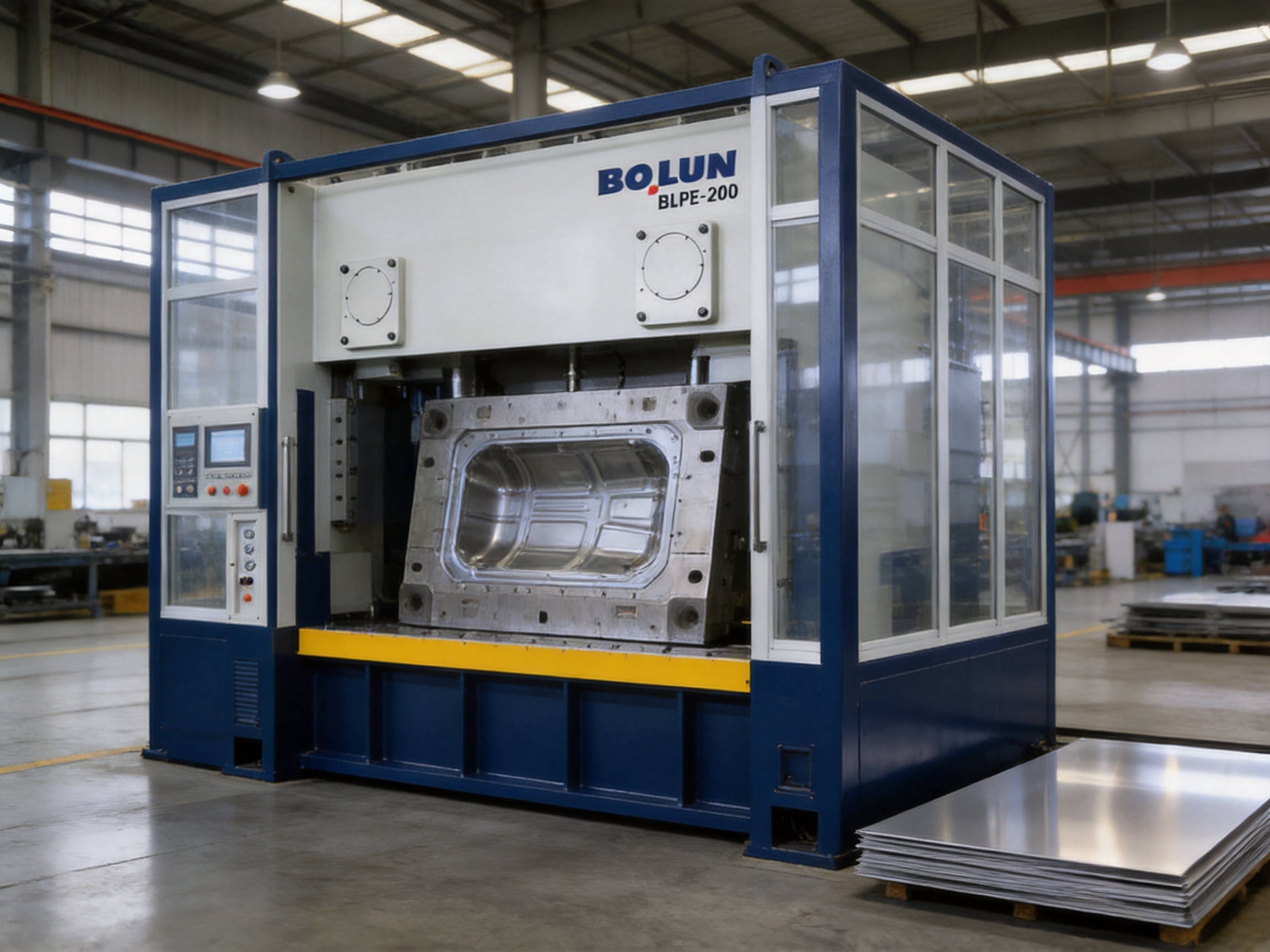
The 2200 × 940 mm worktable offers a practical working area for larger dies and multi-operation tooling. The wide table is complemented by the double-point structure, allowing the press to support tools that would be difficult to operate efficiently on a smaller or less rigid open-frame machine.
Wide-die capability can reduce the need to divide a component into several separate operations. In some applications, a manufacturer may be able to combine blanking, forming, or bending stages into a more integrated tooling solution. This can reduce handling time, improve process continuity, and simplify production planning.
Balanced movement supports more uniform contact between the die surfaces. While tooling life also depends on lubrication, material quality, die design, alignment, and maintenance, stable slide guidance provides an important foundation for protecting expensive tools. A press that minimizes unnecessary slide deflection can help reduce localized stress concentrations and irregular wear patterns.
This advantage is particularly relevant in automotive and appliance production, where dies may be large, complex, and costly. Consistent mechanical behavior allows maintenance teams to identify abnormal conditions more easily and helps production engineers establish repeatable process parameters.
The BLPE-200 uses a 250 mm slide stroke, providing sufficient vertical movement for many drawing and forming operations. A longer stroke can be valuable when the die requires more material movement, when the formed part has significant depth, or when the tooling includes additional lifting, ejection, or transfer requirements.
The available stroke rate range of approximately 20 to 70 strokes per minute gives the operator flexibility to balance productivity and forming conditions. Higher rates may be appropriate for simpler blanking or shallow forming operations, while slower rates can provide more time for deep drawing, complex material flow, lubrication, and part transfer.
Inverter speed control is important because it allows the machine to be matched more closely to the process. Rather than operating at one fixed speed, production personnel can adjust the press to suit the material thickness, tensile strength, tool design, forming depth, lubrication method, and automation cycle. This adaptability can help reduce unnecessary energy consumption and improve the quality of finished parts.
Speed selection should always be based on the complete process rather than the press alone. A high stroke rate is not automatically the most productive setting if it leads to cracks, wrinkles, excessive tool wear, vibration, or frequent stoppages. The BLPE-200’s adjustable speed capability gives manufacturers the opportunity to identify a stable operating window in which quality and output are both acceptable.
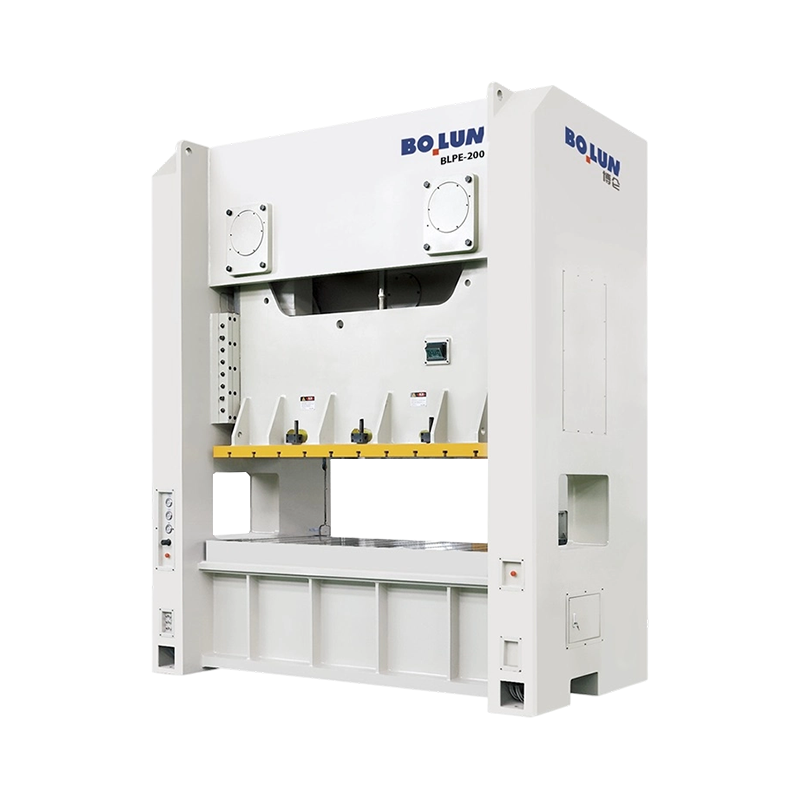
BLPE-200 Versatile Precision-Balanced Closed-Type Double-Point Press
Press accuracy is influenced by the frame, slide, connecting mechanism, guiding surfaces, die mounting, foundation, and production environment. A closed-type structure provides a rigid load-bearing path around the working zone. This design is advantageous when the forming operation generates substantial force or when maintaining alignment is essential to product quality.
The BLPE-200 is listed with a punch accuracy of GB/JIS Class 1. This classification indicates a precision-oriented design target suitable for industrial forming work. In actual operation, the achieved result depends on installation quality, foundation stability, die condition, lubrication, material consistency, regular adjustment, and compliance with the recommended maintenance schedule.
Rigid construction also contributes to operator confidence. When the machine remains stable during repeated cycles, process engineers can establish settings with less variation. The press is better able to maintain a consistent relationship between the upper die, lower die, workpiece, and feeding equipment.
For manufacturers producing visible exterior panels or precision structural components, such consistency is a major commercial benefit. It can reduce rejection rates, minimize rework, and support more predictable delivery performance. Stable machine behavior also assists in the development of standardized production recipes for different materials and product families.
The 2200 × 940 × 170 mm worktable is one of the most important practical features of the BLPE-200. The table provides the foundation for mounting the lower die and supporting the forming load. Its dimensions are suitable for a range of medium and large stamping dies, while the table thickness contributes to the overall rigidity of the tooling interface.
The listed maximum die height is approximately 475 mm, with an adjustment range of about 120 mm for the BLPE-200 configuration. This adjustment capability permits the press to accommodate different tool heights and helps production personnel establish the correct shut height for each operation.
Before selecting a die, the user should confirm all interface dimensions rather than relying only on the worktable length and width. Important factors include slide bottom dimensions, die mounting holes, shut height, maximum opening, required daylight, ejector arrangements, material feeding height, side access, and the available space for sensors or automation equipment.
The broader specification data identifies a slide bottom size of approximately 1850 × 750 × 95 mm for the BLPE-200 configuration and a column spacing of approximately 2290 mm. These dimensions should be checked against the final technical drawing before tooling manufacture. Proper compatibility at the design stage prevents costly modifications after installation.
Overload protection is a critical feature for any production press. Stamping forces can rise rapidly when a material thickness changes, a blank is mispositioned, lubrication is insufficient, a die becomes blocked, or a foreign object enters the working area. Without an effective protection system, an overload may damage the die, connecting components, slide mechanism, or frame.
The BLPE-200 incorporates hydraulic overload protection. When the applied load exceeds the permitted level, the system is designed to help release or limit excessive pressure, reducing the risk of major mechanical damage. This protection can shorten recovery time after an abnormal event and help preserve the service life of high-value tooling.
Hydraulic overload protection does not replace correct process control. Operators must still use suitable materials, maintain accurate feeding, inspect tooling, follow safe operating procedures, and confirm that the press capacity is appropriate for the die and operation. The protection system should be treated as a safeguard rather than a reason to operate beyond rated limits.
Regular inspection of the hydraulic circuit, pressure settings, seals, valves, and related components is essential. Maintenance personnel should follow the supplier’s instructions for checking system response and resetting the equipment after an overload event.
The press is equipped with a dual solenoid valve arrangement that supports operating safety and control reliability. Redundant or coordinated valve architecture can help improve control of the press clutch and braking functions, depending on the final system design. Such arrangements are commonly used to support safe stopping performance and reduce the consequences of a single control fault.
For continuous production, reliability is influenced by the interaction of mechanical, hydraulic, pneumatic, and electrical systems. The dual solenoid configuration forms part of a broader safety and control strategy that should include emergency stop functions, guarding, interlocking, control logic, inspection procedures, and operator training.
Manufacturers should assess the final safety circuit according to the regulations applicable in the destination market. Electrical standards, safeguarding requirements, emergency stop performance, noise limits, and documentation requirements may differ between countries. The machine should be ordered with a complete compliance review when it is intended for export or integration into an automated production line.
The BLPE-200 uses an 18.5 kW main motor with inverter speed control. The four-pole motor configuration provides a practical balance between torque characteristics, operating stability, and energy use for this class of power press. The inverter allows controlled adjustment of the main drive speed instead of relying on a single fixed operating point.
Variable speed operation can provide several production benefits. It may allow a manufacturer to slow the press for difficult drawing operations, increase the rate for simpler work, and coordinate the machine more effectively with feeders, transfer systems, decoilers, and inspection equipment. It can also support smoother process development during tool tryout.
Energy performance depends on the complete duty cycle. A press operating at a lower speed may not always consume proportionally less energy because the motor, control system, and auxiliary equipment remain active. Nevertheless, the ability to select an appropriate speed can prevent unnecessary high-speed operation and may help optimize the relationship between output, quality, and power consumption.
The inverter and motor should be protected from unsuitable environmental conditions, voltage instability, excessive dust, heat, and poor ventilation. Correct grounding and routine inspection are also important for maintaining dependable operation.
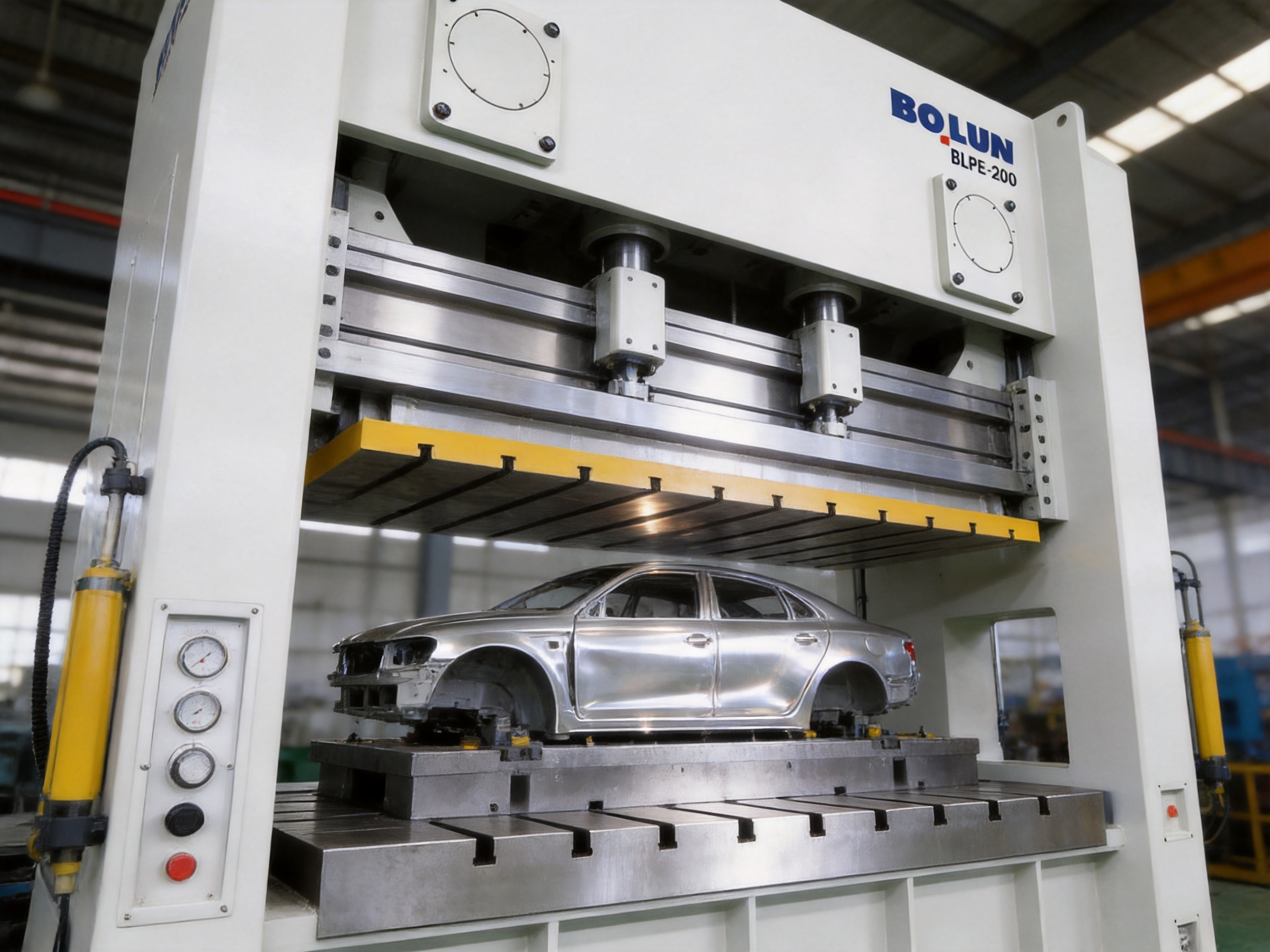
Automotive manufacturers use closed-type presses for a wide range of components, including brackets, reinforcement panels, body subcomponents, floor structures, seat parts, chassis-related components, and formed metal supports. The BLPE-200’s capacity and worktable dimensions make it suitable for many medium-sized automotive stamping operations.
The double-point design is useful when dies are wide or when the part geometry creates an uneven distribution of forming force. Stable slide movement can contribute to more consistent flange formation, hole positioning, bending angles, and surface quality. In visible parts, repeatable forming conditions are particularly important because small defects may be noticeable after painting or assembly.
Automotive production also requires equipment that can operate for extended periods with controlled downtime. Hydraulic overload protection, inverter speed control, and a serviceable mechanical structure support a production strategy based on repeatability and preventive maintenance.
When used with a suitable feeder or transfer system, the press can form part of a semi-automatic or fully automated line. The final line design should consider blank loading, part removal, die sensors, scrap discharge, light curtains, guarding, and communication between the press control system and peripheral equipment.
Appliance manufacturers commonly process steel and other sheet materials into covers, brackets, cabinets, panels, supports, housings, and internal structural parts. These products may require a combination of drawing, bending, embossing, piercing, and trimming.
The spacious worktable of the BLPE-200 supports dies that combine several operations or accommodate relatively large panels. The adjustable speed range gives manufacturers the ability to select a slower cycle for deeper forming or a faster cycle for simpler operations. Consistent force distribution can also assist in maintaining uniform panel geometry.
In appliance production, cosmetic appearance and assembly fit are both important. A stable press helps reduce defects such as uneven flanges, excessive springback caused by inconsistent forming, local marks, or dimensional variation. The actual result will still depend on die design, material coating, lubrication, blank holder control, and downstream finishing processes.
Deep drawing places special demands on a press because material must flow into the die cavity without tearing, wrinkling, or excessive thinning. The 250 mm stroke gives the BLPE-200 useful vertical travel for a variety of drawing operations. The machine’s capacity and rigid closed structure provide a solid base for tools that require substantial forming force.
Successful deep drawing requires careful coordination between press motion, blank holder force, lubrication, material properties, die radius, punch radius, clearance, and forming speed. The inverter-controlled drive helps the user select a speed that supports stable material flow. A slower setting may be advantageous during process development or when working with difficult materials.
Precision forming also benefits from balanced slide movement. When the upper die remains properly aligned with the lower die, the forming clearance can be maintained more consistently. This can help improve repeatability and reduce premature wear on guide components and die surfaces.
Zhejiang Bolun High-Precision Machinery Co., Ltd. integrates research and development, mechanical design, manufacturing, sales, and service. This full-chain structure is significant because the performance of a large power press depends on coordination between many disciplines. Frame design, drive calculations, machining accuracy, electrical control, hydraulic protection, assembly, testing, and after-sales support must work together.
The company is located in Zhejiang, a major manufacturing region with a dense industrial supply chain and a long history of machinery production. Its stated experience spans approximately two decades in machinery manufacturing. Over this period, the company has developed capabilities in forging and casting machinery, precision forming equipment, industrial machine tools, and customized machinery solutions.
An integrated manufacturer can respond more effectively to non-standard requirements. Customers may need modified table dimensions, special die heights, particular electrical standards, customized feeding arrangements, unique safety guarding, different control interfaces, or adaptation for specific materials. Engineering and production teams that work within the same organization can evaluate these requirements more efficiently than a supplier that only assembles standard components.
Bolun also emphasizes the development of a complete production system covering basic design, core component development, precision processing, and final assembly. This approach can improve traceability and help the company maintain closer control over important tolerances and functional relationships.
The manufacturing quality of a power press begins long before final assembly. Large frames and structural components must be designed for load distribution, manufactured with appropriate processes, stress-relieved where necessary, and machined to meet dimensional requirements. Guide surfaces, slide interfaces, table planes, and mounting locations must be controlled carefully because small errors can influence die alignment and product quality.
Bolun’s stated production capabilities include advanced precision processing equipment and a mature industrial environment. These resources support the manufacturing of structural parts and precision components used in forming machinery. A disciplined process may include incoming material inspection, machining checks, dimensional verification, subassembly testing, system integration, and final performance inspection.
Precision production is not limited to one machining operation. It involves controlling the complete chain from material selection to heat treatment, welding, machining, surface finishing, assembly, lubrication, adjustment, and testing. Each stage can influence the behavior of the final press.
For customers, the benefit of a controlled manufacturing process is greater confidence in repeatability. A press that is assembled with verified components and properly adjusted mechanisms is more likely to maintain stable performance during production. It also gives service personnel a clearer basis for troubleshooting and replacement planning.
Quality control is essential for equipment intended to operate under high mechanical loads. The company describes a finished-product inspection system that exceeds ordinary industry requirements and applies quality checks to processes and components. While the exact inspection plan should be confirmed in the technical contract, a comprehensive program may cover frame dimensions, slide parallelism, table flatness, drive operation, lubrication, hydraulic pressure, electrical functions, safety devices, noise, vibration, and no-load or loaded testing.
Inspection documentation is valuable because it creates a technical record for installation and future maintenance. Customers should request the relevant factory test reports, equipment drawings, electrical schematics, hydraulic diagrams, lubrication instructions, spare parts lists, and operating manuals before commissioning.
A clear quality system also supports continuous improvement. When inspection results, service feedback, and customer operating data are reviewed together, manufacturers can identify recurring issues and refine future designs. This is particularly important for machines that may be customized for different markets or applications.
Different factories have different production conditions. A standard press may need to be adapted for a particular die, material, automation arrangement, factory layout, or electrical standard. Bolun’s design and manufacturing capabilities include non-standard customization, allowing the company to provide a more complete engineering response.
Potential customization areas may include feeding direction, table and slide dimensions, die height, control voltage, safety guarding, material handling, transfer integration, pneumatic or hydraulic accessories, automation communication, and special operating modes. The feasibility of each option must be evaluated according to press capacity, safety requirements, cycle time, and tooling conditions.
One-stop engineering can reduce coordination problems between separate machine suppliers. When the press, feeder, controls, and safety system are engineered as a coordinated package, the interfaces can be reviewed earlier. This can reduce installation delays and make operator training more straightforward.
Customization should not be limited to adding features. The most effective approach begins with a clear understanding of the customer’s actual process. Material specifications, part drawings, target output, die information, floor space, energy supply, automation level, and regulatory requirements should all be reviewed before the final machine configuration is approved.
The BLPE-200 has several advantages over a conventional single-point open-type press when the application involves wide dies, higher loads, or demanding alignment requirements. Its closed-type construction offers a more rigid working structure, while the double-point mechanism supports balanced force transmission across the slide.
Open-type presses are often attractive for smaller parts, easy side access, and lower initial investment. They can be highly effective for suitable applications. However, their frame configuration may be less appropriate for large dies or significant off-center loading. The choice should therefore be based on the production requirement rather than on a simple assumption that one structure is universally better.
Compared with a single-point closed press, the double-point BLPE-200 may offer better resistance to slide tilting during wide or unevenly loaded operations. This can provide advantages in die life, dimensional stability, and process consistency. The trade-off is that double-point equipment may require more careful alignment, maintenance, and tooling setup because the drive system contains more coordinated mechanical elements.
Compared with a fixed-speed press, the inverter-controlled BLPE-200 offers greater flexibility. It can be adjusted for different materials and operations, making it more versatile for contract manufacturers or factories producing multiple product families.
Productivity should be evaluated over the entire operating life of the machine rather than by purchase price alone. Important factors include output per hour, setup time, tool life, energy consumption, maintenance costs, spare parts availability, downtime, operator requirements, and product rejection rates.
The BLPE-200’s balanced structure may support lower tooling wear and more stable quality. Its adjustable speed can help optimize cycle conditions, while hydraulic overload protection may reduce the cost of accidental die or machine damage. These benefits can contribute to a lower total cost of ownership when the press is correctly matched to the application.
Preventive maintenance remains essential. Lubrication, fastener inspection, hydraulic checks, electrical inspection, slide and die alignment, and safety system testing should be planned according to operating hours and production conditions. A well-maintained press is more likely to deliver consistent output and predictable availability.
Customers should also consider the cost of installation, foundation preparation, transportation, commissioning, operator training, tooling, automation, spare parts, and local service. A complete quotation and technical review should identify these items before purchase.
A large power press must be installed on a suitable foundation. The foundation must support the machine weight and withstand dynamic loads generated during operation. Floor strength, levelness, vibration isolation, access for maintenance, overhead clearance, and material flow should all be considered during factory planning.
Before shipment, the customer should confirm the machine layout, anchor requirements, utility connections, electrical capacity, compressed air supply, ventilation, lifting method, and route from the unloading area to the final position. The listed air pressure for the wider series is approximately 0.55 MPa, but the final requirement should be confirmed for the delivered configuration and accessories.
Commissioning should include mechanical inspection, electrical connection checks, lubrication verification, hydraulic and pneumatic testing, no-load operation, safety device testing, die installation, low-speed trial cycles, and production validation. The press should not be placed into normal high-speed operation until all systems have been confirmed.
Training should cover start-up and shutdown, speed adjustment, overload response, emergency procedures, die setup, lubrication, inspection, fault reporting, and routine maintenance. Proper training protects both personnel and equipment.
Maintenance is a major factor in the long-term value of a power press. Daily or shift-based checks may include lubrication levels, unusual noise, abnormal vibration, hydraulic leakage, loose fasteners, electrical alarms, guarding, emergency stops, and die alignment. Periodic maintenance may require inspection of bearings, gears, clutches, brakes, guide surfaces, hydraulic valves, motor connections, and inverter cooling.
Serviceability is improved when the machine is delivered with clear manuals, diagrams, maintenance schedules, spare parts information, and diagnostic procedures. Bolun’s customer-oriented service system is intended to cover pre-sales consultation, in-sales support, and after-sales assistance.
Customers operating in overseas markets should clarify the service response process, recommended spare parts inventory, remote technical support, warranty scope, technician availability, and procedures for reporting faults. These factors can be as important as the initial machine specifications for a continuous-production factory.
Press safety requires a combination of machine design, guarding, control systems, safe tooling, and disciplined operating procedures. Operators must never place hands or tools inside the die area during a hazardous movement. Suitable light curtains, fixed guards, interlocks, two-hand controls, emergency stops, and other protective devices should be selected according to the risk assessment and applicable regulations.
The hydraulic overload system and dual solenoid valve arrangement contribute to protection, but they are only parts of the overall safety strategy. Operators must understand the meaning of alarms, the correct response to overloads, and the procedures for isolating energy before maintenance.
Lockout and tagout procedures should be used during servicing. Electrical, hydraulic, pneumatic, and mechanical energy must be safely isolated before personnel enter hazardous areas. Die changes should be performed with appropriate lifting equipment and secure support.
Efficient industrial equipment supports sustainability when it reduces material waste, energy waste, downtime, and premature tooling replacement. The BLPE-200 can contribute to these goals through stable forming, adjustable speed, overload protection, and a structure designed for repeated industrial service.
Process stability may reduce scrap caused by dimensional variation, wrinkles, cracks, or misalignment. Better tooling protection can reduce the frequency of die repair and the consumption of replacement components. Variable speed operation enables manufacturers to avoid using a higher cycle rate than the process requires.
Responsible operation also includes proper disposal of lubricants, hydraulic fluids, worn electrical components, and metal scrap. Factories should implement maintenance and environmental procedures that meet local requirements and support safe handling of industrial materials.
Before ordering the BLPE-200, the buyer should prepare a complete application profile. This should include the material type, thickness, tensile strength, blank dimensions, finished part dimensions, forming depth, required tonnage, die weight, die dimensions, desired output, stroke rate, and automation method.
The required tonnage should be calculated carefully. The nominal capacity of 2000 kN must not be treated as an unlimited working force at every point of the stroke. Forming force changes according to the operation and the position of the slide. The die designer and press supplier should verify that the maximum required force remains within the permitted capacity curve.
The customer should also check the die height, slide stroke, table dimensions, slide bottom dimensions, column spacing, side openings, and available adjustment range. If the process includes deep drawing, blank holding, air cushions, ejectors, or transfer mechanisms, these requirements must be included in the technical discussion.
Electrical supply and control requirements should be confirmed early. Export projects may require different voltage, frequency, language, labeling, safety certification, or communication interfaces. Early confirmation prevents costly changes during production or installation.
| Production objective | Relevant BLPE-200 feature | Potential benefit |
|---|---|---|
| Large or wide die operation | 2200 × 940 mm worktable and double-point drive | Improved support and balanced load transmission |
| Deep drawing | 250 mm slide stroke and adjustable speed | Greater process flexibility and controlled material flow |
| Automotive components | 2000 kN capacity and rigid closed structure | Suitable for substantial forming and structural parts |
| Appliance panels | Large working area and speed control | Adaptation to different panel sizes and materials |
| Continuous production | Hydraulic overload protection and dual solenoid valves | Improved protection and operational reliability |
| Mixed product manufacturing | Inverter-controlled stroke rate | Faster changeover between process conditions |
The BLPE-200 is a closed-type double-point power press designed for sheet metal stamping, deep drawing, blanking, bending, and precision forming. It has a nominal capacity of 2000 kN.
The double-point structure distributes the driving force across two locations on the slide. This helps reduce slide tilting, supports balanced load distribution, and improves suitability for wide or unevenly loaded dies.
The listed slide stroke for the BLPE-200 is 250 mm. The final stroke and related operating parameters should be confirmed in the purchase specification.
The listed worktable size is approximately 2200 × 940 × 170 mm. Buyers should confirm the final table dimensions, mounting holes, and die interface details before tooling production.
Yes. The press uses an 18.5 kW main motor with inverter speed control. The listed operating range is approximately 20 to 70 strokes per minute, depending on the configuration and process.
Yes. Its 250 mm stroke, closed-type structure, 2000 kN capacity, and adjustable speed make it suitable for many deep drawing applications. The die design, material, lubrication, blank holder conditions, and required force must be evaluated for each part.
The machine is equipped with integrated hydraulic overload protection and a dual solenoid valve arrangement. The final safety package should also include suitable guarding, emergency stops, interlocks, and other devices required by the application and destination-market regulations.
Typical industries include automotive parts manufacturing, appliance production, general sheet metal fabrication, industrial equipment manufacturing, and other sectors requiring medium-to-large precision forming operations.
The manufacturer provides non-standard design and manufacturing services. Possible customization areas include electrical standards, die interfaces, automation, guarding, table arrangements, control systems, and special production requirements. Feasibility must be confirmed through an engineering review.
The customer should provide part drawings, material information, thickness, forming process, expected force, die dimensions, required output, automation requirements, electrical standards, factory conditions, and any applicable safety or compliance requirements.
It helps limit the consequences of excessive forming force caused by misfeeds, blocked dies, material variation, or other abnormal conditions. It can reduce the risk of severe damage, although correct tooling, operation, and maintenance remain essential.
The buyer should confirm foundation strength, floor level, machine access, lifting arrangements, electrical supply, compressed air, ventilation, maintenance clearance, safety guarding, and the layout of material flow and auxiliary equipment.
The BLPE-200 versatile precision-balanced closed-type double-point press is designed for manufacturers that need a stable and adaptable forming platform. Its 2000 kN nominal capacity, 250 mm slide stroke, 2200 × 940 mm worktable, inverter-controlled 18.5 kW motor, hydraulic overload protection, and dual solenoid valve arrangement provide a balanced combination of forming capability, flexibility, and operational protection.
Its most important mechanical advantage is the double-point structure. By distributing force across the slide, the machine is better suited to wide dies, demanding forming operations, and applications where alignment and repeatability are essential. The closed-type frame further supports rigidity and stable production behavior.
Compared with a basic single-point or open-type press, the BLPE-200 can offer advantages in load balance, die support, structural stability, and process versatility. Its value becomes especially clear in automotive, appliance, and industrial sheet metal applications where product quality, tooling life, and production continuity directly affect profitability.
The capabilities of Zhejiang Bolun High-Precision Machinery Co., Ltd. strengthen the overall offering. The company combines research and development, precision processing, assembly, inspection, customization, and service in an integrated manufacturing system. This allows it to address both standard requirements and special production challenges.
For the best result, buyers should evaluate the complete application, including material, die, forming force, cycle rate, automation, safety, installation, and maintenance. When properly specified, installed, and maintained, the BLPE-200 can serve as a dependable production asset for precision stamping and forming operations.
1. Manufacturer-provided BLPE series technical specification data.
2. Manufacturer-provided BLPE-200 product description and application information.
3. General principles of mechanical power press design and sheet metal forming.
4. Industrial guidance on press safeguarding, die protection, and energy isolation.
5. Standard practices for deep drawing, stamping force estimation, tooling alignment, and preventive maintenance.
6. General quality management principles for precision machinery manufacturing and factory acceptance inspection.
7. Technical documentation and engineering guidance for variable-frequency motor control in industrial machinery.
8. General reference practices for installation, commissioning, and service of closed-type power presses.
Article prepared from the supplied product, company, and technical specification materials. Final machine performance and configuration should be confirmed with the manufacturer before purchase, tooling design, installation, or production use.


Two presses can both carry a 200-tonne nameplate and still produce very differe...
What Is a Power Press? A power press — also called a stamping press or punch pr...
A fastener plant in Taizhou receives a request from an automotive tier-one supp...
In the fields of metal forming, sheet metal fabrication, blanking, and punching,...
A production manager at a mid-size metal component plant recently faced a probl...
A buyer comparing a 45-ton open-gap press for a bracket line often receives two...
Contact Us

topbolun@gmail.com

+86-575-83362228

+86-13735238388
+86-18667502750

+86-575-83362999

+8618667502750

No.1 Linjiang Road East, Xiaren, Jinting Town, Shengzhou City, Zhejiang Province, China
Ready to Begin?
Get in Touch

Now!

ZHEJIANG BOLUN
 English
 中文简体