
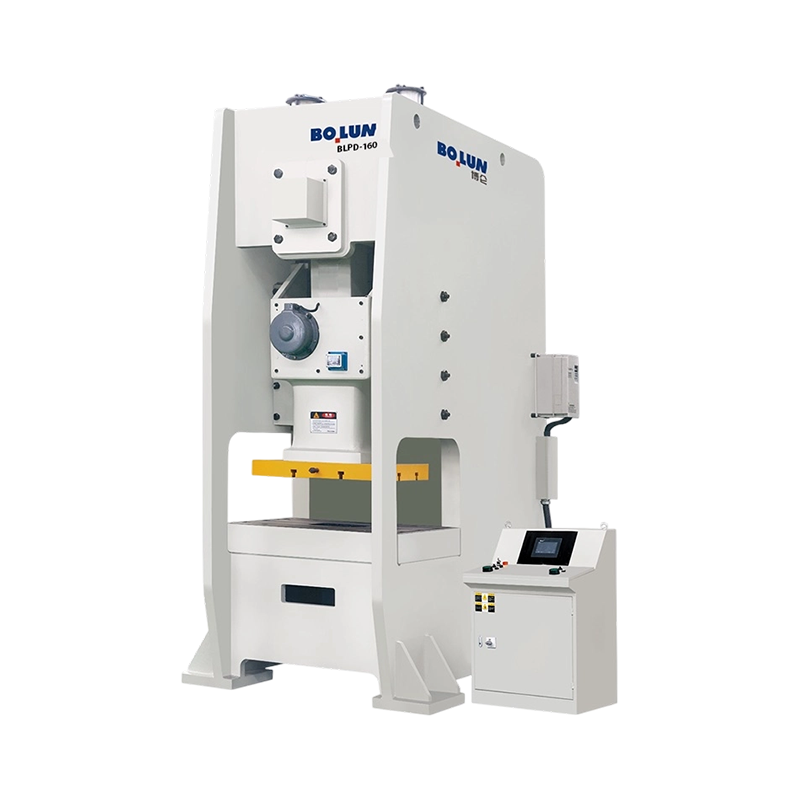
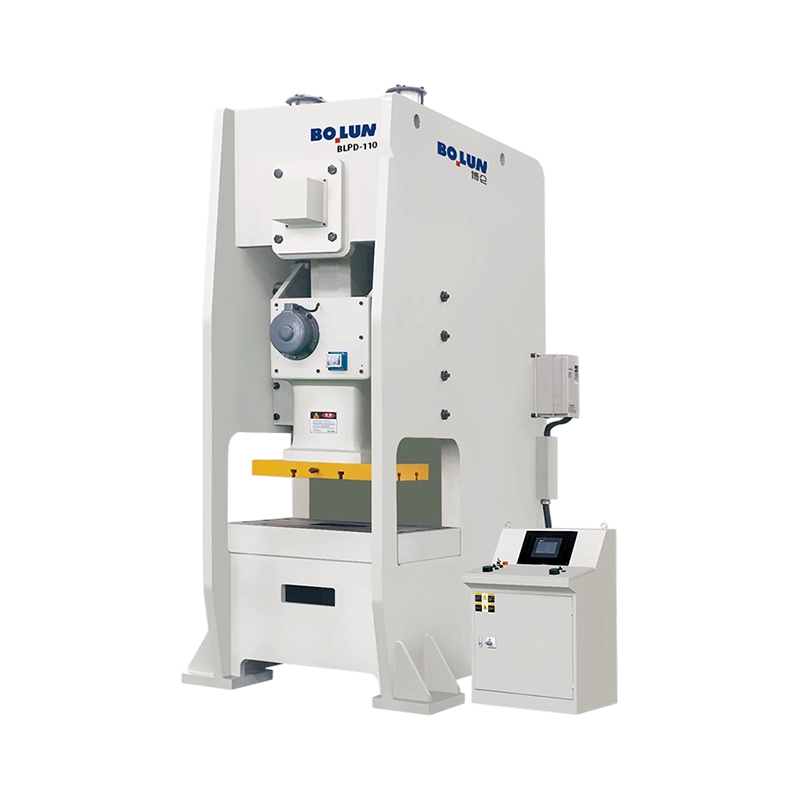
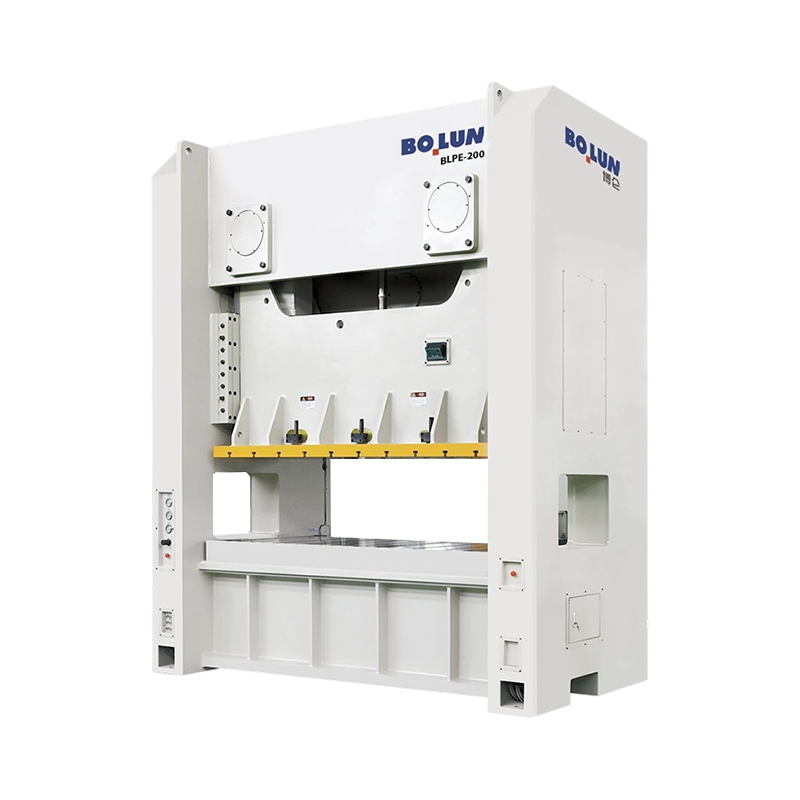
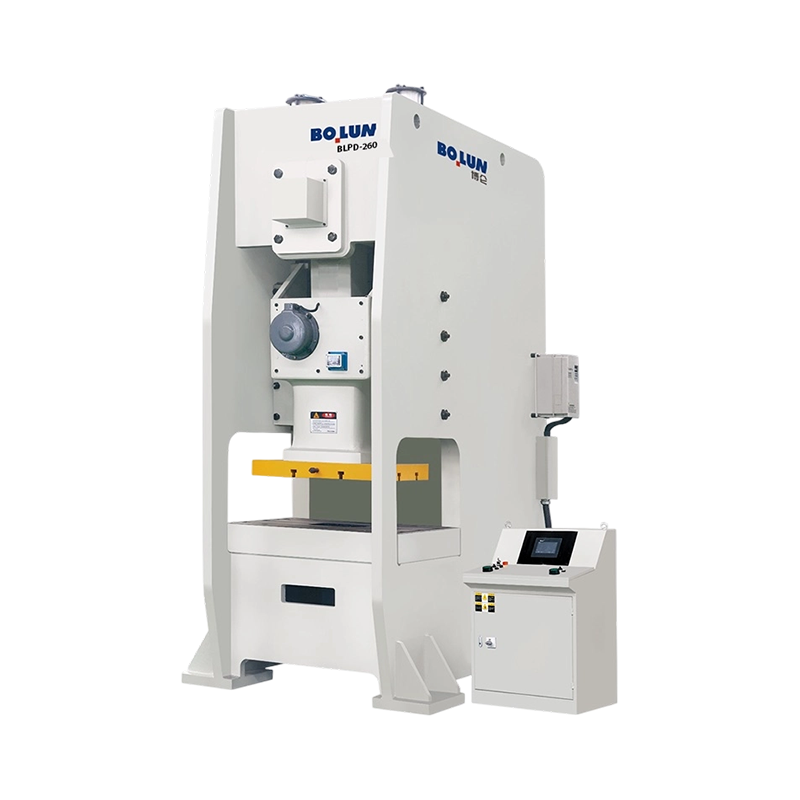
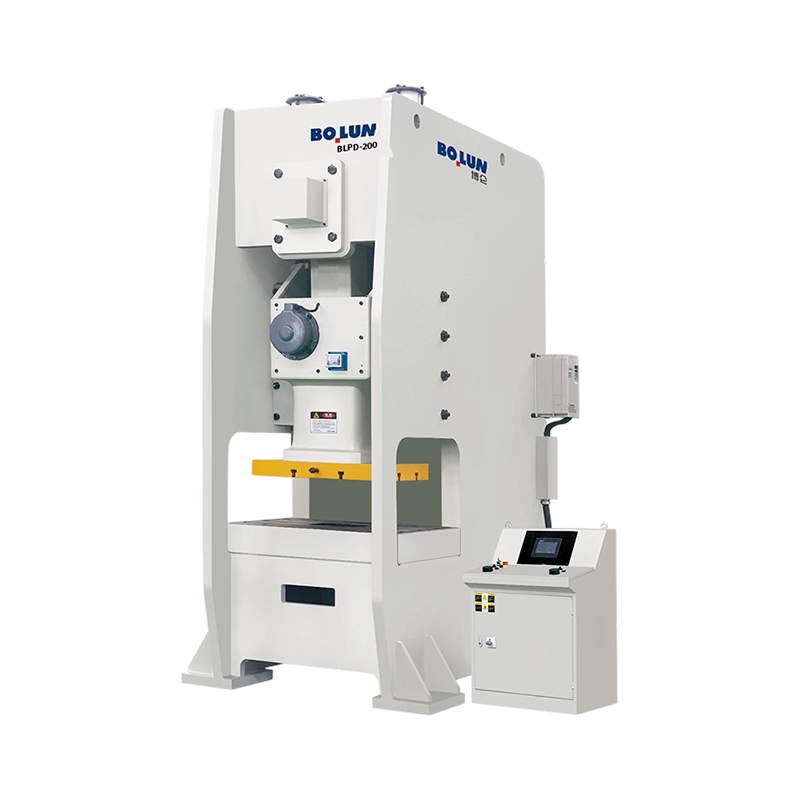
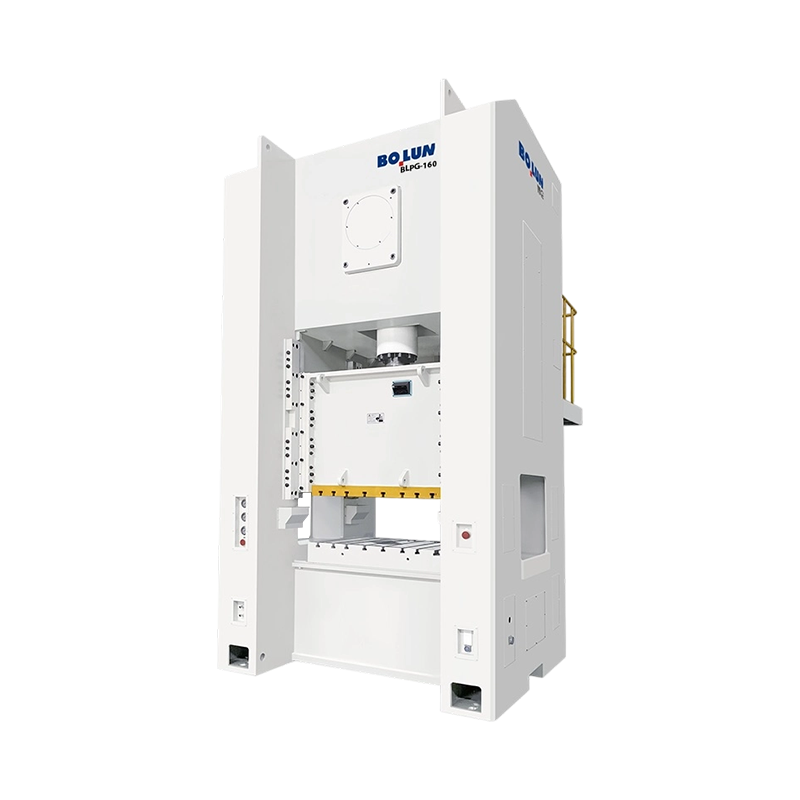
Modern stamping, drawing, bending, and metal forming operations demand equipment that can deliver strength, repeatability, and flexibility without forcing manufacturers to compromise production efficiency. A semi-closed single-point power press designed around balanced stability answers this demand by combining the accessibility often associated with open-type presses and the rigidity usually expected from heavier closed-frame machines. With a nominal capacity of 1600 kN, a high-rigidity 16.8-ton frame, a 200 mm slide stroke, a 980 × 800 mm worktable, electric slide adjustment, digital die height indication, and a 15 kW high-torque drive motor, this press is engineered for stable drawing and forming applications in demanding production environments.
The machine is positioned for manufacturers that require dependable performance in continuous production, especially where tooling changes, forming accuracy, and operational consistency directly influence profitability. Its semi-closed single-point structure makes it suitable for a broad range of medium-to-heavy stamping tasks, including sheet metal forming, deep or moderate drawing, blanking, punching, bending, and progressive die operations where a stable platform is essential. In practical terms, the press offers a useful balance: it provides more structural support than a basic open-type power press while maintaining easier access and more flexible operation than many fully closed-type alternatives.
For manufacturers seeking to upgrade from older mechanical presses, the value of this equipment lies not only in its capacity rating but also in how that capacity is controlled, supported, and maintained over long production cycles. The combination of a high-rigidity frame, controlled slide movement, accurate die height adjustment, and high-torque motor output helps reduce quality variation between parts. In industries where small deviations can create scrap, rework, or assembly problems, these features become more than convenience items; they become core contributors to manufacturing stability.
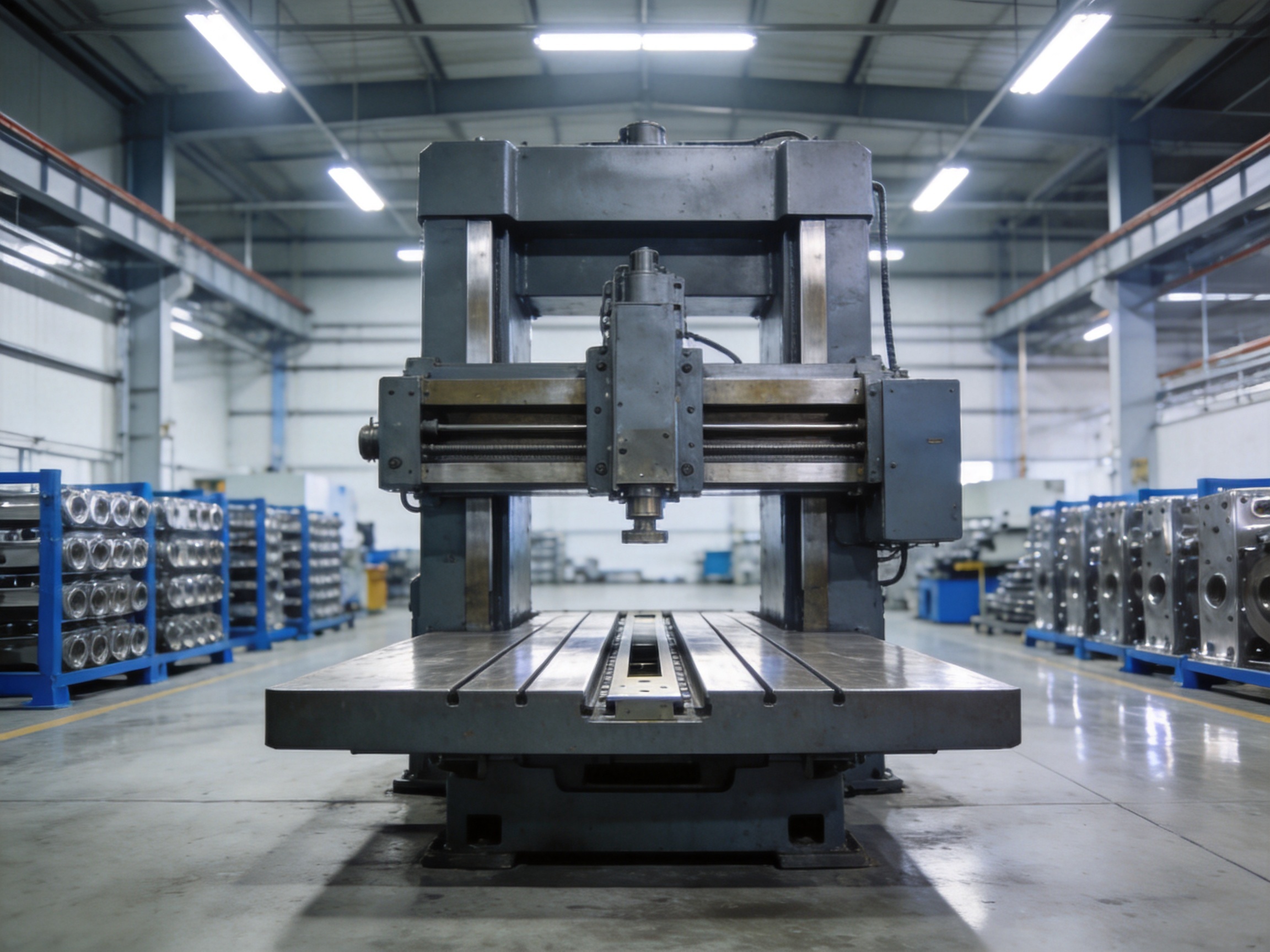
Power presses are commonly categorized into open-type, closed-type, and other specialized press structures. Open-type presses are widely used because they provide easy access to the working area and are convenient for many general stamping applications. However, under heavier loads or more demanding drawing operations, open-frame structures may experience more deflection than desired, particularly when tooling loads are not perfectly centered. Closed-type presses, by contrast, are known for their superior rigidity and high load-bearing capability, but they can be larger, more expensive, and less convenient for certain tooling and maintenance operations.
A semi-closed single-point power press occupies a valuable middle ground. It is designed to increase frame stability compared with many conventional open-type presses while still preserving the accessibility and operational flexibility that production teams appreciate. This makes it especially attractive for manufacturers that need improved forming reliability but do not necessarily require the cost, footprint, or complexity of a fully closed-frame press. The semi-closed concept supports balanced force transmission, helping the machine maintain accuracy when operating near its rated capacity.
The single-point configuration is particularly suitable for applications where the forming load is concentrated around the center of the slide. When properly paired with suitable dies and feeding systems, this press can support efficient batch production and continuous stamping lines. The single-point layout also simplifies maintenance, setup, and operation compared with more complex multi-point systems. For many factories, this simplicity translates into reduced training time, easier troubleshooting, and faster return to productive operation after die changes.
Unlike machines built only for basic punching, this press is described as versatile and balanced-stability oriented. That means its structural and drive features are intended to support a broader set of operations, including drawing and forming processes that place more complex stresses on the slide and frame. In competitive markets, such versatility is important because manufacturers increasingly seek equipment that can adapt to changing orders, varied part geometries, and shorter production runs without requiring major equipment changes.
The following table summarizes the principal technical features and the practical manufacturing benefits associated with them.
| Feature | Specification | Manufacturing Benefit |
|---|---|---|
| Nominal Capacity | 1600 kN | Supports medium-to-heavy stamping, drawing, and forming operations with dependable force output. |
| Frame Structure | High-rigidity semi-closed frame | Improves stability and reduces deformation compared with many conventional open-type structures. |
| Machine Frame Weight | 16.8 tons | Provides mass and rigidity for stable operation under heavy-load conditions. |
| Slide Stroke | 200 mm | Offers suitable movement range for drawing, forming, bending, and varied die applications. |
| Worktable Size | 980 × 800 mm | Provides generous tooling support and clearance for a wide range of dies. |
| Slide Adjustment | Electric slide adjustment | Enables faster, more convenient mold setup and reduces manual adjustment time. |
| Die Height Indication | Digital die height indicator | Improves setup accuracy and repeatability during die changes. |
| Main Motor | 15 kW high-torque motor | Maintains reliable drive performance in continuous production and heavy-load forming. |
One of the most important differentiators of this semi-closed single-point power press is its structural rigidity. In stamping and forming, the frame is not merely a supporting body; it is the foundation of accuracy. When a press frame flexes excessively, the slide may move unevenly, the die clearance can change, and the finished workpiece may show dimensional inconsistency. Over time, excessive deflection may also accelerate die wear and increase maintenance requirements.
The 16.8-ton high-rigidity frame gives the machine the mass and strength needed to resist deformation during high-load operations. Compared with lighter machines in similar capacity classes, a heavier and more stable frame can better absorb forming forces and vibration. This contributes to smoother operation, more consistent part quality, and longer service life. It also helps maintain alignment between the slide and worktable, which is particularly important when forming parts with tight dimensional tolerances.
Against conventional open-type competitors, the semi-closed design offers enhanced support around the working zone. Open-type presses are valuable for access, but their C-frame or gap-frame structures can be more vulnerable to angular deflection under eccentric loads. This press, by using a semi-closed configuration, is intended to reduce those disadvantages while retaining practical working access. The result is a machine that can be more stable in operations where forming resistance is high or where tooling load distribution varies.
When compared with fully closed-type presses, the semi-closed configuration can offer a more economical and operationally flexible solution for many applications. Fully closed presses may provide excellent rigidity, but not every production line needs their size or cost. A semi-closed structure can deliver an effective balance for manufacturers that want stronger performance than a basic open-type press without overinvesting in a machine that exceeds the actual requirements of their product range.
Rigidity also has a direct relationship with safety and operator confidence. A stable machine is less likely to produce sudden quality shifts caused by frame movement or inconsistent slide behavior. When operators know that the machine responds predictably under load, setup becomes more controlled, process tuning becomes easier, and production planning becomes more reliable.
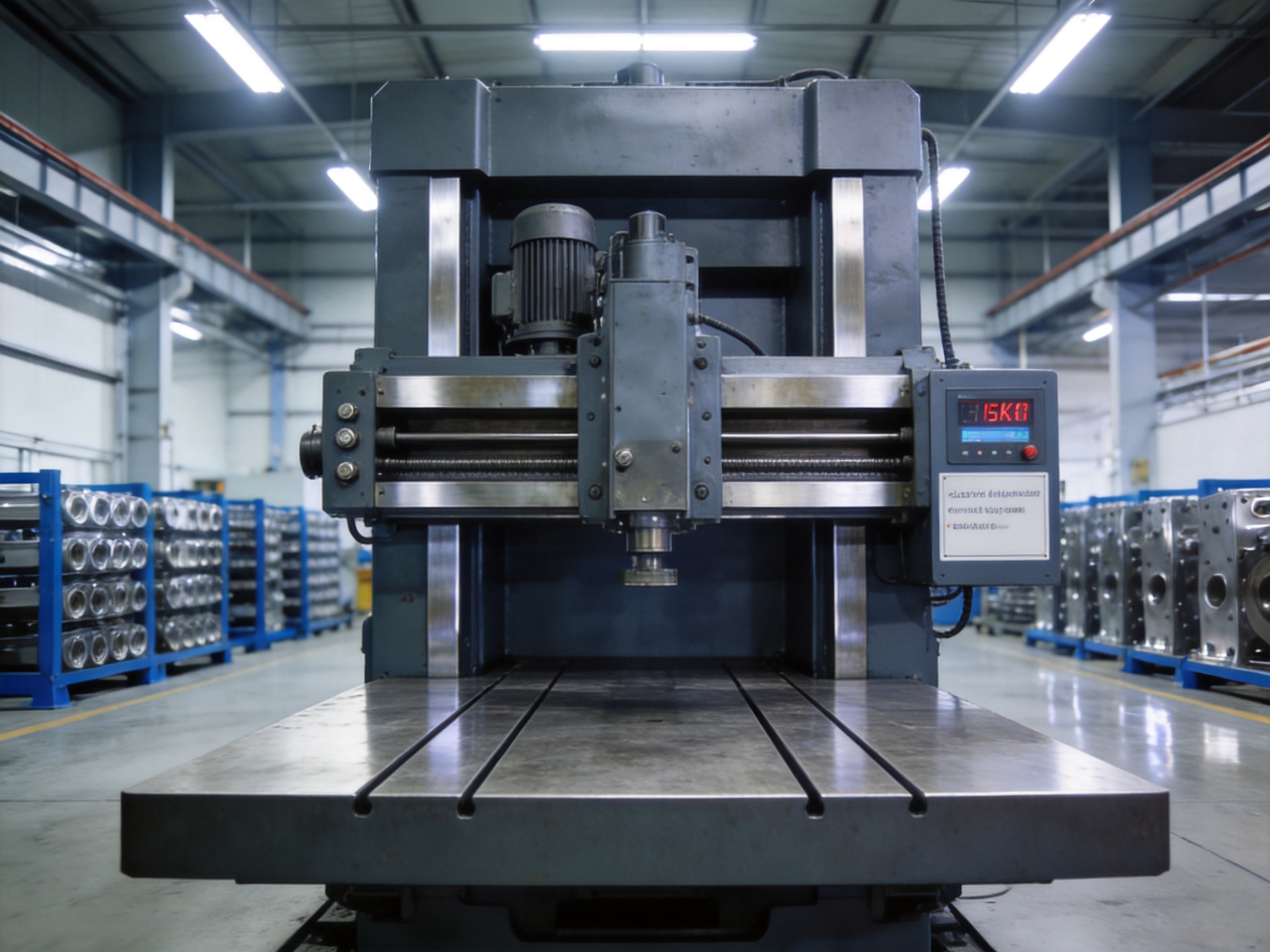
The 200 mm slide stroke provides a practical movement range for a variety of metal forming operations. Stroke length affects how the press interacts with the die and material, especially during drawing, bending, and forming. A stroke that is too limited can restrict tooling design, while a stroke that is excessive for the application may reduce efficiency. The 200 mm stroke gives this press useful adaptability for medium-duty and heavier forming tasks without making the machine unnecessarily complex.
Stable slide motion is essential for producing repeatable parts. In a single-point press, force is transmitted through a central drive arrangement, which is well suited for centrally loaded dies and many common stamping processes. When the slide moves accurately along its guided path, die engagement remains consistent from cycle to cycle. This minimizes variation in forming depth, edge quality, hole position, and bend angle.
The electric slide adjustment system strengthens this advantage by making setup faster and more precise. Manual adjustment can be time-consuming, physically demanding, and more dependent on operator experience. Electric slide adjustment reduces this dependency by allowing more controlled positioning of the slide. In high-mix manufacturing environments, where die changes occur frequently, faster adjustment can significantly reduce downtime.
The digital die height indicator further improves setup repeatability. Die height is a critical parameter because it determines the relationship between the slide, die, and workpiece at the lower point of the press cycle. If die height is set incorrectly, the result can be poor forming quality, die damage, or unsafe operating conditions. A digital indicator allows operators and technicians to confirm setup values quickly and accurately. It also supports standardized process documentation, helping teams repeat successful setups across shifts or production batches.
These features give the machine an important advantage over older presses or low-cost competitors that rely heavily on manual setup and analog estimation. In modern production, the cost of setup error can be high. A single incorrect die height setting may damage tooling worth far more than the value of the parts being produced. By integrating electric adjustment and digital indication, the press supports both speed and risk reduction.
The 980 × 800 mm worktable provides generous support for a wide range of tooling. In practical factory conditions, the worktable is more than a flat surface; it is the interface between the machine and the die system. A larger and stable table allows manufacturers to mount more complex dies, accommodate varied workpiece sizes, and support operations that require additional fixtures or automation connections.
Tooling flexibility is a major production advantage. Manufacturers increasingly face smaller order quantities, more customized parts, and faster delivery expectations. A press that can accept a wider range of dies allows one machine to serve multiple product families. This improves equipment utilization and reduces the need for separate machines dedicated to narrow tasks.
The worktable size is particularly useful for parts requiring stable support over a broader area. When dies are not fully supported, uneven load distribution can lead to vibration, misalignment, or premature wear. The 980 × 800 mm table helps provide a solid foundation for tooling, improving forming consistency and helping extend die service life.
In comparison with smaller competing presses, this table size can reduce restrictions during die design. Tool designers have more freedom to include guiding structures, stripping mechanisms, forming inserts, and transfer features. This can improve the overall efficiency of the stamping process. In production settings where progressive dies or compound dies are used, adequate table area becomes especially important.
At the same time, the semi-closed structure does not impose the same level of access limitations that may be encountered on some closed-frame designs. This helps maintenance teams install, inspect, and remove dies with less difficulty. The balance between table area, frame support, and accessibility is one of the machine’s strongest practical benefits.
The press is driven by a 15 kW high-torque motor, which supports stable operation under heavy-load conditions. In mechanical power press applications, motor performance influences cycle reliability, energy transfer, and the machine’s ability to maintain consistent production rhythm. A motor that lacks torque reserve may struggle during demanding forming operations, causing speed fluctuation, increased wear, or reduced process stability.
A high-torque motor is especially valuable in drawing and forming applications because these processes often require substantial force over a portion of the stroke. The motor must work with the press drive system to deliver sufficient energy at the right moment. When motor output is stable, the press can maintain more consistent cycling and reduce the likelihood of production interruption.
Compared with lower-powered machines in the same general size range, a 15 kW high-torque configuration provides stronger confidence for continuous production. This does not mean that the press should be overloaded beyond its rated capacity; rather, it means the drive system is designed to support the intended workload with reliability. For manufacturers running long shifts, this reliability is a direct contributor to delivery performance.
The drive system also supports operational efficiency. A press that maintains stable motion under load reduces the need for frequent process adjustment. Operators can focus on monitoring material feed, part quality, lubrication, and safety instead of constantly compensating for machine instability. In a competitive manufacturing environment, this kind of consistency can be a decisive factor.
Open-type power presses remain common in many workshops because they are accessible, economical, and suitable for general stamping. However, they may not always provide the rigidity required for more demanding forming operations. When force is applied in a gap-frame structure, the frame can open slightly under load. This effect, often referred to as deflection, can alter die alignment and influence the final part geometry.
The semi-closed single-point press is designed to reduce such limitations. Its balanced-stability structure provides stronger frame support than many open-type competitors, making it more suitable for applications where accuracy must be maintained under higher forming resistance. This is especially important for parts with consistent thickness requirements, tight bends, drawn features, or multiple forming steps.
Another advantage is improved long-term consistency. Open-type presses can perform well in light and medium operations, but repeated high-load use may expose structural weaknesses more quickly. A heavier, more rigid frame helps resist fatigue and deformation, supporting longer service life and more dependable production performance. This can reduce the total cost of ownership even if the initial investment is higher than that of a basic open-type machine.
The semi-closed design also improves confidence in tool protection. When die alignment remains stable, tooling experiences less uneven stress. This can reduce the risk of chipping, cracking, galling, or abnormal wear. For factories using expensive dies, the protection of tooling investment is a major economic benefit.
Finally, the machine’s electric slide adjustment and digital die height indication provide a clear upgrade over many traditional open-type presses. These features reduce setup time, improve accuracy, and support standardized operations. In high-volume production, minutes saved during each setup can accumulate into significant productivity gains. In high-mix production, repeatable setup data can improve quality across multiple short runs.
Closed-type power presses are known for excellent rigidity and are often selected for heavy-duty or high-precision stamping. However, they are not always the most efficient choice for every factory. Fully closed structures can be larger, more expensive, and less convenient for die access. They may also require more floor space and more complex handling systems for die installation and maintenance.
The semi-closed single-point press offers an alternative for manufacturers that require improved rigidity but still value accessibility and cost-effectiveness. It provides a strong structural foundation while avoiding some of the limitations associated with fully enclosed frames. For many medium-to-heavy forming applications, this balance can deliver a better return on investment than purchasing a fully closed machine that exceeds actual production needs.
Another practical advantage is operational flexibility. The semi-closed configuration can be easier to integrate into existing workshops where space, material flow, and operator access are important considerations. A closed-type press may require more extensive layout planning, especially if large dies, automated feeders, or transfer devices are involved. A semi-closed machine can often be adapted more readily to varied production arrangements.
Maintenance accessibility also matters. Production equipment must be inspected, lubricated, adjusted, and repaired over its service life. If maintenance tasks are difficult to perform, factories may delay them, leading to reduced machine life and unexpected downtime. A semi-closed design can make daily checks and tooling operations more convenient while still delivering high stability.
For manufacturers evaluating competing machines, the key question is not simply which press is the strongest, but which press offers the best combination of rigidity, usability, cost, and productivity for the intended applications. This machine’s balanced design addresses that question by giving manufacturers a robust forming platform without unnecessary complexity.
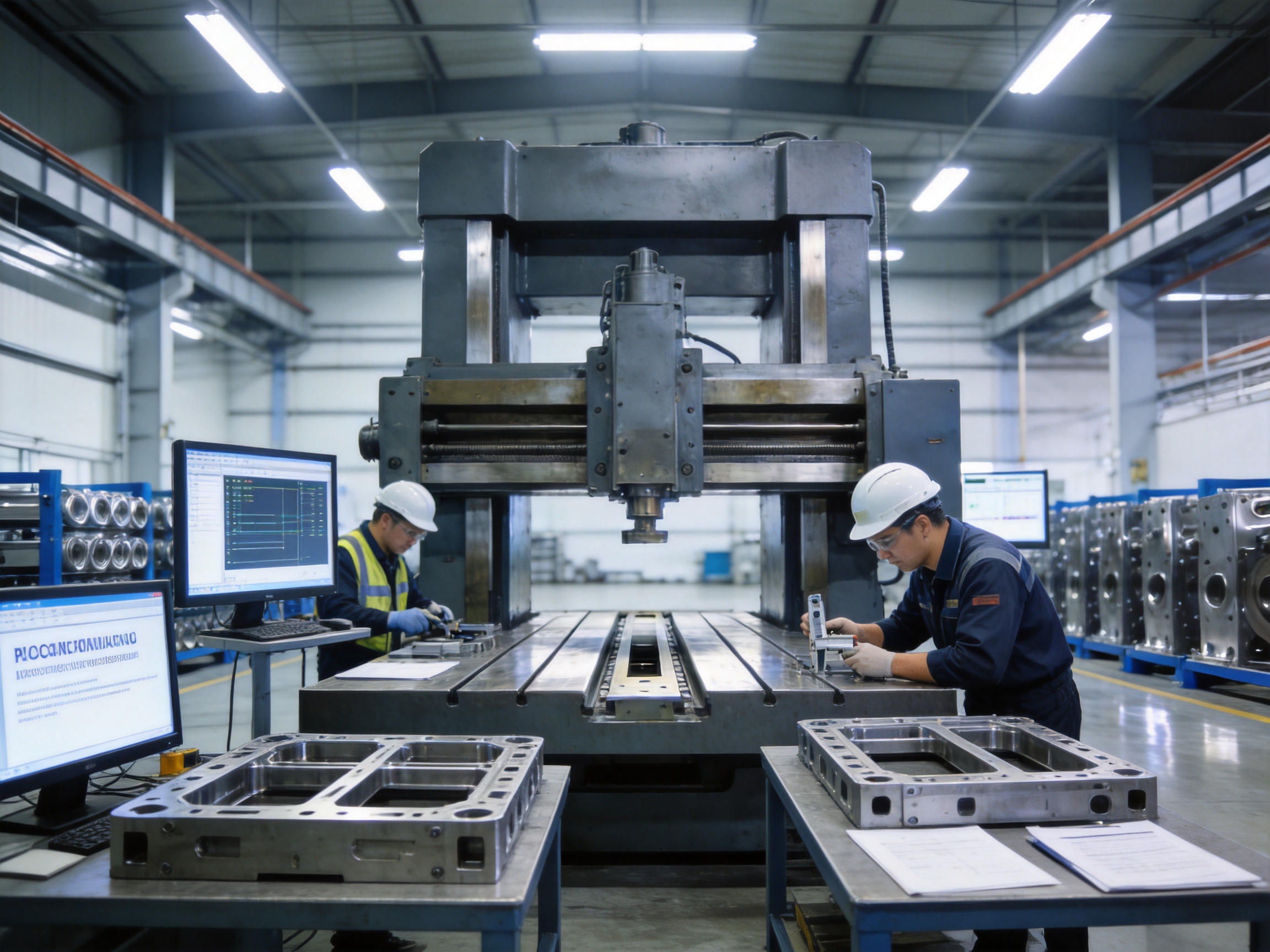
The performance of a power press depends heavily on the quality of its manufacturing process. A strong design must be supported by accurate machining, disciplined assembly, strict inspection, and consistent quality control. Zhejiang Bolun High-Precision Machinery Co., Ltd. is located in Zhejiang, one of China’s important regions for precision manufacturing, and has developed over two decades in the machinery manufacturing industry. The company integrates research and development, design, production, sales, and service, giving it control over the complete equipment lifecycle.
The company’s manufacturing strength begins with technical accumulation. Over many years in forming equipment and machinery manufacturing, it has built a production management system intended to support professional, mature, and efficient operations. This background matters because power presses are not simple fabricated products. They require expertise in structure, mechanical transmission, material behavior, machining accuracy, assembly alignment, and safety-conscious industrial design.
Advanced precision processing equipment supports the production of core press components. In a machine of this capacity, the accuracy of the frame, slide, guide surfaces, worktable, and drive components has a direct influence on final performance. Precision machining helps ensure that mating surfaces align correctly, that movement remains smooth, and that forces are distributed as intended. Poor machining can undermine even a strong theoretical design, while careful processing helps convert engineering intent into reliable production performance.
The company’s full-chain production approach is another strength. By covering stages from basic design and core component development to final assembly, the manufacturer can coordinate design requirements with practical production methods. This reduces the risk of mismatch between engineering drawings and manufacturing execution. It also allows quality problems to be traced and corrected more effectively.
Non-standard customization capability is particularly important for industrial users. Every factory has different material types, part sizes, die requirements, feeding methods, production volumes, and floor layouts. A manufacturer capable of customized design and manufacturing can help customers adapt the press to specific production needs rather than forcing them to accept a one-size-fits-all solution. This capability is valuable for companies producing specialized parts or entering new product fields.
Quality is described as a lifeline of the manufacturer, and this philosophy is especially relevant for high-precision forming equipment. A power press must operate under repeated high-force cycles, often for many years. Even minor defects in machining, assembly, lubrication, or alignment can become serious problems when multiplied across thousands or millions of strokes.
The company has established a finished product inspection system that exceeds ordinary industry expectations. This means that inspection is not limited to a visual check before shipment. A responsible inspection system should include dimensional verification, assembly accuracy checks, functional testing, operational stability assessment, and confirmation that key control features perform as required. For the customer, such inspection reduces installation risk and supports faster commissioning.
Rigorous quality control on every process and component is essential to stable precision and long service life. Frame components must be manufactured and assembled to resist deformation. Slide movement must remain smooth and controlled. Electrical adjustment systems must respond accurately. Digital indicators must provide reliable readings. The motor and transmission components must withstand heavy-duty use. Each of these details contributes to the customer’s final experience.
Compared with competitors that rely mainly on final-stage inspection, process-based quality control offers a stronger safeguard. When quality is monitored throughout production, defects can be detected before they become embedded in the finished machine. This reduces rework, improves consistency, and helps ensure that each press leaving the factory reflects the intended standard.
In demanding production environments, equipment buyers increasingly evaluate not only the machine specifications but also the manufacturer’s quality culture. A press may look similar on paper to competing models, yet its real-world performance can differ greatly depending on how it was manufactured and inspected. The manufacturer’s emphasis on rigorous control, advanced processing, and customer-oriented service provides an important foundation for long-term reliability.
Research and development capacity allows a press manufacturer to adapt to market changes and customer requirements. Metal forming technology continues to evolve as manufacturers demand higher precision, lower waste, improved automation compatibility, and better operator safety. A company that integrates R&D and design with production is better positioned to improve machine structures, optimize performance, and respond to specialized applications.
The design team behind this type of forming equipment must consider multiple engineering factors. These include load distribution, frame rigidity, slide guidance, motor torque, die mounting space, adjustment convenience, maintenance access, and production safety. The balanced-stability concept indicates an engineering focus on reducing unwanted movement and improving forming consistency. This is not achieved by a single component but through the coordination of the entire machine structure.
One-stop design and manufacturing services are particularly valuable for customers with special requirements. For example, a customer may need a press suited for a particular die height range, special automation interface, unusual part size, or production line layout. With integrated design and manufacturing, the company can evaluate these needs early and recommend practical solutions. This improves the likelihood that the delivered machine will match actual production conditions.
International management perspective also contributes to product competitiveness. Global customers often expect not only reliable equipment but also clear communication, standardized service, documentation support, and professional project coordination. A manufacturer that combines local production strength with international management experience can better serve customers across different markets.
A power press is a long-term production asset, and its value depends on more than its initial performance. Pre-sales consultation, in-sales support, and after-sales guarantees all influence the customer’s total experience. The manufacturer’s customer-oriented service system is therefore an important part of the product value proposition.
Pre-sales consultation helps customers select the correct press for their process. Choosing a press only by nominal capacity can be risky. Buyers must also consider stroke length, table size, die height, material thickness, production speed, forming complexity, and future product plans. Professional consultation reduces the chance of under-specifying or over-specifying equipment.
In-sales support helps ensure that technical requirements, production schedules, and delivery arrangements are properly coordinated. For customized or semi-customized equipment, communication during manufacturing is especially important. Customers may need updates on configuration, inspection, and shipping preparation. Clear support during this stage reduces uncertainty and strengthens trust.
After-sales service is critical once the machine enters production. Installation guidance, commissioning support, operator training, maintenance advice, and spare parts coordination can all affect uptime. Even a well-built press requires correct operation and regular maintenance. A manufacturer that remains responsive after delivery helps customers protect their investment and maintain production continuity.
Continuous production places special demands on a power press. The machine must maintain precision under repeated loading, resist vibration, support stable die operation, and allow operators to perform routine tasks efficiently. This semi-closed single-point press is designed for reliable performance in such conditions, especially where heavy-load forming is involved.
The high-rigidity frame helps preserve alignment across long production runs. This stability reduces the likelihood of gradual quality drift, where parts slowly move out of specification as the machine heats, vibrates, or experiences repeated force cycles. Stable production allows quality teams to maintain tighter process control and reduces the need for frequent inspection interruptions.
The digital die height indicator supports repeatability when production returns to a previously used die. Instead of relying on operator memory or approximate settings, teams can use recorded values to restore the correct setup more quickly. This is especially useful in factories with multiple shifts or frequent product changeovers.
The electric slide adjustment system contributes to reduced downtime. In competitive manufacturing, downtime is one of the most expensive hidden costs. Even short delays during setup can reduce daily output, especially when several die changes occur in one shift. By making adjustment faster and more controlled, the press supports higher effective utilization.
The 15 kW high-torque motor supports stable cycling under demanding conditions. When the drive system maintains consistent performance, material feeding, part ejection, and downstream handling become more predictable. This is important when the press is integrated with feeders, straighteners, decoilers, conveyors, or robotic handling equipment.
This type of press can be applied across many industries that require metal stamping and forming. Suitable applications may include appliance components, automotive brackets, electrical hardware, machinery parts, metal housings, small structural elements, and general industrial stamped products. Its 1600 kN capacity makes it suitable for parts that require substantial forming force but do not necessarily require the scale of very large presses.
Drawing operations benefit from the machine’s rigidity and stroke. When material is drawn into a die cavity, consistent pressure and alignment are necessary to avoid wrinkling, tearing, or uneven wall thickness. The stable frame and controlled slide movement help support more predictable material flow.
Bending applications benefit from repeatable slide positioning and die height accuracy. Bend angle variation can result from material differences, tooling wear, or inconsistent press movement. While material springback must always be managed, a stable press reduces one major source of variation.
Blanking and punching operations benefit from accurate die alignment. Proper clearance between punch and die determines cut quality, burr height, and tool life. If the press frame deflects or the slide alignment shifts, cut quality can deteriorate. The semi-closed high-rigidity structure helps maintain stable working conditions.
Forming operations involving multiple features can also benefit from the 980 × 800 mm worktable. More complex dies may require additional guide posts, springs, nitrogen cylinders, or inserts. Adequate table area improves the feasibility of mounting such tooling and maintaining a stable process.
When evaluating a power press, buyers often compare purchase price first. However, the real cost of a press includes setup time, scrap rate, maintenance frequency, tooling wear, downtime, energy use, and long-term reliability. A machine with stronger structure, better adjustment systems, and reliable manufacturing quality may deliver superior return on investment even if its initial price is not the lowest.
Reduced scrap is one of the most direct economic benefits of stable press performance. If each production run produces fewer defective parts, material costs decline and delivery reliability improves. In metal forming, material waste can be expensive, especially when working with coated steel, stainless steel, aluminum alloys, or specialty materials.
Reduced die wear is another important benefit. Dies are often among the most expensive assets in a stamping operation. Stable slide movement and frame rigidity help maintain correct die engagement, reducing uneven stress and extending tool life. Longer die life reduces both direct tooling cost and downtime for maintenance or replacement.
Faster setup improves machine utilization. The electric slide adjustment and digital die height indicator help shorten changeover time and reduce setup uncertainty. This is valuable in both high-volume and high-mix production. In high-volume operations, faster setup allows production to resume sooner after maintenance or die changes. In high-mix operations, it makes frequent changeovers more practical.
Longer machine service life also improves investment value. A rigid, well-manufactured press can remain productive for many years if properly maintained. When customers buy from a manufacturer with strong quality control and service support, they gain additional confidence that the machine can remain a reliable production asset over time.
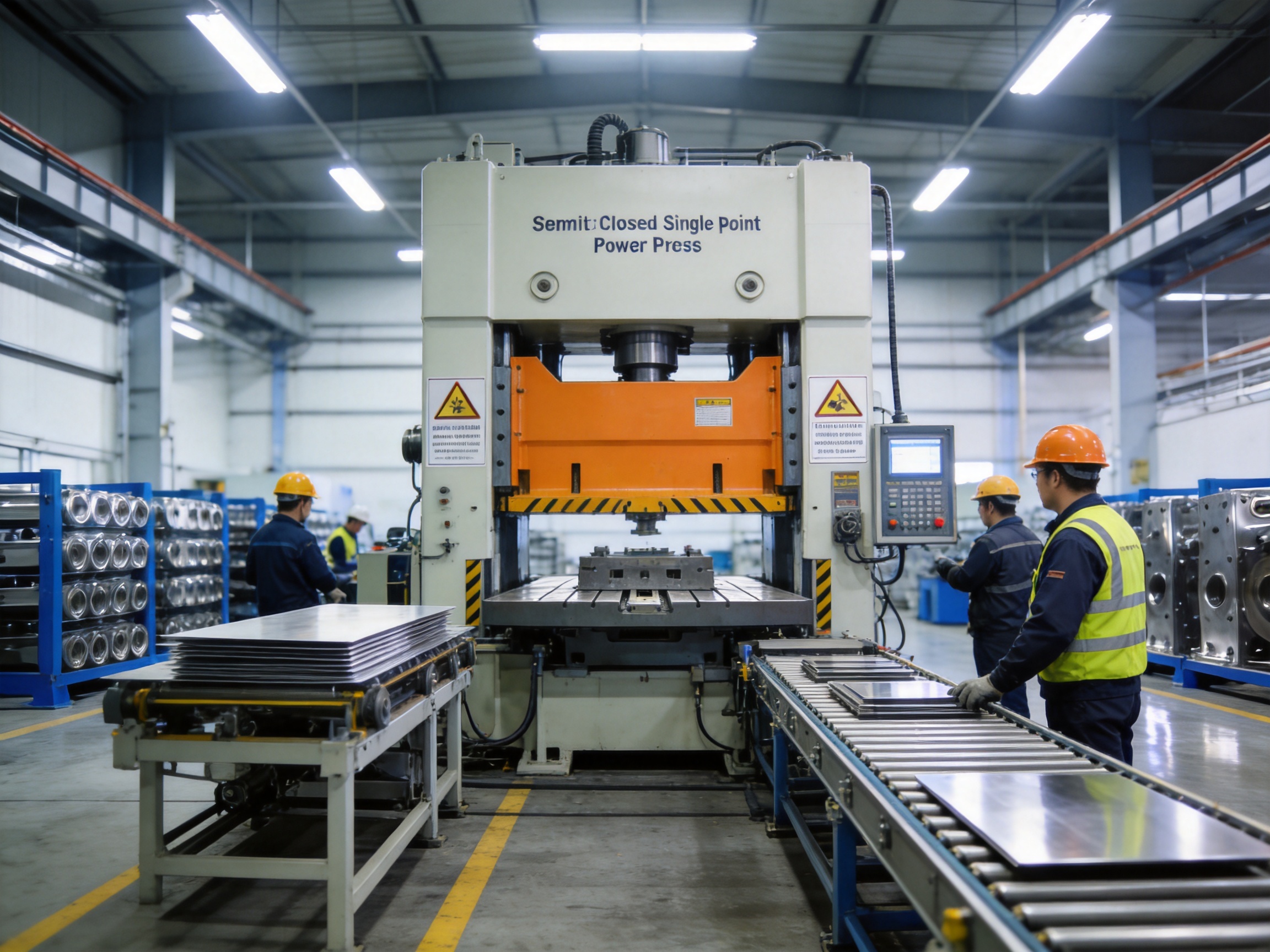
In a crowded market, many power presses may appear similar by capacity rating alone. However, experienced buyers know that nominal capacity is only one part of performance. The real question is whether the machine can deliver that force accurately, repeatedly, and safely under actual production conditions. This semi-closed single-point press stands out because it combines capacity, rigidity, adjustment convenience, tooling flexibility, and manufacturing quality into a balanced package.
Its 1600 kN nominal capacity addresses a broad range of forming needs. Its 16.8-ton high-rigidity frame provides a strong foundation for stability. Its 200 mm slide stroke gives practical versatility. Its 980 × 800 mm worktable supports varied tooling. Its electric slide adjustment and digital die height indicator improve setup speed and accuracy. Its 15 kW high-torque motor supports dependable production under load. Together, these features create value that extends beyond a simple specification sheet.
The manufacturer’s strengths further reinforce the product advantage. With two decades of experience, integrated R&D, advanced processing equipment, full-chain production, non-standard customization, strict inspection, and customer-oriented service, the company provides more than a machine; it provides an industrial equipment solution. This matters for customers who need confidence not only at the time of purchase but throughout the machine’s working life.
For factories upgrading from lighter open-type presses, the machine offers improved rigidity and forming stability. For factories considering closed-type presses, it may offer a more flexible and economical alternative. For production teams seeking easier setup, the electric and digital adjustment features provide practical daily benefits. For managers focused on long-term cost, the structure and quality control support lower risk and stronger reliability.
It is well suited for medium-to-heavy stamping, drawing, bending, blanking, punching, and forming operations where stable force, reliable slide movement, and sufficient tooling space are required. It is especially useful for manufacturers that need more rigidity than a conventional open-type press but do not require the full size or cost of a heavy closed-frame press.
The semi-closed structure provides stronger support around the working area than many open-type frame designs. This helps reduce frame deflection under load, maintain die alignment, and improve part consistency. At the same time, it preserves better access than many fully closed-type presses, making tooling and maintenance more convenient.
The frame weight reflects the machine’s structural strength and stability. A heavier, high-rigidity frame can better absorb forming forces and resist deformation during repeated heavy-load operation. This contributes to longer service life, better precision retention, and more reliable production quality.
A 200 mm stroke provides a practical movement range for varied tooling applications, including drawing and forming processes that need sufficient slide travel. It helps the machine handle more than simple punching tasks and increases its usefulness across different production requirements.
The 980 × 800 mm worktable gives manufacturers more room for dies, fixtures, and tooling structures. A larger and stable table improves support for complex dies, helps maintain alignment, and expands the range of parts that can be produced on the machine.
Electric slide adjustment reduces manual labor and speeds up mold setup. The digital die height indicator improves accuracy and repeatability by allowing operators to confirm setup values clearly. Together, these features reduce downtime, lower setup risk, and support consistent production across shifts.
The 15 kW high-torque motor provides reliable driving power for heavy-load forming and continuous production. It helps the press maintain stable operation when forming resistance is high, reducing the chance of speed fluctuation or process instability.
Compared with many open-type presses, this semi-closed model offers improved rigidity and better resistance to deformation under load. It is therefore more suitable for demanding forming applications where part accuracy and die alignment are important.
Compared with closed-type presses, it can provide a more flexible and cost-effective solution for many medium-to-heavy applications. It offers enhanced stability while maintaining better access for die installation, maintenance, and production adjustment.
Zhejiang Bolun High-Precision Machinery Co., Ltd. provides integrated R&D, design, production, sales, and service. The company has two decades of machinery manufacturing experience, advanced precision processing equipment, a full-chain production system, customization capability, strict finished product inspection, and customer-oriented service support.
A high-performance power press must do more than deliver force. It must deliver controlled force through a stable structure, accurate slide motion, practical tooling space, reliable drive power, and repeatable setup systems. This semi-closed single-point power press achieves those goals by combining a 1600 kN nominal capacity with a 16.8-ton high-rigidity frame, 200 mm slide stroke, 980 × 800 mm worktable, electric slide adjustment, digital die height indication, and a 15 kW high-torque motor.
Its value lies in balance. It is stronger and more stable than many conventional open-type presses, yet more accessible and cost-effective for many users than fully closed-frame alternatives. It supports stable drawing and forming operations, reduces setup time, improves die height accuracy, and provides the rigidity required for dependable continuous production.
Behind the machine is a manufacturer with deep industry experience, advanced processing capability, integrated production control, customization strength, and a quality-first philosophy. These factors are essential because the long-term performance of a press depends not only on design but also on how precisely it is manufactured, inspected, installed, and supported.
For manufacturers seeking a reliable forming solution that can improve productivity, protect tooling investment, support varied applications, and maintain precision under demanding conditions, this semi-closed single-point power press offers a compelling and practical choice. It represents a modern approach to mechanical forming equipment: stable, versatile, efficient, and built for long-term industrial value.
Altan, T., and Tekkaya, A. E. Sheet Metal Forming: Fundamentals and Applications. ASM International.
Boljanovic, V. Sheet Metal Forming Processes and Die Design. Industrial Press.
Kalpakjian, S., and Schmid, S. R. Manufacturing Engineering and Technology. Pearson Education.
Lange, K. Handbook of Metal Forming. Society of Manufacturing Engineers.
Suchy, I. Handbook of Die Design. McGraw-Hill Education.
Wick, C., Benedict, J. T., and Veilleux, R. F. Tool and Manufacturing Engineers Handbook: Forming. Society of Manufacturing Engineers.


Contact Us

bolunpress@gmail.com

+86-575-83362228

+86-15158259588

+86-575-83362999

+86-15158259588

Hangzhou Office Add: No. 332 Wangjiang East Road, Shangcheng District

No.1 Linjiang Road East, Xiaren, Jinting Town, Shengzhou City, Zhejiang Province, China
Ready to Begin?
Get in Touch

Now!

ZHEJIANG BOLUN
 English
 中文简体
中文简体