
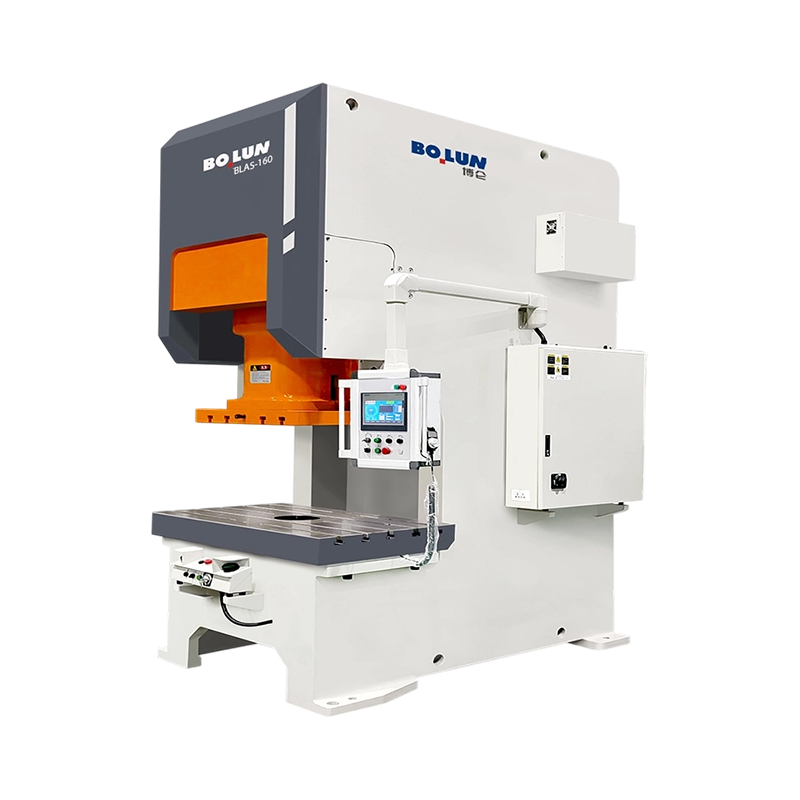
In modern stamping and forming production, manufacturers are under constant pressure to improve output, reduce variation, shorten die changeover time, and maintain stable quality even when processing thicker or more difficult materials. The BLAS-160 Heavy-Duty Digital-Forming Open-Type Single-Point Servo Power Press is designed for exactly this environment. As an open-type single-point servo power press with a nominal capacity of 1600 kN and maximum continuous working energy of 9000 J, it provides the strength, controllability, and production flexibility required by automotive parts, appliance components, hardware products, electrical enclosures, structural brackets, and other medium-to-heavy stamping applications.
This article presents a detailed overview of the BLAS-160, focusing on its servo-driven forming advantages, heavy-duty structural design, digital process control, production value, and the manufacturing strengths behind the equipment. It also explains how Zhejiang Bolun High-Precision Machinery Co., Ltd. supports product reliability through advanced processing capability, rigorous quality inspection, customization experience, and a complete service system.
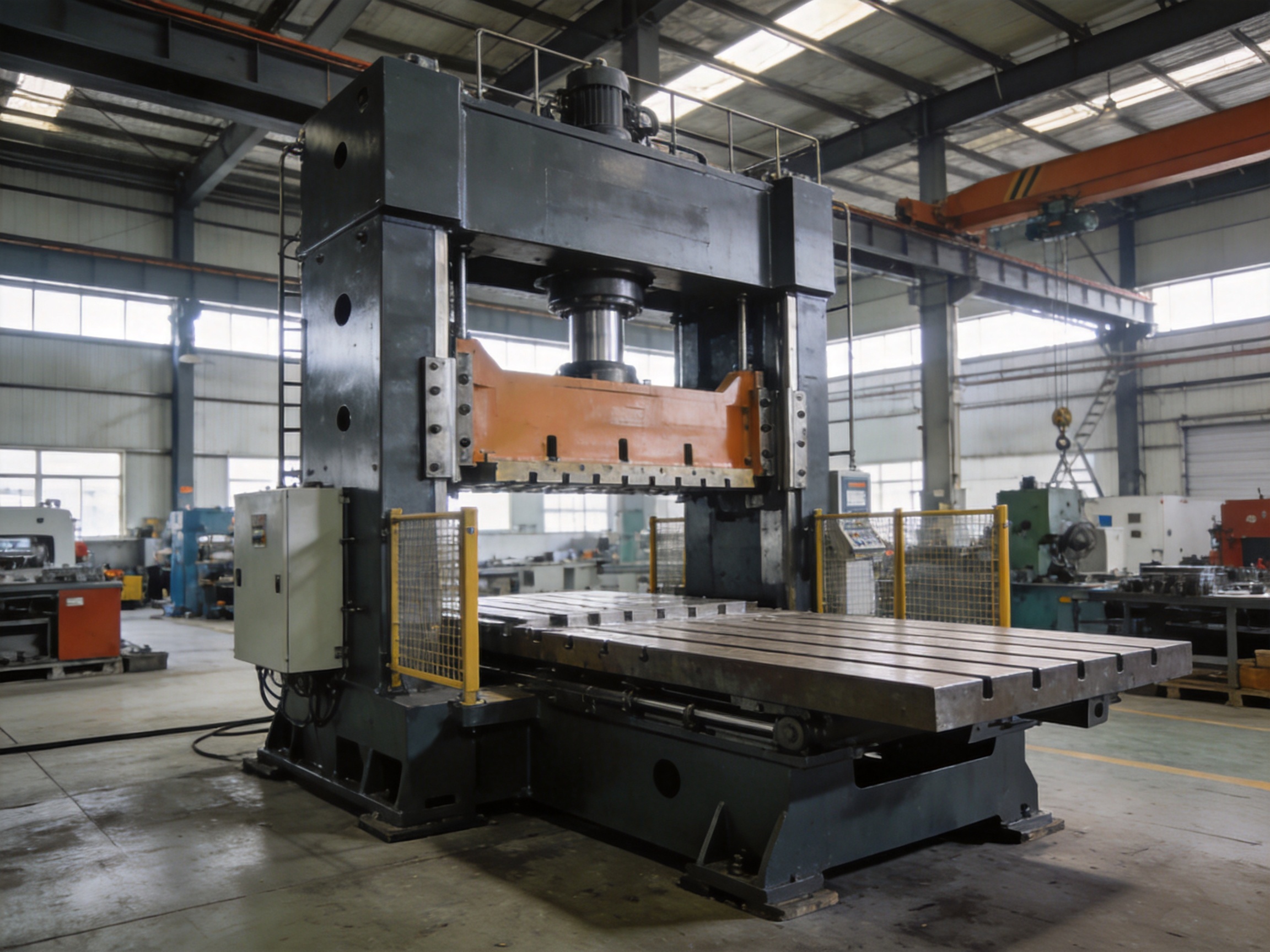
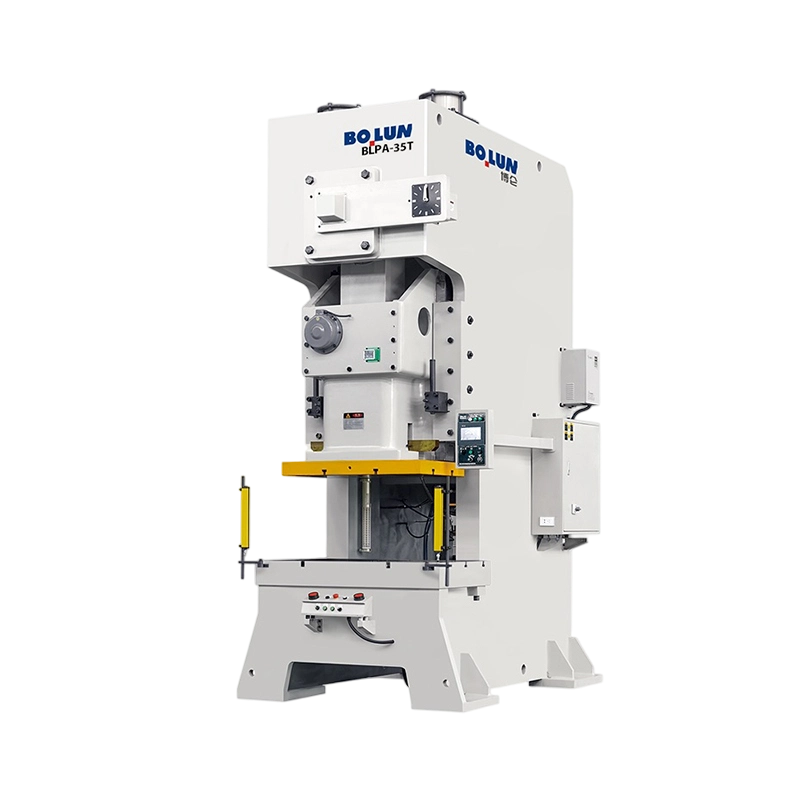
The BLAS-160 belongs to the open-type power press category and is specifically configured as an open-type single-point servo power press. Open-type presses are valued for convenient die access, operator visibility, and relatively flexible production layouts. Compared with closed-type presses, an open-type structure can simplify feeding, maintenance, and die installation in many production settings. For manufacturers that process medium and large parts but still require efficient accessibility, this structure offers a practical balance between working space and productivity.
The 1600 kN nominal capacity places the BLAS-160 in a heavy-duty class among open-type single-point presses. This capacity allows the machine to handle demanding stamping, blanking, forming, shallow drawing, bending, trimming, and calibration operations. Its 1200 × 760 mm worktable provides generous die support for larger molds, making it suitable for parts used in automotive manufacturing, household appliances, metal furniture, construction hardware, and industrial electrical products. The large table is especially beneficial when dies require wide support surfaces, balanced clamping, and stable material positioning.
Unlike conventional crank presses that operate with a fixed mechanical motion profile, the BLAS-160 uses servo drive technology to control slide movement more intelligently. This programmable motion capability enables the user to adapt the slide curve to the forming process rather than forcing every process to fit one fixed motion pattern. In practical production, this can improve forming quality, reduce impact, lower noise, extend die life, and create more stable results across repeated cycles.
The BLAS-160 is defined by several key performance features: a 1600 kN nominal capacity, a maximum continuous working energy of 9000 J, a 1200 × 760 mm worktable, programmable slide motion, stored die parameters, tonnage monitoring, and a color touch-screen human-machine interface. These features combine mechanical strength with digital control, allowing the press to serve both high-load forming and data-oriented production management.
| Item | Specification or Feature | Production Benefit |
|---|---|---|
| Product Type | Open-Type Single-Point Servo Power Press | Convenient die access, flexible layout, and suitable visibility for stamping operations |
| Nominal Capacity | 1600 kN | Supports heavy-duty stamping, forming, bending, trimming, and blanking work |
| Maximum Continuous Working Energy | 9000 J | Provides stable energy support for thicker materials and high-load forming cycles |
| Worktable Size | 1200 × 760 mm | Accommodates larger and heavier dies used in automotive, appliance, and industrial parts production |
| Drive System | Servo-driven programmable motion | Allows controlled slide speed, adjustable motion curves, and repeatable forming profiles |
| Control Interface | Color touch-screen HMI | Improves parameter adjustment, operator interaction, and process visibility |
| Process Monitoring | Tonnage monitoring system | Provides real-time load feedback and helps prevent overload or abnormal forming conditions |
| Parameter Management | Stored die parameters | Supports faster setup, repeatable production, and reduced dependence on manual experience |
The nominal capacity of 1600 kN gives the BLAS-160 the forming force needed for robust production. In stamping, insufficient tonnage can lead to incomplete forming, unstable part dimensions, premature tool damage, or frequent process interruptions. By providing a strong capacity margin for many medium-to-heavy applications, this press helps manufacturers maintain consistent output and reduce the risk of operating near equipment limits.
Working energy is equally important. A press may have a high nominal capacity, but if its available working energy is insufficient during continuous operation, performance can drop when processing thick materials or larger parts. The BLAS-160 offers a maximum continuous working energy of 9000 J, supporting repeated high-load forming cycles with stability. This matters in production lines where uptime, cycle consistency, and part quality directly affect cost per component.
For manufacturers producing brackets, structural panels, reinforced appliance parts, sheet-metal frames, and metal housing components, the combination of high capacity and energy reserve helps maintain forming reliability. It also allows production engineers to consider wider application coverage with one machine, improving equipment utilization and reducing the need to purchase multiple presses for overlapping operations.
One of the most important advantages of the BLAS-160 is its servo-driven programmable motion. Traditional mechanical presses generally rely on fixed stroke characteristics determined by the crank or eccentric mechanism. While conventional machines are suitable for many standard jobs, their limited motion flexibility can restrict forming quality when materials, part geometry, or die requirements become more demanding.
The servo system of the BLAS-160 allows the slide movement to be controlled according to the forming task. The operator can adjust motion characteristics and store process parameters for repeat use. Instead of using the same slide behavior for every die, production teams can select motion profiles that better match blanking, forming, bending, or drawing requirements. This helps stabilize material flow, reduce shock at contact, and improve dimensional repeatability.
For example, in a forming process that requires slower movement near the bottom of the stroke, servo motion can reduce forming speed at the critical area while maintaining efficient movement during non-working travel. In blanking or trimming, different motion settings may be selected to improve productivity while protecting the die. This flexibility provides a clear advantage over many conventional open-type presses that cannot easily adapt slide motion to process conditions.
The ability to program and repeat slide behavior also improves process standardization. Skilled operators often develop machine settings based on experience, but if settings are not stored accurately, quality can vary between shifts or after die changeover. With stored die parameters and digital motion control, the BLAS-160 helps reduce dependence on memory and manual adjustment. This supports more stable production management and easier training for operators.
The 1200 × 760 mm worktable is a key design feature for manufacturers using larger dies. A large table provides better support for complex tooling and helps distribute load more evenly. This is particularly useful in automotive and appliance component production, where parts often require extended die layouts, multiple forming zones, guide structures, or integrated trimming and piercing sections.
In production, die stability is not only a matter of convenience; it directly influences accuracy and tool life. If a die is not fully supported or if clamping space is insufficient, vibration and uneven force distribution may increase. Over time, this can lead to wear, misalignment, or inconsistent part dimensions. The BLAS-160’s spacious worktable helps support larger tooling arrangements and gives technicians more flexibility during installation and maintenance.
The open-type frame structure further improves accessibility. Operators and maintenance personnel can approach the working area more easily for die setup, alignment checks, material feeding adjustments, and routine cleaning. In factories where frequent product changes are required, convenient access can reduce non-productive time and make small-batch or multi-variety production more practical.
The BLAS-160 is equipped with a tonnage monitoring system that provides real-time load feedback. This feature is important because press overload, material feeding errors, double-sheet feeding, die obstruction, or improper lubrication can create abnormal forming forces. Without monitoring, such issues may not be detected until after a defective part is produced or a die is damaged.
Real-time load feedback allows operators to observe forming conditions and respond to deviations. When load values move outside expected ranges, the system can help indicate process instability. This is valuable for quality assurance, preventive maintenance, and die protection. In high-capacity production environments, early detection of abnormal tonnage can prevent costly downtime and reduce the risk of tool failure.
Compared with competitor machines that rely mainly on operator observation or post-process inspection, integrated tonnage monitoring gives the BLAS-160 a stronger foundation for controlled manufacturing. It supports data-based decision-making and helps production engineers build a more reliable forming process. In industries where component quality must remain consistent over long production runs, this capability is increasingly important.
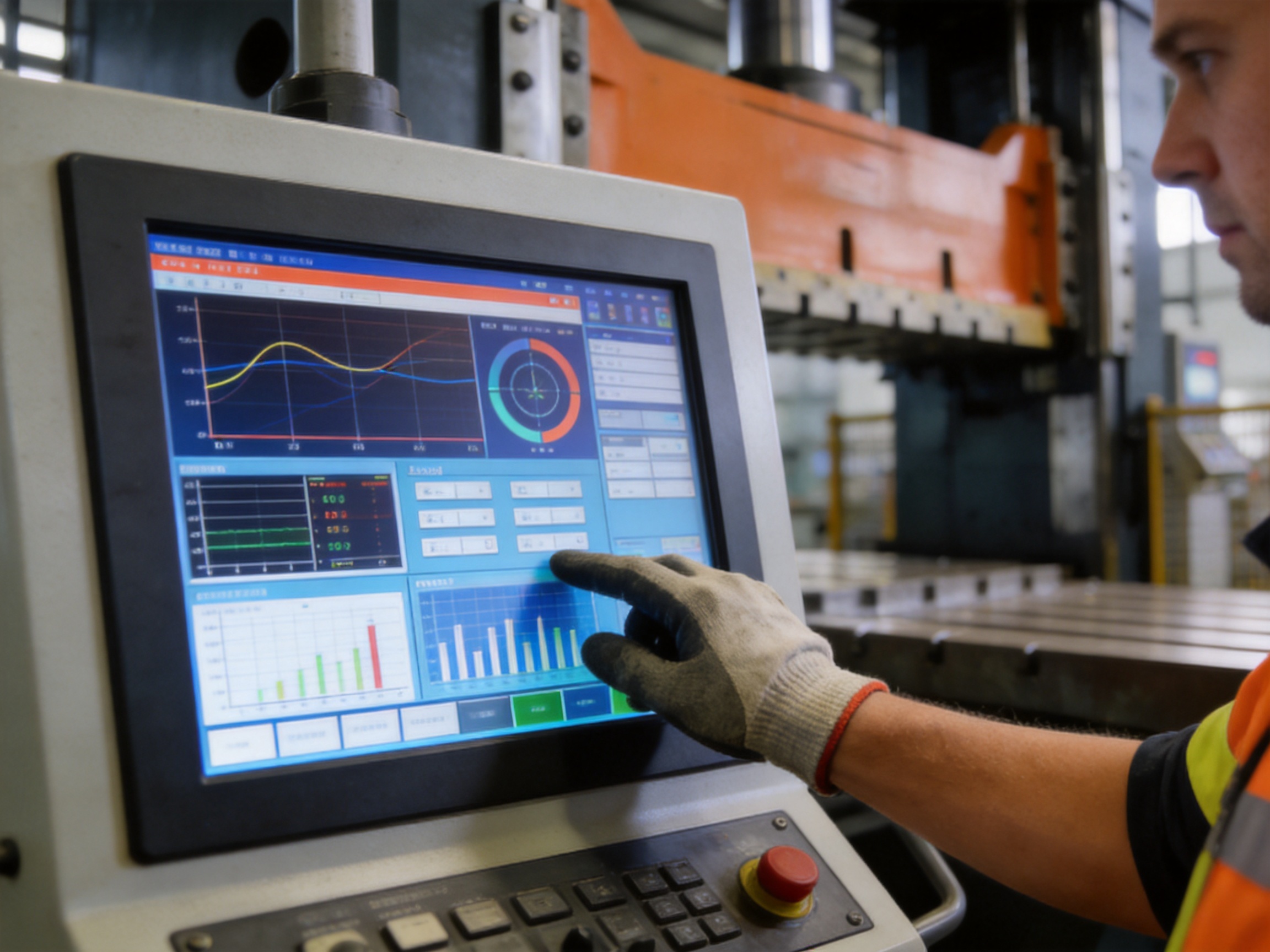
The color touch-screen human-machine interface improves the way operators interact with the press. A clear HMI makes it easier to adjust parameters, observe operating status, manage stored die information, and check process feedback. In traditional production environments, manual switches and mechanical indicators may be sufficient for simple work, but digital forming equipment requires an interface that makes advanced functions accessible and practical.
The HMI of the BLAS-160 supports real-time visibility and user-friendly operation. Operators can adjust machine settings with better clarity, reducing the chance of input errors. Production supervisors can standardize parameters for repeat jobs, improving consistency from one batch to another. Maintenance teams can also use system information to understand machine behavior and identify potential issues more efficiently.
This digital control environment is one of the reasons the BLAS-160 is suitable for modern manufacturing. As factories move toward intelligent production and traceable processes, equipment interfaces must support not only operation but also process control. The combination of servo motion, tonnage monitoring, and touch-screen control helps bridge the gap between traditional stamping and data-oriented forming production.
When compared with conventional mechanical presses, the BLAS-160 offers several important advantages. The first is motion flexibility. A conventional press generally operates according to a fixed mechanical relationship, while the servo power press can provide programmable slide movement. This means the BLAS-160 can better adapt to various materials, die types, and forming requirements.
The second advantage is repeatability through stored parameters. In many workshops, press setup depends heavily on operator experience. Although skilled workers remain essential, digital parameter storage helps preserve correct settings and makes repeat production easier. When a die is used again, the system can recall the relevant motion and process settings, reducing setup time and improving consistency.
The third advantage is improved process awareness. With tonnage monitoring and an HMI, the BLAS-160 provides feedback that many older presses do not deliver. Instead of relying solely on sound, vibration, or final part inspection, operators can see load behavior during production. This helps identify abnormal conditions earlier and supports more systematic quality control.
The fourth advantage is potential die life improvement. Because servo motion can reduce unnecessary impact and optimize forming speed, it can help reduce stress on tooling in suitable applications. Lower impact and smoother forming conditions may extend maintenance intervals and reduce die repair costs. While results depend on the specific material and die design, programmable motion gives production teams more tools to protect valuable tooling assets.
The fifth advantage is production flexibility. A servo press can often handle a wider range of forming tasks with more adjustable control. For manufacturers serving multiple industries or producing a wide product mix, this flexibility can increase the long-term value of the equipment. Instead of limiting the press to a narrow process window, the BLAS-160 supports a broader operating strategy.
Open-type presses are widely used because they are accessible and efficient for many stamping applications. However, not all open-type presses provide the same level of rigidity, energy, or control. The BLAS-160 stands out by combining a heavy-duty 1600 kN capacity with digital servo forming and a large worktable. This combination makes it more advanced than many standard open-type presses that focus mainly on basic stamping output.
For factories that want the accessibility of an open-type structure but do not want to sacrifice process intelligence, the BLAS-160 provides a strong option. It delivers user-friendly access for die operation while adding servo control, tonnage monitoring, and HMI-based management. This makes it suitable for manufacturers upgrading from traditional mechanical equipment to more intelligent and controllable forming systems.
In competitor comparisons, some machines may offer capacity but lack advanced motion programming. Others may offer digital controls but not enough working energy for high-load continuous production. The BLAS-160 addresses both sides: it has heavy-duty forming strength and the control architecture needed for modern stamping requirements.
Zhejiang Bolun High-Precision Machinery Co., Ltd. is located in Zhejiang, an important center of precision manufacturing in China. The company has developed through two decades of experience in machinery manufacturing and has grown into a modern enterprise integrating research and development, design, production, sales, and service. This complete operating structure allows the company to control product development from concept to final machine delivery.
The company’s strength is based on accumulated industry knowledge, technical breakthroughs, and a mature production management system. In the field of forging and casting machinery, reliable equipment depends on design accuracy, machining capability, assembly discipline, and strict inspection. The company’s development history reflects a practical understanding of these requirements and a commitment to stable, high-precision forming equipment.
A key manufacturing advantage is the company’s full-chain production capability. Instead of relying only on assembly, the company participates deeply in design, core component development, processing, inspection, and final machine integration. This helps improve coordination between engineering intent and manufacturing execution. When machine structures, drive systems, control systems, and finishing processes are considered together, the final product can achieve better reliability and consistency.
Advanced precision processing equipment is another important foundation. Heavy-duty presses require accurate machining of frame components, slide mechanisms, bearing surfaces, connection points, and assembly references. Even small errors in large machine structures can affect slide accuracy, alignment, vibration, and service life. By using mature processing capability and a disciplined manufacturing environment, the company supports the precision demanded by high-load production equipment.
Modern stamping customers often require more than a standard machine. They may need special worktable arrangements, production line integration, automation interfaces, feeding system coordination, safety configurations, or process-specific functions. Zhejiang Bolun High-Precision Machinery Co., Ltd. has developed non-standard customization capabilities to meet these needs. This allows customers to obtain equipment solutions aligned with their actual production requirements rather than adapting production around unsuitable machines.
The company relies on a robust design team to provide one-stop design and manufacturing services for products with special specifications and functions. This is valuable for manufacturers facing unique materials, special part geometries, limited plant space, or automation requirements. A supplier with customization capability can help analyze production needs, recommend machine configurations, and support implementation from design to operation.
For the BLAS-160, customization knowledge is especially useful because servo presses often serve complex production environments. Different customers may prioritize speed, forming quality, die protection, automation, or integration with digital management systems. A strong engineering team can help adapt machine functions and process parameters to maximize equipment value.
Quality is described by the company as its lifeline, and this philosophy is essential in power press manufacturing. A press is not a disposable machine; it is a long-term production asset expected to operate under repeated impact and high force for many years. To ensure stable performance, quality must be controlled at every stage, from material selection and machining to assembly, adjustment, testing, and final inspection.
The company has established a finished product inspection system that exceeds basic industry expectations. Rigorous quality control is performed on processes and components to ensure stable precision and long service life under high-intensity operating conditions. This is especially important for a 1600 kN servo power press, where structural stability, drive control, tonnage feedback, and slide accuracy must work together reliably.
For customers, strict inspection reduces the risk of unexpected installation problems, early wear, or inconsistent performance. It also supports faster commissioning and more predictable production planning. A well-inspected machine gives users greater confidence when introducing new dies, processing thicker materials, or expanding production volume.
The company actively adopts advanced international production management experience and integrates it with China’s manufacturing environment. This combination is important because press manufacturing requires both systematic management and practical production efficiency. International management concepts can improve standardization, documentation, process discipline, and quality traceability, while local manufacturing strength can support flexibility, responsiveness, and cost-effective production.
A scientific, humane, and efficient management system helps align departments such as engineering, procurement, machining, assembly, quality inspection, sales, and service. For customers purchasing capital equipment, this coordination matters because delays or communication gaps can affect project schedules. A mature management system helps ensure that machine specifications, production status, inspection results, and delivery requirements are handled professionally.
The company’s culture emphasizes being steadfast, rigorous, open, and mutually supportive. This mindset supports long-term reliability in a field where shortcuts can lead to serious consequences. Power presses require disciplined engineering, careful assembly, and responsible service. A rigorous company culture helps sustain these values across product development and customer support.
The BLAS-160 reflects a broader industrial trend toward intelligent and digital stamping equipment. Manufacturers are increasingly seeking machines that provide controllable motion, process feedback, operator-friendly interfaces, and repeatable parameter management. These capabilities support smart factory development, even when the production line is not fully automated.
Servo power presses are important in this transition because they combine mechanical forming force with digital control. The BLAS-160 allows the stamping process to be adjusted, observed, and repeated with greater precision than conventional machines. As factories introduce production data systems, quality traceability, and automated feeding, presses with digital interfaces and monitoring functions become easier to integrate into advanced manufacturing environments.
Zhejiang Bolun High-Precision Machinery Co., Ltd. has stated its intention to increase investment in intelligent and digital stamping equipment. This strategic direction supports future development of machines like the BLAS-160 and demonstrates awareness of global machinery industry trends. Customers choosing this equipment are not only purchasing a press; they are also working with a manufacturer focused on the future of precision forming technology.
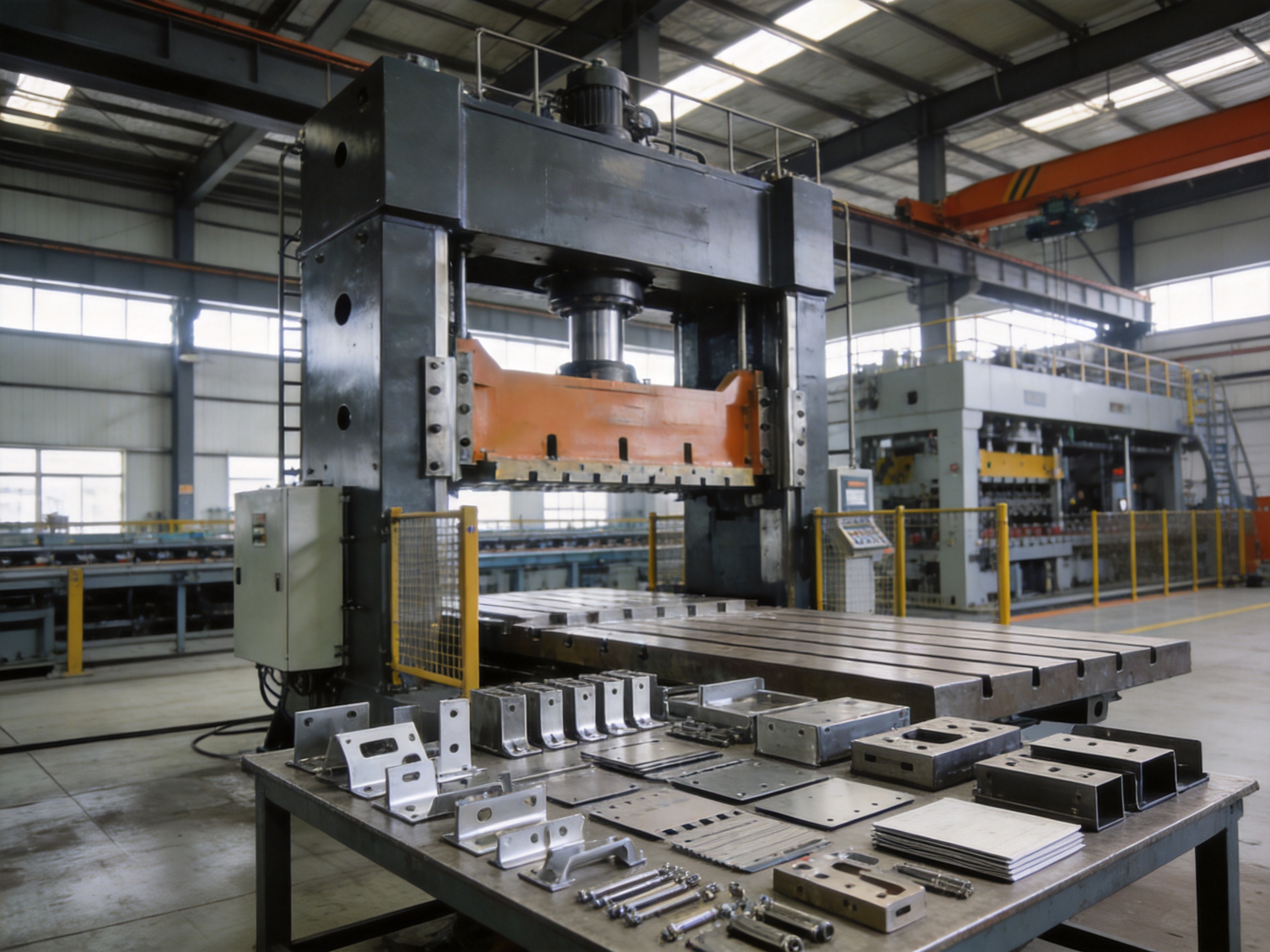
In automotive component production, the BLAS-160 can be used for forming and stamping parts such as brackets, reinforcements, panels, mounting plates, and structural sheet-metal elements. Automotive manufacturing requires stable dimensions, repeatable forming quality, and strong control over process variation. The press’s tonnage monitoring and programmable motion help support these requirements.
In home appliance manufacturing, the machine can support parts such as outer panels, internal supports, frames, covers, and metal housings. Appliance components often require clean edges, stable geometry, and efficient batch production. The large worktable allows larger dies to be installed, while the servo drive can help optimize forming movement according to part geometry.
In industrial hardware and electrical equipment production, the BLAS-160 can be used for enclosures, mounting plates, structural hardware, protective covers, and bracket systems. These parts may involve thick sheets or complex bends, making high capacity and stable working energy important. The press’s digital controls help manufacturers manage multiple product types with greater consistency.
For factories handling custom metal parts, flexibility is especially valuable. The ability to store die parameters and adjust motion profiles can reduce setup uncertainty when switching between jobs. This helps workshops serve diverse customers while maintaining stable quality and efficient production scheduling.
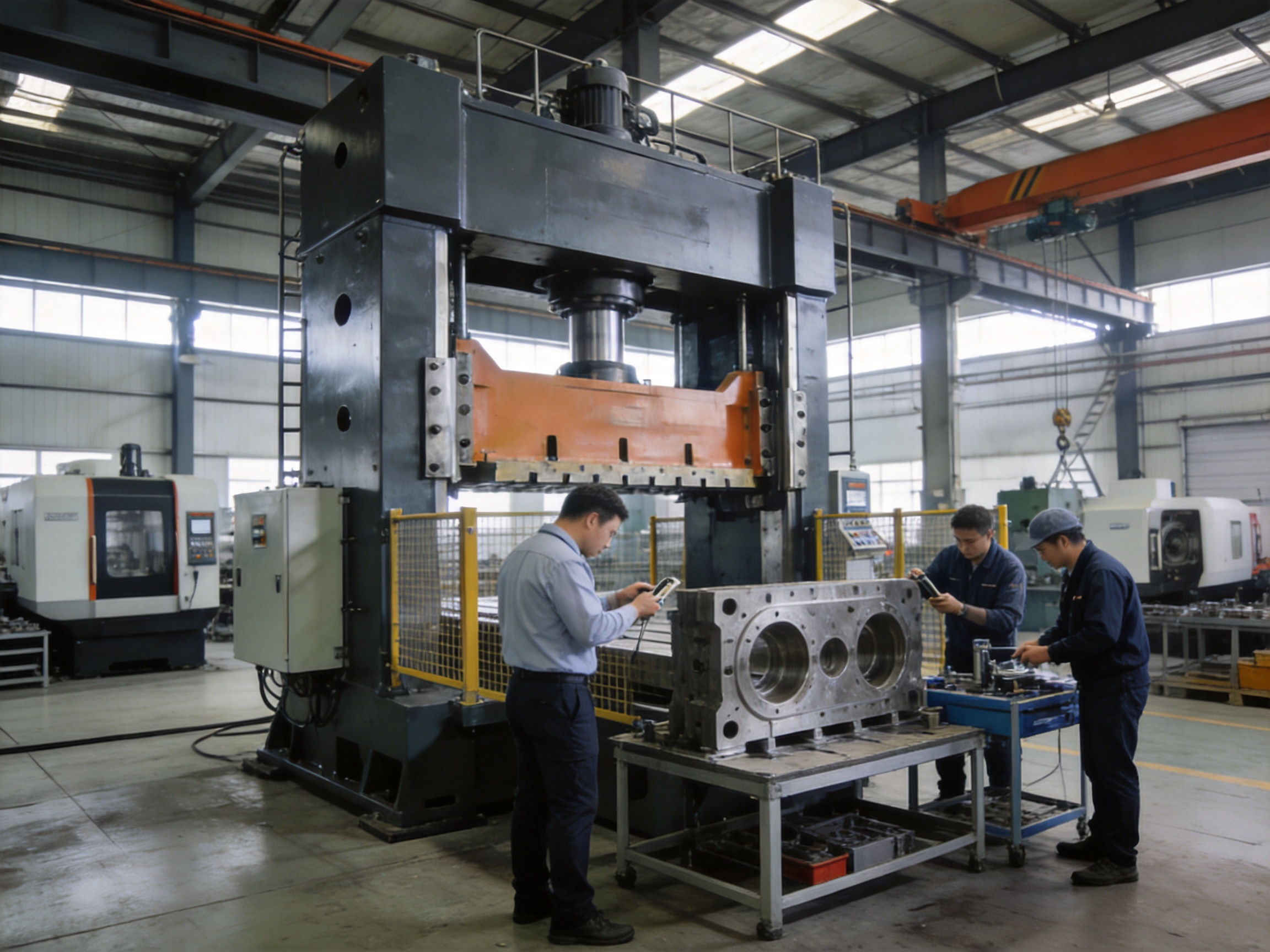
Operator efficiency is an important factor in stamping productivity. A machine may have high capacity, but if setup is difficult or parameter adjustment is confusing, production benefits may be reduced. The BLAS-160 addresses this through its open structure, touch-screen interface, parameter storage, and monitoring functions. Operators can access the die area more conveniently, adjust settings more clearly, and observe load feedback during production.
The digital interface also supports training. New operators can learn standardized procedures rather than relying entirely on informal instruction. Stored die parameters reduce the risk of incorrect setup when experienced personnel are unavailable. Supervisors can establish approved operating settings, helping maintain process discipline across different shifts.
Maintenance personnel also benefit from better visibility. Tonnage data and operating feedback can help identify abnormal conditions before they develop into serious failures. Routine inspection, lubrication checks, and die maintenance can be planned more effectively when the production team has reliable process information.
Dies are among the most valuable assets in stamping production. A complex die can cost a significant amount to design, manufacture, debug, and maintain. Damage caused by overload, misfeed, poor alignment, or excessive impact can stop production and create high repair costs. The BLAS-160 helps protect dies through controlled servo motion and real-time tonnage monitoring.
Programmable motion allows users to reduce unnecessary shock in selected processes. Slower forming speed near critical areas can reduce stress on the die and improve part quality. Tonnage monitoring provides a warning basis when abnormal load conditions occur. Together, these functions help create a more controlled forming environment.
Cost control is not only about the purchase price of a press. Long-term operating cost includes downtime, scrap, die maintenance, operator time, energy use, setup duration, and quality losses. By improving repeatability, monitoring, and process flexibility, the BLAS-160 can contribute to a lower total cost of ownership in suitable applications.
Buyers evaluating a heavy-duty open-type power press should consider more than force capacity alone. They should review forming energy, table size, control capability, monitoring features, manufacturer experience, service support, and customization options. The BLAS-160 offers a strong combination of these factors, making it suitable for production environments that require both power and intelligence.
The machine is particularly attractive for manufacturers upgrading from conventional mechanical presses. It provides familiar open-type accessibility while adding servo-driven control and digital process management. This allows factories to improve production quality without completely abandoning established stamping workflows.
It is also suitable for manufacturers planning future automation or smart production upgrades. The HMI, stored parameters, and monitoring functions support a more organized production environment. As demand grows for traceability and standardized manufacturing, these capabilities become increasingly valuable.
Zhejiang Bolun High-Precision Machinery Co., Ltd. provides a customer-oriented service system covering pre-sales consultation, in-sales support, and after-sales guarantees. This full-cycle service is important because press purchasing involves technical evaluation, configuration selection, production planning, installation, commissioning, training, and long-term maintenance.
During pre-sales consultation, customers can clarify production requirements, material conditions, die sizes, tonnage needs, and automation expectations. During the manufacturing and delivery stage, coordinated support helps ensure that machine specifications match the intended application. After installation, after-sales service contributes to stable operation, troubleshooting, and user confidence.
The company can be contacted through its business communication channels for project discussions and technical inquiries. Its manufacturing base is located in Shengzhou City, Zhejiang Province, China, and it also maintains an office presence in Hangzhou. This geographic position supports access to China’s precision manufacturing supply chain and industrial expertise.
The BLAS-160 is an open-type single-point servo power press. It combines the accessibility of an open-type press with servo-driven programmable slide motion, making it suitable for medium-to-heavy stamping and forming applications.
The machine provides a nominal capacity of 1600 kN, allowing it to handle demanding forming, blanking, trimming, bending, and stamping work for many industrial applications.
Continuous working energy affects how reliably the press can perform repeated high-load operations. The BLAS-160’s 9000 J maximum continuous working energy supports stable production when forming thicker materials or using larger dies.
Servo-driven motion allows the slide curve to be adjusted for different processes. This can improve forming quality, reduce impact, support repeatability, protect dies, and make the press more flexible than conventional mechanical presses with fixed motion profiles.
The worktable measures 1200 × 760 mm. This provides sufficient space for large and heavy-duty dies commonly used in automotive, appliance, electrical, and industrial sheet-metal component production.
Tonnage monitoring provides real-time load feedback during operation. It helps detect abnormal forming conditions, supports die protection, improves process control, and contributes to consistent quality in high-capacity production environments.
The color touch-screen HMI allows operators to adjust parameters, observe machine status, manage stored die settings, and interact with the press more efficiently. It improves usability and supports standardized operation.
The BLAS-160 is suitable for automotive components, appliance parts, metal hardware, electrical enclosures, industrial brackets, structural sheet-metal parts, and other applications requiring stable heavy-duty forming.
Compared with conventional open-type presses, the BLAS-160 offers programmable servo motion, digital parameter management, tonnage monitoring, and a user-friendly HMI. These features improve flexibility, process visibility, and repeatability.
The machine is supported by Zhejiang Bolun High-Precision Machinery Co., Ltd.’s integrated R&D, design, production, sales, and service capabilities. The company emphasizes precision processing, full-chain production, non-standard customization, rigorous inspection, and customer-oriented support.
The BLAS-160 Heavy-Duty Digital-Forming Open-Type Single-Point Servo Power Press is a powerful and intelligent forming solution for manufacturers requiring high capacity, stable working energy, process flexibility, and reliable digital control. Its 1600 kN nominal capacity, 9000 J maximum continuous working energy, 1200 × 760 mm worktable, programmable servo motion, tonnage monitoring, and color touch-screen HMI make it a strong choice for demanding stamping environments.
Its advantages over many conventional competitors come from the combination of mechanical strength and digital controllability. It is not merely a heavy press; it is a process-oriented machine designed to help manufacturers improve forming repeatability, reduce setup uncertainty, protect dies, and support modern production management. For companies producing automotive parts, appliance components, industrial hardware, electrical enclosures, and thick sheet-metal products, these advantages can translate into meaningful production value.
Behind the machine is a manufacturer with two decades of machinery experience, advanced precision processing capability, a mature production management system, full-chain manufacturing strength, customization expertise, and strict quality inspection. This foundation supports the reliability and long-term service value expected from high-capacity forming equipment. As global manufacturing continues to move toward intelligent, precise, and digitally controlled production, the BLAS-160 offers a practical and future-oriented solution for heavy-duty open-type servo press applications.
Altan, T., and Tekkaya, A. E. Sheet Metal Forming: Processes and Applications. ASM International.
Kalpakjian, S., and Schmid, S. R. Manufacturing Engineering and Technology. Pearson Education.
Society of Manufacturing Engineers. Fundamentals of Tool Design. SME Publications.
Groover, M. P. Fundamentals of Modern Manufacturing: Materials, Processes, and Systems. Wiley.
Boljanovic, V. Sheet Metal Forming Processes and Die Design. Industrial Press.


Contact Us

bolunpress@gmail.com

+86-575-83362228

+86-15158259588

+86-575-83362999

+86-15158259588

Hangzhou Office Add: No. 332 Wangjiang East Road, Shangcheng District

No.1 Linjiang Road East, Xiaren, Jinting Town, Shengzhou City, Zhejiang Province, China
Ready to Begin?
Get in Touch

Now!

ZHEJIANG BOLUN
 English
 中文简体
中文简体