
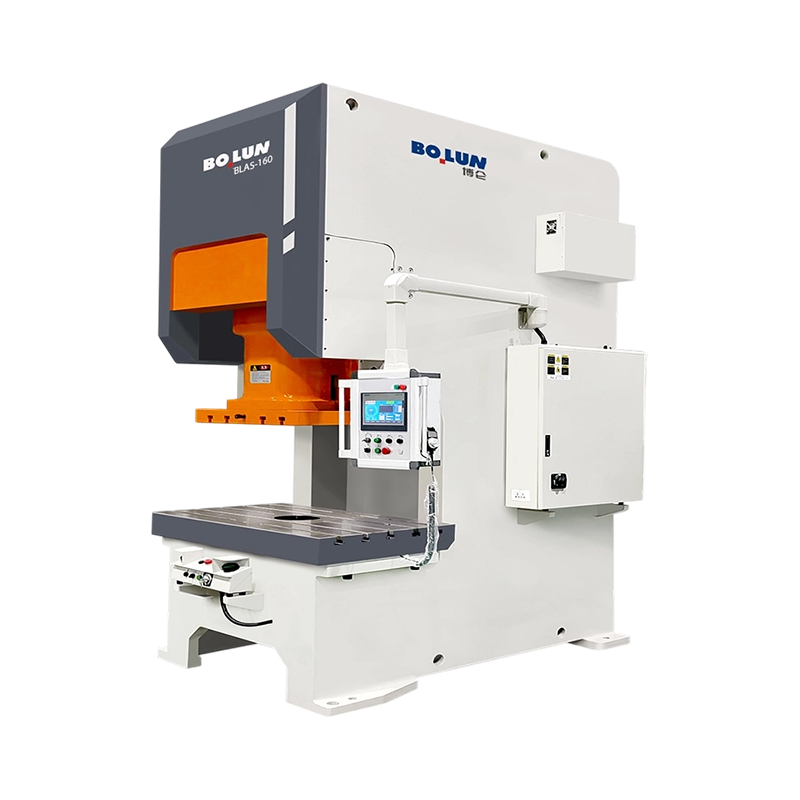
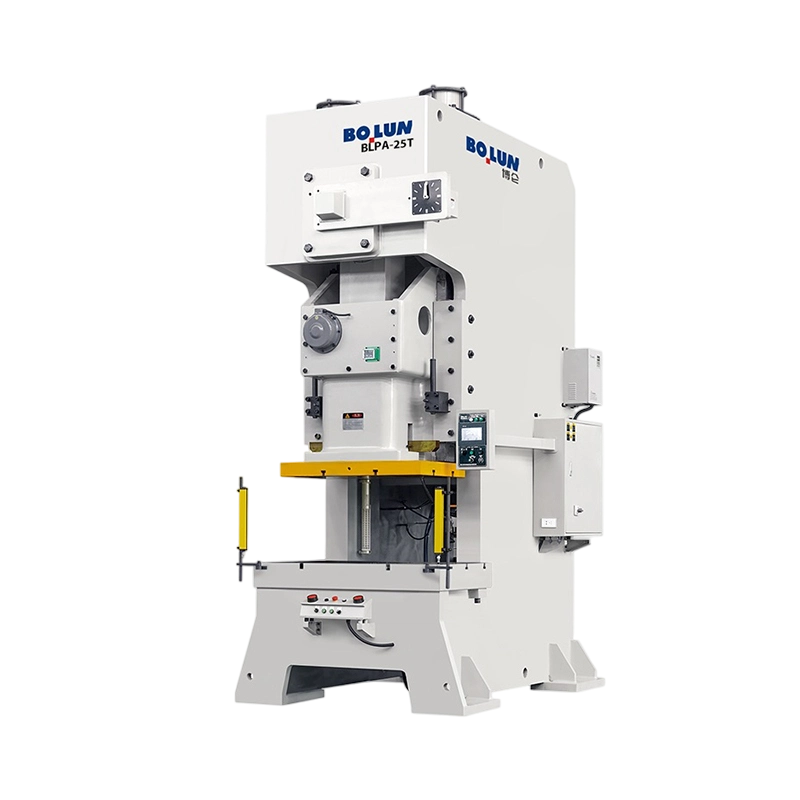
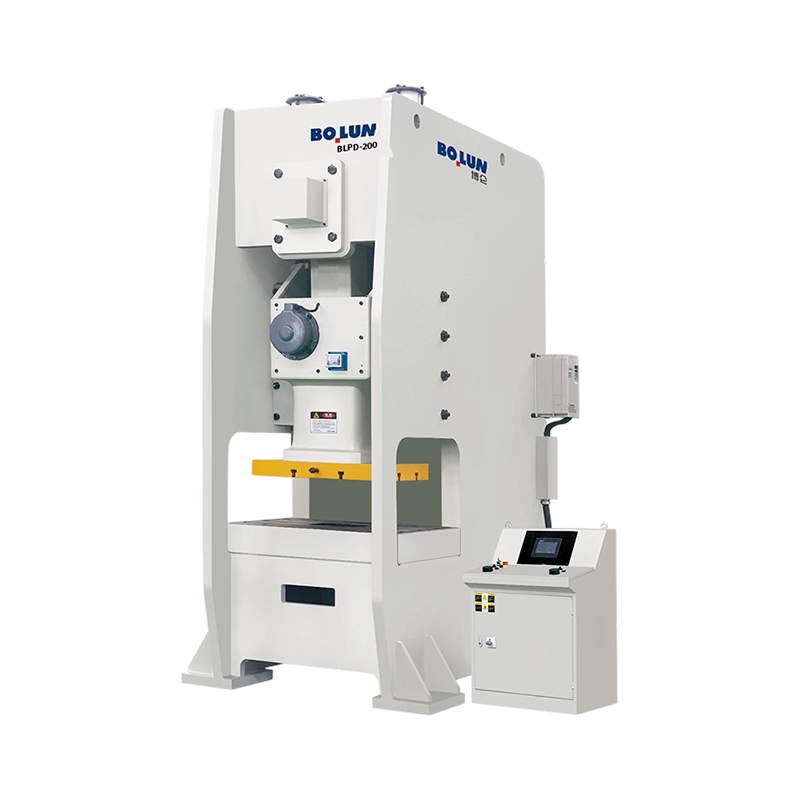
In modern stamping and forming production, manufacturers face a difficult combination of expectations: higher output, tighter dimensional stability, lower scrap rates, more flexible die changeovers, and safer operation under demanding workloads. A heavy-duty open-type single-point servo power press with a nominal capacity of 1600 kN answers these requirements by combining strong mechanical construction with digitally programmable slide motion. The BLAS-160 Heavy-Duty Digital-Forming Open-Type Single-Point Servo Power Press is designed for thick-material forming, high-load stamping, and repeatable production of medium-to-large components used in industries such as automotive parts, appliance hardware, electrical enclosures, metal brackets, hinges, structural components, and general industrial manufacturing.
Unlike conventional presses that depend on fixed motion characteristics, this servo power press gives the user control over how the slide moves through the stroke. That capability is central to its value. By shaping the speed, dwell, approach, forming, and return stages of the slide movement, the machine can be adapted to different dies and materials without requiring the same level of mechanical compromise found in traditional equipment. The result is a more intelligent stamping platform: powerful enough for heavy-duty operations, flexible enough for frequent production changes, and precise enough for quality-driven manufacturing environments.
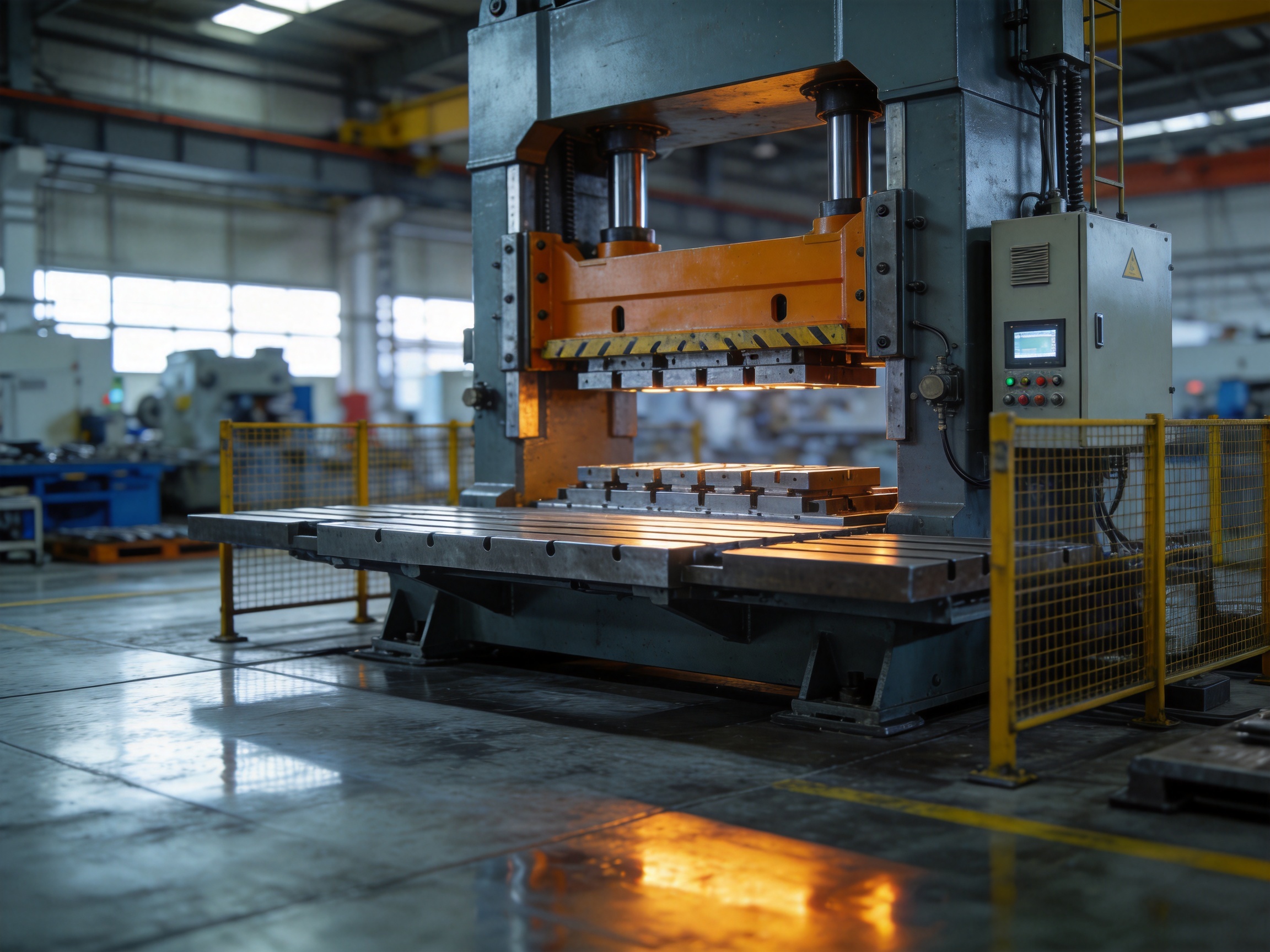
The BLAS-160 is an open-type single-point servo power press with a nominal capacity of 1600 kN and a maximum continuous working energy of 9000 J. Its 1200 × 760 mm worktable gives operators and tooling engineers ample space for large and heavy dies. This makes the machine especially suitable for applications in which a smaller table would restrict die design, limit part dimensions, or increase setup complexity. The machine’s servo-driven system supports programmable motion, allowing press users to store and repeat die parameters for consistent production from batch to batch.
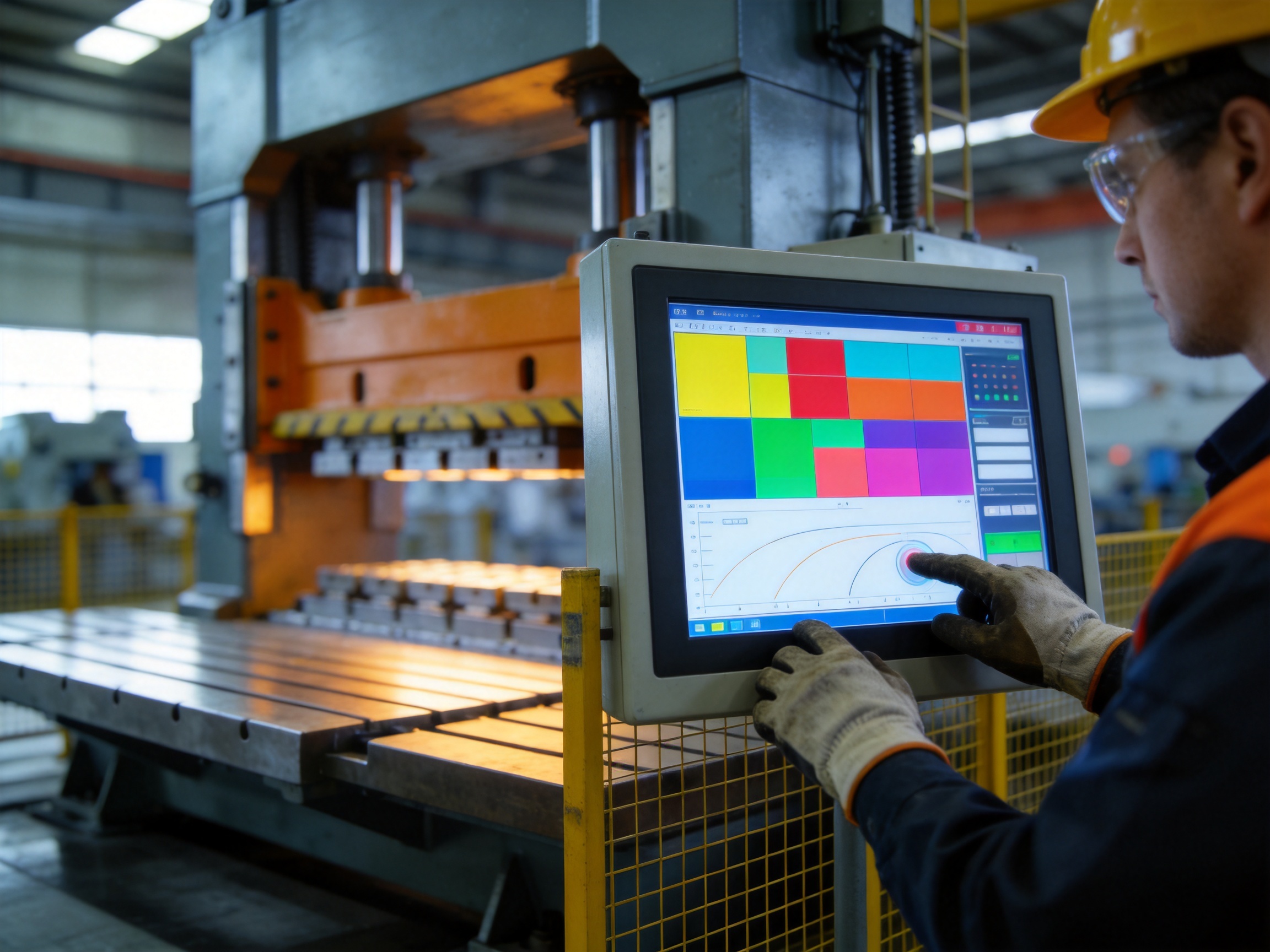
The press is equipped with a tonnage monitoring system and a color touch-screen human-machine interface. These features are not simply convenient additions; they are practical tools for process control. Real-time load feedback helps operators understand forming conditions and detect abnormal tonnage changes that may indicate material variation, misfeed, die wear, improper lubrication, or alignment issues. The touch-screen interface allows easier parameter adjustment and improves communication between the operator and the machine, reducing the dependency on manual trial-and-error setup.
As an open-type press, the machine provides accessibility from the front and sides, simplifying material handling, die setting, part removal, inspection, and integration with automation equipment. The single-point structure is suitable for many stamping tasks in which the load is centrally distributed or controlled through proper die design. For manufacturers requiring a balance between capacity, accessibility, and digital control, this press offers an effective solution.
| Item | Specification or Feature | Production Value |
|---|---|---|
| Press Type | Open-type single-point servo power press | Combines access convenience with programmable forming control |
| Nominal Capacity | 1600 kN | Supports high-load stamping and thick-material forming |
| Maximum Continuous Working Energy | 9000 J | Enables stable performance in demanding production cycles |
| Worktable Size | 1200 × 760 mm | Provides space for large dies and complex tooling layouts |
| Drive System | Servo-driven programmable motion system | Allows controlled slide profiles and repeatable die parameters |
| Monitoring System | Tonnage monitoring | Supports real-time load feedback and process protection |
| Control Interface | Color touch-screen HMI | Improves parameter setting, operation visibility, and productivity |
| Typical Applications | Automotive, appliance, hardware, industrial metal parts | Suitable for medium-to-large stamping and forming production |
The greatest difference between a servo power press and a conventional mechanical press is control over the slide motion. In a traditional press, the slide motion is determined mainly by the crank mechanism and flywheel speed. Once the system is running, the relationship between crank angle and slide movement is fixed. This is adequate for many simple stamping operations, but it can become limiting when forming more complex parts, working with thicker materials, reducing noise, protecting dies, or improving part quality.
A servo press introduces a programmable motion strategy. The slide can move quickly during non-working portions of the stroke, slow down during the forming zone, dwell near bottom dead center when necessary, and return in a way that matches the production requirement. This flexibility can improve material flow, reduce shock loading, extend die life, and help minimize defects such as cracking, wrinkling, springback, distortion, and inconsistent forming depth.
For example, when forming thick material, a controlled forming speed can reduce sudden impact between die and workpiece. Instead of applying force abruptly, the slide can engage the material more smoothly. This is useful in forming operations where material resistance increases sharply. By adjusting the motion curve, the operator can better match the press behavior to the real conditions inside the die. Competitor machines without such control often require slower overall running speeds or more conservative die designs to avoid failure, which can reduce productivity.
Programmable motion also supports better process repeatability. Once the optimal slide curve is found for a particular die, it can be stored as a recipe and recalled later. This is extremely valuable in factories that produce multiple part numbers, perform frequent changeovers, or operate with different shifts. Instead of depending entirely on individual operator experience, the machine helps standardize production conditions. That standardization becomes a competitive advantage in quality management.
The nominal capacity of 1600 kN places this press in a class intended for serious forming work. It is not limited to light blanking or small hardware operations. It is built for processes that require substantial forming pressure, stable frame support, and reliable energy delivery. The 9000 J maximum continuous working energy gives the machine the stamina needed for repeated forming cycles under load. In real production, capacity alone is not enough; continuous working energy matters because stamping lines must maintain performance over time rather than only achieving peak force momentarily.
Many lower-level machines may advertise high nominal tonnage but struggle when energy demand remains high across long production runs. This can lead to inconsistent forming, reduced operating speed, overheating, frequent stoppages, or accelerated component wear. A press designed with continuous working energy in mind is better suited for sustained manufacturing. For users producing automotive brackets, appliance reinforcement panels, thicker metal covers, or structural stamped components, energy stability directly influences productivity and part quality.
The 1200 × 760 mm worktable expands the range of dies that can be installed. A larger worktable allows tooling engineers to design stronger die sets, add guide structures, include sensors, improve scrap handling, and position parts effectively. It also supports larger part dimensions. In many factories, the ability to use an existing large die without excessive modification can reduce investment cost and shorten project launch time.
Compared with smaller open-type presses, this model gives manufacturers more freedom. It allows larger dies, heavier tools, and more demanding forming layouts. Compared with some closed-type machines, the open-type design provides easier access and greater operational convenience where the application does not require the enclosed rigidity of a straight-side frame. This balance of access and strength makes the press practical for a broad range of production environments.
The BLAS-160 provides several advantages over many conventional mechanical presses and basic open-type power presses. The first advantage is motion flexibility. In fixed-stroke machines, the manufacturer must accept the natural motion characteristics of the press. With a servo press, the slide profile becomes a process variable. That means the machine can be tuned to the die and material instead of forcing every die to accept the same motion pattern.
The second advantage is improved forming quality. Controlled slide speed helps reduce excessive impact and allows the material to deform more predictably. In operations where cracking or springback is a concern, the ability to slow down near the working zone or add dwell time can be highly beneficial. While not every part requires complex motion programming, the option to program motion gives production engineers a stronger toolset for difficult jobs.
The third advantage is die protection. Sudden overload, misfeed, double material feeding, incorrect blank positioning, or material hardness variation can damage tooling. The tonnage monitoring system provides real-time load visibility, allowing operators to identify abnormal forming conditions earlier. This can reduce the risk of expensive die repairs and unplanned downtime. Competitor machines without effective tonnage feedback may continue operating until damage has already occurred.
The fourth advantage is operational convenience. The color touch-screen HMI makes parameter adjustment more direct and understandable. In many factories, machine setup time is lost because settings are difficult to access, poorly displayed, or dependent on mechanical adjustment. A digital interface improves the operator’s ability to manage recipes, monitor conditions, and respond quickly to process changes. The value is not only in comfort but in measurable production efficiency.
The fifth advantage is production flexibility. Modern manufacturing rarely depends on one part for many years without change. Customers request smaller batches, more model variations, and faster delivery. A servo press with stored die parameters helps shorten changeovers and reduces the time needed to re-establish stable conditions after a die change. For suppliers competing in automotive and appliance supply chains, this flexibility can be a decisive factor.
The sixth advantage is process transparency. When a press provides tonnage data and digital settings, production management can make better decisions. Instead of relying only on visual inspection or end-of-line measurement, the forming process itself becomes easier to understand. Operators can compare actual load curves or tonnage values with expected conditions. Maintenance teams can identify trends. Quality teams can connect process data with inspection results. This supports a more scientific production culture.
The open-type press structure remains popular because it supports convenient access to the working area. Operators can approach the die area more easily for setup, inspection, feeding, and part removal. Automation equipment such as feeders, conveyors, transfer devices, lubricators, and part collection systems can also be integrated with less restriction. For many stamping plants, this accessibility improves day-to-day productivity.
In practical use, accessibility affects every shift. Die change teams need room to position tools safely. Operators need clear visibility. Maintenance personnel need access for inspection, lubrication, tightening, and troubleshooting. Production engineers need to observe forming conditions during trial runs. A machine that is difficult to access increases hidden labor cost even if its purchase price appears attractive.
The open-type design also supports flexible manufacturing cells. A press may be used as a standalone machine for manual or semi-automatic stamping, or it may be connected with feeding systems for coil processing. It can be integrated into lines where parts are transferred from one operation to another. Because the work area is accessible, factories can adapt the press to changing production needs.
At the same time, the press must remain stable under high load. A well-engineered open-type press must address frame strength, slide guidance, bed rigidity, vibration control, and alignment stability. The heavy-duty nature of this machine reflects the need to combine open access with reliable forming performance. For manufacturers that do not require a closed straight-side frame for every operation, this style of machine provides a cost-effective and operationally efficient alternative.
A single-point press applies force through one main drive point. This configuration is widely used for many blanking, punching, bending, drawing, embossing, trimming, and forming operations where the load can be properly centered. The advantage is mechanical simplicity compared with multi-point systems, combined with strong and accurate control when the die is suitable for the structure. In the BLAS-160, the single-point design is enhanced by servo control, which improves the user’s ability to manage the forming process.
Precision is not only a matter of static machine geometry; it is also the result of dynamic behavior during the stroke. The servo drive system contributes to better control of acceleration and deceleration. Smooth motion reduces unnecessary shock, and programmable profiles allow the machine to approach bottom dead center in a more controlled manner. This is especially useful when producing parts with strict dimensional requirements or when working with materials that react sensitively to forming speed.
Repeatability is another key advantage. Once a process is established, the same motion profile can be repeated cycle after cycle. For stamping plants that must meet customer audits and quality management requirements, repeatability is essential. A press that behaves consistently makes it easier to maintain stable part dimensions, reduce inspection failures, and improve production confidence.
The color touch-screen HMI provides an important bridge between human experience and machine capability. Advanced machinery is only valuable when operators can use it effectively. A clear interface allows users to view operating status, adjust parameters, manage recipes, and respond to alarms or abnormal conditions. This makes the machine more approachable for skilled operators while also reducing the learning curve for new personnel.
In traditional presses, adjustments may require manual mechanical setting, separate control panels, limited displays, or handwritten setup records. These methods can work, but they are more vulnerable to error. Digital parameter storage helps ensure that a proven setup can be reused. When a die is installed again, the operator can recall the appropriate settings rather than reconstructing them from memory or paper records. This improves consistency across shifts and production batches.
The HMI also supports process visibility. Operators can observe tonnage information and machine status in real time. If production conditions begin to drift, they can react more quickly. This helps reduce scrap and supports preventive maintenance. For factories pursuing intelligent manufacturing, the HMI is part of a broader movement toward data-driven forming operations.
Tonnage monitoring is essential for a high-capacity forming press. During each stroke, the load applied to the material and die provides valuable information about the condition of the process. If the load is too low, the material may not be positioned correctly, the feed may have failed, or the part may not be forming completely. If the load is too high, there may be a double blank, material thickness variation, die obstruction, insufficient lubrication, or misalignment. Without tonnage monitoring, these problems may remain hidden until defective parts are produced or tooling is damaged.
Real-time load feedback allows operators to detect abnormalities earlier. It supports die protection, machine protection, and quality control. In high-volume production, even a small reduction in die damage risk can save significant money. Dies for automotive and appliance components can be expensive, time-consuming to repair, and difficult to replace quickly. A tonnage monitoring system therefore protects not only the machine but also production schedules and customer delivery commitments.
Compared with machines that offer only basic overload protection, tonnage monitoring gives more detailed process understanding. Basic overload protection may stop the press only when a dangerous threshold is reached. Monitoring allows users to see trends before a severe event occurs. For example, a gradual increase in tonnage may suggest lubrication decline or die wear. A sudden spike may indicate a feeding problem. This information supports a more proactive maintenance strategy.
Zhejiang Bolun High-Precision Machinery Co., Ltd. is located in Zhejiang, one of China’s important centers for precision manufacturing. The company has developed through two decades of experience in machinery manufacturing and has grown into a modern enterprise integrating research and development, design, production, sales, and service. This full-chain capability is significant because a press is not merely an assembled product; it is a system requiring structural design, machining precision, component selection, assembly discipline, testing, and service support.
The company’s manufacturing philosophy emphasizes technical innovation, quality control, non-standard customization, and practical customer service. For buyers of heavy-duty forming equipment, these strengths matter as much as the machine specifications. A press must perform reliably for years, often in high-intensity production environments. The supplier must understand not only how to build equipment but also how customers use it, how dies interact with the press, and how production problems are solved on the shop floor.
Bolun’s production system covers stages from basic design and core component development to final machine assembly. This integrated approach helps maintain consistency and accountability. When too many critical processes are outsourced without strong control, quality can vary. By emphasizing full-chain production management and advanced processing equipment, the company is better positioned to control accuracy, fit, stability, and final performance.
The company also highlights its capability in non-standard customization. This is important because stamping factories often require special specifications, optional functions, unique worktable configurations, automation interfaces, or process-specific modifications. A supplier with an experienced design team can adapt equipment more effectively to actual production needs rather than offering only rigid standard models. In competitive manufacturing, the ability to tailor equipment can reduce installation difficulty and improve return on investment.
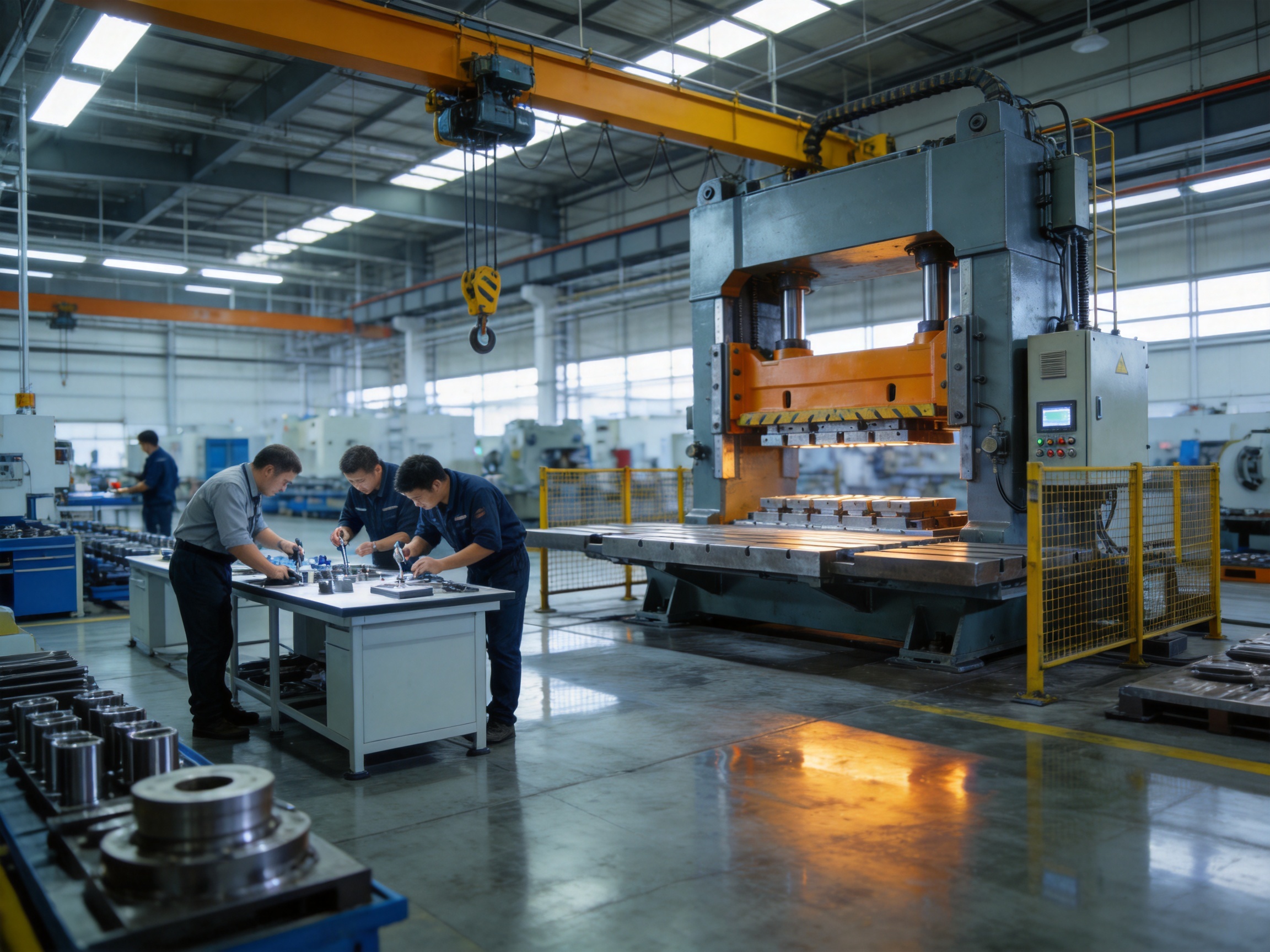
The performance of a power press depends heavily on how it is manufactured. Heavy frames, precision guide surfaces, drive components, and control systems must be produced and assembled with discipline. A strong design can fail to deliver value if machining, inspection, and assembly are not controlled. Bolun’s emphasis on advanced precision processing equipment and a mature industrial environment supports the production of machines intended for stable operation under high load.
Frame manufacturing is one of the most important areas. A heavy-duty press must resist deformation during forming. Even small deflections can affect die alignment, part accuracy, and tool life. Proper material selection, welding or casting processes, stress relief, machining, and inspection all contribute to frame stability. The result is a foundation capable of supporting repeated high-load cycles.
Machining accuracy is another essential factor. Slide guides, bed surfaces, connection points, and mounting areas must be processed to maintain alignment. If these surfaces are inaccurate, the press may experience uneven loading, vibration, accelerated wear, and inconsistent part quality. Precision machining reduces these risks. For a servo press, mechanical accuracy works together with digital control; the control system can only deliver full value when the mechanical platform is stable.
Assembly quality is equally important. A press contains interacting mechanical, electrical, hydraulic, lubrication, safety, and control elements. Proper assembly ensures that the servo drive system, slide mechanism, guide system, monitoring components, and HMI operate as a coordinated unit. Skilled assembly also reduces noise, vibration, and premature wear. In high-capacity equipment, small assembly errors can become large operational problems, so rigorous process discipline is essential.
Final inspection is the last gate before the equipment reaches the customer. Bolun’s quality approach includes a finished product inspection system intended to exceed ordinary industry standards. Such inspection may involve checking machine geometry, operational stability, control response, safety functions, tonnage monitoring behavior, lubrication performance, and trial running. A strict inspection culture gives customers greater confidence that the equipment will perform reliably after installation.
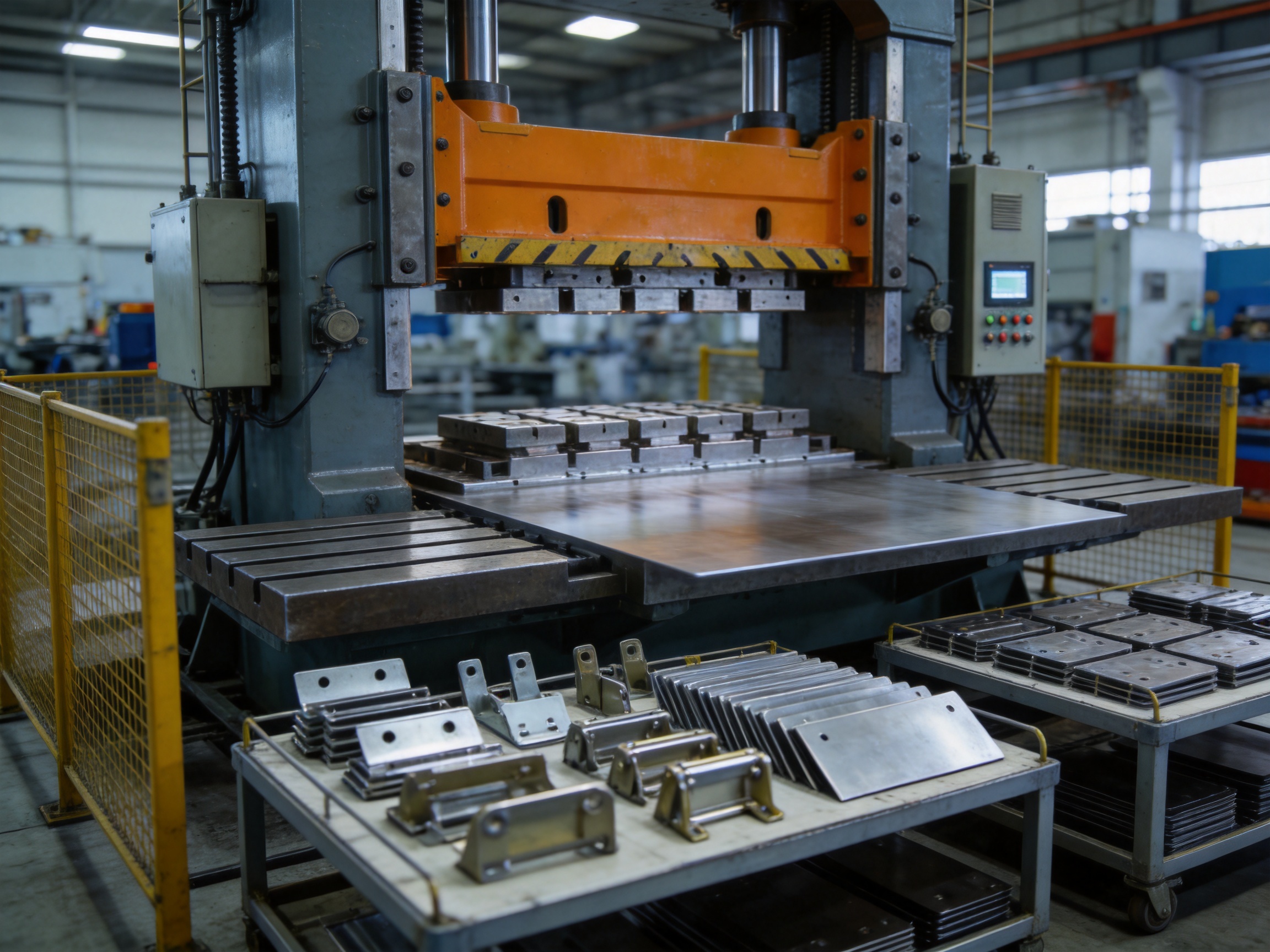
Automotive and appliance industries are mentioned as typical application fields because they require a combination of strength, accuracy, repeatability, and production efficiency. Automotive parts may include brackets, reinforcements, covers, supports, hinges, seat components, chassis-related stampings, and other formed metal parts. Appliance manufacturing may involve panels, internal brackets, frames, motor supports, covers, and structural hardware. These industries often demand stable quality across large batches and strict delivery schedules.
The BLAS-160 is well suited for these environments because it offers both capacity and digital process control. Automotive suppliers often face changing product requirements and frequent quality audits. A programmable servo press supports documented and repeatable process settings. Appliance manufacturers often require efficient production of visible or functional parts, where consistent forming depth, clean edges, and controlled deformation are important. The press’s worktable size allows the use of larger dies for such components.
In addition, both industries benefit from reduced die wear and improved setup efficiency. Die maintenance is a major cost in high-volume stamping. By controlling slide motion and monitoring tonnage, manufacturers can reduce unnecessary impact and detect abnormal forming conditions before they cause severe tooling damage. This improves equipment utilization and reduces unplanned stoppages.
Thick-material forming places special demands on a press. The force required is higher, energy demand is greater, and the risk of tool stress increases. The material may resist deformation strongly, requiring careful control over forming speed and bottom dead center behavior. The BLAS-160 addresses these needs with its 1600 kN nominal capacity, 9000 J continuous working energy, and programmable servo motion.
In thick-material stamping, the difference between impact and controlled forming can be significant. Excessive impact can increase noise, vibration, tool wear, and part defects. A servo-controlled approach allows the slide to slow during the most demanding part of the stroke while still moving efficiently through non-working travel. This helps balance productivity and forming quality.
Thick materials also create greater sensitivity to lubrication and material variation. Tonnage monitoring helps users observe these effects. If load values rise unexpectedly, the operator can investigate before damage occurs. This is especially important when material batches vary or when forming conditions change with temperature, lubrication, or die wear. The press therefore supports a more controlled and informed forming process.
Servo presses are often valued for their ability to improve practical efficiency rather than simply increasing maximum strokes per minute. In stamping, the fastest machine is not always the most productive if it produces defects, damages dies, or requires frequent adjustment. True productivity is measured by acceptable parts produced per hour, stable operation, low scrap, and minimal downtime.
The BLAS-160 supports this practical view of efficiency. Programmable motion allows the slide to move quickly when speed does not affect forming quality and slowly when control is needed. This targeted use of speed can improve cycle performance while protecting the process. Stored parameters reduce setup time, especially when the same dies are reused. Tonnage feedback reduces troubleshooting time by giving operators clearer information about what is happening during forming.
Energy delivery also affects efficiency. The machine’s maximum continuous working energy of 9000 J supports demanding operations without sacrificing stability. In heavy forming, insufficient energy can force operators to slow down, reduce forming severity, or split operations into additional steps. A press with appropriate working energy can help consolidate processes and maintain production rhythm.
A good press must be powerful, but it must also be usable. Operator-centered design improves safety, productivity, and consistency. The open-type structure improves access, while the color touch-screen HMI improves communication. These features reduce the gap between machine capability and daily production reality.
Operators benefit from clearer control logic, visible load information, and easier parameter management. Setup personnel benefit from stored recipes and accessible work area. Maintenance teams benefit from process feedback and easier inspection. Production managers benefit from improved repeatability and reduced dependency on individual operator memory. In this sense, the machine supports not only mechanical forming but also better factory management.
In many factories, labor skill levels vary across shifts. Digital control helps standardize operation and reduce variation. When settings are stored and displayed clearly, new operators can follow established procedures more easily. Experienced operators can refine process parameters and preserve their knowledge in the system. This turns individual experience into organizational capability.
Not every stamping plant has the same requirements. Differences in material type, part geometry, die size, feeding method, safety standard, floor layout, and automation plan can all affect press selection. Bolun’s capability in one-stop design and manufacturing services supports customers with special specifications and functions. This is valuable for users who need more than a standard machine.
Customization may involve worktable adaptations, feeding line integration, control options, safety devices, monitoring functions, or process-specific support. Application engineering helps ensure that the press is matched to the production goal. A mismatch between machine and process can lead to poor performance, even if the press itself is well built. Therefore, supplier engineering support is a competitive advantage.
The company’s international management perspective also matters for global customers. Export-oriented machinery suppliers must understand different operating expectations, communication needs, documentation requirements, and service standards. A manufacturer that combines local manufacturing strength with international awareness can support customers more effectively in different markets.
A heavy-duty power press is a long-term investment. Buyers must evaluate not only purchase price but also durability, service life, maintenance cost, die protection, scrap reduction, energy use, production flexibility, and supplier support. The BLAS-160 is positioned as a high-capacity, digitally controlled machine intended for stable operation under demanding conditions. Its long-term value comes from the combination of structural strength, servo flexibility, monitoring capability, and manufacturer quality discipline.
Durability begins with the mechanical platform. A strong frame, accurate guide system, and reliable drive structure reduce wear and maintain forming accuracy. Digital control protects the machine by managing motion more intelligently. Tonnage monitoring protects dies and helps identify process problems. The HMI supports correct operation and reduces setup errors. Together, these factors reduce the hidden costs that often exceed the initial savings of cheaper equipment.
Compared with basic competitor presses, a servo machine may require a higher initial investment. However, the value appears in improved part quality, faster changeovers, lower scrap, reduced die damage, and greater adaptability. For manufacturers facing complex parts or changing orders, flexibility is not a luxury; it is a requirement for competitiveness.
Quality control in stamping depends on stable interaction between the press, die, material, lubrication, feeding system, and operator. The press contributes by providing consistent motion, sufficient force, and reliable alignment. The BLAS-160 adds digital control and monitoring to this foundation. By programming the slide profile, users can establish forming conditions that are less damaging and more repeatable. By monitoring tonnage, they can detect deviations during production.
Consider a production run where material thickness varies slightly. A conventional press may continue running with no clear indication until part dimensions drift or the die experiences unusual stress. With tonnage monitoring, the operator can see that forming load has changed. This does not automatically solve the problem, but it provides early information. Early information is the key to modern quality management.
Stored die parameters also improve quality. If a die is used repeatedly over months or years, the ability to recall proven settings reduces the chance of setup variation. Consistent setup leads to consistent production. This is especially important for customers that require traceability, repeatability, and process discipline.
Power presses are powerful machines, and safe operation must always be a priority. While specific safety configurations depend on the installation and local requirements, the BLAS-160’s digital control, HMI visibility, and tonnage monitoring can contribute to safer process management. When operators have clearer information and better control, they are better equipped to avoid dangerous or damaging conditions.
Safety also includes protecting the machine and tooling from overload events. A severe die crash can create risks for personnel, equipment, and production schedules. Monitoring systems, proper setup procedures, and disciplined operation reduce those risks. The open-type structure should be combined with appropriate guarding, light curtains, two-hand controls, feeding systems, and safety procedures according to the application.
Responsible production requires training. Operators should understand the meaning of tonnage values, alarm signals, motion profiles, die parameters, lubrication conditions, and safe setup methods. A high-quality machine provides the tools, but a well-managed factory uses those tools through proper procedures and skilled personnel.
When selecting forming equipment, buyers often compare open-type servo presses, conventional open-type mechanical presses, closed-type presses, and hydraulic presses. Each has advantages. Conventional mechanical presses can be economical for simple high-speed operations. Closed-type presses offer strong rigidity for certain high-precision and off-center load applications. Hydraulic presses provide full-force capability through longer stroke ranges and are useful for some deep drawing or slow forming operations. The BLAS-160 occupies a valuable position among these choices.
Compared with conventional mechanical presses, it offers programmable motion, improved process flexibility, better setup repeatability, and digital monitoring. Compared with closed-type presses, it provides easier access and often better convenience for die setting and material handling where open-frame suitability is acceptable. Compared with hydraulic presses, it can offer mechanical press productivity with servo-controlled motion profiles, making it effective for stamping operations requiring both speed and controllability.
The best choice always depends on the part and process. However, for manufacturers needing heavy-duty open access, strong capacity, and intelligent motion control, this machine offers a compelling balance. It is especially useful where production includes multiple part types, thick material, high-load forming, or quality-sensitive stamping.
Bolun’s company philosophy emphasizes quality, credit, technical progress, and customer-oriented service. For industrial machinery, service capability is essential. Customers need support before purchase, during installation, and after commissioning. Pre-sales consultation helps define the correct machine type and configuration. In-sales support helps coordinate manufacturing, delivery, installation preparation, and technical communication. After-sales guarantees help maintain confidence during long-term use.
A press supplier must be more than a machine seller. It should be a technical partner that understands forming challenges. Customers may need help with machine selection, die compatibility, automation planning, parameter use, maintenance guidance, and troubleshooting. A company integrating R&D, design, production, sales, and service is better positioned to provide complete support.
The company’s cultural message, “Accumulate Richly and Break Forth Thinly; Pressure is Power,” reflects a practical understanding of the machinery industry. Precision machinery requires patience, accumulated expertise, and the ability to turn production pressure into technological improvement. This mindset supports continuous development in intelligent and digital stamping equipment.
The direction of the stamping industry is clear: more intelligence, more data, more flexibility, and more precision. Manufacturers are moving away from purely mechanical production habits toward digitally managed forming systems. Servo presses, tonnage monitoring, touch-screen interfaces, recipe storage, and process feedback are part of this transformation. The BLAS-160 fits this trend by combining heavy-duty forming capability with programmable digital control.
As factories adopt smarter production management, machines must provide usable information. A press that can store parameters, display operating conditions, and support process analysis becomes part of the intelligent manufacturing environment. Over time, this can support better maintenance planning, improved quality documentation, and more efficient production scheduling.
Bolun’s continued investment in intelligent and digital stamping equipment is aligned with market needs. Global customers increasingly expect machines that are not only strong but also controllable, observable, and adaptable. A heavy-duty servo power press is therefore not just a replacement for older equipment; it is a platform for future production improvement.
When evaluating this press, buyers should consider the types of parts they produce, material thickness, required tonnage, die size, production volume, changeover frequency, quality requirements, and automation plans. The 1600 kN capacity and 1200 × 760 mm worktable make the machine suitable for many medium-to-large forming applications, but proper selection should always include calculation of forming load, energy demand, shut height requirements, stroke requirements, die dimensions, and feeding method.
Buyers should also consider long-term factory strategy. If production is stable, simple, and unchanging, a conventional press may appear sufficient. However, if the factory expects new product introductions, stricter customer requirements, thicker materials, or more complex forming processes, servo control provides valuable flexibility. The ability to adapt is often what determines whether equipment remains useful for many years.
Maintenance planning should also be reviewed. Servo systems, monitoring devices, lubrication systems, and mechanical structures require proper care. A disciplined maintenance program will protect the investment and preserve accuracy. Supplier training and documentation can help operators and maintenance teams use the machine correctly.
It is a heavy-duty open-type single-point servo power press designed for digital forming, high-load stamping, and repeatable production. It combines a 1600 kN nominal capacity with programmable slide motion and a large 1200 × 760 mm worktable.
The main advantage is programmable slide motion. Instead of operating with a fixed motion curve, the servo press can adjust the slide speed, dwell, and movement profile to match different dies, materials, and forming requirements. This improves flexibility, repeatability, and process control.
Continuous working energy indicates the press’s ability to perform demanding forming operations repeatedly. For thick material and high-load stamping, stable energy delivery helps maintain consistent production and reduces the risk of performance loss during long runs.
The machine is suitable for automotive parts, appliance components, hardware products, industrial brackets, metal structural parts, covers, supports, and other medium-to-large stamped or formed components requiring strong capacity and reliable control.
Tonnage monitoring provides real-time load feedback during forming. It helps detect abnormal conditions such as misfeeds, double blanks, material variation, die wear, insufficient lubrication, or overload risk. This supports die protection, quality control, and reduced downtime.
The 1200 × 760 mm worktable provides space for larger dies and more complex tooling arrangements. It gives tooling engineers more flexibility and allows the press to handle larger components or heavier die sets used in automotive and appliance manufacturing.
Yes. The open structure provides convenient access for feeders, conveyors, transfer systems, lubricators, sensors, and part collection equipment. It can be used in manual, semi-automatic, or automated production cells depending on the application.
The HMI allows operators to view machine status, adjust parameters, manage stored recipes, and monitor production information more easily. It reduces setup errors and helps standardize operation across shifts and batches.
Zhejiang Bolun High-Precision Machinery Co., Ltd. integrates R&D, design, production, sales, and service. The company has two decades of machinery manufacturing experience, advanced processing equipment, non-standard customization capability, and a quality control system focused on stable precision and long service life.
Yes. Programmable motion and stored die parameters help reduce setup time and improve repeatability when switching between different dies or product batches. This is valuable for factories handling varied orders.
The BLAS-160 Heavy-Duty Digital-Forming Open-Type Single-Point Servo Power Press represents a strong combination of force, energy, accessibility, and intelligent control. With a nominal capacity of 1600 kN, maximum continuous working energy of 9000 J, and a 1200 × 760 mm worktable, it is built for demanding stamping and forming applications. Its servo-driven programmable motion system gives manufacturers the ability to adjust slide behavior to match real production needs, while tonnage monitoring and a color touch-screen HMI improve visibility, repeatability, and process discipline.
Compared with conventional competitor machines, the press offers greater flexibility, stronger die protection, easier parameter management, and better support for thick-material forming. Compared with less advanced open-type presses, it provides a more future-oriented platform for intelligent manufacturing. Its value is not limited to machine specifications; it also reflects the manufacturing strength of Zhejiang Bolun High-Precision Machinery Co., Ltd., including integrated design and production, precision processing capability, customization services, strict inspection, and customer-focused support.
For manufacturers seeking to improve stamping quality, reduce setup variation, protect tooling, and prepare for more flexible production demands, this heavy-duty servo power press is a practical and forward-looking choice. It brings together the strength required for high-load forming and the digital intelligence required for modern manufacturing competitiveness.
Altan, T., and Tekkaya, A. E. Sheet Metal Forming: Processes and Applications. ASM International.
Schuler GmbH. Metal Forming Handbook. Springer.
Kalpakjian, S., and Schmid, S. R. Manufacturing Engineering and Technology. Pearson.
Groover, M. P. Fundamentals of Modern Manufacturing: Materials, Processes, and Systems. Wiley.
Society of Manufacturing Engineers. Tool and Manufacturing Engineers Handbook: Forming. SME.
International Organization for Standardization. Safety of Machinery and Industrial Press Standards Publications.
Bolun Machinery Product and Company Technical Materials.


Contact Us

bolunpress@gmail.com

+86-575-83362228

+86-15158259588

+86-575-83362999

+86-15158259588

Hangzhou Office Add: No. 332 Wangjiang East Road, Shangcheng District

No.1 Linjiang Road East, Xiaren, Jinting Town, Shengzhou City, Zhejiang Province, China
Ready to Begin?
Get in Touch

Now!

ZHEJIANG BOLUN
 English
 中文简体
中文简体