
In modern metal forming, the demand for equipment that combines force, accuracy, stability, and production flexibility continues to grow. Manufacturers working with automotive parts, appliance components, hardware products, electrical enclosures, structural brackets, and precision stamped assemblies need presses that can withstand heavy-duty operation while maintaining consistent slide motion and repeatable die alignment. The BLPD-160 Versatile Balanced-Stability Semi-Closed Single-Point Power Press is designed for exactly this environment. With a nominal capacity of 1600 kN, a high-rigidity frame weighing approximately 16.8 tons, a 200 mm slide stroke, and a spacious 980 × 800 mm worktable, it offers a practical balance between robust forming capability and efficient die handling.
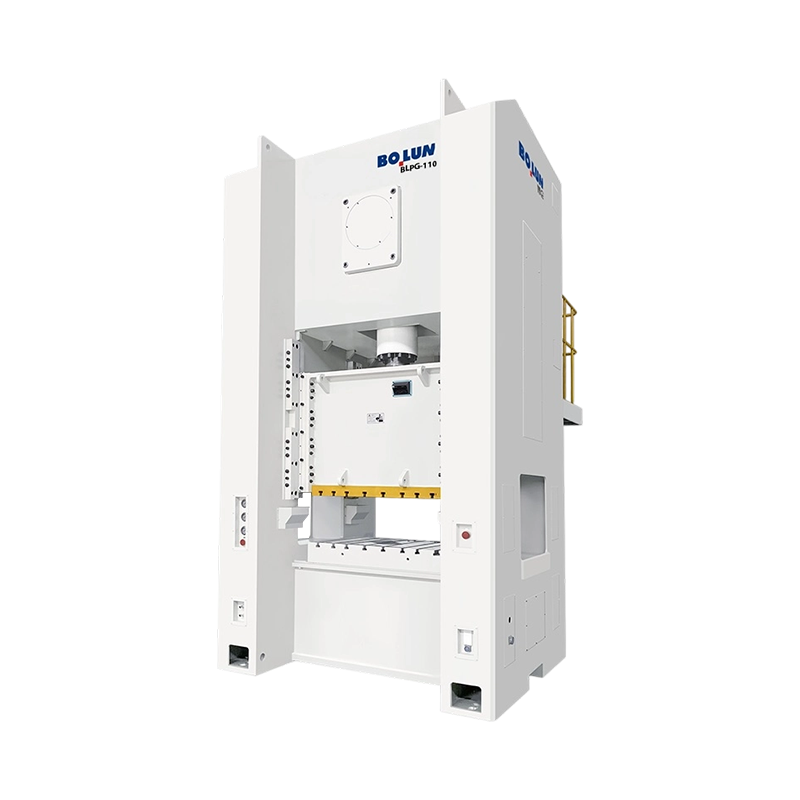
This press is positioned as a semi-closed single-point power press, meaning it provides greater frame stability than many open-type alternatives while retaining practical accessibility for tooling, material feeding, setup, and maintenance. For users who require stronger resistance to deformation during drawing, bending, blanking, forming, and progressive die applications, the semi-closed structure delivers an important advantage. It helps control deflection, improves load distribution, and supports stable precision under repeated heavy-load conditions.
BLPD-160 Versatile Balanced-Stability Semi-Closed Single-Point Power Press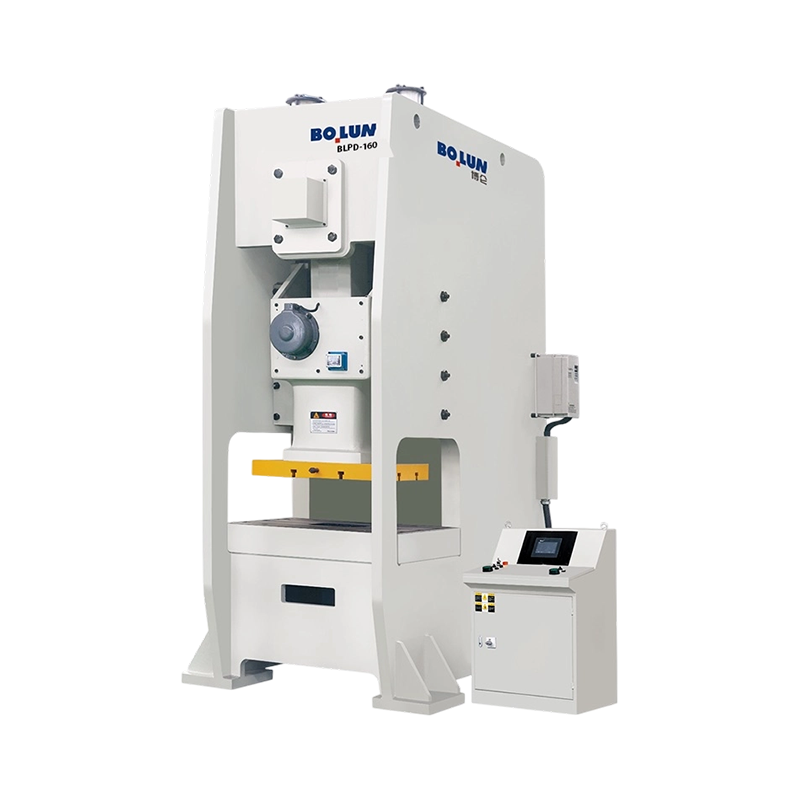
The BLPD-160 is a high-capacity power press developed for stable drawing and forming operations. Its nominal capacity of 1600 kN gives it the strength required for demanding stamping tasks, while its 15 kW high-torque motor provides the drive capability needed for consistent operation in continuous production. The machine is not simply built for force; it is built for dependable precision, reliable repeatability, and simplified setup.
One of the defining features of this press is its balanced-stability design. In stamping operations, accuracy depends not only on tonnage but also on the ability of the frame, slide, drive system, and worktable to remain stable during the full working cycle. When a press lacks rigidity, die life can be shortened, workpiece dimensions may vary, and operators may need to perform frequent adjustments. The BLPD-160 addresses these concerns through a high-rigidity frame and carefully coordinated machine architecture.
The electric slide adjustment system and digital die height indicator are especially valuable for production environments where tooling changes are frequent. Instead of relying on slow manual adjustment and repeated trial checks, operators can make die height settings more efficiently and with better repeatability. This improves productivity, reduces setup time, and helps ensure that different molds can be installed with confidence.
The machine’s key specifications reflect a focus on stability, capacity, and usability. The nominal 1600 kN capacity enables it to handle heavier forming and stamping jobs than smaller general-purpose presses. The 200 mm slide stroke provides sufficient travel for deeper forming operations and for tooling designs that require larger vertical movement. The 980 × 800 mm worktable offers practical working space for medium to large dies, supporting a broad range of production tasks.
The 16.8-ton high-rigidity frame plays a central role in performance. A heavier and stronger frame is not merely a sign of mass; it directly affects operational stability. During stamping, forming force is transmitted through the slide, tooling, workpiece, bolster, and frame. If the frame is not sufficiently rigid, elastic deformation can influence part accuracy. The BLPD-160’s frame structure is intended to resist these effects and maintain stable alignment during continuous operation.
The 15 kW high-torque motor supports reliable press performance under load. In real production conditions, stamping force may fluctuate depending on material thickness, tooling geometry, lubrication, feed accuracy, and forming complexity. A high-torque drive system helps maintain motion stability, reducing the risk of inconsistent operation when the machine is used for heavier applications.
| Item | Specification or Feature | Production Benefit |
|---|---|---|
| Nominal Capacity | 1600 kN | Suitable for demanding stamping, drawing, bending, and forming operations |
| Frame Type | Semi-closed single-point structure | Improves rigidity while maintaining tooling accessibility |
| Frame Weight | Approximately 16.8 tons | Enhances vibration resistance and stability under heavy load |
| Slide Stroke | 200 mm | Provides clearance for wider tooling and forming applications |
| Worktable Size | 980 × 800 mm | Supports medium and large dies with practical setup space |
| Slide Adjustment | Electric adjustment system | Reduces setup time and improves die change efficiency |
| Die Height Display | Digital indicator | Supports accurate mold positioning and repeatable setup |
| Main Motor | 15 kW high-torque motor | Maintains stable operation during continuous production |
Power presses are often compared by capacity, stroke, worktable dimensions, and speed, but frame structure is one of the most important factors in long-term production quality. Open-type power presses are widely used because they provide excellent access from multiple sides, making them convenient for feeding, tool adjustment, and part removal. However, open-type frames can be more sensitive to deflection when operating near their capacity, especially in off-center loading conditions.
A closed-type power press offers superior rigidity and is often selected for high-precision and heavy-duty applications. However, fully closed structures may limit side access and may require more planning for die installation and automation layout. The semi-closed single-point design of the BLPD-160 creates an effective middle ground. It provides improved support and rigidity compared with many open-type machines while retaining a practical working area for production teams.
This balance is valuable in factories where different products must be made on the same press. A machine that is too open may lack the stiffness required for certain forming jobs, while a machine that is too enclosed may reduce convenience for frequent die changes. The BLPD-160 is designed for users who want strong forming capability without sacrificing operational practicality.
Compared with many conventional presses in the same capacity class, the BLPD-160 emphasizes a combination of high rigidity, practical stroke length, large table area, and intelligent setup assistance. Competitor machines may advertise similar tonnage, but actual production performance depends on structural quality, slide stability, die height control, and the ability to maintain precision under continuous load. The BLPD-160 addresses these areas as a complete system.
First, its 16.8-ton high-rigidity frame supports stable force transmission. Some lighter presses may reduce purchase cost, but reduced frame mass and rigidity can lead to vibration, deflection, and inconsistent forming quality. In contrast, a strong frame helps protect tooling, improves part consistency, and supports production reliability over the life of the machine.
Second, the 200 mm slide stroke expands application flexibility. A shorter stroke can limit forming depth and tool design options. With a 200 mm stroke, the press can accommodate a wider range of dies, including tools requiring deeper draw motion, greater clearance, or more complex forming cycles. This makes the machine suitable not only for simple blanking but also for more demanding forming processes.
Third, the 980 × 800 mm worktable gives manufacturers more room for tooling. A larger table supports progressive dies, compound dies, and larger single-operation dies. It also improves setup convenience, allowing operators and maintenance personnel to work more efficiently around the die area. For factories that frequently change product models, this flexibility is a significant advantage.
Fourth, the electric slide adjustment and digital die height indicator reduce dependence on manual measurement and operator experience. In highly competitive manufacturing, setup time is a major cost factor. A press that allows faster and more accurate mold setting can improve overall equipment effectiveness. This is especially important for manufacturers producing multiple part batches in short production runs.
Finally, the 15 kW high-torque motor improves reliability under heavier load conditions. Competitor machines with insufficient drive capability may suffer from unstable motion, overheating, or inconsistent performance when working near capacity. The BLPD-160 is built to support continuous production with a motor configuration appropriate for demanding use.
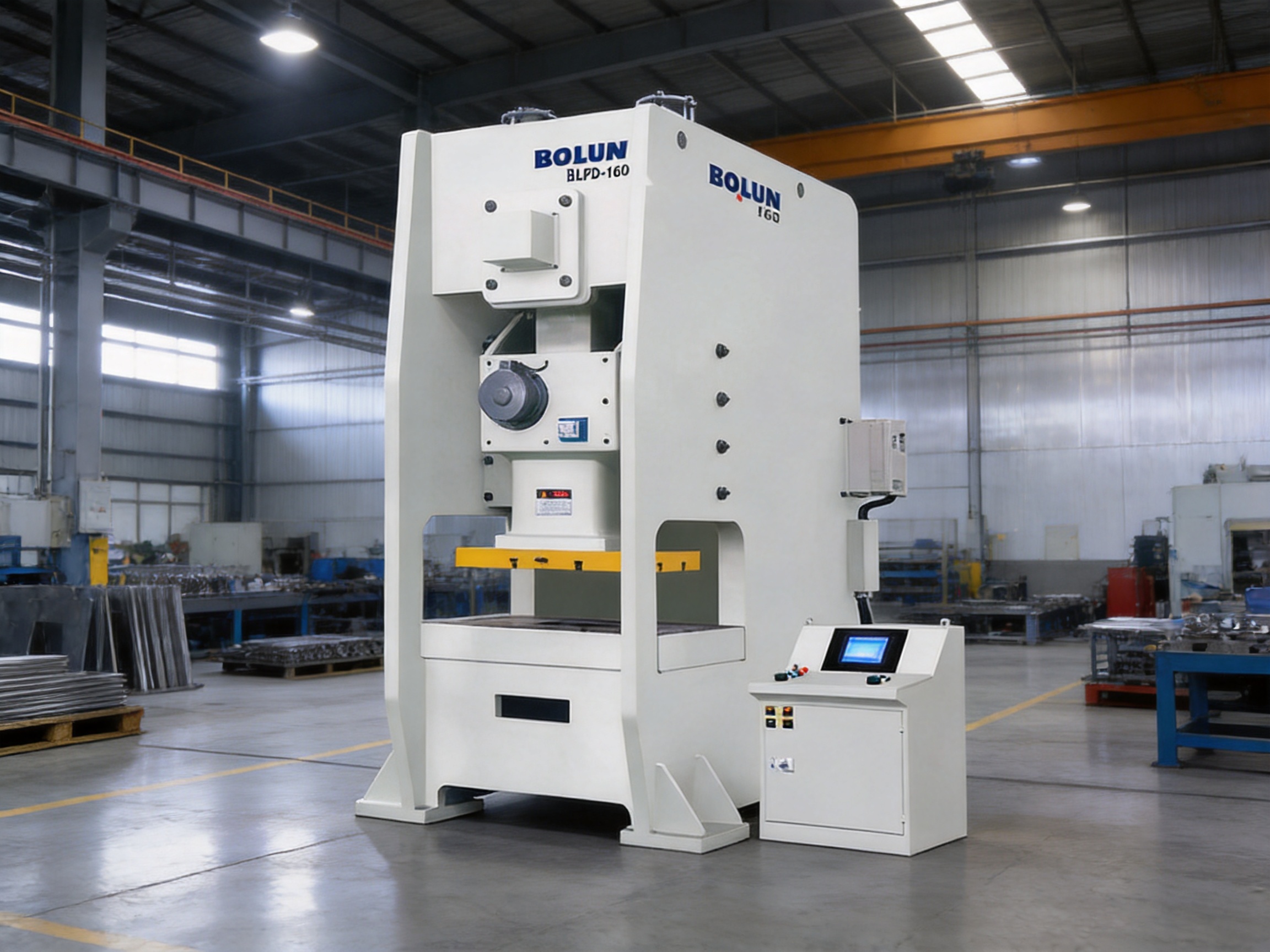
Drawing and forming processes place special demands on a power press. Unlike simple punching, where the main concern is cutting force, drawing and forming require controlled material flow, consistent pressure, and stable slide guidance. If the press frame flexes, the slide tilts, or die height varies, the result can include wrinkling, tearing, uneven wall thickness, or dimensional deviation.
The BLPD-160 is designed to support these operations through balanced stability. Its semi-closed frame improves resistance to deformation, while its robust mechanical structure supports repeated cycles at high load. The result is better confidence in part consistency, especially when producing components that require forming accuracy across large production batches.
In appliance manufacturing, for example, formed panels and brackets often require both aesthetic quality and dimensional accuracy. In automotive component production, stamped parts must meet fit and assembly requirements. In electrical hardware and enclosure manufacturing, bends, holes, and formed areas must align precisely. A press with stable slide motion and reliable force delivery helps meet these production needs.
Die setup is one of the most important steps in stamping production. Even a strong press cannot deliver good results if the die is not positioned correctly. Manual slide adjustment can be time-consuming, and small errors in die height can cause product defects, excessive die wear, or even tool damage. The BLPD-160 improves this process through electric slide adjustment and a digital die height indicator.
Electric slide adjustment allows operators to set the slide position more conveniently. Instead of relying only on manual mechanical adjustment, the operator can make controlled changes with reduced physical effort. This is especially helpful when working with larger dies or when production requires frequent changeovers.
The digital die height indicator improves visibility and repeatability. Once a mold setup has been proven, the die height value can be recorded and reused during future production. This supports standardized process control and reduces variation between operators. For companies aiming to improve quality management, repeatable setup data is a valuable resource.
In practical terms, these features help reduce trial stamping time. Fewer test pieces are wasted, die adjustments become more predictable, and production can begin more quickly. Over time, this contributes to lower operating cost and higher machine utilization.
The 980 × 800 mm worktable is a major advantage for manufacturers using varied tooling. Tooling size is often one of the limiting factors when selecting a press. Even if a machine has sufficient tonnage, it may not be suitable if the table is too small or if the die cannot be installed securely. The BLPD-160’s worktable provides a practical platform for a wide range of applications.
A larger worktable enables better distribution of die load. This is important when using larger dies or dies with multiple forming stations. Good load distribution helps reduce localized stress and supports better frame and bolster longevity. It also allows more flexibility when designing tooling layouts, feeding directions, and automation integration.
For production managers, tooling flexibility means the press can serve more jobs. Instead of purchasing separate presses for each application, a versatile machine can support multiple product families. This improves capital efficiency and provides greater adaptability as market demands change.
Continuous stamping production requires a drive system capable of maintaining stable operation hour after hour. The 15 kW high-torque motor used in the BLPD-160 is selected to support this requirement. In real industrial conditions, presses are subjected to variable loads, repeated impact, heat generation, and demanding production schedules. The motor must provide sufficient torque while maintaining reliability.
A high-torque motor helps the press handle heavier forming loads without unstable speed behavior. It supports smooth energy transmission through the drive system and contributes to consistent slide motion. In production environments where downtime is costly, this reliability is a meaningful advantage.
The motor also contributes to operational confidence. When the press is properly matched to the application, operators can focus on process control rather than worrying about whether the machine can withstand the workload. This supports safer, more predictable, and more efficient production.
Zhejiang Bolun High-Precision Machinery Co., Ltd. is located in Zhejiang, one of China’s important centers for precision manufacturing. The company has spent approximately two decades developing its capabilities in machinery manufacturing, forging and casting equipment, precision forming systems, and industrial machine tool solutions. Its experience is reflected not only in product design but also in production management, quality control, customization, and service.
The company integrates research and development, design, production, sales, and service. This full-chain capability is important because power press quality depends on coordination across many disciplines. Mechanical design, material selection, machining precision, heat treatment, assembly accuracy, inspection standards, and after-sales support all affect the final user experience. A manufacturer that controls these processes internally can respond more effectively to customer requirements and maintain more consistent product quality.
Bolun’s production philosophy emphasizes technology, quality, and accumulated expertise. The company develops high-precision forming equipment with attention to long service life, stable performance, and practical production efficiency. Its approach is not limited to producing standard machines; it also provides non-standard customization for customers with special requirements. This ability is valuable because many factories have unique tooling, production line, safety, automation, or installation needs.
The development of a reliable power press begins with engineering design. For a machine such as the BLPD-160, the design team must consider force transmission, frame strength, slide motion, bearing loads, worktable stability, operating ergonomics, maintenance access, and safety integration. Every design decision affects how the machine performs during years of heavy-duty operation.
Bolun’s design process emphasizes practical manufacturing conditions. The company’s engineering team evaluates customer requirements and converts them into machine configurations that can perform in real production environments. This includes selecting appropriate frame structures, drive systems, stroke parameters, worktable dimensions, and adjustment mechanisms.
Non-standard customization capability is one of the company’s strengths. Some customers may need a special table opening, modified feeding direction, automation interface, special guarding arrangement, or custom stroke and die height requirements. A manufacturer with strong design capability can adapt the machine while maintaining structural integrity and safety. This is a major advantage over suppliers that only offer fixed catalog models.
Engineering also includes attention to manufacturability. A design that looks good on paper must be practical to machine, assemble, inspect, and maintain. Bolun’s full-chain production environment allows design engineers to consider production realities from the beginning, reducing the risk of mismatch between design intent and manufacturing execution.
Power press performance depends heavily on the quality of core components. Frame surfaces, slide guides, worktables, shafts, gears, and adjustment mechanisms must be manufactured with precision. Poor machining can lead to misalignment, uneven wear, noise, vibration, and reduced service life. For this reason, advanced precision processing is central to the production of high-quality presses.
Bolun owns advanced precision processing equipment and operates within a mature industrial manufacturing environment. This supports accurate machining of large structural components and critical mechanical parts. Precision machining helps ensure that the slide and frame relationship remains stable, that the worktable provides a reliable tooling base, and that moving components operate smoothly.
Component inspection is equally important. Each machined part must be checked against design requirements before assembly. Dimensional accuracy, surface quality, geometric tolerances, and fit relationships all influence final machine performance. A press may appear strong externally, but its real value is determined by the accuracy and reliability of its internal and structural components.
By emphasizing precision processing, the BLPD-160 gains advantages in stability and durability. Users benefit from smoother operation, reduced adjustment frequency, and better long-term consistency.
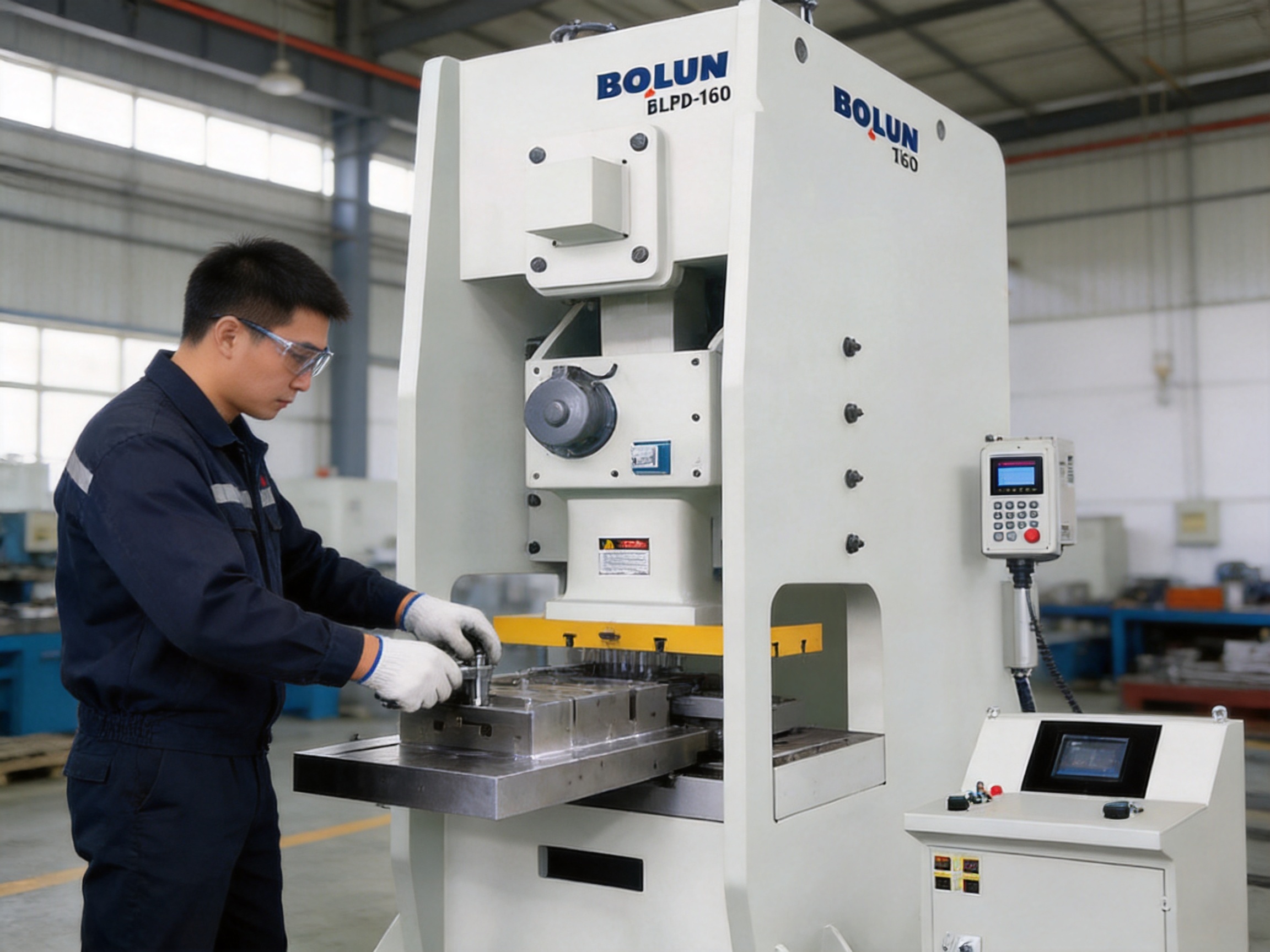
Machine assembly is where design and component quality become a finished product. For a power press, assembly requires careful alignment of the frame, slide, drive components, worktable, adjustment system, lubrication points, electrical components, and safety-related systems. Even high-quality parts can fail to deliver expected performance if assembly is inaccurate.
Bolun applies a rigorous production management system developed through long-term industry experience. The assembly process is carried out with attention to mechanical fit, motion smoothness, fastening reliability, and operational testing. Proper alignment supports slide accuracy, reduces abnormal wear, and improves the machine’s ability to maintain stable performance under load.
The company’s finished product inspection system exceeds ordinary industry expectations. This means that inspection is not limited to basic appearance checks. It includes functional verification, dimensional confirmation, operational stability review, and quality control across processes and components. The objective is to ensure that every delivered machine can perform reliably in high-intensity industrial conditions.
For customers, this inspection culture matters. A power press is a long-term capital investment. Failures, misalignment, and quality problems can interrupt production and cause significant cost. A manufacturer that invests in final inspection helps reduce these risks and supports customer confidence.
Quality is described as the lifeline of Bolun’s development. This philosophy is especially relevant for press manufacturing because quality problems may not always appear immediately. A poorly made press may run during initial testing but lose accuracy, develop vibration, or suffer from premature component wear after extended use. Long-term reliability requires strong design, good materials, precise machining, skilled assembly, and strict inspection.
The BLPD-160 is built for stable precision under heavy-load conditions. Its frame strength, motor capability, adjustment features, and worktable size all contribute to reliability. However, the deeper source of reliability is the manufacturing system behind the machine. When every process is controlled, from basic design to final assembly, the finished product becomes more predictable and durable.
Bolun’s approach includes rigorous control of every process and every component. This process-based quality management is essential because a press is a system, not a single part. The frame, slide, motor, clutch, electrical system, bearings, guides, and adjustment mechanisms must all work together. Weakness in one area can affect the entire machine.
Long service life is also supported by stable precision. When a machine maintains alignment and controlled motion, tooling experiences less abnormal stress. Reduced tool damage, fewer part defects, and more predictable maintenance intervals all contribute to lower total cost of ownership.
The BLPD-160 is suitable for a wide range of stamping and forming applications. Its 1600 kN capacity, semi-closed structure, 200 mm stroke, and large table make it useful in industries requiring medium to heavy forming capability. It can be used for blanking, punching, bending, shallow drawing, forming, trimming, and other press operations depending on tooling and material conditions.
In automotive component manufacturing, it may be used for brackets, reinforcement plates, structural parts, covers, and formed sheet metal components. The need for consistent dimensions makes frame stability and die height control especially important. In household appliance manufacturing, it can support panels, housings, internal brackets, and formed metal structures. In electrical equipment production, it can be used for enclosures, mounting plates, cabinet parts, and hardware pieces.
Hardware and general metal product manufacturers can also benefit from the machine’s versatility. Many such factories produce a mix of products in varying batch sizes. The combination of electric slide adjustment and digital die height display helps them change dies more quickly and maintain repeatability across different jobs.
Because the press offers strong stability and practical access, it can be integrated into production lines with feeding systems, material straighteners, decoilers, transfer devices, or part collection systems, subject to customer requirements and safety design. Its flexible worktable and semi-closed design make it a practical choice for manufacturers upgrading from smaller or less rigid machines.
Production efficiency is not determined only by machine speed. It includes setup time, adjustment accuracy, downtime, scrap rate, tool life, operator convenience, and maintenance requirements. The BLPD-160 contributes to efficiency in several interconnected ways.
The electric slide adjustment reduces manual effort and speeds up die setting. The digital die height indicator supports repeatable setup, which is valuable when the same die is used repeatedly over time. The high-rigidity frame reduces the need for frequent correction caused by deformation or vibration. The large table supports flexible tooling, reducing limitations during production planning.
Stable operation also helps reduce scrap. When a press maintains consistent motion and die alignment, the stamping process becomes more predictable. This is especially important for formed parts where small variations can lead to unacceptable quality. Reduced scrap directly lowers material cost and improves delivery reliability.
Tool life may also improve because stable press operation reduces abnormal loading. Dies are expensive assets, and their maintenance cost can be significant. A press that supports proper alignment and controlled force transmission helps protect these tools over long production runs.
A machine’s value is strongly affected by how easily operators and maintenance teams can use it. The BLPD-160 is designed with practical operation in mind. The electric slide adjustment system reduces physical workload, while the digital die height indicator makes settings easier to confirm. The semi-closed structure provides stability without making the tooling area excessively difficult to access.
During die changes, operators need space to install, align, and secure tools. The 980 × 800 mm worktable provides sufficient working area for many tooling arrangements. The 200 mm slide stroke gives useful clearance for tool installation and forming requirements. These features help reduce the time and difficulty associated with production changeover.
Maintenance teams benefit from a machine built with manufacturing discipline. Precise component fit, stable assembly, and controlled inspection contribute to predictable maintenance behavior. When a machine is produced with consistent quality, maintenance planning becomes easier and unexpected downtime can be reduced.
One of Bolun’s important strengths is its ability to provide one-stop design and manufacturing services for products with special specifications and functions. In the machinery industry, standard models cannot always satisfy every production requirement. Customers may need customized machine dimensions, special automation interfaces, modified controls, unique safety solutions, or press configurations designed around specific tools.
Bolun’s design and manufacturing integration allows the company to respond to these needs. Instead of treating customization as an afterthought, the company’s production system supports non-standard development from design through final assembly. This gives customers a more practical path to equipment that matches their process requirements.
One-stop service also includes pre-sales consultation, in-sales support, and after-sales guarantees. Pre-sales consultation helps customers select suitable equipment based on material, part shape, tonnage requirements, production volume, and tooling plans. In-sales support helps coordinate technical details, manufacturing progress, and delivery requirements. After-sales service helps customers maintain performance after installation.
This service structure is an advantage over suppliers that only sell machines without strong technical follow-up. For press users, application knowledge and service responsiveness are as important as the machine itself.
The global stamping industry is moving toward intelligent, digital, and integrated production. Manufacturers increasingly require machines that can support process standardization, data recording, automated feeding, safety monitoring, and efficient changeover. The BLPD-160’s digital die height indicator and electric adjustment system align with this direction by improving setup visibility and repeatability.
Bolun has expressed a commitment to increasing investment in intelligent and digital stamping equipment. This is important because modern factories are no longer satisfied with machines that only provide mechanical force. They need equipment that can integrate into more organized production systems. Digital parameters, repeatable settings, and standardized processes help support quality control and production management.
As factories adopt lean manufacturing and smart workshop practices, presses with better adjustment control become more valuable. Operators can record settings, reduce reliance on memory, and improve consistency between shifts. Maintenance teams can better understand machine behavior. Managers can plan production with greater confidence.
Power presses are high-force machines and must be operated with proper safety measures. While this article focuses on performance and manufacturing quality, safety should always be a central consideration in any press application. Proper guarding, operator training, die safety design, feeding methods, lockout procedures, and maintenance discipline are essential.
The semi-closed structure can support more stable operation, but safe production depends on the complete production system. Users should ensure that the press is installed on a suitable foundation, that electrical systems are properly connected, that operators receive training, and that maintenance is performed according to recommended schedules. Tooling should be designed and inspected carefully to avoid unsafe loading conditions.
When integrating automatic feeders, decoilers, straighteners, or robotic handling equipment, safety interlocks and process coordination should be carefully reviewed. A high-quality press provides the foundation, but safe use requires responsible operation by the manufacturer, integrator, and end user.
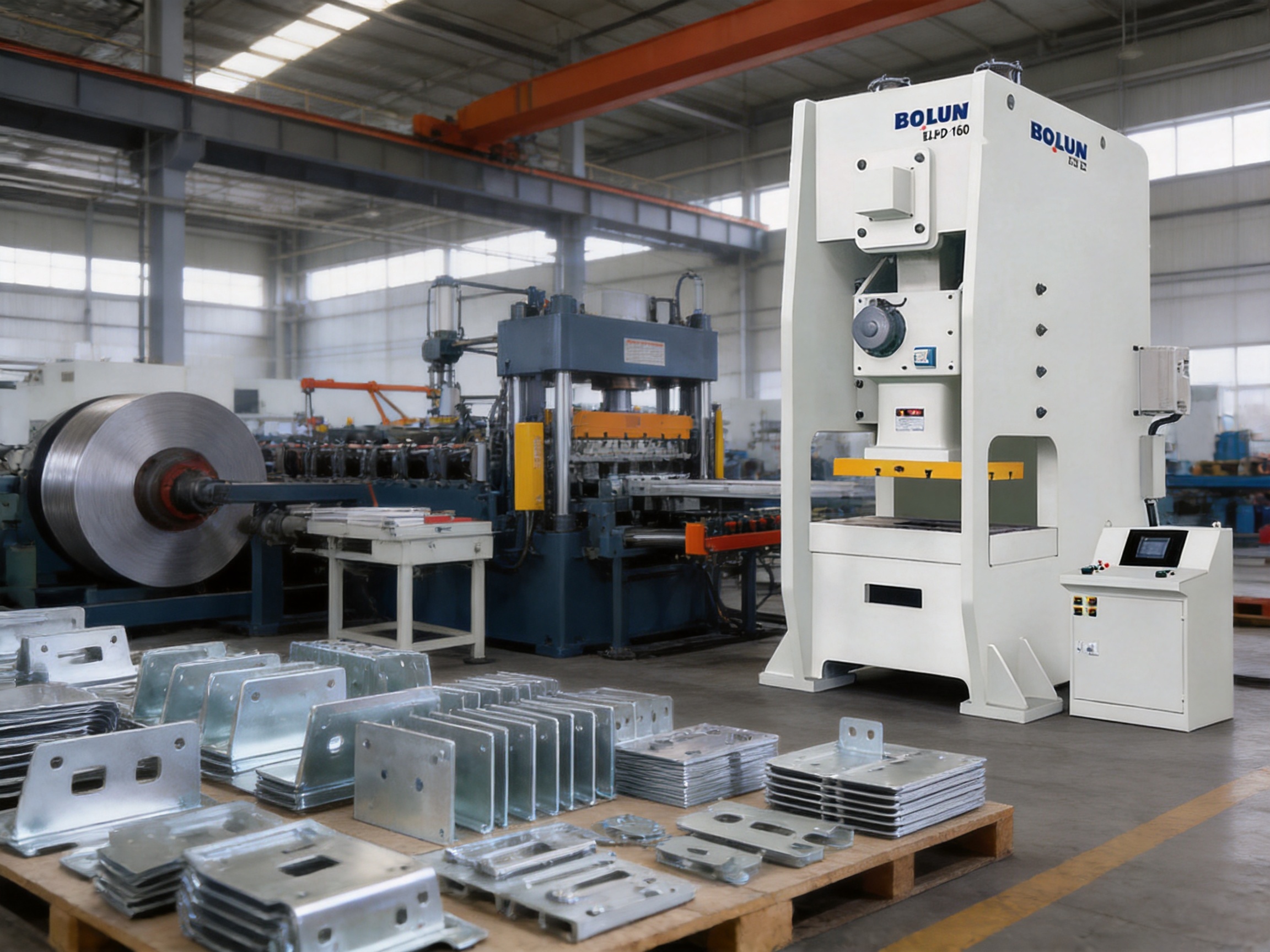
When comparing presses, buyers often look first at purchase price. However, the total cost of ownership includes many additional factors: productivity, energy use, downtime, repair cost, tool wear, scrap rate, setup time, and service life. A lower-priced machine may become more expensive if it lacks rigidity, requires frequent repair, or produces inconsistent parts.
The BLPD-160 offers value through stable structure, practical automation-friendly features, and manufacturing quality. Its high-rigidity frame supports long-term accuracy. Its electric slide adjustment and digital die height indicator reduce setup time. Its large worktable and 200 mm stroke expand application flexibility. Its 15 kW high-torque motor supports reliable operation under load.
For users producing high-value parts or operating multiple shifts, these benefits can be more important than initial price differences. Reduced scrap, improved die life, faster changeover, and lower downtime all contribute to long-term economic performance. In many factories, reliability and repeatability are the true sources of profitability.
The BLPD-160 belongs to a semi-closed single-point power press category, which gives it a distinct position among open-type, closed-type, and other power press solutions. Open-type presses are suitable for many general applications and offer easy access. They are often used for lighter stamping, small to medium parts, and operations where tooling convenience is a primary concern. However, for heavier forming and higher precision needs, open frames may not always provide the desired stiffness.
Closed-type presses are typically selected for high rigidity and heavy-duty applications. They are excellent for demanding production where frame deflection must be minimized. However, their more enclosed structure may be less convenient for certain setup and feeding arrangements. They may also represent a larger investment depending on configuration.
The BLPD-160’s semi-closed structure offers a balanced alternative. It improves frame support compared with many open presses while retaining practical accessibility. For manufacturers that need strength, flexibility, and efficient tooling changes, this structure can be more suitable than either extreme. It is especially valuable for production environments with varied part types and medium to heavy forming requirements.
Manufacturers choose a press based on current production needs and future growth plans. The BLPD-160 is attractive because it combines capacity, stability, setup convenience, and manufacturing reliability. It can support demanding operations while remaining flexible enough for varied tooling. Its features are not decorative; they directly address common production challenges.
For a factory struggling with inconsistent part dimensions, the press’s rigid structure and stable operation can help improve quality. For a company facing long die change times, electric slide adjustment and digital die height indication can improve setup efficiency. For a user whose current press has limited table space, the 980 × 800 mm worktable provides greater tooling freedom. For production lines requiring sustained operation, the 15 kW high-torque motor and robust frame support reliable performance.
Another reason to choose this machine is the manufacturer’s production background. Bolun’s two decades of experience, full-chain manufacturing system, precision processing capability, non-standard customization, and strict quality inspection provide support beyond the machine’s specification sheet. Buyers are not only purchasing equipment; they are selecting a manufacturing partner.
The BLPD-160 is a semi-closed single-point power press designed for stable drawing, forming, stamping, bending, blanking, and related metal forming operations. Its structure provides a balance between rigidity and tooling accessibility.
The press has a nominal capacity of 1600 kN, making it suitable for medium to heavy-duty stamping and forming applications.
The semi-closed frame improves rigidity compared with many open-type presses while retaining practical access for tooling and material handling. This helps reduce deformation, improve die alignment, and support stable precision during production.
Key advantages include a 16.8-ton high-rigidity frame, 200 mm slide stroke, 980 × 800 mm worktable, electric slide adjustment, digital die height indicator, and a 15 kW high-torque motor. These features support stronger stability, faster setup, better repeatability, and reliable continuous operation.
The digital die height indicator allows operators to set and verify die height more accurately. Proven settings can be recorded and reused, reducing setup variation and improving repeatability during future production runs.
Yes. The electric slide adjustment system, digital die height display, practical worktable size, and semi-closed accessibility make it suitable for production environments where die changes occur regularly.
The press can be used in automotive parts, household appliances, electrical enclosures, hardware manufacturing, metal brackets, structural components, and general sheet metal forming applications.
The manufacturer integrates R&D, design, production, sales, and service. It has advanced precision processing equipment, mature production management, non-standard customization capability, and a strict finished product inspection system.
Yes. Bolun provides one-stop design and manufacturing services for special specifications and functions, allowing customers to adapt equipment to particular tooling, production, automation, or installation requirements.
Users should evaluate part material, thickness, forming force, die size, stroke requirements, production volume, automation plans, safety requirements, and future product flexibility. Matching the press to the complete production process is essential for best results.
The BLPD-160 Versatile Balanced-Stability Semi-Closed Single-Point Power Press is a strong solution for manufacturers seeking reliable forming capacity, improved rigidity, and efficient die setup. Its 1600 kN nominal capacity, 16.8-ton high-rigidity frame, 200 mm slide stroke, 980 × 800 mm worktable, electric slide adjustment, digital die height indicator, and 15 kW high-torque motor create a balanced machine for demanding production environments.
Its semi-closed structure gives it a meaningful advantage over many open-type presses while preserving practical accessibility that fully closed machines may not always provide. This makes it a versatile choice for factories that require both stability and flexibility. Whether used for drawing, forming, bending, blanking, or general stamping, the press is designed to support consistent quality and dependable performance.
Behind the machine is Zhejiang Bolun High-Precision Machinery Co., Ltd., a manufacturer with deep roots in precision machinery, full-chain production capability, advanced processing equipment, customization strength, and strict inspection standards. These manufacturing advantages help ensure that the machine is not only powerful on paper but reliable in actual industrial operation.
For companies upgrading stamping capacity, improving production consistency, reducing setup time, and strengthening long-term competitiveness, the BLPD-160 represents a practical and capable investment in high-precision forming equipment.
1. Altan, T., and Tekkaya, A. E. Sheet Metal Forming: Processes and Applications. ASM International.
2. Lange, K. Handbook of Metal Forming. Society of Manufacturing Engineers.
3. Kalpakjian, S., and Schmid, S. R. Manufacturing Engineering and Technology. Pearson.
4. Schuler GmbH. Metal Forming Handbook. Springer.
5. Society of Manufacturing Engineers. Fundamentals of Tool Design.
6. Groover, M. P. Fundamentals of Modern Manufacturing: Materials, Processes, and Systems. Wiley.


Contact Us

bolunpress@gmail.com

+86-575-83362228

+86-15158259588

+86-575-83362999

+86-15158259588

Hangzhou Office Add: No. 332 Wangjiang East Road, Shangcheng District

No.1 Linjiang Road East, Xiaren, Jinting Town, Shengzhou City, Zhejiang Province, China
Ready to Begin?
Get in Touch

Now!

ZHEJIANG BOLUN
 English
 中文简体
中文简体