
In modern metal forming, manufacturers are under constant pressure to improve accuracy, reduce downtime, increase throughput, and handle increasingly complex part geometries. The BLPS-35 Versatile High-Stability Open-Gap Deep-Throat Power Press is designed for these demands. With a nominal force of 350 kN, a maximum operating speed of 180 strokes per minute, a 780 × 340 mm worktable, an extended die height of up to 250 mm, and a deep throat range of 500–1200 mm, this machine provides a practical combination of power, working clearance, stability, and production efficiency.
This product belongs to the open-type power press family and is especially suitable for applications requiring extended access from the frame center. Unlike conventional compact open-gap presses, the deep-throat configuration creates a larger operational window for material feeding, positioning, and part handling. This makes it particularly valuable for precision stamping, perforating, bending, trimming, forming, and specialized mold operations where ordinary throat depth can restrict productivity or part design freedom.
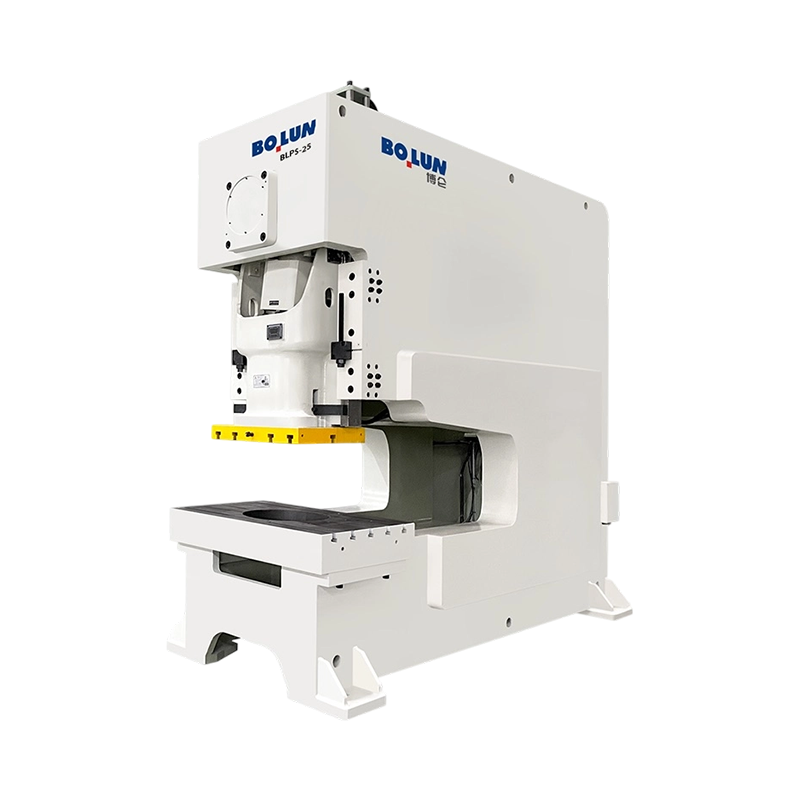
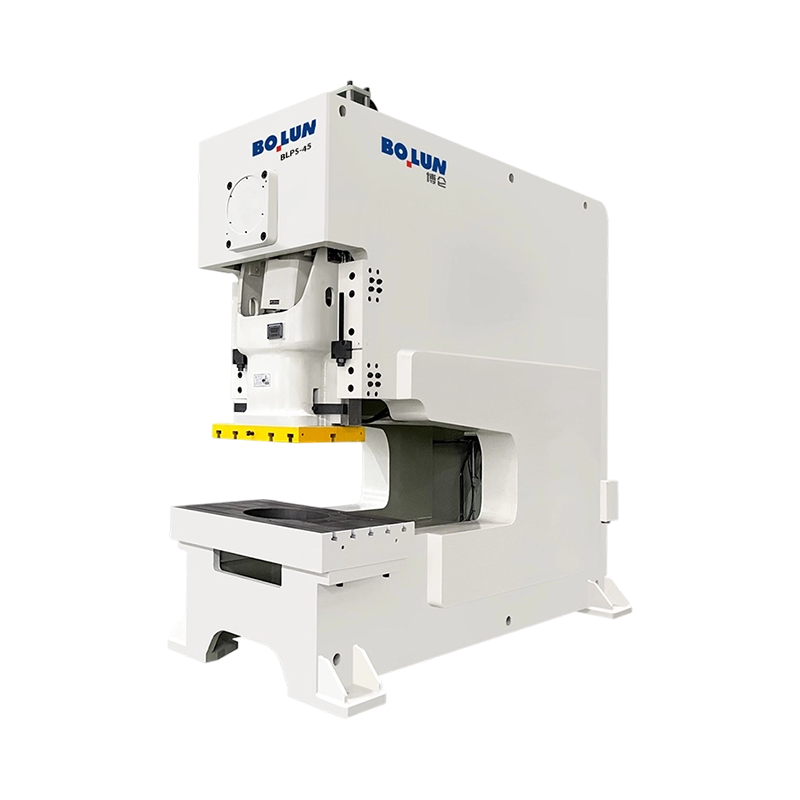
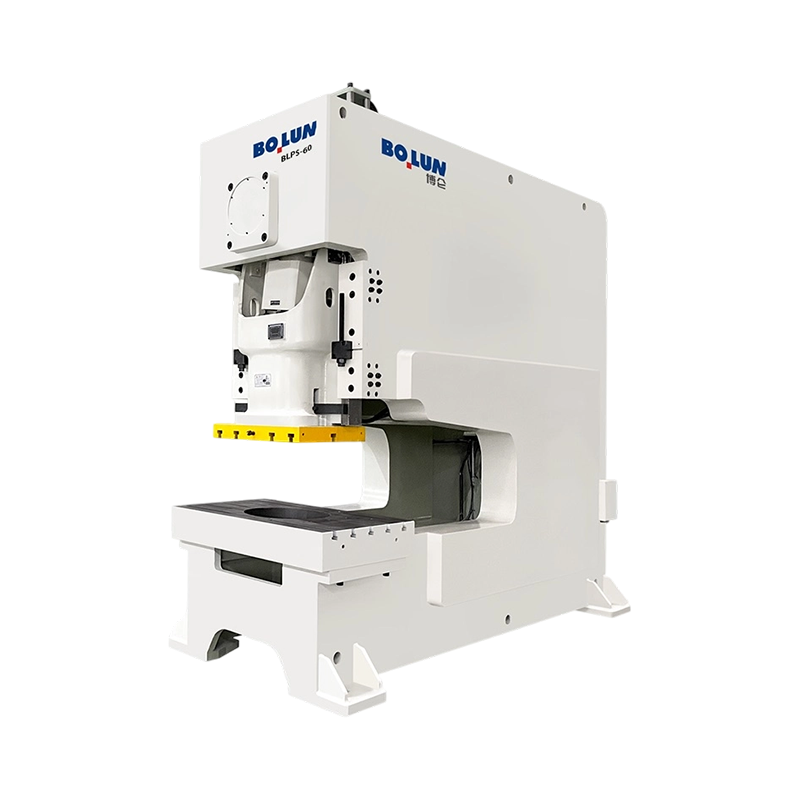
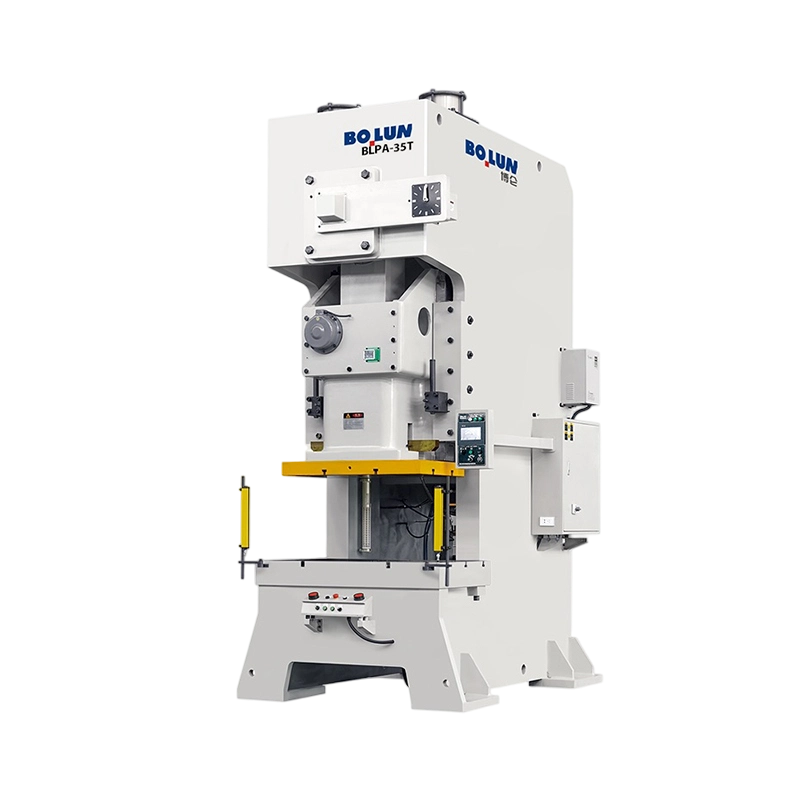
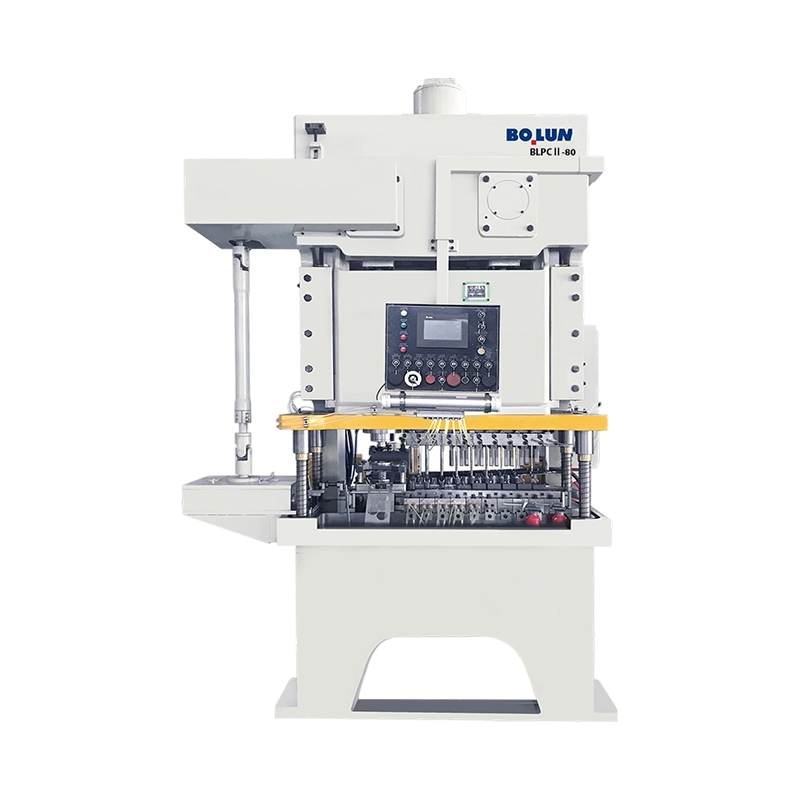
BLPS-35 Versatile High-Stability Open-Gap Deep-Throat Power Press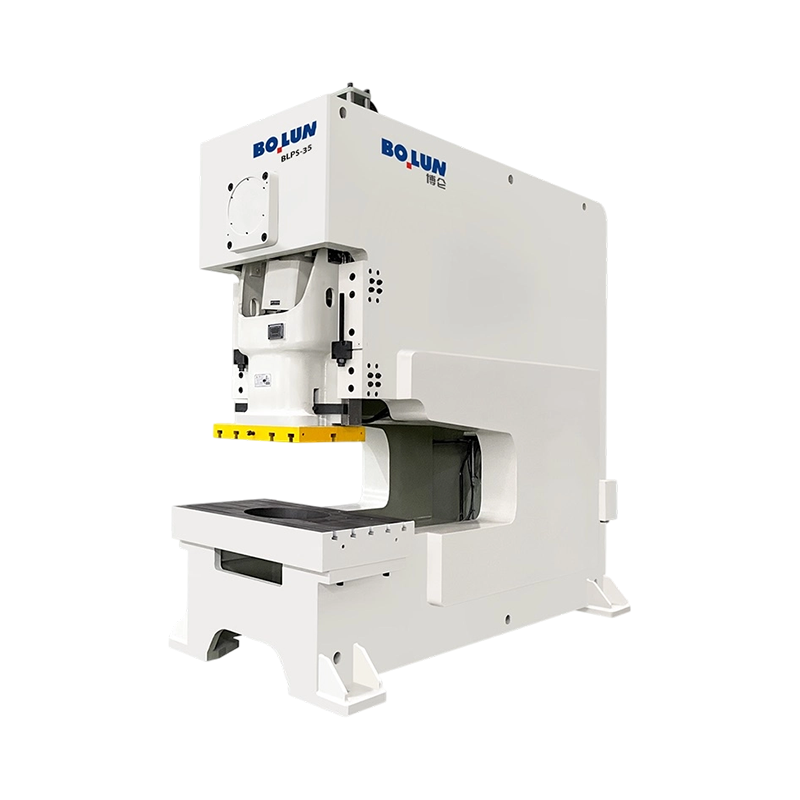
The BLPS-35 is more than a press with higher tonnage. It is engineered as a high-stability forming platform. Its uniform load distribution, vibration-damping structure, stable frame behavior, and high-speed operating capability allow users to maintain consistent accuracy during continuous production. For manufacturers working with metal sheets, electrical components, appliance parts, precision hardware, light automotive components, and custom metal products, these characteristics translate into better dimensional repeatability, lower scrap rates, and more predictable production planning.
Zhejiang Bolun High-Precision Machinery Co., Ltd. supports this product with two decades of industry experience in precision machinery manufacturing. The company integrates research and development, design, production, sales, inspection, and service into a complete operating system. Its strengths are not limited to machine assembly; they include customized engineering, core component development, precision processing, quality inspection beyond common industry standards, and customer-oriented service support throughout the full equipment life cycle.
The BLPS-35 is positioned for users who need greater working clearance than a conventional open-gap press can provide, but who still require compact operation, efficient output, and flexible mold compatibility. Its open-gap deep-throat structure allows operators and automation systems to work with larger sheets, irregular blanks, elongated parts, or production layouts that require feeding material deeper into the press area.
In many factories, forming equipment is selected only by nominal force. However, power alone does not determine production capability. A press must also provide enough throat depth, sufficient table area, suitable die height, reliable speed, and structural stability under repeated loading. The BLPS-35 balances these factors. Its 350 kN nominal force is appropriate for a wide range of light-to-medium precision forming tasks, while its deep throat and extended die height increase mold and part compatibility.
Compared with standard open-type presses that may be limited by shorter throat dimensions, the BLPS-35 offers a practical advantage in part handling. When workpieces are wide, long, or difficult to position close to the frame, the deeper throat provides more freedom. Operators can place materials with less interference, and automated feeding systems can be arranged with greater flexibility. This improves process flow and reduces the need for secondary handling or complicated fixture design.
The machine is also designed for high-speed consistency. A maximum operating speed of 180 strokes per minute allows users to pursue efficient production where part geometry and process conditions permit. More importantly, the machine is built to maintain accuracy at speed. In press operations, high speed without stability can lead to inconsistent forming, excessive vibration, tool wear, and poor dimensional control. The BLPS-35 addresses this challenge through a vibration-damping structure and an emphasis on uniform load distribution.
The technical value of the BLPS-35 can be understood through several key specifications and design features. Each parameter contributes to its suitability for precision forming, specialized mold use, and high-efficiency manufacturing.
| Parameter | Specification | Practical Benefit |
|---|---|---|
| Nominal Force | 350 kN | Provides forming power for a broad range of precision metalworking operations. |
| Maximum Speed | Up to 180 strokes per minute | Supports high-output production while maintaining process efficiency. |
| Worktable Size | 780 × 340 mm | Offers a stable platform for molds, fixtures, and workpieces. |
| Die Height | Up to 250 mm | Allows compatibility with taller or more specialized molds. |
| Main Motor Power | 3 kW | Delivers efficient drive performance for continuous production. |
| Throat Depth | 500–1200 mm | Provides extended clearance for large, long, or difficult-to-position workpieces. |
| Structure | Open-gap deep-throat design | Improves material access, operator convenience, and layout flexibility. |
| Stability Features | Uniform load distribution and vibration damping | Enhances accuracy, tool life, and production repeatability. |
The 350 kN force rating gives the machine enough capacity for many stamping and forming tasks without excessive energy consumption or unnecessary equipment size. This makes it suitable for factories that need reliable forming power but do not require a large closed-frame press. The 3 kW main motor also supports efficient operation, helping users balance production performance with energy awareness.
The 780 × 340 mm worktable provides a practical mounting surface for dies and tooling. A table of this size allows the press to handle a wide range of mold structures while maintaining enough support to stabilize the process. In many precision forming applications, die stability is as important as press force. If the mold base is not properly supported, part quality can deteriorate even when the nominal tonnage is sufficient.
The extended die height of up to 250 mm gives the BLPS-35 increased mold adaptability. Manufacturers often need to run specialized dies, progressive tooling, compound dies, or forming tools with additional guide structures. A taller die space reduces limitations during tooling selection and helps users adapt the machine to more production programs over time. This is especially important for factories that serve multiple customers or manufacture different product families.
The deep-throat configuration is one of the defining characteristics of the machine. With a throat depth range of 500–1200 mm, the press provides clearance that standard open-gap models cannot easily match. This is beneficial when processing larger sheets, long strips, panels, enclosures, brackets, or components requiring operations far from the edge of the material. The deeper reach expands process possibilities and reduces the need for alternative machines or manual repositioning.
When compared with ordinary open-type power presses, the BLPS-35 offers a stronger combination of clearance, stability, speed, and tooling flexibility. Many conventional presses perform well in basic stamping tasks but become less efficient when parts are larger, dies are taller, or forming positions are located farther from the material edge. The BLPS-35 is engineered to overcome these common limitations.
The first advantage is deep-throat accessibility. A standard open-gap press may require operators to reposition materials repeatedly or use additional handling steps for workpieces that extend beyond the normal throat depth. This can slow production and increase the risk of positioning errors. The BLPS-35 allows deeper material entry, improving access to forming locations that are difficult to reach on standard machines. This advantage is especially valuable in low-to-medium batch production, custom forming, and applications where product dimensions vary frequently.
The second advantage is stability under high-speed operation. Competitor machines may advertise high stroke rates, but without structural damping and load balance, actual usable speed may be lower than the rated speed. Excessive vibration can reduce accuracy, accelerate wear, and affect operator confidence. The BLPS-35 uses a vibration-damping structure to support stable operation at up to 180 strokes per minute. This helps maintain precision in continuous cycles and improves the reliability of production output.
The third advantage is uniform load distribution. In press work, off-center loads and uneven stress can shorten tool life and affect machine accuracy. Uniform load distribution helps control deformation and allows the press to perform more predictably. For precision parts, the difference between a stable load path and an unstable one can determine whether production remains within tolerance over thousands or millions of cycles.
The fourth advantage is mold compatibility. With a die height of up to 250 mm and a worktable size of 780 × 340 mm, the machine supports a wide range of tooling configurations. Some competitor presses may force users to redesign tools around equipment limitations. The BLPS-35 helps reduce this restriction, allowing users to adapt existing tooling more easily or design specialized molds with fewer compromises.
The fifth advantage is production flexibility. In many workshops, a press must support more than one product. The BLPS-35 can be applied to different operations such as blanking, punching, bending, shallow drawing, flattening, trimming, and forming. Its deep-throat reach and stable structure make it useful across changing production needs. This flexibility can improve equipment utilization and reduce the need to purchase multiple specialized machines.
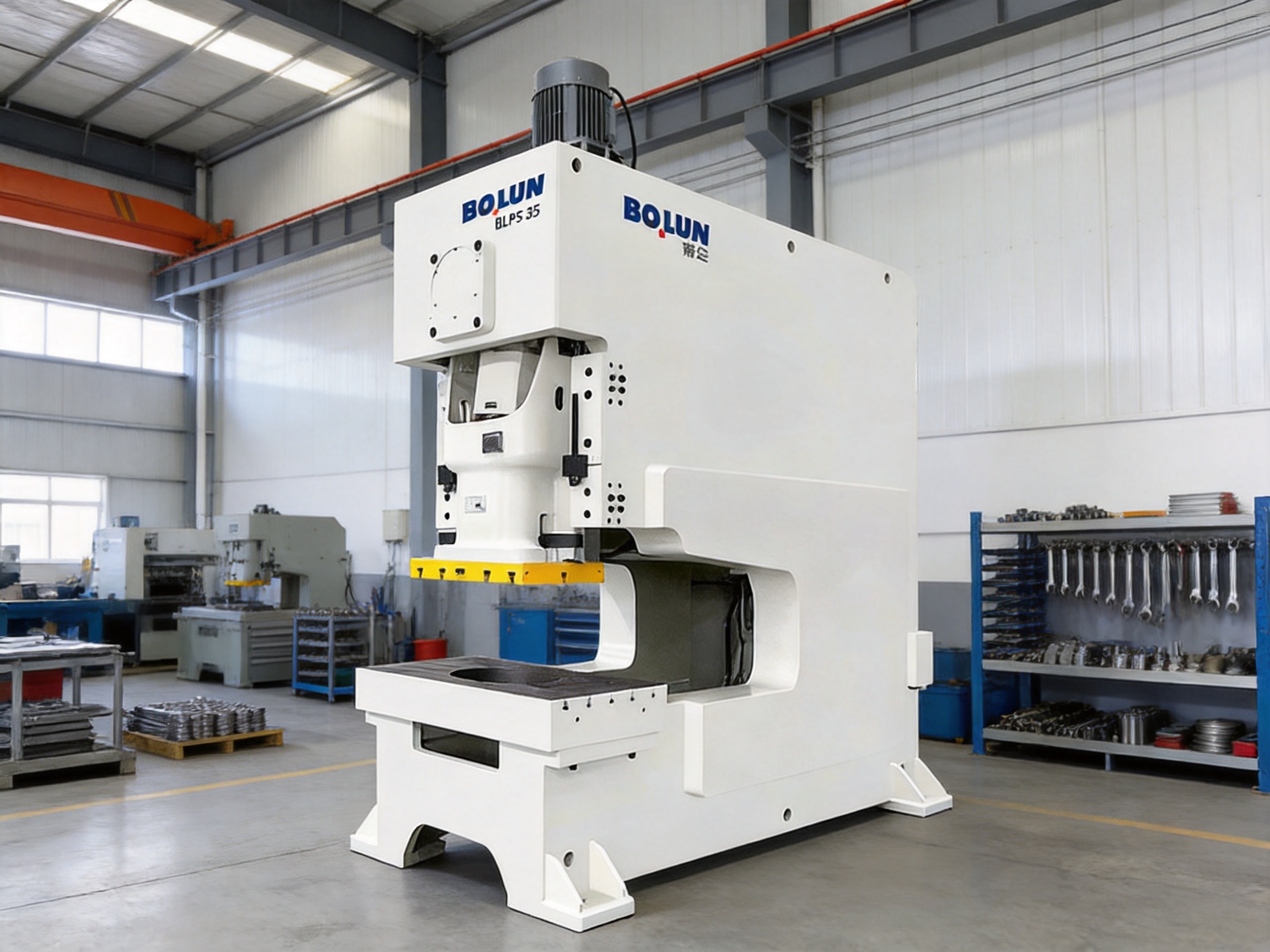
The sixth advantage is its balance between performance and practicality. A closed-type power press may offer high rigidity, but it can be more expensive, occupy more space, and provide less open access for certain workpieces. A standard open-type press may be economical but limited in clearance and stability. The BLPS-35 occupies a valuable middle ground: it maintains open access and flexible handling while offering enhanced throat depth and stability for more demanding applications.
The open-gap deep-throat design is particularly important for manufacturers that process large or irregular parts. In metal forming, the relationship between the frame and the forming point determines what types of workpieces can be processed efficiently. If the throat is shallow, the forming position must be close to the material edge. If a product requires holes, bends, embossing, or forming features farther inward, a shallow-throat press may not be suitable.
The BLPS-35 addresses this limitation by enabling a deep working reach. This makes it easier to perform operations on wider sheets and components. Operators can position material deeper into the press without interference from the frame. In manual operation, this improves convenience and reduces physical strain. In semi-automatic or automatic production, it gives engineers more freedom to design feeding and positioning systems.
Greater throat depth can also reduce secondary processing. In some production environments, parts are moved from one machine to another because no single press can reach all required forming locations. Each transfer increases labor, time, and quality risk. By extending the usable forming area, the BLPS-35 can consolidate operations and simplify production flow.
For manufacturers of electrical enclosures, ventilation components, metal panels, appliance brackets, lighting parts, metal frames, and precision hardware, this working clearance can be a direct competitive advantage. It allows production teams to accept more complex orders and respond quickly to customer design changes. In a market where customization is increasingly common, adaptable forming equipment improves business resilience.
The deep-throat structure also supports specialized molds. Some dies require additional guide posts, feeding channels, sensors, or part positioning mechanisms. A larger working clearance helps accommodate these features. Rather than restricting tooling to compact designs, the BLPS-35 allows engineers to prioritize part quality and process reliability.
Precision forming depends on controlled movement. Every stroke of a press must deliver force in a predictable way. If the machine frame vibrates excessively, if the slide motion is unstable, or if the load path is uneven, the final part can deviate from specification. Over time, these deviations can cause cumulative quality problems, higher scrap rates, and increased tool maintenance.
The BLPS-35 is characterized by a high-stability structure designed to damp vibration and distribute load evenly. This is particularly important when running at higher speeds. At 180 strokes per minute, even small vibration issues can become significant. A vibration-damping design helps reduce resonance, improve operator confidence, and protect the mold from unnecessary impact stress.
Uniform load distribution contributes to the machine’s long-term precision. When forming force is not properly distributed, the frame and working components may experience uneven stress. This can affect alignment and cause inconsistent part geometry. By improving load balance, the BLPS-35 supports repeatable results and helps protect the investment in precision tooling.
Stability also influences die life. Tooling can represent a major cost in metal forming production. If a press vibrates or deflects excessively, die components may wear faster, cutting edges may degrade, and guide mechanisms may require more frequent maintenance. A stable press platform helps extend tooling service life, reducing total production cost.
For customers producing precision components, accuracy is not simply a technical preference; it is a commercial requirement. Parts must fit assemblies, meet customer drawings, and pass inspection. The BLPS-35 helps manufacturers build a more reliable process, which can improve customer satisfaction and reduce the risk of delayed delivery caused by rework or quality failure.
The maximum operating speed of 180 strokes per minute gives the BLPS-35 strong productivity potential. In stamping operations, stroke rate directly affects output, especially for small and medium-sized parts produced in large quantities. However, efficient production is not only about speed. It also depends on safe feeding, stable tooling, quick setup, and consistent performance.
The BLPS-35 combines speed with structural stability. This means users can pursue higher throughput without sacrificing accuracy. In competitive manufacturing, this balance is essential. A press that runs quickly but produces unstable parts does not improve profitability. A press that is accurate but too slow may fail to meet delivery schedules. The BLPS-35 is designed to support both productivity and precision.
The open-gap configuration can also reduce setup time. Because access to the working area is more open than many closed-frame alternatives, operators can mount, adjust, and inspect tooling more conveniently. The deep-throat structure gives additional working space for handling larger materials. These practical advantages can shorten changeover time, especially in workshops that process different parts throughout the week.
Efficient operation is further supported by the 3 kW main motor. The motor provides suitable drive power for the machine’s forming capacity while maintaining a practical energy profile. For factories focused on long operating hours, energy efficiency and mechanical reliability both affect operating cost. A well-matched drive system helps ensure that the machine performs consistently without unnecessary power waste.
In high-mix production environments, equipment utilization is a key measure of value. The BLPS-35 can support multiple forming tasks, allowing manufacturers to keep the machine productive across changing orders. This reduces idle time and improves return on investment. For small and medium-sized enterprises, such flexibility can be more valuable than owning a highly specialized machine that only performs one narrow task.
The BLPS-35 is suitable for precision metal forming applications requiring high stability, large working clearance, and consistent high-speed performance. Its feature set makes it relevant to a broad range of industries and components.
In electrical and electronics manufacturing, the press can be used for brackets, shielding parts, terminal plates, mounting tabs, heat dissipation components, and small structural pieces. These parts often require tight tolerances and clean forming edges. Stable slide action and proper die support help maintain consistent geometry.
In appliance manufacturing, the machine can process panels, support components, clips, and formed metal details. Appliance parts often vary in shape and size, making a deep-throat press useful for reaching forming positions on wider workpieces. The ability to handle specialized molds can also support product design variation.
In automotive and transportation-related production, the BLPS-35 can be applied to light-duty brackets, reinforcement pieces, clips, washers, and precision stamped parts. While heavier automotive structural components may require larger presses, many small and medium components benefit from stable, high-speed forming equipment.
In hardware production, the press can support punching, forming, bending, trimming, and shaping operations for hinges, fasteners, connectors, and general metal parts. Hardware manufacturers often require flexible equipment because product dimensions and order volumes vary. The BLPS-35 helps meet this requirement through adaptable die space and working clearance.
In custom metal fabrication, the machine’s deep throat is especially valuable. Custom shops frequently handle parts that do not fit standard processing assumptions. A press with extended clearance enables more creative tooling and production methods. This can help fabricators accept specialized orders that competitors with standard machines may reject.
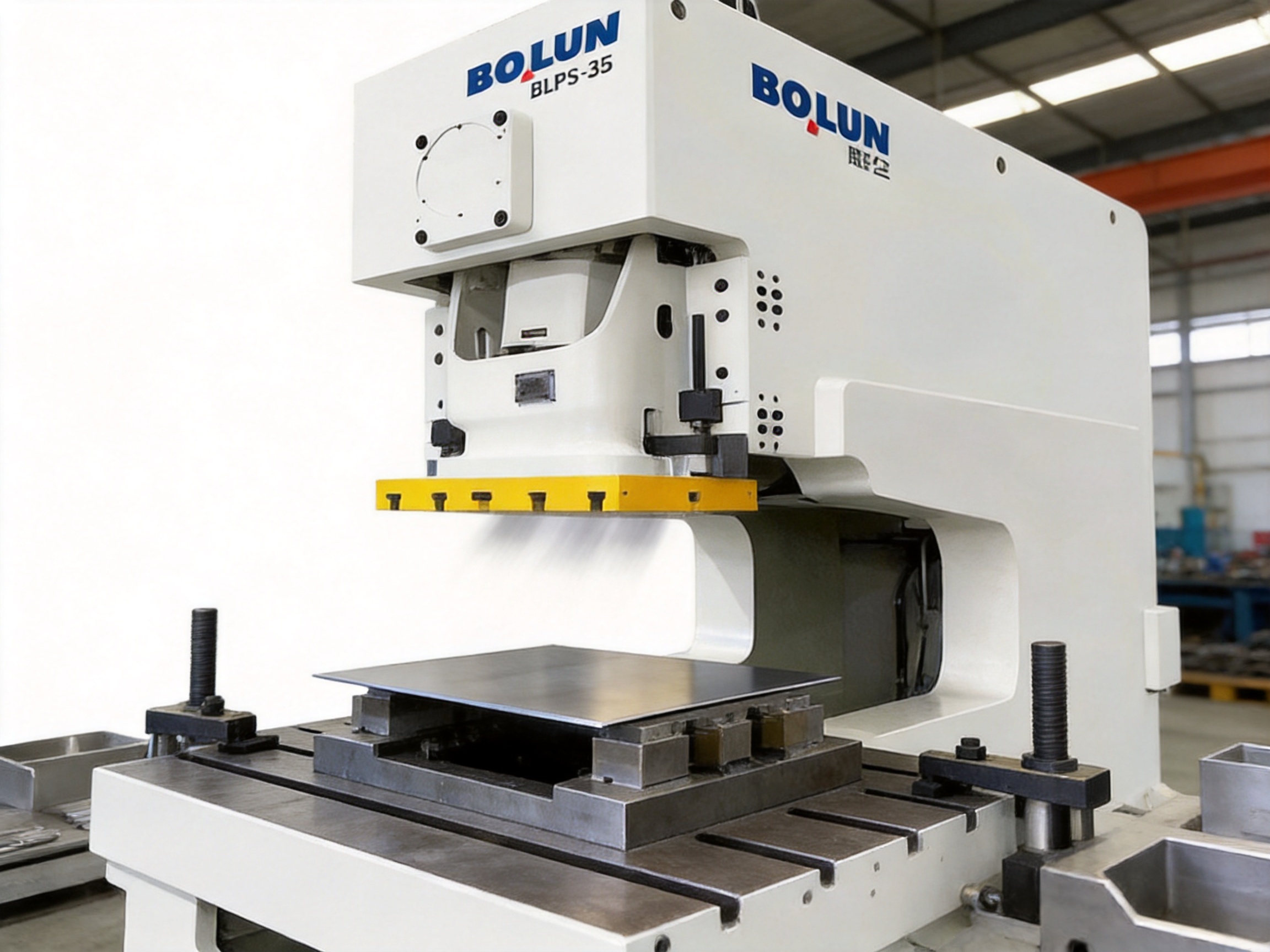
In precision component production, repeatability is essential. The BLPS-35 helps maintain consistent results by combining vibration control, high-speed capability, and a stable forming platform. Whether used in batch production or continuous operation, it provides a dependable basis for forming quality.
The performance of a power press depends not only on its design concept but also on the strength of the manufacturer behind it. Zhejiang Bolun High-Precision Machinery Co., Ltd. is located in Zhejiang, a major center of precision manufacturing in China. With around two decades of experience in machinery manufacturing, the company has developed into a modern enterprise focused on high-precision forming equipment.
The company integrates research and development, design, production, sales, and service. This integrated structure is important because press manufacturing requires coordination between engineering, machining, assembly, inspection, and customer support. When these functions are disconnected, product quality and response speed can suffer. A complete internal system allows the manufacturer to control quality more effectively and respond to customer needs more directly.
One of the company’s strengths is its full-chain production capability. From basic design and core component development to final machine assembly, the company emphasizes control over critical production stages. This helps ensure that machines are not merely assembled from unrelated parts but built as coordinated systems. For customers, this means improved reliability, easier service communication, and better consistency between design intention and final performance.
Another major strength is non-standard customization. Many customers have production requirements that standard catalog machines cannot fully satisfy. Different workpieces may require special throat depth, working height, control functions, feeding interfaces, tooling arrangements, or process adaptations. With a capable design team, the company can provide one-stop design and manufacturing services for products with special specifications and functions.
The company also adopts advanced international production management experience and combines it with the realities of China’s manufacturing environment. This creates a management system that is scientific, efficient, and practical. In machinery manufacturing, good management directly affects delivery reliability, process consistency, inspection discipline, and after-sales response.
Precision processing equipment and a mature industrial environment support the production of stable machine structures and accurate components. A power press must withstand repeated impact loads, so machining quality, component fit, and assembly accuracy are essential. The manufacturer’s focus on precision processing helps create a foundation for long service life and stable operation.
Quality is described by the company as the lifeline of its development. This philosophy is especially relevant to power presses because these machines operate under repeated mechanical stress and are often used in demanding production environments. A press that appears acceptable during initial operation may fail to perform reliably if the manufacturing process lacks strict quality control.
The company has established a finished product inspection system that exceeds common industry standards. This includes careful checks on processes and components to ensure stable precision and long service life under high-intensity operating conditions. For customers, this inspection discipline reduces the risk of receiving equipment that requires frequent adjustment after installation.
Quality control must begin before final assembly. Material selection, component machining, heat treatment where applicable, alignment, assembly procedures, lubrication systems, and functional testing all influence the final machine. A manufacturer with rigorous process control can identify and correct issues before the machine reaches the customer.
Finished product inspection is particularly important for a deep-throat power press because the extended frame reach must maintain stability during operation. The larger the throat depth, the more important structural design and manufacturing quality become. Proper inspection helps confirm that the machine can deliver the required stability and accuracy.
The BLPS-35 benefits from this quality-oriented manufacturing culture. Its value depends on real-world performance: stable operation, repeatable forming, reliable speed, and long-term durability. A strong inspection system helps transform design specifications into dependable production capability.
Purchasing a power press is not merely a transaction; it is a production investment. Customers need support before, during, and after purchase. The company provides a service system covering pre-sales consultation, in-sales support, and after-sales guarantees. This service approach helps customers select suitable equipment, implement production effectively, and maintain machine performance over time.
Pre-sales consultation is important because many users must match press capacity, die requirements, production speed, and material characteristics. Selecting an undersized press can create quality and safety problems, while selecting an oversized machine can waste capital and floor space. Technical consultation helps customers choose equipment that fits their real process needs.
In-sales support can include communication about specifications, production schedule, customization requirements, and installation preparation. For users with special applications, engineering support during this stage can prevent later problems. A deep-throat press may be integrated with feeding systems, safety devices, specialized molds, or production lines, so early coordination is valuable.
After-sales support is essential for maintaining long-term value. Even a well-built press requires proper operation, lubrication, inspection, and maintenance. A responsive manufacturer helps customers solve issues faster and reduce downtime. This is particularly important in production environments where equipment stoppage can affect delivery commitments.
The company’s willingness to work with global partners also reflects its international perspective. As manufacturing becomes increasingly connected across regions, customers need suppliers who understand global quality expectations, communication requirements, and industrial standards. This international outlook strengthens the value proposition of the BLPS-35.
The BLPS-35 reflects a design philosophy based on practical strength, precision, and adaptability. It does not attempt to be the largest press or the most specialized machine in the workshop. Instead, it focuses on solving a common production challenge: how to combine open access, deep reach, stable forming, and efficient speed in one power press.
This design philosophy is important because many manufacturers operate in changing markets. Product lifecycles are shorter, customer requirements are more varied, and production schedules are tighter. Equipment that can adapt to multiple tasks provides strategic value. The BLPS-35 supports this need through its deep throat, sufficient die height, practical worktable, and stable high-speed performance.
Its open-gap structure improves accessibility, while its reinforced stability features help address the traditional weakness of open-type presses: susceptibility to vibration and deflection under certain loading conditions. By emphasizing load distribution and damping, the machine improves the reliability of open-type forming.
The press also demonstrates a balance between engineering and usability. Operators and maintenance teams benefit from accessible working space. Tooling engineers benefit from greater mold compatibility. Production managers benefit from high-speed potential and reliable output. Business owners benefit from equipment utilization across different product categories.
This combination makes the BLPS-35 a strong option for factories seeking a flexible forming solution rather than a narrow-purpose machine. It can become a central press in a production cell, a specialized deep-reach machine for difficult parts, or a dependable high-speed press for recurring orders.
Manufacturers today compete on cost, quality, delivery speed, and responsiveness. The BLPS-35 contributes to all four areas. Its stable structure helps improve quality. Its maximum speed supports output. Its deep-throat design enables more flexible production. Its mold compatibility reduces tooling limitations. Its manufacturer’s quality control and service system support long-term reliability.
Cost competitiveness is improved not only by machine price but by total production economics. A machine that reduces scrap, improves die life, supports multiple products, and lowers handling steps can deliver significant value over time. The BLPS-35 is designed to support these outcomes.
Quality competitiveness comes from repeatability. Customers expect parts that match specifications from the first batch to the last. A stable press platform helps maintain this consistency. When combined with proper tooling and process control, the BLPS-35 can help manufacturers achieve dependable forming results.
Delivery competitiveness depends on production speed and uptime. The machine’s high-speed capability and stable design help users meet production schedules. Its flexible working area can also reduce delays caused by tooling or material-handling limitations.
Responsiveness is increasingly important in custom and small-batch manufacturing. Customers may request design changes, new part dimensions, or urgent production. A deep-throat press with broad mold compatibility gives manufacturers more options for responding quickly without waiting for new equipment.
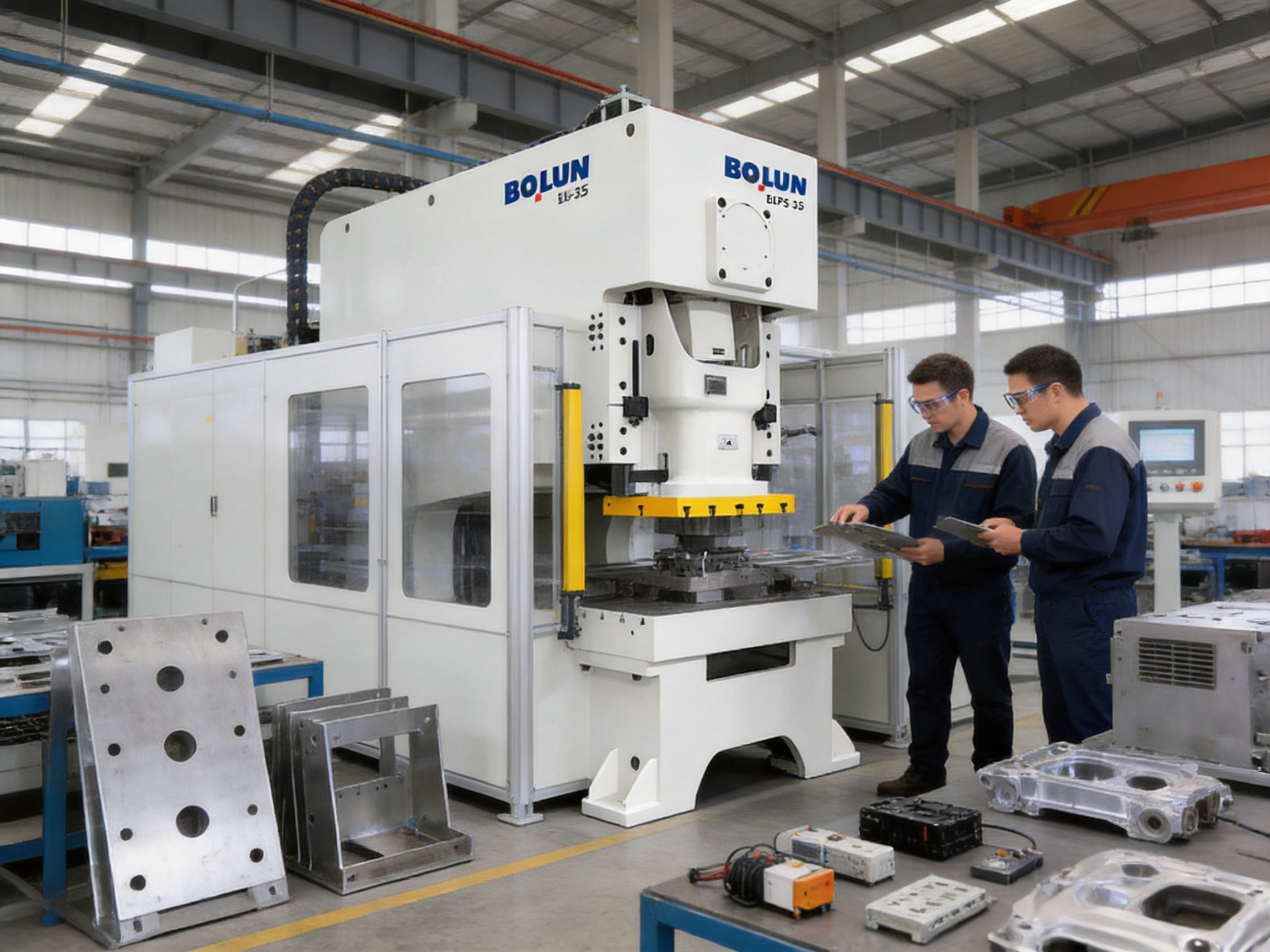
To obtain the best performance from the BLPS-35, users should match the machine with appropriate dies, correct material specifications, and proper operating procedures. Even the most capable press depends on responsible use and process discipline.
Die design should consider the press force, worktable size, die height, and forming position. Because the machine offers extended throat depth, tooling engineers should still ensure that load distribution remains balanced whenever possible. Proper die alignment and secure mounting are essential for maintaining precision.
Material feeding should be planned according to part size and production volume. For manual feeding, operators should be trained in safe positioning and consistent placement. For automatic feeding, equipment should be integrated carefully to avoid misalignment or excessive side loads. The open-gap deep-throat structure provides flexibility, but process planning remains important.
Maintenance should include regular inspection of lubrication, fastening points, alignment, wear components, and safety systems. High-speed operation increases the importance of preventive maintenance. A stable machine will remain stable longer when operated under proper maintenance conditions.
Operators should avoid exceeding rated capacity or using improper tooling. Nominal force provides a guideline for safe operation, but actual forming requirements depend on material thickness, strength, cutting length, forming depth, and die design. Technical consultation can help determine suitable operating parameters.
When used correctly, the BLPS-35 can deliver stable, efficient, and flexible forming performance. Its design gives manufacturers a strong platform, while proper application ensures that the platform reaches its full value.
The BLPS-35 is an open-gap deep-throat power press in the open-type power press family. It is designed for precision metal forming applications that require greater working clearance, stable operation, and efficient production speed.
The machine provides a nominal force of 350 kN, making it suitable for many light-to-medium precision stamping, forming, punching, trimming, and bending operations.
The deep-throat design allows materials to be positioned farther from the frame center, providing greater clearance for large, long, wide, or irregular workpieces. This improves material handling and expands the range of possible forming operations.
The BLPS-35 can operate at up to 180 strokes per minute. This high-speed capability supports efficient production when matched with suitable tooling, materials, and feeding methods.
The machine is characterized by uniform load distribution and a vibration-damping structure. These features help reduce vibration, support accuracy, protect tooling, and maintain repeatability during continuous operation.
The worktable measures 780 × 340 mm, providing a practical and stable mounting area for molds, fixtures, and production tooling.
The press supports an extended die height of up to 250 mm, allowing compatibility with a wider range of specialized molds and tooling structures.
The machine can be used in electrical components, appliance parts, precision hardware, custom metal fabrication, light automotive components, metal brackets, panels, and other formed metal products.
Compared with many standard open-gap presses, the BLPS-35 offers deeper throat clearance, stronger handling flexibility, enhanced stability, and improved compatibility with specialized molds. These advantages help users process more complex parts and maintain higher repeatability.
Zhejiang Bolun High-Precision Machinery Co., Ltd. applies integrated manufacturing, precision processing, full-chain production control, non-standard customization capability, and rigorous finished product inspection to support stable machine quality and long service life.
The BLPS-35 Versatile High-Stability Open-Gap Deep-Throat Power Press is a strong solution for manufacturers that need more than basic stamping capability. Its 350 kN nominal force, 180 strokes-per-minute maximum speed, 780 × 340 mm worktable, 250 mm die height, 3 kW main motor, and 500–1200 mm throat depth create a balanced platform for precision forming and flexible production.
Its greatest value lies in the combination of deep working clearance and high operational stability. The open-gap deep-throat structure improves material handling and expands the types of workpieces that can be processed. The vibration-damping structure and uniform load distribution help maintain accuracy, improve repeatability, and protect tooling under continuous operation.
Compared with conventional competitor presses, the BLPS-35 provides stronger adaptability for specialized molds, larger workpieces, and high-speed production requirements. It offers a practical alternative for manufacturers that need greater reach than ordinary open-type presses while preserving open access and efficient operation.
The product is further strengthened by the manufacturing capabilities of Zhejiang Bolun High-Precision Machinery Co., Ltd. With two decades of experience, integrated R&D and production, advanced processing equipment, rigorous inspection, customization capability, and customer-oriented service, the company provides not only a machine but also a dependable manufacturing solution.
For factories seeking stable precision, greater forming clearance, flexible tooling compatibility, and competitive production efficiency, the BLPS-35 stands out as a capable and forward-looking open-gap deep-throat power press.
Altan, T., Ngaile, G., and Shen, G. Cold and Hot Forging: Fundamentals and Applications. ASM International.
Kalpakjian, S., and Schmid, S. Manufacturing Engineering and Technology. Pearson Education.
Groover, M. P. Fundamentals of Modern Manufacturing: Materials, Processes, and Systems. Wiley.
Boljanovic, V. Sheet Metal Forming Processes and Die Design. Industrial Press.
ASM Handbook, Volume 14B: Metalworking: Sheet Forming. ASM International.
International standards and industrial practices for mechanical power presses, forming equipment inspection, and precision metal stamping production.


Contact Us

bolunpress@gmail.com

+86-575-83362228

+86-15158259588

+86-575-83362999

+86-15158259588

Hangzhou Office Add: No. 332 Wangjiang East Road, Shangcheng District

No.1 Linjiang Road East, Xiaren, Jinting Town, Shengzhou City, Zhejiang Province, China
Ready to Begin?
Get in Touch

Now!

ZHEJIANG BOLUN
 English
 中文简体
中文简体