Modern metal-forming operations require more than high nominal capacity. Automotive components, large appliance panels, structural parts, and precision industrial products must be produced with repeatable accuracy, controlled energy consumption, dependable safety systems, and minimal unplanned downtime. A press selected only by tonnage may perform adequately in simple applications but fail to deliver the rigidity, stability, working envelope, and production flexibility required by demanding manufacturing environments.
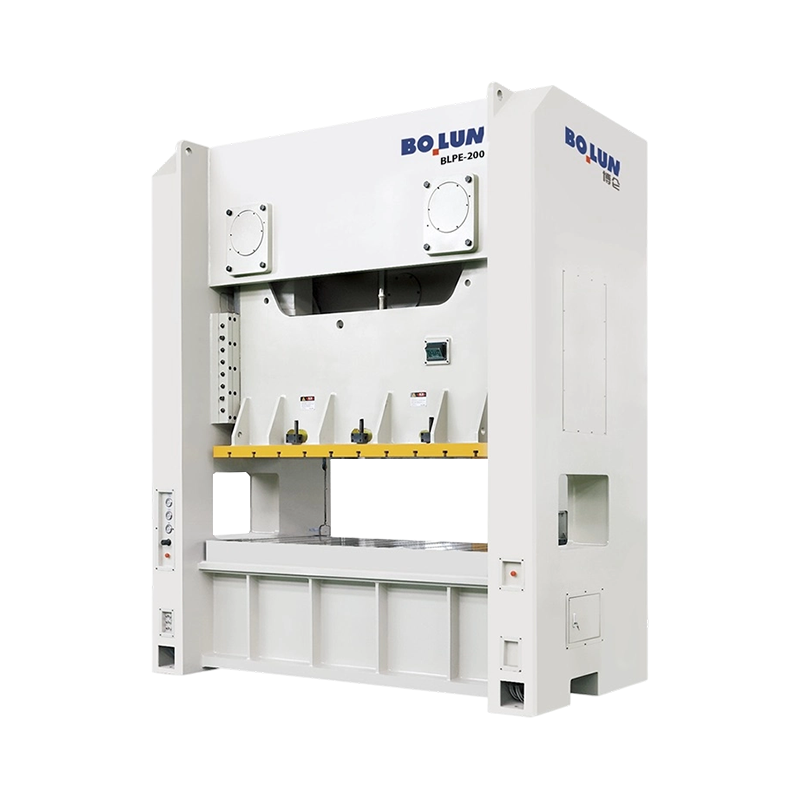
The BLPE-315 High-Capacity Heavy-Duty Closed-Type Double-Point Press is designed for manufacturers that need substantial forming force combined with controlled motion, a stable frame, and production-oriented automation features. With a nominal capacity of 3,150 kN, a 300 mm V-type slide stroke, a maximum die height of 615 mm, and a 30 kW main motor, it occupies an important position between medium-duty stamping equipment and the largest industrial presses.
Its three-section closed-type frame provides a rigid foundation for high-load operations. The double-point slide arrangement helps distribute working force across the die area, supporting stable movement and reducing the tendency toward uneven loading. An electric die-height adjustment and display system improves setup control, while automatic lubrication supports the long-term operation of highly loaded moving components. Photo-electronic safety protection and sensitive control systems further improve the suitability of the press for modern production lines.
This article examines the machine’s construction, operating advantages, production applications, manufacturing strengths, quality philosophy, and selection considerations. It also explains why a precision-oriented manufacturer with integrated design, processing, assembly, inspection, and service capabilities can provide greater long-term value than a supplier focused only on nominal press capacity.
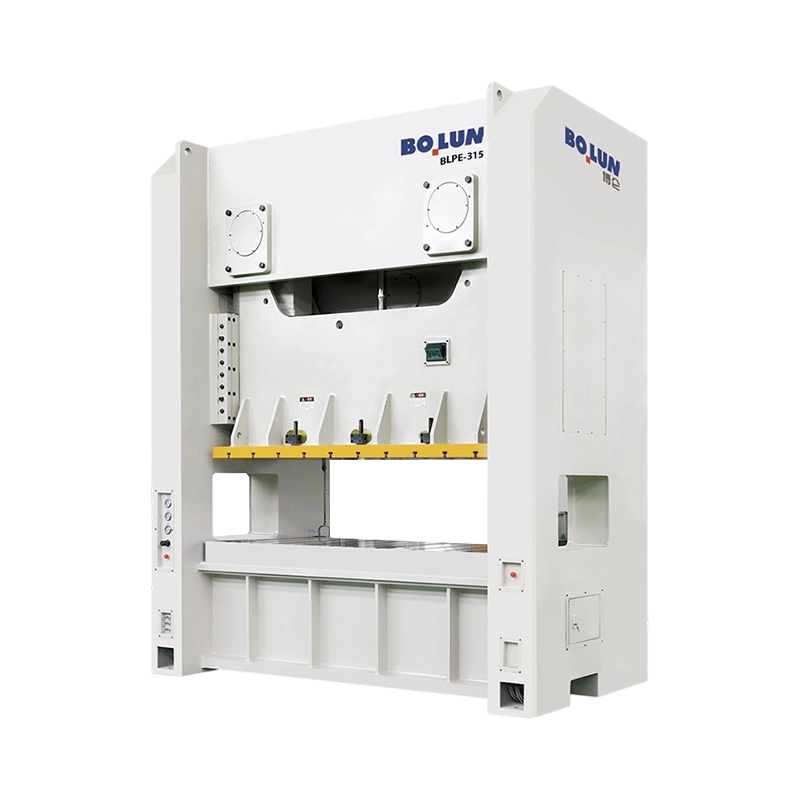
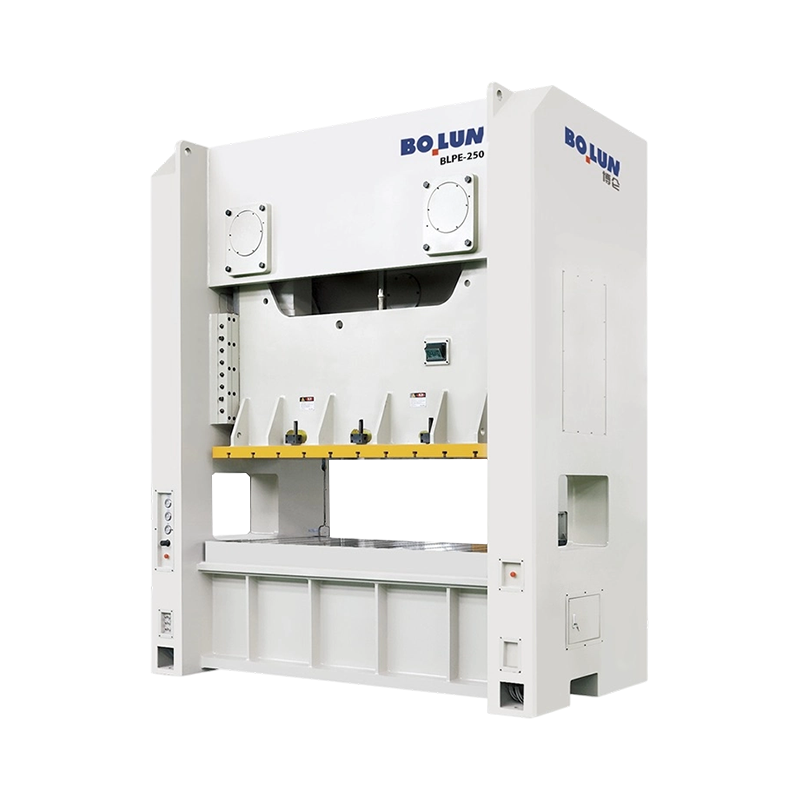
BLPE-315 High-Capacity Heavy-Duty Closed-Type Double-Point Press
The BLPE-315 is a closed-type double-point mechanical power press intended for high-force forming operations. Its 3,150 kN nominal capacity corresponds to approximately 315 metric tons of pressing force, placing it in a class suitable for large and structurally demanding workpieces. The press is not designed merely to complete individual forming cycles; it is engineered as an industrial production asset capable of supporting repeated operation in a controlled manufacturing environment.
A closed-type press differs fundamentally from an open-type press in the way its frame surrounds the working area. The closed structure creates a more stable load path between the crown, side frames, connecting members, and base. This is particularly important when forming large parts or when the die arrangement applies force across a wide area. A rigid closed frame helps limit deflection and contributes to more consistent die alignment.
The double-point configuration uses two connecting points between the drive mechanism and the slide. Compared with a single-point arrangement of similar nominal capacity, this structure can provide better support for wide dies and more balanced slide movement. It is especially useful where the forming tool has a broad working surface or where material flow must remain consistent from one side of the part to the other.
The BLPE-315 is therefore positioned for applications where production teams require a combination of force, width, working height, accuracy, and repeatability. Typical sectors include automotive component production, heavy appliance manufacturing, industrial equipment, electrical cabinets, metal furniture, structural sheet-metal processing, and other applications involving large dies or substantial formed components.
Its design also makes it appropriate for manufacturers that are upgrading from smaller open-type presses. As part dimensions and material thickness increase, an open frame may become less suitable because of reduced lateral rigidity, limited die space, or inadequate load distribution. Moving to a closed-type double-point press provides a stronger platform for larger tools and more demanding process sequences.
The following specifications summarize the primary configuration of the BLPE-315 model. The values are based on the supplied product information and should be confirmed against the final technical offer when special options, electrical standards, or customized layouts are required.
| Item | Specification |
|---|---|
| Product type | Closed-type double-point power press |
| Model | BLPE-315 |
| Nominal capacity | 3,150 kN |
| Nominal pressure stroke | 3 mm |
| Slide stroke | 300 mm, V-type configuration |
| Strokes per minute | 20–35 S.P.M. |
| Maximum die height | 615 mm |
| Die-height adjustment | 120 mm |
| Worktable size | 2,500 × 1,000 × 190 mm |
| Slide bottom size | 2,300 × 900 × 95 mm |
| Distance between columns | 2,800 mm |
| Working-face height | 1,200 mm |
| Side opening | 900 × 600 mm |
| Main motor | 30 kW × 4-pole configuration |
| Air pressure | 0.55 MPa |
| Punch accuracy | GB/JIS Class 1 |
| Overall dimensions | Approximately 2,899 × 3,600 × 4,729 mm |
| Frame structure | Three-section construction |
The 2,800 mm distance between columns and the 2,500 mm worktable length provide a substantial working envelope for wide dies. The 2,300 × 900 mm slide bottom gives tool designers a practical mounting area, while the maximum die height of 615 mm allows the machine to accommodate relatively tall tooling and complex die assemblies.
The 300 mm slide stroke is another important feature. A longer stroke can support deeper drawing, forming, bending, and compound operations than a short-stroke press. The correct stroke requirement depends on the tool design, material behavior, transfer system, and required clearance, but the BLPE-315 offers a useful range for large-part forming work.
The 20–35 strokes-per-minute range reflects the balance between high forming force, substantial slide movement, and machine durability. Although smaller presses may offer higher cycle rates, a heavy-duty press is often evaluated by total production output rather than speed alone. Stable cycling, reliable part quality, fewer stoppages, and reduced die-related problems can produce better overall productivity than a nominally faster machine operating outside its ideal load range.
Frame rigidity is one of the most important performance factors in a heavy-duty press. During a forming cycle, the machine is exposed to very high compressive forces. If the frame, slide, or table deflects excessively, several problems may appear: uneven material deformation, inconsistent dimensions, premature die wear, tool misalignment, elevated noise and vibration, or reduced component life.
The BLPE-315 uses a three-section frame structure to create a strong and stable load-bearing system. This construction is intended to distribute force through the principal structural members and maintain the relationship between the slide and worktable under demanding loads. A carefully assembled multi-section structure also supports transportation, installation, and service requirements for a machine of this scale.
Compared with less rigid constructions, the closed three-section arrangement provides several practical advantages. First, it improves resistance to bending and twisting during forming. Second, it supports better alignment between the upper and lower die. Third, it provides a stable foundation for large tooling with multiple forming stations. Finally, it helps maintain repeatable performance when the press is operated over long production runs.
The value of rigidity is not limited to machine life. It directly affects product quality. When a die remains properly supported, the clearance between punch and die is more consistent. This can reduce burr formation, improve dimensional control, and help maintain uniform forming across large panels. The result is a more predictable process and less need for repeated manual adjustment.
Frame performance also influences tooling investment. A stable press allows expensive dies to operate closer to their intended design conditions. By reducing unnecessary movement and uneven loading, it may help extend the service interval of wear components. For manufacturers using large progressive, compound, transfer, or deep-forming tools, this stability can become a major cost advantage over the equipment’s service life.
The double-point drive arrangement is particularly beneficial for wide dies. A single central connection can create a greater risk of angular movement or uneven force distribution when the work area is broad. Two drive points provide more balanced support across the slide, helping the upper die approach the lower die in a controlled manner.
Balanced support is important for stamping operations involving long panels, large brackets, reinforcement members, and wide appliance components. It may also reduce the tendency for one side of a tool to experience excessive loading. While the final result depends on die design, material properties, setup quality, and maintenance, the double-point structure gives the process a stronger mechanical foundation.
The arrangement can also support improved die life. Uneven loading can accelerate wear on guide posts, bushings, die edges, and slide connections. A more balanced slide movement helps distribute these forces more evenly, reducing stress concentration and supporting a longer operating period between tool-maintenance events.
The BLPE-315 is powered by a 30 kW main motor in a four-pole configuration. The motor supplies the energy required for the drive mechanism to move the large slide through its 300 mm stroke and maintain reliable operation within the specified speed range.
Heavy-duty presses require more than a high motor rating. The complete drive system must transfer power efficiently, withstand repeated shock loads, maintain timing, and operate smoothly at different production speeds. The motor, flywheel, clutch and brake system, crank mechanism, connecting rods, slide, and control system must function as an integrated unit.
For production managers, the practical benefit of a properly matched drive system is process stability. A press that can maintain consistent slide motion is easier to set up and monitor. It also provides a more predictable response when material thickness, blank shape, lubrication, or forming depth changes within the approved process range.
The 20–35 S.P.M. operating range allows users to select a suitable cycle speed according to the complexity of the operation. A simpler blanking or shallow-forming process may be run toward the upper part of the range, while a deeper or more demanding forming operation may require a lower speed. This flexibility helps users balance output, part quality, tool life, and energy use.
It is important to distinguish nominal capacity from actual forming capability. A press should be selected according to the force curve, pressure point, stroke position, die requirements, blank-holder conditions, and material characteristics. The BLPE-315’s 3,150 kN rating provides a substantial capacity, but responsible application engineering remains essential. Bolun’s design and technical teams can support customers in evaluating special applications and non-standard requirements before production.
Tooling flexibility is a key reason manufacturers choose large closed-type presses. The BLPE-315 offers a 2,500 × 1,000 mm worktable and a 2,300 × 900 mm slide bottom. These dimensions provide sufficient space for many large dies while leaving room for appropriate clamping, guiding, feeding, and safety arrangements.
The 615 mm maximum die height is valuable for tools that include multiple stages, lifting systems, sensors, blank holders, or other integrated components. A generous die-height range can reduce the need to redesign tooling solely to fit the press. It also gives production engineers greater freedom when planning forming sequences and part transfer systems.
The 120 mm die-height adjustment allows the upper and lower tool relationship to be set with precision. Accurate adjustment is essential for achieving the correct closed height, ensuring suitable forming depth, and controlling the relationship between the die, punch, stripper, and material. Electric adjustment simplifies this process compared with entirely manual methods.
The electric height display provides operators with a visible reference during setup. A clear digital or electronic indication can reduce guesswork and help operators return the press to a known setting after tool changes. It also supports more consistent documentation of production parameters, which is useful for repeat orders and quality management.
The 900 × 600 mm side opening offers access for tooling installation, inspection, part handling, and auxiliary equipment. Side access can be particularly useful when integrating conveyors, transfer mechanisms, lubrication systems, sensors, or other production-line equipment.
Large components often require broad dies and careful control of material flow. Examples may include automotive structural panels, cross members, chassis-related components, large brackets, electrical enclosures, appliance shells, and industrial covers. In these applications, the available table area and column spacing are as important as nominal tonnage.
The 2,800 mm column spacing creates a wide passage for tooling while preserving the advantages of a closed frame. This combination is more difficult to achieve than simply increasing the size of an open press. The machine must remain rigid while providing enough space for the die, blank, workpiece, and feeding arrangement.
When compared with smaller or narrower presses, the BLPE-315 can reduce the need for splitting a large operation into multiple machines. Consolidating forming steps may lower handling time, reduce intermediate storage, and improve process consistency. The exact benefits depend on product geometry and tooling strategy, but the machine’s working envelope supports this type of production planning.
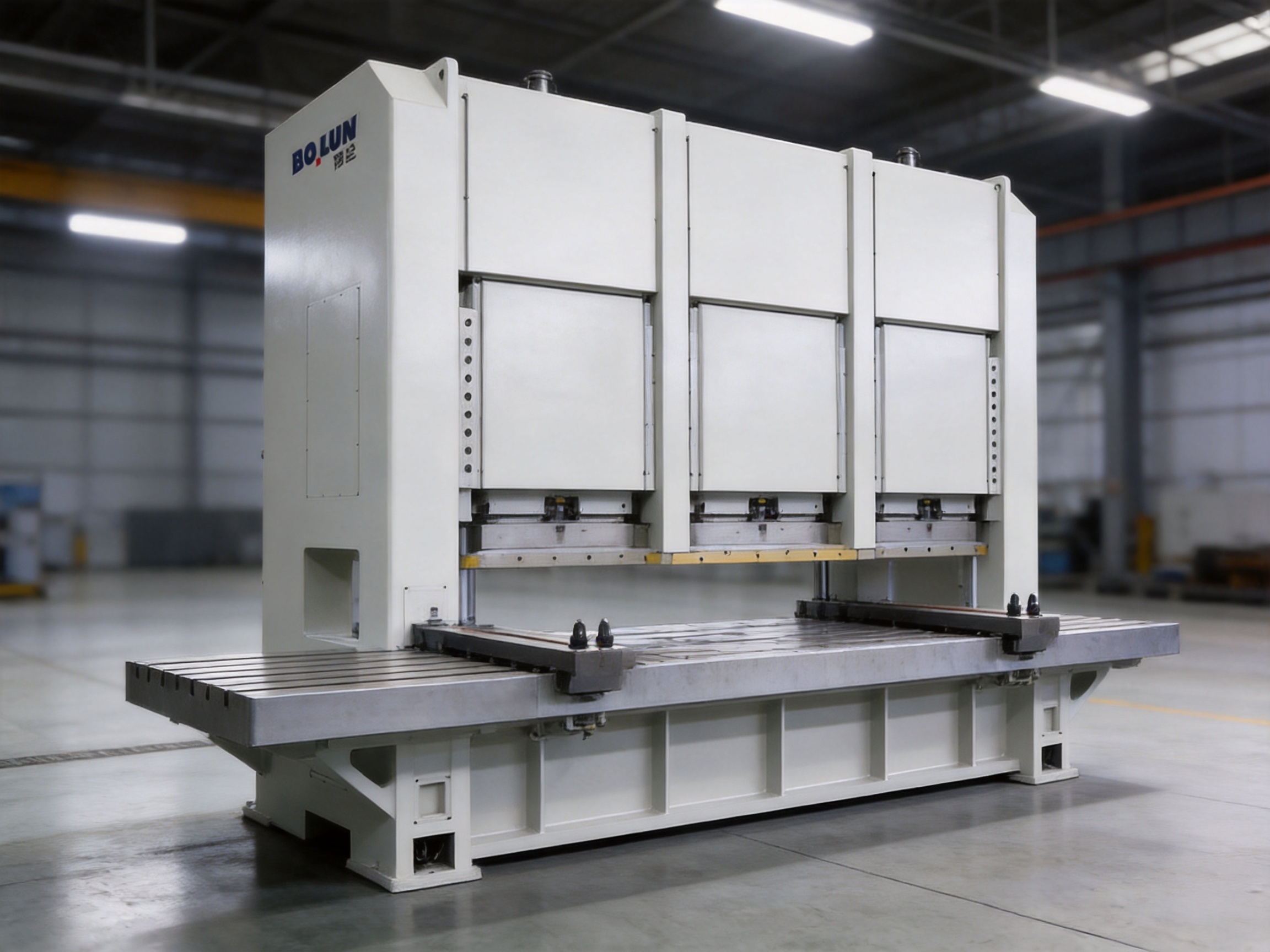
Precision in a power press is the combined result of frame design, machining accuracy, assembly quality, guide systems, drive synchronization, die condition, material control, and operator setup. No single component can create precision by itself. The BLPE-315 addresses this requirement through a rigid frame, balanced double-point operation, controlled adjustment, and a stated punch accuracy of GB/JIS Class 1.
Class 1 accuracy indicates a precision-oriented machine configuration intended for demanding industrial work. Actual results will always depend on installation conditions, foundation quality, tooling accuracy, material variation, lubrication, maintenance, and operating practice. Nevertheless, the stated accuracy class demonstrates that the press is designed for more than basic low-tolerance forming.
Repeatability is especially important in automotive and appliance production. These industries often require thousands of parts with consistent dimensions, clean edges, stable geometry, and reliable fit during downstream assembly. Small variations at the press can become larger problems during welding, painting, assembly, sealing, or final inspection.
The press’s electric die-height adjustment supports repeatable setup. Instead of relying only on manual measurement, operators can use the adjustment system and displayed value to establish a controlled operating condition. This is beneficial when multiple dies are used on the same machine or when production orders change frequently.
A controlled setup also improves communication between production shifts. When the press setting, stroke, speed, lubrication state, and die condition are documented, a new operator can reproduce the approved process more easily. This reduces dependence on individual experience and supports a more standardized production system.
One of the strongest advantages of a precision press is the ability to reduce variation before defects occur. A rigid structure reduces mechanical deformation, a balanced slide supports even force application, and an accurate height adjustment helps maintain the intended die position. Together, these features contribute to a more stable process window.
Process stability can reduce several hidden costs: scrap, rework, die adjustment, unplanned inspection, production interruptions, and customer complaints. Even a modest reduction in defect rates can have a significant financial effect when the machine operates continuously and the formed parts are expensive or difficult to handle.
For manufacturers comparing equipment, it is therefore useful to consider total process performance rather than purchase price alone. A lower-cost machine may appear attractive initially but become more expensive if it requires frequent adjustment, creates uneven wear, or cannot maintain product quality under sustained loading.
Lubrication is fundamental to the service life of a heavy-duty press. Bearings, guides, joints, gears, and other moving components operate under repeated loads. Insufficient or inconsistent lubrication can increase friction, heat, wear, noise, and the risk of component failure.
The BLPE-315 incorporates an electric automatic lubrication system. This feature helps deliver lubricant according to a controlled operating cycle rather than depending entirely on manual intervention. Automatic lubrication improves convenience, but its greatest value is consistency. A system that operates at the correct intervals can help ensure that critical points receive attention during long production runs.
By reducing the need for frequent manual lubrication, the system can lower routine maintenance workload and help keep operators away from moving equipment during production. It also supports a more organized preventive-maintenance program, because lubrication status can be included in inspection and service records.
Automatic lubrication does not eliminate maintenance responsibilities. Reservoir levels, lubricant quality, distribution lines, pumps, valves, and lubrication points must still be inspected. However, it provides a stronger foundation for reliable operation than a system that depends only on periodic manual application.
Reliability is especially important for a 3150 kN press because downtime can affect an entire production line. If a large press stops, upstream blank preparation and downstream assembly may also be interrupted. Preventive systems such as automatic lubrication therefore have a value that extends beyond the machine itself.
Safety must be integrated into the press design, operating procedure, tooling layout, and factory environment. The BLPE-315 includes an integrated photo-electronic safety device designed to detect access or interruption within the protected area. When correctly installed, adjusted, and maintained, photo-electronic protection can help prevent the machine from cycling when an operator or object enters a hazardous zone.
Photo-electronic protection is particularly useful for production lines where operators load blanks, remove formed parts, conduct inspections, or work near the die area. It provides a non-contact protective method that can be adapted to different working arrangements.
However, no safety device should be treated as a substitute for complete risk assessment. The final installation should include appropriate guarding, emergency-stop systems, safe operating modes, lockout and isolation procedures, die-access controls, operator training, and compliance with applicable regional regulations. Safety devices also require regular functional testing.
The press’s sensitive control systems contribute to safer and more controlled operation by coordinating machine commands, operating modes, and protective functions. Clear controls help operators distinguish setup, inching, single-cycle, and continuous production conditions where applicable to the final configuration.
For customers exporting equipment or operating multinational facilities, safety requirements may vary by country. Electrical standards, guarding specifications, emergency-stop arrangements, and documentation should be confirmed during the purchasing process. A manufacturer with experience in international equipment supply is better positioned to identify these requirements early.
Good safety engineering can also support productivity. When access points, controls, and protective functions are clearly designed, operators can work with greater confidence and fewer interruptions. A properly protected machine is easier to integrate into a professional production line and can reduce the risk of incidents that lead to investigations, downtime, or equipment damage.
Safety should therefore be considered a core performance characteristic rather than an optional accessory. The best press design combines high force with controlled access, clear operating logic, and maintainable protective systems.
The BLPE-315 offers several advantages when compared with smaller open-type presses, single-point presses of similar size, or equipment with less comprehensive setup and lubrication systems. These advantages should be evaluated in relation to the specific part, die, material, and production volume.
Open-type presses provide convenient front access and may be suitable for smaller parts, simple blanking, and general-purpose work. However, their open frame may offer less resistance to lateral deflection under large or uneven loads. The closed-type construction of the BLPE-315 is better suited to wide dies and high-force forming where rigidity and alignment are priorities.
The larger worktable, column spacing, and maximum die height also provide greater tooling flexibility. A manufacturer working with large components may avoid the limitations associated with a narrow throat, reduced die area, or insufficient working height.
Single-point presses can perform effectively in many applications, particularly when the die is relatively narrow or the load is concentrated near the center. For wide tooling, however, a double-point configuration can provide more balanced slide support. The BLPE-315 is designed to distribute working force across two drive points, supporting stable movement over its broad working area.
This can help reduce angular tendencies, uneven die loading, and concentrated wear. As always, proper die design and setup remain essential, but the mechanical configuration provides a useful advantage for large-format work.
Manual die-height adjustment can be slow and may produce variation between setups. The electric adjustment and display system on the BLPE-315 supports faster, more repeatable changes. This is valuable for manufacturers handling multiple tools, short production batches, or frequent product changes.
Manual lubrication systems may depend heavily on operator discipline and may not distribute lubricant evenly during long production cycles. The electric automatic lubrication system provides a more consistent approach and reduces routine workload. This can support better machine availability and longer component life when properly maintained.
Using a press close to its maximum practical capacity for every cycle can increase stress on the frame, drive components, tooling, and foundation. Selecting a machine with an appropriate capacity margin can improve durability and production stability. The BLPE-315 provides substantial force and working space for applications that would place smaller presses under excessive operating pressure.
The quality of a heavy-duty press depends not only on the design concept but also on the manufacturing system used to produce it. Zhejiang Bolun High-Precision Machinery Co., Ltd. integrates research and development, design, production, sales, and service. This integrated structure allows technical decisions to be coordinated across the complete machine lifecycle.
A company with internal design capability can adapt the equipment to specific production requirements instead of offering only a fixed standard configuration. Customers may require different electrical systems, safety arrangements, die interfaces, feeding layouts, working heights, or auxiliary equipment. The ability to manage non-standard specifications is particularly valuable for large industrial projects.
The manufacturer’s stated focus on high-precision forming equipment is supported by a full-chain production approach. This covers basic design, core component development, precision processing, machine assembly, testing, and final delivery. Managing these stages as a connected process helps reduce communication gaps between engineering, machining, and assembly teams.
Precision processing is essential for large presses. Structural components must be machined and assembled with careful attention to flatness, parallelism, alignment, hole position, bearing seats, guide surfaces, and connection accuracy. If these relationships are not controlled, the final machine may experience uneven loading or difficult setup even when individual parts appear acceptable.
An integrated manufacturing environment also supports traceability. Components, inspection records, assembly procedures, and adjustment data can be organized as part of the production file. This creates a stronger basis for troubleshooting, maintenance, replacement-part supply, and future upgrades.
Not every customer uses a press in the same way. One factory may require a machine for automotive panels, another for appliance shells, and another for heavy brackets or industrial enclosures. Die sizes, material grades, feeding methods, cycle rates, safety standards, and floor layouts can all differ.
Bolun’s stated non-standard customization capability allows the press to be considered as part of a complete process rather than an isolated machine. Engineering discussions can cover the required tonnage, pressure point, stroke, speed, die height, table arrangement, automation interface, control functions, and installation conditions.
Customization should always be based on verified technical requirements. A well-engineered solution avoids both under-specification and unnecessary oversizing. The goal is to create a press that provides adequate performance, maintainability, and expansion potential without adding avoidable complexity.
Quality control for a large power press must extend from raw materials and fabricated structures to final machine testing. The manufacturer describes a finished-product inspection system that exceeds basic industry expectations and applies quality control to each process and component.
For the customer, this philosophy is important because a machine’s long-term precision depends on many details that may not be visible after installation. Structural weld quality, machining accuracy, bearing fit, shaft alignment, hydraulic or pneumatic connections, electrical wiring, control logic, lubrication flow, and safety-device response all contribute to final performance.
Inspection should verify both static and dynamic conditions. Static checks may include dimensions, alignment, worktable flatness, slide parallelism, die-height adjustment, and machine geometry. Dynamic tests may evaluate slide motion, operating speed, stopping behavior, lubrication performance, control response, noise, vibration, and safety functions.
A rigorous inspection process helps identify issues before shipment, when corrections are easier and less expensive. It also gives customers greater confidence during installation and commissioning. Technical documentation, inspection reports, operating instructions, maintenance schedules, and spare-parts information should form part of the delivery package.
For international customers, quality documentation is also important for internal approval and regulatory review. A professional supplier should be able to provide clear technical data and respond to questions about installation, commissioning, electrical requirements, and service intervals.
Automotive production uses large formed parts that require substantial force, broad dies, and consistent geometry. The BLPE-315 is suitable for selected automotive components such as structural panels, reinforcements, brackets, cross members, supports, and other medium-to-large stamped parts, subject to material and tooling verification.
The double-point slide can support wide dies, while the closed frame provides a stable platform for high-force forming. Repeatable die-height adjustment is beneficial when several tools share the press. Photo-electronic protection and automatic lubrication support integration into a structured automotive production environment.
Washing-machine panels, refrigerator components, industrial appliance housings, and other large sheet-metal parts often require broad forming tools and consistent surface quality. A rigid press can help control panel shape and reduce deformation caused by uneven loading.
The machine’s table size and die-height capacity provide flexibility for large appliance dies. The moderate production speed range can also suit operations where part handling, surface protection, and quality inspection are more important than maximum cycle speed.
Industrial cabinets, equipment covers, electrical enclosures, machine guards, and structural metal components may require deep forming, bending, piercing, or compound operations. The 300 mm stroke and broad working envelope support a range of tooling arrangements.
These applications often involve low- to medium-volume production with frequent tool changes. The electric height adjustment and clear operating controls can help reduce setup time and improve repeatability between production orders.
Other potential applications include metal furniture, transportation components, construction-related parts, agricultural machinery components, and specialized industrial products. The suitability of the press depends on material thickness, tensile strength, part geometry, die design, production speed, and required force curve.
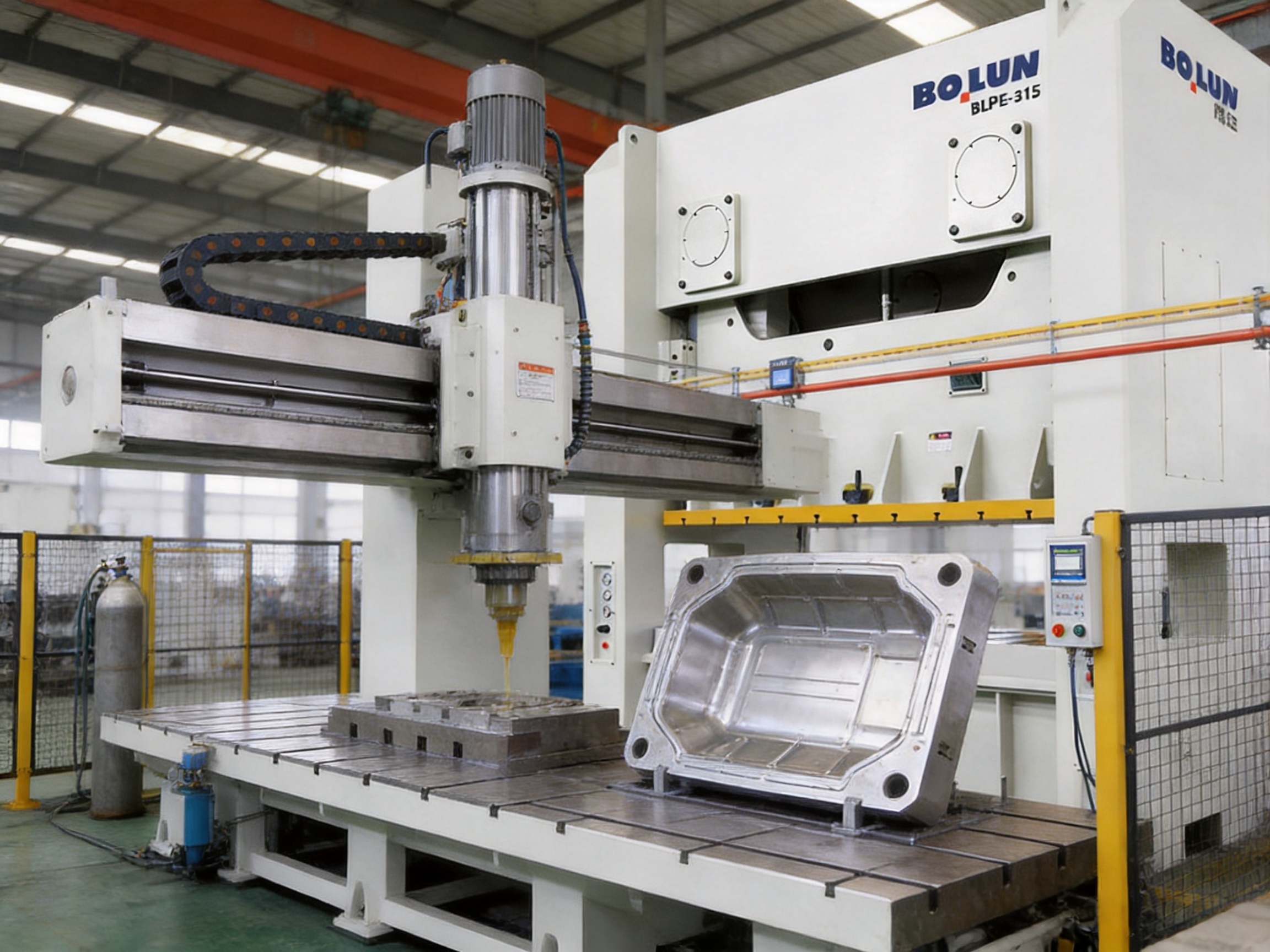
Correct installation is essential to achieving the designed performance of a 3,150 kN press. The foundation must be engineered to support the machine’s mass and dynamic forces. The installation area should provide sufficient clearance for operation, die handling, maintenance, electrical cabinets, safety guarding, and material flow.
Before commissioning, the machine should be inspected for transport damage, foundation condition, electrical connections, lubrication lines, control-system wiring, safety devices, and moving-part clearance. The press should be leveled and aligned according to the manufacturer’s procedures. Incorrect leveling can affect die alignment, bearing loads, slide movement, and long-term precision.
Commissioning should proceed in stages. Initial checks may be performed without load, followed by low-speed cycling, single-cycle operation, die-height adjustment, safety-device testing, lubrication verification, and controlled trial production. Production speed and load should be increased only after the machine demonstrates stable behavior.
Maintenance should include daily, weekly, monthly, and periodic tasks. Operators may check lubrication status, unusual noise, vibration, temperature, fasteners, die condition, safety-device response, and visible leakage. Maintenance personnel should inspect bearings, drive components, electrical connections, brake and clutch systems, guide surfaces, adjustment mechanisms, and structural connections according to the service schedule.
The automatic lubrication system reduces manual work but does not remove the need for inspection. Lubricant levels, pump operation, distribution lines, and delivery points should be checked regularly. Using the correct lubricant and maintaining clean equipment are important for reliable operation.
Production records can improve maintenance planning. Recording cycle counts, die changes, stoppages, adjustments, lubrication events, and replaced parts helps identify trends. Preventive maintenance based on operating history is generally more effective than waiting for a major failure.
Although the BLPE-315 offers a broad range of capabilities, selection should be based on a detailed application review. Buyers should provide information about material type, thickness, blank dimensions, part geometry, required forming depth, die size, production volume, cycle time, feeding method, and quality requirements.
Force calculations should account for the complete forming operation rather than only the final part shape. Blanking, bending, drawing, piercing, restriking, and compound operations may produce different force demands. The pressure point and force curve should be reviewed to ensure that the selected machine is suitable throughout the stroke.
Die height is another critical factor. The actual closed die height, adjustment range, shut height requirements, stripper travel, cushion arrangements, and tool-changing method should be compared with the press specifications. A tool that technically fits the table may still be unsuitable if access, adjustment, or auxiliary equipment is not considered.
Automation requirements should also be defined early. Customers may need blank feeders, transfer systems, conveyors, automatic lubrication interfaces, die sensors, part detectors, or integration with a central production-control system. Discussing these requirements before manufacture can prevent costly modifications after delivery.
Electrical and safety requirements vary by region. Voltage, frequency, control standards, emergency-stop expectations, guarding, light-curtain arrangements, and documentation should be agreed upon in the technical contract. A customized solution can improve compatibility with the customer’s existing factory environment.
The purchase price of a press is only one part of its economic value. A more meaningful assessment includes installation, tooling compatibility, energy use, maintenance, spare parts, operator training, downtime, product quality, and expected service life.
The BLPE-315 can contribute to lower total cost of ownership through its rigid frame, balanced slide, electric adjustment, automatic lubrication, and safety systems. These features may reduce setup effort, uneven tool wear, maintenance interruptions, and quality variation when properly implemented.
A stable machine also protects the customer’s investment in dies. Large dies can be expensive to manufacture and difficult to repair. A press that supports balanced loading and accurate movement helps the tooling operate in a more controlled mechanical environment.
Energy efficiency should be evaluated across the entire process. The 30 kW motor provides the required drive power for the machine’s capacity, but actual energy consumption depends on speed, load, operating pattern, idle time, and auxiliary equipment. Good production planning, timely maintenance, and reduced idle operation can improve overall efficiency.
Service support is another important cost factor. A supplier capable of providing technical consultation, commissioning assistance, spare parts, troubleshooting, and after-sales support can reduce the financial impact of unexpected problems. Bolun’s integrated sales and service structure is intended to support customers before, during, and after installation.
Large industrial equipment is a long-term partnership rather than a one-time transaction. The supplier must understand the customer’s process, communicate clearly, produce the equipment accurately, deliver it safely, support installation, and remain available for future service needs.
Zhejiang Bolun High-Precision Machinery Co., Ltd. has built its business around precision forming equipment and describes a development history of approximately two decades in machinery manufacturing. Its activities cover research, design, production, sales, and service, creating a coordinated platform for industrial press projects.
The company’s emphasis on technology, precision processing, customization, and quality control is relevant to customers seeking equipment for demanding production conditions. Its engineering approach combines international production-management experience with local manufacturing resources, supporting both standard and specialized requirements.
A mature manufacturing environment can also provide better control over project scheduling and technical changes. When design, machining, assembly, inspection, and service teams communicate directly, the supplier can respond more efficiently to customer feedback and application-specific challenges.
For global customers, supplier stability is particularly important. Clear communication, export experience, documented quality systems, and responsive technical support can reduce the risks associated with purchasing complex equipment from overseas.
The model designation corresponds to a nominal capacity of 3,150 kN, commonly described as approximately 315 metric tons of pressing force. The actual suitability of the machine must be confirmed using the complete forming-force calculation and the pressure point of the application.
A closed-type frame provides strong structural support around the working area, while the double-point arrangement helps distribute force across a wide slide. This combination is useful for large dies, wide workpieces, and operations where alignment and balanced loading are important.
The supplied specification lists a 300 mm V-type slide stroke. This provides useful travel for forming, bending, drawing, and compound operations, subject to die design and material requirements.
The maximum die height is listed as 615 mm. The press also includes approximately 120 mm of electric die-height adjustment, allowing the operating position to be set more precisely for different tools.
The listed speed range is 20–35 strokes per minute. The correct operating speed depends on the material, die, forming depth, part-handling system, required quality, and permitted load conditions.
It is designed for demanding industrial stamping and forming applications and may be suitable for selected automotive structural and panel components. The final decision should be based on part drawings, material data, die dimensions, forming-force calculations, and the required production cycle.
The electric automatic lubrication system helps supply lubricant at controlled intervals to relevant moving components. It improves consistency, reduces manual maintenance work, and supports long-term reliability, although lubrication lines, lubricant levels, and system operation still require regular inspection.
The product information specifies an integrated photo-electronic safety device and sensitive control systems. The final installation should also include suitable guarding, emergency stops, lockout procedures, operator training, and compliance with applicable local safety regulations.
The listed worktable size is 2,500 × 1,000 × 190 mm. The slide bottom size is listed as 2,300 × 900 × 95 mm.
The distance between columns is listed as 2,800 mm. This wide spacing supports large dies and workpieces while retaining the structural advantages of a closed-type frame.
The manufacturer provides non-standard design and manufacturing services. Possible areas for discussion include electrical standards, automation interfaces, safety arrangements, die requirements, working height, feeding systems, and special production functions. All customization should be confirmed through a formal technical specification.
The supplied information lists punch accuracy as GB/JIS Class 1. Actual production accuracy depends on installation, foundation quality, die precision, material control, maintenance, and operating conditions.
A buyer should provide material type and thickness, blank dimensions, part drawings, die dimensions, required force, production volume, cycle-time target, feeding method, automation requirements, factory electrical standards, safety requirements, and installation conditions.
Large presses require correct installation, commissioning, maintenance, and technical support. A manufacturer with integrated engineering, production, inspection, and service capabilities can help reduce project risk and provide more consistent support throughout the machine’s operating life.
The BLPE-315 High-Capacity Heavy-Duty Closed-Type Double-Point Press is designed for manufacturers that require substantial forming force, a broad working area, balanced slide support, and dependable operation. Its 3,150 kN nominal capacity, 300 mm stroke, 615 mm maximum die height, 2,800 mm column spacing, and 30 kW main motor make it suitable for a wide range of demanding industrial applications.
The machine’s strongest advantages come from the way its features work together. The three-section closed frame supports rigidity, the double-point drive supports balanced loading, the large table accommodates broad dies, electric die-height adjustment improves setup repeatability, automatic lubrication supports reliability, and photo-electronic safety protection contributes to safer production.
Compared with smaller open-type or single-point equipment, the BLPE-315 offers a stronger platform for wide, heavy, and structurally demanding parts. Compared with basic presses, it provides more comprehensive support for repeatable setup, maintenance, safety, and production-line integration.
Its ultimate value, however, depends on correct application engineering. The machine should be matched to the material, die, force curve, production speed, foundation, automation system, and regional safety requirements. When these factors are properly evaluated, the press can become a productive and durable foundation for automotive, appliance, industrial, and general heavy-duty forming operations.
The manufacturer’s integrated capabilities in research and development, precision processing, assembly, inspection, customization, sales, and after-sales service further strengthen the overall proposition. For customers seeking a long-term industrial forming solution rather than a basic standalone machine, this combination of product design and manufacturing support is a significant consideration.
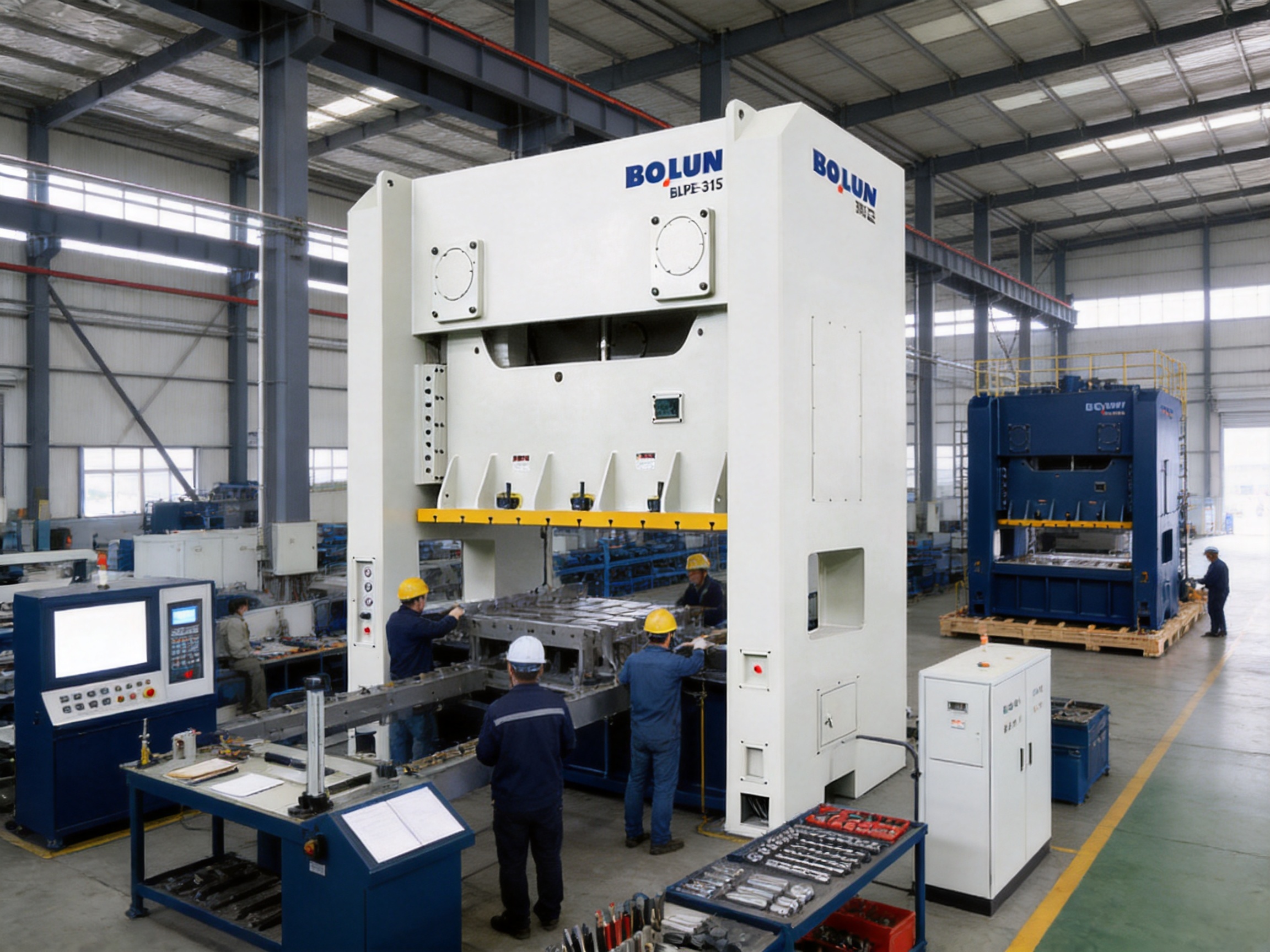
1. Product technical data supplied for the BLPE-315 closed-type double-point press.
2. General principles of mechanical power press design, frame rigidity, slide guidance, and forming-force evaluation.
3. Industrial press installation, commissioning, preventive maintenance, and lubrication management practices.
4. General safety principles for mechanical power presses, safeguarding, photo-electronic protection, and lockout procedures.
5. GB and JIS-oriented precision and inspection concepts for industrial forming equipment.
6. Manufacturing engineering practices for automotive, appliance, structural sheet-metal, and industrial component stamping.
7. Technical information concerning integrated research, design, production, quality inspection, customization, and service capabilities provided by the manufacturer.


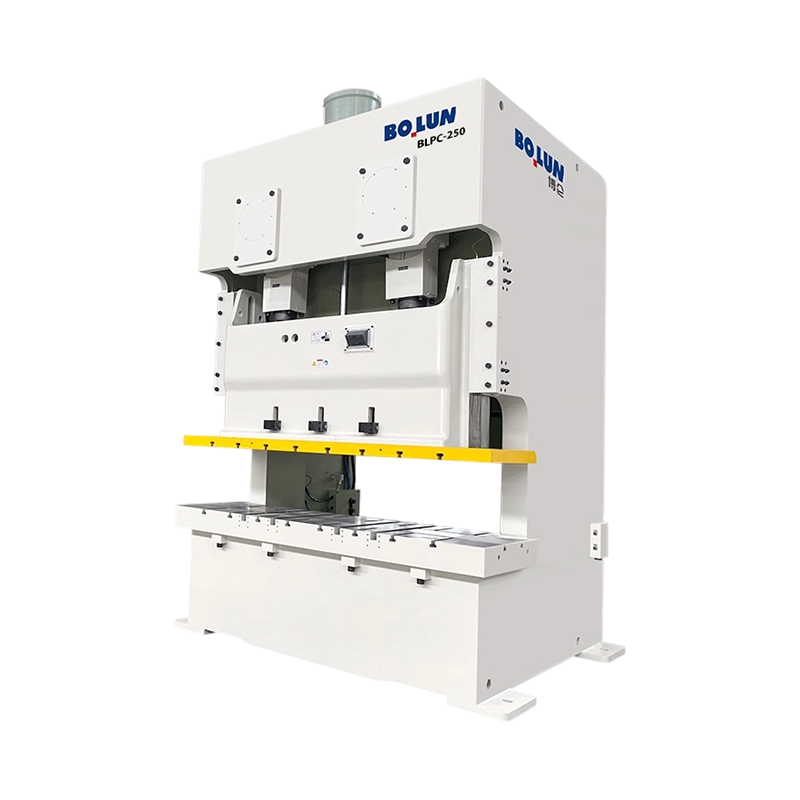
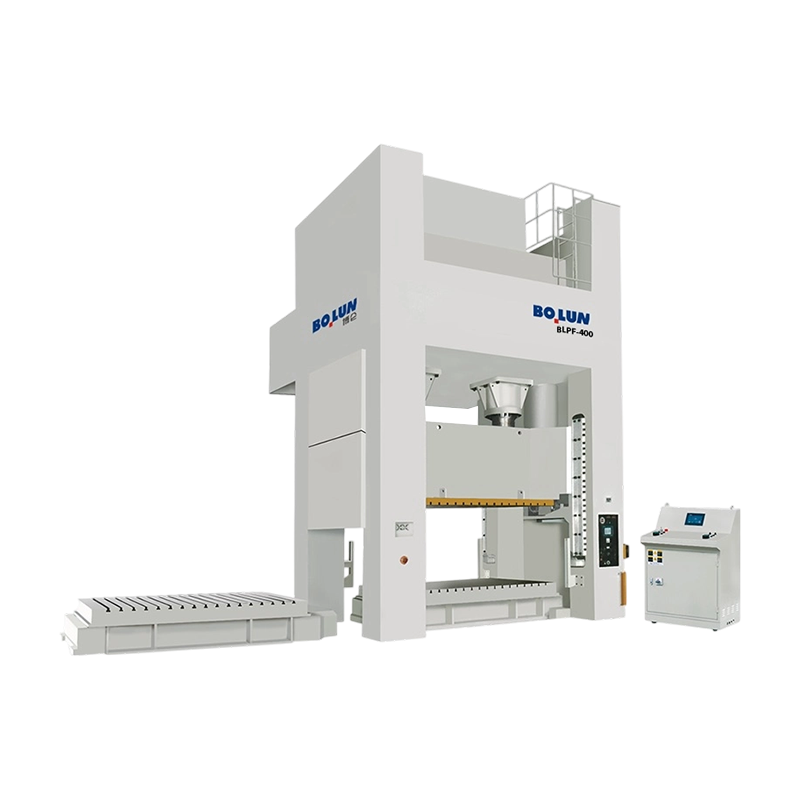
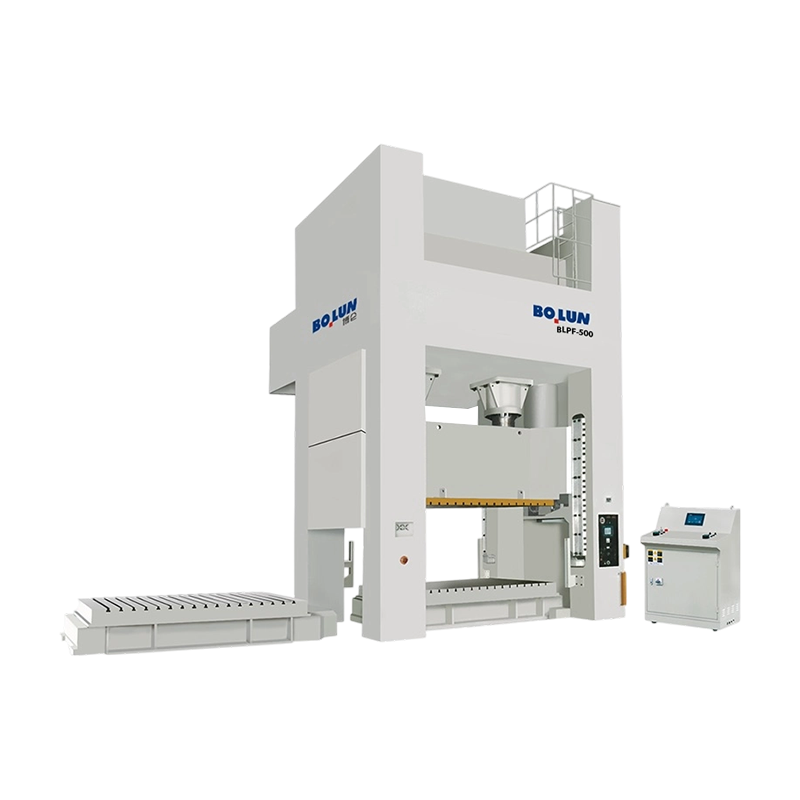
Power press machines are classified in two main ways: by frame construction, w...
Understanding Mechanical Power Presses and Their Essential Functions A mechani...
Two presses can both carry a 200-tonne nameplate and still produce very differe...
In the fields of metal forming, sheet metal fabrication, blanking, and punching,...
As the manufacturing industry moves steadily toward automation and smart product...
What Is a Power Press? A power press — also called a stamping press or punch pr...
Contact Us

topbolun@gmail.com

+86-575-83362228

+86-13735238388
+86-18667502750

+86-575-83362999

+8618667502750

No.1 Linjiang Road East, Xiaren, Jinting Town, Shengzhou City, Zhejiang Province, China
Ready to Begin?
Get in Touch

Now!

ZHEJIANG BOLUN
 English
 中文简体