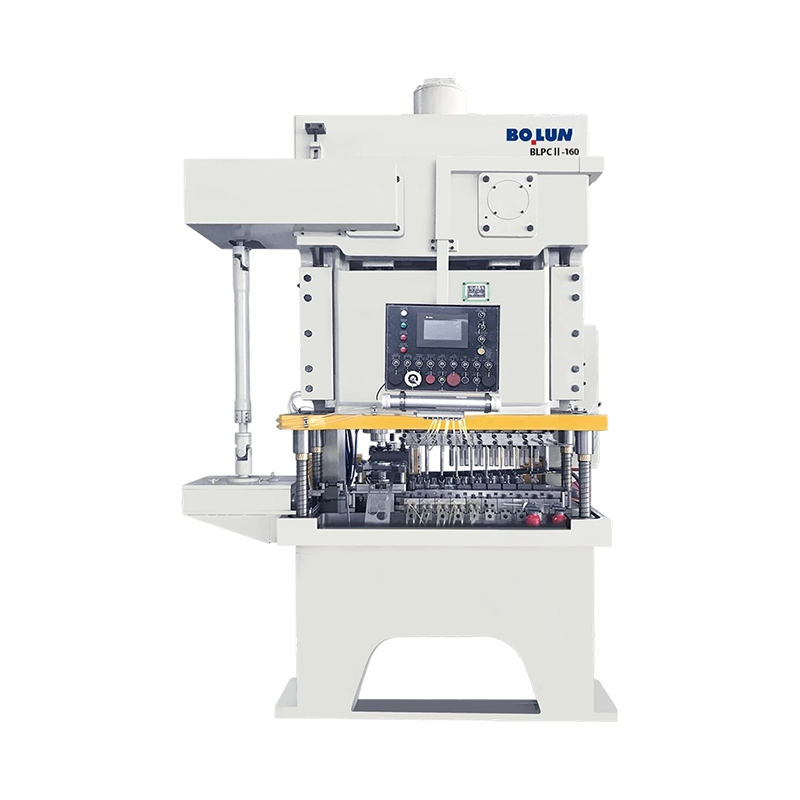
The BLAS-160 Heavy-Duty Programmable Motion Open-Type Single-Point Servo Power Press is designed for manufacturers that require high forming capacity, repeatable accuracy, programmable slide movement, and dependable operation in demanding production environments. With a nominal capacity of 1600 kN, a maximum continuous working energy of 9000 J, and a spacious 1200 × 760 mm worktable, the machine is suited to high-load stamping and forming applications involving thick materials, large dies, and complex production requirements.
Unlike a conventional mechanical press that relies on a relatively fixed slide-motion pattern, this servo power press combines substantial forming force with digitally controlled motion. Operators can program the slide profile according to the characteristics of a die, workpiece, material, and production process. This provides greater flexibility for applications where forming quality depends not only on tonnage, but also on controlled speed, dwell, return, and approach behavior.
The machine is part of the BLAS series of open-type single-point servo power presses, a product range that covers nominal capacities from 600 kN to 4000 kN. The BLAS-160 occupies an important heavy-duty position within this range. It offers more working capacity and die space than smaller models while maintaining the accessibility and practical layout associated with an open-type press.
For automotive components, appliance parts, industrial covers, electrical enclosures, hardware products, and other formed sheet-metal applications, the BLAS-160 provides a combination of force, energy, worktable area, controllability, and monitoring functions. Its configuration is intended to support both stable mass production and flexible manufacturing of different parts.
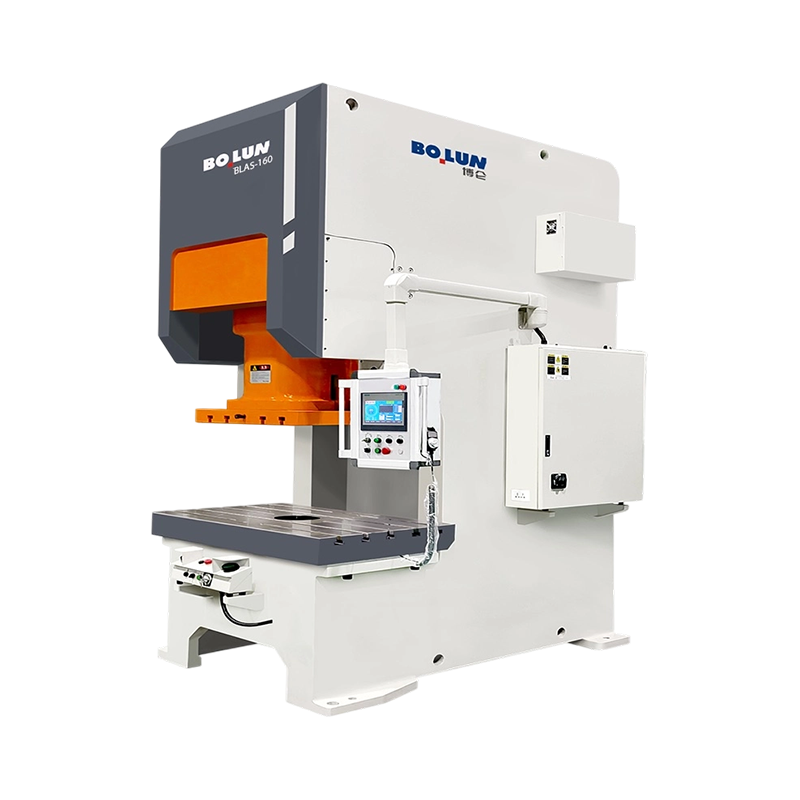
BLAS-160 Heavy-Duty Digital-Forming Open-Type Single-Point Servo Power Press
The primary purpose of the BLAS-160 is to provide high-capacity stamping in a compact and accessible open-type configuration. The 1600 kN nominal capacity gives the press sufficient force for a broad range of demanding forming tasks. The machine can be used for blanking, bending, shallow drawing, embossing, coining, flattening, and other operations when the selected die and process remain within the machine’s operating limits.
A nominal capacity of 1600 kN is equivalent to approximately 163 metric tons-force. This level of capacity enables the press to handle workpieces that may exceed the practical range of smaller presses. It also offers a useful reserve for tooling requirements, material variation, and production processes in which a consistent force margin is important.
The maximum continuous working energy is specified at 9000 J. Energy capacity is especially important in high-load stamping because the press must perform work throughout the forming cycle rather than simply reach a peak nominal force. The BLAS-160 is therefore configured for applications where force and energy must be balanced over repeated cycles.
The press has a 200 mm slide stroke and a rated speed of approximately 50 strokes per minute. This combination provides a practical balance between production output and controlled forming. Depending on the programmed motion profile, die design, material, lubrication, and process conditions, the actual operating speed may be adjusted to prioritize productivity, part quality, tool life, or energy use.
The 1200 × 760 × 150 mm worktable provides an effective platform for large and heavy-duty dies. The 150 mm table thickness contributes to a stable tooling foundation, while the 720 × 580 × 90 mm slide bottom provides a substantial mounting surface for the upper die. The distance between columns is 750 mm, and the throat depth is 390 mm, allowing the operator and tooling designer to plan for a broad range of workpiece geometries.
With a maximum die height of 400 mm and die-height adjustment of 100 mm, the machine can accommodate tooling of different sizes and configurations. This adjustment range is useful for manufacturers operating multiple dies or producing parts with different forming depths. Die-height adjustment also supports efficient setup when changing from one production job to another.
| Item | Specification |
|---|---|
| Product model | BLAS-160 |
| Machine type | Open-type single-point servo power press |
| Nominal capacity | 1600 kN |
| Continuous working energy | 9000 J |
| Nominal stroke | 5 mm |
| Slide stroke | 200 mm |
| Rated strokes per minute | Approximately 50 S.P.M. |
| Maximum die height | 400 mm |
| Die-height adjustment | 100 mm |
| Throat depth | 390 mm |
| Worktable size | 1200 × 760 × 150 mm |
| Slide bottom size | 720 × 580 × 90 mm |
| Distance between columns | 750 mm |
| Working-face height | 915 mm |
| Shank-hole diameter | 65 mm |
| Die-height adjuster motor | 1.1 kW |
| Cushion capacity | 100 kN |
| Cushion working stroke | 80 mm |
| Effective cushion area | 540 × 350 mm |
| Punch accuracy | JIS B 6402 Level 1 |
| Air pressure | 0.55 MPa |
The specifications show that the BLAS-160 is not simply a high-tonnage machine. It is a balanced production system with a large working envelope, substantial cushion support, programmable motion, and integrated monitoring. Each of these elements affects the practical performance of a press line.
The most important distinction between the BLAS-160 and a traditional fixed-motion press is its servo-driven slide control. A servo system allows the motion of the slide to be coordinated electronically rather than being limited to one mechanical cycle pattern. This makes it possible to create different motion profiles for different materials, dies, and part geometries.
Programmable motion can be used to control the approach speed, forming speed, dwell behavior, return movement, and other stages of the cycle. For example, a tool may require a relatively fast approach to improve productivity, followed by a slower forming segment to reduce shock and improve material flow. Another process may benefit from a short dwell at the bottom of the stroke to stabilize the part before retraction.
This flexibility can help manufacturers manage several common stamping challenges. Excessive forming speed may contribute to cracking, wrinkling, springback, surface marking, or premature tool wear. A carefully selected motion profile can reduce unnecessary impact and give the material more time to respond to the die. The appropriate profile depends on the material grade, thickness, geometry, lubrication, tooling clearance, and required quality level.
Servo motion is also valuable when one machine must produce multiple part families. Instead of using the same mechanical motion for every die, the operator can store and recall process parameters for individual tools. This supports faster changeovers and reduces the time required to recreate a production setup after maintenance or a repeat order.
Stored die parameters can include motion-related settings and other process values managed through the control system. The exact parameters used in a production recipe should be established during process validation and protected through appropriate access controls. Once approved, the recipe can help operators reproduce the same operating conditions from one batch to the next.
Compared with a fixed-speed press, programmable servo motion can also make process development more systematic. Engineers can test different motion patterns, monitor the resulting load behavior, inspect part quality, and select a profile that provides the desired balance of output and quality. This is particularly useful for difficult forming operations that require more than a simple full-speed cycle.
Controlled slide motion can improve the consistency of the forming process by reducing sudden changes in speed and force. Smooth motion helps limit mechanical shock transmitted to the frame, die, and workpiece. It may also support more stable material flow, especially in forming operations where the sheet must move across a radius or into a cavity.
For high-strength or thick materials, the ability to adjust the forming behavior is a significant practical advantage. A process may need high force but moderate forming speed. The BLAS-160 can be configured to deliver the required force while allowing the operator to select a more suitable movement pattern than a conventional fixed-cycle press may offer.
Servo control does not eliminate the need for correct die design, material selection, lubrication, or process engineering. Instead, it provides an additional control dimension. The machine gives the production team more opportunity to optimize the complete process rather than treating slide movement as an unchangeable condition.
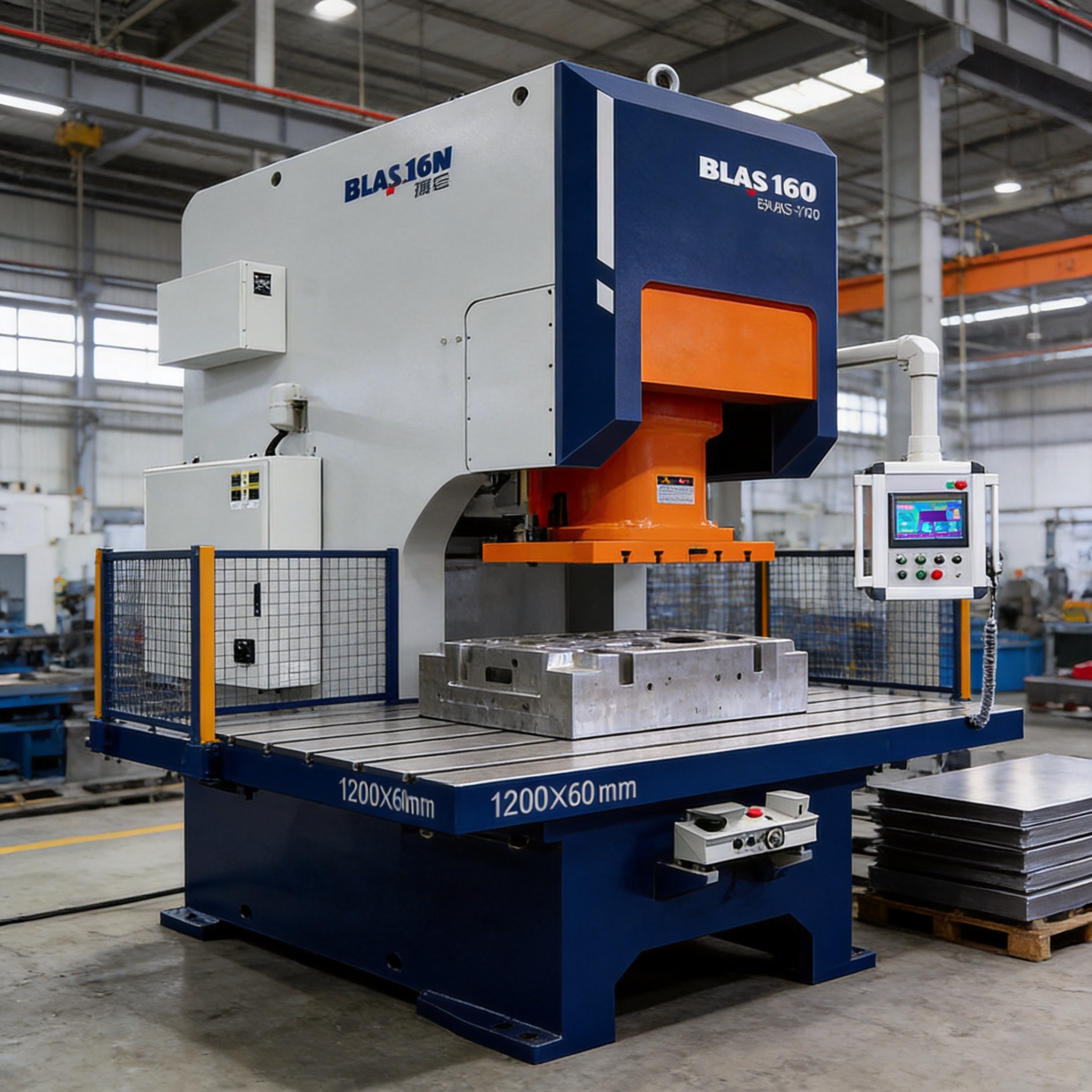
The 1600 kN nominal capacity makes the BLAS-160 suitable for parts that require a substantial forming force. These may include structural brackets, automotive reinforcement parts, appliance panels, hardware components, industrial housings, and other medium-to-large stamped products. The actual application range depends on the material, thickness, die design, force distribution, and working point within the stroke.
High-load stamping requires more than a large nominal number. The press structure must support repeated loads while maintaining alignment and minimizing deflection. The worktable and slide must provide suitable support for the tooling. The drive and control system must deliver repeatable cycles. Monitoring functions must help identify abnormal loading before it develops into a serious tooling or production problem.
The BLAS-160 addresses these requirements through its heavy-duty dimensions and integrated production features. The 1200 × 760 mm worktable offers room for large dies, while the 750 mm column spacing and 390 mm throat depth provide useful access for tooling arrangements and workpiece handling. The large slide bottom allows the upper die to be mounted with a stable contact area.
The 100 kN cushion capacity and 80 mm cushion working stroke further expand the machine’s process capability. A cushion can assist with controlled material support and may be used in suitable forming operations to improve material flow, reduce wrinkling, and control the behavior of the workpiece. The effective cushion area of 540 × 350 mm provides a defined working zone for compatible die configurations.
Because cushion requirements vary considerably by application, engineers should confirm the required force, stroke, area, and timing before selecting a die. The cushion system should be considered together with blank-holder force, draw-bead configuration, lubrication, and material properties. When properly integrated, it can make a significant contribution to forming stability.
The BLAS-160 is equipped with a tonnage monitoring system and a color touch-screen human-machine interface. These features support a more transparent and controllable production process. Instead of relying only on sound, visual inspection, or operator experience, the production team can use load-related information to evaluate the condition of each cycle.
Tonnage monitoring can help identify overloads, uneven loading, abnormal force patterns, and changes in the forming process. A gradual increase in required force may indicate die wear, incorrect material, insufficient lubrication, misalignment, or a developing tooling problem. An unexpected load peak may indicate a double blank, a feeding issue, an obstruction, or an incorrect setup.
Monitoring is most effective when appropriate limits are established for each die and product. The acceptable load range should be based on engineering validation rather than arbitrary values. Once the process is qualified, the monitoring system can help detect deviations and support faster intervention.
The color touch-screen HMI gives operators access to machine settings, process parameters, status information, and adjustment functions. A clear interface can shorten training time and reduce the risk of incorrect manual settings. It also helps operators understand the machine condition during setup, production, maintenance, and troubleshooting.
Digital control is particularly valuable in facilities that use several dies or produce multiple product families. Approved settings can be associated with specific tools and recalled when the same job returns to production. This reduces dependence on handwritten notes and individual operator memory. It also supports a more standardized approach to process management.
Consistency is a central requirement in industrial stamping. Customers expect parts to maintain their dimensions, surface quality, and functional performance throughout a production run. Variations in material, tooling, speed, force, or setup can affect the final product even when the press nominally completes every cycle.
The combination of programmable movement, tonnage monitoring, and a touch-screen control interface gives the BLAS-160 a stronger foundation for repeatable production than a basic manually adjusted press. The operator can work with defined recipes, monitor key conditions, and respond to deviations more systematically.
These capabilities can also support production documentation. Depending on the factory’s control architecture and data practices, process values and alarms may be recorded as part of internal quality procedures. Such records can help production managers analyze recurring issues, compare tooling performance, and improve preventive maintenance planning.
Every press selection should be based on a complete technical comparison rather than a single feature. The BLAS-160 offers several advantages that can be important when compared with conventional fixed-motion mechanical presses or servo presses with smaller working envelopes.
A conventional press may be mechanically optimized for a particular speed and stroke pattern. This can be effective for simple, high-volume operations, but it may limit process optimization when the material or die requires a different motion. The BLAS-160 provides programmable slide movement, allowing the manufacturer to adapt the cycle to the job.
This flexibility can reduce the need to compromise between productivity and quality. A die may run quickly during non-forming portions of the cycle and more slowly during the critical forming stage. The result can be a more application-specific cycle than a single fixed profile can provide.
Some servo presses provide excellent control but are limited by lower nominal capacity or smaller tables. The BLAS-160 combines servo control with 1600 kN of nominal capacity and a large working area. This makes it suitable for manufacturers that need digital motion control without moving immediately into a much larger and more expensive press category.
The 200 mm slide stroke, 400 mm maximum die height, and 1200 × 760 mm worktable provide substantial space for demanding tooling. These dimensions can reduce the risk that a die will be technically compatible in force but unsuitable in physical size.
Basic equipment may provide limited information about the load applied during each cycle. By contrast, the BLAS-160 includes tonnage monitoring and an operator-oriented color HMI. This gives the production team better visibility into the actual process and supports faster response when operating conditions change.
The 100 kN cushion capacity and 80 mm working stroke provide additional flexibility for forming processes that require controlled support from below. This is an important advantage over configurations that do not offer a comparable cushion arrangement or that require separate equipment to achieve the same function.
Manufacturers increasingly need equipment that can support more than one product family. The BLAS-160 is well suited to this environment because its programmable motion, adjustable die height, large worktable, and recipe-based control approach can support different dies and production conditions. This can improve asset utilization and reduce the need to dedicate one machine to a single product.
These advantages should not be interpreted as a guarantee that the BLAS-160 will outperform every competing machine in every application. Final performance depends on machine configuration, tooling quality, operator training, material properties, maintenance, and process design. However, the product’s combination of capacity, controllability, and monitoring gives it a strong basis for comparison in high-load stamping projects.
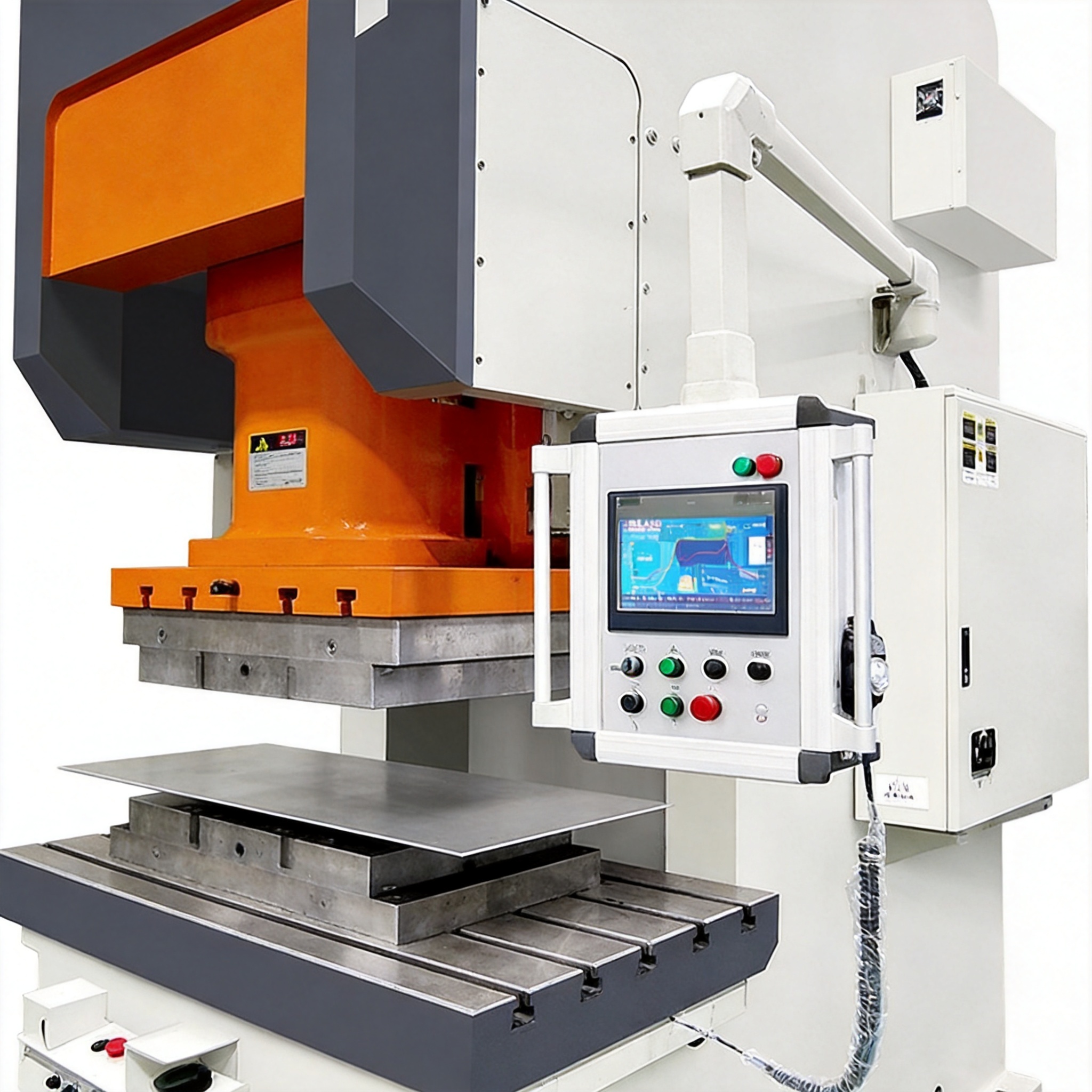
Tooling compatibility is one of the first issues that should be evaluated when selecting a power press. A machine may have sufficient tonnage but still be unsuitable if the worktable is too small, the die height is inadequate, the throat depth is insufficient, or the slide mounting surface cannot properly support the die.
The BLAS-160 provides a 1200 × 760 × 150 mm worktable and a 720 × 580 × 90 mm slide bottom. These dimensions create a substantial upper and lower tooling interface. The 150 mm table thickness is suitable for a heavy-duty machine layout, while the slide dimensions provide a stable area for compatible upper dies.
The 400 mm maximum die height allows the use of relatively tall tooling. A 100 mm adjustment range supports setup flexibility and helps the operator position the die correctly within the available stroke. Before installation, the die designer should verify total die height, shut height, bolster requirements, mounting holes, shank dimensions, ejection arrangements, and any interference with guards or feeding equipment.
The 65 mm shank-hole diameter should also be considered during die design. Proper shank fit and alignment are necessary for reliable load transmission. The tooling must be mounted according to the machine and die manufacturer’s instructions, with appropriate fastening, alignment, and safety verification.
The 390 mm throat depth gives the press useful reach for parts that extend toward the rear of the machine. This can be important for larger blank sizes and dies with deeper working zones. As with all press dimensions, the usable area must be evaluated together with the actual die outline and movement envelope.
Zhejiang Bolun High-Precision Machinery Co., Ltd. is based in Zhejiang, China, a region recognized for its strong manufacturing infrastructure and extensive machinery supply chain. The company has approximately two decades of experience in machinery manufacturing and integrates research and development, design, production, sales, and service.
This integrated structure is important for complex industrial equipment. A power press is not created by assembling isolated components alone. Its performance depends on the interaction of structural design, machining accuracy, drive technology, electrical control, hydraulic or pneumatic functions, monitoring, assembly, inspection, and after-sales support.
The company describes technology as a central part of its development strategy. Its capabilities include precision processing equipment, core component development, machine assembly, non-standard customization, and one-stop design and manufacturing services. These capabilities can support customers whose production requirements do not fit a standard catalog configuration.
Customization is particularly valuable in stamping because applications differ in material, part size, die structure, feeding method, cycle time, automation level, and safety requirements. A manufacturer with engineering and production resources across the entire machine-development chain can evaluate these requirements more effectively than a supplier that only resells standard equipment.
Integrated design allows the supplier to consider the press as a complete system. Structural strength, slide movement, die space, cushion performance, control logic, monitoring functions, and operator access must work together. This type of coordination helps reduce the risk of solving one technical issue while creating another elsewhere in the system.
For a servo press, design integration is especially important. The servo drive must be matched to the mechanical transmission, the required energy, the desired motion profile, and the expected production cycle. The control system must interpret operator commands accurately and coordinate the machine functions in a safe and repeatable way.
The BLAS-160 reflects this integrated approach through its combination of servo-driven programmable motion, digital HMI control, tonnage monitoring, die-height adjustment, and cushion capability. The product is designed as a production platform rather than as a simple frame with a drive mechanism.
High-precision processing is essential for press components that must maintain alignment and repeatability under load. Machining quality affects the relationship between the frame, slide, table, guides, drive elements, and die. Consistent assembly practices are also necessary to ensure that the machine performs as intended after installation.
The company emphasizes advanced precision processing equipment and a mature industrial environment. These resources support the manufacture and assembly of heavy machinery components. They also provide a foundation for producing customized designs in which dimensions, interfaces, and operating requirements may differ from those of standard models.
Quality control is described as a process that extends across components and production stages. A finished product inspection system is used to evaluate machine condition before delivery. For a high-load press, inspection should address mechanical condition, control functions, safety-related systems, operating accuracy, load behavior, and the relationship between the machine and its documented specifications.
The listed punch accuracy of JIS B 6402 Level 1 indicates that the product is positioned within a recognized precision framework. Buyers should review the specific inspection documents, acceptance criteria, and testing methods applicable to their purchase. Clear inspection records help establish a common technical baseline between the supplier and the customer.
The BLAS-160 can serve a variety of industrial stamping and forming applications. Its combination of capacity and worktable size makes it suitable for medium-to-large components that require significant force and controlled motion.
Automotive manufacturing often involves high-strength steels, structural brackets, reinforcement parts, chassis-related components, and formed panels. These parts may require stable load application, repeatable die movement, and reliable monitoring. The BLAS-160 can be considered for suitable automotive tools when the required force, energy, stroke, and dimensions fall within the validated operating range.
Appliance manufacturers produce panels, brackets, supports, housings, and internal structural parts in a wide range of sizes and materials. The large worktable and programmable motion can support processes that require controlled forming and consistent appearance. A recipe-based control approach is useful when production moves between different appliance models or part families.
Industrial hardware products often require repeatable bending, blanking, embossing, and forming. The BLAS-160 provides the capacity needed for heavier components and offers enough control flexibility to accommodate multiple tooling arrangements. Tonnage monitoring can also help maintain process stability when the product is produced in large batches.
Electrical enclosures, machine covers, mounting plates, brackets, and fabricated sheet-metal parts may require a press with a combination of force and accessible working space. The open-type design offers practical access for die setup and workpiece handling, while the programmable slide can support different forming sequences.
In every application, the final selection should be confirmed through engineering review. Sample trials, die evaluations, material testing, and load analysis are recommended before committing to full-scale production.
Production value is determined by more than rated speed. A press that runs quickly but produces inconsistent parts, causes frequent die damage, or requires long setup periods may deliver less practical output than a machine with a more controlled cycle.
The BLAS-160 supports operational efficiency through several coordinated functions. Programmable motion can reduce unnecessary movement and optimize the forming segment. Stored parameters can shorten repeat-job setup. The large work area can accommodate substantial dies. Tonnage monitoring can help detect problems early. The touch-screen HMI can make process adjustments more organized.
At approximately 50 strokes per minute, the rated speed provides a useful production reference. Actual throughput depends on the operation, including loading, unloading, feeding, inspection, lubrication, part removal, and safety requirements. In automated lines, the press cycle must also be synchronized with upstream and downstream equipment.
Servo control may support energy-conscious operation by allowing the machine to use motion and power more specifically for the actual process. Energy behavior depends on the programmed cycle, production load, drive configuration, and operating practices. Buyers should request application-specific energy data if energy consumption is a major purchasing criterion.
Maintenance planning also affects total production value. Operators should follow the supplier’s maintenance schedule, inspect critical components, maintain appropriate lubrication, check fasteners and connections, verify sensor function, and keep the control system and work area clean. Preventive maintenance helps preserve accuracy and reduce unplanned downtime.
A heavy-duty servo press should be installed on a suitable foundation and positioned according to the supplier’s technical requirements. The installation plan should consider machine weight, floor loading, working clearances, access for maintenance, electrical supply, air pressure, die handling, material flow, and safety guarding.
The specified air pressure is 0.55 MPa. The customer should confirm that the factory air system can provide the required pressure and flow under operating conditions. Air quality, drainage, filtration, and maintenance should also be considered because pneumatic systems can be affected by moisture and contamination.
Operator training should cover machine startup and shutdown, die installation, recipe selection, manual and automatic modes, motion parameters, tonnage limits, alarm handling, emergency procedures, and daily inspection. Maintenance personnel should receive additional training on lubrication, mechanical inspection, electrical systems, sensors, troubleshooting, and safe isolation procedures.
The supplier’s service structure includes pre-sales consultation, in-sales support, and after-sales assistance. For international customers, service planning should include documentation, spare parts, remote technical support, installation assistance, and response procedures. These factors can be just as important as the initial machine price when the equipment is intended for continuous production.
Customers should provide the supplier with detailed application information before purchase. Useful information includes material type and thickness, blank dimensions, target cycle time, die weight, die height, required stroke, forming method, automation requirements, production volume, quality standards, and local electrical conditions. Accurate information helps the supplier confirm suitability and recommend the correct configuration.
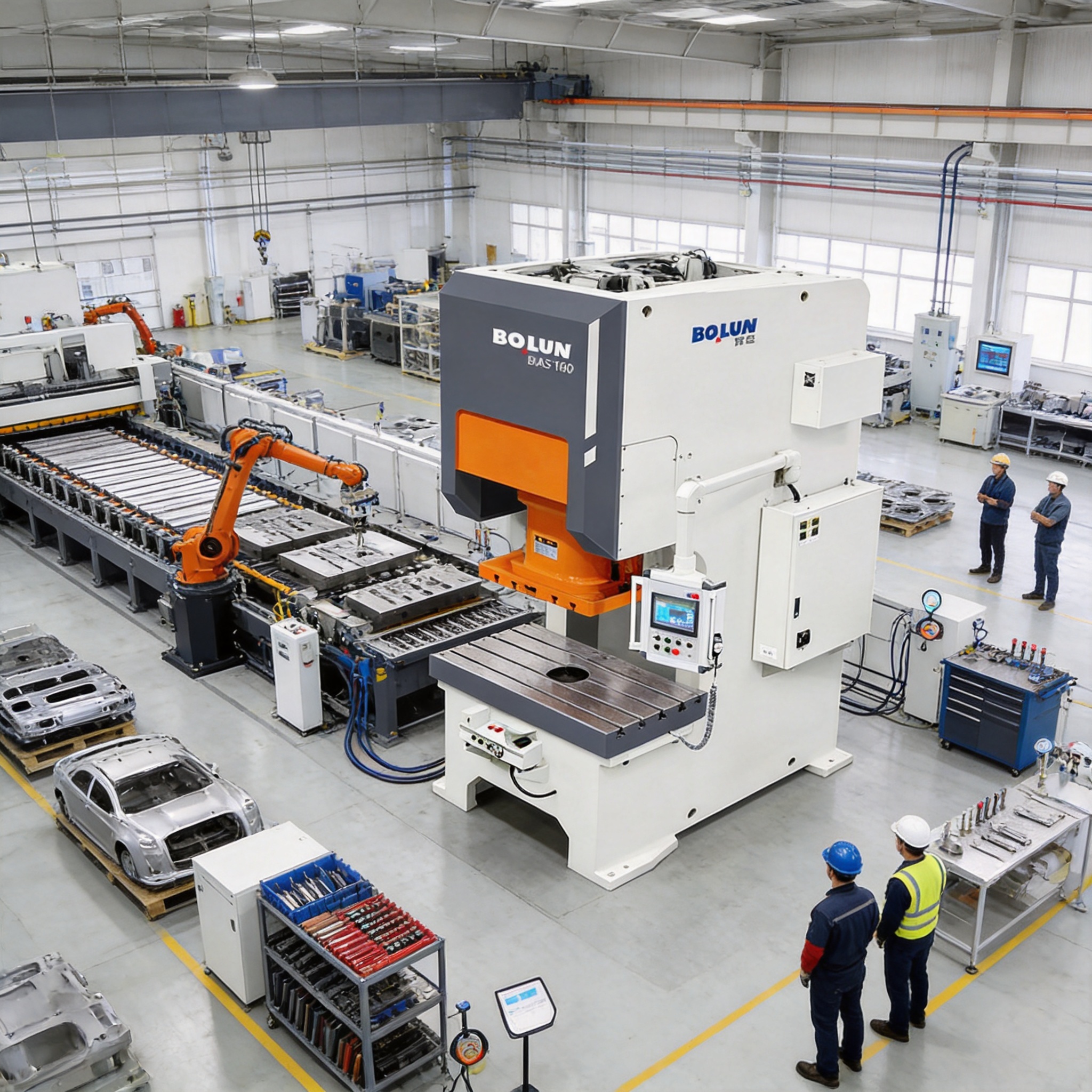
High-capacity presses must be operated only by trained and authorized personnel. The BLAS-160 should be integrated into a complete workplace safety system that includes appropriate guarding, emergency-stop devices, control procedures, die-setting practices, inspection routines, and lockout or isolation procedures.
Operators should never bypass safety devices or reach into the die area while the machine is capable of cycling. Die changes, adjustments, troubleshooting, and maintenance must follow approved procedures. The machine’s control functions and monitoring systems are important safeguards, but they do not replace proper training and disciplined operating practices.
Tooling must be correctly installed and secured. The force and energy requirements of the die must remain within the press capability. Uneven loading should be avoided because it can affect the slide, tooling, frame, and finished product. If abnormal noise, vibration, load behavior, or part quality occurs, production should be stopped and the condition investigated.
Safety requirements vary by country, industry, and installation. The purchaser is responsible for ensuring that the complete machine installation complies with applicable laws, standards, workplace rules, and site-specific risk assessments. Supplier documentation should be reviewed before commissioning.
The BLAS-160 addresses several priorities that define modern stamping production. Manufacturers need more than force; they need flexibility, data visibility, repeatability, and the ability to adapt to changing products. The machine’s servo-driven programmable motion provides process flexibility, while its 1600 kN capacity supports demanding applications.
Its working dimensions are also practical for manufacturers that require substantial dies without moving directly to a much larger closed-type press. The 1200 × 760 mm worktable, 400 mm maximum die height, 390 mm throat depth, and 750 mm column spacing form a useful working envelope for many medium-to-large parts.
The tonnage monitoring system contributes to process control by making load behavior more visible. The color touch-screen HMI creates a more accessible interface for parameter management and machine status. The 100 kN cushion adds capability for appropriate forming processes that require controlled support.
Behind the product is a supplier with experience in machinery manufacturing, integrated engineering resources, customization capability, precision processing, and quality inspection. These strengths support customers that need more than a standard machine transaction. They provide a foundation for technical consultation, application matching, production support, and long-term equipment service.
For buyers comparing power presses, the most relevant question is not simply whether a machine has a high nominal capacity. The more important question is whether the entire system can deliver the required part quality, cycle repeatability, tooling compatibility, operator control, maintenance support, and production value. The BLAS-160 is designed around this broader requirement.
The BLAS-160 is a heavy-duty open-type single-point servo power press with programmable slide motion. It is designed for high-load stamping and forming applications that benefit from substantial capacity and digital process control.
The nominal capacity is 1600 kN. The actual usable capacity in a specific operation depends on the working point, stroke position, die design, material, tooling condition, and operating limits established for the machine.
The maximum continuous working energy is 9000 J. This specification indicates the machine’s ability to perform repeated forming work under continuous operating conditions within the rated limits.
The listed speed is approximately 50 strokes per minute. The suitable operating speed may be lower or otherwise adjusted depending on the die, material, forming method, motion profile, feeding process, and required quality.
The worktable measures 1200 × 760 × 150 mm. Buyers should compare these dimensions with the actual die footprint, mounting arrangement, workpiece movement, and safety clearance requirements.
The maximum die height is 400 mm, with 100 mm of die-height adjustment. The complete tooling arrangement should be checked to confirm compatibility with the press stroke, slide position, mounting components, and cushion system.
It can support suitable complex forming operations through programmable slide motion and cushion capability. The actual suitability depends on the geometry, material, die design, required force, energy, and validated process parameters.
Programmable servo motion allows the operator or process engineer to establish different movement profiles for different dies and products. It can provide faster movement where appropriate and slower or more controlled movement during critical forming stages.
Tonnage monitoring helps observe the load behavior of the stamping process. It can assist in identifying overloads, abnormal force patterns, double blanks, tooling problems, misalignment, or process changes when appropriate limits and procedures are established.
The cushion capacity is 100 kN, with an 80 mm working stroke and an effective area of 540 × 350 mm. The cushion should be matched to the die and forming process through engineering evaluation.
Yes. The adjustable die height, programmable motion, digital control, and large working area make the press suitable for multiple dies and product families, provided each application remains within the machine’s technical limits.
Potential industries include automotive components, appliance manufacturing, industrial hardware, electrical enclosures, general sheet-metal fabrication, and other sectors requiring high-load stamping or forming.
Customers should confirm material type and thickness, die dimensions and weight, required force and energy, stroke, speed, cushion requirements, worktable compatibility, automation needs, electrical supply, air pressure, safety requirements, installation conditions, and service arrangements.
It identifies the listed punch accuracy according to a recognized Japanese industrial standard classification. Buyers should request the relevant inspection details and acceptance documentation for the specific machine and application.
The company provides non-standard customization and one-stop design and manufacturing services for products with special specifications and functions. Custom requirements should be discussed during the technical evaluation stage.
The BLAS-160 Heavy-Duty Digital-Forming Open-Type Single-Point Servo Power Press is engineered for manufacturers that need high forming capacity together with flexible digital control. Its 1600 kN nominal capacity, 9000 J continuous working energy, 200 mm slide stroke, approximately 50 S.P.M. rated speed, and large 1200 × 760 mm worktable make it suitable for demanding stamping environments.
Its key distinction is the combination of heavy-duty performance and programmable servo motion. This allows manufacturers to optimize slide movement for different materials and dies, improve process repeatability, and manage multiple production recipes. Tonnage monitoring and a color touch-screen HMI provide additional visibility and control, while the 100 kN cushion supports appropriate forming applications.
The supplier’s integrated approach to research, design, precision processing, assembly, inspection, customization, and service strengthens the product’s value for industrial customers. When correctly specified, installed, operated, and maintained, the BLAS-160 can provide a reliable foundation for high-load stamping, flexible production, and long-term manufacturing development.
1. Product technical specifications for the BLAS-160 open-type single-point servo power press.
2. BLAS Series power press capacity and dimensional data, including nominal capacity, slide stroke, worktable size, cushion performance, and operating speed.
3. JIS B 6402, reference standard for accuracy classification of machine tools and presses.
4. General industrial guidance on mechanical power press operation, die safety, preventive maintenance, and workplace risk control.
5. General engineering principles for sheet-metal stamping, programmable servo motion, tonnage monitoring, die design, and material forming.


A buyer comparing a 45-ton open-gap press for a bracket line often receives two...
What Is a Power Press? A power press — also called a stamping press or punch pr...
Understanding Mechanical Power Presses and Their Essential Functions A mechani...
In the fields of metal forming, sheet metal fabrication, blanking, and punching,...
Two presses can both carry a 200-tonne nameplate and still produce very differe...
Start With the Purchase Decision, Not the Definitions A procurement engineer co...
Contact Us

topbolun@gmail.com

+86-575-83362228

+86-13735238388
+86-18667502750

+86-575-83362999

+8618667502750

No.1 Linjiang Road East, Xiaren, Jinting Town, Shengzhou City, Zhejiang Province, China
Ready to Begin?
Get in Touch

Now!

ZHEJIANG BOLUN
 English
 中文简体