
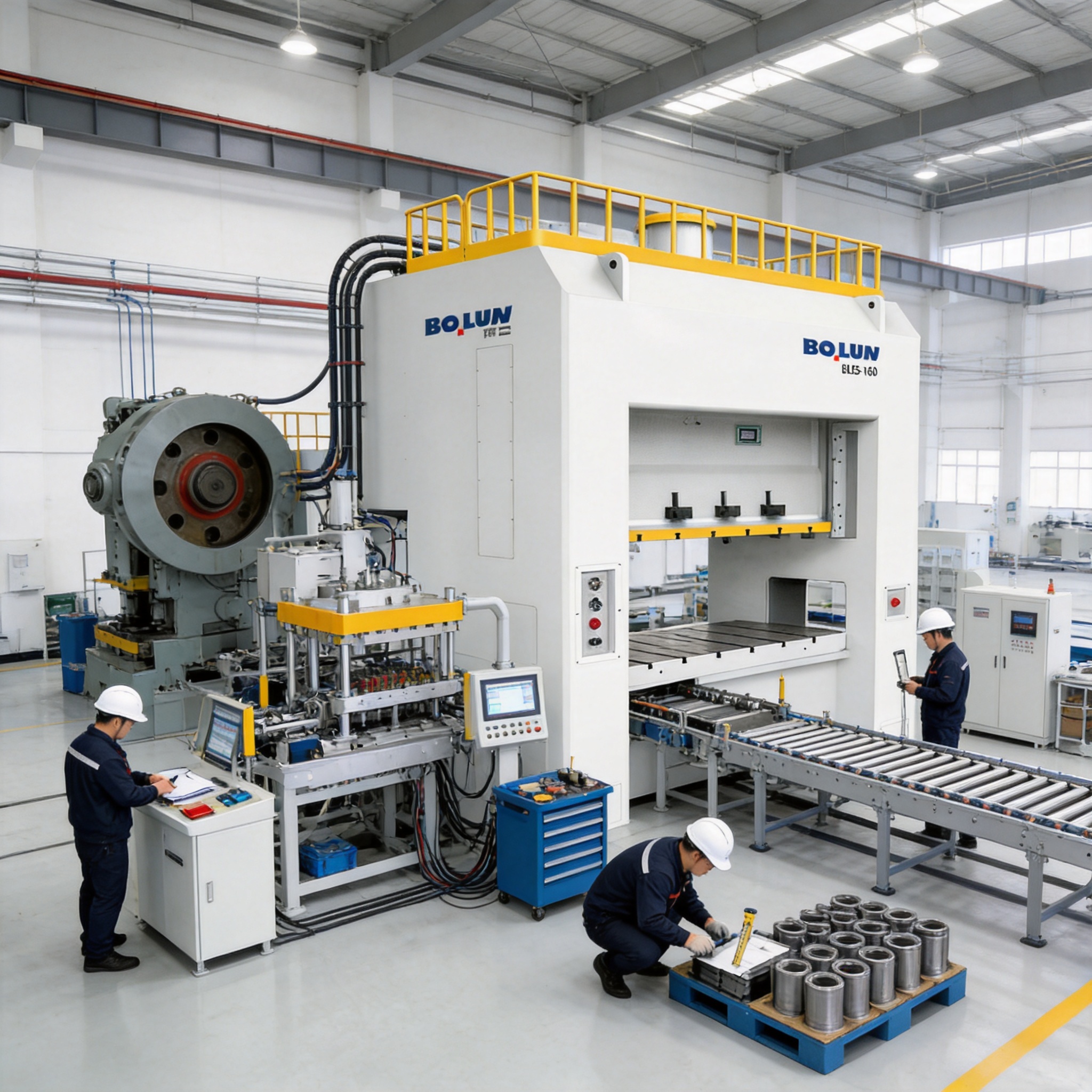
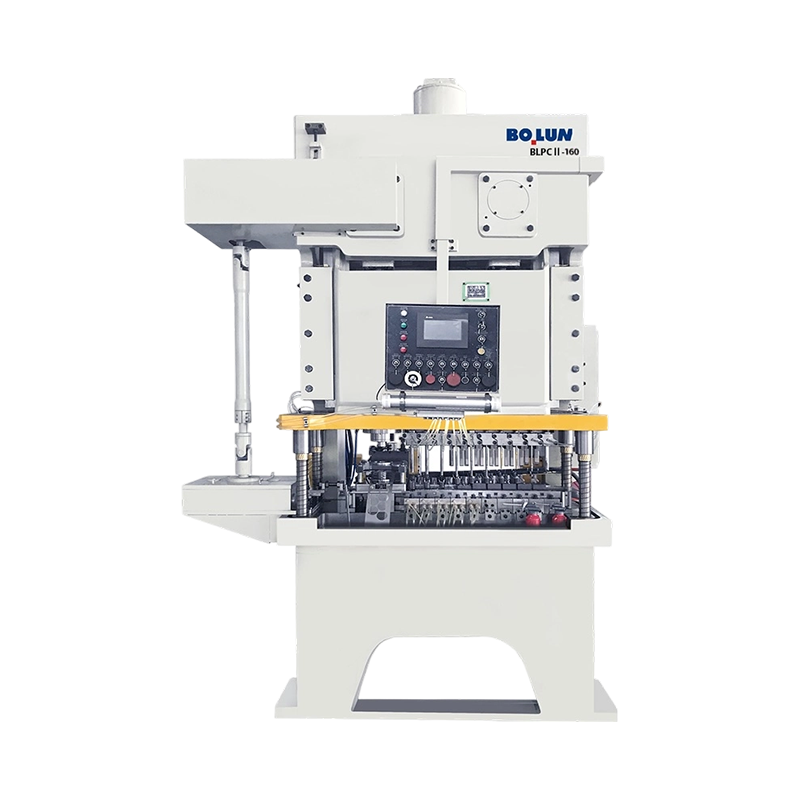
Modern stamping production requires more than high nominal capacity. Manufacturers must achieve repeatable dimensional accuracy, stable cycle performance, low vibration, efficient die operation, and reliable integration with automated production lines. These requirements become especially important when producing electronic components, precision hardware parts, and other formed products with demanding tolerances. The BLES-160 Agile Precision Closed-Frame Double-Point Servo Power Press is designed for this environment, combining a 1600 kN nominal capacity with servo-controlled slide motion, a rigid closed-frame structure, a large worktable, and programmable motion characteristics.
As a precision forming solution, the BLES-160 is intended to support high-speed and continuous stamping while maintaining stable production quality. Its approximately 55 strokes per minute operating rate, 1800 × 760 mm worktable, 180 mm slide stroke, and JIS B 6402 Class 1 precision provide a balanced configuration for demanding industrial applications. Rather than relying on a fixed mechanical motion profile, the servo-driven system allows the operator to control the slide movement more precisely according to the material, die design, and forming operation.
This flexibility is one of the machine’s most important advantages. A press used for blanking may require a different slide behavior from a press used for drawing, embossing, bending, or progressive forming. The BLES-160 incorporates nine built-in motion curves, including precision blanking and pulsing modes, to help manufacturers select a more suitable movement pattern for each process. This can improve forming consistency, reduce unnecessary impact, and lower vibration and operating noise.
The machine is produced by Zhejiang Bolun High-Precision Machinery Co., Ltd., a Chinese manufacturer specializing in high-precision forming equipment, forging machinery, casting machinery, and customized industrial machine tools. The company integrates research and development, mechanical design, component production, assembly, quality inspection, sales, and technical service. Its manufacturing approach combines precision machining, process control, customization capability, and systematic inspection to create equipment for high-intensity continuous production.
Traditional mechanical presses generally operate according to a predetermined crankshaft or eccentric motion. This type of motion is effective for many common stamping applications, but it can limit the ability to optimize the slide movement for different operations. The slide may move quickly through areas where lower speed would be beneficial, or it may apply unnecessary impact during material contact and release. These factors can influence die life, material flow, noise, vibration, and product consistency.
A servo press uses a servo motor and control system to manage slide motion more directly. Instead of treating the slide movement as a single fixed cycle, the control system can coordinate speed, position, acceleration, deceleration, dwell, and return characteristics. This allows a manufacturer to create a motion profile suited to the specific stamping process.
For precision blanking, a controlled and slower movement through the cutting zone can help reduce fracture variation and improve edge quality. For forming operations, a temporary dwell or pulsing movement can help the material flow more consistently into the die. For complex parts, controlled acceleration and deceleration can reduce shock loading on both the press and the tooling. These benefits are especially valuable in electronic and precision hardware production, where small dimensional differences may affect assembly, electrical performance, or customer acceptance.
The BLES-160 uses this principle through its built-in motion curve selection. Operators can use the available curves as practical starting points instead of developing every motion profile from the beginning. The machine therefore offers a combination of standardized operation and process flexibility. This is useful for factories producing multiple product families or changing dies frequently.
The press structure has a major influence on precision. During stamping, the die generates substantial vertical and lateral forces. If the frame deflects excessively or the slide is not supported evenly, the result may be uneven clearance, inconsistent part dimensions, accelerated die wear, or poor edge quality. A closed-frame construction helps create a rigid load-bearing structure around the working area.
The double-point arrangement provides two connection points between the drive system and the slide. Compared with a single-point design, this arrangement can offer more balanced support across a wide die. It is particularly suitable for tools with a large working width, where uneven force distribution can create angular error or slide tilting. The 1800 × 760 mm worktable of the BLES-160 provides useful space for broad dies, multi-operation tooling, and automated material handling arrangements.
Balanced slide support is also important when the load is not perfectly centered. In real production, material positioning, tool geometry, and forming conditions may create differences between the left and right sides of the die. A double-point system is designed to manage these conditions more effectively than a narrow single-point structure. While correct die setup and load distribution remain essential, the press architecture provides a strong foundation for maintaining stability.
The closed-frame and double-point design also support the machine’s role in continuous production. A rigid frame can help control deflection and vibration over repeated cycles. This is not only a matter of product quality; it also affects maintenance, die service life, operator comfort, and the long-term stability of the production line.
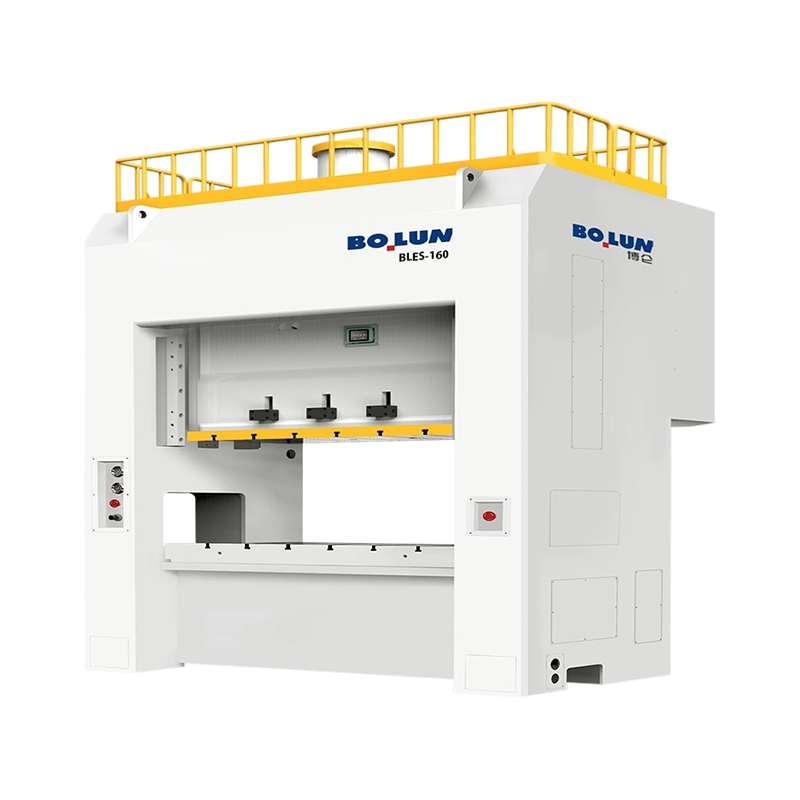
BLES-160 Agile Precision Closed-Frame Double-Point Servo Power Press
The BLES-160 is rated at a nominal capacity of 1600 kN. This capacity places the press in a useful range for medium-to-large precision stamping operations, including electronic hardware, structural parts, brackets, covers, connectors, and other formed metal components. Nominal capacity must always be matched to the actual force curve, material thickness, die design, and forming process, but the rating provides a substantial operating foundation for industrial production.
The nominal pressure stroke is 6 mm. This specification indicates the stroke position associated with the rated nominal force. In practical die selection, engineers should consider the complete force requirement across the operation, not only the peak cutting or forming load. Servo control can help manage the movement through the critical working region, but tooling, material, lubrication, and process design remain important factors.
The slide stroke is 180 mm, providing sufficient vertical movement for a broad range of stamping and forming tools. The approximately 55 strokes per minute operating speed is particularly notable for a 1600 kN precision press. Actual production speed depends on the part, die, material feed, safety requirements, and selected motion curve. Nevertheless, the stated speed gives manufacturers a strong starting point for high-throughput production planning.
The maximum die height is 450 mm, with 100 mm of die height adjustment. This arrangement gives users useful flexibility when installing dies of different heights. The adjustment range can help simplify setup and support tooling changes, especially in factories producing several parts on the same machine.
The side opening is 700 × 450 mm. This opening can assist with die installation, inspection, cleaning, maintenance, and access to auxiliary equipment. For automated lines, a suitable side opening can also make it easier to arrange sensors, transfer mechanisms, scrap removal systems, and other peripheral components.
The worktable measures 1800 × 760 mm, while the slide bottom size is 1600 × 650 mm. These dimensions create a practical die mounting area for wide-format stamping tools while retaining a balanced relationship between the upper and lower tooling surfaces. Tool designers can use the available space for progressive dies, multiple cavities, transfer tooling, or other specialized arrangements, subject to the specific die load and mounting requirements.
| Specification | BLES-160 Value | Production Significance |
|---|---|---|
| Nominal capacity | 1600 kN | Supports demanding precision stamping and forming operations |
| Nominal pressure stroke | 6 mm | Defines the rated force reference point |
| Slide stroke | 180 mm | Provides useful vertical movement for varied tooling |
| Strokes per minute | Approximately 55 S.P.M. | Supports high-throughput continuous production |
| Maximum die height | 450 mm | Accommodates substantial die assemblies |
| Die height adjustment | 100 mm | Facilitates tooling setup and changeover |
| Side opening | 700 × 450 mm | Improves access for installation and maintenance |
| Worktable size | 1800 × 760 mm | Supports large and multi-operation dies |
| Slide bottom size | 1600 × 650 mm | Provides a broad upper die mounting surface |
| Accuracy standard | JIS B 6402 Class 1 | Supports repeatable dimensional performance |
| Air pressure | 0.55 MPa | Defines the specified operating air requirement |
One of the most practical features of the BLES-160 is the inclusion of nine built-in motion curves. The machine is not limited to a single movement pattern for every die. Instead, users can select a curve that better corresponds to the process requirements. This is a major difference between a flexible servo press and a conventional fixed-motion press.
Blanking and piercing operations often require controlled contact between the punch, workpiece, and die. Excessive impact can contribute to burrs, noise, tool wear, and dimensional variation. A precision blanking curve can be used to manage slide speed and movement around the cutting zone. With correct clearance, material preparation, and die maintenance, controlled motion can contribute to cleaner edges and more repeatable parts.
Some forming processes benefit when the material is given additional time to flow. A pulsing or dwell-type movement may help reduce the tendency of the material to deform suddenly. This can be useful when forming shallow drawn features, embossed surfaces, complex bends, or parts with areas of different stiffness. The exact result depends on material properties and die geometry, but the availability of such a curve gives process engineers more options than a fixed-speed cycle.
Rapid changes in slide speed can generate mechanical shock. Servo control allows the motion to be managed more progressively, reducing abrupt acceleration and deceleration where the selected process permits. This can improve machine smoothness and help limit vibration transferred to the tooling and factory floor. It may also support more stable operation when the press is connected to a feeder or automated transfer device.
Different materials respond differently to the same stamping cycle. High-strength steel, stainless steel, aluminum, copper alloys, and coated sheet materials may require different combinations of speed, dwell, and return characteristics. Built-in motion curves allow production teams to compare operating behavior without replacing the press. The result is a more adaptable platform for product development, trial production, and regular manufacturing.
The BLES-160 maintains JIS B 6402 Class 1 precision according to the supplied technical information. This precision classification is an important indicator for manufacturers that need reliable geometric and operational performance from a stamping press. It is especially relevant to electronic and precision hardware components, where product tolerances can be tight and variation may create downstream assembly problems.
Press accuracy is influenced by several related factors. Frame rigidity, slide guidance, table flatness, die mounting, drive synchronization, lubrication, thermal conditions, and maintenance all contribute to final performance. A stated precision standard does not remove the need for proper installation and process control, but it provides a defined target for machine quality.
The double-point slide configuration helps support balanced motion across the working width. When the slide approaches the die evenly, the tooling can maintain more consistent clearance. This may reduce the risk of uneven burr formation, angled cuts, inconsistent bends, and premature wear on one side of the tool.
Servo control further supports repeatability by regulating the slide position and movement electronically. The system can repeat a selected motion profile from cycle to cycle, helping reduce variation caused by mechanical speed changes or unstable operating conditions. In high-volume production, even a small reduction in variation can lower scrap, rework, and inspection costs.
At approximately 55 strokes per minute, the BLES-160 is configured for productive high-speed operation. Throughput, however, is not determined by speed alone. A fast press that produces unstable parts, excessive scrap, or frequent die maintenance may deliver less useful output than a slightly slower press with consistent quality. The BLES-160 is designed to combine speed with controlled slide movement and precision construction.
Servo motion can help reduce unnecessary impact during the cycle. Lower impact may contribute to reduced vibration and noise, improving the working environment around the machine. It can also help protect sensitive tooling and reduce mechanical stress. In automated production lines, smoother movement may support more reliable coordination between the press, feeder, transfer system, inspection equipment, and part removal equipment.
Noise and vibration are important considerations in modern factories. They influence worker comfort, equipment longevity, building requirements, and the stability of nearby inspection processes. The BLES-160’s motion curve technology is intended to reduce vibration and noise while maintaining productive operation. Actual sound and vibration levels depend on foundation design, die construction, material, speed, and surrounding equipment, but controlled servo movement provides a useful technical advantage.
The machine’s approximately 55 S.P.M. rating should be treated as a reference rather than a universal production guarantee. A high-speed blanking application may operate differently from a deep forming process. Manufacturers should confirm the target cycle rate during die trials and evaluate part quality, die temperature, lubrication, feeding accuracy, and safety conditions before selecting the final production setting.
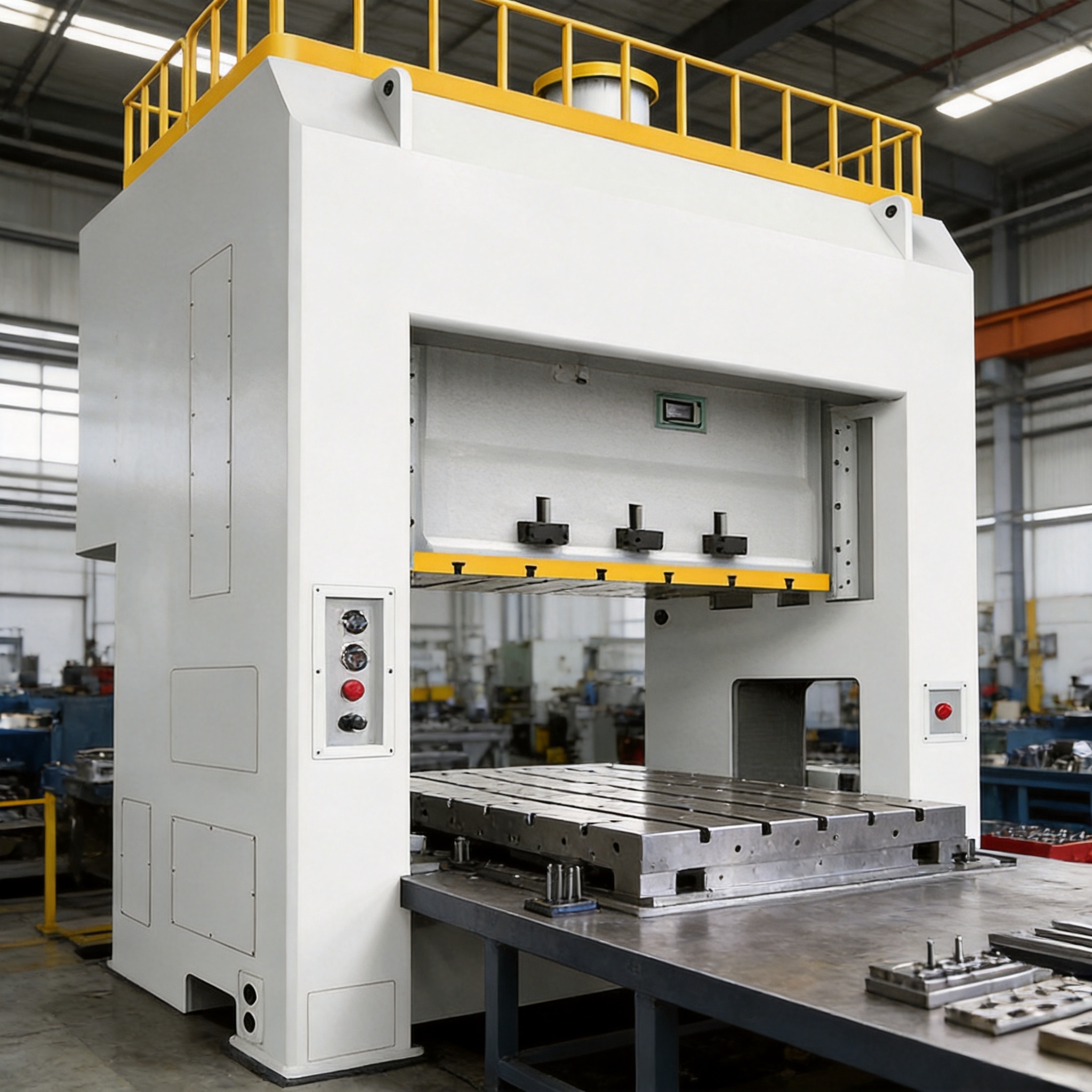
Electronic component manufacturing often requires stable, repeatable, and clean forming. Components may be small, but the production volume can be very high. Contact elements, shielding parts, brackets, terminals, clips, covers, and structural hardware may require precise blanking, bending, embossing, and progressive forming. A servo press can help manufacturers tailor the slide cycle to each individual operation.
For connector and terminal production, edge quality and dimensional repeatability are especially important. Burrs, uneven bends, or inconsistent pitch can interfere with assembly and electrical performance. The BLES-160 offers a rigid working structure, controlled slide motion, and a precision-oriented configuration suitable for such demanding work, provided that the die and material process are correctly engineered.
Precision hardware manufacturers can also benefit from the machine’s flexible die space. The large worktable can accommodate broad dies and multi-station tooling. This may reduce the number of secondary operations required for selected parts. Combining several operations in one die can improve production efficiency, reduce handling, and support more consistent part positioning.
The press can also serve automotive electrical hardware, appliance components, industrial enclosures, communication equipment parts, and general precision sheet-metal products. Its 1600 kN capacity provides more forming force than smaller electronic-component presses, allowing it to handle a broader range of materials and thicknesses while remaining suitable for high-speed work.
When evaluating a power press, manufacturers often compare mechanical presses, hydraulic presses, single-point presses, and servo presses. Each technology has a suitable application, but the BLES-160 offers a combination of features intended to address the limitations of less flexible designs.
A conventional mechanical press may offer high productivity and a relatively simple operating concept, but its slide motion is commonly tied to a fixed crankshaft profile. This can limit optimization for different materials and processes. The BLES-160 provides selectable motion curves, allowing the operator to adapt the cycle more effectively to blanking, forming, and precision stamping requirements.
The servo system can also provide better control over speed and dwell in the working zone. This can help reduce impact and improve process consistency. For manufacturers changing products or dies frequently, this flexibility may provide a stronger return than a press that operates efficiently only under one fixed set of conditions.
Hydraulic presses are known for their ability to control force and movement over a broad range, making them suitable for deep drawing and specialized forming. However, many high-speed production applications require the cycle efficiency and repeatability associated with a servo mechanical configuration. The BLES-160 is designed for faster continuous stamping, with an approximately 55 S.P.M. reference speed and motion control adapted to high-volume work.
The appropriate choice depends on the product. Deep drawing with long dwell requirements may favor a different machine configuration, while high-speed blanking, bending, and precision progressive stamping can benefit from the BLES-160’s combination of speed and programmable movement.
Single-point presses can be effective for narrow or centrally loaded dies. However, broad dies and uneven loads may place greater demands on slide stability. The BLES-160’s double-point architecture is intended to provide balanced support over a wider working area. This can be particularly useful for large progressive dies and components requiring consistent left-to-right dimensional control.
Smaller presses may be highly efficient for light-gauge components, but they can be limited when the manufacturer needs greater force, larger tooling, or more complex forming stages. With 1600 kN nominal capacity and a 1800 × 760 mm worktable, the BLES-160 offers additional process range while retaining a high-speed precision orientation.
A basic power press may have a lower initial cost, but the total production cost also includes scrap, die maintenance, setup time, energy use, noise control, and product changeover. The BLES-160’s servo movement, motion curves, precision structure, and broad tooling area can help address these factors. The best value is achieved when the machine is used for products that benefit from motion flexibility and stable high-speed operation.
The performance of a high-precision press depends not only on its design concept but also on the manufacturer’s ability to produce and inspect each major component accurately. Zhejiang Bolun High-Precision Machinery Co., Ltd. has developed its business around precision forming equipment and industrial machine tools. The company combines research and development, engineering design, production, sales, and service within an integrated operating structure.
Its manufacturing process covers the major stages required for a complete press system. These stages include basic mechanical design, core component development, precision machining, structural assembly, electrical and control integration, finished-machine testing, packaging, installation support, and after-sales service. Managing these stages within a coordinated production system can improve communication between design and manufacturing teams.
Precision processing equipment is important for the production of frame components, slide assemblies, guide systems, drive parts, tables, and other load-bearing elements. The accuracy of these parts influences alignment, rigidity, operating smoothness, and long-term reliability. Machining quality must be supported by process planning, inspection procedures, calibration, and skilled assembly.
The company also emphasizes non-standard customization. Industrial users may require different table arrangements, automation interfaces, electrical standards, safety systems, die handling systems, or process functions. A manufacturer with in-house design capability can evaluate these requirements at an earlier stage and develop a more coherent machine solution. Customization is most effective when the manufacturer understands both the press structure and the customer’s actual production process.
Bolun’s production philosophy is based on technology development, quality control, and an international management perspective. The company states that it has established a finished-product inspection system exceeding ordinary industry requirements. Such a system is intended to verify machine performance before delivery and to reduce the risk of installation problems or unstable operation in the customer’s factory.
Press manufacturing involves many interfaces. A frame may be dimensionally correct, but the final machine can still experience problems if the slide, guide system, drive mechanism, control system, and die table are not aligned correctly. Quality control must therefore continue from individual components through final assembly.
Typical inspection areas include material and component verification, dimensional measurement, machining accuracy, frame alignment, slide parallelism, table flatness, die height adjustment, drive synchronization, lubrication performance, electrical operation, safety functions, and test running. The exact inspection program depends on the machine model and customer requirements, but a systematic approach helps ensure that the final press performs as an integrated system.
For the BLES-160, maintaining JIS B 6402 Class 1 precision requires attention to both static and dynamic conditions. Static inspection can verify geometric relationships when the machine is stopped. Dynamic testing evaluates the machine during operation, including movement smoothness, repeatability, vibration, and control response. These checks are important because a press must maintain stability under repeated production cycles, not only during a single measurement.
Factory acceptance testing can also help customers confirm the machine configuration before shipment. Buyers should request documentation covering the final specifications, electrical requirements, foundation conditions, tooling interface, operating air pressure, safety functions, and recommended maintenance procedures. Clear technical records support smoother installation and operator training.
The BLES-160 is suitable for high-speed automated stamping production lines. Automation can include decoilers, straighteners, servo feeders, transfer systems, scrap conveyors, part collectors, vision inspection, sensors, lubrication equipment, and programmable line controls. The press must communicate reliably with these systems to maintain safe and synchronized operation.
Servo press technology is particularly compatible with automated production because slide position and movement can be controlled electronically. This can support more precise timing between the press and the feed system. The selected motion curve should be evaluated alongside material feed length, die pitch, transfer timing, and part ejection requirements.
Automation can improve productivity, but it also increases the importance of system engineering. The press, die, feeder, sensors, and safety devices must be designed as one production cell. Before installation, manufacturers should confirm the line layout, access space, material direction, electrical interface, pneumatic supply, scrap path, emergency stops, and maintenance access.
The BLES-160’s worktable and side opening provide useful design space for die and peripheral equipment planning. Nevertheless, the final layout should be based on the actual die dimensions and automation configuration. Adequate clearance is required for coil loading, tool change, inspection, lubrication, cleaning, and safe operator access.
Correct installation is essential to achieve the press’s intended precision. The foundation must be designed according to the machine weight, operating force, vibration behavior, soil conditions, and factory layout. Leveling and anchoring should be completed using the manufacturer’s installation instructions and qualified personnel.
Utility requirements must also be verified. The specified air pressure is 0.55 MPa. The factory should provide clean and stable compressed air with suitable filtration and drainage. Electrical power, grounding, control voltage, ambient temperature, humidity, and ventilation should be confirmed before commissioning.
Die installation requires careful attention to the maximum die height, adjustment range, table dimensions, slide bottom dimensions, shut height, bolster condition, and load distribution. The die should be centered appropriately and secured according to the tooling manufacturer’s instructions. Excessive off-center loading can affect machine behavior and should be avoided.
During commissioning, operators should begin at a conservative speed and verify lubrication, feeding, sensor operation, slide position, emergency stops, die clearance, and part transfer. The correct motion curve should be selected through controlled trials. Once the process is stable, production speed can be increased while monitoring part quality, vibration, noise, die temperature, and machine alarms.
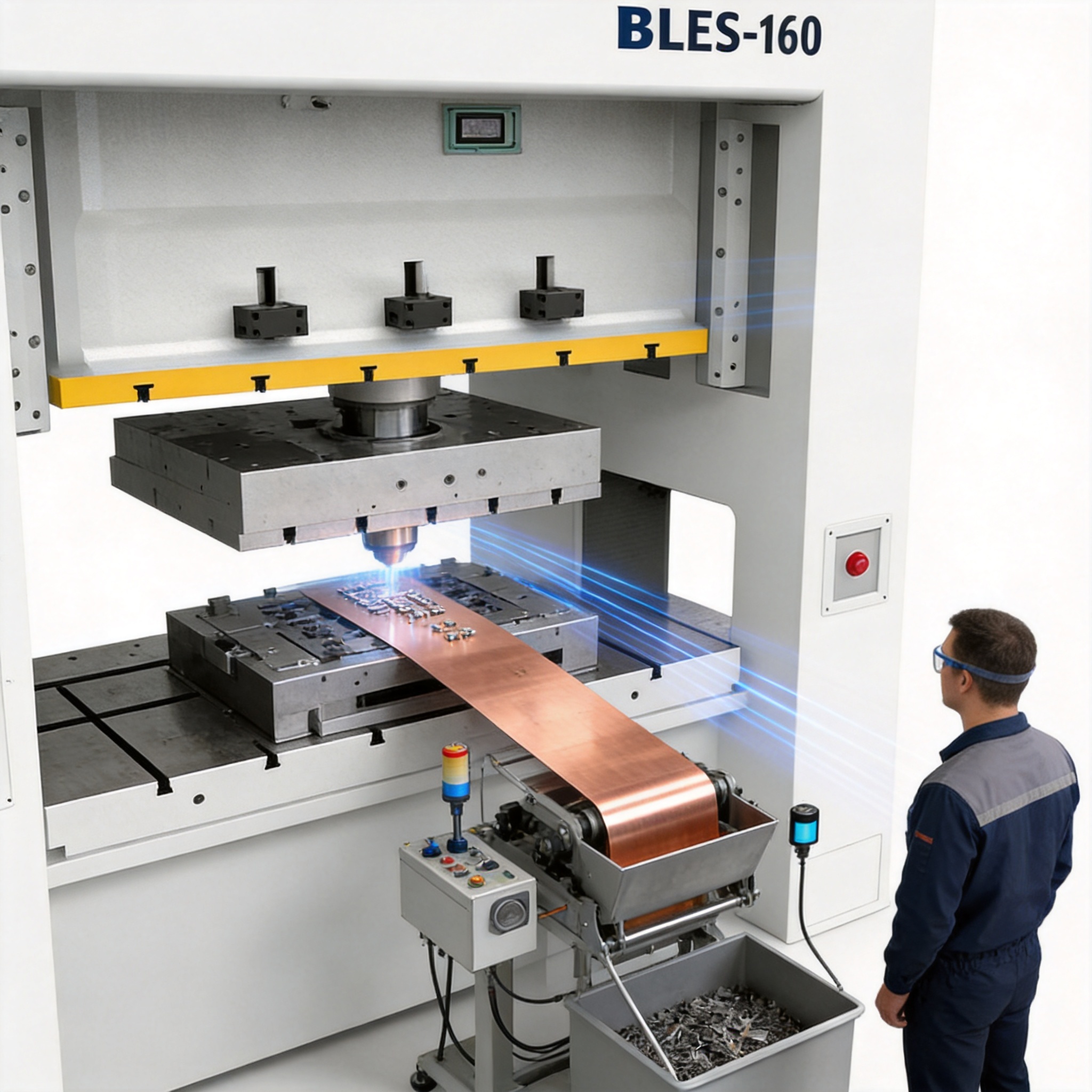
Regular maintenance helps preserve precision and reduce unplanned downtime. A preventive maintenance program should include lubrication, inspection of fasteners, guide components, electrical cabinets, sensors, pneumatic equipment, safety devices, die mounting surfaces, and drive-system condition.
Servo systems require attention to control alarms, motor condition, encoder feedback, cable connections, cooling, and software parameters. Operators should record alarms and unusual operating behavior rather than simply resetting the machine. Repeated alarms may indicate alignment issues, overload, tooling interference, sensor contamination, or a developing electrical problem.
Die maintenance is equally important. A precision press cannot compensate indefinitely for a damaged or poorly maintained die. Cutting edges should be inspected, clearances should be controlled, forming surfaces should be cleaned, and lubrication should be appropriate for the material and process. Tool wear can increase the required force and reduce product consistency.
Maintenance records should include operating hours, stroke rate, motion curve, product type, die number, lubrication actions, inspection results, alarm history, and replacement parts. This information helps identify trends and supports more accurate planning for service and spare parts.
Motion curve selection should begin with the process rather than the machine’s maximum speed. Engineers should identify whether the operation is primarily blanking, piercing, bending, drawing, embossing, coining, or a combination of processes. They should then consider material thickness, tensile strength, elongation, die clearance, lubrication, forming depth, required surface quality, and production rate.
A precision blanking curve may be appropriate when edge quality and reduced impact are priorities. A pulsing or dwell-type curve may be useful when material flow needs additional control. A faster return curve may support throughput when the critical forming zone is short, while a smoother acceleration profile may be preferable when vibration or feeding stability is a concern.
Trial results should be measured rather than judged only by sound or appearance. Recommended evaluation factors include dimensional variation, burr height, crack formation, surface marks, die wear, noise, vibration, cycle time, and scrap rate. The selected curve should be documented for each die and product so that operators can reproduce the approved settings.
The financial value of a precision servo press comes from its complete production performance rather than from its nominal capacity alone. Higher useful throughput can increase output without requiring additional floor space. Improved consistency can reduce scrap and rework. Controlled motion may extend die life and lower maintenance costs. Flexible curves can reduce the need for separate specialized presses when a single machine can handle multiple processes.
Changeover efficiency is another potential benefit. A large worktable and adjustable die height support different tools, while programmable motion makes it easier to store and recall process settings. Faster and more repeatable setup can be particularly valuable for manufacturers producing multiple part numbers in moderate batches.
Lower vibration and noise may also reduce indirect costs associated with factory improvements, operator fatigue, and equipment disturbance. These benefits should be assessed together with the machine’s purchase price, installation expense, automation requirements, energy consumption, tooling, training, and service support.
Manufacturers should conduct a practical return-on-investment analysis using their own production data. Relevant measurements include current cycle time, scrap rate, tool replacement frequency, labor requirements, changeover time, annual operating hours, and expected product demand. A press that delivers stable quality at the required speed can create value over many years of operation.
Zhejiang Bolun High-Precision Machinery Co., Ltd. operates from Zhejiang, an important center of Chinese manufacturing and industrial equipment production. With approximately two decades of experience in machinery manufacturing, the company has developed capabilities in engineering, production management, precision processing, and customer support.
The company’s integrated structure allows it to participate in the full project cycle. During the pre-sales stage, its technical team can review product requirements, material conditions, die dimensions, line layout, automation needs, and special functions. During manufacturing, engineering and production teams can coordinate component preparation, assembly, control integration, and testing. During delivery and after-sales support, the company can provide installation guidance, commissioning assistance, operator training, maintenance recommendations, and technical communication.
This one-stop approach is valuable for customers purchasing a complete stamping solution rather than a standalone machine. Complex projects may require changes to the press configuration, special interfaces, or non-standard automation. Early technical cooperation can reduce compatibility risks and improve the efficiency of implementation.
The company also emphasizes research and development in intelligent and digital stamping equipment. As factories seek higher automation, production traceability, remote monitoring, process data collection, and adaptive control, press manufacturers must continue developing both mechanical and software capabilities. A long-term focus on technology can help equipment remain competitive as production requirements evolve.
Before purchasing a BLES-160 or a comparable precision servo press, buyers should prepare a detailed technical specification. The specification should identify the material types, thickness range, maximum blank size, required force, target strokes per minute, die dimensions, production volume, product tolerances, and automation configuration.
The buyer should also ask how the manufacturer verifies press accuracy, how motion curves are selected and stored, what safety functions are included, and what commissioning support is available. Information about electrical standards, spare parts, software access, operator training, warranty terms, and service response should be documented before the order is finalized.
Tooling compatibility is another important consideration. The die supplier and press manufacturer should confirm the maximum die height, adjustment range, slide bottom size, table size, mounting holes, shut height, feed direction, and allowable load distribution. These details can prevent expensive modifications after delivery.
Finally, customers should evaluate the supplier’s production capabilities, inspection system, customization experience, and long-term service resources. A high-precision press is a strategic production asset. The supplier’s ability to support the machine throughout its operating life can be as important as the initial technical specification.
The BLES-160 is an agile precision closed-frame double-point servo power press with a nominal capacity of 1600 kN. It is designed for high-accuracy stamping and forming of electronic components, precision hardware, and similar industrial products.
The stated operating speed is approximately 55 strokes per minute. Actual speed depends on material, die design, process type, selected motion curve, feeding system, safety conditions, and the required quality level.
Servo control allows the slide movement to be adjusted more precisely than a fixed mechanical motion profile. Operators can select different curves for blanking, forming, pulsing, and other processes, helping optimize speed, dwell, acceleration, and deceleration.
The machine includes nine built-in motion curves. The supplied information identifies precision blanking and pulsing modes among the available characteristics.
The BLES-160 has a maximum die height of 450 mm and 100 mm of die height adjustment. Its worktable measures 1800 × 760 mm, and the slide bottom measures 1600 × 650 mm. Actual die suitability must be confirmed against force, shut height, mounting, and load-distribution requirements.
The supplied technical information specifies JIS B 6402 Class 1 precision. Installation quality, tooling condition, material control, lubrication, and maintenance are also necessary to achieve stable production results.
A double-point design supports the slide at two points, helping distribute force across a wider die. This can improve slide balance and reduce the effects of uneven loading compared with a single-point arrangement.
Typical applications include electronic components, precision hardware, connectors, terminals, brackets, covers, clips, appliance parts, communication equipment components, and automated high-speed stamping products.
Yes. The machine is suitable for automated stamping production lines. Integration may involve a decoiler, straightener, servo feeder, transfer system, scrap conveyor, inspection equipment, lubrication equipment, and line-level safety controls. The complete configuration should be engineered according to the product and die.
The specified air pressure is 0.55 MPa. The customer should provide clean, stable compressed air and confirm the final pneumatic requirements during technical preparation.
Maintenance should include lubrication, inspection of guide and drive components, checking electrical and pneumatic systems, verifying safety devices, monitoring servo alarms, cleaning sensors, inspecting die surfaces, and recording operating conditions. A preventive maintenance schedule should be created for the specific production environment.
Customers should confirm material specifications, force requirements, die size, maximum die height, production speed, motion curve needs, automation interfaces, electrical standards, foundation conditions, safety requirements, installation support, training, spare parts, and after-sales service.
The BLES-160 Agile Precision Closed-Frame Double-Point Servo Power Press is designed for manufacturers that need a combination of force, speed, precision, flexibility, and production stability. Its 1600 kN nominal capacity supports demanding forming work, while the approximately 55 strokes per minute reference speed makes it suitable for high-throughput stamping. The 1800 × 760 mm worktable provides useful die capacity, and the double-point closed-frame structure supports balanced operation across a broad working area.
Its strongest competitive advantage is the combination of servo-controlled motion and precision press construction. Nine built-in motion curves give manufacturers additional control over blanking, forming, pulsing, acceleration, and deceleration. This flexibility can help reduce vibration and noise, improve forming consistency, protect tooling, and adapt the machine to different materials and products.
The machine’s value is also supported by the manufacturer’s integrated capabilities in research and development, precision processing, assembly, inspection, customization, and technical service. With careful installation, properly designed tooling, trained operators, and preventive maintenance, the BLES-160 can serve as a dependable platform for electronic components, precision hardware, and automated industrial stamping.
For companies seeking to modernize a stamping line, reduce process variation, and improve the productivity of complex dies, the BLES-160 represents a practical precision servo press solution. Its performance should be validated through application-specific trials, but its architecture and specifications provide a strong foundation for stable, high-quality continuous production.
1. Zhejiang Bolun High-Precision Machinery Co., Ltd., BLES Series Technical Specification Data.
2. JIS B 6402, Machine Tools and Press Accuracy Classification Reference.
3. Industrial Press Design Principles, Mechanical Frame Rigidity and Slide Guidance.
4. Servo Motion Control Applications in Metal Stamping and Forming.
5. Precision Die Design, Blanking Clearance, Forming Stability, and Tool Maintenance.
6. Manufacturing Quality Control Practices for High-Precision Industrial Machinery.


What Is a Power Press? A power press — also called a stamping press or punch pr...
Power press machines are classified in two main ways: by frame construction, w...
Understanding Mechanical Power Presses and Their Essential Functions A mechani...
In the fields of metal forming, sheet metal fabrication, blanking, and punching,...
As the manufacturing industry moves steadily toward automation and smart product...
In modern manufacturing, cold forging is widely used in the automotive, aerospac...
Contact Us

bolunpress@gmail.com

+86-575-83362228

+86-15158259588

+86-575-83362999

+86-15158259588

Hangzhou Office Add: No. 332 Wangjiang East Road, Shangcheng District

No.1 Linjiang Road East, Xiaren, Jinting Town, Shengzhou City, Zhejiang Province, China
Ready to Begin?
Get in Touch

Now!

ZHEJIANG BOLUN
 English
 中文简体
中文简体